

1958–2026: The Complete History of Nepal Airlines’ Aircraft Liveries
Nepal Airlines (RA) started as the Royal Nepal Airlines Corporation on July 3, 1958, staffed by 97 employees. It began flying a single Douglas DC-3 Dakota aircraft. Seven more DC-3s were added to the fleet between 1959 and 1964, while China supplied a couple of AN-2 Fong Shee aircraft which did not enter scheduled service...
Read More
Nearly 100 Aircraft Lost: How Common & Dangerous Are Bird Strikes in Nepalese Aviation?
Nepal is home to 871 of the world’s roughly 10,000 bird species, and that extraordinary biodiversity collides with the nation’s demanding aviation environments. Between 1990 and 2023, Nepal lost at least 92 airplanes and helicopters and 817 people in civil aviation accidents attributable to causes including engine failure, weather constraints, and bird strikes, according to...
Read More
The Evolution of Qantas Liveries: Every Major Design From 1920 to 2026
Qantas Airways (QF), whose name comes from the origins of its formation on 16 November 1920 as the Queensland and Northern Territory Aerial Services, unveiled its Coral Reef livery on its Airbus A321XLR. Over the course of more than a century, the airline has refreshed its signature red-and-white identity just five times since the flying...
Read More
Is Pilot Training a Degree Course? How to Become a Pilot?
The most common question from aspiring pilots is whether pilot training is a degree course. The answer is no. Pilot training is a licence-based programme, not a university degree. It leads to FAA certificates, not academic qualifications. The FAA does not require a college degree for any pilot licence, from the Private Pilot Licence (PPL)...
Read More
Why Do Pilots Wear Sunglasses? The Surprising Reason Goes Beyond Bright Sunlight
Pilots wear sunglasses for the same reason surgeons wear gloves: their working environment exposes a critical biological asset to an occupational hazard that ground-based workers simply do not face at equivalent intensity. At sea level, the Earth’s atmosphere filters a substantial proportion of the sun’s ultraviolet output before it reaches human eyes; the Hong Kong...
Read More
Delta’s $1.5 Billion JFK Transformation: From Terminal 2 to Terminal 4
Delta Air Lines (DL) has transformed its presence at John F. Kennedy International Airport (JFK), New York, through a USD 1.5 billion Terminal 4 modernisation and expansion programme. This was the largest capital commitment by any single airline at any U.S. airport in the post-pandemic era. It helped consolidate all operations from the former Terminal...
Read More
A-10 Warthog: The Legendary Gunship That Refuses to Retire
The A-10 Warthog, which is officially known as the Fairchild Republic A-10 Thunderbolt II, is a single-seat, straight-wing jet aircraft was designed and developed to serve the United States Air Force (USAF) for close air support (CAS) of friendly ground troops. Developed in the middle of the Cold War, it is one of the most...
Read More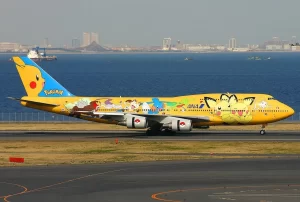
The Complete History of ANA’s Pokémon Jets: 1998–2026
All Nippon Airways (NH), Japan’s flag-carrying titan and the largest airline in the country, has long operated its aircraft as instruments of cultural diplomacy as much as commercial transport. On May 28, 2026, the Tokyo-based carrier unveiled the livery designs for two of its three forthcoming Pokémon anniversary jets — the “Pokémon Jet Red” and...
Read More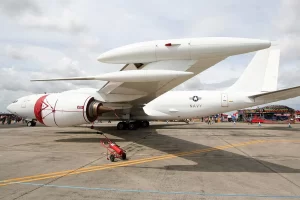
E-6B Mercury: America’s Most Lethal Aircraft Ever
The Boeing E-6B Mercury is not the fastest aircraft in the U.S. military, not the most heavily armed, and not the most recognisable. Despite this, many consider this to be the most consequential by strategic measure. Operating under the codename TACAMO, an acronym for “Take Charge and Move Out,” the E-6B is the United States’...
Read More