

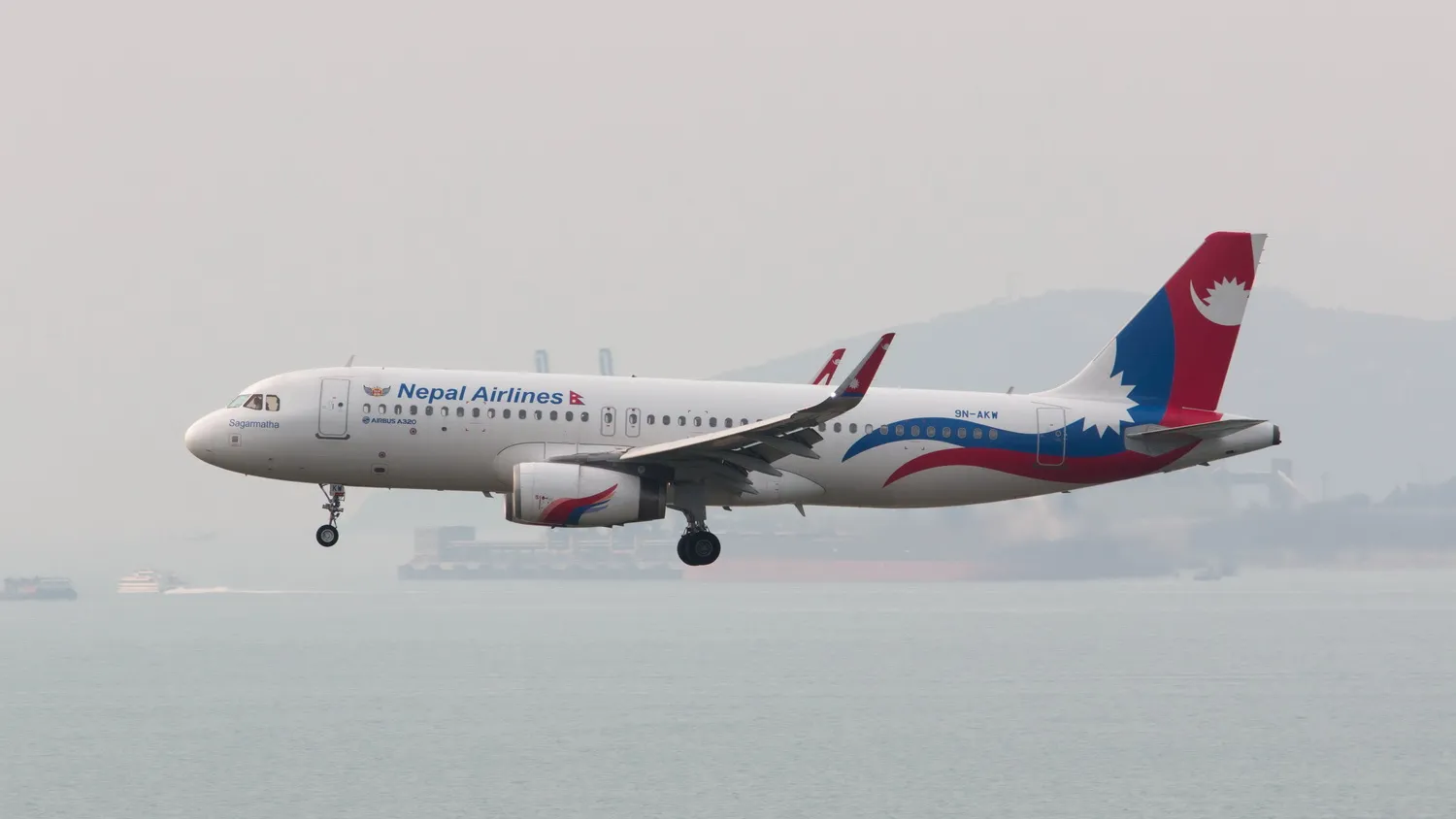
Nepal Airlines Corporation (RA) operates six active aircraft across three types, and the spread between the oldest and youngest is stark even by the standards of a small state carrier: a pair of De Havilland Canada DHC-6 Twin Otters that have been flying Nepal’s mountain routes for more than four decades, alongside four Airbus jets acquired within the past 11 years.
The airline’s roots go back to July 1958, when it began life as Royal Nepal Airlines Corporation with a single Douglas DC-3 Dakota, and its fleet has since passed through Hawker Siddeley HS-748s, Boeing 727s, and Boeing 757s before narrowing to the mix it flies today. This breakdown looks at the oldest individual aircraft in each type Nepal Airlines currently operates, and what has kept each one flying.
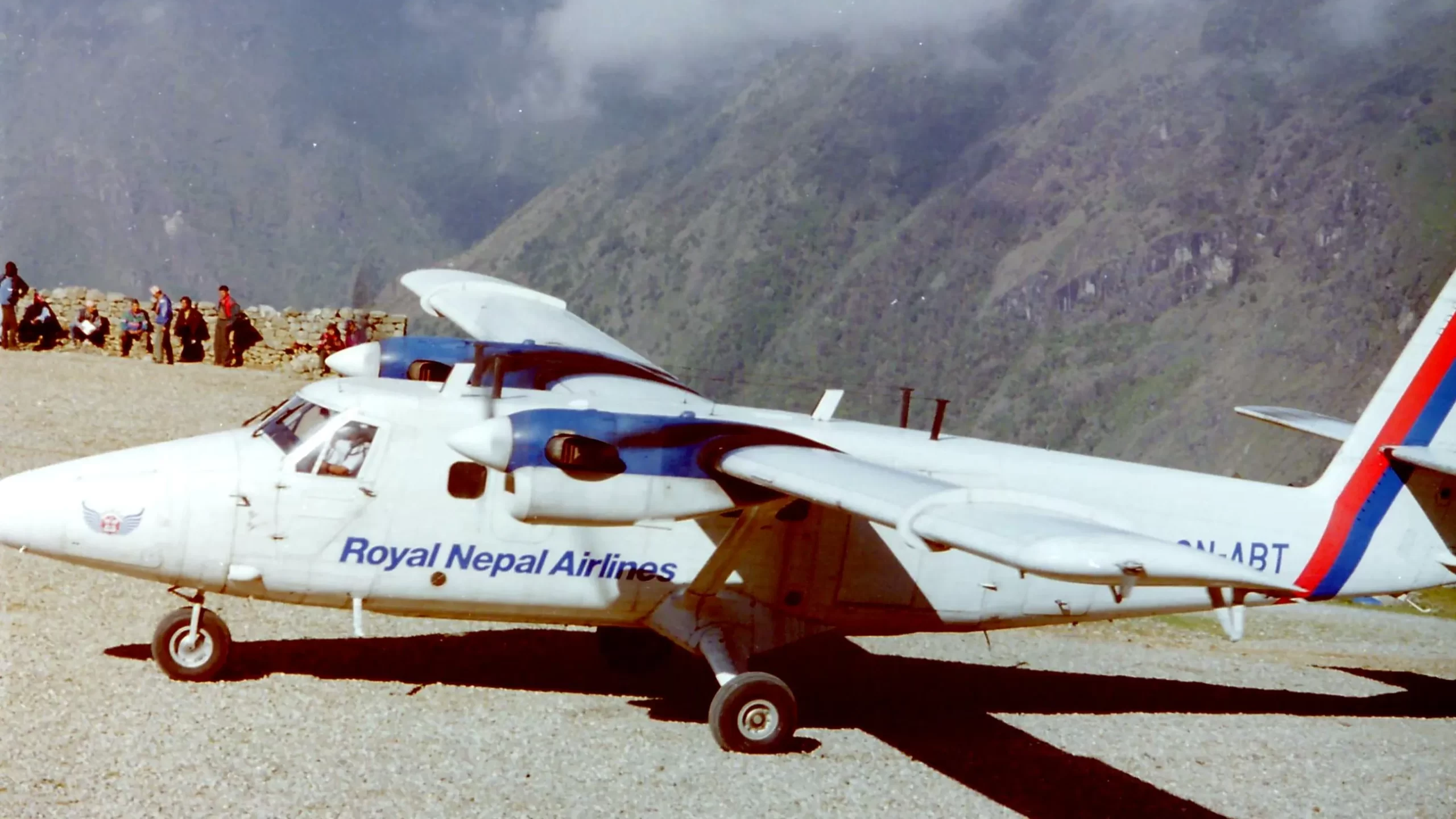
De Havilland Canada DHC-6 Twin Otter: 9N-ABT And 9N-ABU, over 42 Years Old
Nepal Airlines’ oldest active aircraft are not its widebodies but its smallest ones. The carrier’s two DHC-6-300 Twin Otters, registered 9N-ABT and 9N-ABU, have an average age exceeding 42 years, having entered the fleet in January 2007 on airframes manufactured decades earlier, before the DHC-6-300 series ceased production altogether in 1988.
Both aircraft are configured for 19 economy-class passengers and remain the workhorses of Nepal Airlines’ domestic STOL network, connecting settlements such as Bhojpur and Tulsipur that would otherwise require days of overland travel.
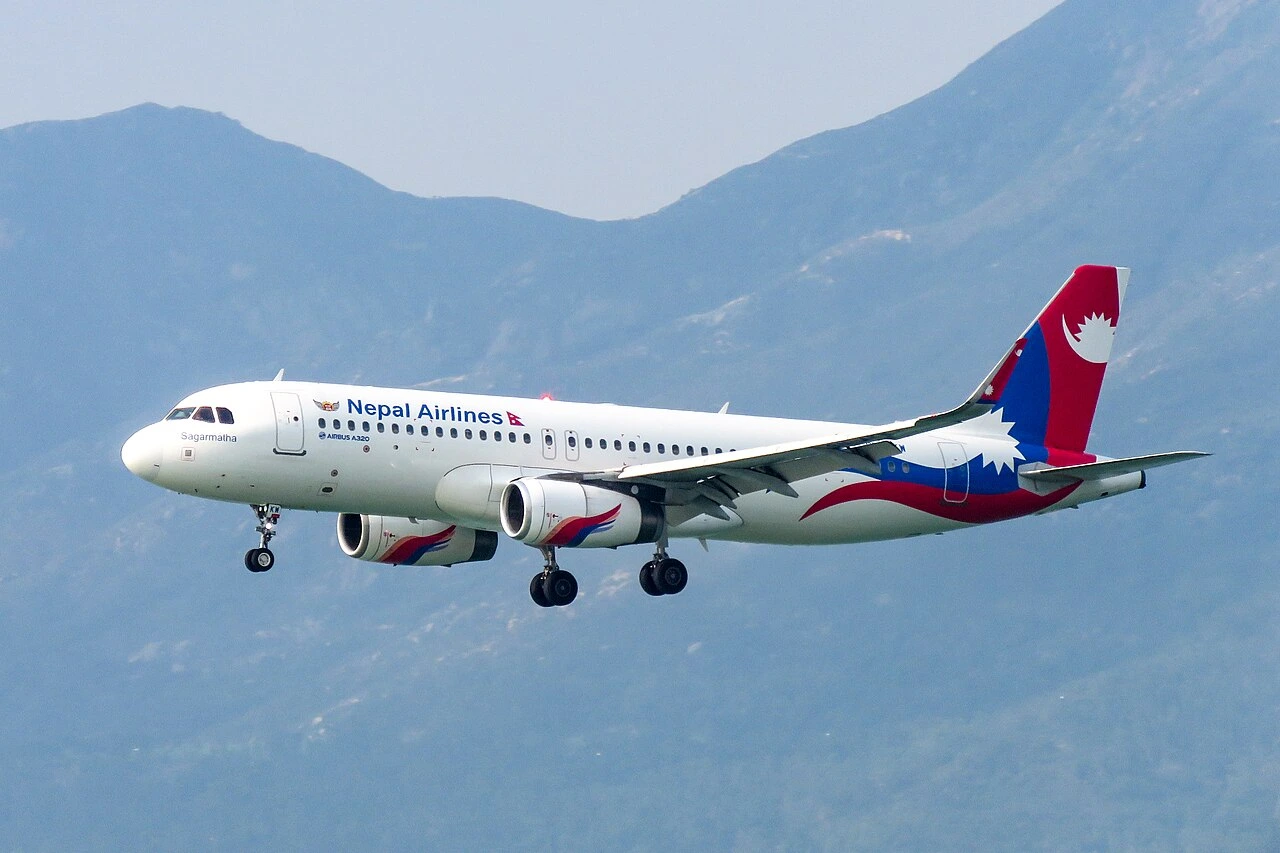
Airbus A320-200: 9N-AKW “Sagarmatha,” 11.5 Years Old
Nepal Airlines’ oldest Airbus A320 is 9N-AKW, named Sagarmatha after the Nepali name for Mount Everest. Carrying manufacturer serial number 6445, the aircraft was built at Airbus’ Hamburg (XFW) facility in Germany and first flew under the test registration D-AXAR before its delivery to Nepal Airlines in February 2015. It was ferried from Hamburg to Kathmandu via Doha on February 7-8, 2015, before entering commercial service.
The aircraft is configured with 158 seats, split between 8 Business Class and 150 Economy Class, and is powered by two International Aero Engines (IAE) turbofans.
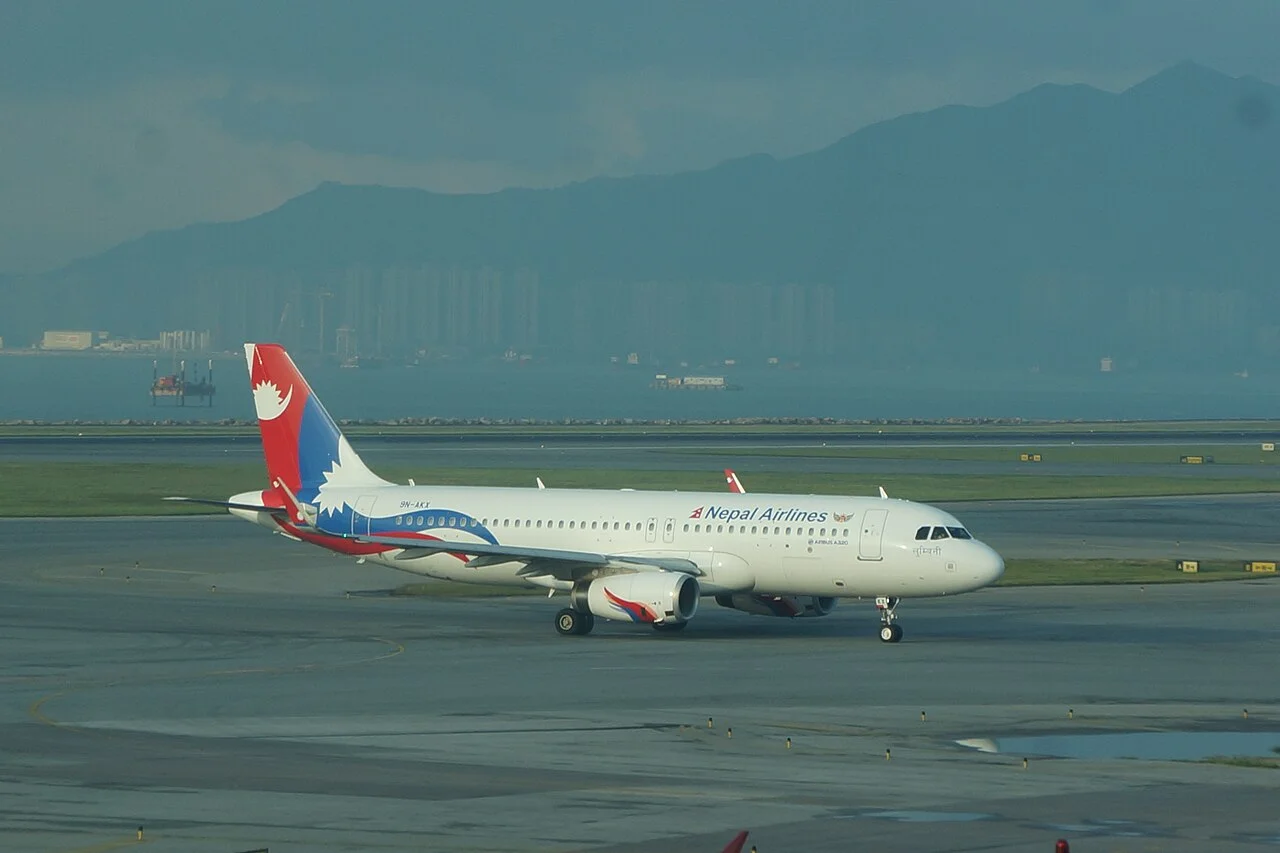
Airbus A320-200: 9N-AKX “Lumbini,” 11.3 Years Old
Nepal Airlines’ second A320, registered 9N-AKX and named Lumbini after the birthplace of Buddha, followed Sagarmatha into the fleet by just two months. Built at the same Hamburg facility under manufacturer serial number 6555, the aircraft conducted its test flights as D-AVVI before delivery in April 2015. It made the Hamburg-to-Kathmandu delivery flight via Doha between April 30 and May 1, 2015.
Lumbini shares an identical 158-seat configuration with its sister aircraft, comprising 8 Business Class and 150 Economy Class seats, and is likewise powered by two IAE engines. Together, the two A320s have an average age of roughly 11.4 years, well short of the multi-decade histories carried by the airline’s Twin Otters.
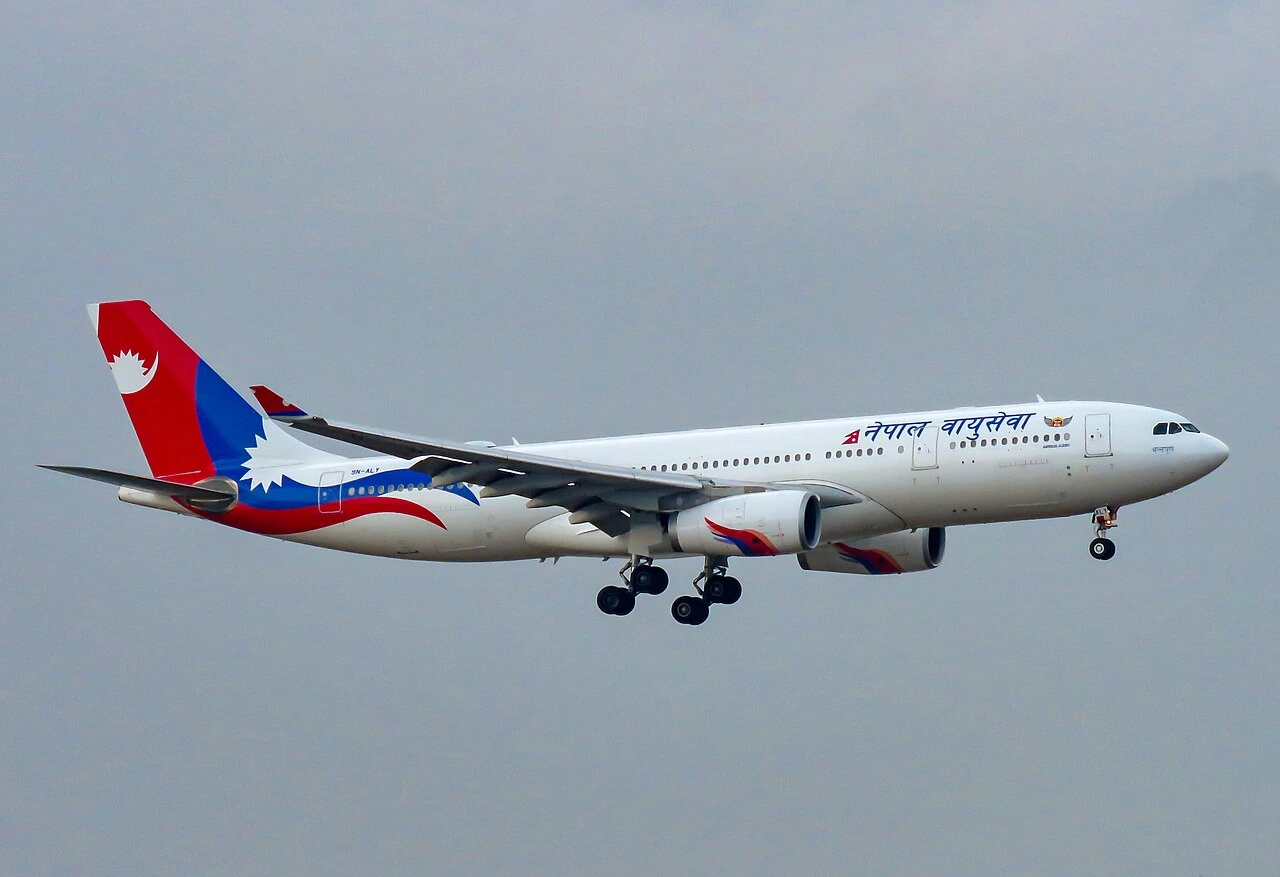
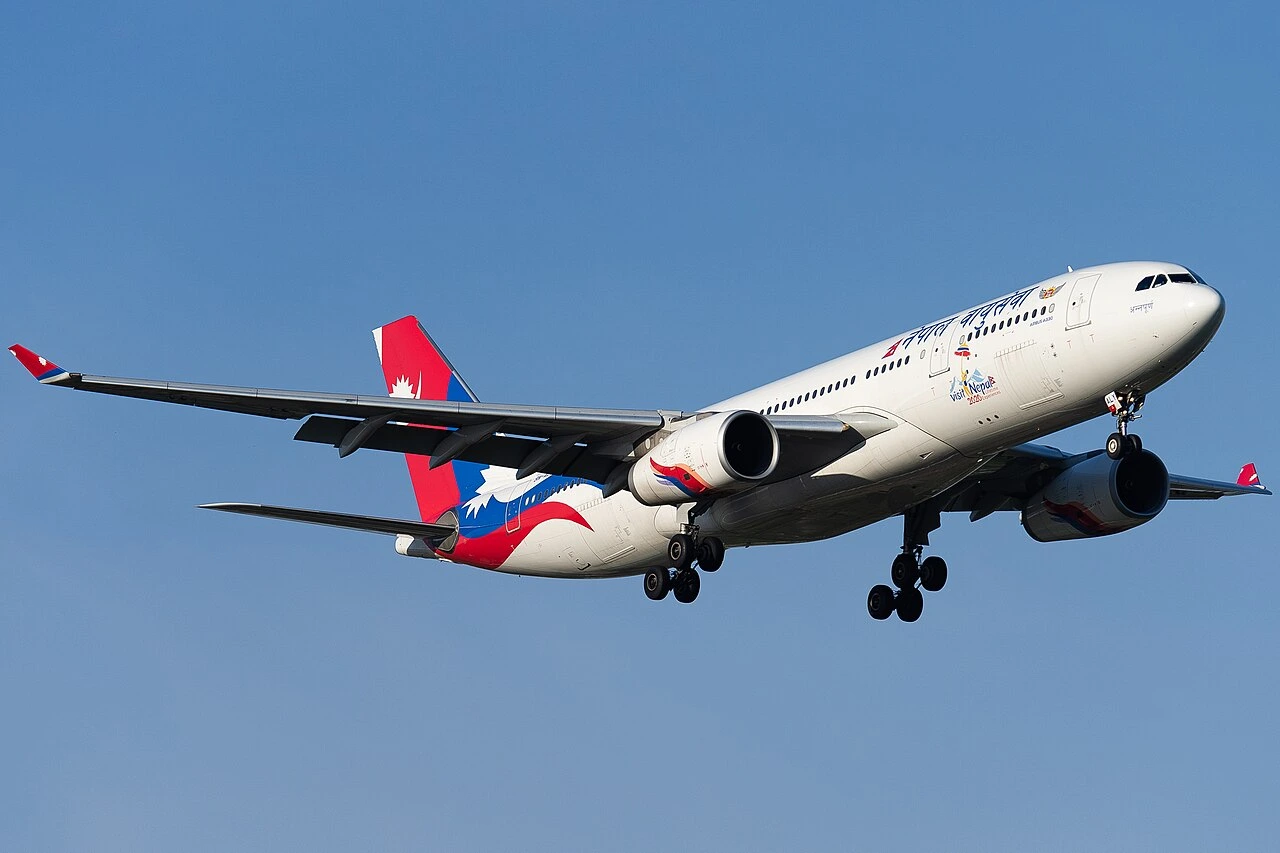
Airbus A330-200: 9N-ALY “Annapurna” And 9N-ALZ “Makalu,” Around 8 Years Old
Nepal Airlines’ two Airbus A330-200s are its youngest and most consequential aircraft, both for what they were meant to achieve and for the controversy that surrounded their purchase. Registered 9N-ALY and named Annapurna, the first was built at Airbus’ Toulouse (TLS) facility under MSN 1872, first flew as F-WWCT, and was delivered in June 2018, ferried directly from Toulouse to Kathmandu on June 27-28, 2018. Its sister aircraft, 9N-ALZ, named Makalu, carries MSN 1878, first flew as F-WWYN, and was delivered a month later in July 2018, arriving in Kathmandu on July 25-26.
Both widebodies are configured with 274 seats, comprising 18 Business Class and 256 Economy Class, and are powered by two Rolls-Royce engines. They were acquired to open direct routes to Europe and Australia, but that ambition collided almost immediately with reality: the European Union had already banned Nepali carriers from its airspace in 2013, years before the A330s arrived, which meant the aircraft entered service unable to fly to the market they were bought to serve.
The procurement itself became the biggest aviation corruption case in Nepal’s history, with a parliamentary investigation finding the corporation had incurred a loss of more than Rs 4 billion on the deal.
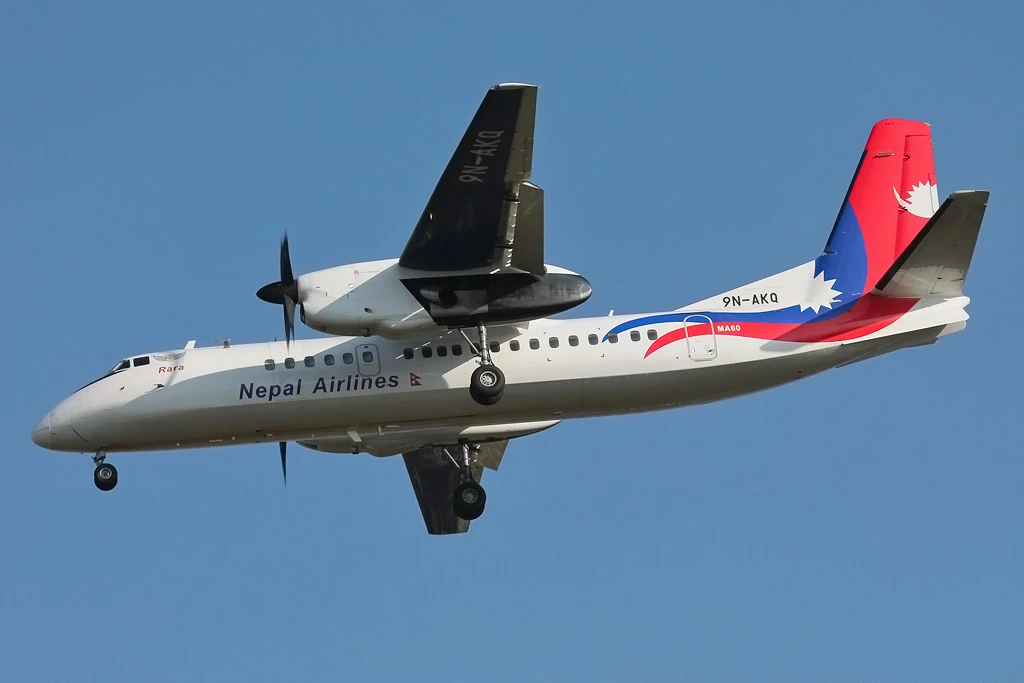
Nepal Airlines’ Fleet at a Glance
| Registration | Aircraft Type | Configuration | Delivered | Aircraft Name | Age |
|---|---|---|---|---|---|
| 9N-ALY | Airbus A330-200 | 18 Business / 256 Economy (274 seats) | Jun 2018 | Annapurna | 8.2 Years |
| 9N-ALZ | Airbus A330-200 | 18 Business / 256 Economy (274 seats) | Jul 2018 | Makalu | 8.1 Years |
| 9N-AKW | Airbus A320-200 | 8 Business / 150 Economy (158 seats) | Feb 2015 | Sagarmatha | 11.5 Years |
| 9N-AKX | Airbus A320-200 | 8 Business / 150 Economy (158 seats) | Apr 2015 | Lumbini | 11.3 Years |
| 9N-ABT | De Havilland Canada DHC-6 Twin Otter | 19 Economy | Jan 2007 | — | 42.1 Years |
| 9N-ABU | De Havilland Canada DHC-6 Twin Otter | 19 Economy | Jan 2007 | — | 41.9 Years |
Data: planespotters.net
_shortly_after_landing_at_Lukla_Airport_1.jpg)
_@_HKG,_March_2019.jpg)

_@_HKG,_March_2019.jpg)

Leave a Reply