
By now, we are all versed with the basics of Lukla Airport (LUA): the runway slope as an aircraft leaving this most-dangerous airport seems to approach a gully, a tricky approach to land the aircraft just in time to avoid crashing into a wall, its frequently changing weather, no go-around after crossing a certain point, culminates into an aerodrome that has captured people’s imagination.
In peak seasons an operator can have up to ten flights to Lukla. There are possibilities of technical snag at the airport. For an airport that is so remote and devoid of any major facilities, what happens if an aircraft faces a technical problem? In this article we are going to dive deep into the aircraft maintenance engineering perspective at Lukla Airport.
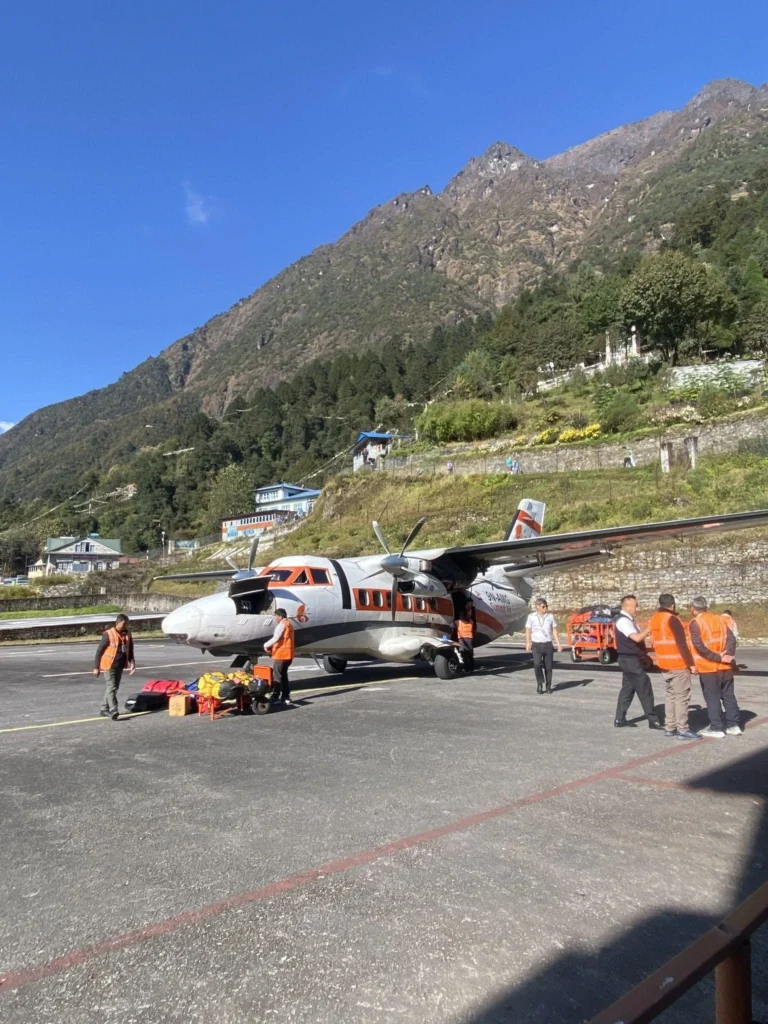
Lukla Airport has no Dedicated Fixed-Wing Aircraft Maintenance Professionals
None of the scheduled fixed-wing operators to Lukla have Aircraft Maintenance Engineers (AME) or maintenance personnel based at this airport. The Pilot in Command (PIC) performs the transit inspection at Lukla before arriving back to the base. If the aircraft faces any technical issues at Lukla Airport, it might turn into a serious problem.
In some cases, PICs are given one-off authorization certification by the Quality Manager of that company so that the aircraft can return to base, Dipesh Prasad Chalise, an aircraft maintenance engineer at Sita Air told aviospace.org. During peak seasons (Late September to starting of December), airline companies assign duty to engineers at Lukla only if the aircraft has to be night stopped. Otherwise, they have AMEs at Ramechhap Airport, from where the airlines operate flights to Lukla during peak seasons.
Performing aircraft maintenance tasks at Lukla airport is something that every operator tries to avoid. None of the operators have an engineering store or equipment even to perform basic tasks. Neither manpower nor tools, so you can evaluate how the companies deliberately do not try to perform any maintenance at Lukla. But it doesn’t mean that operators don’t place engineers at Lukla because the operators don’t want to perform any task there. It’s because the environment at Lukla does not allow them.
One of the basic tasks to perform during transit is to check engine oil level. According to Chalise, even trestles are not available at Lukla to check the engine oil level. But there is a lot more to it.
Let us imagine a fixed-wing aircraft’s wheel gets flat at Lukla. The company has no other option than getting the aircraft rescued by sending AMEs and technicians to Lukla from either Kathmandu or Ramechhap. As soon as the engineer accomplishes the job, the aircraft gets released for another flight.
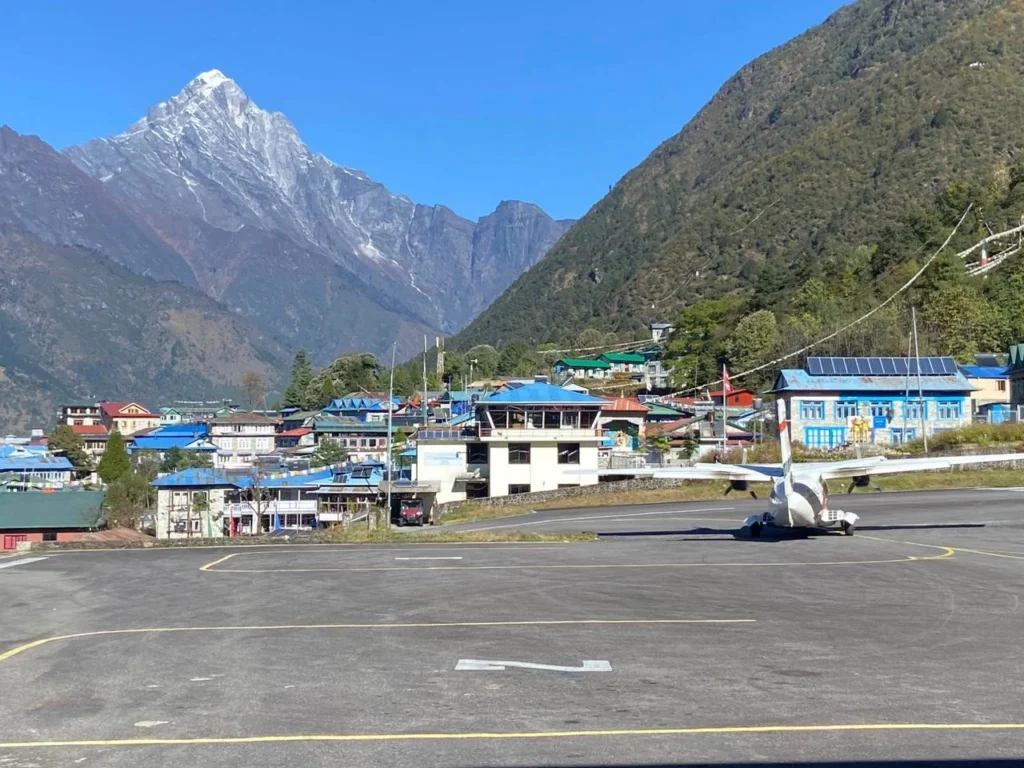
Weather Brings Forth its Own Challenges for Maintenance Engineers at Lukla
Another challenge for performing aircraft maintenance at Lukla is the harsh weather. Chalise also said that due to frigid weather at Lukla, maintenance personnel may experience fingers numbness, rendering them unable to hold tools and perform tasks as adeptly as they would have done in their bases in Kathmandu.
Visibility can deteriorate in almost no time. Rising, moisture-laden air could cool to its dew point, forming low clouds and engulf the airport altogether, rapidly reducing visibility. Lukla Airport can be engulfed into a dusk-like darkness with dense clouds. This is another condition that makes it challenging for maintenance engineers in Lukla.
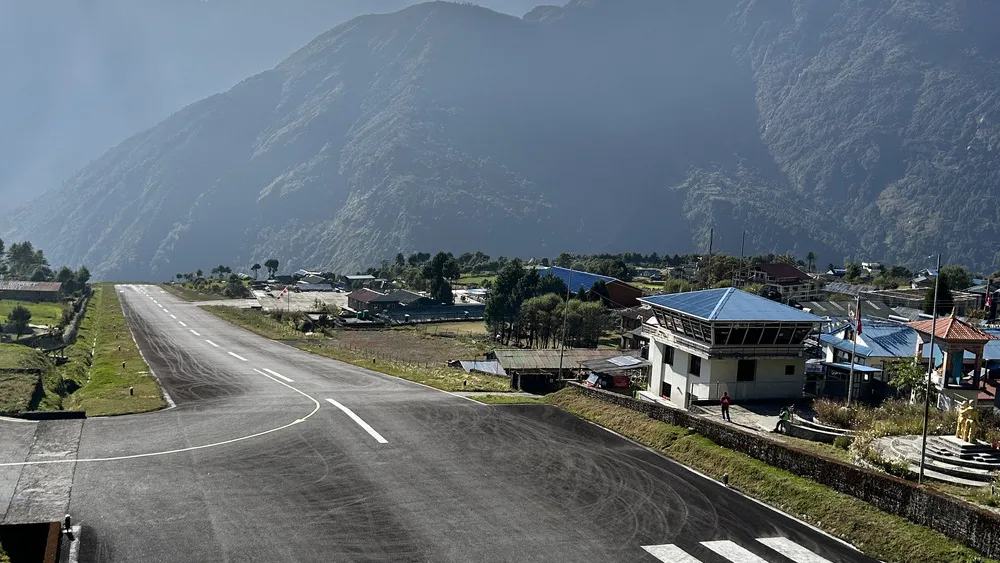
Photo: Karan Bhatta | aviospace.org
Fixed-Wing Operating to Lukla are Frequently Swapped
Aircrafts operating to Lukla get swapped frequently to make sure no maintenance is due on the aircraft that will be stationed in Lukla overnight stopping at Lukla.If a critical maintenance task is due on the aircraft, it has to be nightstopped at Kathmandu for facilities, manpower, and weather at Kathmandu makes maintenance tasks easier.
Aircraft have to go through a comprehensive maintenance check commonly called Daily Inspection or DI which is valid for 24 hours. According to Chalise, if an aircraft has been certified D.I at 1900 hours on Monday and Tuesday evening the aircraft is declared night stop at Lukla, the aircraft may return to its base the next day carrying passengers within 36 hours of the D.I time. Upon crossing the 36 hour mark, the aircraft has to be certified by an AME before it can carry passengers but it may return to base without passengers. This depends on the company’s Continuing Airworthiness Management Organization.
This all culminates in the fact that under normal circumstances, aircraft maintenance is not performed at Lukla. But if any critical unscheduled task arises, the aircraft may even be grounded and the required personnel tools and equipment are transported to the Lukla to apply the corrective measures. This can take a few days to a week, depending upon how favorable the weather is. After all, in rainy seasons or winters, the airport can be devoid of flights for weeks. For non-critical maintenance tasks, on the other hand, the aircraft can be rescued within a couple of hours.
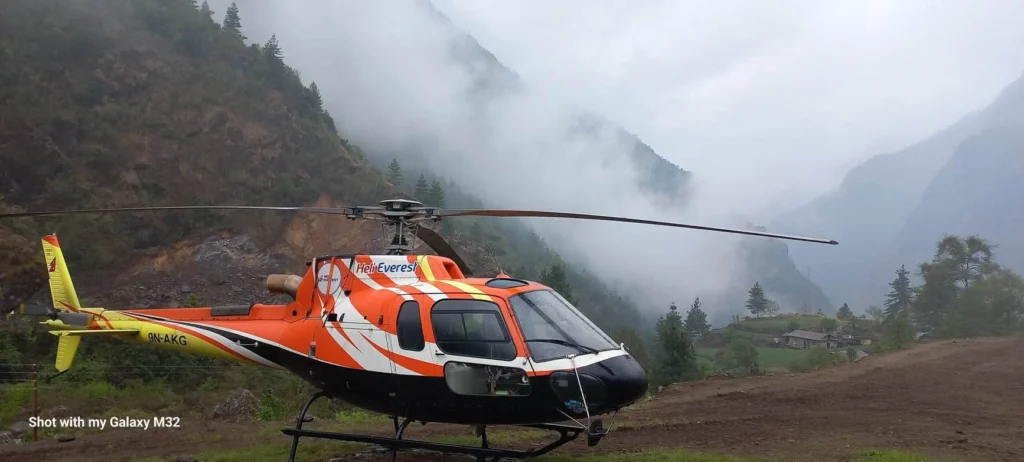
How Easy is Managing Helicopter Maintenance at Lukla?
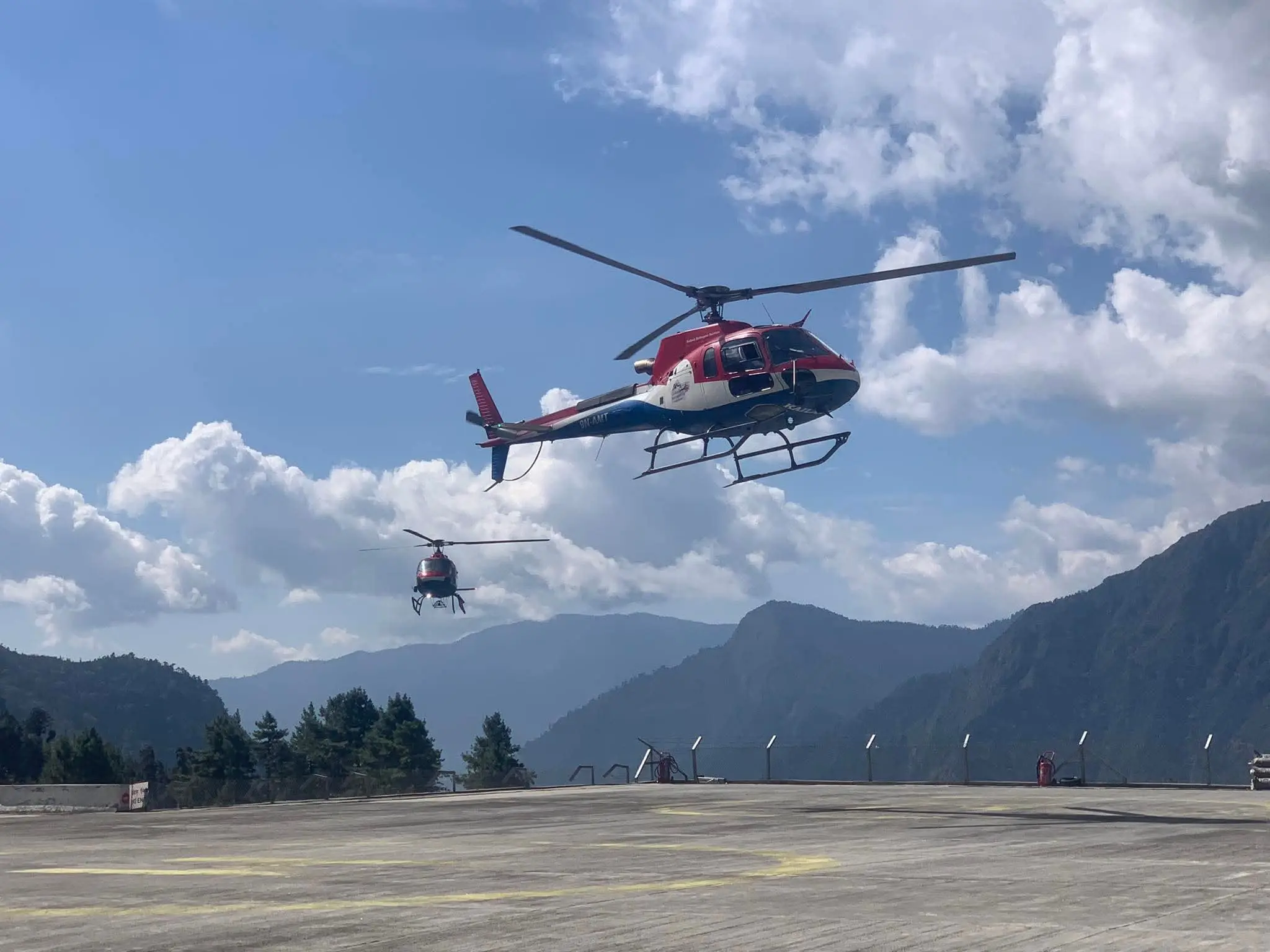
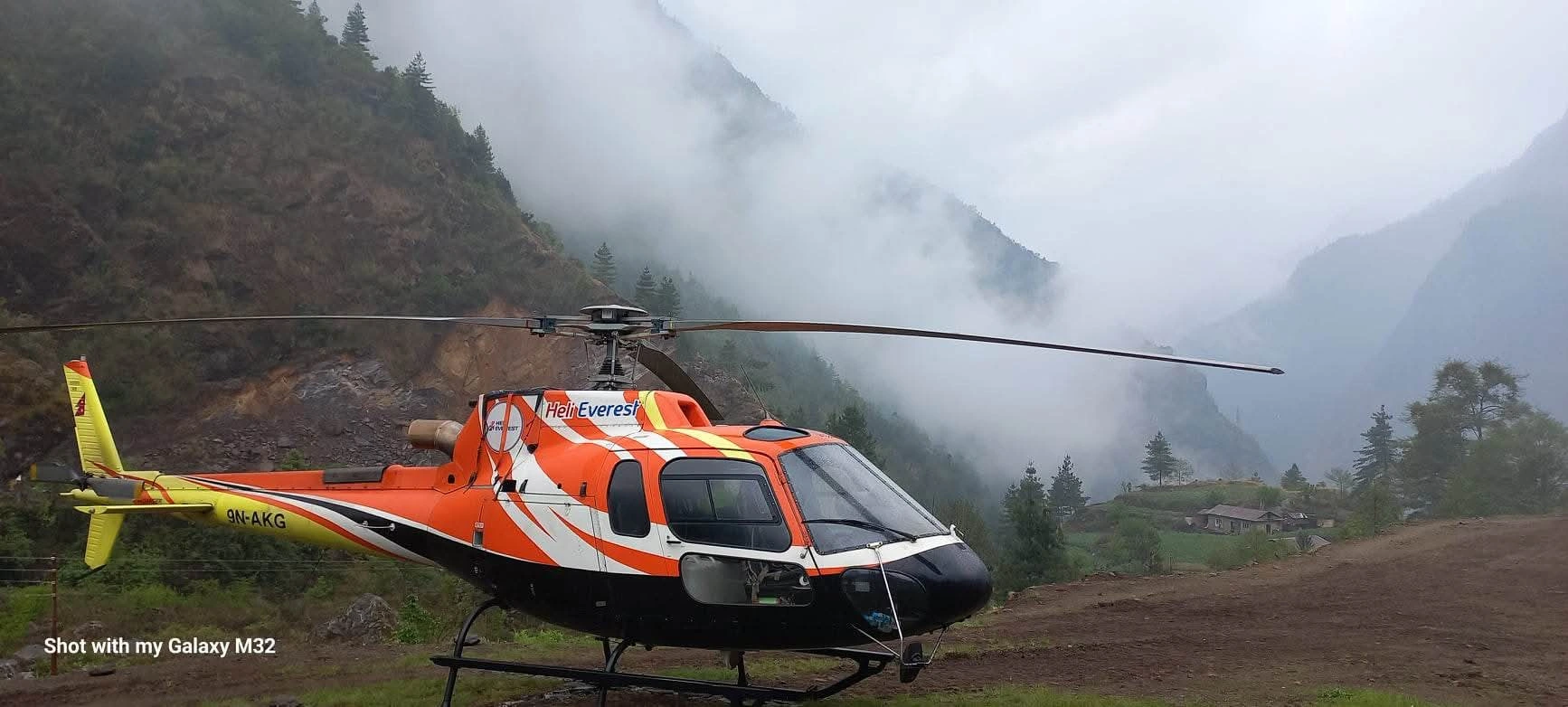
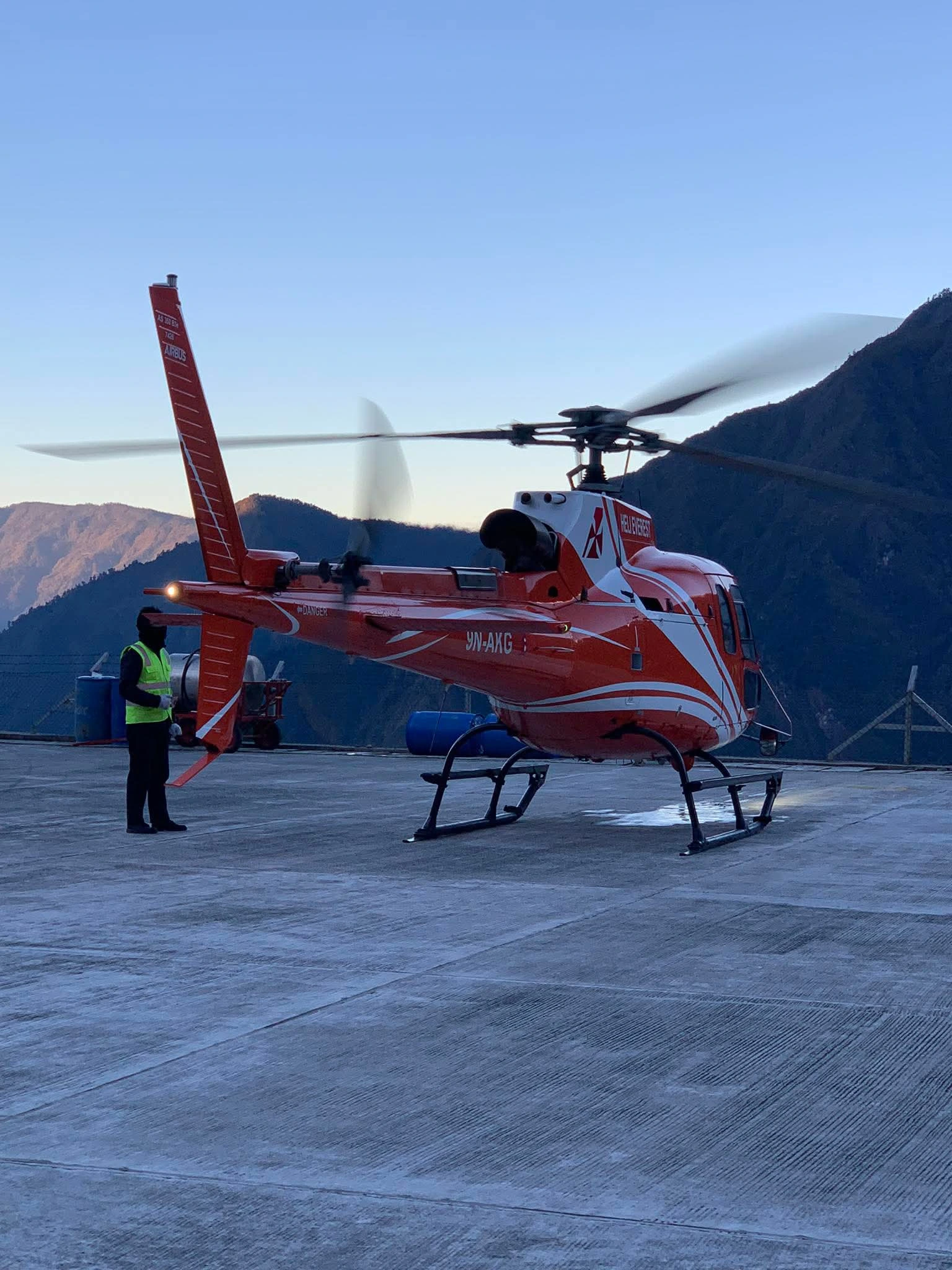
Unlike fixed-wing operators, helicopter operators tend to station maintenance engineers at Lukla when the operations are at full swing. Helicopter AMEs perform daily inspections at Lukla and maintenance upto 150 hours or 12 months inspections as per the Maintenance Organisation Exposition (MOE) procedure.
However, it would be presumptuous to assume that all helicopter operators would perform maintenance in Lukla. According to the Quality and Safety officer at Prabhu Helicopter, Sumit Timilsina, in peak seasons (i.e., March-May & Sep-November ), almost all Heli operators will have positioned engineers for Daily Inspections, which are valid till 24 hour. According to Timilsina, “if the aircraft stranded outside where engineer not available then, pilot can use their quality authorization after 24hour to come back to base or where engineer is available”. He noted that this applies only for the weather related case.
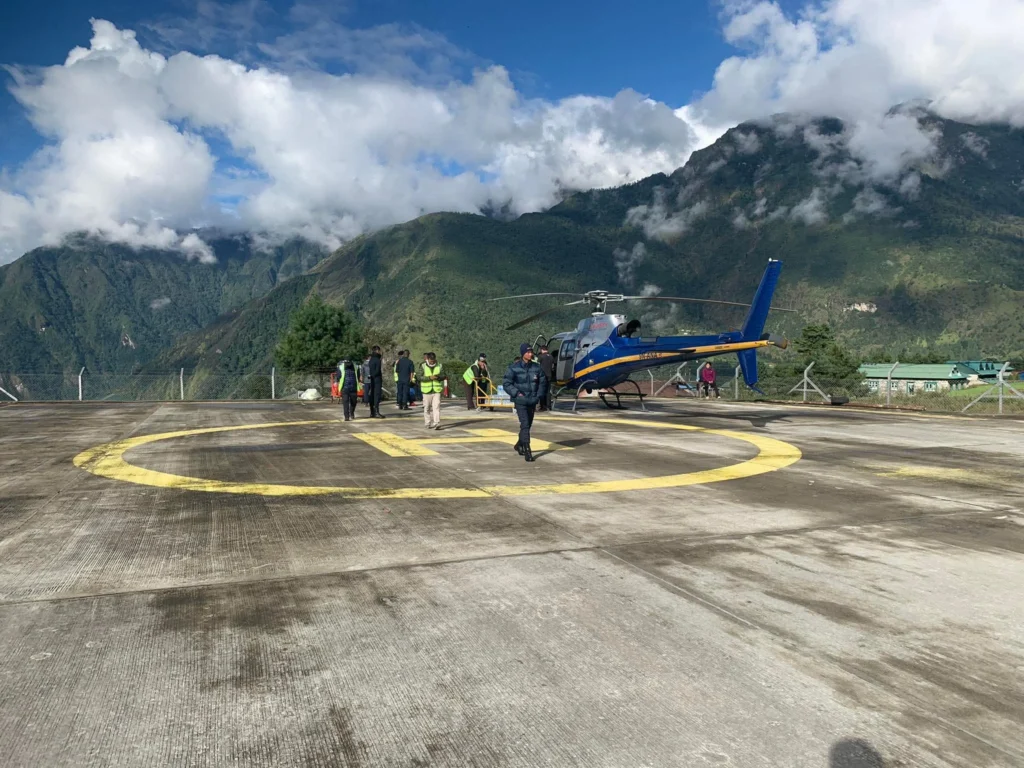
While all technical issues should be troubleshoot in the places where the issues occur, it is indispensable to bring back the chopper to the base for scheduled maintenance. Timilsina said that one can’t perform scheduled maintenance outside base without MOE procedures:
“Any unscheduled maintenance or snag rectification should be carried out by arranging the necessary facilities and resources required to address the issue and return the aircraft to service. This should apply not only to Lukla but to any location where an aircraft becomes unserviceable, including cases requiring an engine change, gearbox change, blade change, or other major maintenance. If the issue cannot be resolved at the location, the aircraft should be uplifted and returned to the designated maintenance base.”
He clarified that a sling operation would be used for transporting an unserviceable helicopter from a remote location back to the base when the required maintenance cannot be performed on site.