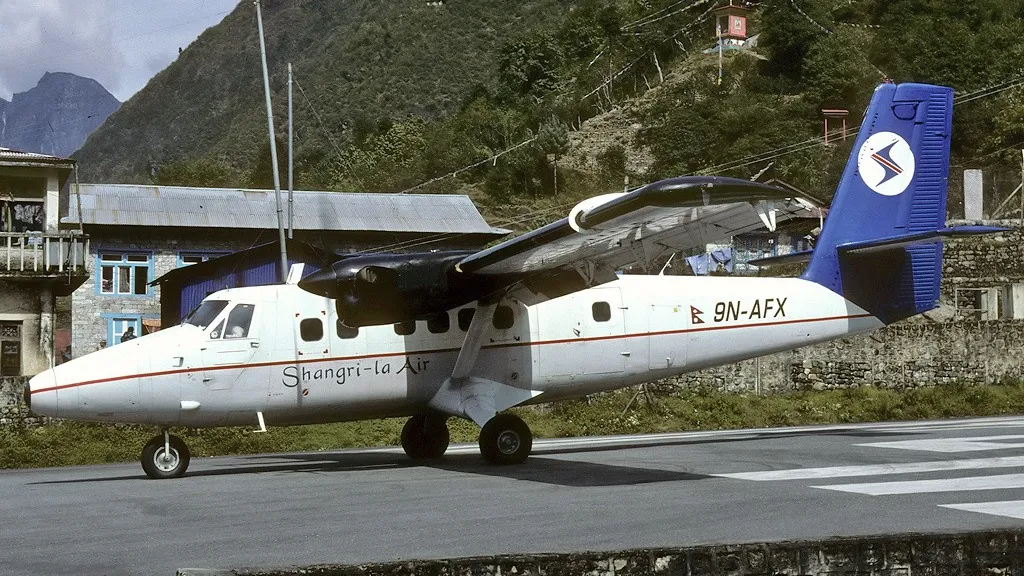
There are three domestic airlines that fly to Lukla Airport (LUA) -Sita Air, Summit Air, and Tara Air – three major fixed-wing operators in Nepal. These three operators deploy the Do 228-200, Let L-410 Turbolet, and the De Havilland DHC 6 Twin Otter, respectively, to the world’s most dangerous airport. All of these are multifunctional twin-engine turboprop aircraft that fly not only to Lukla but other remote Short Take-off and Landing (STOL) airports in Nepal such as Rara, Dolpa, among others.
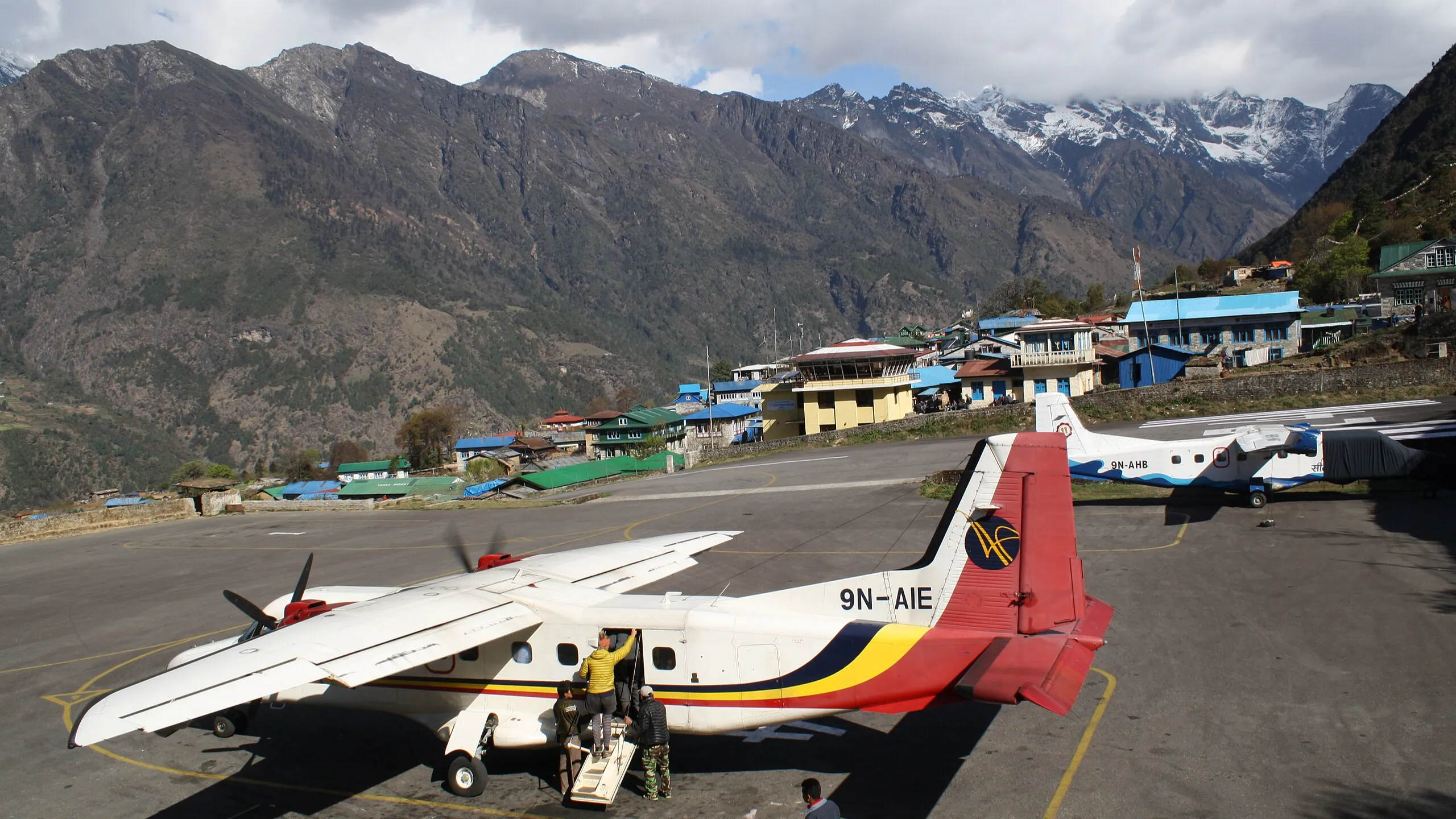
These three aircraft are widely used around the world for military tasks as well. Last year, the Indian military Defence Research and Development Organization (DRDO) operating the Dornier Do-228 got indigenous Electronic Support Measures (ESM) modules. Bangladesh Air Force operates the Let L-410 Turbolets while the Australian government operates the DHC-6 Twin Otter for its voyages into Antarctica. The following photograph shows these two aircraft types in Lukla’s runway.
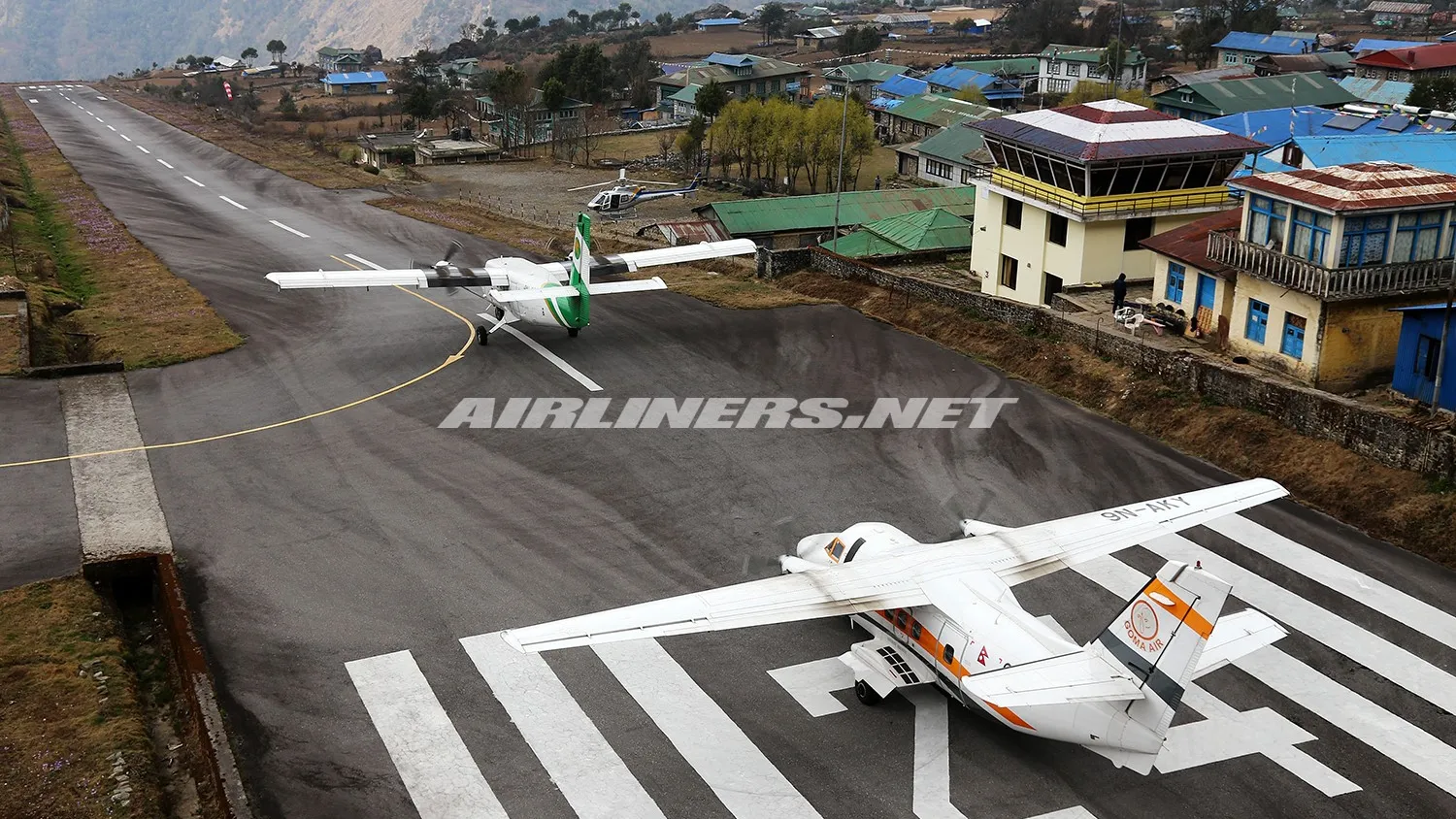
The three aircraft are regularly deployed (by carriers in Nepal) for freight operations as well. This is especially true for operations in one of the closest operating airports to Lukla – the Phalpu Airport, which has gained a reputation for being a freighter airport, as a lot of supply into the Khumbu region is brought here and then transported upwards.
Even though the duties of all these aircraft are fairly similar, each of the three models has special features and engineering innovations that make them stand out from the others in their unique ways. In this article, we aim to examine their characteristics, performance, operational effectiveness, and general design in order to determine their benefits and drawbacks for operations in Lukla Airport, which might not be dangerous as people make it out to be.
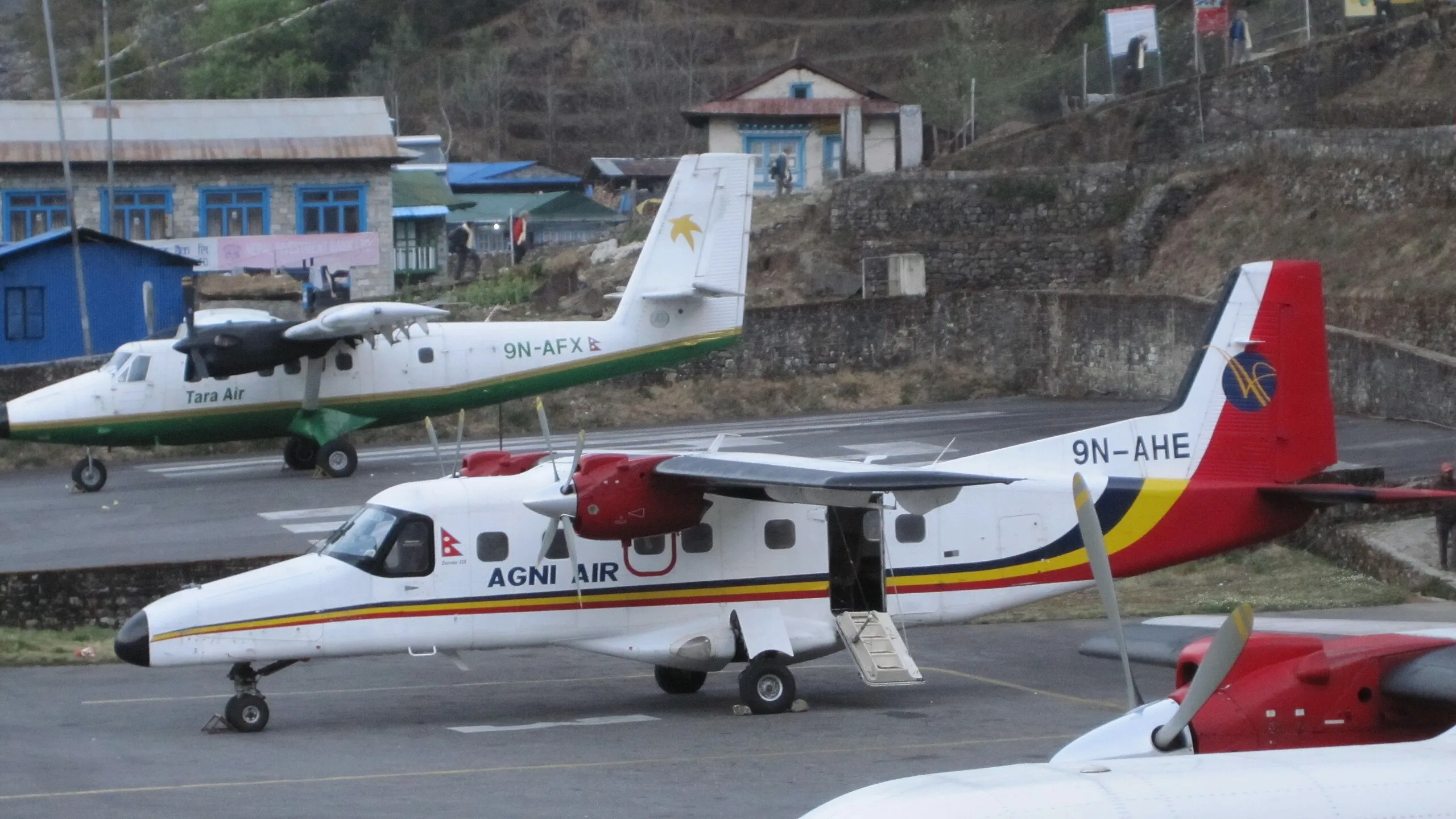
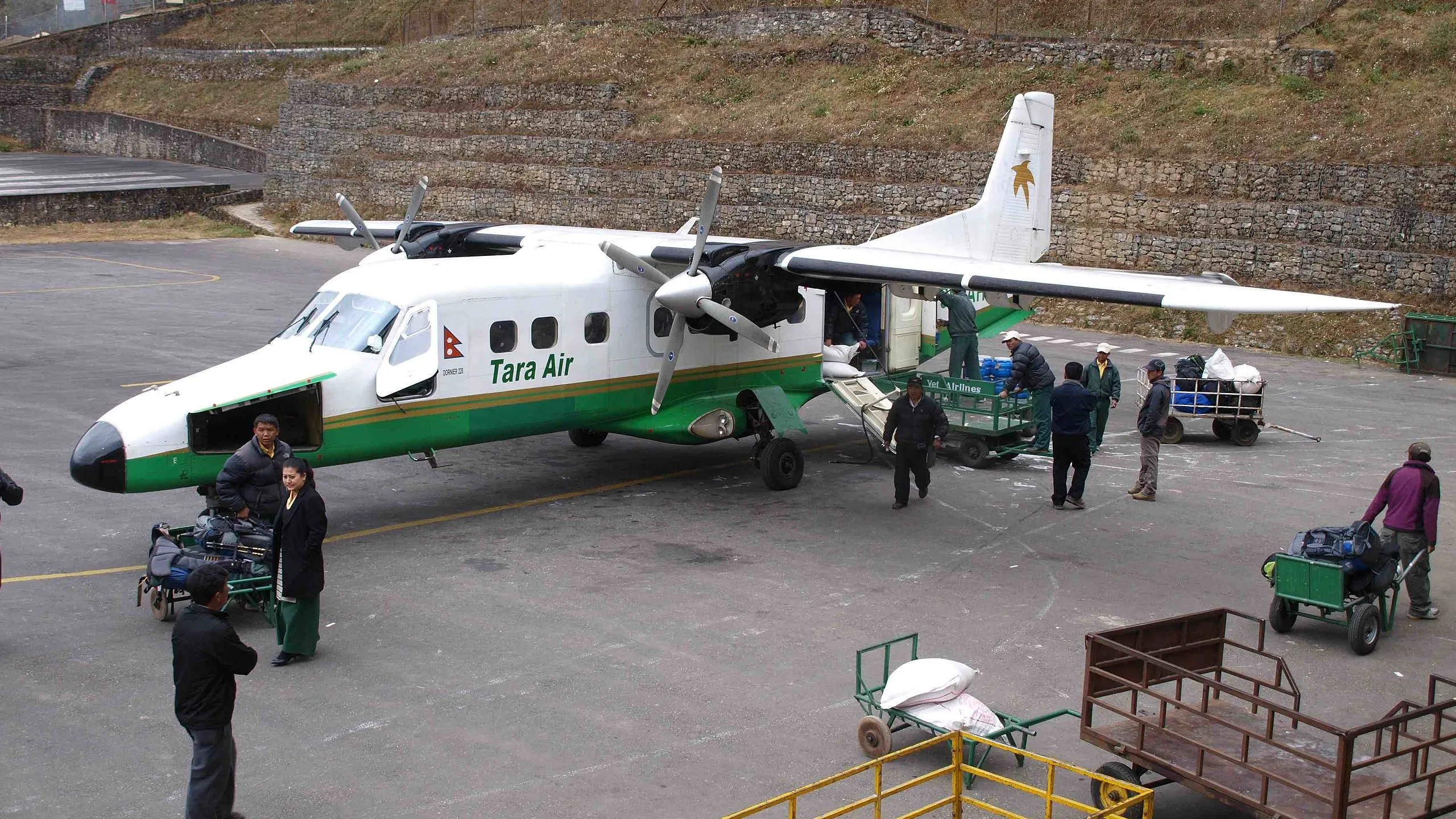
Dornier 228-200
The Dornier 228 was designed and manufactured by Dornier Flugzeugwerke in Germany. The company made two versions of a new aircraft that could carry 15 and 19 passengers (Do 228-100 and Do 228-200). Both the prototypes were flown in 1981 for the first time.
Other variants of Dornier
There are numerous variants and changes after the Dornier 328. Some of them are:
Dornier 328: It is the larger version of Dornier 228, which also has the jet version known as the Fairchild Dornier 328JET. It is used for military and civilian purposes.
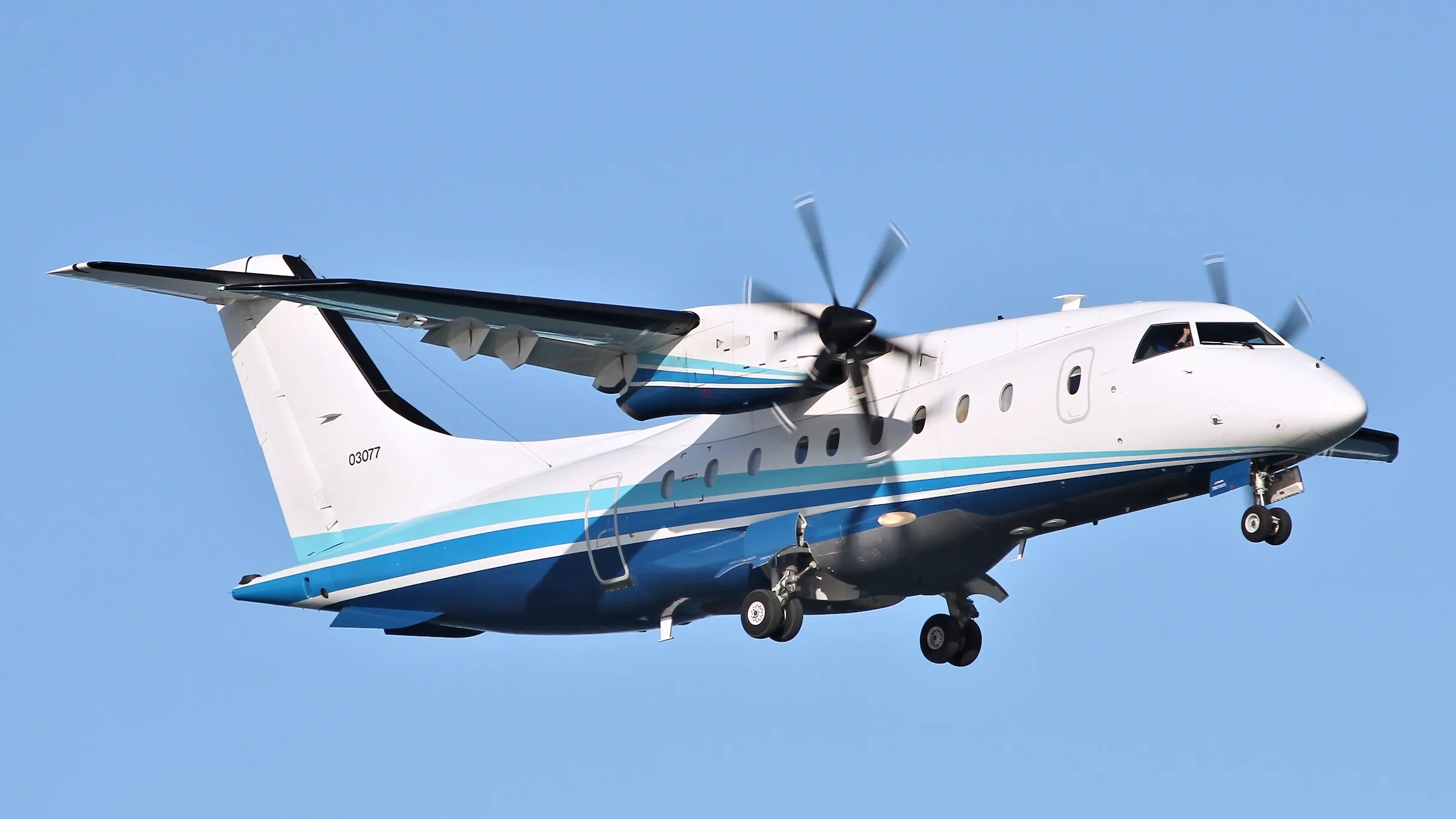
Do 228 NG: Dornier 228 Next Generation is the updated version that has upgraded engines and a revised version of aerodynamic improvements. Due to its more than 350 innovations and improvements from the Do 228, it is also known as the most advanced aircraft in its class. The NG variant is also the most-environment friendly variant:
“..the Dornier 228 NG sets a new benchmark in environmental protection, thus meeting the high expectations of airlines and passengers alike. Its fuel consumption of 5,41 liters per 100 passenger kilometers is the lowest in its class, ensuring correspondingly low CO2 emissions. Along with this, the new five-bladed propellers substantially cut noise emissions.”
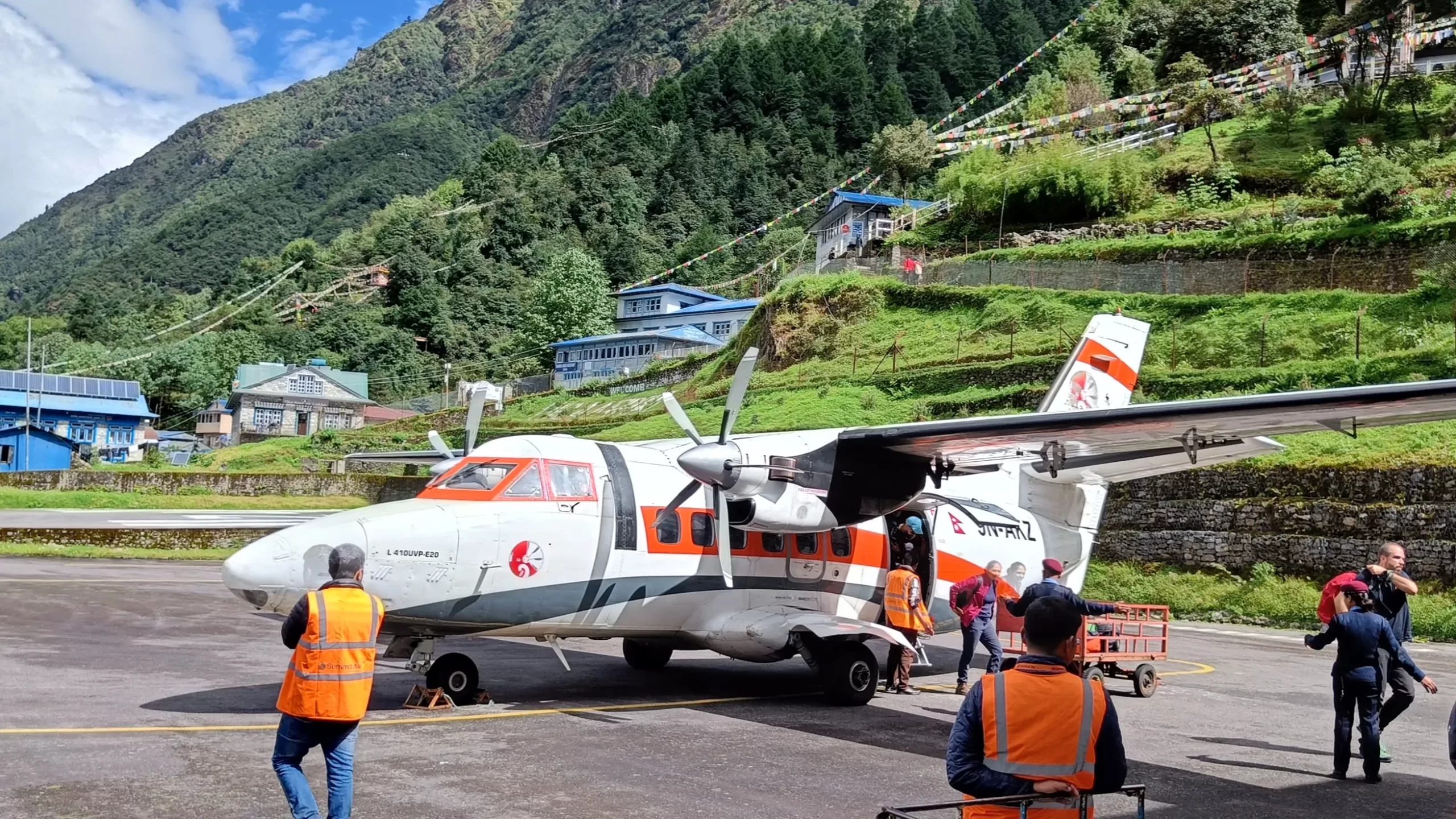
L-410 Turbolet UVP E-20
The LET L-410 Turbolet was designed by Let Kunovice in the Czech Republic. The aircraft is used in more than 30 countries, and over 200 of this aircraft type have been made till date. Some of the nations outside Nepal where L-410 is certified to operated include:
- USA (FAA)
- Russian Federation (FATA)
- European Union (EASA)
- South Africa
- Indonesia
Variants:
L410 NG: LET 410 NEW Generation is the upgraded version of L-410 UVP E-20. It has more powerful GE H85-200 engines, combined with quieter Avia-725 propellers, new designed wing and a bigger cabin.
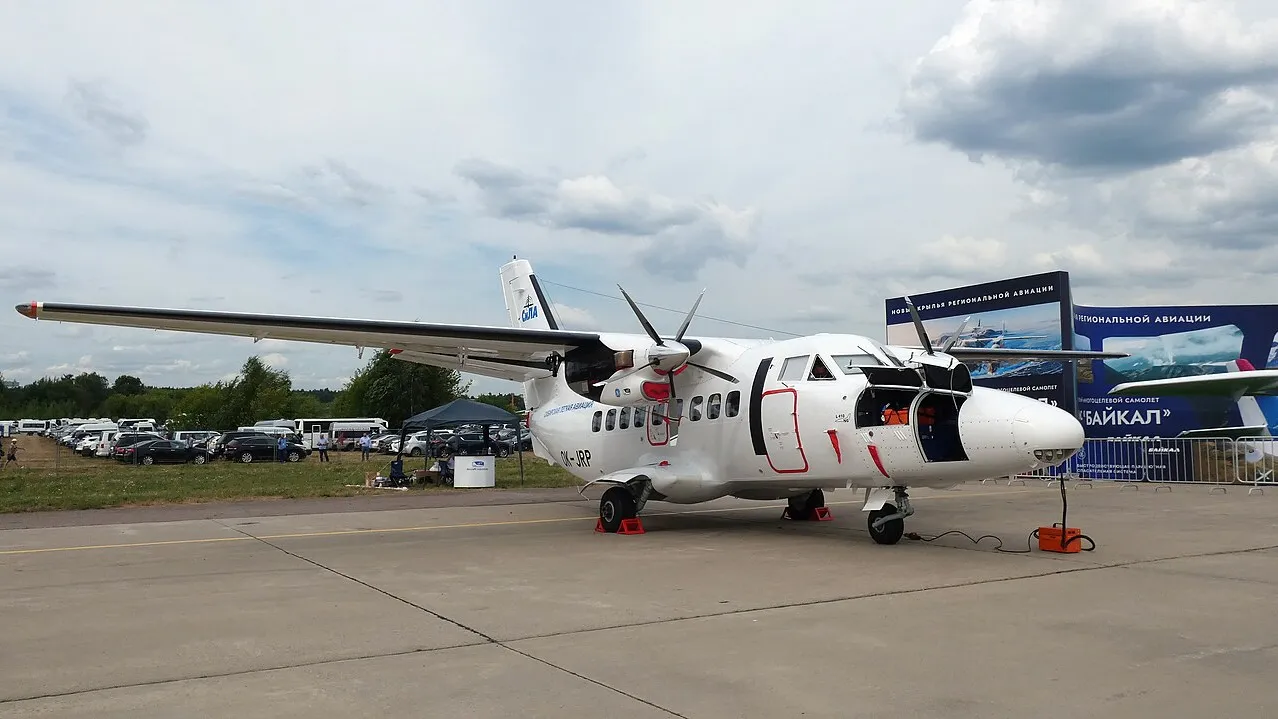
L-410 E: Upgraded fourth-series L-410UVPs with M601E or E-21 engines, five-bladed Avia V510 propellers, and optional tip tanks. The rear baggage compartment was also remodeled to hold 19 passengers. It could boast significantly maximum weights and maximum landing mass.
Aircraft Industries’ CEO said in an interview that the modification to the L-410 helped bring an aircraft with different characteristics than the model on which the modifications were based on.
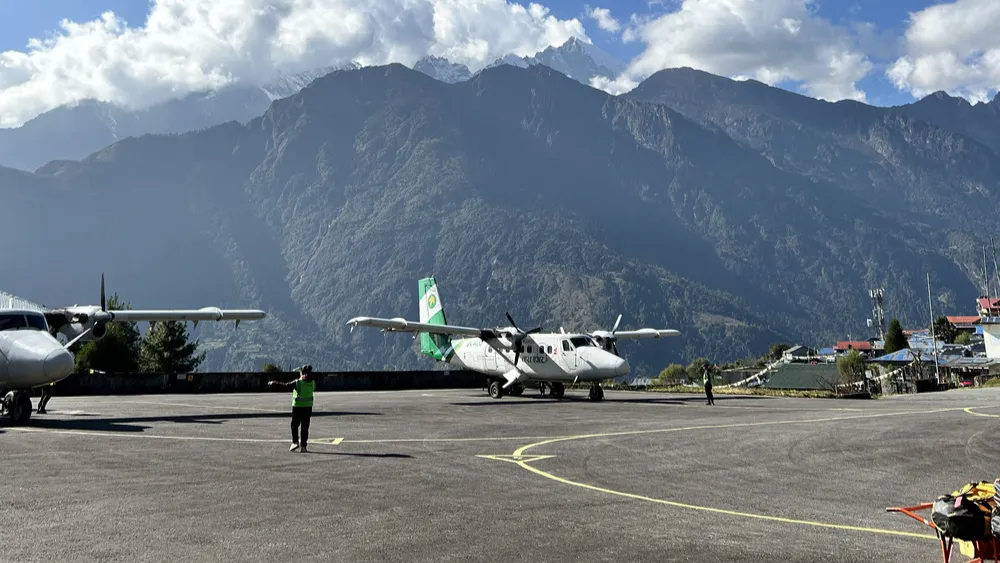
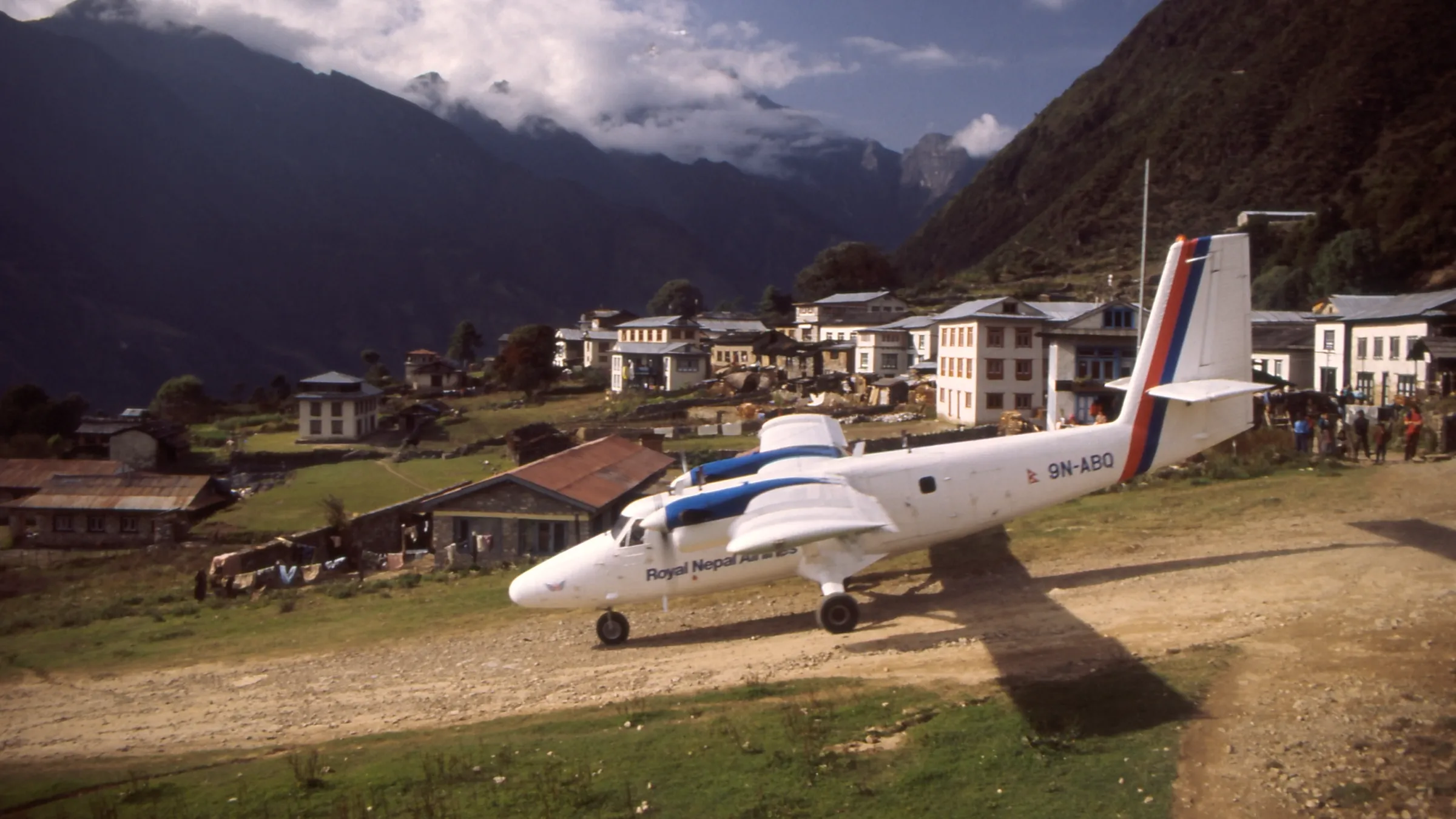
DHC-6 Twin Otter 400
The DHC-6 Twin Otter was developed by De Havilland Canada (now Viking Air). It is also a twin turboprop STOL utility aircraft. There are many variants of the aircraft, but the 300 proved to be the best in performance. It was invented in 1964, but the first flight was in 1965.
Variants of the DHC-6 Twin Otter
Guardian 400: DHC-6 Twin Otter has a military variant called the Guardian 400 which is designed for extreme environmental operations. It can be furnished with wheels, skis, and floats. It has 1600 fpm (feet per minute).
DHC-6 300 G: The aircraft’s basic weight was reduced by 400 to 500 pounds, allowing for a larger payload or a longer range. The Classic 300-G’s cabin layout has been altered, and its flight deck is outfitted with the Garmin G1000 NXi avionics suite and the GFC 700 autopilot with envelope protection.
Now let’s dive into the similarities and differences in the three aircraft operating in the Everest region:
Comparing the cost of the three aircraft
The Dornier 228 was priced at $5.2 million in 2010. The L-410 Turbolet costs around $3.25 million. The initial cost of the DHC-6 Twin Otter was $680,000 in 1972. Although now it is $7.25 million in 2023.
Comparing the speed and performance
The maximum takeoff weight of the L-410 Turbolet is the highest among the three aircrafts. There is little difference between the cruise speed of the Dornier 228 and the L-410, but the DHC-6 Twin Otter has the lowest cruise speed. The DHC-6 Twin Otter stands out with the shortest takeoff and landing distances, ideal for rough or short airstrips. The L-410 Turbolet and Dornier 228 require slightly longer distances, though they are still quite short for turboprop aircraft.
| Characteristics | Dornier 228-200 | L-410 Turbolet | DHC 6 Twin Otter |
| Maximum take-off weight | 14,110 lbs (6,400 kg) | 14,551 lbs (6,600 kg) | 12,500 lbs (5,670 kg) |
| Maximum cruise speed | 413 km/h | 405 km/h | 338 km/h |
| Takeoff run | 792 m (2,600 ft) | 510 m (1670 ft) | 400 m (1312 ft) |
| Landing run | 451 m (1480 ft) | 500 m (1600 ft) | 300 m (984 ft) |
Comparing the size and interior: DHC-6 Twin Otter vs Let L 410 vs Dornier 228
All three aircraft can fit up to 19 passengers with comfortable seats. Since the L-410 Turbolet is the tallest and has the largest cabin of the three, it is more spacious than the other two. The aircraft manufacturer also claims that the L-410 has “the most spacious passenger cabin in its category”.
The cabin of the Dornier 228 is slightly taller and broader than that of the Twin Otter, which may offer a bit more space for comfort even though the two aircraft are about the same size. Each of the three aircraft can carry both passengers and cargo, are incredibly versatile, and can operate in difficult situations like small runways or hilly landscapes.
| Characteristics | Dornier 228 | L-410 Turbolet | DHC 6 Twin Otter |
| Exterior Length | 16.56 m (54 ft 4 in) | 14.42 m (47 ft 4 in) | 15.54 m (51 ft) |
| Exterior Height | 4.86 m (15 ft 11 in) | 5.97 m (19 ft 7 in) | 6.9 m (22 ft 8 in) |
| Wingspan | 16.97 m (55 ft 8 in) | 19.98 m (65 ft 7 in) | 19.81 m (65 ft 0 in) |
| Cabin width | 1.42 m (4 ft 8 in) | 1.80 m (5 ft 11 in) | 1.75 m (5 ft 9 in) |
| Cabin height | 1.6 m (5 ft 3 in) | 1.90 m (6 ft 3 in) | 1.50 m (4 ft 11 in) |
Comparing the engines and fuel consumption of three only three fixed-wing in Lukla
The Garrett TPE331-5 is responsible for the Dornier 228-200’s remarkable short takeoff and landing (STOL) characteristics and high reliability in remote places. These turboprop engines produce 704 SHP each. The fuel consumption is approximately 0.94 kg/km (3.3 lb/mi) at a cruise speed of 413 km/h.

The L-410 Turbolet is powered by the Walter M601B engine, which is slightly less powerful (690 SHP) but still capable of handling short-field operations. The current GE H80 engine has more performance and better fuel economy than earlier variants. The fuel consumption for the L-410 Turbolet at the 1st hour is 350 km/h (433 L) then it comes down to 300 kg/h (372 L) later, for an aircraft of this type manufactured in 2014.
DHC-6 Twin Otter: The PT6A-27 engine has been upgraded to PT6A-34 of the Twin Otter to produce powerful performance. PT6A-34 offers a performance boost for difficult tasks in hot climates and high altitudes with a 620 SHP power gain. It has a fuel consumption of approximately 400 L/h.
Rate of climb
Under certain circumstances, the Dornier 228-200 can fly at a rate of between 1,500 to 2,000 feet per minute (fpm), with a maximum rate of climb approaching 2,000 fpm. Factors like altitude, environmental conditions, and aircraft weight affect this performance. L-410 Turbolet has 1673 fpm. DHC-6 has 1400 fpm. The rate of climb helps in short takeoff and landing (STOL) in remote and less-infrastructure areas.
Crashes in Lukla
Dornier 228
30th September 2004
A Sita Air Dornier crashed, closing the runway and leaving hundreds of hikers trapped in Kathmandu and Lukla. On Thursday, severe weather prevented a helicopter carrying civil aviation officials from landing in Lukla. Lukla airport remained closed for a few days after a Sita Air Dornier crash landing blocked the runway, leaving hundreds of trekkers stranded in Kathmandu and Lukla.
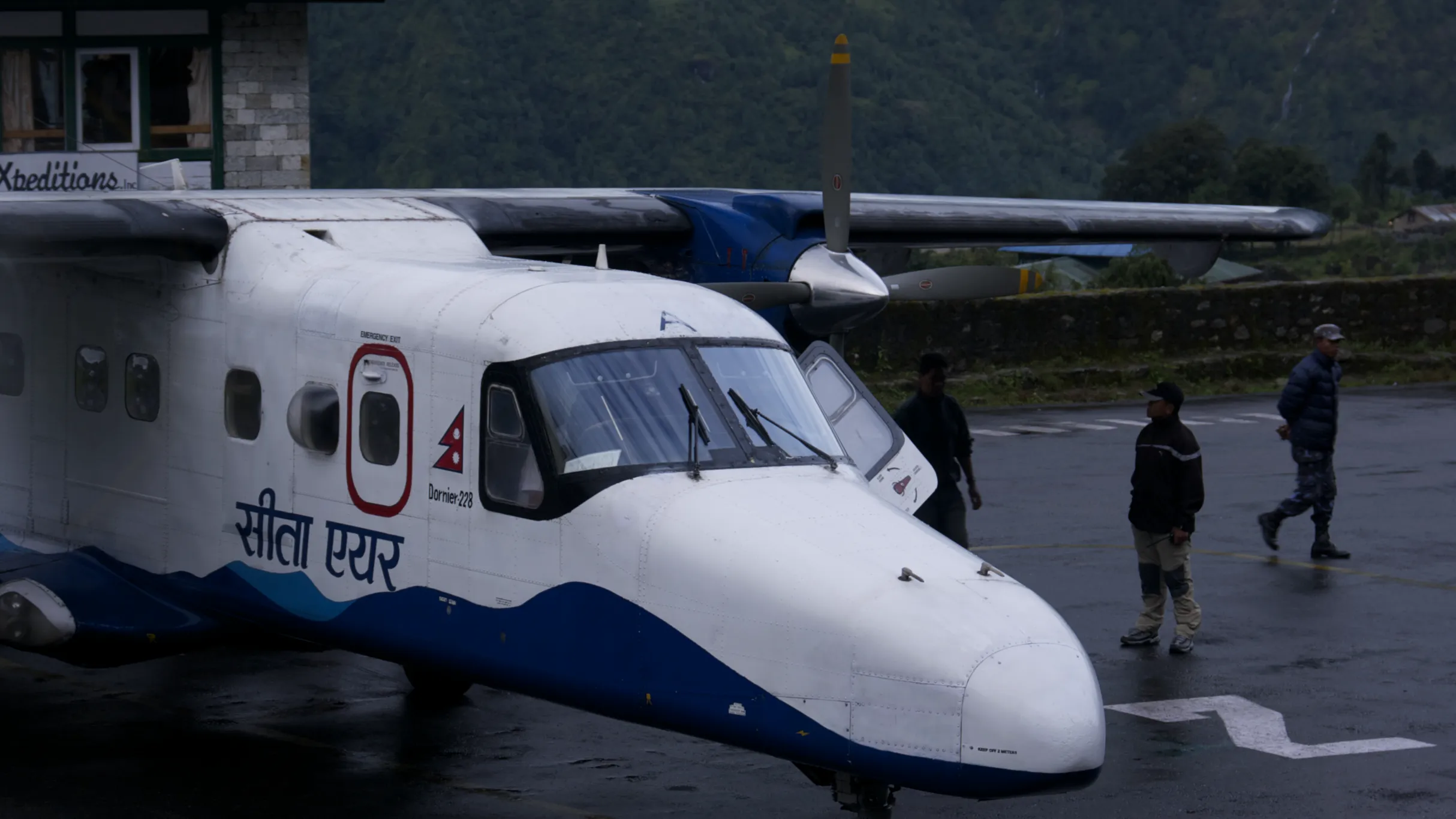
The airport reopened on Saturday morning following two days of the runway being closed due to a malfunctioning aircraft. Passengers who were stranded started to be brought in and taken out by regular and additional planes.
12th October 2010
While landing in Lukla, a Sita Air Dornier 228 carrying 11 passengers and 3 crew members on a scheduled passenger trip from Kathmandu to Lukla (Nepal) overran runway 06 (length 527 meters/1730 feet, elevation 2774 meters/9100 feet) and made contact with the wall at the end of the runway. The aircraft’s nose was seriously damaged, but no one was hurt. According to reports, the aircraft’s brakes failed during the landing roll.
28th September 2012
The aircraft had valid certificates of registration and airworthiness, and the flight crew was licensed and rested. Nevertheless, the aircraft’s flight idle fuel flow was adjusted to 90% rather than 96.5 ± 0.5%, and the AMM/POH-recommended flight idle descent check was not performed. At TIA, the aircraft started its takeoff run from Runway 20’s Intersection 2, accelerating normally until it reached about 70 kt.

The aircraft struck a bird at around 70 knots despite the flight crew’s attempts to rotate and continue the takeoff. After climbing to approximately 100 feet above the ground, the aircraft’s speed increased to 89 knots before dropping to 77 knots. The aircraft then stopped while turning left and slid off the left side of the runway after the left engine produced less power than the right.
The investigation also issued several safety recommendations. The operators and the Civil Aviation Authority of Nepal were advised to ensure that weighing machines used at check-in counters at all airports are regularly calibrated by the appropriate Government of Nepal authority.
The Civil Aviation Authority of Nepal was also asked to review pilot training requirements for engine malfunctions occurring at or near V1. The review was intended to ensure that training is adequate for commercial pilots operating aircraft types for which simulator-based training is not currently available.
LET-410
27th May 2017
The pilots were certified and qualified as per the rules and had adequate rest before the flight. There was no evidence of engine failure before impact. Upon entering Lukla Valley the flight crew could not fully comply with VFR rules as they repeatedly entered into the cloud. The pilot was frequently informed by the duty ATS officer of the rapidly worsening weather condition, and in the interim, the officer asked the pilot to hurry.
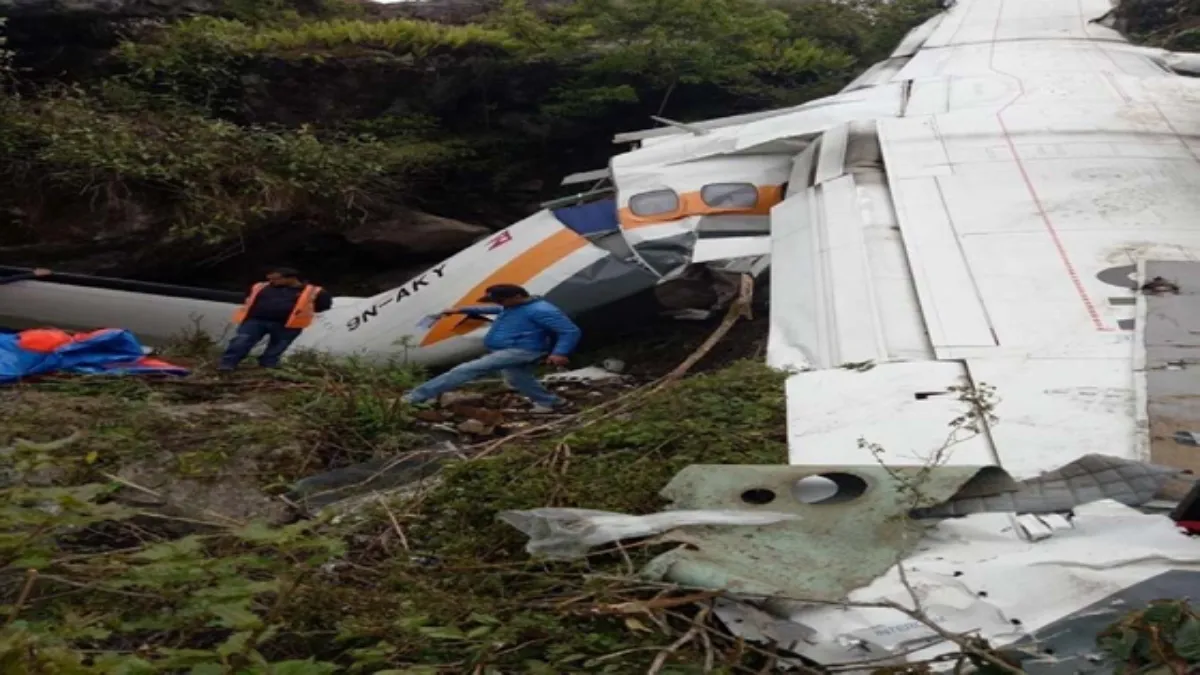
He did not, however, close the airport in accordance with the authorized SOP. PIC (PF) lost situational awareness during the crucial final approach phase, veered about 15 degrees to the right, and dropped below the threshold height. PIC couldn’t hear the FO’s callout about the excessive descent.
Following the investigation, the commission issued several safety recommendations. It advised that increased stress and fatigue caused by air traffic congestion at Tribhuvan International Airport (TIA), and their potential impact on pilot proficiency, should be considered when assigning flights to crews, with remedial measures taken where necessary.
The commission also recommended strengthening the rescue and fire service at Lukla Airport by providing adequate manpower and equipment.
14th April 2019
LET-410 of Summit Air crashed at Tenzing-Hillary Airport in Lukla when L410UPV-E20 (registered 9N-AMH) drifted right off the runway during takeoff on April 14, 2019.
The right wing of the aircraft swept two police officials (outside the inner perimeter fence) before slashing the rotor shaft of 9N-ALC. The moving rotors cut through the cockpit on the right side, slaying the first officer immediately. They discovered a CB that had exploded out of the nose wheel steering. Since the helicopter’s rotors were still operating at idle, the simultaneous, intense mixed operations of fixed and rotor wing aircraft in close proximity worsened the damage from the runway excursion.
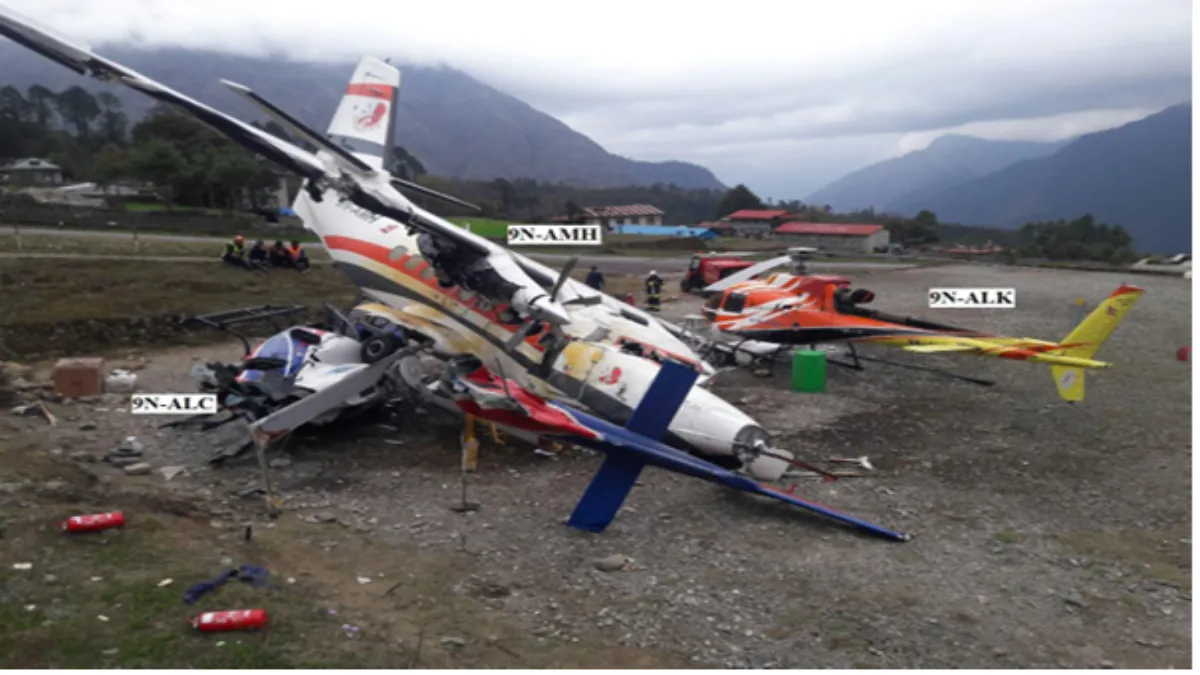
The investigation commission issued several safety recommendations following the accident. It recommended that the operator provide simulator training for rejected takeoff procedures, particularly for unforeseen situations at STOL airfields.
The commission also recommended that the Civil Aviation Authority of Nepal (CAAN) study the possibility of relocating the existing helipad at Lukla Airport. After this accident, the existing helipad in Lukla was constructed.
DHC-6 Twin Otter
8th October 2008
The airport was foggy during approach. The aircraft could enter the Lukla valley but wouldn’t be able to land safely due to clouds on the runway. The load/trim sheet of the airlines contradicted the sheet provided by CAAN.

The flight crew was unable to properly assess how quickly the fog was rising during the final approach and failed to take appropriate action as visibility deteriorated.
Following the crash, the investigation commission issued several safety recommendations. It called on the Civil Aviation Authority of Nepal (CAAN) to ensure that meteorological information and equipment calibration complied with the standards outlined in ICAO Document 9837.
CAAN was also advised to investigate why two different load and trim sheets had been issued and take appropriate corrective action to prevent similar discrepancies.
The commission further recommended that operators establish effective internal quality and safety audit systems to identify deficiencies within their operations and ensure that corrective measures are implemented promptly.



_(cropped).jpg)


