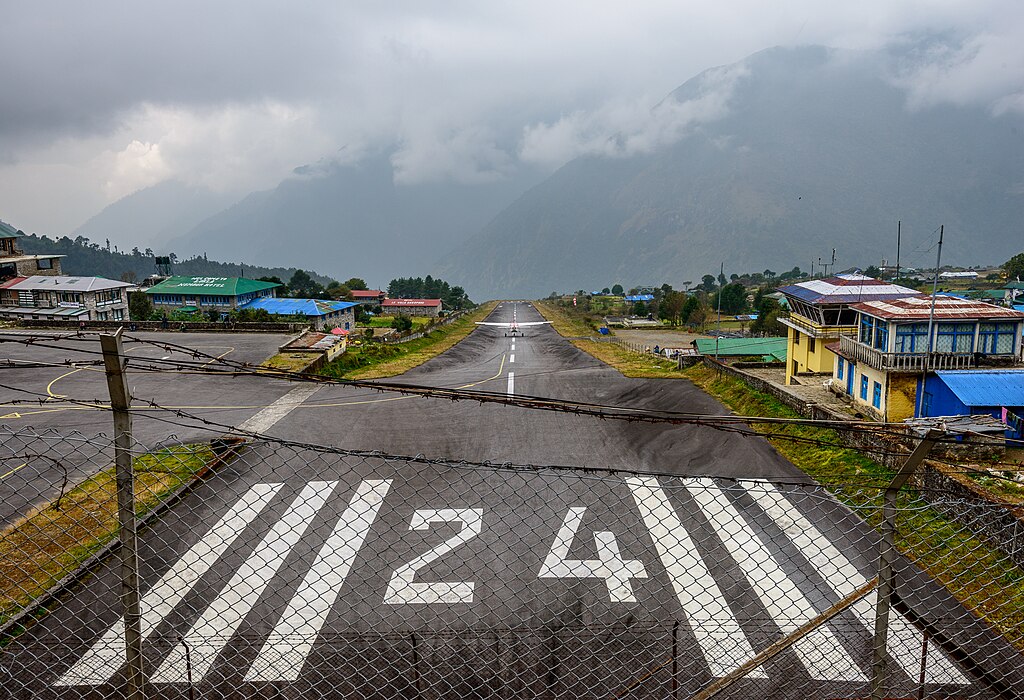
Runway of one of the most dangerous airports in the world
Photo : valcker| Wikimedia commons
According to Aviation and Space Dictionary compiled by Dr. Wernher, a STOL (Short Takeoff and Landing) is defined as “the ability of an aircraft to clear a 50-foot obstacle within 1500 feet of commencing takeoff, or in landing, to stop within 1500 feet after passing over a 50-foot obstacle,”. STOL can either refer to an airport with shorter runways compared to others, or aircraft that operate in such airports.
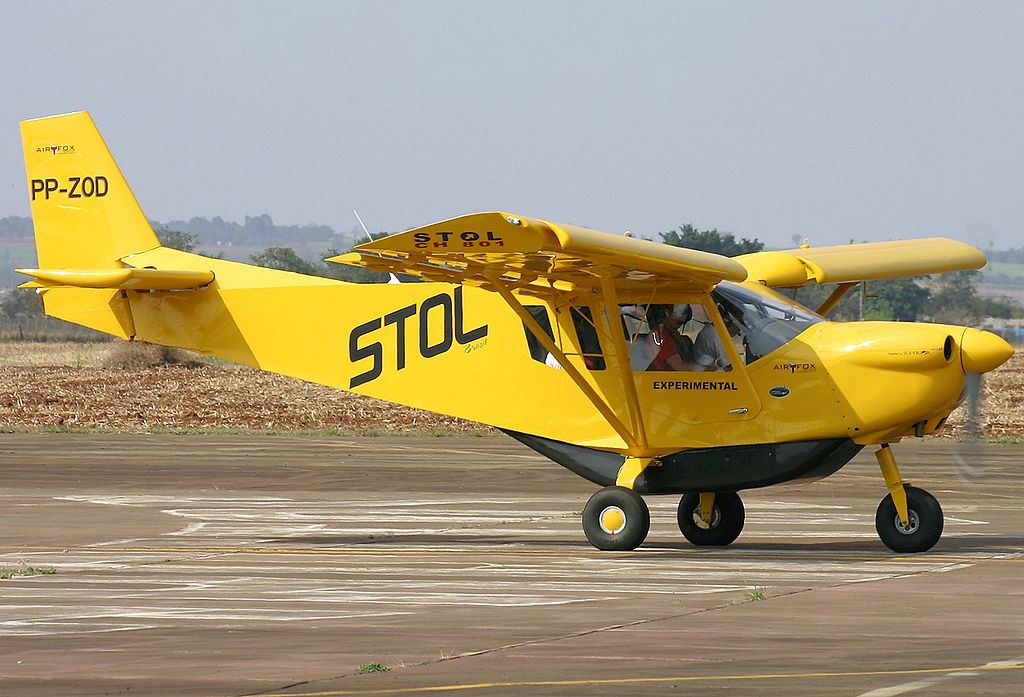
Photo: Renato Spilimbergo Carvalho|Wikimedia Commons
As larger aircraft such as the A380 have a large take-off distance, they cannot operate at STOL ports. Some aircraft that are specifically designed for STOL operations include the De Havilland Canada DHC-6 and Dornier Do-228.
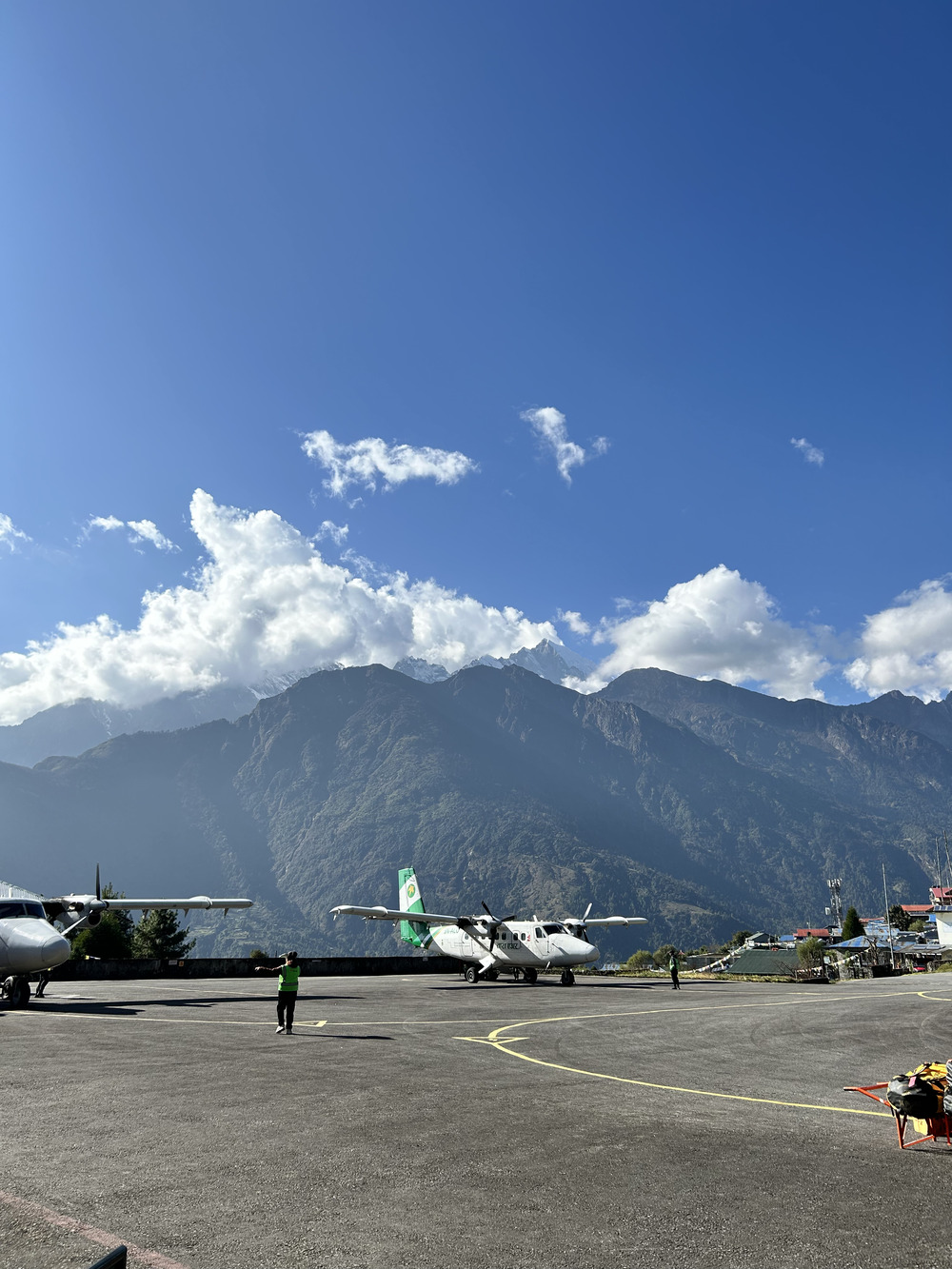
According to ICAO, an aeroplane designed for operations in STOLport is “assumed to be an aeroplane that has a reference field length of 800 m or less. In size, the STOLPORT design aeroplane is assumed to have a wingspan of up to 26 m and a main landing gear measurement of up to 9 m.”

Photo:Timo Breidenstein|Wikmedia Commons
A STOLport can be considered a type of airport or aerodrome, but it has specific runway length requirements. In the context of Lukla Airport and other small STOLports with high volume of operations, it is dangerous to construct the heliport near STOLport.
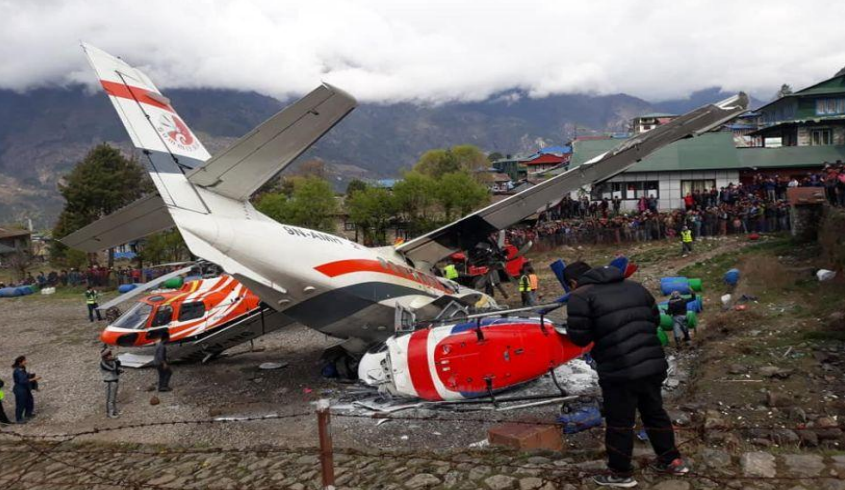
Photo: Government of Nepal
Aircraft Accident Investigation Commission, 2019
In 2019, a Let L-410 Turbolet collided with an Airbus A350B3E in Lukla Airport. The heliport and the airport were adjacent as you can see in the picture above.

photo:Radek Linner|Wikimedia Commons
It is not necessary that a heliport be a part of the STOLports. Heliports can be constructed atop of a hospital or at the center of a garden, or other isolated places where airports are not existent.
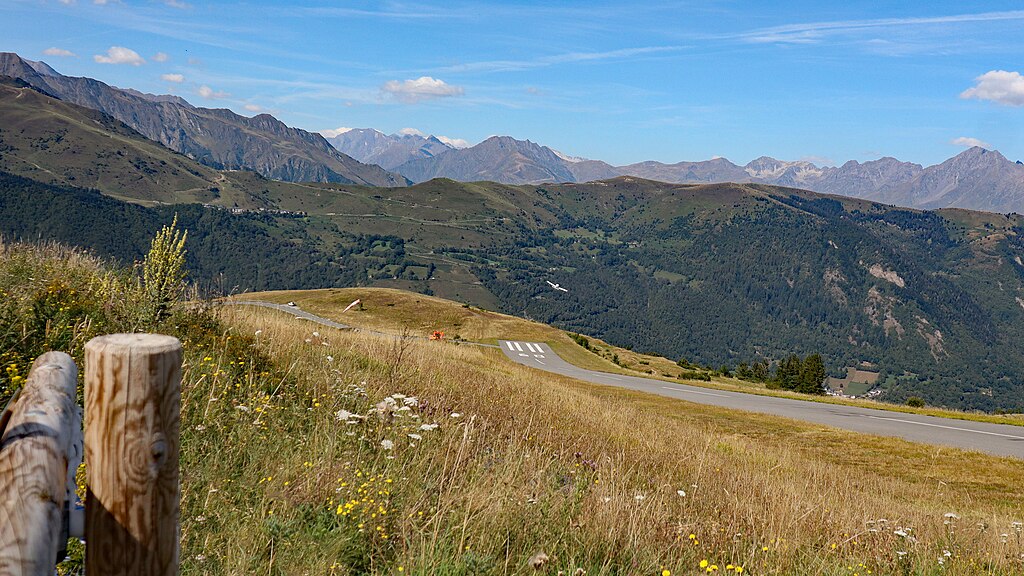
Photo:Jcb-caz-11|Wikimedia Commons
According to the International Civil Aviation Organization (ICAO), there is a more specific term for a STOLport constructed in the mountains – an ALTIPort, which is defined as “a small airport in a mountainous area with a steep gradient runway, used for landing up the slope and for take-off down the slope, thereby making use of only one approach/departure area.”
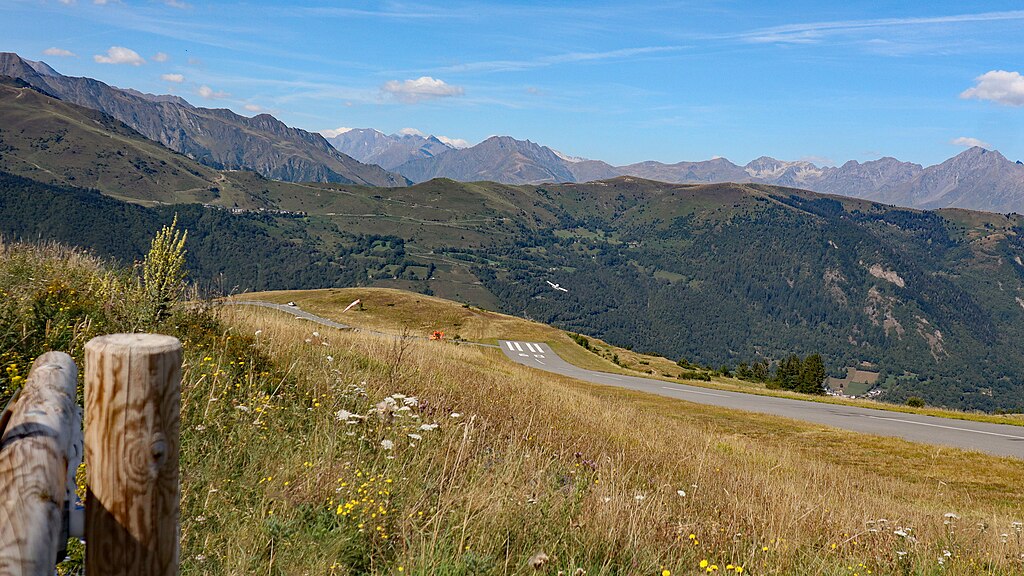
Photo:Jcb-caz-11|Wikimedia Commons
On altiports, the longitudinal profile slopes affect the acceleration of an aircraft during takeoff. If the aircraft faces a downhill while taking off, the aircraft experiences an additional force due to the component of gravitational acceleration.
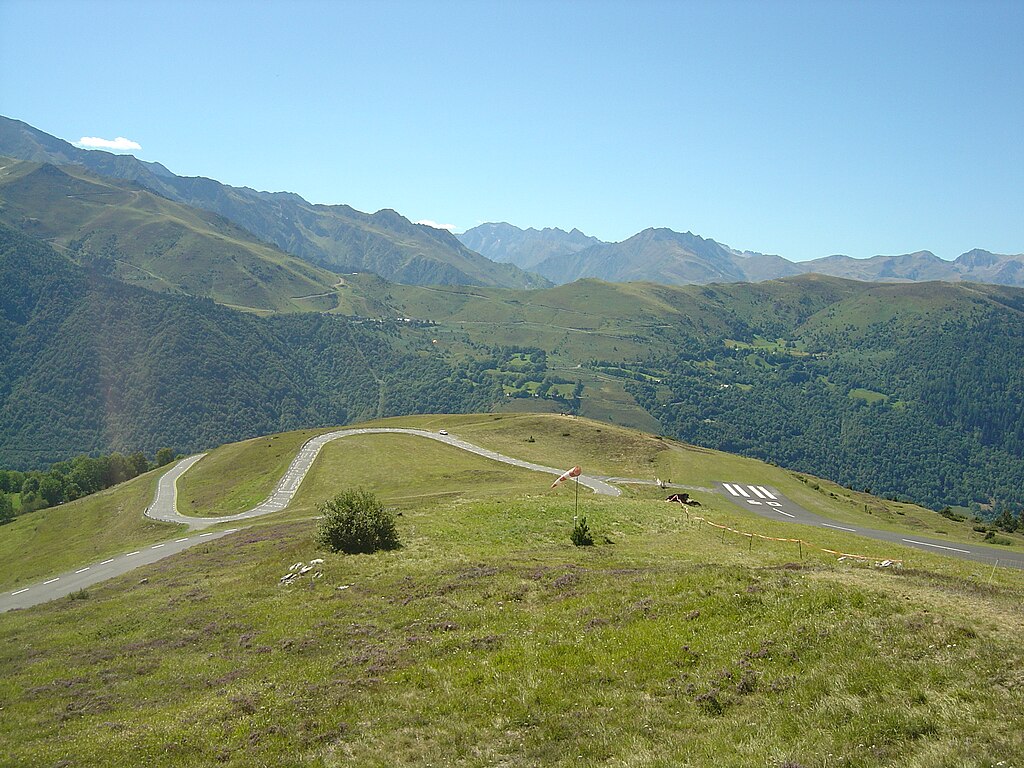
Photo: Anthospace| Wikimedia Commons
If the aircraft in an altiport experiences an uphill while landing, the aircraft decelerates quicker.
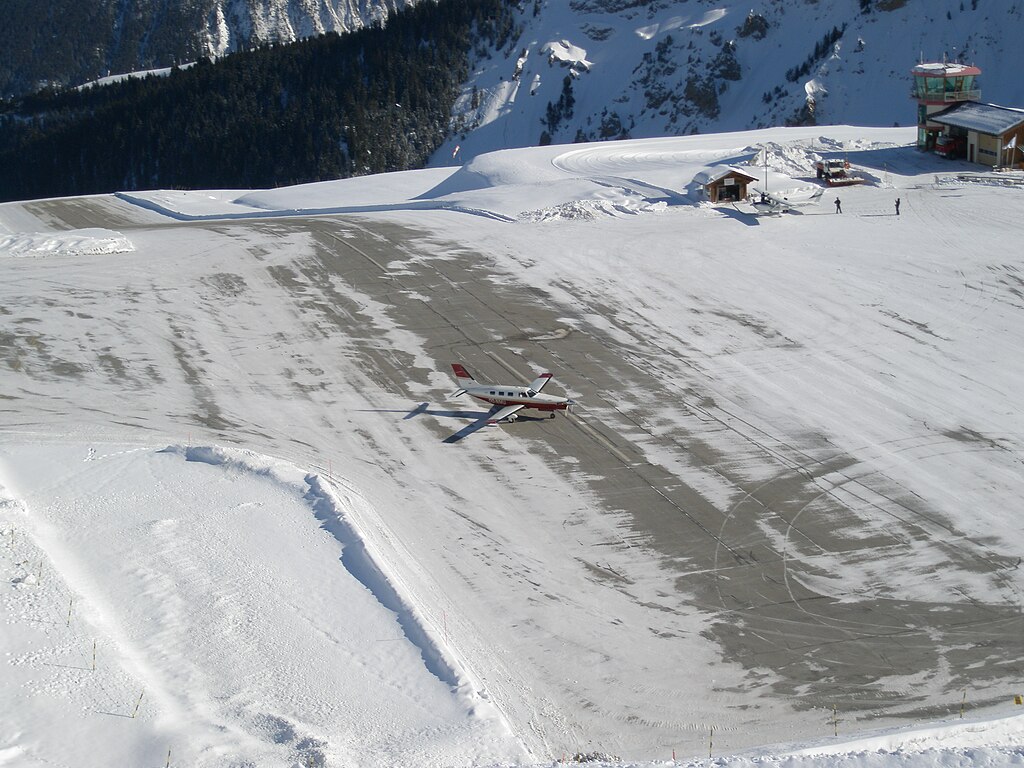
Photo:Peter Robinett|Wikimedia Common
The smallest runway in the world is Courchevel Altiport, which has a length of 537 meters and an 18.7% gradient. In comparison, Lukla Airport, which is regarded as “the most dangerous airport,” has a gradient of 11.7%.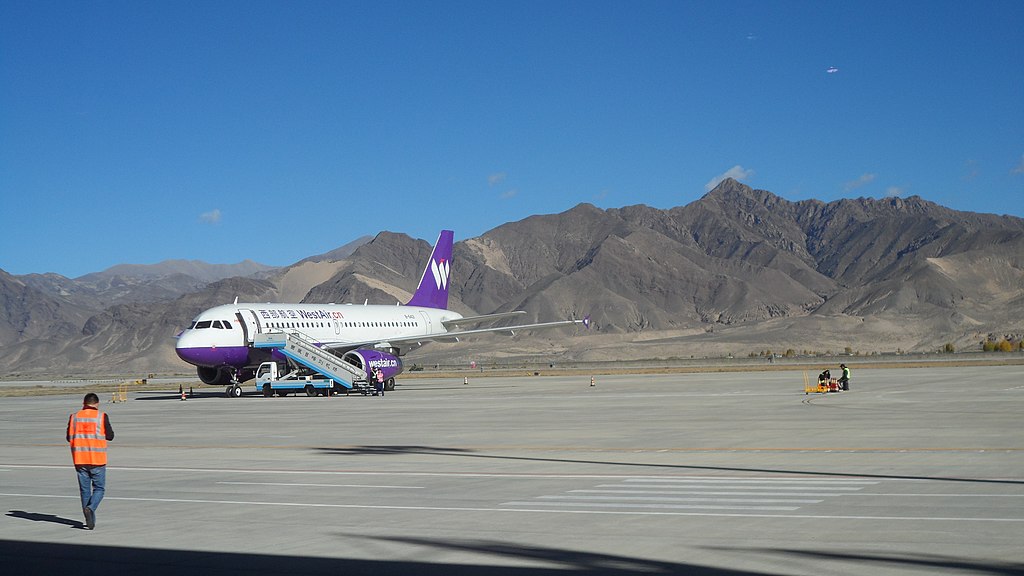
Shigatse Peace Airport
Photo::钉钉 | Wikimedia
On the opposite end of the spectrum, the longest runway, is Ulyanovsk Vostochny Airport in Russia and Shigatse Peace Airport in China the Airport runway is 5000m long. Unlike Altiports, these long runways often don’t have sharp gradients.

Photo: Rundvald | Wikimedia Commons
Only small aircraft and helicopters can operate in altiports, such as the Jodel D140R, the Dornier Do-228, and other STOL aircraft.
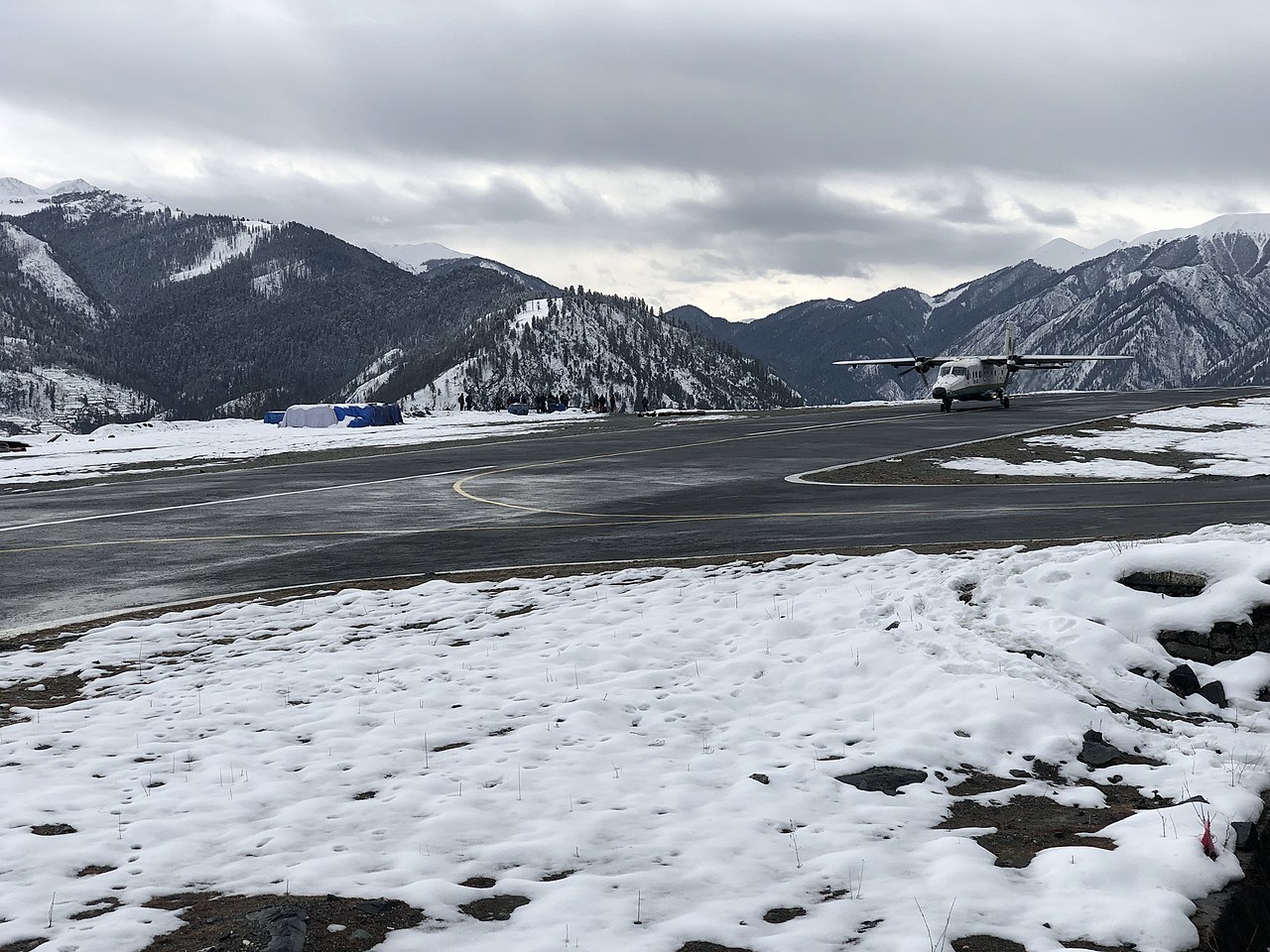
Photo: Tannu 01 | Wikimedia Commons
One could very well say that an altiport is a type of STOLport. The given picture is of a STOLport from Lukla. The common features of STOLports and altiports are that they both have small runways and operate small aircraft.
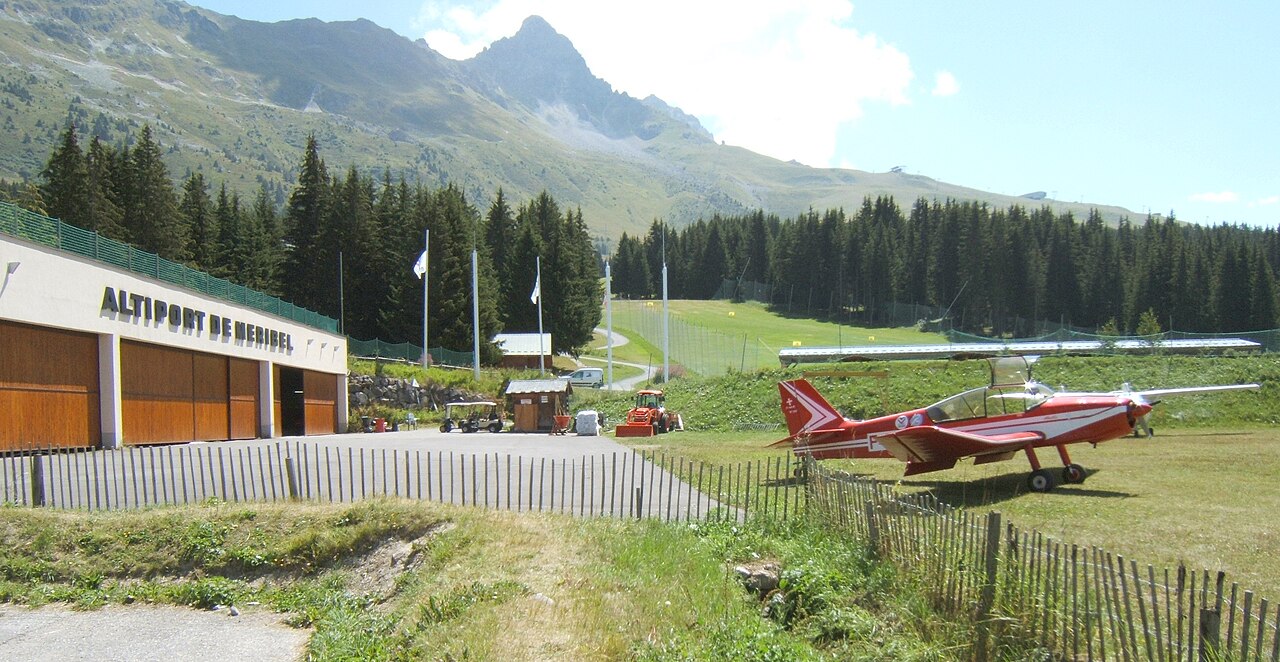
Not all altiports need to have paved runways. Lukla Airport‘s runway hadn’t been paved until the turn of the millennium. The picture above shows the Méribel Altiport, an aerodrome in France.
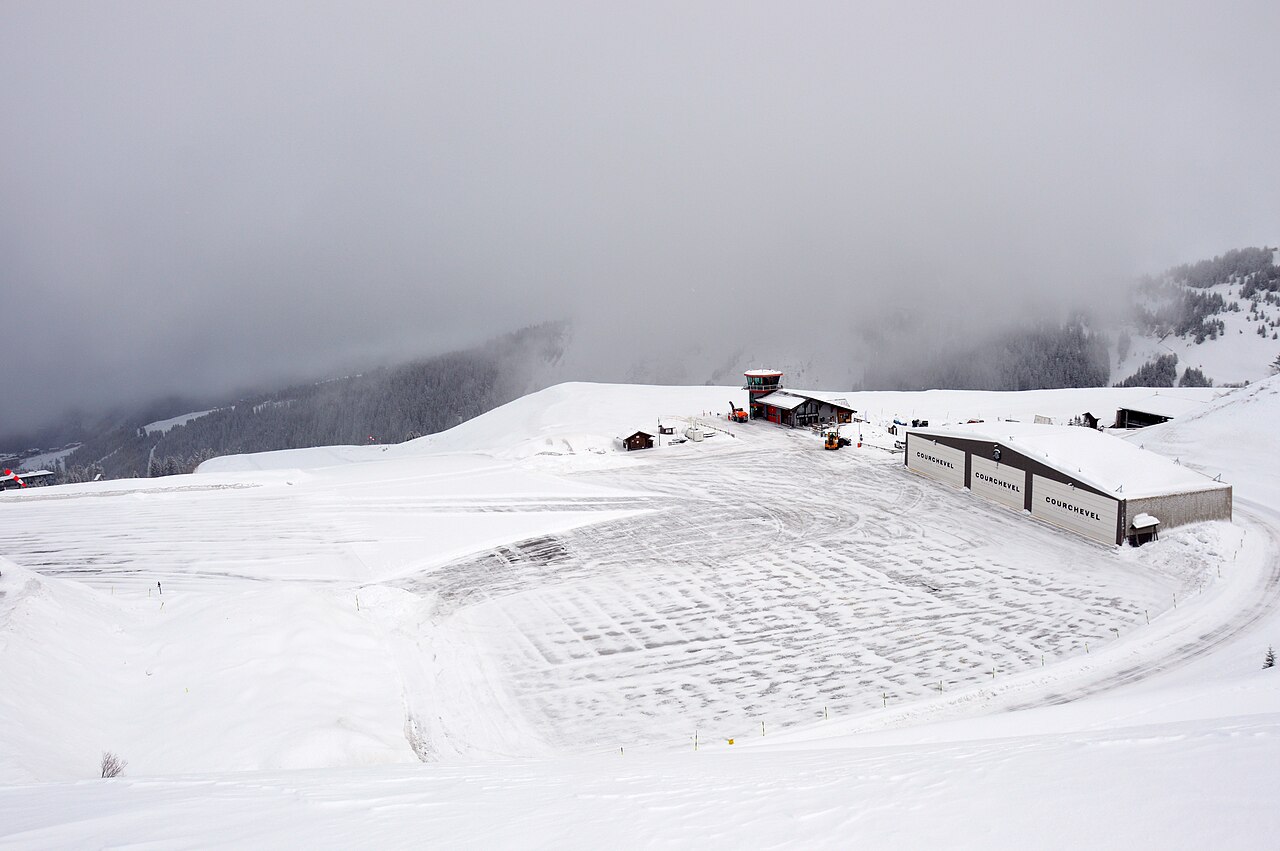
Given that some altiports such as Courchevel (as shown in the picture above) are enveloped with snow for some part of the year, it is possible that altiports might not have proper maintenance facilities. Lukla altiport, the gateway to Everest, has no maintenance facilities either.
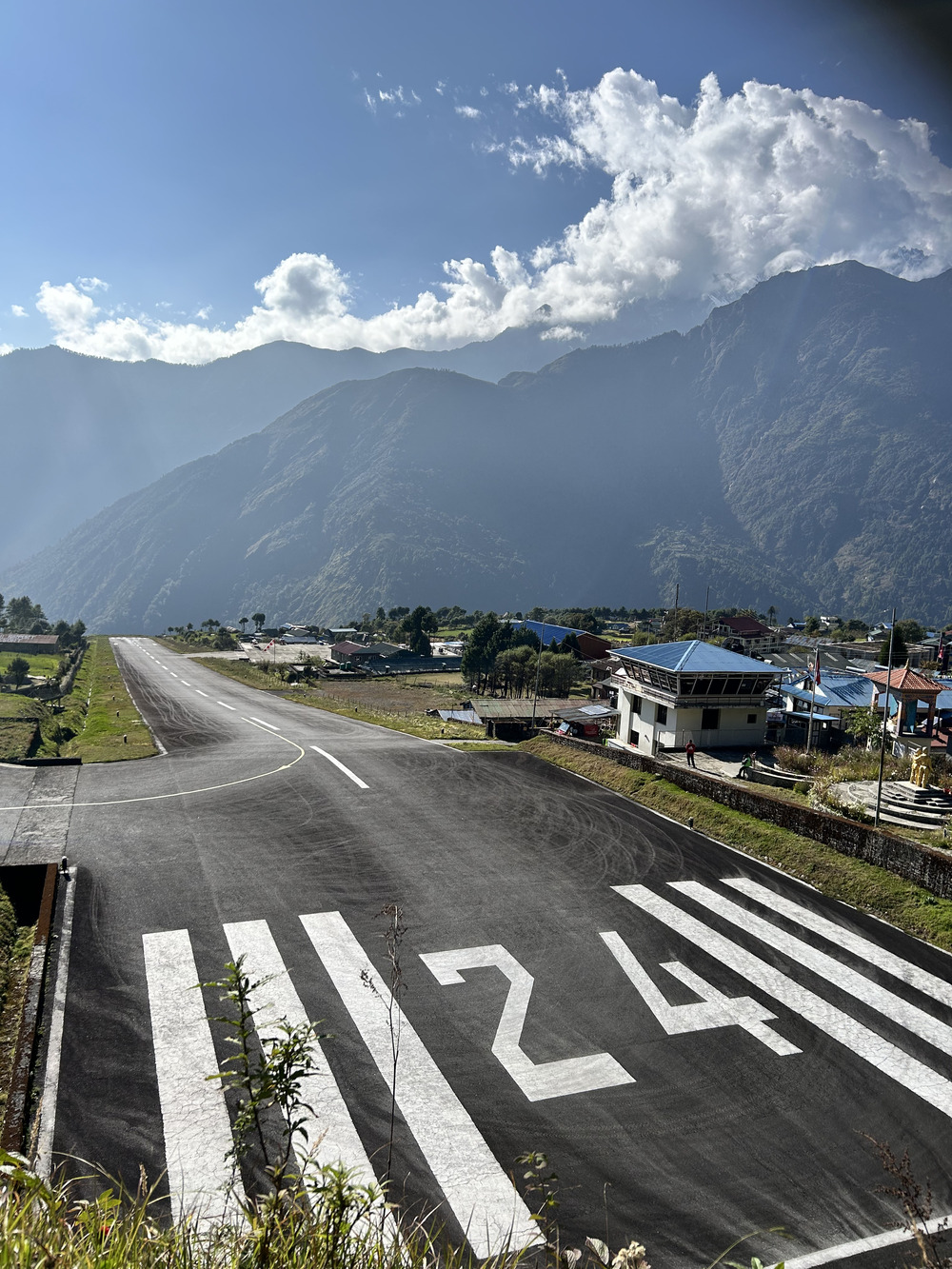
Photo: Karan Bhatta | aviospace.org

Henri Giraud Altiport at L’Alpe d’Huez
Photo: Lalbugues | Wikimedia Commons Unusual slopes are a part of STOLports in the mountainous regions. While landing, an upward slope an aircraft encounters in a STOLport serves as a natural braking mechanism.
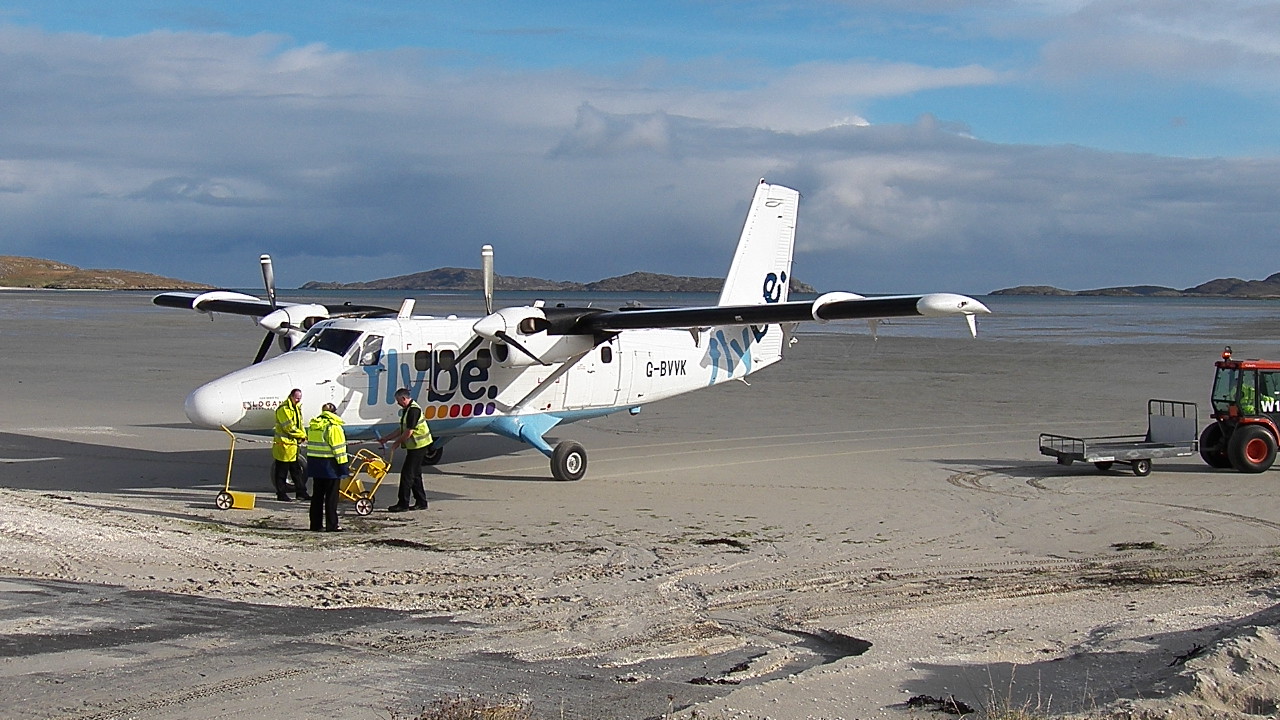
Photo: Dougsim | Wikimedia Commons
Barra Airport in Scotland is a unique STOLport as it is “the only beach runway in the world that handles scheduled airline services“.
Photo: Tannu 01 | Wikimedia Commons
Nepal has a number of STOLports, some of which are considered more dangerous than Lukla. In the preliminary draft on Regional Guidance for the Design and Operation of Altiports prepared by Nepal and collaborated by Bhutan and India, a STOLPORT was defined as “an airport whose physical characteristics, visual and non-visual aids and total infrastructure are created to support safe and effective public air transport in and out of densely populated urban areas as well as to and from rural areas with difficult terrain.”