
Photo: Oleksandr Ratushniak |Wikimedia Commons
When the Antonov An-225 Mriya was destroyed in the Russia-Ukraine War in the Battle of Antonov Airport, it was a hard blow to a lot of aviation lovers. This is because only one of the An-225 has ever been built. This weighed an incredible 285,000 kilograms, making it one of the biggest aircraft. But it wasn’t a commercial one, or with more than a century of records; it would have easily fitted in the list of the biggest commercial aircraft ever. And so would have the whale-ish Airbus Beluga.
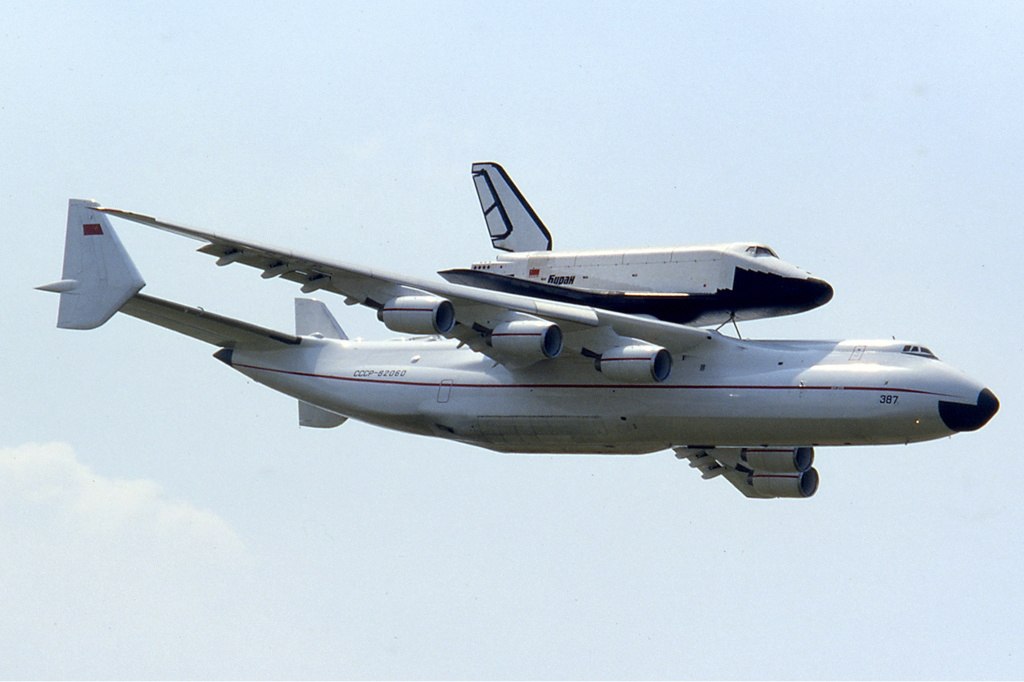
Photo Ralf Manteufel | Wikimedia Commons
While the An-225 was built to transport spacecraft, the Beluga’s purpose was to transport Airbus’ parts from one of its facilities to another—hence its out-of-the-ordinary shape. A passenger aircraft, on the other hand, comes in unobtrusive shapes and sizes. Commercial aircraft might refer to airplanes designed either solely for transporting passengers or fully for cargo or a combination of both.
Each is designed sometimes to optimize flow, at others with fuel efficiency in mind, while sometimes considering a whole corpus of other considerations, such as achieving maximum speeds, as was the case of the Concorde, the Tupolev Tu-144, or other supersonic aircraft. Most are designed with a deliberation of all these matters together. Let’s take a look at the 10 biggest commercial aircraft ever built.
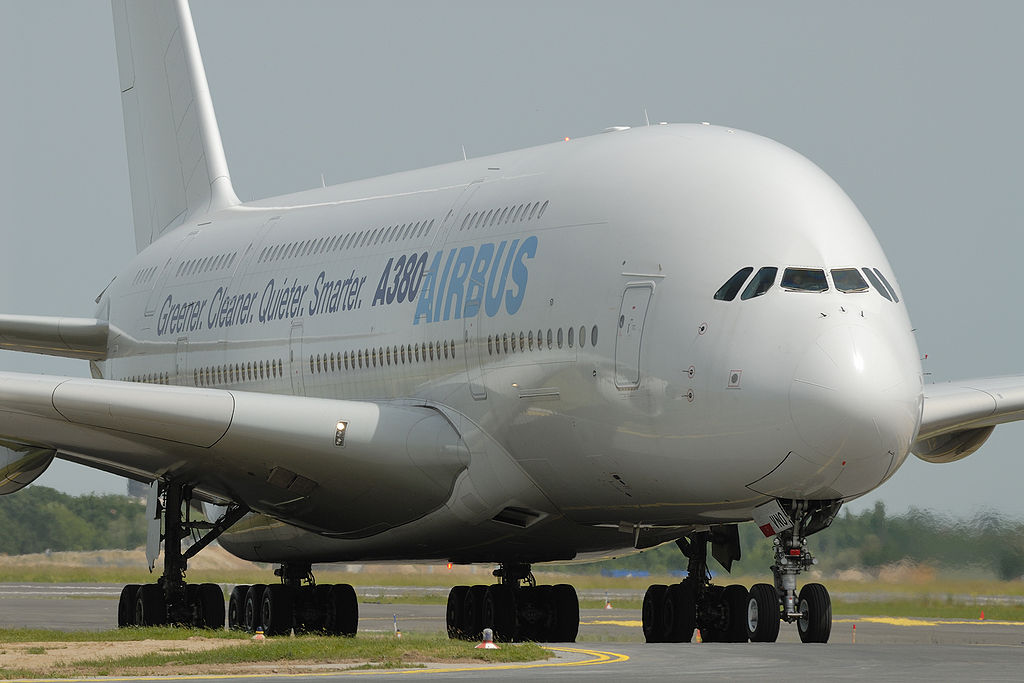
Photo: Jochen Teufel | Wikimedia Commons
Before diving deep into it, let us know some interesting facts about commercial aircraft:
10. Boeing 787-10
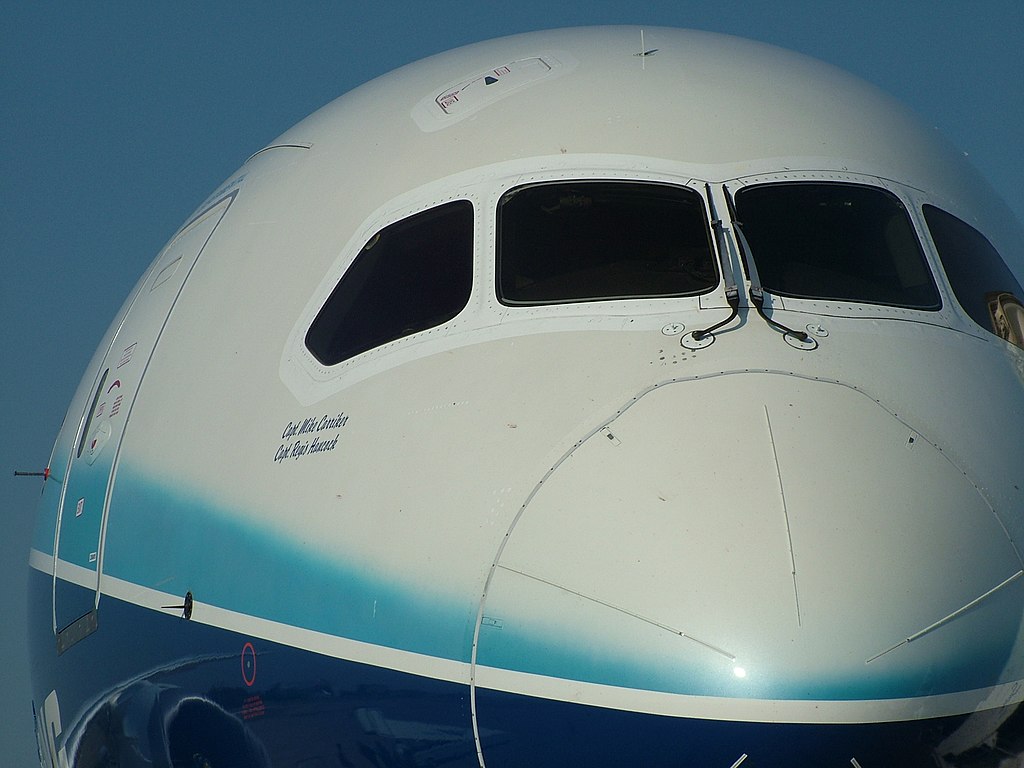
Photo: Niklitov | Wikimedia Commons
According to Boeing itself, the Boeing 787-10 is the longest member of the “longest member of the super-efficient 787 family”. This aircraft can accommodate 440 passengers and has “10 percent better fuel and emissions than the best on offer by the competition and 25 percent better than the airplanes it will replace”. Despite such improvements, the aircraft hasn’t been as popular as the other variants. Only 114 Boeing 787-10s have been delivered till date while 787-9 and 787-8s have seen more than three times this number, individually, till date.
Some of the longest routes on which the Boeing 787-10s were delivered include the following:
- KLM operating from Amsterdam Airport Schiphol to Los Angeles International Airport
- United Airlines between Chicago and Tokyo Haneda
- EVA Air operates a more than 6,000 mile route between Seattle and Taipei.
Eva Air’s Boeing 787-10s are have 308 Recaro CL3710 seats arranged in a 3-3-3 pattern in the economy class, while there are thirty-four Thompson Aero Vantage XL seats in a staggered 1-2-1 pattern. United’s Boeing 787-10s have forty two seats configured 3-3-3 in Economy Plus, while the economy class has a similar configuration with 199 seats.
Some interesting facts about the Boeing 787-10 include:
- It can reach a distance of 8055 miles, which means that it can cover “more than 90% of the world’s twin-aisle routes”, reports Airport-Technology.
- It has a single-piece composite barrel that eliminates all longitudinal skin splices.
- Singapore Airlines was the launch customer of the Boeing 787-10.
Capacity and Features
| Maximum Takeoff Weight | 560,000 lb / 254,000 kg |
| Service Ceiling | 43,000 feet |
| Maximum Speed | 516 knots / 956 km/h |
| Engine; Power | 2; 76,000 pound-force |
| Engine Model | 2x Rolls-Royce Trent 1000 or General Electric GEnx-1B
Turbofan |
9. A350-900
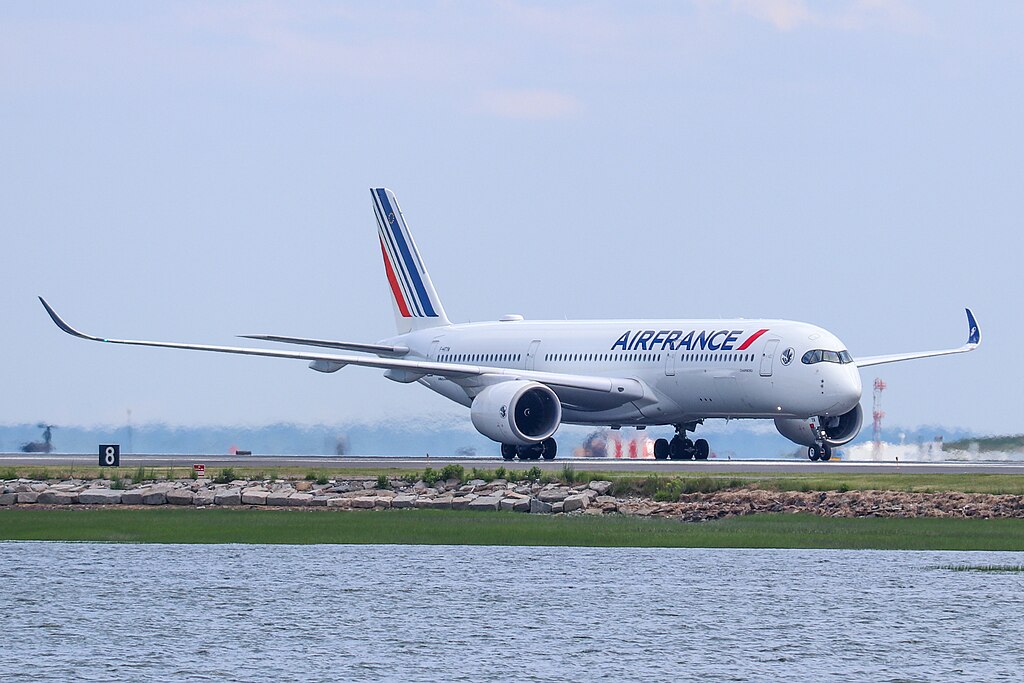
photo: Tim| Wikimedia Commons
The Airbus A350-900 has a maximum passenger capacity of 440 passengers and has a range of over 15,000 kilometres. It is the first Airbus aircraft made of carbon fibre reinforced polymers. On 15 January 2015, the first A350-900 entered service with Qatar Airways, followed by the A350-1000 on 24 February 2018 with the same launch operator. The −900 is meant to replace the Airbus A340-300.
| Maximum take-off weights | 277, 000 kg (610 681 lb) |
| Service Ceiling | 43,000 feet |
| Maximum Speed | 488 knots
904 Km/h |
| Engine Power | 87,000 pound-force |
| Engine Model | 2 X Rolls Royce Trent XWB |
Some of the longest routes on which the A350-900 were delivered include the following :
- Singapore airlines between Singapore to New York .
- Qatar Airways between Doha to Auckland .
- Singapore Airlines between Singapore and Los Angeles .
- Delta Air Lines operated between Atlanta to Johannesburg.
Whereas in Asia , through Asiana Airlines Longest route which has been travelled are seoul incheon to paris, seoul incheon to london Heathrow airport , seoul incheon to Francisco etc.
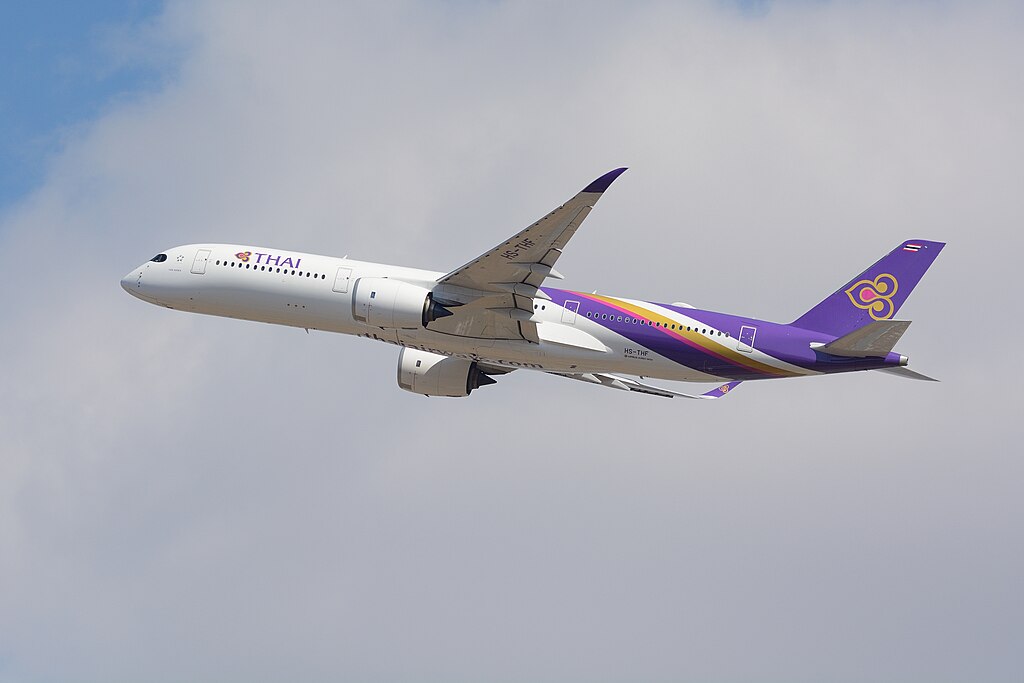
Photo: Julian Herzog Wikimedia Commons
Largest Airline Operators Of A350-900
- Thai Airways -79 Aircraft.
- Ethiopian Airlines -138 Aircraft (+ 2 On Order/Planned)
- Turkish Airlines -374 Aircraft (+ 10 On Order/Planned)
- Lufthansa-318 Aircraft (+ 32 On Order/Planned)
- Singapore Airlines- 158 Aircraft (+ 5 On Order/Planned)
8. Airbus A 330-300 (440 passengers)
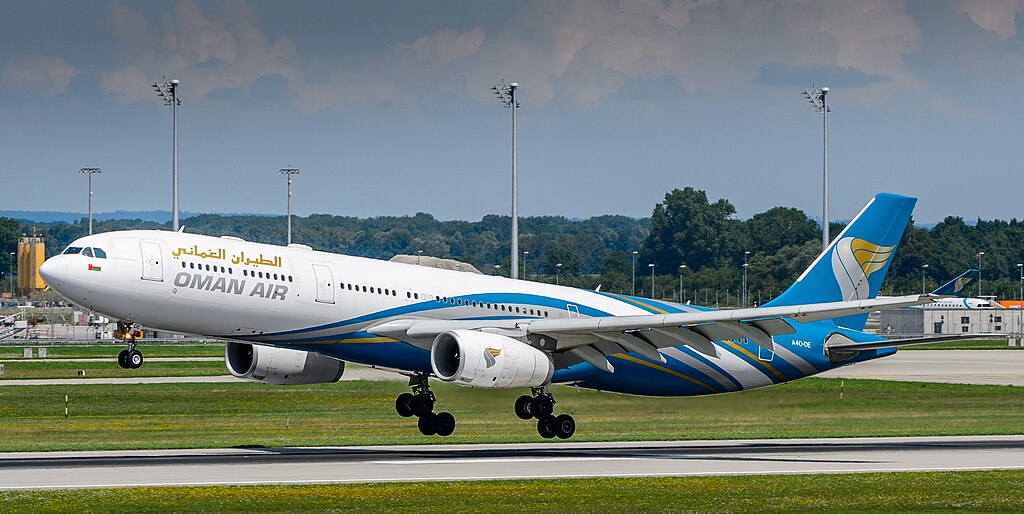
Photo: Alessandro Caproni |Wikimedia Commons
With a record of 5 hours and 15 minutes maiden flight on 2 November 1992, successful testing, the A330-300 soared through a large number of testing areas, covering a variety of speeds, heights, and configurations with landing gear raised and lowered, pushing the edge of stalling.
A330- 300 undergoes continuous advancements given the love of its investors, persistently funding, for better operability of the aircraft. A recent enhancement is its increased maximum take-off weight of 242.000 tones, which allows the aircraft longer air time and range of 6,350 nautical miles, which is 500 extra nautical miles than its previous version.
Capacity and Features
With a maximum cabin width of 5.26 m and cabin length of 50.36m, A 330-300 can board up to 440 passengers in a standard configuration or 250-290 per class in a three-class layout. Stretched A300 fuselage but with new wings, stabilizers, and fly-by-wire systems, the aircraft’s wing is swept back at 30 degrees.
|
Maximum Takeoff Weight |
242.000 tonnes / 533,500 |
|
Maximum Landing Weight |
187.000 tonnes / 412,000 |
|
Service Ceiling |
11,750 m/ 38,550 ft |
|
Maximum Speed |
493 knots/ 913km/hr |
|
Normal Cruise Speed |
473 knots/ 875km/hr |
|
Engine; Power |
2; 311kN (69,900 lbf) |
|
Engine Model |
Rolls Royce Trent 700, PW 4000, GE CF6-80E1 |
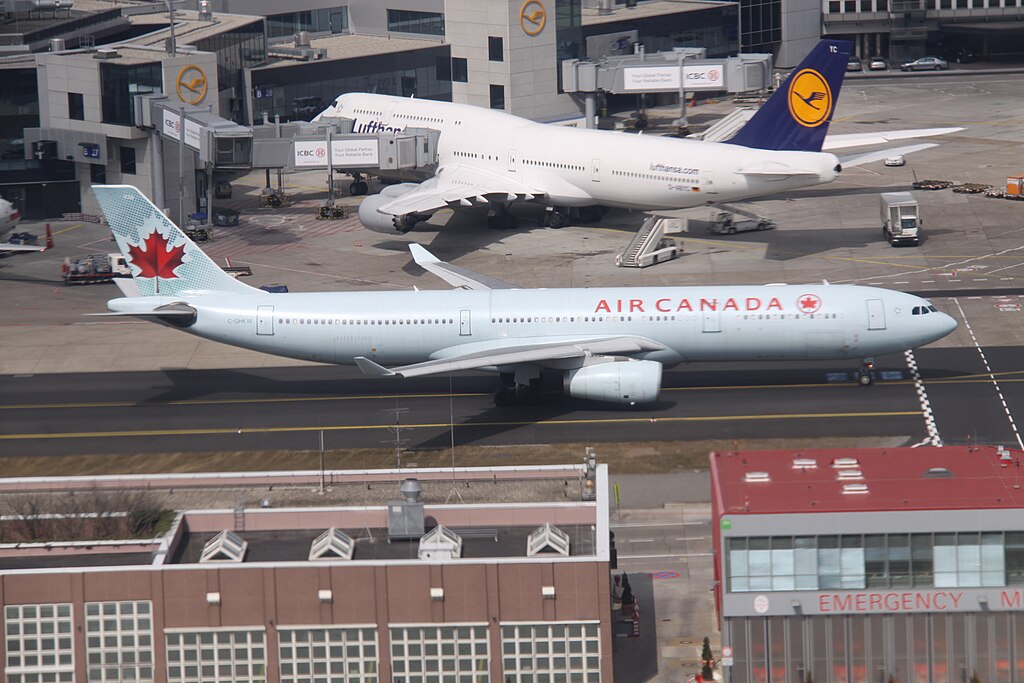
Photo: Flunker |Wikimedia Commons
7. Airbus A 340-300 and Airbus A 340-600
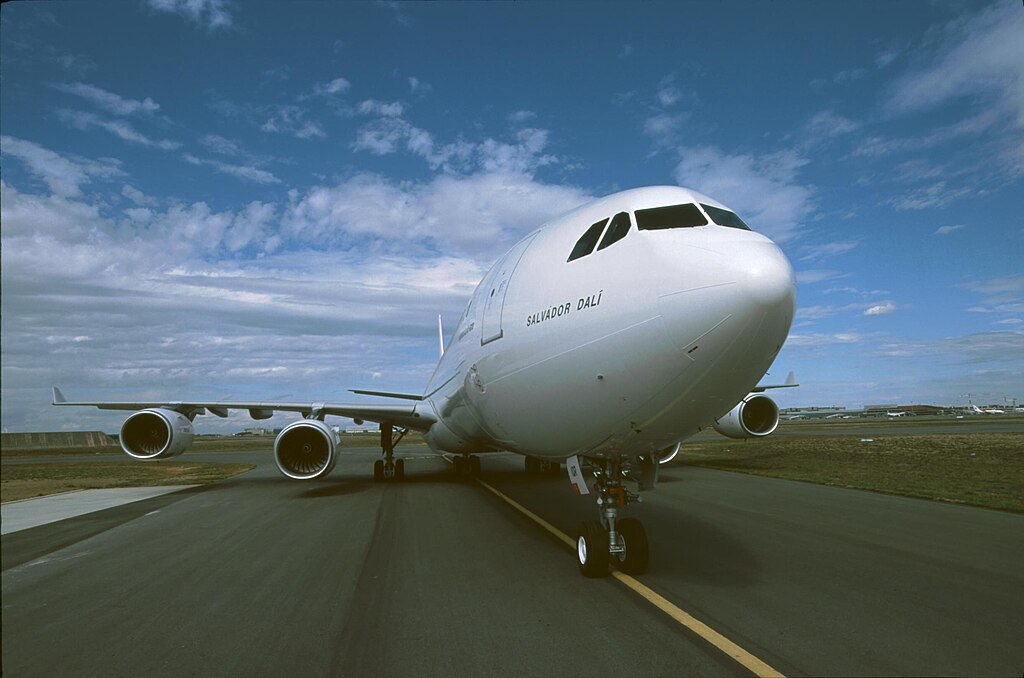
Photo: Iberia Airlines |Wikimedia Commons
The Airbus A340-300 is a long-haul aircraft designed to accommodate approximately 250 to 300 passengers in a standard three-class layout, making it ideal for transcontinental flights. Additionally, it can accommodate 440 passengers in a single-class layout. The same is true for the A 340-600.
Renowned for its impressive range capabilities, the A340-300 can traverse vast distances non-stop, thanks to its efficient fuel consumption and aerodynamic design. Powered by four CFM International CFM56-5C engines, this aircraft offers enhanced safety and reliability, instilling confidence in passengers and operators alike. Additionally, the A340-300 boasts generous cargo space, facilitating the transportation of goods and supplies across continents.
Capacity and Features
The Airbus A340-300 accommodates 250 to 300 passengers, excelling in long-haul travel with its impressive range and four CFM56-5C engines. It offers ample cargo space and advanced avionics for enhanced safety and comfort, making it a preferred choice for transcontinental flights.
|
Maximum Takeoff weight |
276,500 kg / 609,600 lb |
|
Maximum landing weight |
192,000 tonnes / 423,300 lb |
|
Service Ceiling |
41,00 feet ( 12,500 meters) |
|
Maximum speed |
490 knots/ 913 km/h at 12,500m |
|
Normal Cruise speed |
490 knots/ 908 km/h at 10,670m |
|
Engines; Power |
4; 151 to 155 Kn ( 34,000 – 24,8000 lb) |
|
Engine model |
CFM International CFM56-5C engines |
Interesting facts about the Airbus A340-300 and the A340-600
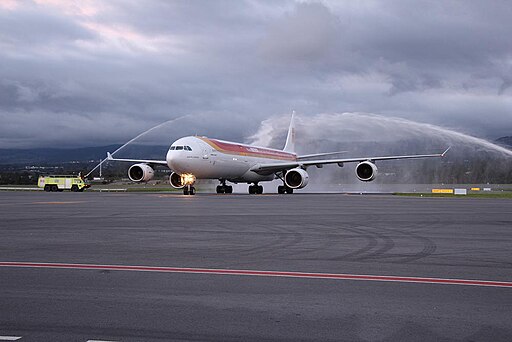
photo: Usuario S.A.D |Wikimedia Commons
6. AirbusA330-900
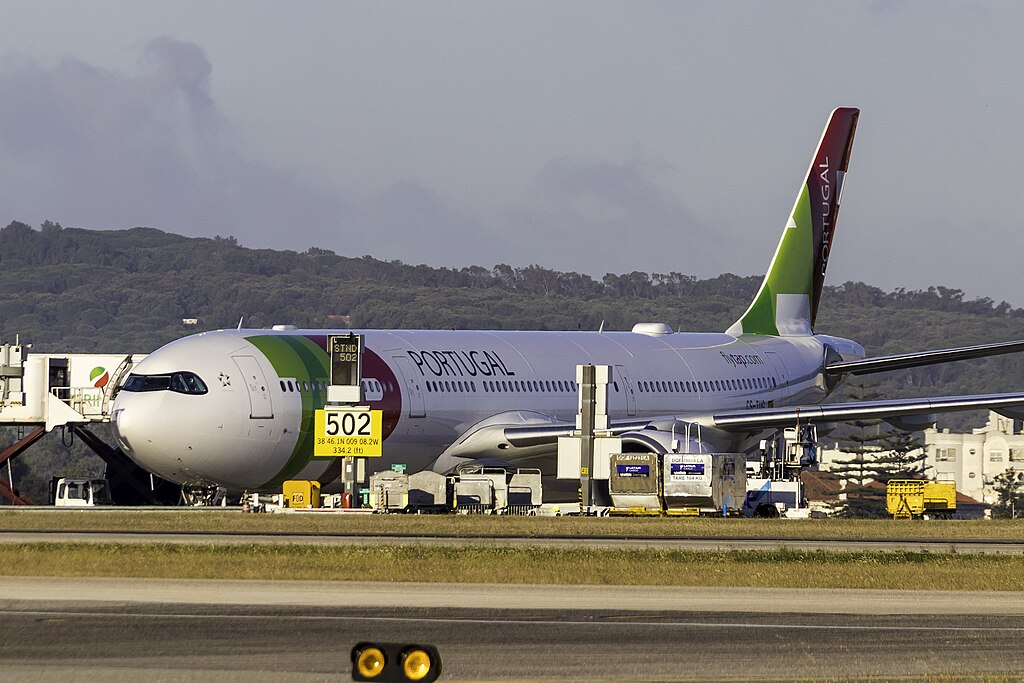
Photo: Bene Riobó |Wikimedia Commons
The A330-900neo (the first neo variant of the A330) made its first flight on October 19, 2017. It went into commercial service on November 26, 2018 with lunch customer TAP Portugal. TAP Air Portugal has taken delivery of the world’s first new-generation A330neo accommodating both short-haul segments and long-range routes of up to 7,200 nautical miles. Delta Air Lines is the largest operator of the A330-900 with 31 in its fleet, followed by TAP Air Portugal with 19 and Condor with 17.
Cebu Pacific, a low-cost carrier, offers 459 seats in its A330-900s (A330neo) in a single class configuration. This is 149 more than the next operator with the highest seats on the aircraft – Condor offers 310 seats.
Let’s have a look about the specification of the AirbusA330-900.
| Engine Model(s) | Rolls-Royce Trent 7000 |
| Max range | 13 334 km |
| Max fuel capacity | 139 090 liters |
| Max take-off weight | 181000 kg |
| Maximum speed | 496 knots |
Photo:DiscoA340 |Wikimedia Commons
5. Airbus A350-1000
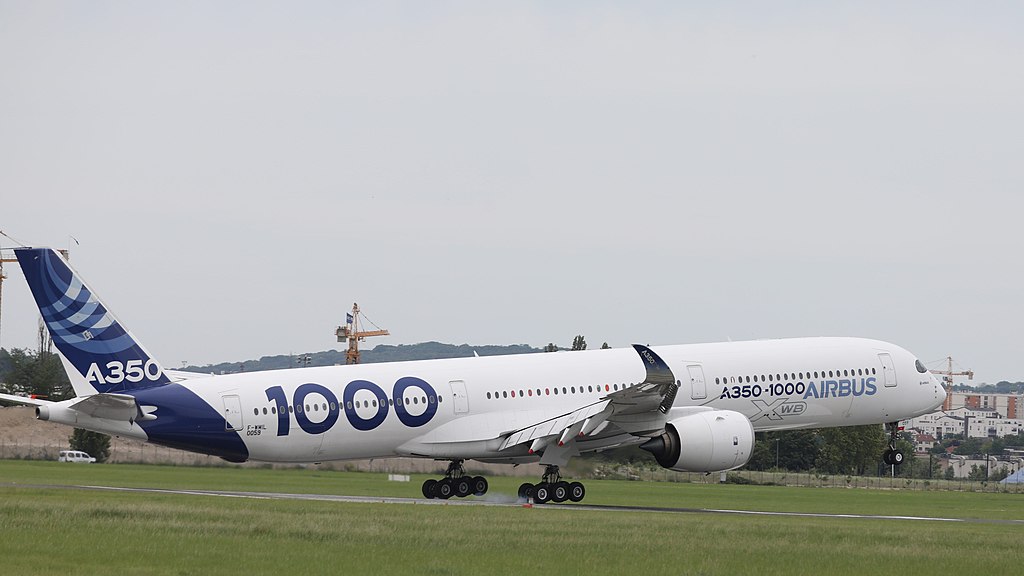
Photo: New York-Air| Wikimedia Commons
Airbus dubs the A350-1000 as “the long range leader”. It was assembled in February 2016. Eight months later, the aircraft had its first flight test. And in 2017 the plane underwent cold-weather trials, while in May 2017 it completed its first long-distance flight. In the same year, the aircraft received its Federal Aviation Administration and European Aviation Safety Agency certification.
| Service ceiling | 43,100ft |
| Max Cruise Speed | 945 Km/h |
| Travel range | 16,112 Kilometers |
| Max Takeoff Weight: | 316,000 Kg |
| Fuel Tank Capacity | 158,790 litre |
The aircraft made the wings advanced allows them to change shape and morph while the aircraft is in flight. According to the manufacturer, “the A350-1000 comfortably accommodates from 350 to 410 passengers in a standard three-class configuration, with 40% more area for premium-category seating.”
4. Boeing 777-300ER
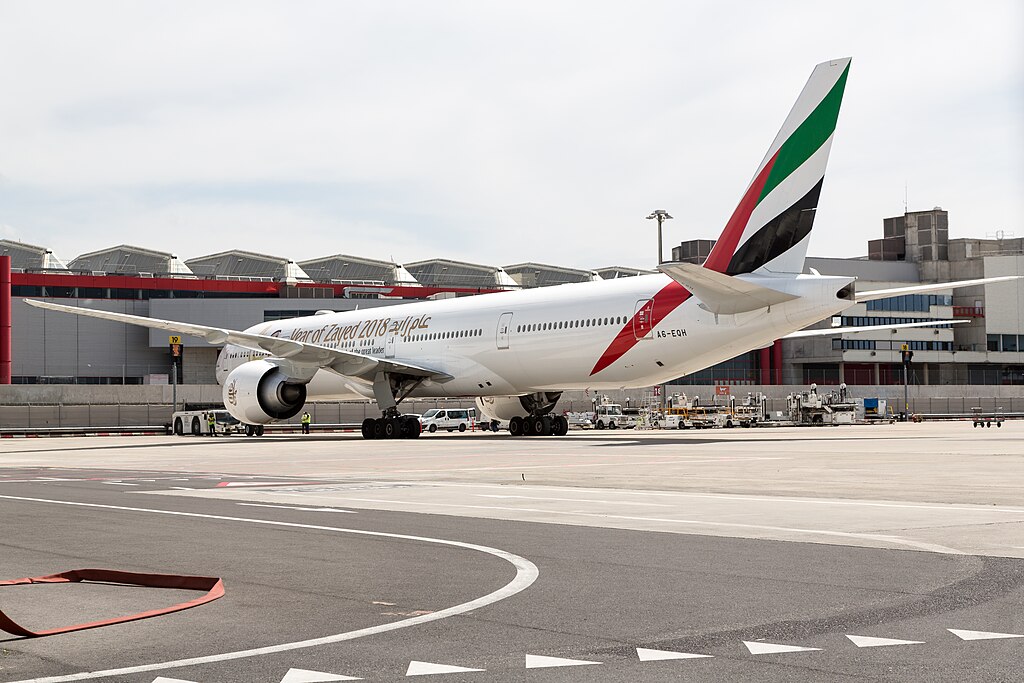
Photo: Matti Blume | Wikimedia Commons
Boeing 777-300 is the largest twin-engine passenger aircraft in the world. Cathay Pacific was the launch operator of the 777-300, which was stretched 33ft (10.1 meters) compared to the earlier versions of the 777. This gives it leverage of 60 more, i.e., 370 in tri-class, 451 in two classes, or up to 550 in a single configuration. The success of the 777-200 had led Boeing to manufacture an aircraft that could carry more passengers.
Out of the 1,718 deliveries of the 777s, 832 (46.8%) comprised of the 777-300ER variant. The non-ER variant sold only 60 units, and only 10 are active. These are operated by All Nippon Airways, Korean Air, Russia, Southwind Airlines, Cathay Pacific, Nigeria’s Air Peace, and Alexandria Airlines.
Capacity and features
|
Maximum Take-of weight |
660,000 lb/ 299,370 kg) |
|
Maximum landing weight |
524.000 lbs/ 237.680 kg |
|
Service Ceiling |
43,100 ft (13,100 m) |
|
Maximum speed |
499–511 kn; 924–945 km/h |
|
Normal Cruise speed |
482 kn; 892 km/h |
|
Engines; Power |
2; 98,000 lbf (440 kN) |
|
Engine model |
PW4000 / Trent 800 |
3. Boeing 747-8
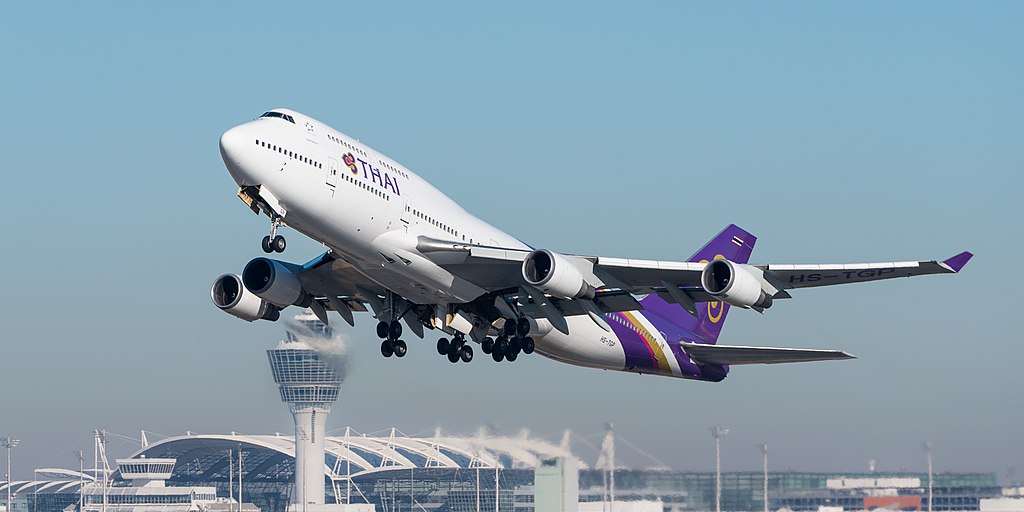
Photo: Julian Herzog | Wikimedia Commons
Boeing’s historic 747 was often referred to as the ‘Queen of the Skies,’ and was the first twin-aisle airplane in the world. 1,571 orders of the 747 were made, making it the second most widely ordered jet- only next to Boeing’s 777. 747 completed nearly 23 million flight cycles and 118 million flight hours. The 747-8 comes in two variations: the passenger version, known as the 747-8 Intercontinental, and the cargo version, known as the 747-8 Freighter.
To put the 747-8I in comparison with the biggest commercial aircraft ever: developing the 747-8I cost $4 billion while Airbus expenses for the development of the A380 equalled $16 billion. The 747-8I was equipped with several upgrades or “stretches” from the previous versions of the 747, such as the Boeing 747-400. The upgrades included longer fuselage, improved wings, engines, and avionics.
Capacity and features:
The 747-8 can travel over 8,000 nautical miles. It also has a wingspan of 68.5 meters, ranking it amongst the wider planes in operation. It is powered by four General Electric GEnx-2B engines, making it more fuel-efficient and environmentally friendly than earlier models.
|
Maximum Take-of weight |
447,696 kg/ 987.000 lbs |
|
Maximum landing weight |
312.072 kg/ 688,000 Lb |
|
Service Ceiling |
13,137 m/ 43100 ft |
|
Maximum speed |
510 knots/ 944 km/hr |
|
Normal Cruise speed |
500 knots/ 900 km/he |
|
Engines; Power |
4 Turbofan Engines; 295.8 kN |
|
Engine model |
General Electric GEnx-2B67B |

Photo: Oliver Holzbauer | Wikimedia Commons
2. Boeing 747-400
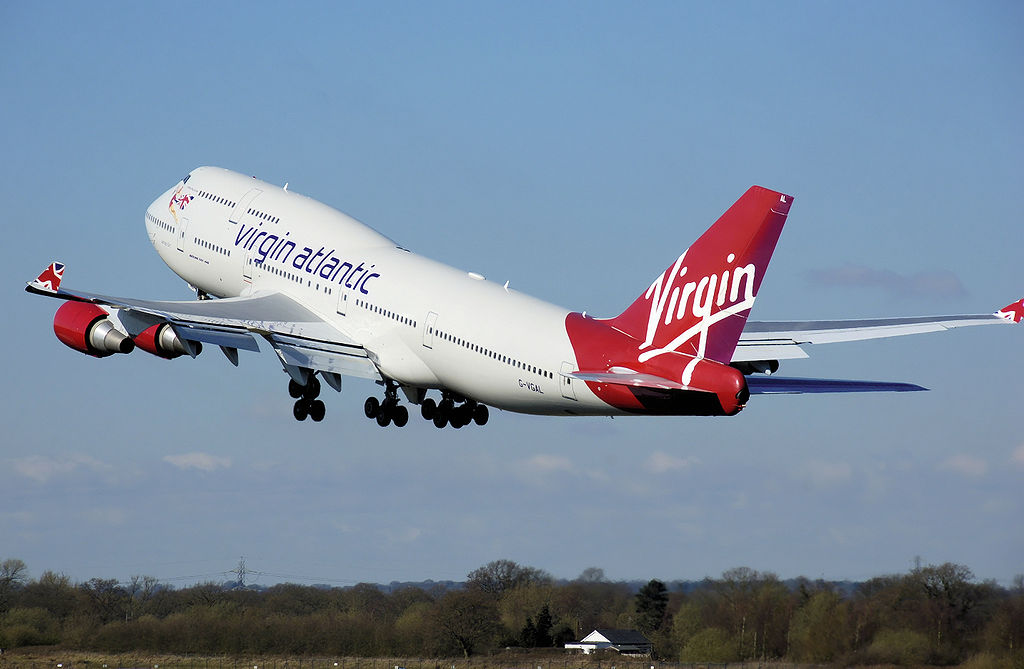
Photo: Adrian Pingstone | Wikimedia Commons
A four-engine passenger plane developed as an upgrade to the original 747 models, the Boeing 747-400, was built in 1989, entered service in 1991, and could accommodate up to 416 passengers in a three-class layout. In a two-class configuration, 568 passengers can fit the 747-400. It was the first of the 747 series which did not require a flight engineer to be a part of the flight crew.
Capacity and Features:
The 747-400 comes with a digital flight deck and advanced avionics- two things that made the -400 stand out during its time.
|
Maximum Take-of weight |
412,770 kg / 910,000 lb |
|
Maximum landing weight |
295,743 kg/ 652,000 lbs |
|
Service Ceiling |
13,747 m/ 45,102 ft |
|
Maximum speed |
573 knots / 1061.66 km/hr |
|
Normal Cruise speed |
490 knots / 908 km/h |
|
Engines; Power |
4 turbofan engines; 62000 lb (275.8 kN) |
|
Engine model |
PW4062A |
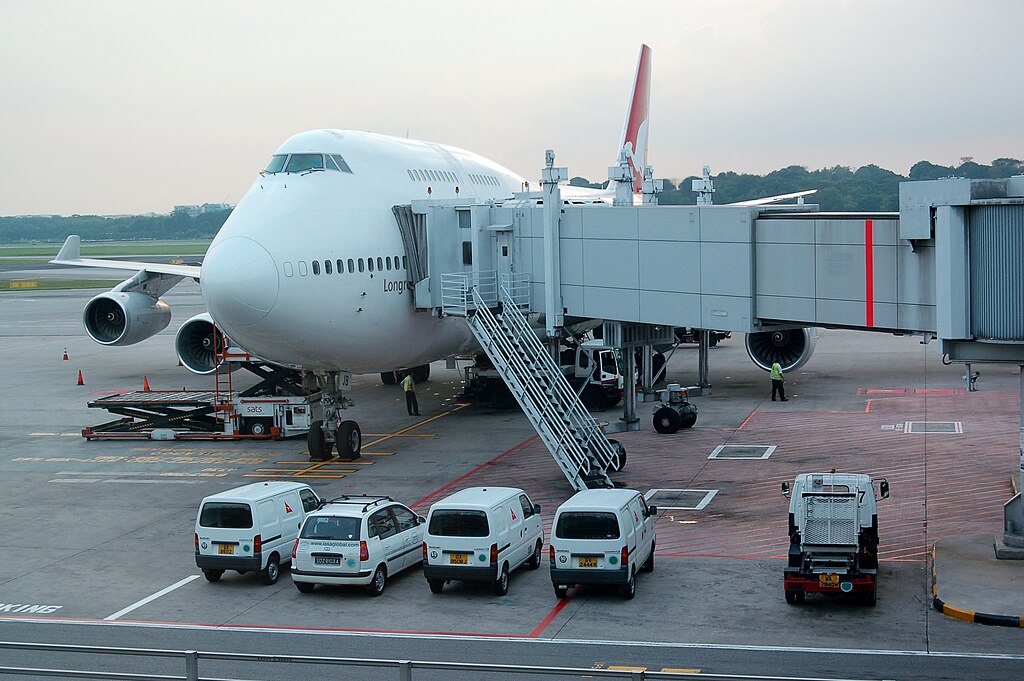
Photo: Bahnfrend | Wikimedia Commons
1. Airbus A380-800

Photo: Damien Aiello | Wikimedia Commons
The Airbus A380-800 has two decks, a wide body, and a wingspan that is almost the length of a football field. It was launched by the European company Airbus in 2007 and is the only full-length double-deck jet airliner. Its sumptuous amenities, such as bars, lounges, and in-flight entertainment systems, make it an excellent choice for long-haul flights.
When it was first operated by Singapore Airlines, people were in awe of the A380 which had 50% more floor space than the next biggest plane. Since then, the A380 has flown more than 300 million passengers in over 800,000 flights.
The list price of an A380 is approximately $450 million. The largest customer of the A380 of which 250 units have been produced, is the Emirates, which alone has more than 120 units of these. When it was decided that Airbus would cease its production in 2021, the CEO of Airbus, Thomas Enders, was quoted in the APF:
“If you have a product that nobody wants anymore, or you can sell only below production cost, you have to stop it.”
Capacity and features:
The A380 can accommodate up to 853 passengers in a single-class layout or up to 525 passengers in a three-class configuration. A fly-by-wire flight control system, advanced avionics, and noise-reducing technology make it one of the quietest large planes flying today. It is powered by four engines, usually Rolls-Royce Trent 900 or General Electric GE90 engines, and has a range of 8,000 nautical miles.
|
Maximum Take-of weight |
560,000 kg/ 1,234,588 lb |
|
Maximum landing weight |
394,171 kg/ 869,000 lb |
|
Service Ceiling |
13,137 m / 43100 ft |
|
Maximum speed |
510 knots/ 944 km/hr |
|
Normal Cruise speed |
500 knots/ 900 km/he |
|
Engines; Power |
4; 332.44–356.81 kN (74,740–80,210 lbf) |
|
Engine model |
RR Trent 900 and GP 7200 |
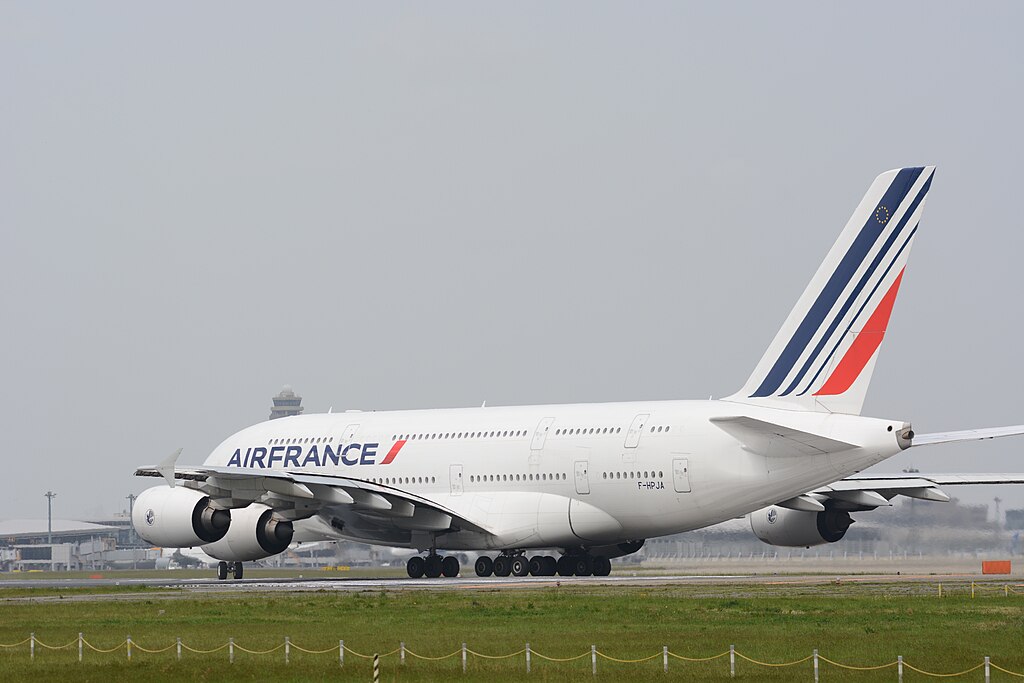
Photo: Masakatsu Ukon | Wikimedia Commons


_(8633667415).jpg)
.jpg)


.jpg)

_ready_for_departure_to_Tokio-Haneda_(HND-RJTT)_@_Frankfurt_-_Rhein-Main_International_(FRA_-_EDDF).jpg)

.jpg)

