Chinese researchers have built a lightweight artificial intelligence system designed to help heat-seeking air-to-air missiles identify stealth fighters by their infrared signatures, according to a report by the South China Morning Post. The team, based at the Beijing Institute of Technology and the China Airborne Missile Academy, tested the system in laboratory conditions against mock-up targets built to mimic the F-22 and F-35. Lead researcher An Jiangshan disclosed the results on August 10, 2026.
The system reached up to 97.1 percent recognition accuracy in one round of testing and roughly 90 percent in a separate test using the same simulated fighter targets. It trained on 3,245 infrared images gathered from a missile-borne scanning system, covering three categories of airborne targets. The study does not show how the system would perform against real F-22 or F-35 aircraft, since that data remains confidential.
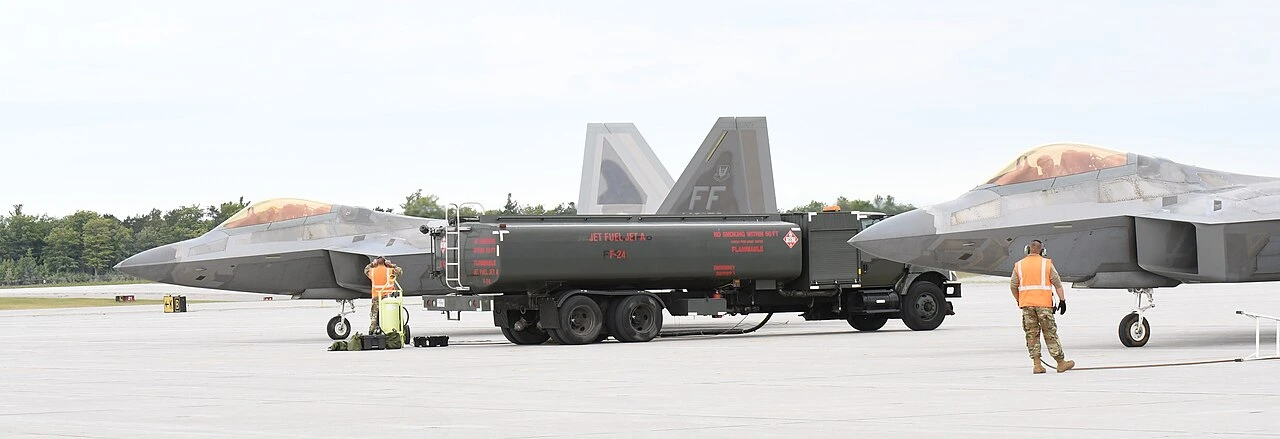
How the System Reads a Fighter’s Heat Signature
Stealth aircraft like the F-22 and F-35 minimize their radar cross-section, but they cannot eliminate heat. Engine exhaust and friction from air moving over the fuselage both generate infrared emissions that heat-seeking missiles can detect.
Fighters have long countered infrared-guided missiles by releasing flares, which create a brighter, competing heat source to pull the missile off target. The Chinese research argues that a fighter’s genuine infrared signature differs enough from a flare’s signature that an AI system can tell the two apart, potentially making flares far less effective as a countermeasure.
Older infrared missile seekers relied on simpler heat-tracking logic that flares could exploit fairly easily. A machine-learning system trained on real infrared imagery, by contrast, can learn the specific shape and pattern of a genuine aircraft signature rather than just chasing the brightest heat source in its field of view.
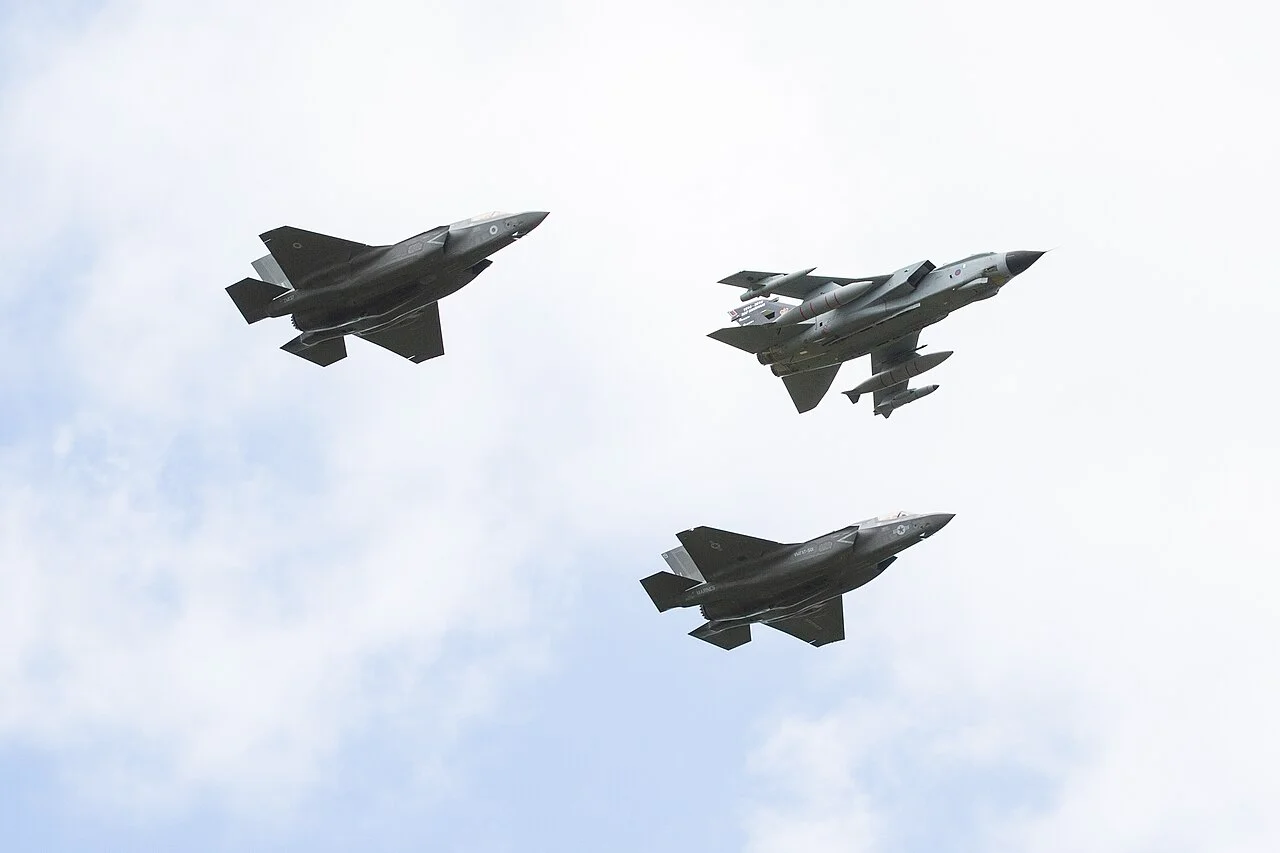
Inside the Test: 3,245 Images and Three Target Types
The research team built its dataset from a missile-borne scanning infrared imaging system, the same type of hardware a real missile seeker would carry. The 3,245 images spanned three categories of airborne targets, including mock-ups built to represent the F-22 and F-35.
- Training data: 3,245 infrared images
- Target categories: three, including simulated F-22 and F-35 aircraft
- Peak accuracy: 97.1 percent in laboratory testing
- Secondary test result: around 90 percent recognition accuracy
An Jiangshan said lightweight recognition models could see wide use in future missiles because they combine “high-speed recognition” with strong identification capability. The study was published in the Journal of Electronic Measurement and Instrumentation, a peer-reviewed Chinese academic journal.
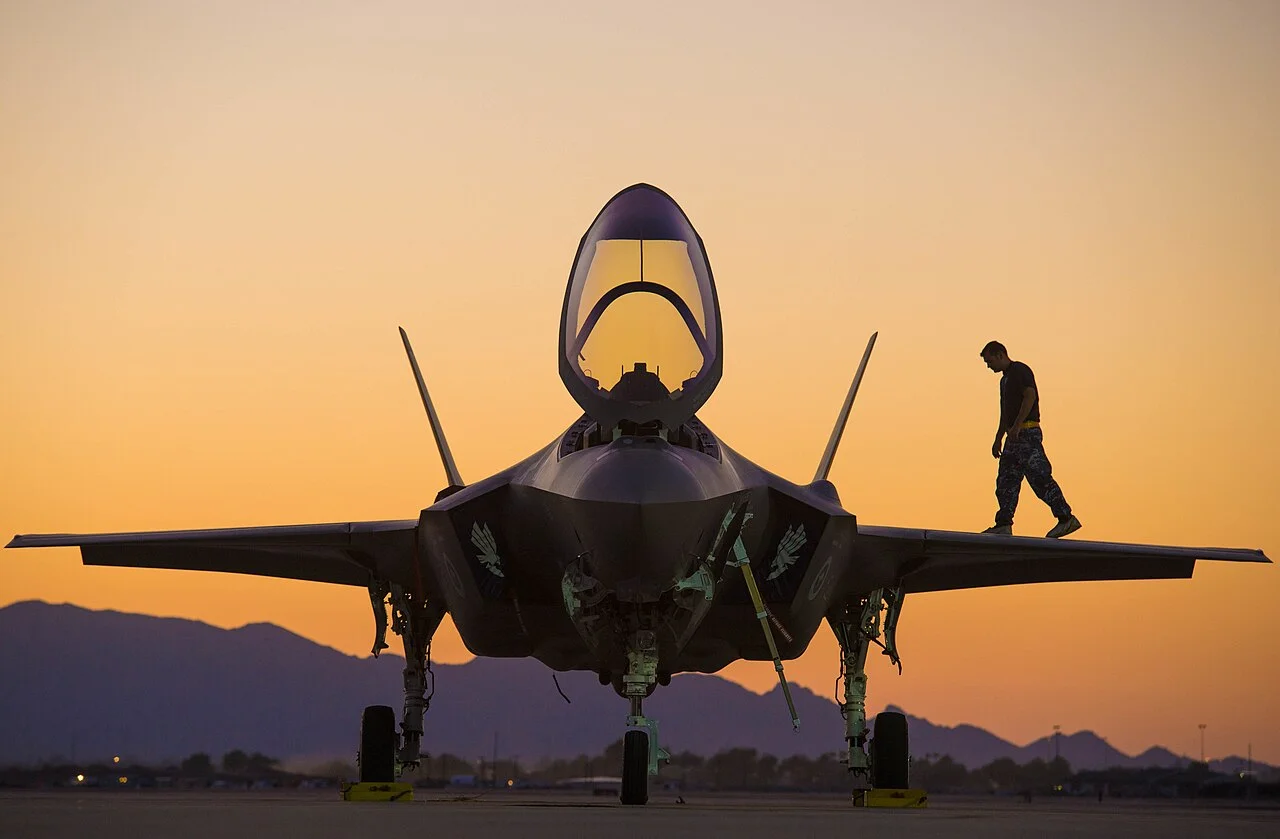
Squeezing the AI Onto Missile-Sized Hardware
Most deep-learning systems need far more computing power, weight, and space than a missile can spare. The Beijing team addressed that by cutting the model down to 16.1 percent of the parameters used in earlier approaches, while reducing computational requirements to 19.2 percent of previous methods.
To hit those reductions, the researchers combined structural optimization, batch normalization fusion, and 8-bit quantization, a set of techniques that shrink a neural network without a proportional loss in accuracy. They then paired the model with a dedicated AI accelerator chip built around parallel processing and optimized convolution operations.
Running on that hardware, the system processed each infrared image in about 1.5 milliseconds while drawing roughly 2.2 watts of power. It kept 96.4 percent accuracy during hardware testing, close to the laboratory results achieved without the size and power constraints of missile-ready equipment.
This infrared study is one of several Chinese research efforts aimed at exposing gaps in American stealth technology. A separate team at the Air Force Engineering University in Xi’an published a method that it says could increase the F-22’s apparent radar signature by a factor of 60,000, using a detection network spread across roughly 63,000 square kilometers.
Researchers at the Changchun Institute of Optics, Fine Mechanics and Physics have taken a different approach, developing infrared detection for a stratospheric airship that they say could spot an F-35-type aircraft from nearly 2,000 kilometers away.
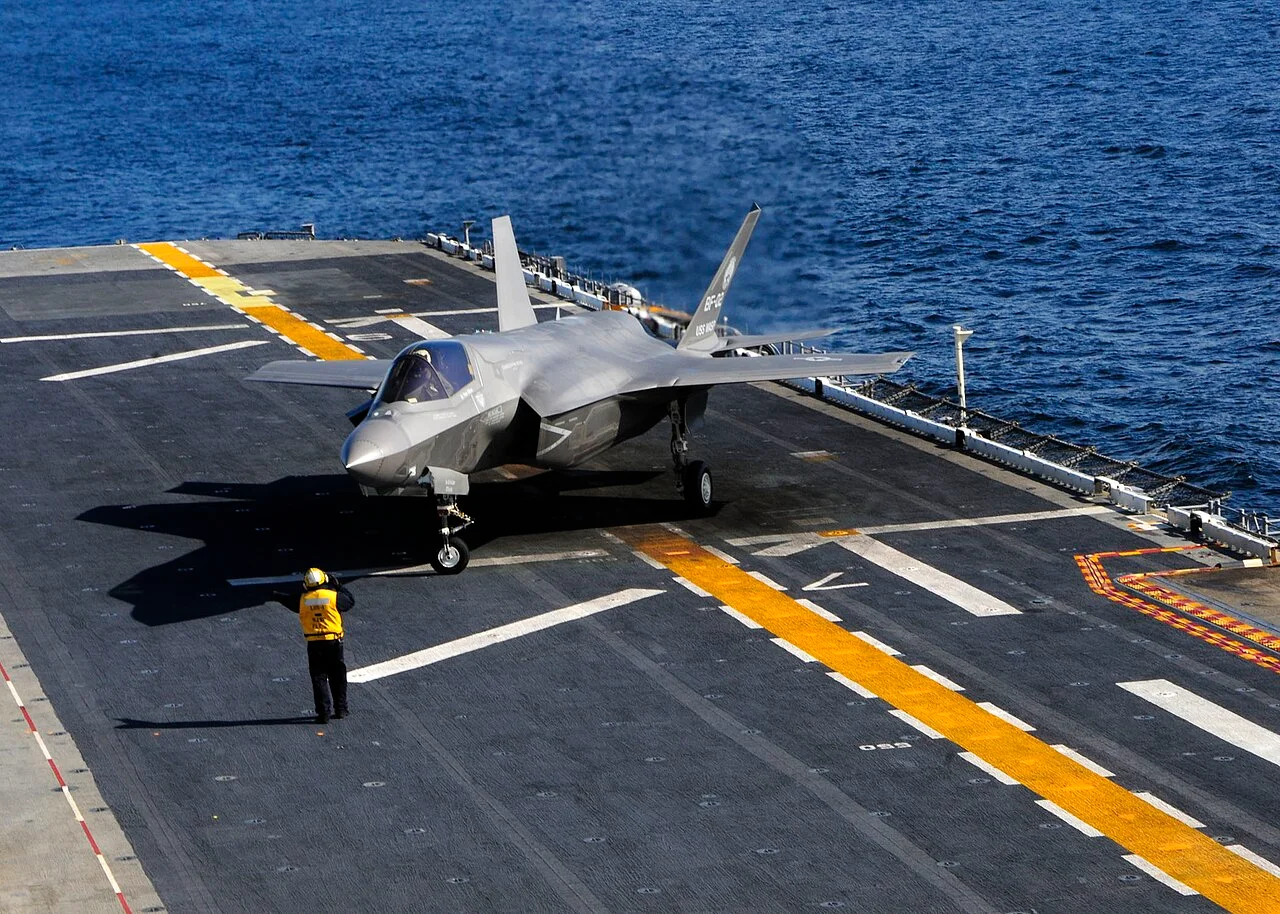
What the Results Do and Do Not Show
The study’s authors were careful to frame their results as laboratory findings rather than proof of real-world missile performance against actual F-22 or F-35 jets. An Jiangshan said the team could not disclose confidential test data covering that scenario.
The research also focused only on close-range air-to-air missile seekers. It has not yet examined whether the same lightweight AI approach would work in surface-to-air missile systems, which operate under different range, targeting, and hardware constraints.

All in All
The researchers say further work is needed to improve both recognition accuracy and processing speed before any system like this could see operational deployment. Any transition from laboratory testing to a fielded missile system would also require additional validation against real aircraft rather than mock-up targets.