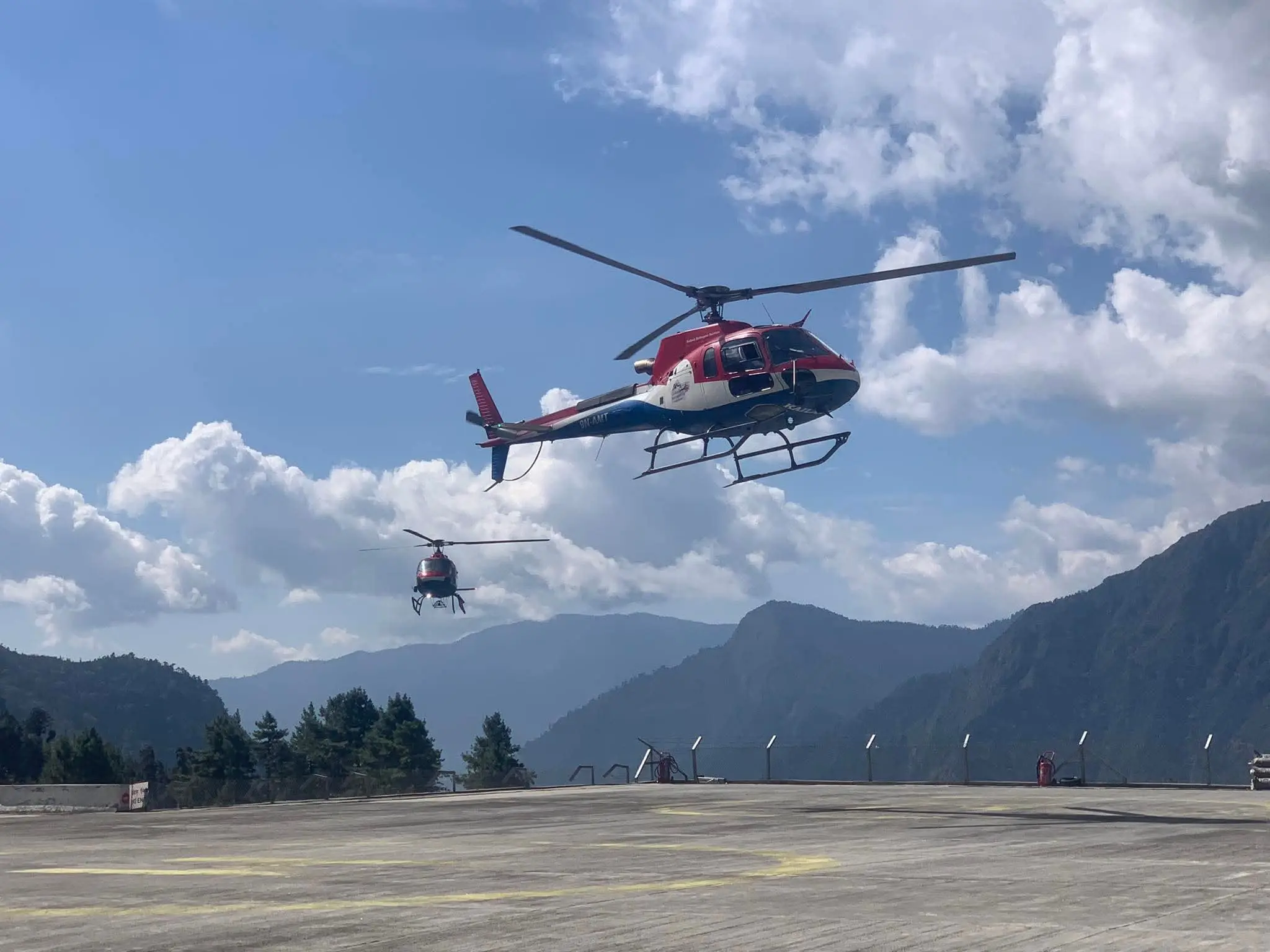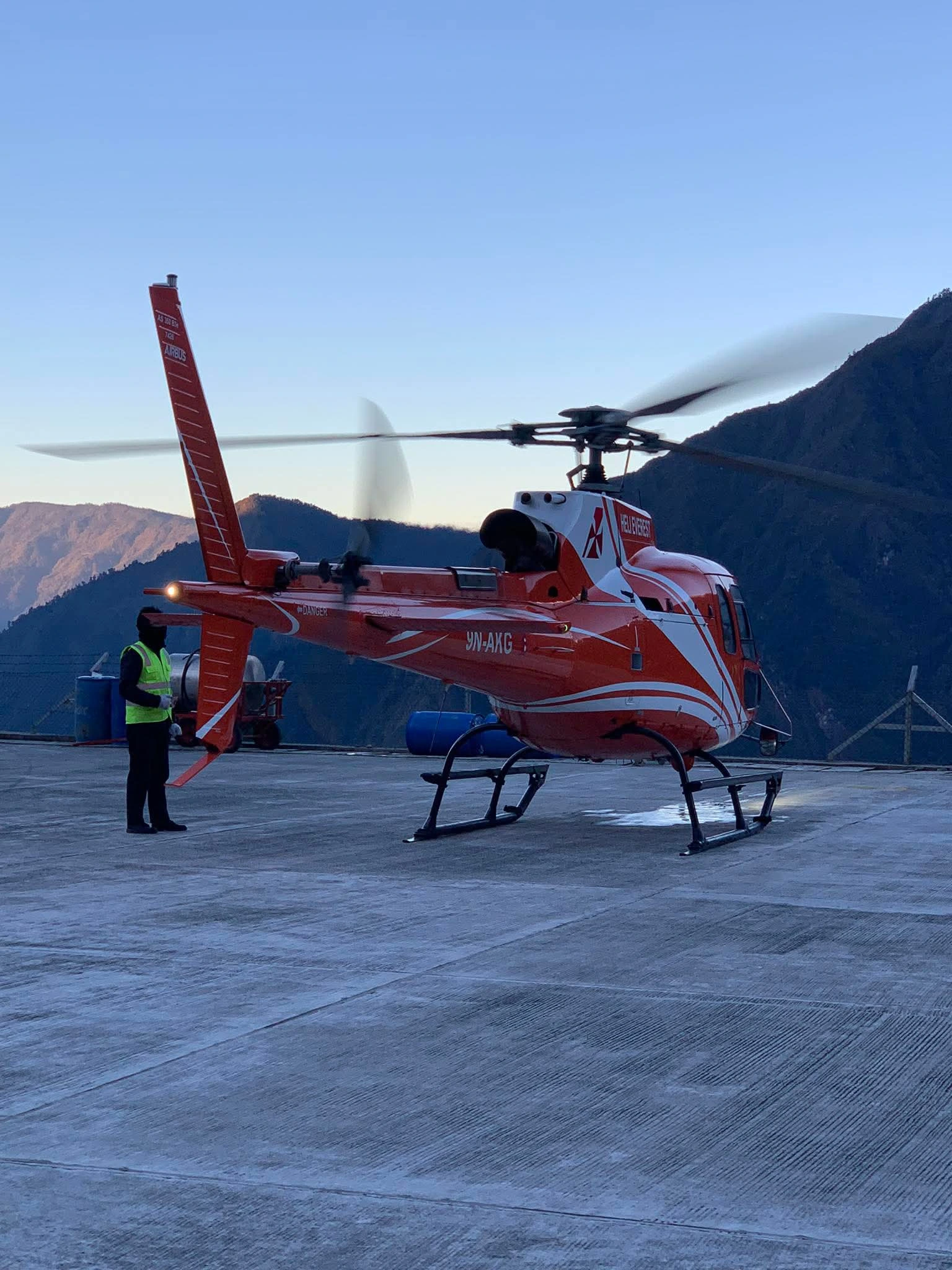

The scale of helicopter deployment during the recent flood in Nepal was staggering to say the least. The very day after the flood saw Nepal Army rescuing 97 people, . This included three airlifts from the Mailung tunnel and 14 from Timure, a place where floodwaters had swept away the local helipad. Among the helicopters deployed by the Nepalese army included a Mil Mi-17 helicopter that carried an emergency medical team to Trishuli. At some point of time, Nepalese Army’s rescue helicopters were managing a combined 15 trips an hour, about 500 trips a day.
What made the rescue operations particularly difficult was the monsoon season, when the Civil Aviation Authority of Nepal (CAAN) usually issues a circular mandating dual-pilot operations. However, for the rescue missions during the flood, CAAN did not mandate dual-pilot operations.
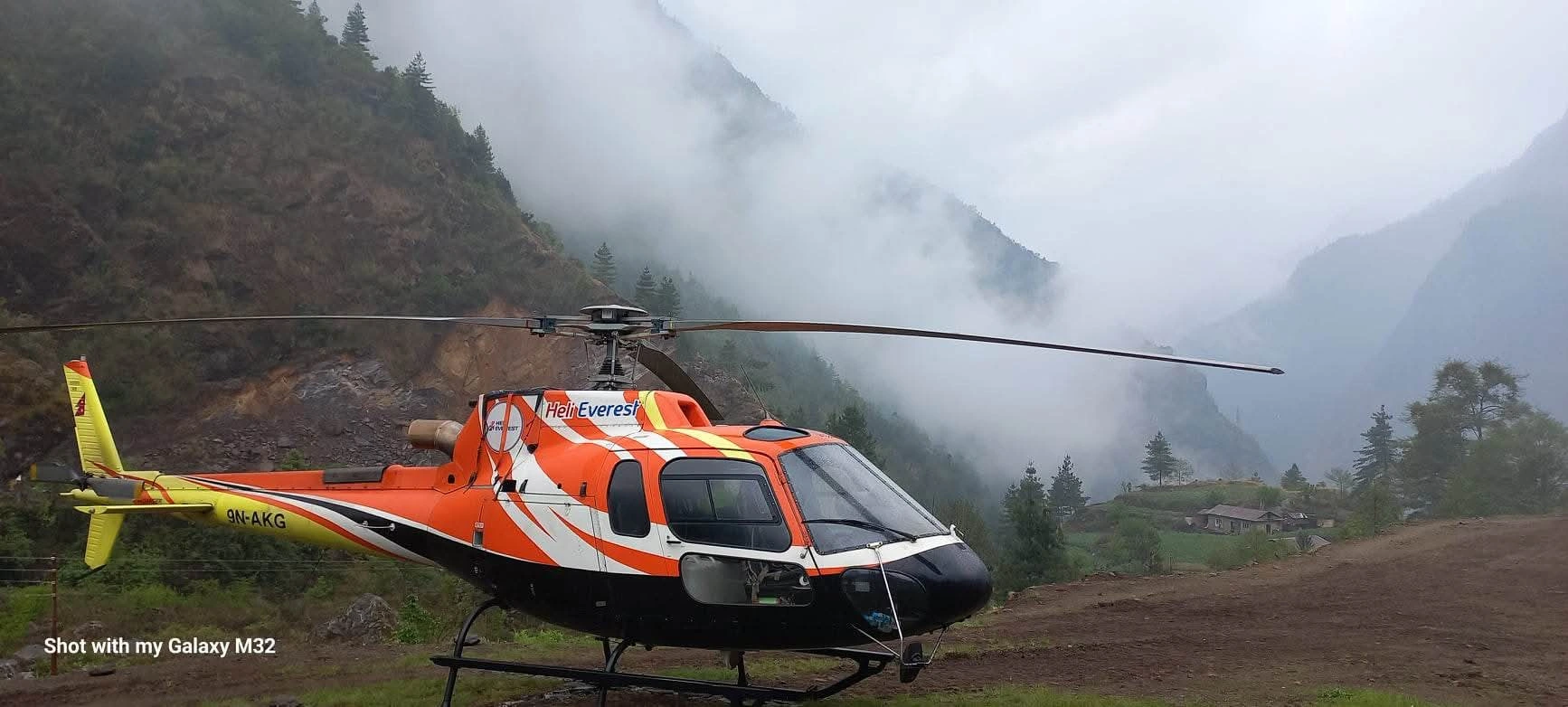
Nevertheless, single-pilot operations in the Rasuwa and Trishuli-affected areas were highly challenging and risky due to several operational hazards, including: overhead wires and cables in the operating areas, lack of suitable and properly prepared landing sites, foreign Object Debris (FOD) at landing areas, difficult and unpredictable mountainous terrain, limited ground support and marshalling facilities, and high helicopter traffic density due to the large number of aircraft involved in the rescue mission.
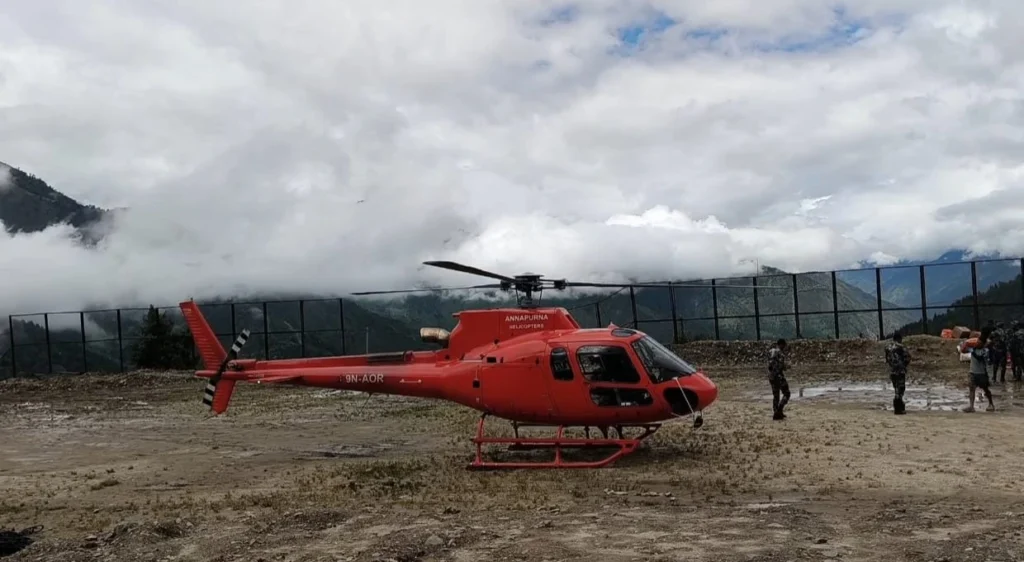
Ground Support, Marshalling, and the Rescue Areas
The rescue operations were particularly challenging because adequate ground support personnel were not available at many operating locations. According to the Quality and Safety officer at Prabhu Helicopter, Sumit Timilsina, the absence of adequate ground support was why many helicopter operators “deployed their own ground staff to the affected areas”. According to him, these personnel were responsible for:
-
Marshalling the helicopter during landing and take-off.
-
Safely embarking and disembarking passengers.
-
Maintaining a safe area around the helicopter.
-
Identifying and removing FOD from the landing area.
-
Assisting the crew and passengers during rescue operations.
The presence of dedicated ground personnel was particularly important for maintaining helicopter safety during passenger embarkation and disembarkation.
The other major problem that several helicopter operators experienced during the rescue was FOD-related problems, as choppers operated from unprepared or poorly maintained landing areas, which included Mailung Bazaar in Rasuwa district, the Trishuli-3A hydropower dam area, the Trishuli River, Trishul Dhara (Grung), Bhange waterfall, Bandare post, Langtang National Park, the Ghalegadhi area, the Upper Trishuli 3A powerhouse, the Kalikasthan vicinity, the Betrawati Bazaar area, the Trishuli hydropower dam, and the Chilime hydropower vicinity.
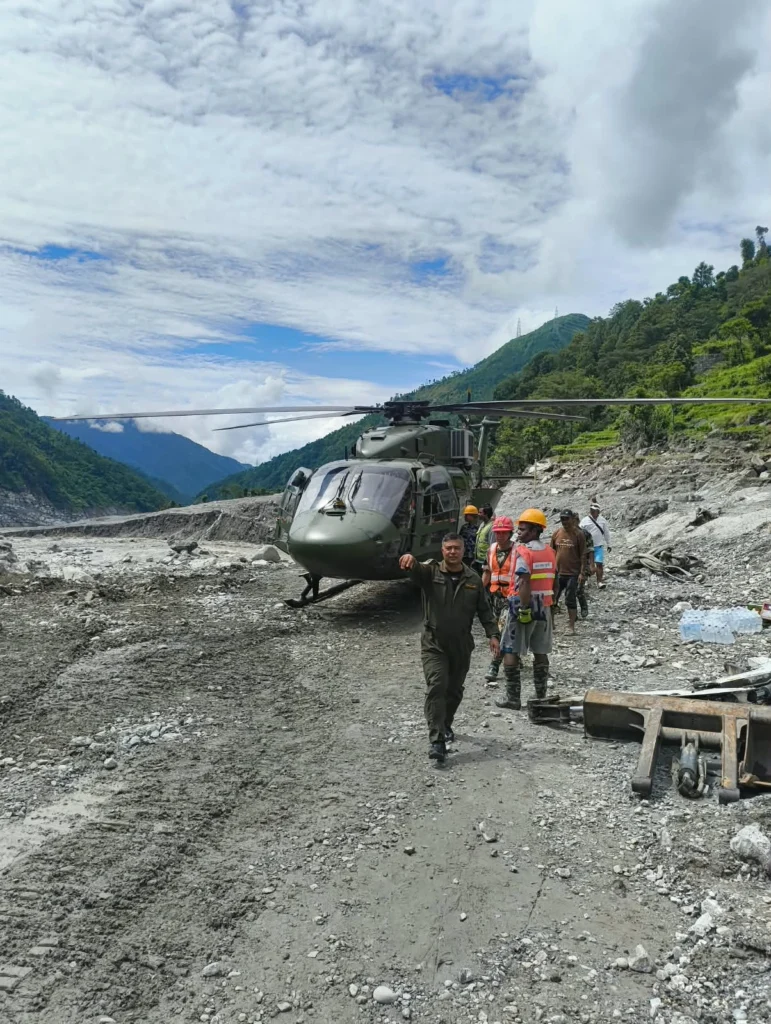
The Large Air Traffic Density During the Rescue
High air traffic density was another major challenge in the affected areas, particularly around Rasuwa and Trishuli. Nepal is home to a dozen helicopter companies with a combined 32 helicopters and around 45 pilots. On the first day of the flood, 16 helicopters carried out rescue operations, six Army and 10 private.
Many of the private operators of Nepal have a fleet of Airbus H125 (an aircraft that was able to land at the top of Everest), while the Nepalese army operates some larger aircraft as well, such as the AW 139, SA 315B Lama, 206 JetRanger, among others.
The large number of helicopters operating in the same area created additional challenges related to air traffic coordination, communication, traffic separation, and safe movement of aircraft. According to Timilsina, the situation was further complicated by the mountainous terrain, rapidly changing weather conditions, limited visibility, and multiple helicopters operating simultaneously from or around the same locations.
According to data compiled by Online Khabar, the day after the flood saw 40 flights, while the number was down to 21 by 28 August. By the time of that report, Army-coordinated flights had reached 881 and private companies had flown another 129, about 1,010 in total. A single Friday saw 96 flights. As these figures exclude flights from the Trishuli base, these figures might be understating the total number.
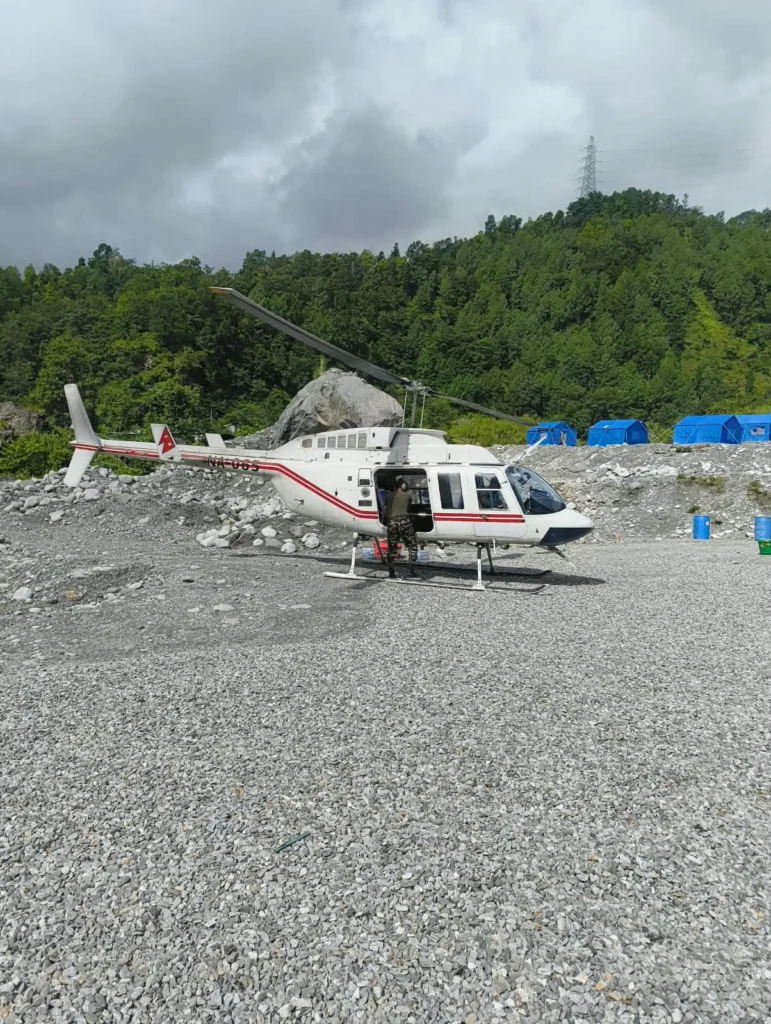
Food, Logistics, Aviation Fuel Arrangement, and Other Operational Challenges
According to Mr. Timilsina, there was no proper arrangement for food and basic logistical support for the deployed helicopter crews and ground personnel either. In an area that was wracked by the floods, which wiped out whole towns, basic logistical support would have been extraordinarily difficult to arrange for. The absence of proper arrangement for food and basic logistical support for extended periods created additional difficulties for the personnel involved in the mission.
For helicopter refuelling, NOC (Nepal Oil Corporation) fuel bowsers were arranged at the operating location. The fuel distribution and bowser operations were managed and controlled by the Nepal Army.
Needless to say, the operation required significant coordination between helicopter operators, pilots, ground personnel, CAAN/ATS, the Nepal Army, NOC, and other concerned authorities.
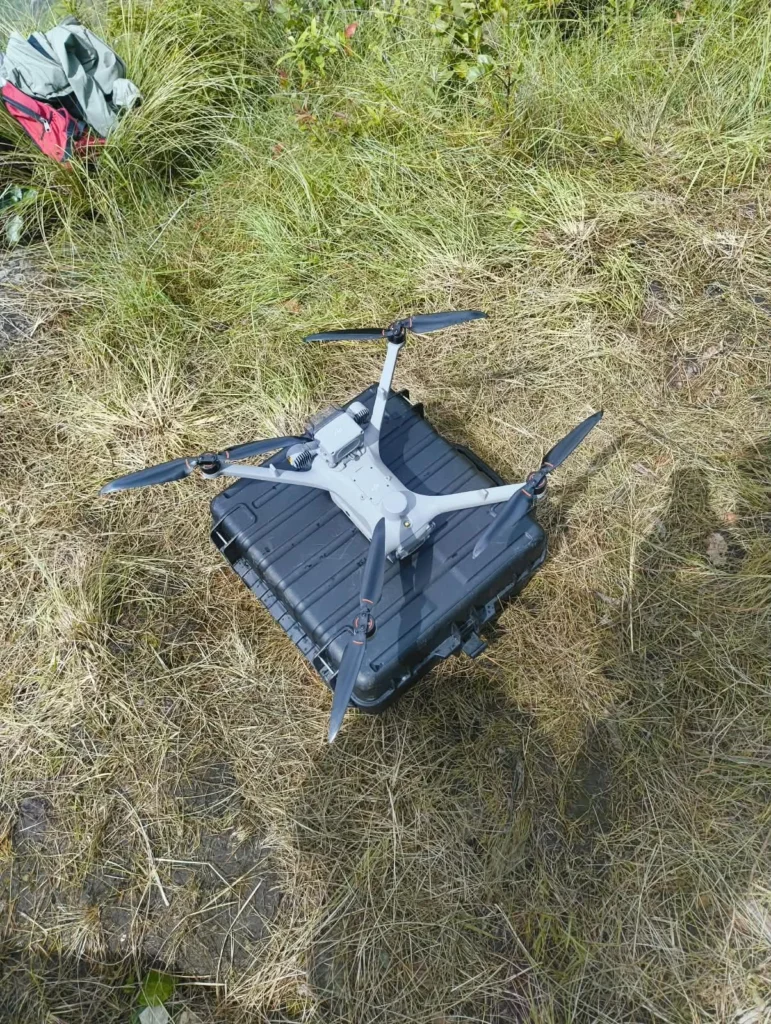
How the Drone Operations Came into the Equations
While drones can’t physically evacuate people the way helicopters can, they can complement ground crews by locating victims fast so ground teams can be directed to them. Timilsina also said that when helicopters can’t operate due to tricky weather weather, drones could reach affected areas, help us assess the situation, and give us a measure of FOD in the landing/ rescue areas, stream imagery live, and a drone’s electric motors let a speaker talk to lost or injured people. These are exactly the areas where Pushpak Udaan Aviation, which took on technical leadership and the main responsibility for advanced drone operations, focused on.
Working in coordination with the rescue team mobilised under DSP Ramesh Kumar Shah, the teams of Pushpak Udan Aviation Academy and Drone Hub Nepal carried out continuous search and surveillance. The technical team included Senior SI Bishnu Bikram Thapa, Engineer Motiram Itani (Chairperson, Pushpak Udan Aviation Academy Pvt. Ltd.) and Praveen Bhattarai (Managing Director, Drone Hub Nepal), among others.
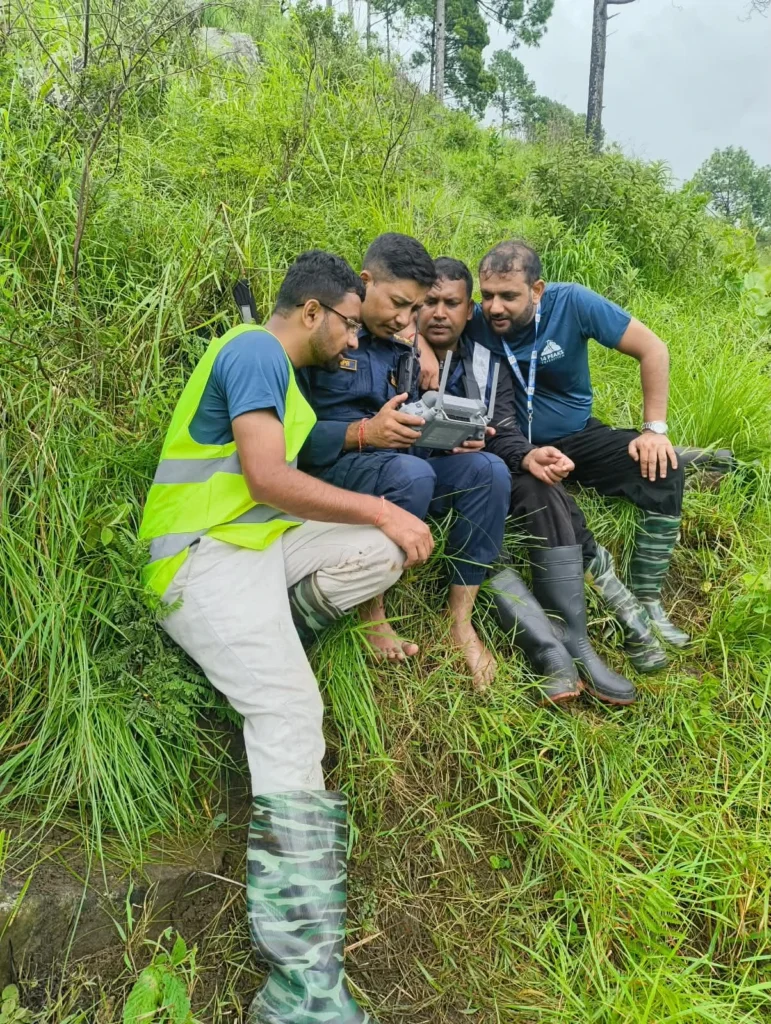
Talking to aviospace.org, Motiram Itani said that under Pushpak Udan’s leadership, the technical team used:
” thermal drones, various DJI drones and anti-gravity drone systems for aerial surveillance and searches along the Trishuli River, riverbanks, forests and other remote, high-risk areas. These drones were used to try to detect possible human activity and body heat signatures. Public-address (miking) and aerial communication technology were also used to relay information and messages of support to people who might be trapped, and to identify their likely locations.”
One of the more successful uses of the drone was carried out near the Chilime hydropower area where a drone was used to successfully carry a river cable-crossing (tuin) line from one bank to the other, directly helping with the transport of goods.
According to Itani, placing the saving of citizens’ lives was “its highest priority”, and his organization has “tried to make the search effort more effective through maximum use of modern drone technology”.
He further stressed that with better, and high-definition and infrared-camera fitted drones, Nepal will be able to survey open terrain quickly.