On the morning of August 26, 2026, a flash flood tore down the Bhote Koshi gorge on Nepal’s border with Tibet, killing at least 1,280 people and leaving thousands more missing. The Airlines Operators Association of Nepal (AOAN) confirmed in a press release that its member helicopter companies had joined search and rescue operations within hours of the disaster.
The flood swept away the Rasuwagadhi border post, bridges, hydropower plants, and long stretches of Nepal’s only overland road link to Tibet. It is now Nepal’s deadliest natural disaster since the 2015 earthquake, which killed roughly 9,000 people. In the days that followed, Nepal’s aviation sector, both fixed-wing airlines and helicopter operators, became central to the relief effort.
Why Helicopters Became Rasuwa’s Only Lifeline
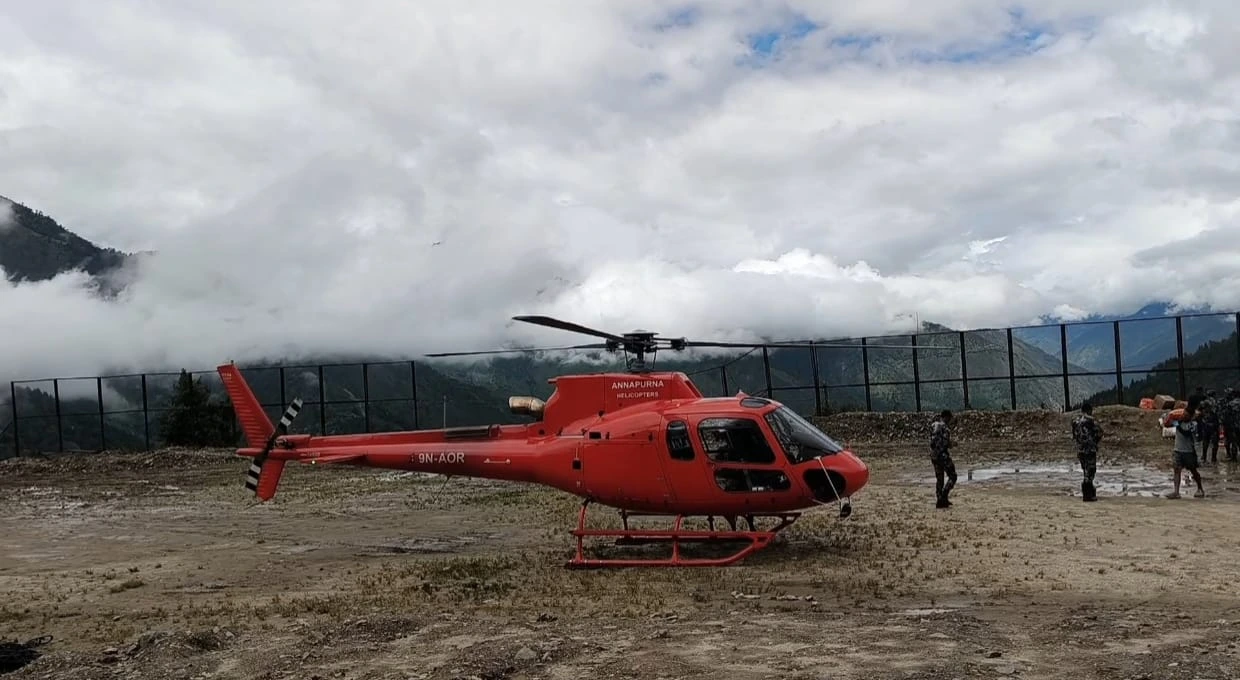
Rasuwa, Nuwakot, Dhading, Gorkha, and Chitwan districts all suffered damage, but the destruction hit hardest along the Bhote Koshi and Trishuli river corridors. With roads and bridges gone, helicopters became the only way to reach cut-off villages.
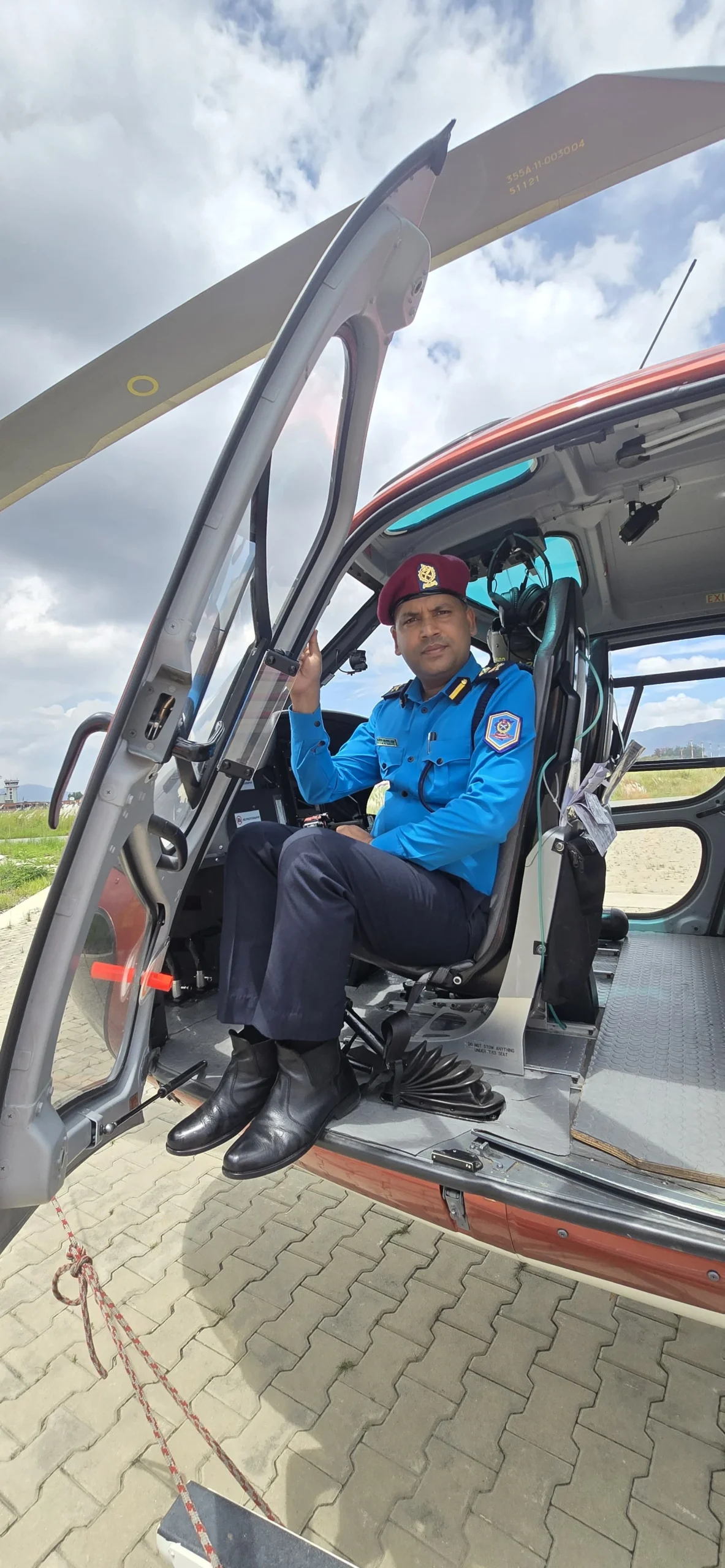
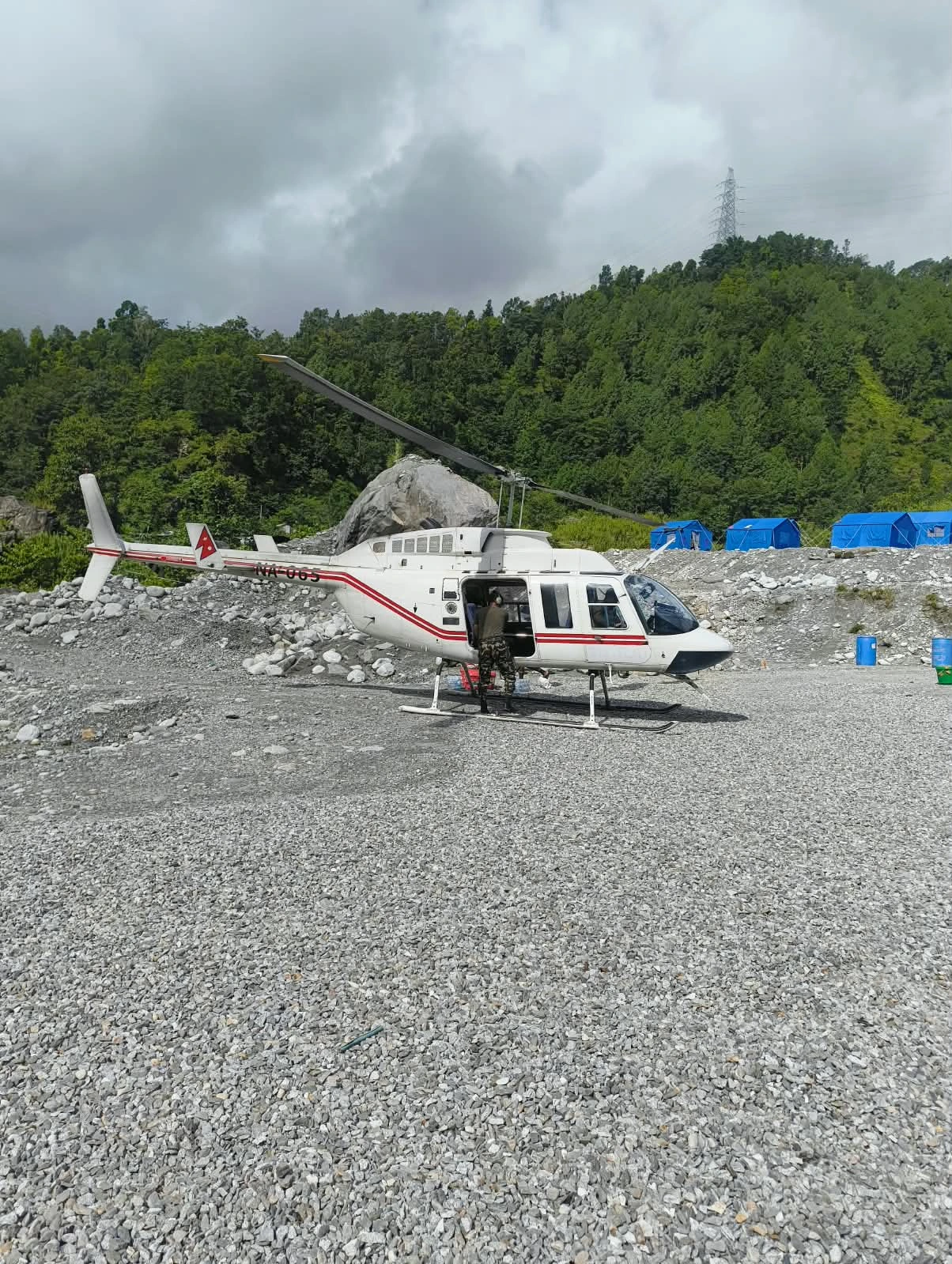
According to on AOAN figures cited by OnlineKhabar, Nepal has around a dozen helicopter companies with a combined fleet of just 32 helicopters and roughly 45 pilots. This is a relatively small fleet for a disaster of this scale. The Nepali Army deployed its own Augusta helicopters alongside private operators, with as many as 13 aircraft working Rasuwa and Nuwakot at once in the earliest days of the response, and around 20 helicopters operating over the Timure area at times during the following week.
More than 40 chartered private helicopter flights left Kathmandu for relief and rescue work in the days immediately after the flood, according to a report by Kantipur. The Nepali Army’s brigade at Tribhuvan International Airport (KTM), Kathmandu, coordinated the movement of relief supplies from collection centers onto the waiting aircraft.
What Pilots Faced on the Ground in Timure
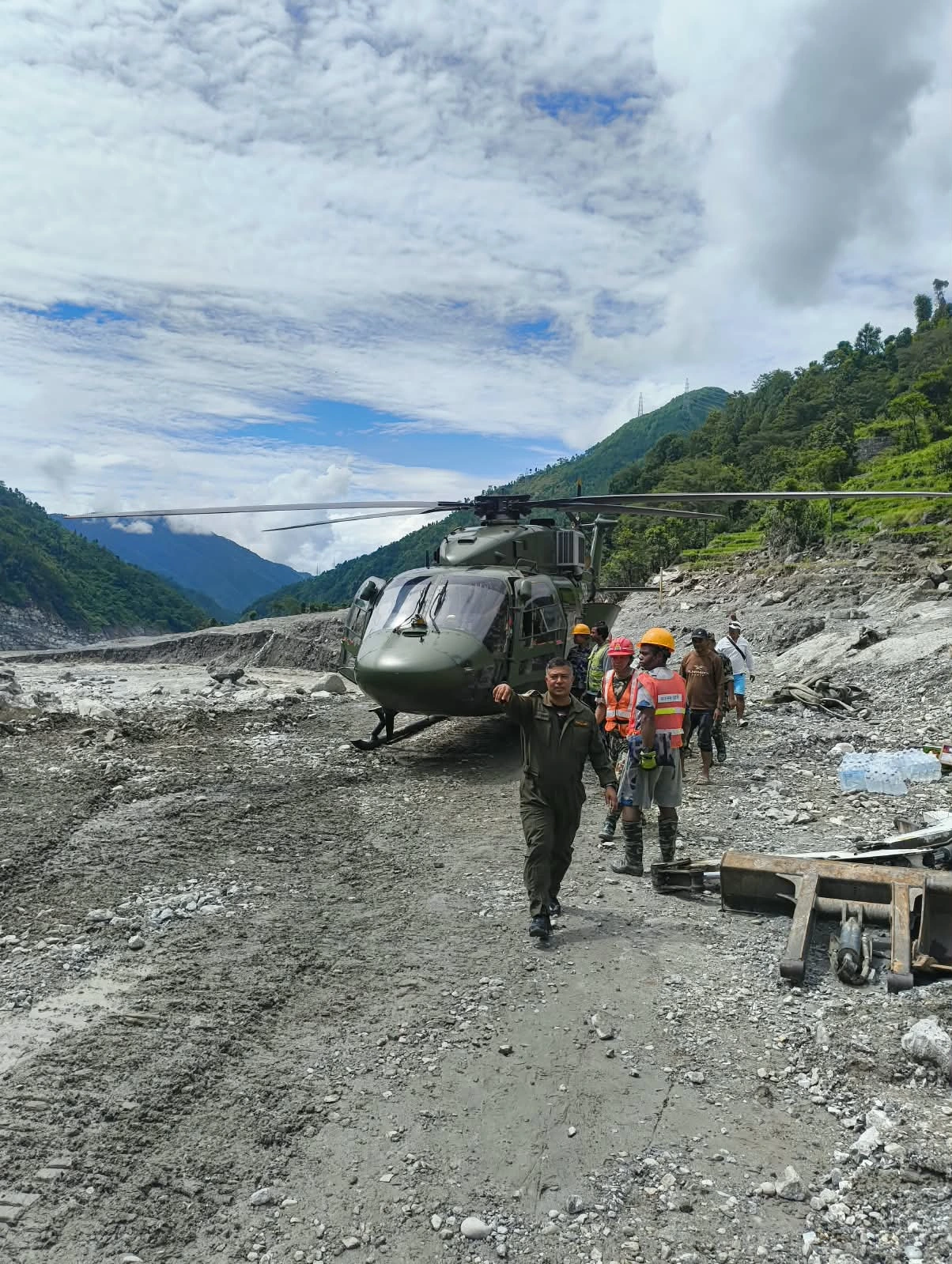
Priya Adhikari, Nepal’s first female helicopter captain, flew roughly 100 rescue missions over six days in the flooded valley. She described the scale of the disaster to CNN’s Anderson Cooper as unlike anything she had seen before, in some ways worse than the 2015 earthquake, because the destruction this time was concentrated into one narrow gorge.
Landing conditions were treacherous throughout the operation. Mud was too soft to trust in many spots, so pilots kept their engines powered up rather than shutting down, ready to lift off the moment the ground gave way beneath them. More than 200 survivors were flown out of Timure in the first two days alone.
What Buddha Air Promised on Fares and Free Relief Cargo
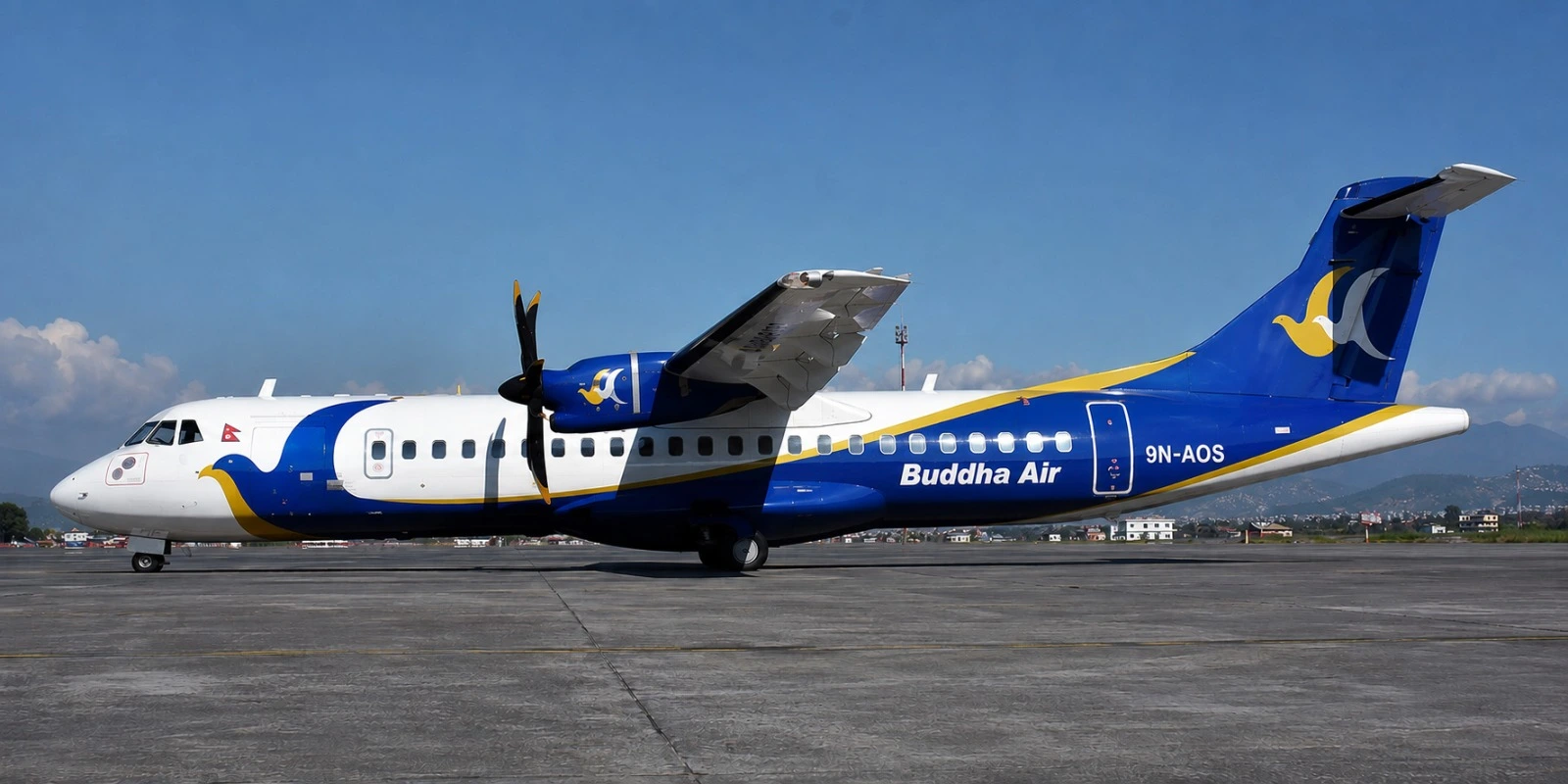
Buddha Air (U4) issued its own statement addressing a separate concern: the risk of airlines raising prices during a crisis. The carrier stated plainly that it had made no change to its fares since the disaster began.
“No matter what business challenges arise in the current difficult situation, we remain committed to providing simple and affordable fares,” the airline said in its statement. It asked the public to report any case of tickets being sold at inflated prices, warning it would take “necessary and strict action against such activities in accordance with the rules.”
Buddha Air outlined several concrete commitments in its announcement:
- An additional discount of NPR 300 on tickets booked through its website or mobile app
- Regular additional flights added to Bhairahawa, Pokhara, and Bharatpur since the flood began
- Free collection and air transport of relief materials, arranged in line with a Ministry of Home Affairs decision
- A pledge to hold fares steady until road access to the affected areas is restored
The airline asked passengers to check fares directly through its website or app before booking, noting that its published prices had not changed from before the disaster.
How Buddha Air’s Response Compares to Other Nepali Carriers
Buddha Air was not alone in adjusting its policies. Nepal Airlines is the only Nepali carrier that has published a formal flood change policy covering both its domestic and international routes. The Nepalese flag carrier said that the impacted passengers who had tickets issued on/before 26th Aug 2026 with travel itinerary until 05th Sep 2026 were entitled to revalidate their tickets under the following terms and conditions:
| Criteria | Waiver Conditions |
|---|---|
| Ticket issuance date | On or before 26 August 2026 |
| Original travel date | 26 August 2026 to 5 September 2026 |
| Eligible passengers | Travel originating from Nepal only |
| Revalidation / travel completion date | Travel must be completed on or before 16 September 2026 |
| Applicable charges | Free of cost |
The carriers in Nepal froze their fares after the Civil Aviation Authority of Nepal (CAAN) urged Nepalese airlines to maintain current fares after there were fears that airfares were likely to hike their fares disproportionately during times of crisis.
Shree Airlines, meanwhile, contributed directly to the physical rescue effort through its helicopter fleet, the same fleet that Adhikari flew during her six days over Timure. The airline is Nepal’s largest operator of Mi-17 helicopters and also flies AS 350 B3e aircraft, a fleet profile detailed in an earlier overview of Nepal’s fixed-wing and helicopter operators.
Shree Airlines had taken the same initiative as Nepal Airlines allowing the passengers to reschedule their flights free of charge until 05 September, 2026. In a notice issued by the company, the airline claimed that it had reduced airfares across all routes to the applicable minimum fare and increased flight frequency ensuring safe and accessible travel for all passengers.
Yeti airlines also committed on sticking to the lowest fare possible although people have reported that the ticketing system displayed higher ticket price due to high demand of passengers on some sectors.
However, no statements have been provided by STOL operators regarding the airfare.
Relief flights from across the world has been received at Tribhuvan International Airport. According to Ujjwal Devkota, an aircraft maintenance professional at Sita Air, the relief flights have led to some rare appearance of various aircraft at Kathmandu:
Over the last ten days, TIA has a sequence of rare cargo flights delivering relief supplies to Kathmandu, drawing significant attention from local aviation enthusiasts over the past ten days.
The rare cargo flights include:
- the Boeing C-17 Globemaster III (Indian Air Force, C-130 Super Hercules (U.S Air Force)
- Chinese Military Aircraft Y-20 (two Y-20s arrived on the same day bringing over 50 tonnes of relief materials)
- Boeing C-17 Globemaster III (Qatar Emiri Air Force)
- National Airlines Boeing 747- 30th /anniversary livery
- KC-330 Cygnus by Korean Air Force
- Samaritan’s Purse Boeing 767
- Malaysia Air Force Airbus A400-M
- Royal Thai Air Force C-130 Hercules
- Emirates Boeing 777F (which made its first appearance at KTM)
What Comes Next for the Relief Effort
Nepal’s disaster authority reported 1,050 bodies recovered and 4,606 people still missing exactly one week after the flood, figures that continued to rise in the days that followed. Families of workers trapped inside flooded hydropower tunnels along the Trishuli corridor have demanded faster answers, as tunnel rescue attempts have proven extraordinarily difficult.
More than 30,000 security personnel have taken part in search and rescue operations since August 26, supported throughout by both army and private helicopters. Bad weather forced at least one full suspension of flying operations, and a newly formed barrier lake upstream twice triggered precautionary halts to work near the riverbanks.
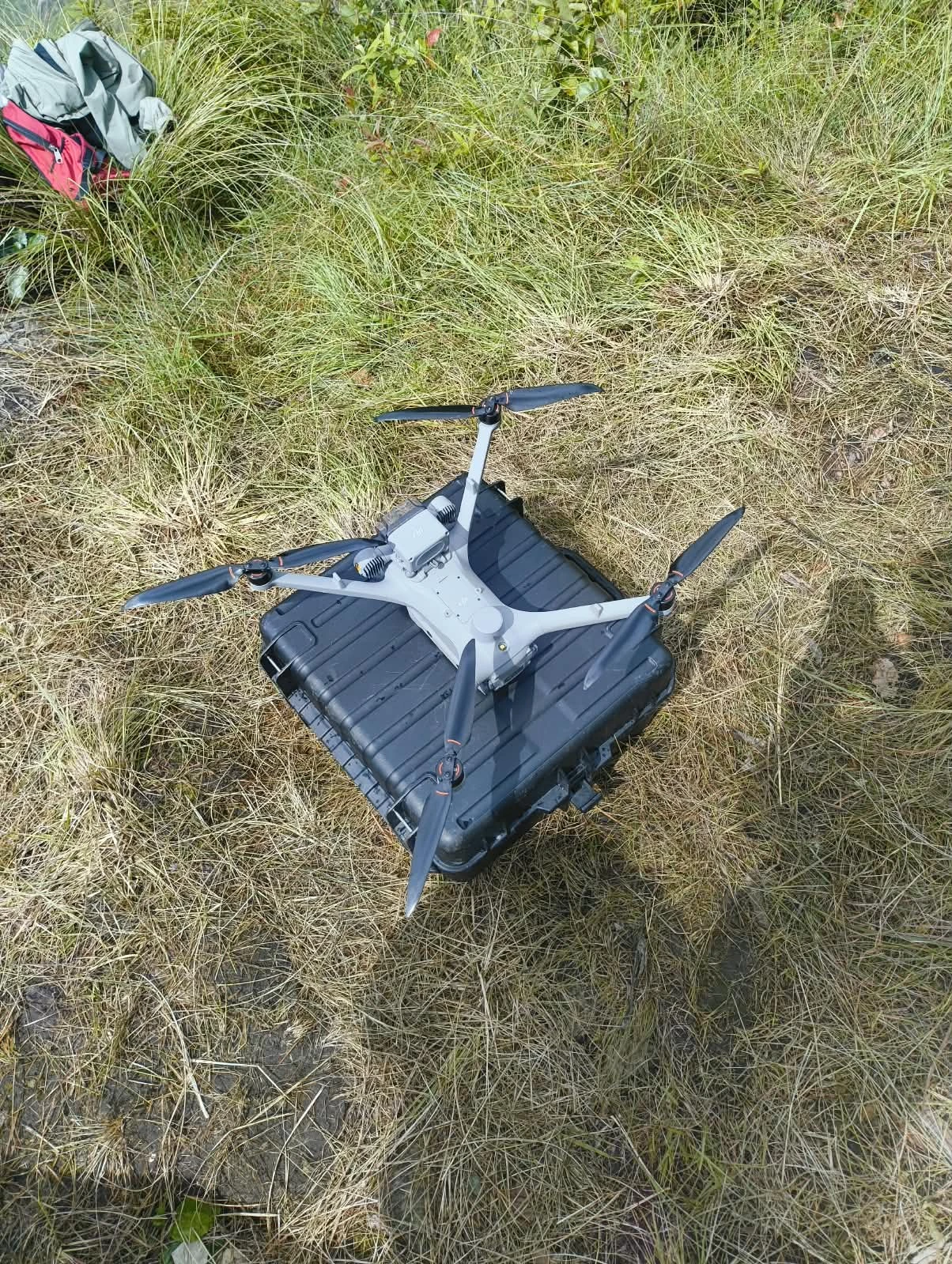
Apart from airline operators, Pushpak Udaan Aviation, in coordination with Drone Hub Nepal and rescue team, deployed under the leadership of DSP Ramesh Kumar Sah, has also intensified search for people trapped or missing in high-risk areas around Mailung Bazaar, the powerhouse and dam areas of the Trishuli-3A Hydropower Project, and along the Trishuli River in Rasuwa.
The technical team is using advanced drone technology for aerial surveillance and searches along the Trishuli River, riverbanks, forests, and other remote and hazardous areas. Thermal drones, various DJI drones, and Anti-Gravity drone systems are being used to detect possible human activity and heat signatures emitted by human bodies.
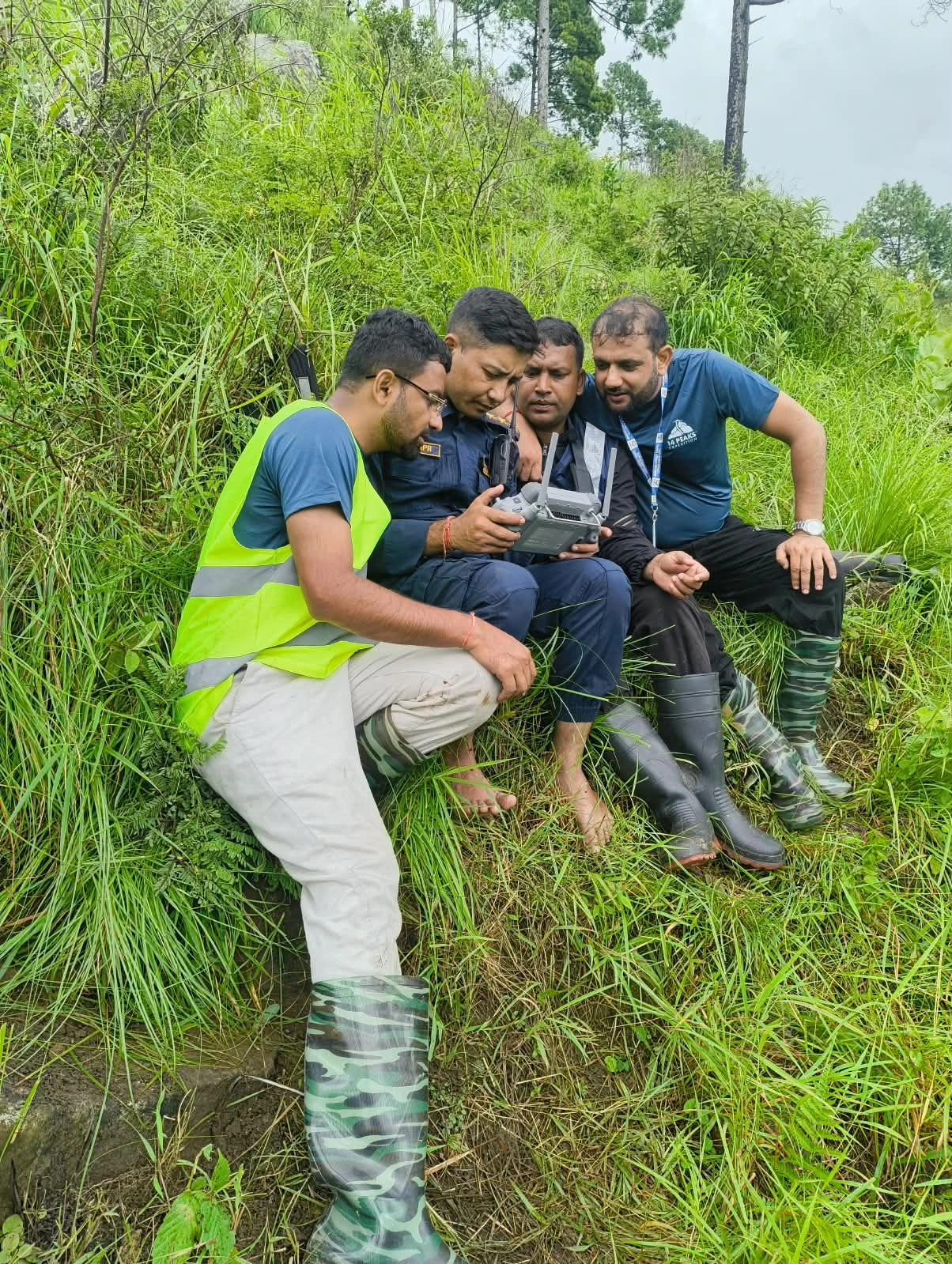
The team is also using drones equipped with public-address and aerial communication systems to deliver information and messages seeking to assist potentially stranded people while attempting to determine their possible locations.
Earlier this year when a serac collapsed while climbers were headed towards Everest Base Camp II for acclimatization, it renewed debates of the need for Nepal to become a drone friendly nation. After all, drones can be used to assess a situation, locate climbers, scout for a helicopter landing spot, among other things.