Around the same time that Nepal hosted a 5-Day FIA Drone training in Nepal as it trained participants from four countries, the nation’s Home Ministry lifted a five-day ban on cargo drone operations at Mount Everest on May 5, 2026, reinstating clearance for Airlift Technology — a Nepali startup — to resume flights between the Everest Base Camp and Camp I in the Khumbu Icefall. The suspension, imposed without a detailed public explanation on April 30 and widely attributed to unspecified “security concerns,”.
Nepal had recently permitted the demonstration of a US-made drone, the Freefly Systems Alta X Gen 2, at Everest Base Camp — an event attended by Sergio Gor, the US Special Envoy for South and Central Asian Affairs — while Chinese-manufactured DJI FlyCart 100 drones had been operating commercially on the mountain since 2025.
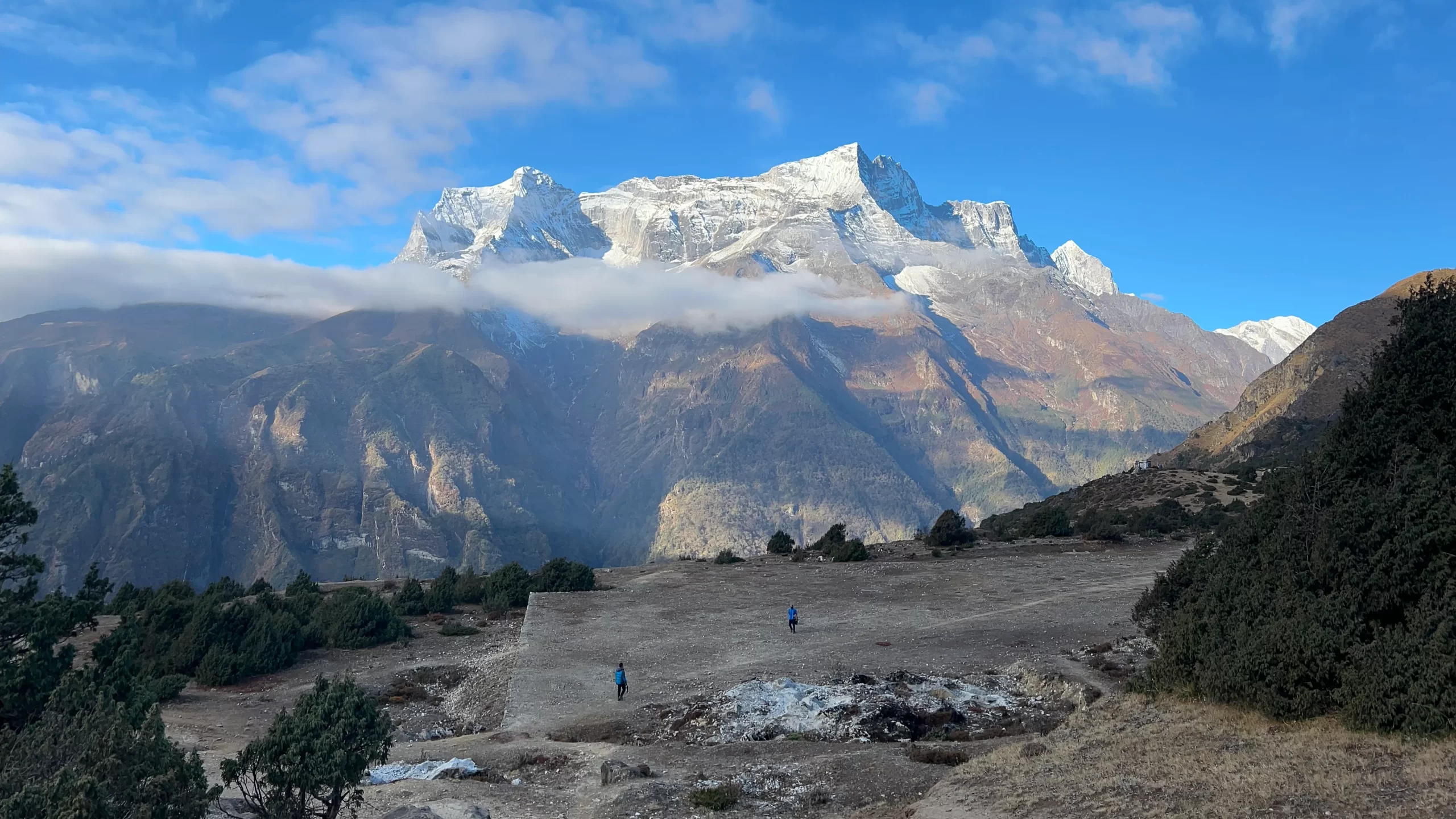
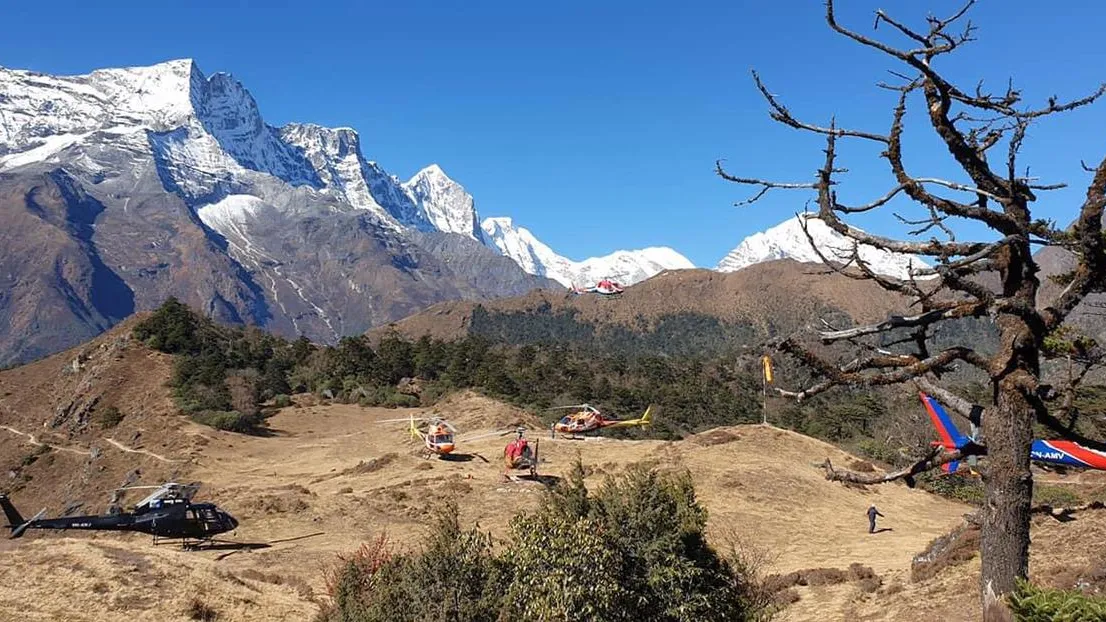
Drone technology might be useful in a now defunct aerodrome such as Syangboche (above) where a lot of cargo flights are conducted.
Nepal’s Home Ministry Suspends Drone Operations Citing Vague Security Concerns
Airlift Technology’s operations were abruptly suspended on April 30 evening by the Home Ministry, citing unspecified security concerns, despite the company holding a tripartite agreement with the Sagarmatha Pollution Control Committee (SPCC) and the Khumbu Pasang Lhamu Rural Municipality to transport garbage and supplies between Base Camp and Camp I.
The suspension order appeared to target two drones — the Chinese-made DJI FlyCart 100 and the American-made Freefly Systems Alta X Gen 2 — both associated with Airlift’s operations. Debendra Subedi, assistant chief district officer at the District Administration Office in Solukhumbu, confirmed that the Home Ministry’s order applied only to those two drones operating at Everest Base Camp, though he noted the district office had yet to receive an official communication.
Raj Bikram Maharjan, CEO of Airlift Technology, expressed frustration at the opacity of the order:
“We were unable to proceed because a suspension order had been issued…There has been confusion over our operation, even though we have been working with SPCC and the local government since last year.”
The company had already delivered four aluminum ladders, five rolls of rope, and oxygen cylinders to Camp I earlier in the season before the halt.
US And Chinese Drones Compete for Everest’s Slopes
On Friday, May 1, a helicopter landed on the Seven Summit Treks helipad at Everest Base Camp carrying dignitaries from the United States. [One has to note that a helicopter has already landed at the top of Everest] Sergio Gor, the US Ambassador to India and Special Envoy for South and Central Asian Affairs, had come to Base Camp to promote American drone technology — part of the Trump Administration’s “Trade Not Aid” policy, implemented after the shuttering of USAID and other foreign aid programs.
A Home Ministry official said the decision to suspend Airlift’s operations was influenced in part by concerns relayed through the Foreign Ministry, amid heightened sensitivity over the presence of both American and Chinese technologies on Everest. “There were also reports circulating that Airlift was planning to deploy a robot from an American company,” the official quoted in Asia News Network said. Nepal currently has no legal framework permitting a non-human entity to attempt an ascent of the peak.
The mountain straddles the international border between Nepal and China’s Tibet Autonomous Region, with the summit lying directly on the boundary shared by the two nations.
Officials at the Ministry of Culture, Tourism and Civil Aviation had flagged potential security risks associated with drone operations approximately six weeks before the ban, particularly regarding geo-mapping capabilities and other sensitive functionalities. Another government official stationed at Everest Base Camp, however, described the suspension as a reaction driven largely by speculation. “The Home Ministry acted quickly, but much of it was based on rumours,” the official said.
Two Climbers Injured in the Khumbu Icefall Prompted Drone Use
The urgency of drone deployment became acutely evident following a fresh incident in the Khumbu Icefall. According to the Department of Tourism, climbers and Sherpa guides heading towards Camp II for acclimatization were struck when part of a serac collapsed onto the route at around 4:45 am on Tuesday. Of the four individuals affected, one Sherpa guide and one Indian climber were injured and later airlifted to Kathmandu, where they received treatment at HAMS Hospital*.
The incident triggered immediate panic, prompting the Expedition Operators Association Nepal and the Icefall Doctors to seek drone assistance to assess the situation and locate climbers — assistance that Airlift could not provide. Milan Pandey, co-founder of Airlift Technology, told Outside magazine that the company had planned to map the icefall every five days. “If we could have followed this plan, maybe we could have identified this weakness in the icefall and informed the Icefall Doctors to go around it,” he said.
Pandey added that the drones could have also flown over the site of the serac collapse to scout for a helicopter landing spot, and could have ferried the ladders and equipment the Icefall Doctors needed to reopen the route quickly, enabling the remainder of the climbers to descend safely. The rescue was eventually completed approximately 45 minutes later without drone support, but the episode starkly illustrated the operational gap created by the ban.
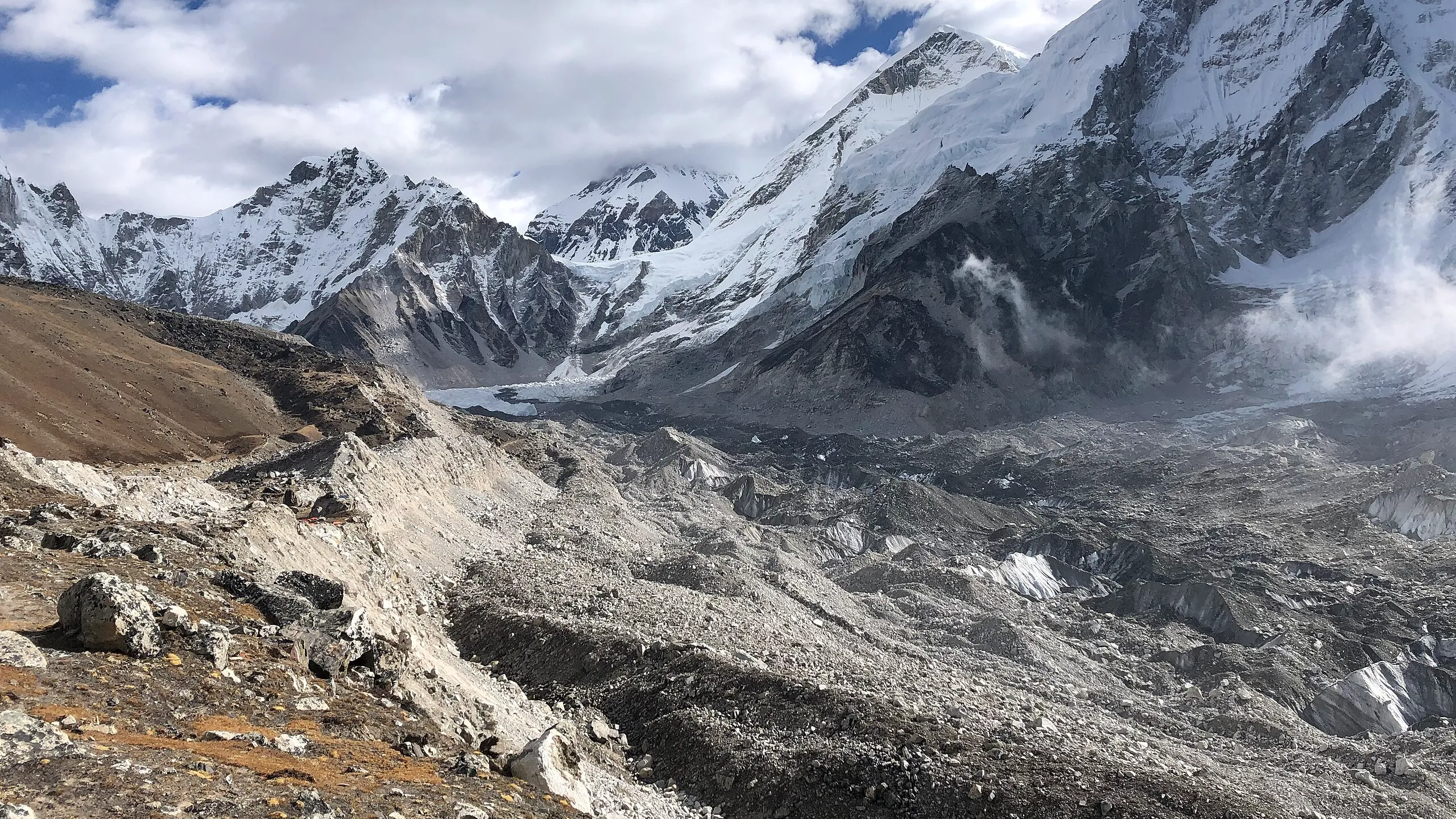
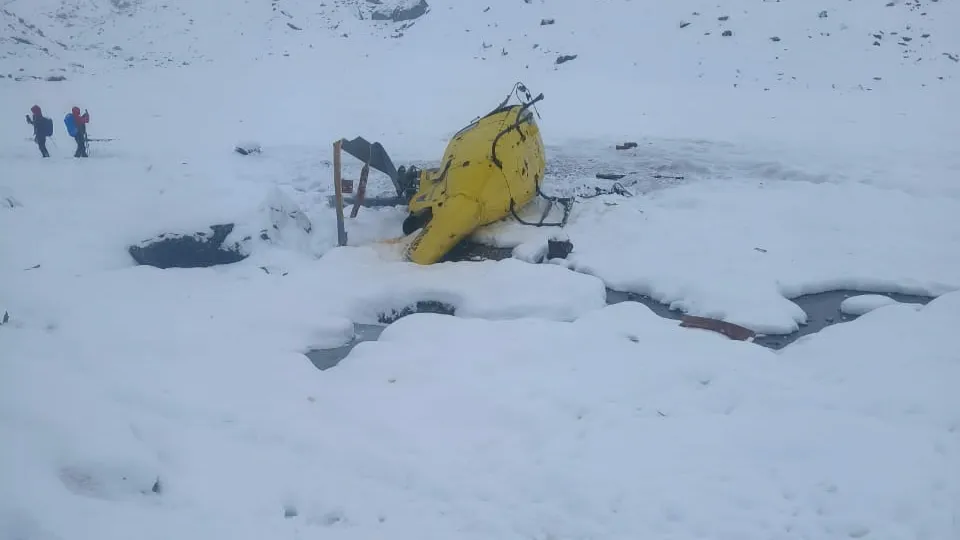
[* Only a year or so ago, a helicopter registered 9N-AMS crashed in the Lobuche region of Everest. The Everest region is notorious for a string of deadly aviation accidents in Lukla Airport, which is considered to be the most dangerous airport in the world, though this might be a myth.]

How Airlift Technology’s Drone Operations Work At Extreme Altitude
Airlift Technology currently operates the DJI FlyCart 100, which can carry up to 100 kilograms at sea level and approximately 40 kilograms in high-altitude conditions. The company charges approximately Rs1,000 per kilogram to transport goods to Camp I — significantly below equivalent helicopter costs.
Navigating a drone on Everest presents formidable technical challenges. The peak is buffeted by swirling winds; the steep walls and Khumbu Icefall can also block radio signals. To fly between Base Camp and Camp I, two drone operators typically work in tandem — one pilots the craft from Base Camp to the top of the Khumbu Icefall, at which point a second pilot standing at Camp I takes over control and guides it upward.
Beyond cargo transport, drones offer critical safety advantages. Last year, during route preparation on Mount Pumori, an Airlift drone identified a dangerously hanging serac, prompting an expedition to halt. Hours later, a massive avalanche struck the same area, narrowly avoiding casualties.
With 3D mapping capabilities, drones can scan hazardous terrain such as the Khumbu Icefall, measuring crevasses and detecting unstable ice formations, allowing climbers and guides to assess risks remotely and reduce exposure to life-threatening zones.

Photo: Vyacheslav Argenberg | Wikimedia Commons
Expedition Operators Describe A Season Organised Around Drone Logistics
Mingma Wongchu Sherpa, Managing Director of Himalayan Sherpa Adventure — leading a British Army expedition with 11 clients attempting the summit — told Outside that his expedition’s logistics strategy had been built entirely around drone service. “I filled out the form for 1,500 kilograms of cargo to be flown to Camp I via drones,” he said. “But now that the operation is halted, we don’t have enough manpower. Our whole expedition was organised around drones.”
He elaborated on the safety dimension driving that choice: “As an operator I employ a lot of Sherpas and climbing guides, and I really care for them. Every evening when they leave it’s kind of emotional for me. They are doing this multiple times so our clients can go once. I really appreciate the idea of drones.” He added: “If the drones don’t operate, I have to mobilize my team even more, which I’m totally against. Ferrying that amount of gear is going to take my team eight or nine extra trips through the icefall.”
The ban also imposed measurable financial and contractual pressure on Airlift itself. Airlift is contractually obliged to remove 10 tonnes of garbage from Camp I this season while simultaneously supplying logistics to high-altitude workers. The Everest spring climbing window typically closes by the end of May, meaning each day of suspension directly eroded the company’s ability to fulfil its commitments.

Nepal Approves Chinese Drones but Grounds American Drones
The manner in which the ban was applied drew pointed commentary from within Nepal’s mountaineering industry. Nepal approved the commercial operation of Chinese-manufactured drones in 2025 but effectively grounded the American equivalent before it ever flew — a disparity that observers interpreted through a geopolitical lens.
In April 2025, DJI conducted what is considered the world’s first successful drone delivery test on Everest, reaching Camp I at an altitude of 6,130 metres — then the highest documented drone delivery in history, surpassing a previous record of approximately 5,000 metres near Tawang in India’s Arunachal Pradesh. The drone carried 15 kilograms of supplies per flight under conditions including temperatures of minus 25 degrees Celsius and winds of up to 45 kilometres per hour.
Following those tests, Airlift Technology deployed two heavy-lift drones that transported 2.5 tonnes of supplies and removed 300 kilograms of garbage from the Khumbu Icefall. In 2025 alone, drones transported 444 kilograms of route-fixing equipment, 900 kilograms of expedition supplies, and 150 oxygen cylinders for climbers. The Chinese-manufactured drone programme, in other words, had already demonstrated tangible value before the US-affiliated demonstration was arranged.
A report by The Kathmandu Post noted that tasks traditionally requiring six to seven hours of climbing by Sherpas carrying 12 kilograms of gear can now be completed by drones in approximately 10 minutes, and that work which would have required at least 14 porters over six hours can be handled by a single drone flight.

The Robot Proposal and Nepal’s Absent Regulatory Framework
The drama over drones unfolded alongside a parallel and equally unresolved controversy: the proposal by the American delegation to deploy a robot on the Khumbu Icefall. In a report published by The Kathmandu Post, journalist Sangam Prasain wrote that the American company also proposed sending a robot to climb Everest, adding: “The plan ran into immediate uncertainty, as Nepal currently has no legal framework that allows a non-human entity to attempt an ascent of the peak.”
Himal Gautam, spokesperson for Nepal’s Department of Tourism, confirmed the regulatory vacuum. “As there is no law allowing non-human to climb Everest, we sought suggestions from the Tourism Ministry,” he said. According to Gautam, the ministry has recommended a detailed review before any decision is made, and the permit remains on hold.
The broader waste crisis on Everest lends urgency to such technological questions. According to the Sagarmatha Pollution Control Committee, 77.19 tonnes of waste was collected from Base Camp alone during the spring 2024 climbing season; including waste brought down from higher camps by expedition teams, the total reached 85 tonnes in spring 2025.
The prospect of robotic or drone-assisted waste collection from technically inaccessible high-altitude camps carries obvious appeal, even as the regulatory and geopolitical frameworks required to govern such technology lag conspicuously behind its capabilities.

Photo: Chhutin Sherpa | aviospace.org
Ban Lifted, But Clearance from Sagarmatha National Park Still Pending
Airlift representatives said they had been in continuous communication with the Home Ministry since Monday and reapplied for permission as instructed. The ministry granted approval on Tuesday evening after a five-day halt. The company then indicated it planned to seek additional clearance from Sagarmatha National Park before resuming full operations.
According to ExplorersWeb, the ban was formally lifted by Nepal’s Ministry of Culture, Tourism and Civil Aviation. The serac collapse that injured two climbers earlier that same day is reported to have hastened the decision, with the Expedition Operators Association Nepal and the Icefall Doctors’ inability to obtain drone support during the emergency crystallising the operational cost of the suspension.
Nepal’s Home Ministry confirmed that the decision was intended to balance technological innovation with safety, as drone technology becomes increasingly integral to remote Himalayan operations. When Outside contacted Pandey on Wednesday, May 6, Airlift Technology was still awaiting final clearance to fly, its cargo drones sitting at Base Camp with rotors quiet. “Our promise and our role here is to help the Icefall Doctors, the expeditions, and Everest. We will do whatever it takes to support them,” Pandey said. “As long as we have permission,” he added.
Mingma Chhiri Sherpa, chairman of the Khumbu Pasang Lhamu Rural Municipality, captured the prevailing frustration among local authorities. “We cannot comment without clarity. The Home Ministry should explain,” he said, after confirming receipt of the suspension letter but noting that no reason had accompanied it.