

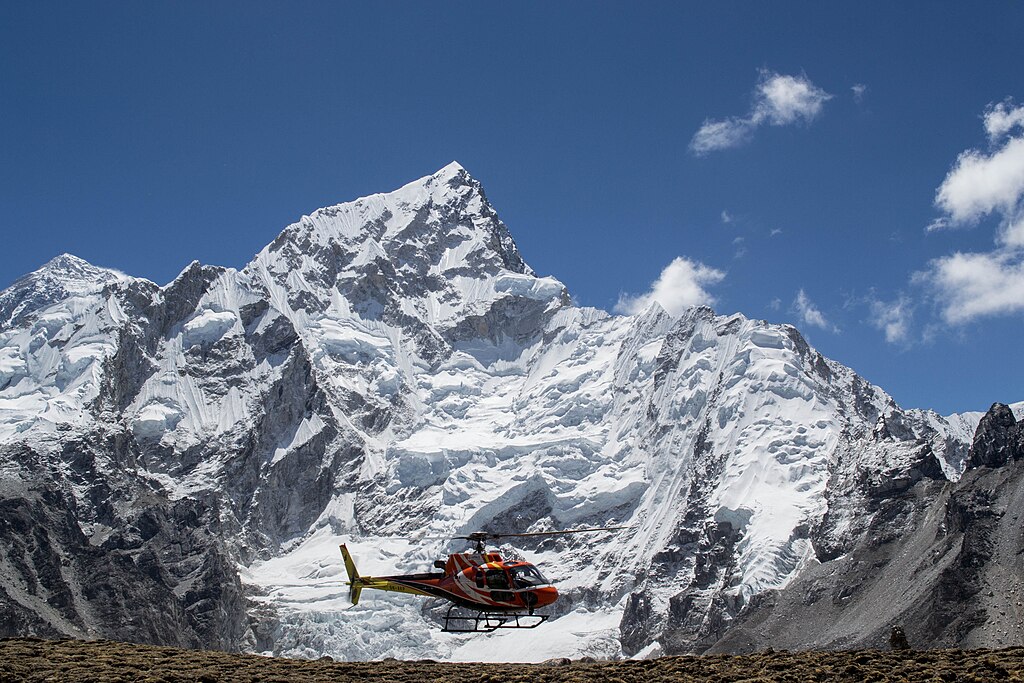
Tens of thousands of travelers come to the Everest region each year. One of the notable people to have been to the Everest is Francys Arsentiev, someone who is known as the Sleeping Beauty in Everest. Some people opt to trek to the Base Camp, whose trekking trails coupled with a sharp altitude gradient and cold climate, means that everyone has to acclimatize at certain places and get a proper amount of rest, while others choose to mountaineer to the region. But a tight schedule and the unavailability of preparing for a trek mean that you might be looking for an alternative to getting to the Base Camp in a swifter way. If that is the case. Everest Base Camp Helicopter Tour is the one for you.
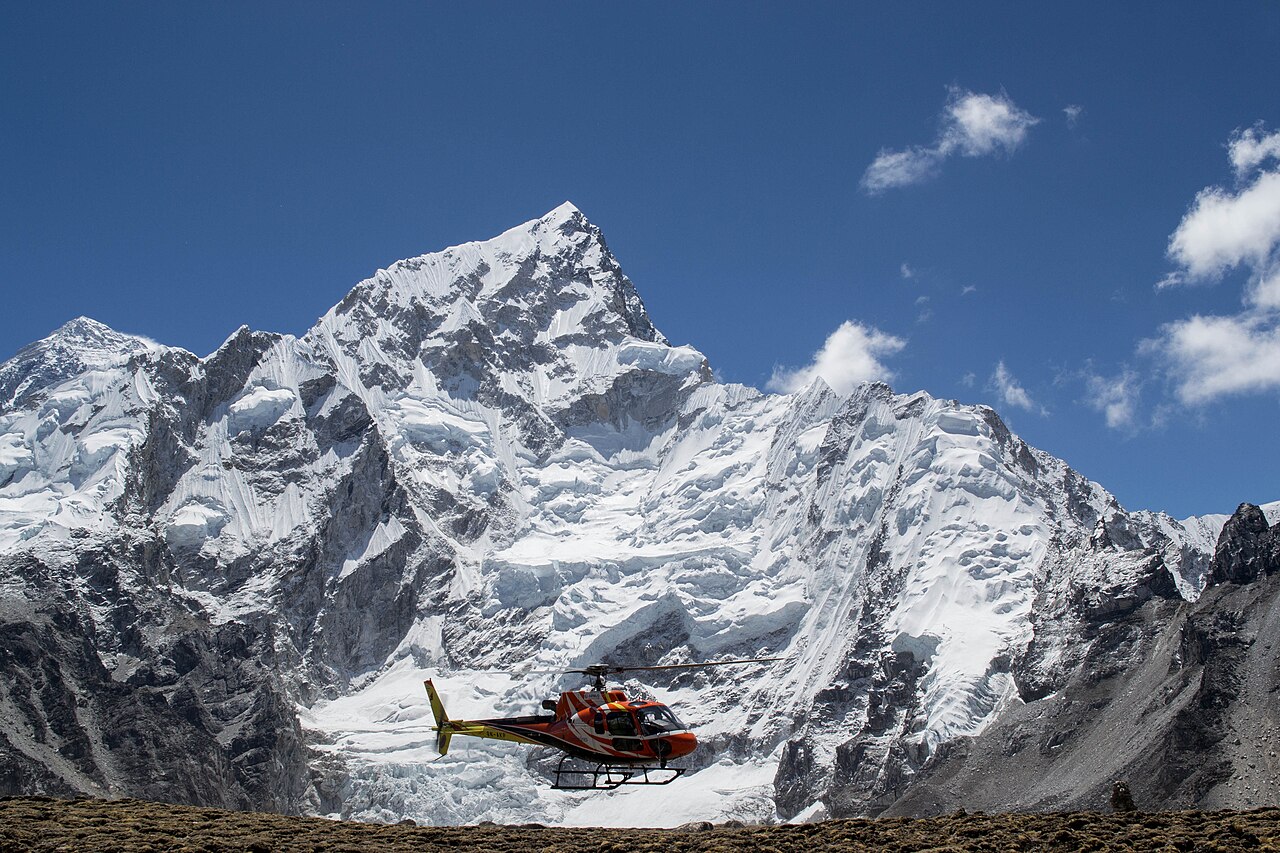
Getting to the Base Camp in a helicopter is a resort for many people who are in awe of the Himalayas and ones enjoy going to exotic destinations but aren’t able to push their bodies physically enough, or gather enough mental fortitude to complete the trek. Besides, the risk of altitude sickness, trekking in difficult terrains of the Khumbu region necessitates walking for 5-6 hours a day, and the fact that the medical facilities aren’t as robust in the trekking areas also results in travelers wanting a safer, more comfortable way to view Everest and its surrounding mountains.
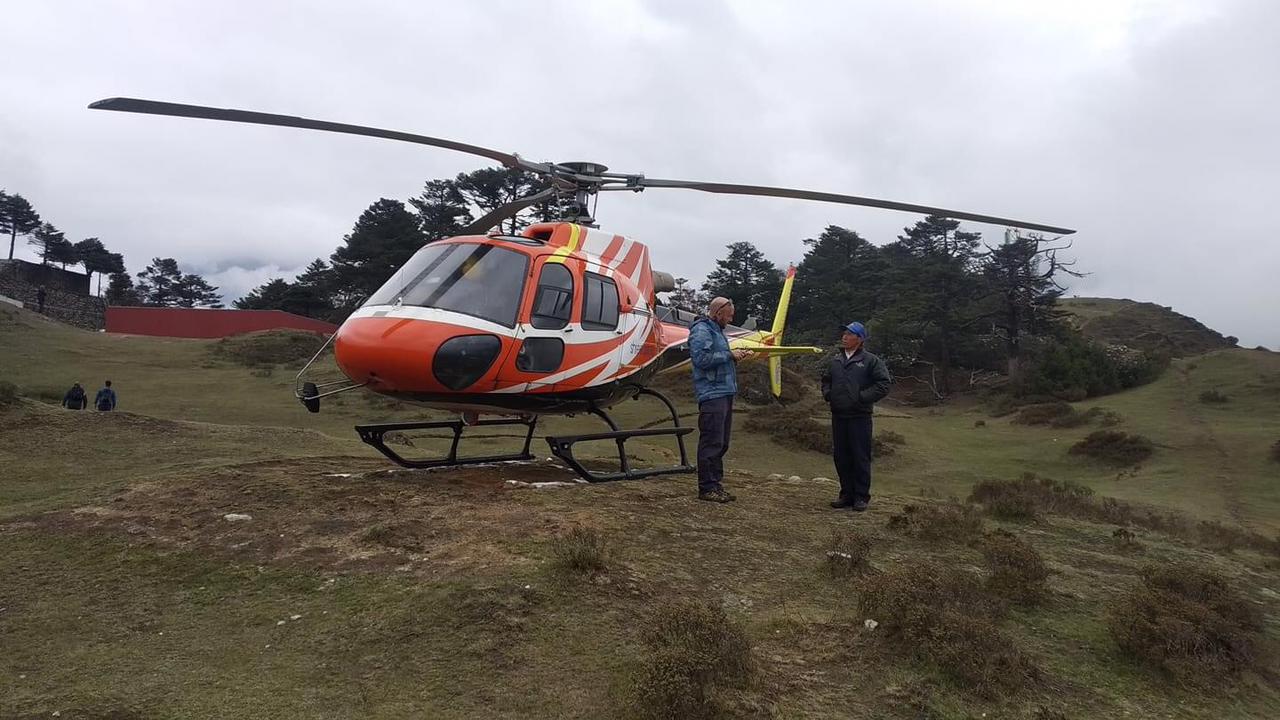
In this article, we’ll take a look at the five fast facts about the Everest Base Camp helicopter tour.
5. You’ll miss out on iconic places during the Everest Base Camp Helicopter tour
The historic airports of the Khumbu region being the most glaring examples
An Everest Base Camp helicopter tour can save travelers the time, accommodation costs, and physical effort involved in completing the trek from Lukla. However, the convenience comes with a trade-off: passengers experience the Everest region primarily from the air and spend far less time exploring its villages, trails, and historic sites.
For example, travelers taking a helicopter may miss Syangboche Airport, a historic STOL airfield near Namche Bazaar that no longer handles regular fixed-wing flights but remains an interesting part of the region’s aviation history.
They may also miss Mingbo Airstrip, another historic airfield associated with Sir Edmund Hillary’s work in the Khumbu region. The airstrip played a role in transporting materials for Khumjung Secondary School and supporting Tibetan refugees in the 1950s.
Therefore, a helicopter tour offers a faster and more convenient way to experience Everest, while trekking provides a deeper connection with the landscapes, villages, culture, and history of the Khumbu region.
| Airports in the district where Mount Everest lies | Altitude | Runway | Starting year |
| Lukla Airport | 2846 m /9337 ft | 527 m | 1971 |
| Syangboche Airport | 3748 m./12296 ft | 405 m | Not Given, though the Civil Aviation Authority of Nepal (CAAN) claims that it had seasonal servicability |
| Phaplu Airport | 2468 m. /8097 ft | 680 m | 1976 |
| Kangeldanda Airport | 2097 m./6880 ft. | 520 m | 2003 |
| Mingbo Airstrip | 4,650 meters / 15,255 ft | Not officially measured | 1961 |

Photo: Pasang Chhiki Sherpa | aviospace.org
4. The helicopter tour might not be as beautiful as the trek
There is not enough time to sink in the beauty of Everest on the helicopter tour
Well, comparing the Everest Base Camp Helicopter Tour with the Everest Base Camp trek would be more or less comparing apples with oranges. Trekking allows you an opportunity to push the physical limits of your body, test your endurance, and in many cases, your mental strength too.
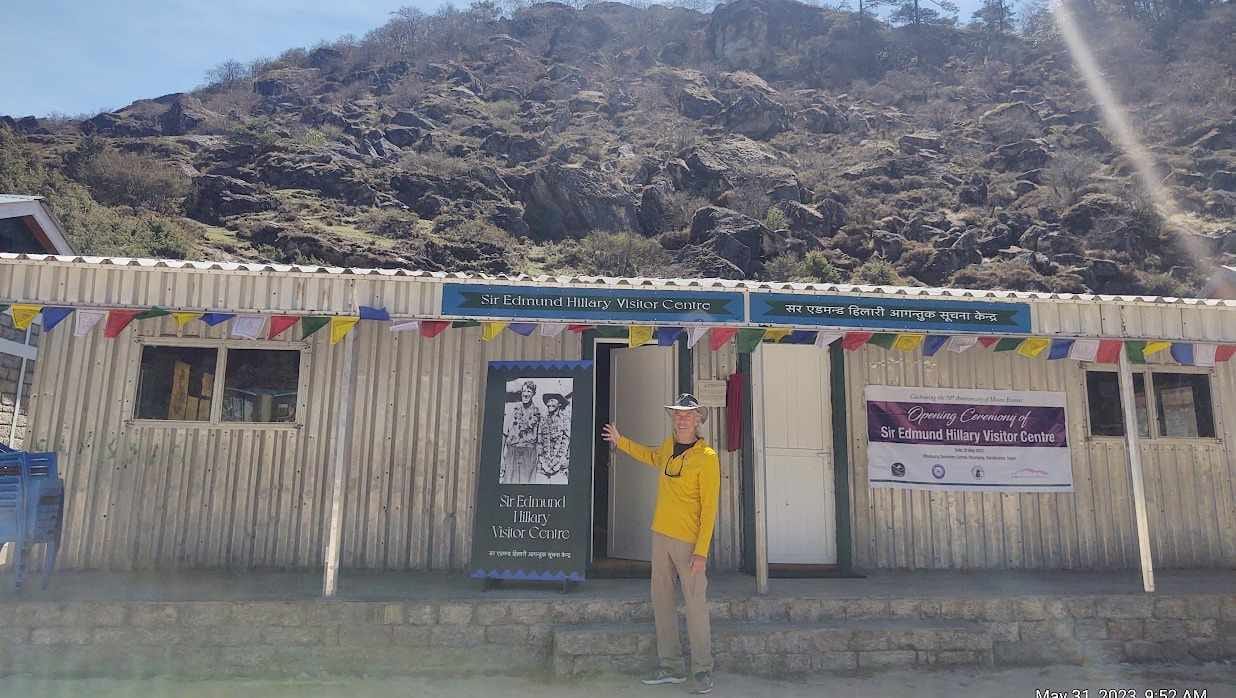
Photo: Pasang Chhiki Sherpa | aviospace.org
Besides that, you will also miss out on the sociological aspect of the trek- perhaps the stories that local people tell about how the society at various points along your treks came into existence, how they perceive changes in the way their lives and surroundings have changed over the past decades as travel has become mainstream, etc.

Photo: Chhutin Sherpa | aviospace.org
But there are other things to gain during the Helicopter tour to Everest Base Camp as well- the chance of exploring the vistas of the Everest region with a bird’s eye view is close to unparalleled, and the uncertainty of not reaching the Base Camp due to altitude sickness or other illnesses you might catch along the way is completely neutralized.
3. You can avoid the erratic weather of the Everest region on a helicopter tour
Flight cancellations and extensions of your stay are a common source of agony during the trek
Weather is one of the biggest challenges for travelers in the Everest region. Flights to Lukla can be delayed or canceled when visibility, wind, cloud cover, or other conditions deteriorate, potentially forcing trekkers to extend their stay.
Helicopter tours can offer greater flexibility because they can operate from different points along the trekking route and are not limited to the same airport operations as fixed-wing aircraft. However, helicopter flights are still weather-dependent and can also be delayed or canceled when conditions are unsafe.
Once conditions permit, the flight from Lukla toward the Everest region offers views of villages, monasteries, forests, rivers, glaciers, and surrounding peaks. The tour typically continues toward Everest Base Camp and Kala Patthar, where passengers can spend a few minutes taking in the mountain scenery.
Kala Patthar is particularly popular because its location on the southern ridge of Pumori provides expansive views of Everest and the surrounding peaks. The itinerary may then continue toward places such as Hotel Everest View before returning to Kathmandu.
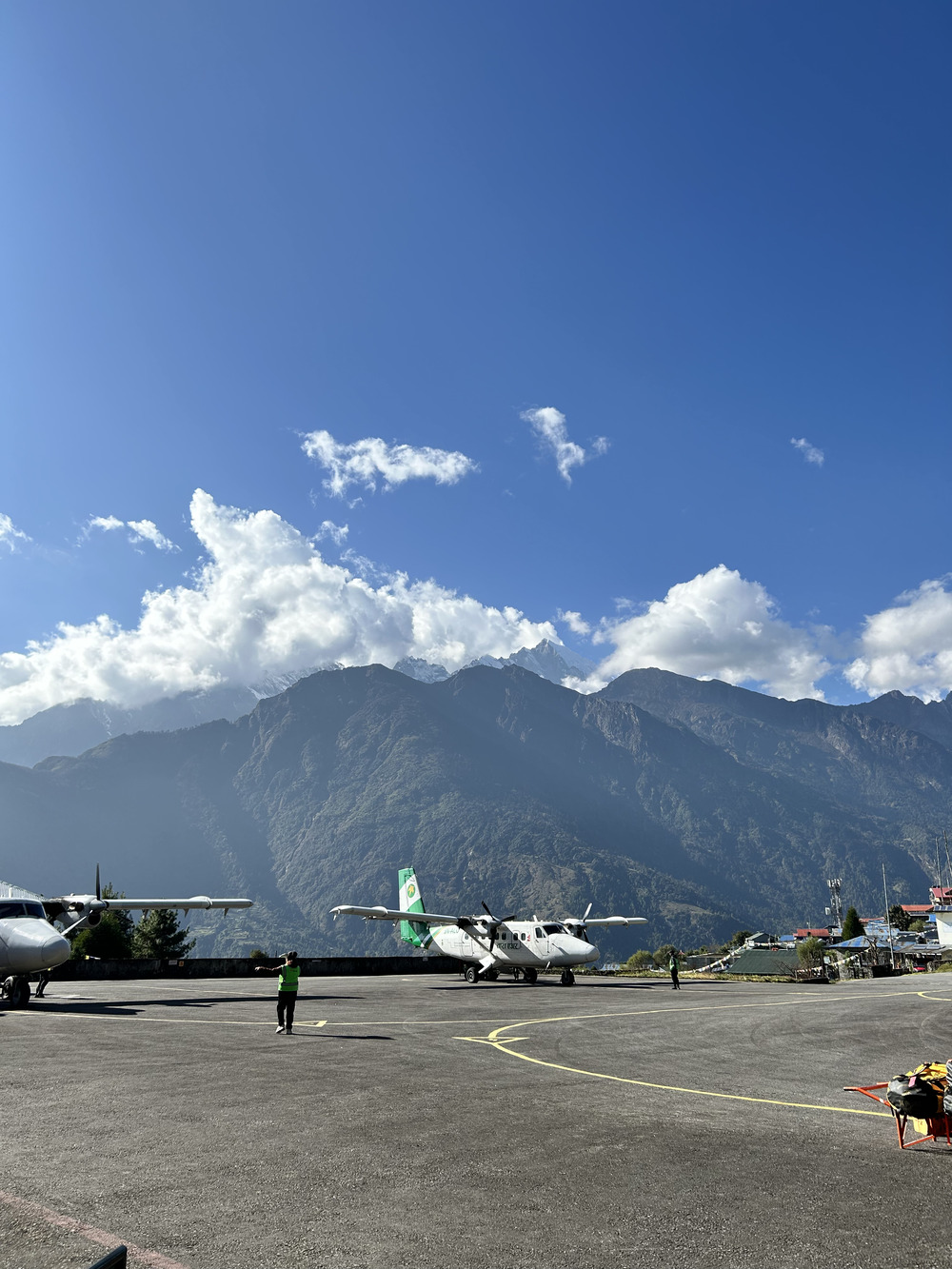
Photo: Pasang Chhiki Sherpa | aviospace.org
2. There are many alternative Helicopter Tours in the Everest Region
You can choose to be picked up at Namche Bazaar, Hotel Everest View, or other places
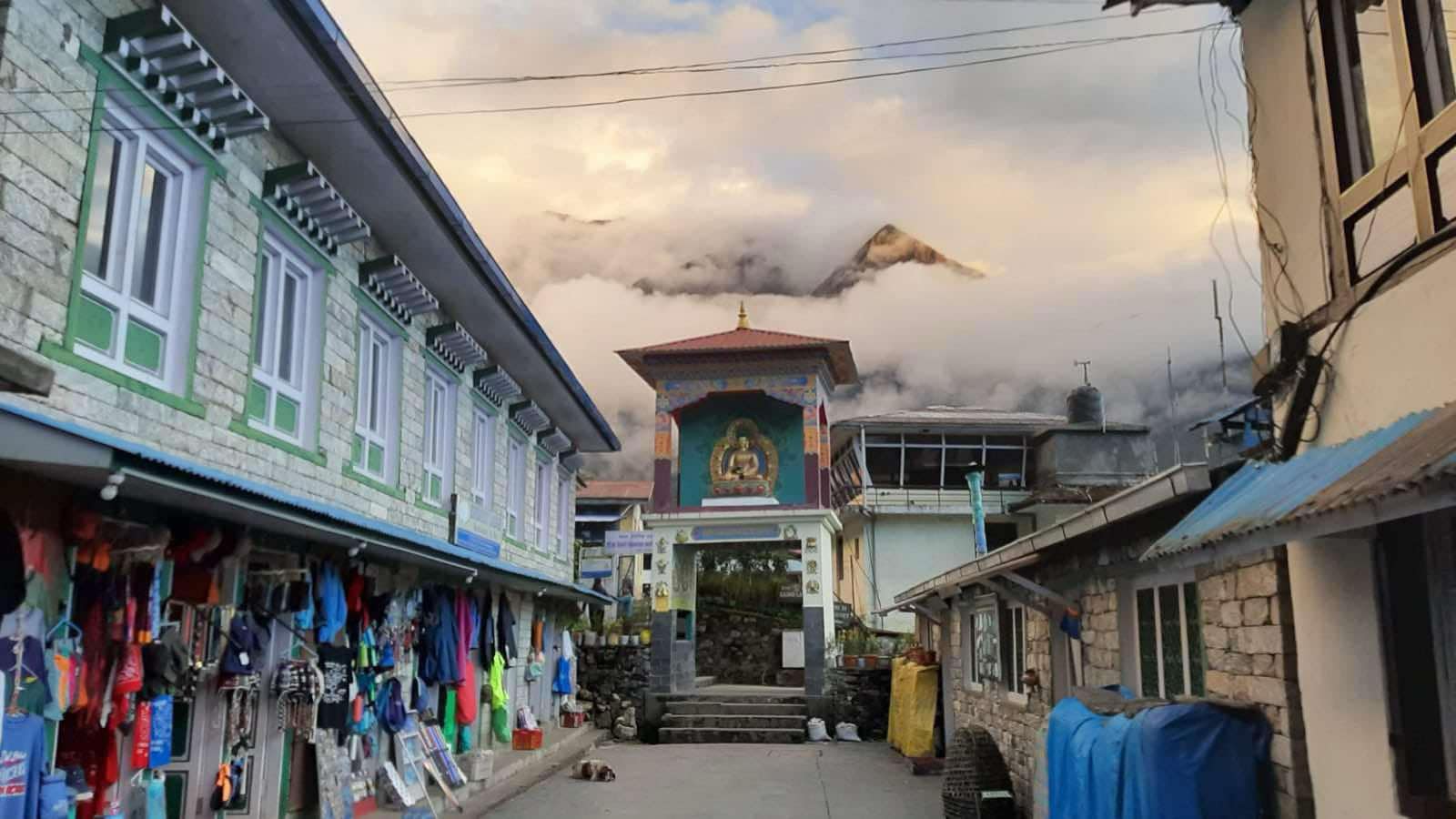
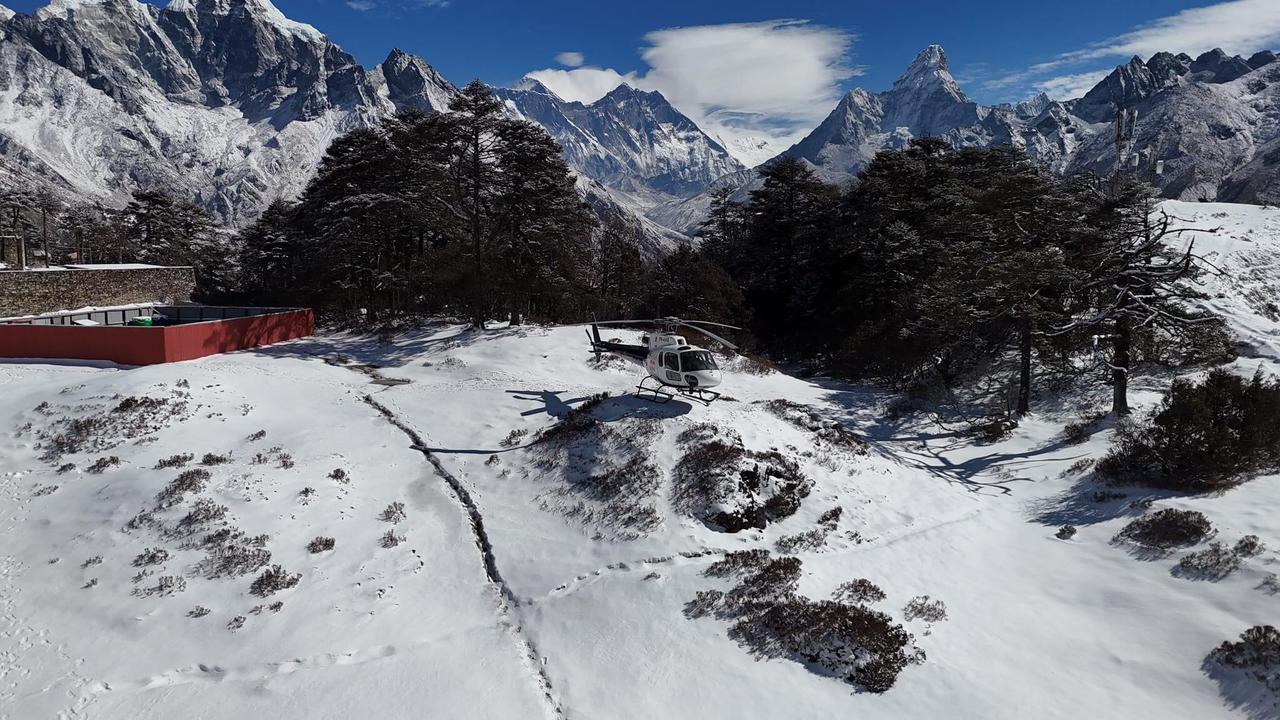
Photo: Pasang Chhiki Sherpa | aviospace.org
1. A helicopter can land at the top of Mount Everest
To your chagrin, you won’t be able to land at the top of Everest on a chopper, though
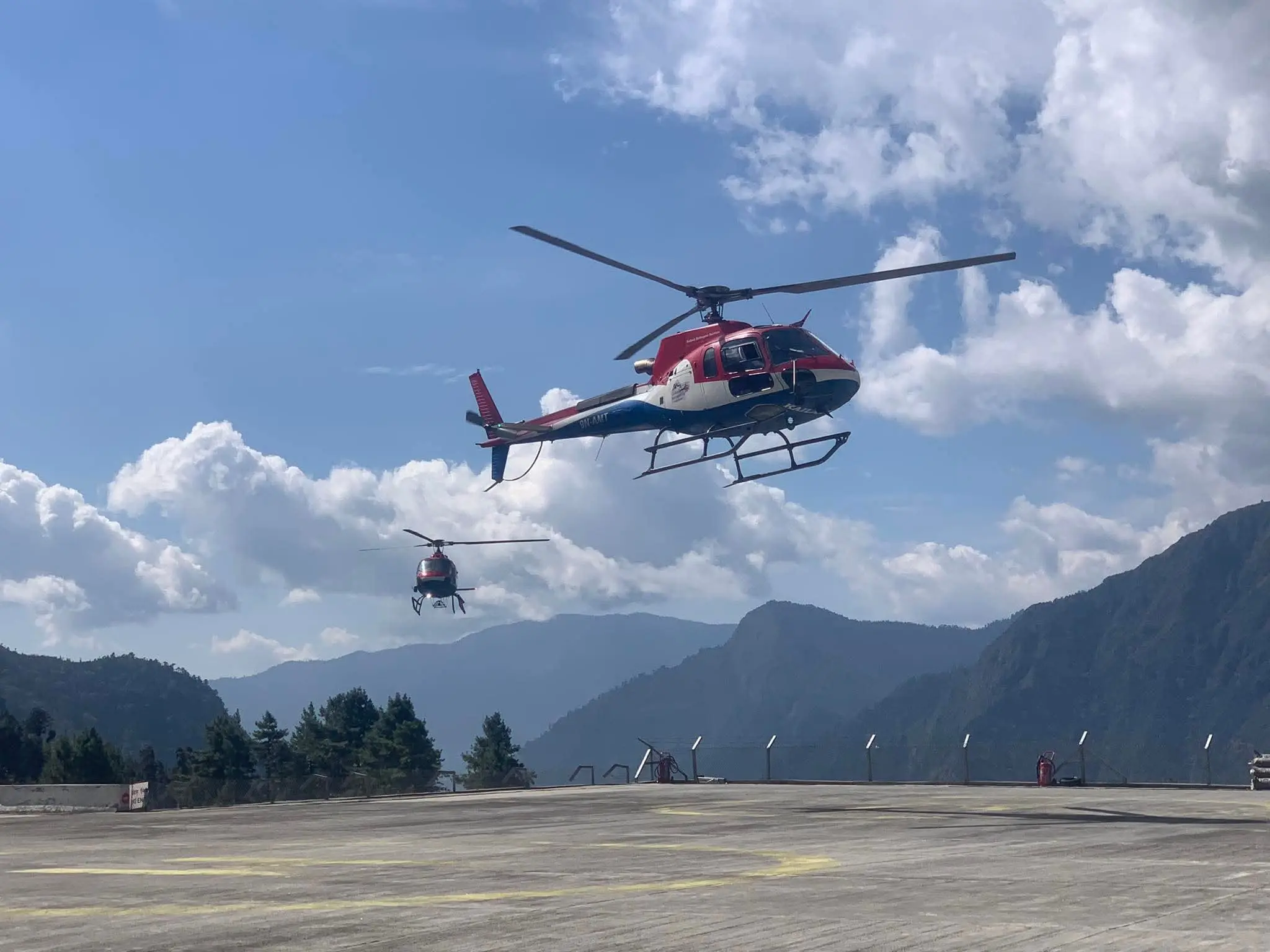
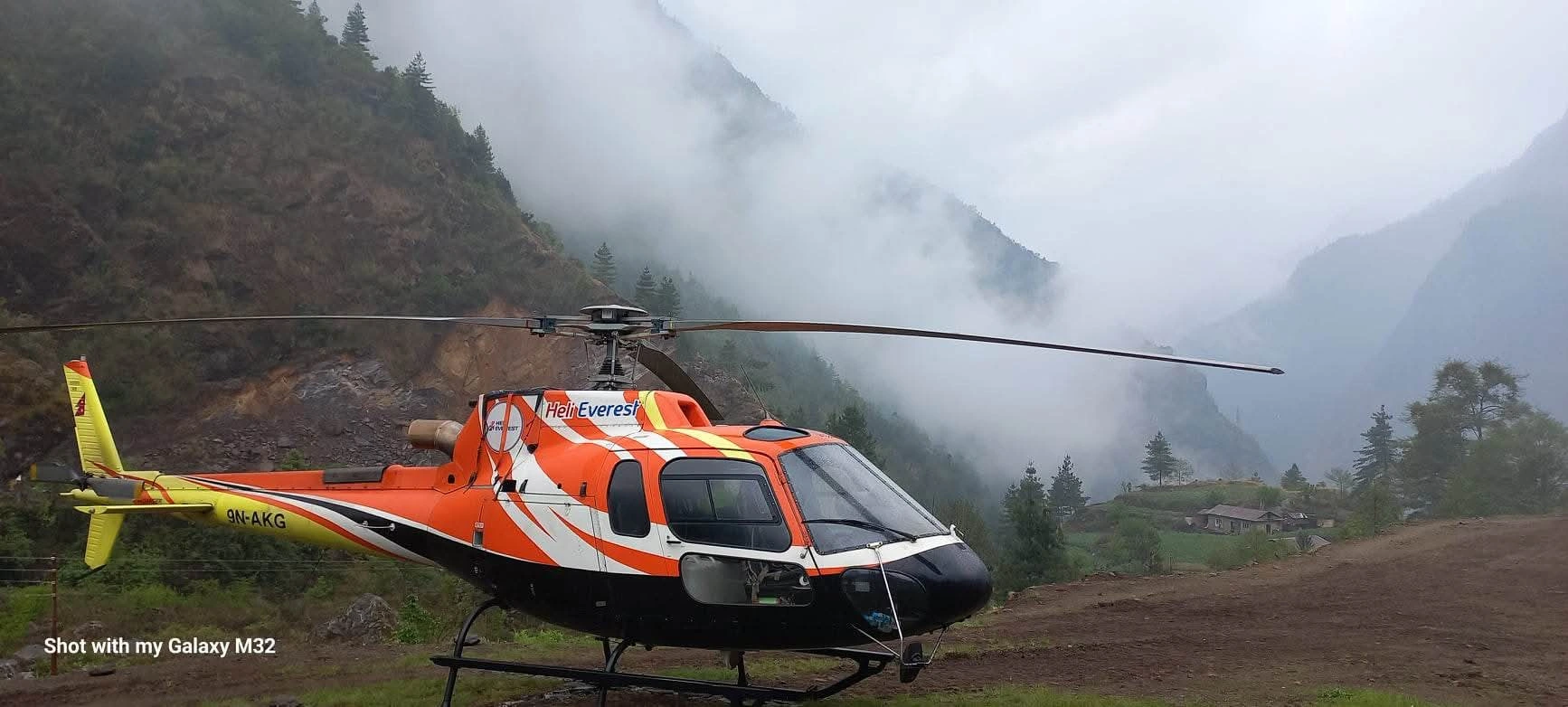
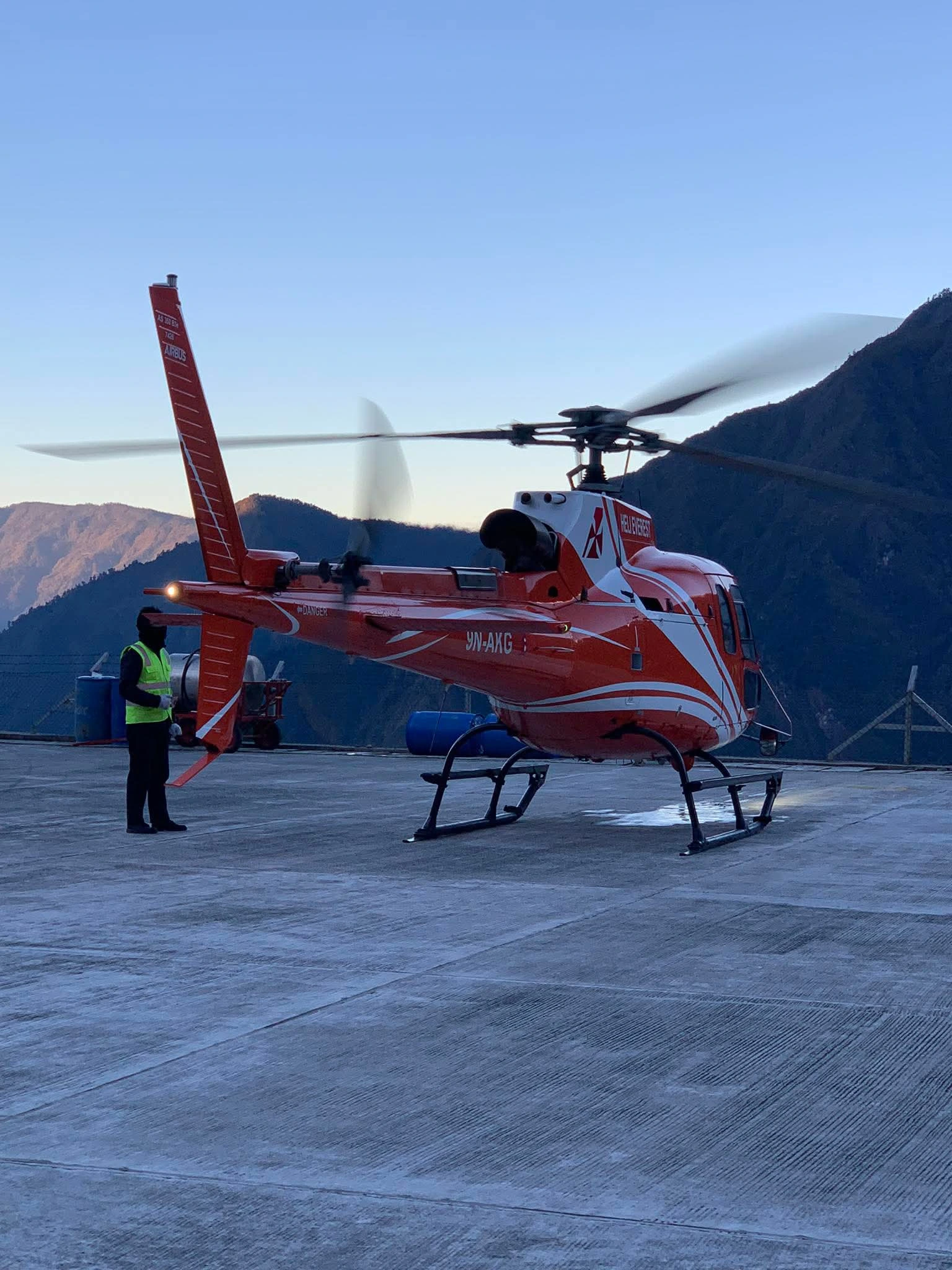
In May 2005, helicopter pilot Didier Delsalle landed at the top of Everest. His historic flight took place on an Airbus A350B3 helicopter, a type that has dominated the Everest region in recent times. While this chopper (and the pilot) landed at the top of Everest on two separate occasions, no one after him has attempted to get to the top of Everest on a helicopter again.
Helicopters are able to fly much higher than the height of Mout Everest. The top of Everest is perched at an altitude of around 29,000 ft but the record of the highest helicopter flight is 40,820 feet (12,442 meters) when French test pilot Jean Boulet took an Aérospatiale SA 315B Lama and broke the record of the highest helicopter flight on June 21, 1972. This record stands still, to this day.

Leave a Reply