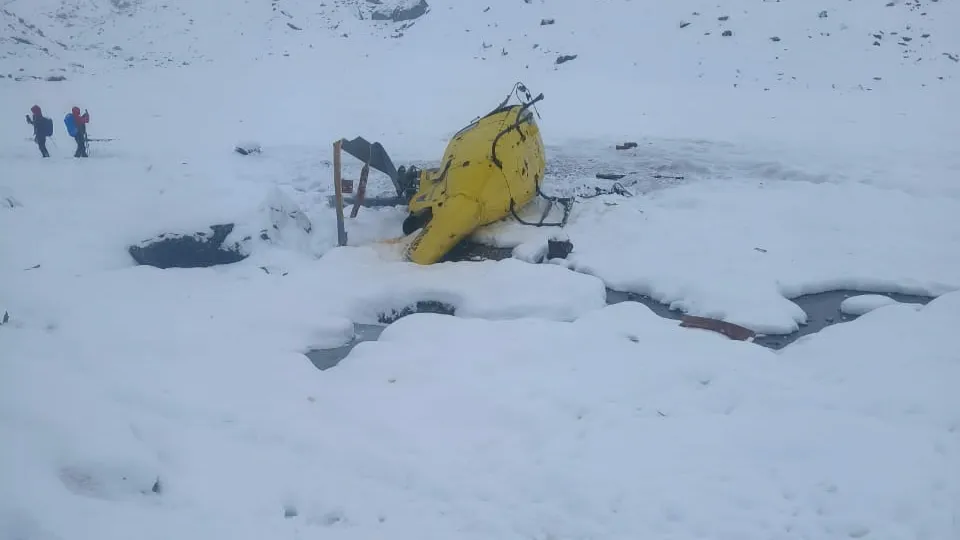
A few days ago, the crash of a helicopter operated by Altitude Air (registered 9N-AMS) in Lobuche (of the Everest region) brought up an issue that has been pertinent to the Nepalese sky: Are Nepalese skies safe for flying? The incident of 9N-AMS wasn’t due to faulty aircraft, or feeble maintenance practises, but most likely due to the fact that this helicopter type, which once reached the top of Everest skidded in snow. The pilot who suffered no injuries made his way back to Lukla- an airport which is regarded to be the most dangerous and has a history of terrible crashes.
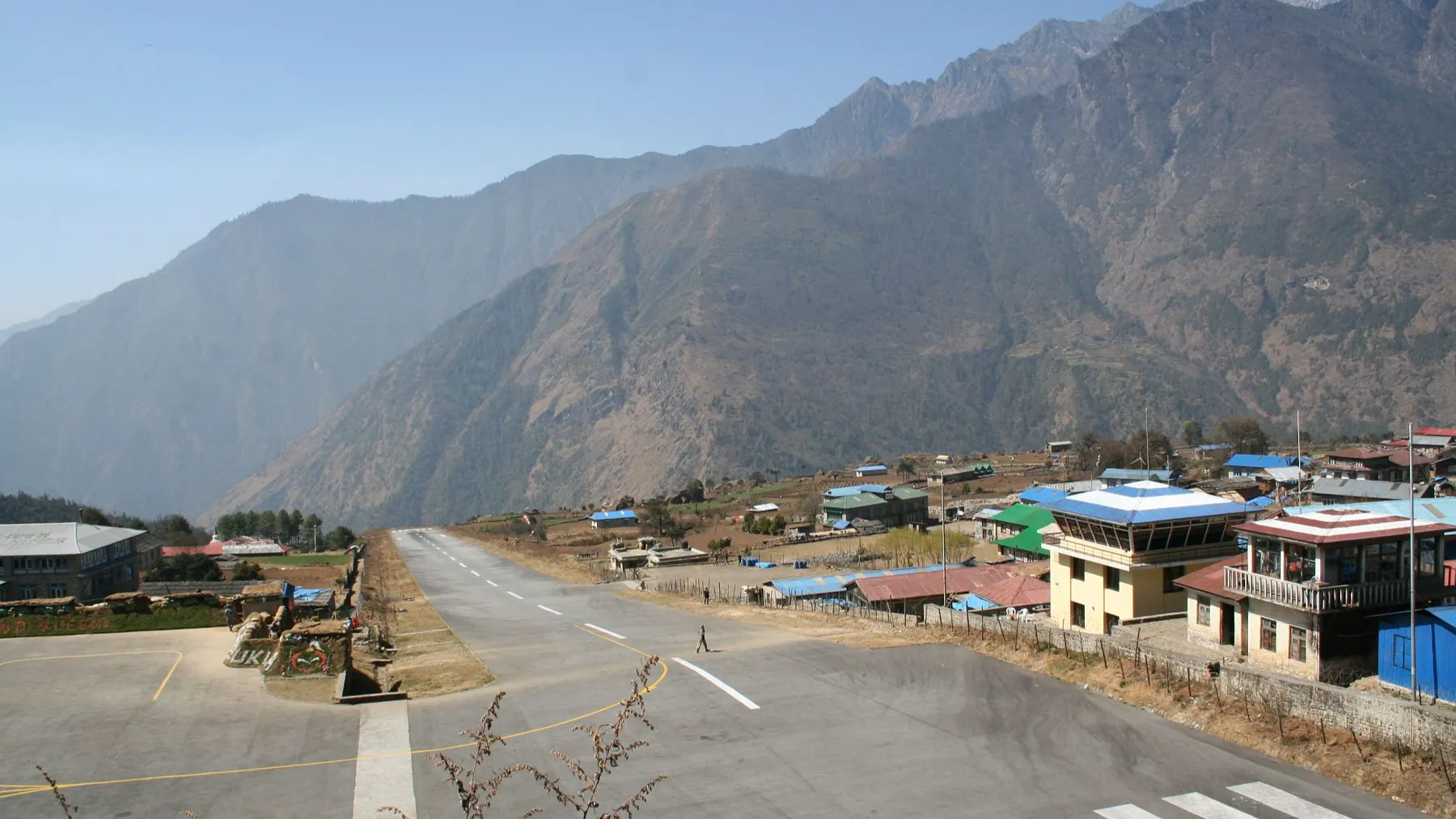
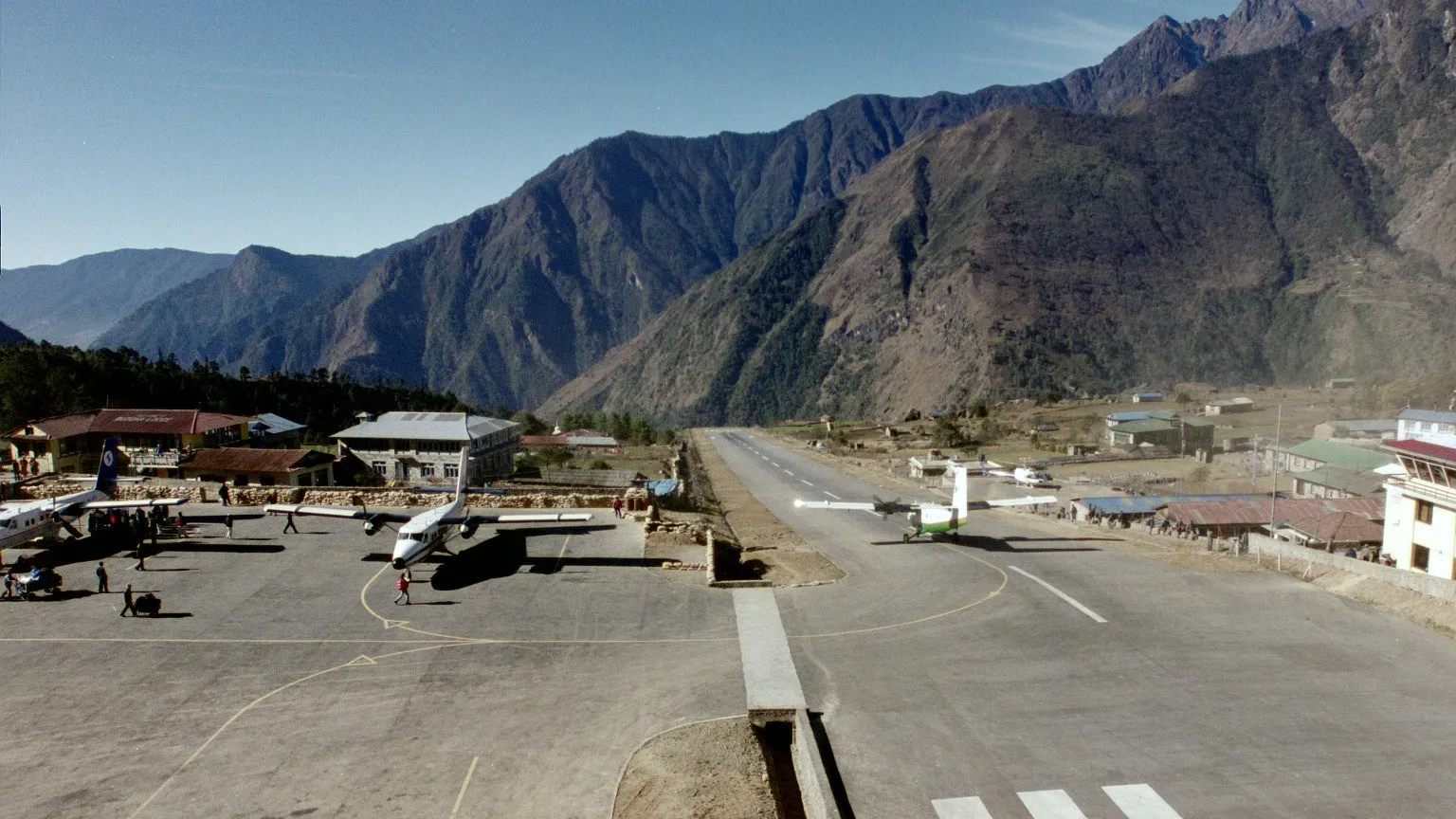
Lukla Airport (LUA), which is also referred to as Tenzing Hillary Airport, located in a small town of Nepal named Lukla, whose meaning enders itself as an “abode for sheep”. One of the reasons why the airport is perceived to be scary was captured by pilot Upendra Singh, who wrote that “the entire flight is a snaking route in between high mountains”.
Despite the fact that a fatal accident took place at this airport more than five years ago, the airport is labelled, although some voices think of this labeling as rather misguided, as the most dangerous airport in the world.
Talking to aviospace.org, Captain Rabindra Dangol, who trains pilots to prepare for Short takeoff and Landing Airport (STOLport) such as Lukla, confided the story of one foreign traveler, who had visited an office to get a travel insurance in his country. The insurance was worth around $500. But when the traveler confided that he would be traveling to Lukla on a flight, the insurance officer said that a traveler to this airport would have to get an insurance of $3000. Such is the scale of the Lukla’s notoriety.
But how many crashes have taken place at this aerodrome? Is the airport as dangerous as it has been made in the wider media? If it was so accident-ridden, why would people even chance their lives to get here? In this article, we will take a look at the history of the crashes at this airport and see what common threads there are in these accidents.
History of Accidents on Lukla Airport
According to data from Aviation Safety Network, there have been fifty-six fatalities in accidents for aircraft that were either bound inward or outward from Lukla. The last of these accidents took place in 2019. Let’s look at these accidents in greater detail.
Summit Airlines’ Let collides with helicopters
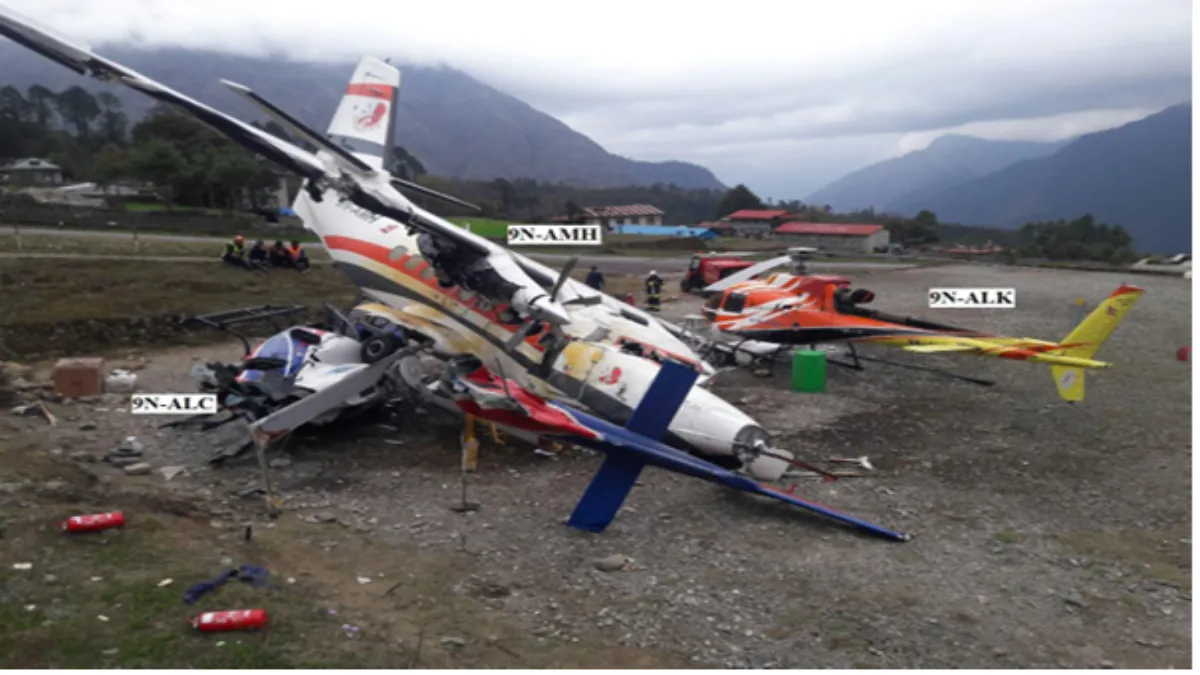
On 14 April 2019 Aircraft L410UPV-E20 registered 9N-AMH which was owned and operated by a Summit Airlines met an accident as it collided with two parked helicopters during landing at the Tenzing Hillary Airport.
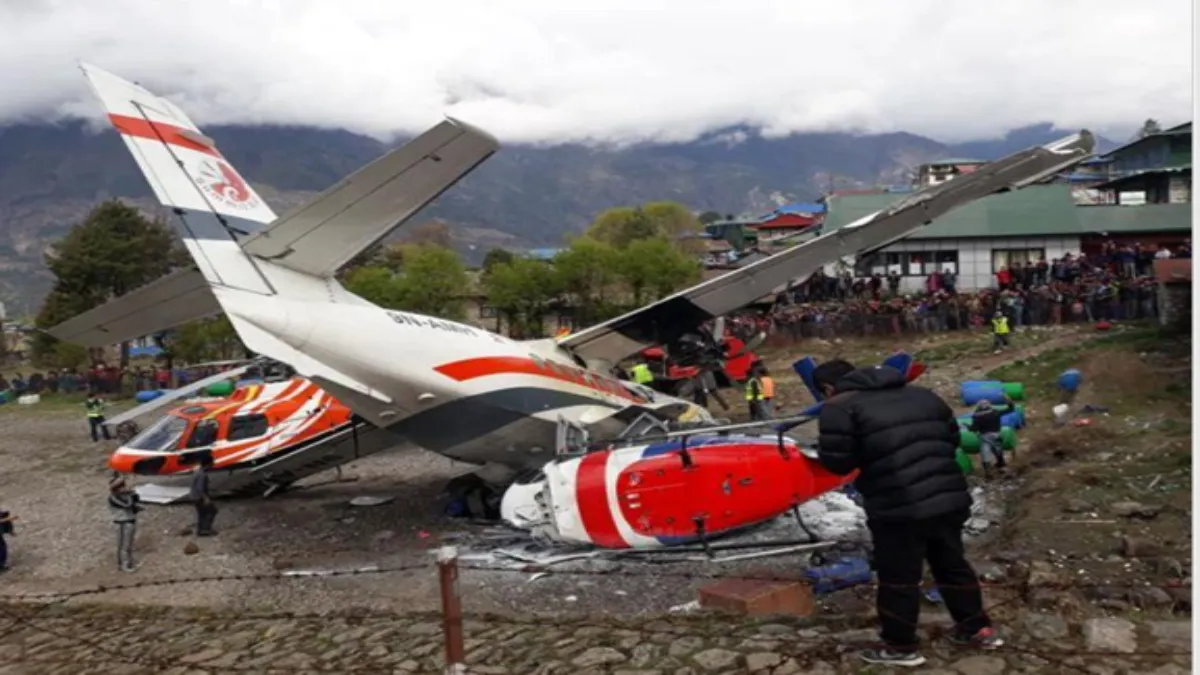
This airplane crashed due to uneven thrust between two engines, as the final report of the accident concluded the most probably cause of the crash was the “aircraft’s veering towards right during initial take-off roll as a result of asymmetric power due to abrupt shifting of right power lever rearwards and failure to abort the takeoff by crew.”.
The report also highlighted the following factors as having contributed to the accident:
- “ Failure of the PF(being a less experienced co-pilot) to immediately assess and act upon the abrupt shifting of the right power lever resulted in aircraft veering to the right causing certain time lapse for PIC to take controls in order to initiate correction.
- PIC’s attempted corrections of adding power could not correct the veering. Subsequently, application of brakes resulted in asymmetric braking due to the position of the pedals, and further contributed veering towards right.”
The crash took place at a time when a helipad hadn’t been constructed in Lukla, and the investigators recommended the Civil Aviation Authority of Nepal (CAAN) to shift the helipad.
One of the members of the investigation team was quoted in the Kathmandu Post as having said that an accident like this wouldn’t have taken place in any other airport as “the inexperienced co-pilot and his instructor were unable to correct the plane because of the slope and narrow width of the runway”. Nepal’s STOL fields have always been challenging as crashes have taken place in Jomsom Airport and other STOLfields.
Mingbo Airport: The Forgotten Most Dangerous Airport In The World
While no faults in the aircraft could be found, the investigation commission advised the manufacturer of the aircraft – Aircraft Industries- to “review MPD (Maintenance Planning Document) in a more robust way to ensure availability of CVR recording.”
Sita Air’s Dornier registered 9N-AHA was written off in 2012
On Friday 28 September 2012, a Dornier Do-228 operated by Sita Airlines had taken off for Lukla Airport but crashed south-east of Tribhuvan International Airport (TIA), killing all 19 people onboard. This is the accident involving the highest number of casualties for any aircraft operating to/from Lukla. The accident occurred during the initial climb of the aircraft.
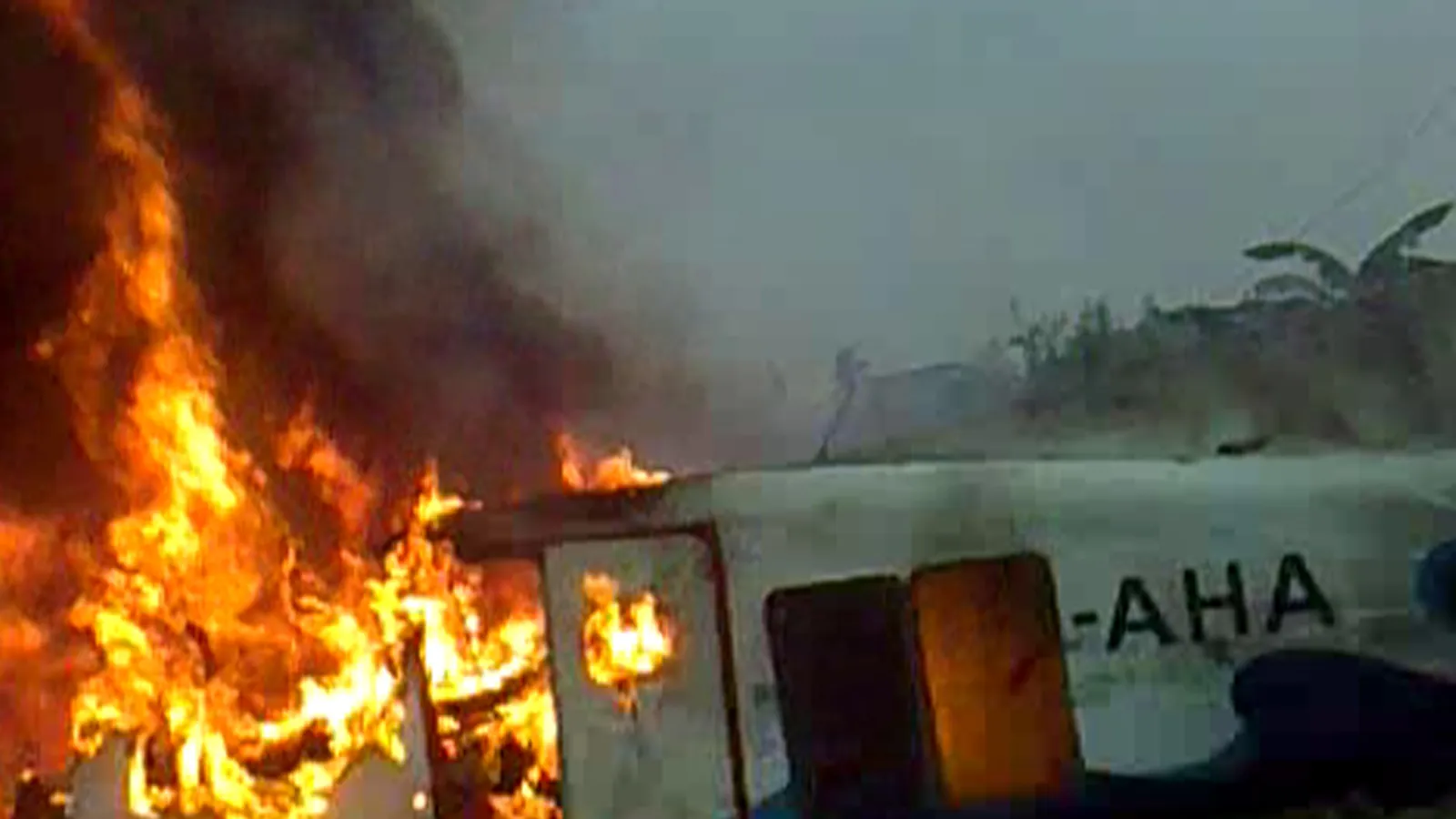
Cause of this deadliest crash of any flight headed to Lukla
The investigation found that there was a hint of a bird strike as a “Black Kite” was found at a position 408 m from Intersection 2 of the runway. However, the engines of the aircraft did not have any remains of the bird.
The pilots couldn’t maintain the airspeed of the aircraft above the stall speed, and when the aircraft departed from “control flight”, the aircraft hadn’t climbed sufficiently to recover. According to the investigation report, the other causal factor was:
“ During level flight phase of the aircraft, the drag on the aircraft was greater than the power available and the aircraft decelerated. That resulted in excessive drag in such critical phase of ascent lowering the required thrust. The investigation was unable to determine the reason for the reduced thrust.”
The report also claimed that “the flight crew did not maintain the runway centreline which removed the option of landing the aircraft on the runway remaining.”
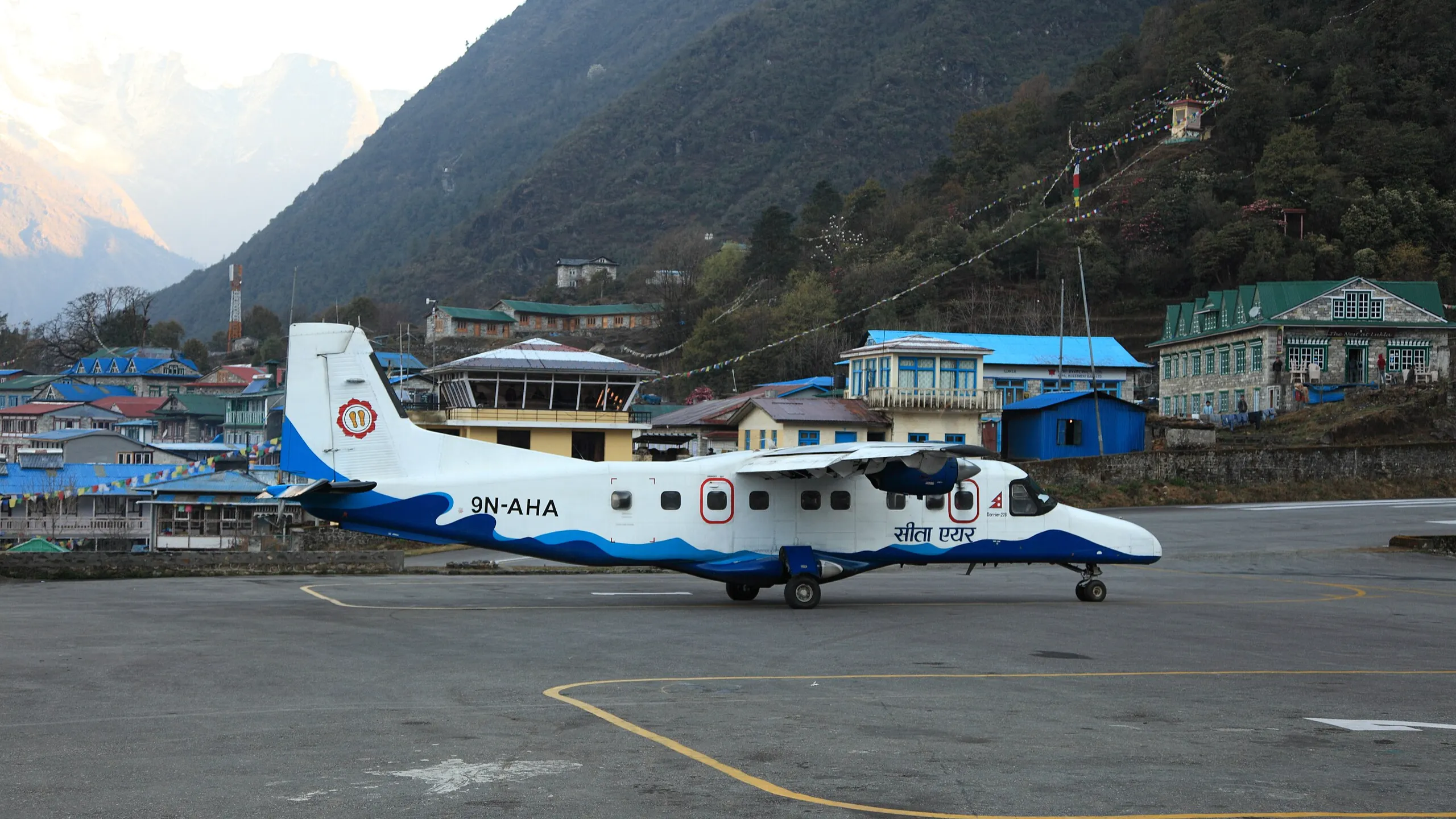
Recommendations following the crash
One of the obvious recommendations that came from the investigation report was the monitoring of bird activity in and around TIA. The Civil Aviation Office of the airport was asked to review its bird activity monitoring program, bird strike reporting system, and bird strike control program. The three districts that lie in close proximity to one another – Kathmandu, Lalitpur, and Bhaktapur – were asked to review its waste management and butcheries to limit bird activities.
Some of the other recommendations included the following:
- “ It is recommended that the Civil Aviation Authority of Nepal reviews its training requirements in relation to engine malfunctions at or near V1 to ensure that they are adequate for commercial pilots flying aircraft for which training is currently not carried out in a flight simulator.
- It is recommended that Sita Airlines Pvt. Ltd reviews the policy that prevents pilots from landing on the remaining runway following an engine malfunction just after V1.* “
* Note: V1 refers to critical speed during takeoff.
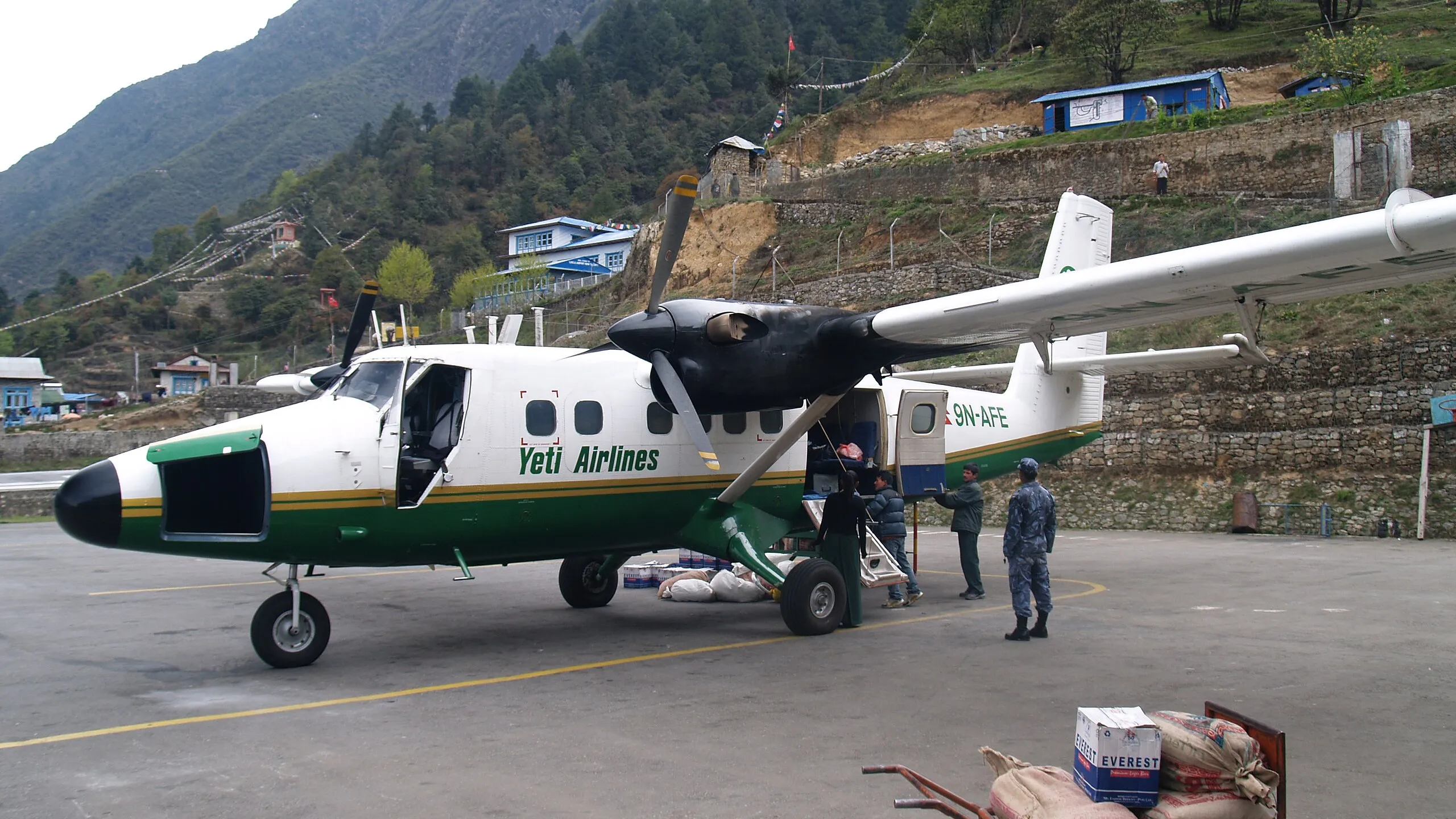
Yeti Airlines Havilland DHC-6 crash in 2008
Yeti Airlines de Havilland DHC–6 Twin otter registration 9N-AFE operating scheduled flight from Kathmandu to Lukla carrying 12 German, 2 Australian and 2 Nepalese passengers crashed and caught fire while landing. According to The Aviation Herald, it was not the first accident of 9N-AFE; the aircraft had already suffered significant damage on July 3rd 2006 in Bajura airport.
None of the passengers survived the crash, though one of the two pilots did: the first officer succumbed to his injuries, while the captain survived with serious injuries, including a fractured lumbar vertebra.

Causes behind the crash of 9N-AFE
It was found that Lukla Tower had no Standard Operating Procedure. Even the fire equipment at Lukla Airport hadn’t been used for firefighting after the accident. Operators were found guilty of creating a “Must-Land” Situation as they treated pilots who landed in adverse weather conditions and diverters unequally.
The information about the weather as transmitted by Lukla Information was inadequate and less authoritative. The investigation report also found that wrong practises were being followed by pilots while landing in STOL fields such as Lukla, with the most probably cause of the crash cited as the following:
“The aircraft encountered the rapidly uplifting fog on short final, causing the flight crews to misjudge the weather based on all the previous aircraft and Lukla information, causing the aircraft to enter the cloud path on final and control flight into terrain.”
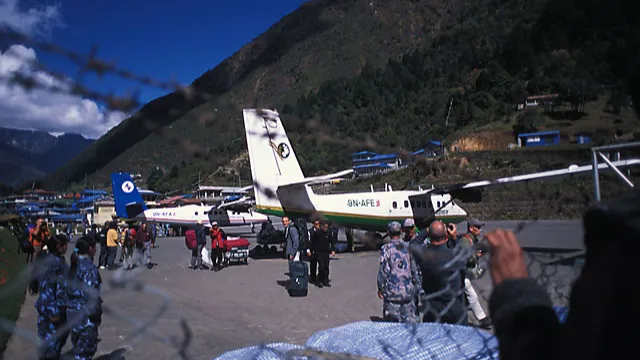
Recommendation following crash
Most of the recommendations from the crash report were directed to the regulatory body – CAAN . It was recommended that there be a limit on the maximum number of flights that could land in STOL fields. Airlines operating to Lukla, and CAAN were asked to not simply develop the approach and landing Accident reduction (ALAR) procedure, but implement it too, to deter accidents like these.
Some of the other recommendations included:
- Busy STOL aerodrome like Lukla should be should be facilitated with required resources including rescue and fire fighting (RFF) facility, audio/visual aids, etc
- The Aviation Safety Department (ASD) of CAAN should be strengthened with adequate qualified manpower and required authority.
An officer working at Lukla during the time of the accident posited that the pilots of private airlines operating in STOL fields in Nepal were subject to a lot of pressure, and he felt that such pressure needed to be reduced. Something similar was said by one representative of a carrier after the accident.
Summit Airlines crash in 2017
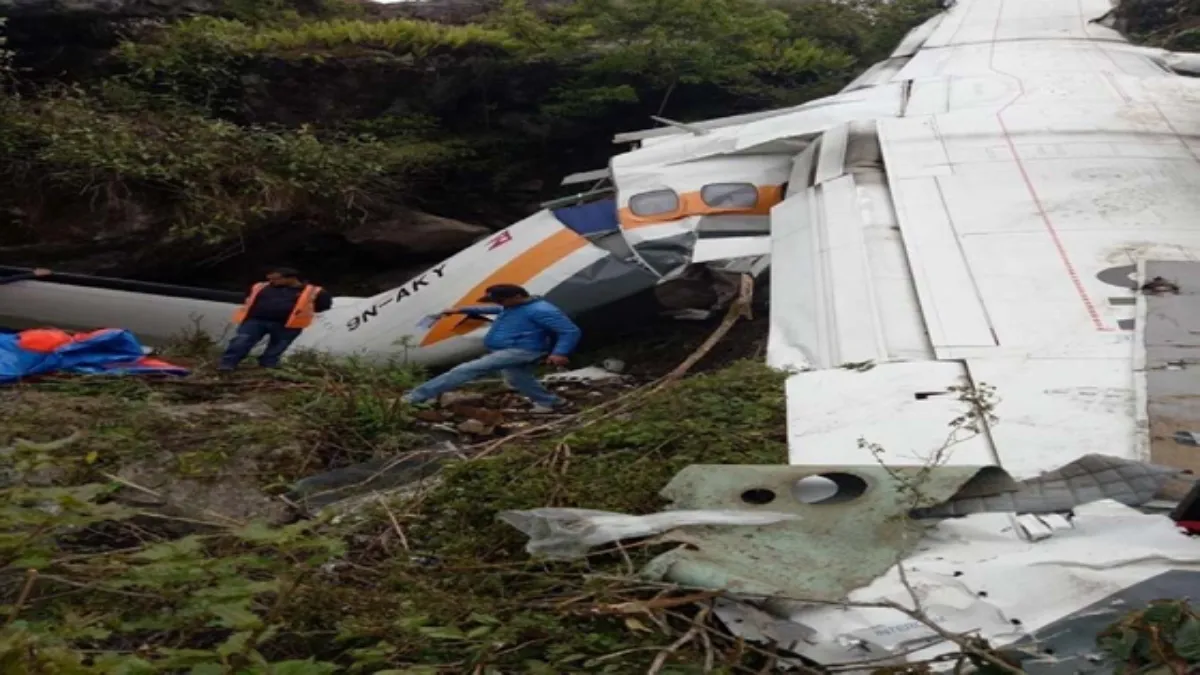
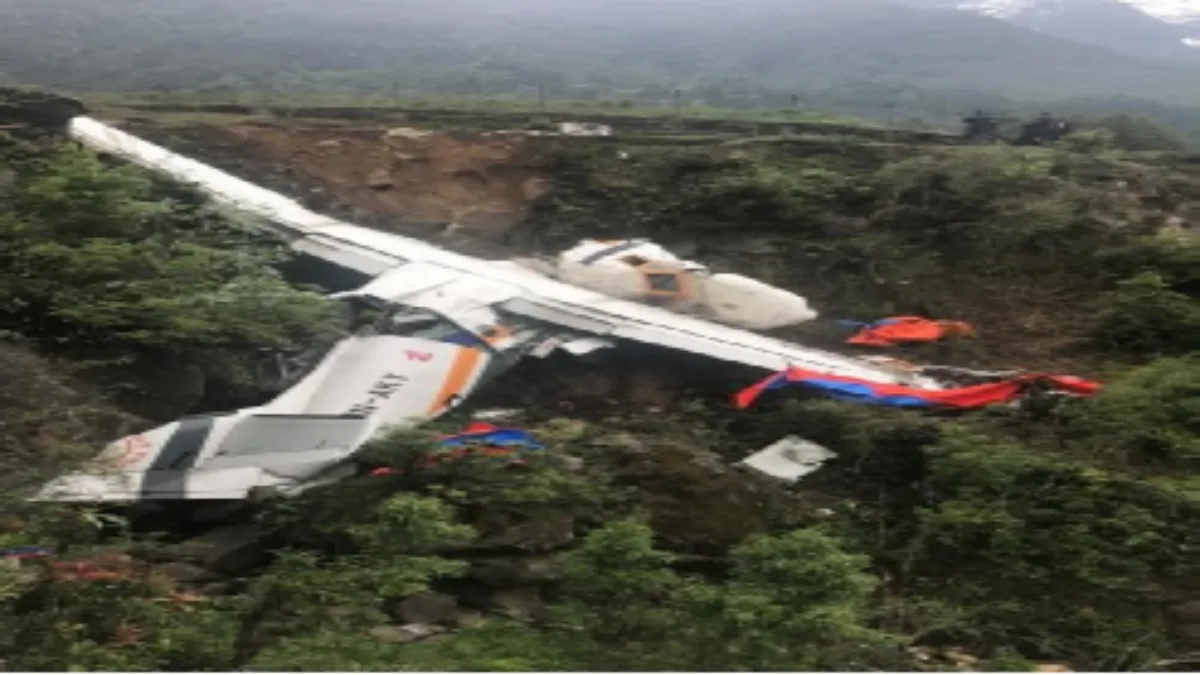
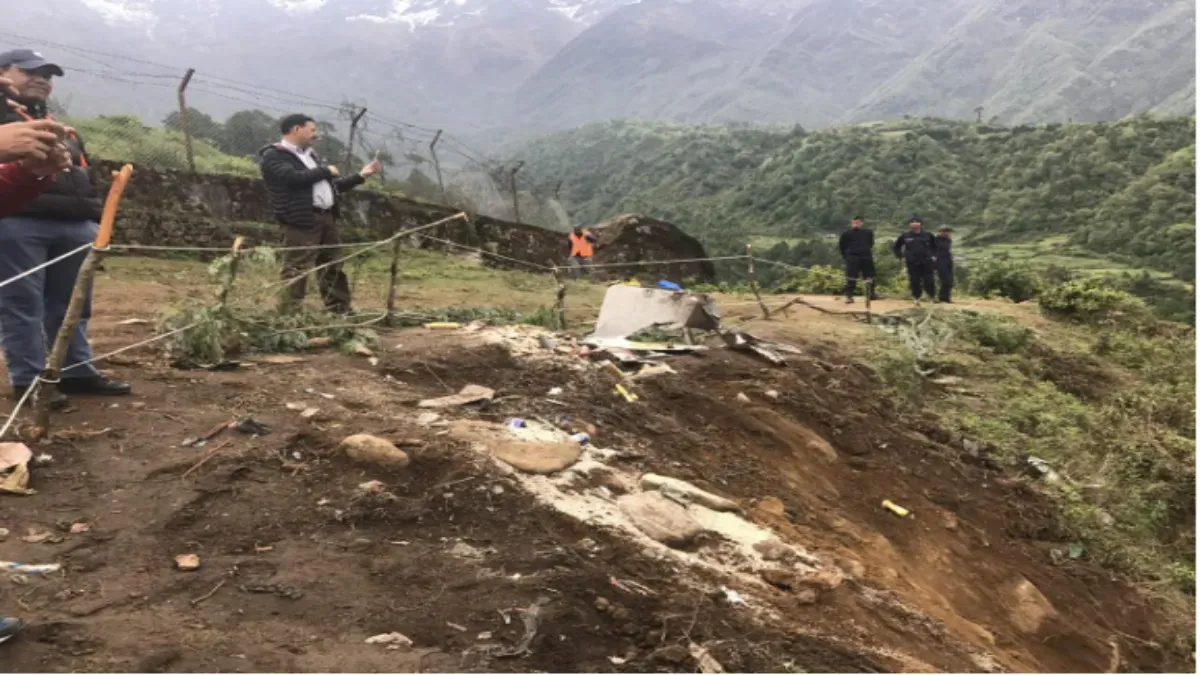
On 27 May, 2017, Goma Air (which is now known as Summit Air) Flight 409, performing a freight flight on a Let L-410 from Kathmandu to Lukla with three crew members, was on final approach to Lukla runway 06. However, poor visibility meant that the aircraft lost altitude and touched a tree three meters below the runway killing two crew.
Causes behind the crash
After Goma Air Flight 409 (a Let 410 registered 9N-AKY) entered Lukla Valley, it frequently encountered cloud cover. Lukla has always been known to have challenging weather as the aircraft can be enveloped in fog in very little time. As the plane approached Lukla, the weather conditions worsened rapidly. The aircraft was navigating along the river route at a low altitude. As they entered the Lukla Valley, the flight crew struggled to adhere entirely to VFR regulations and the weather conditions worsened rapidly.
The investigation report found that the Standard Operating Procedure (SOP) had been violated:
“Duty ATS Officer was regularly updating the rapidly deteriorating weather tendency to the pilot and in the meantime requesting the pilot to expedite. However, he failed to close the airport as per approved SOP….During the critical phase of final approach PIC (PF) lost situational awareness and deviated to the right by almost 15 degree and also descended below threshold height. He could not even pay attention to the FO’s call out alerting the excessive descend.”
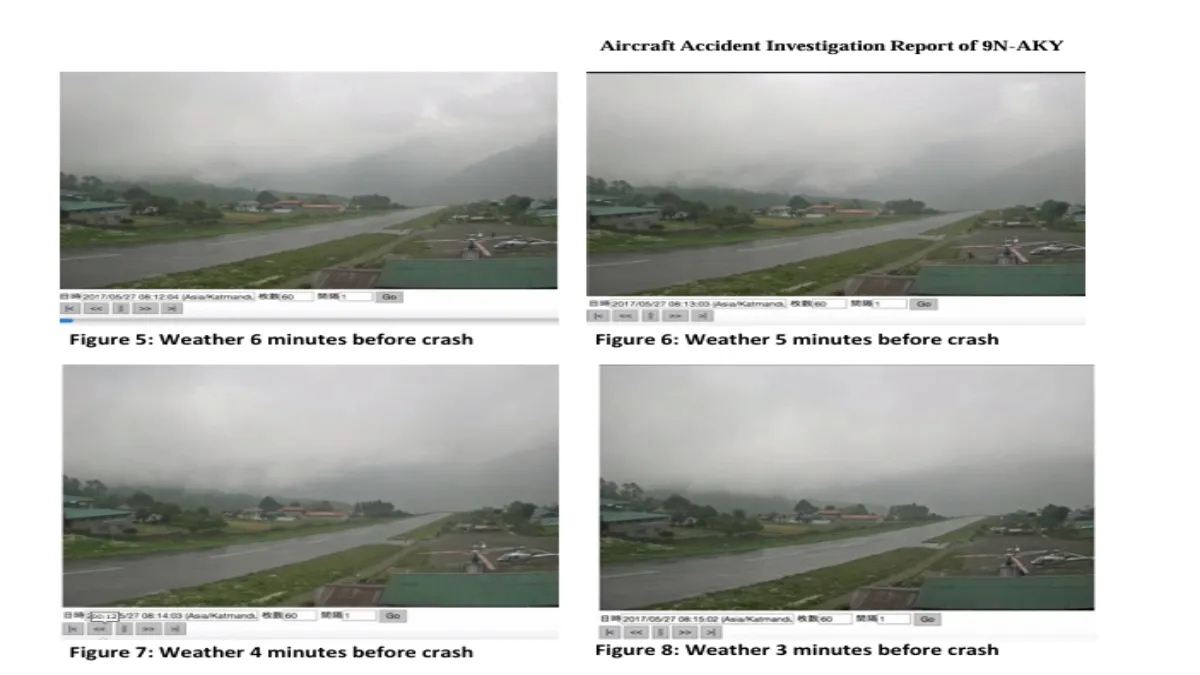
While factors such as a deteriorating weather and pilot’s loss of situational awareness was also quoted as contributing factors, the probable cause of the accident was deemed to be:
“aircraft stall as a result of excessive drag created by sudden increase in angle of attack of the aircraft supplemented by low speed (below Vref) in an attempt to initiate immediate climb on a landing configuration (full flap and landing gear down) warranted by the critical situation of the final phase of flight.”
Recommendation following crash
The most noticeable and obvious recommendation that came from the investigation report a call for the installation of an appropriate visual aid or lighting system at Lukla runway, alongside a call for the Ministry of Culture, Tourism, and Civil Aviation to coordinate with CAAN to implement the safety recommendations effectively. Other recommendations included a call to:
-
- Develop a mechanism to monitor and ensure compliance to the provisions of VFR flights, SOP and other relevant safety directives by the flight crew*.
- Launch Voluntary Reporting System as a part of the regular Aviation Safety Campaign emphasizing a non-punitive environment so that unsafe behavior of all aviation personnel including pilots, ATS personnel and maintenance staff are brought into notice in time.
- GOMA air should enhance the flight dispatcher’s capability to enable them to fulfill their responsibilities as per the provision of company SOP.
Note: VFR stands for Visual flight rules and SOP for standard operating procedures .
Nepal Airlines’ Harbin Y-12-II crash in 1992
On 26 September 1992 Royal Air Nepal Harbin Yunsuji Y-12-II which first flew in 1982 crashed during take-off. Luckily all twelve passengers and two crew members survived .
Causes for accident
The nose gear disintegrated at 85 knots during the takeoff roll at Lukla-Tenzing-Hillary Airport. The plane lost control and went off the runway, landing in a ditch. The airplane was irreparably wrecked, but all 14 people were unharmed. The other probable cause for the accidents was:
“It was determined that the nose gear tyre burst after hitting stones coming from a pothole in the runway surface. This caused the nose gear to collapse.”
Agni Air Flight 101 crash
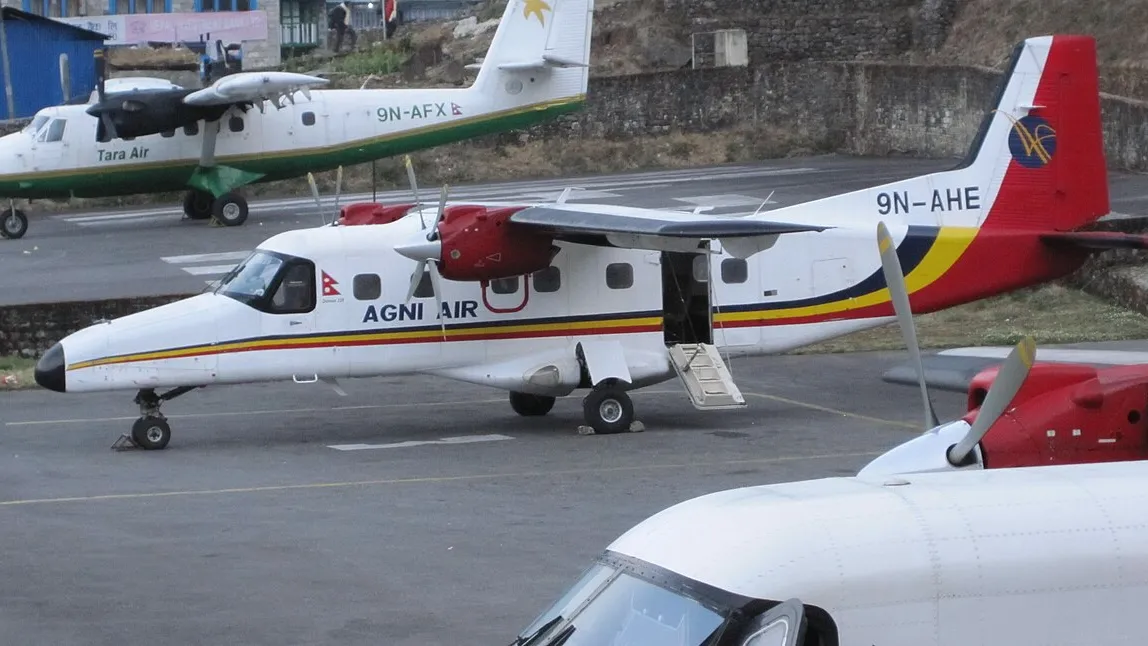
Much like the crash involving Sita Air that we previously discussed, the Agni Air Flight 101 (9N-AHE) crashed on on 24 August 2010 as it was on its way to Lukla but not anywhere in the immediate vicinity of LUA. 14 minutes after the Dornier Do-228 had departed from Kathmandu, i.e., at 07:18, the crew received reports that Lukla’s weather was deteriorating, and a landing wouldn’t be possible.
https://commons.wikimedia.org/wiki/File:Dornier_Do_228-101_(9N-AHE)_(cropped).jpg
According to the Aviation Safety Network, “two minutes later AG-101 acknowledged instructions to maintain an altitude of 12,000 ft and follow a 20-mile arc to the south to make an instrument approach to Kathmandu.”. As the aircraft attempted to land in Kathmandu visually, it crashed in the village of Bastipur (in Makwanpur District).
Although the crew had reported technical failure, The Aviation Herald reported that the initial reports about the technical failure were conflicting:
“The airport of Kathmandu reported, that the crew reported an engine failure before radio and radar contact was lost. Other sources say, that the crew reported a generator failure before turning around, subsequently a second generator failed which would have left the crew without instruments and communication in instrument meteorological conditions.”
Conclusion: Are there any common threads behind the crashes in Lukla?
Two crashes that we discussed above – Goma Air Flight 409 and Yeti Airlines Flight 101 – are strongly indicative of the fact that the Standard Operating Procedure (SOP) was not being followed. Despite adverse weather conditions, the aircraft were expected to land at the LUA.
Even on 9 June, 1991, a Royal Nepal Airlines, a de Havilland DHC-6-300 operated by the flag carrier of Nepal had suffered an accident and was written off. Aviation Safety Network reported:
“The weather deteriorated rapidly and the pilots could not see the runway. They continued to land without properly aligning with the centreline. The wingtip scraped the runway and the undercarriage collapsed.”
When senior Captain Rabindra Dangol, who also trains pilots to fly to Lukla, was asked about the crashes, he confided that the aircraft was never at fault in any of the crashes. He also believed that the newer crop of pilots have helped in increasing the safety of operations in Lukla:
“ In the years gone by, I wouldn’t say that the SOP was adhered to by pilots operating in STOL fields as rigorously as they should have. But the newer generation of pilots always go by the book. This has helped improve the work culture ( of STOL operations ) in the nation considerably.”
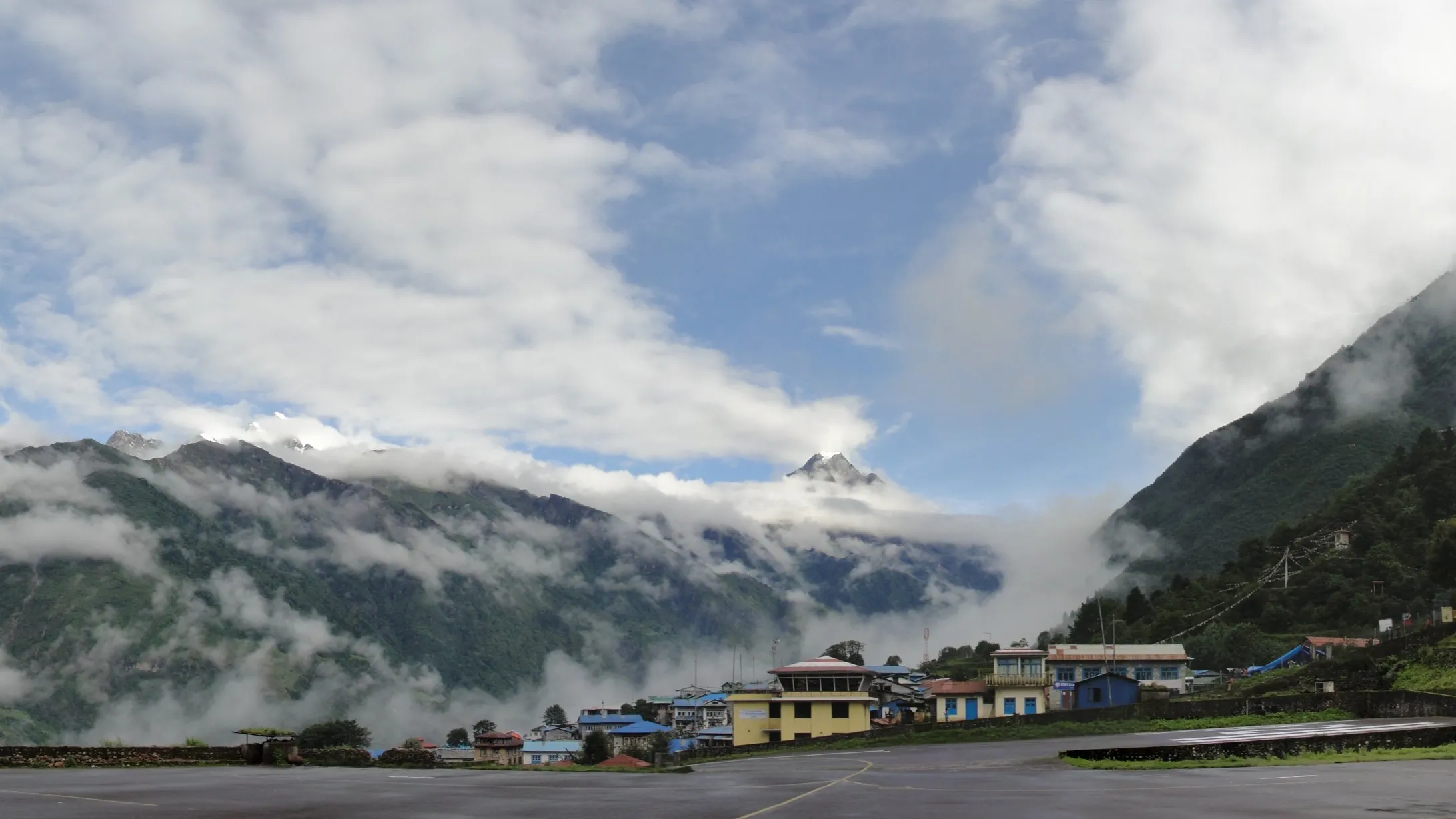
The last accident when a fatality was observed in Lukla was in 2019, when a plane crashed with a helicopter. Since then, a separate helipad has been built. Lukla appears to be headed towards a path where the accident rates have gone down. And if Nepal is expected to better its safety record and aviation practises, the moniker of being the most dangerous airport in the world, is something Lukla airport can shrug off.



_Lukla,_Nepal,_5_april_2012.jpg)


.jpg)