Syangboche Airport (SYH) is located at an altitude of 3748 m./12293 ft and lies in Khumjung Municipality of Solukhumbu District, the same district where the supposed most dangerous airport in the world – Lukla Airport lies. However, the airstrip is not currently in operation. Horses in Syangboche graze around the area surrounding the airport, and when the author was working as a faculty of Khumjung econdary School, it served as his favorite spot for a morning walk.
Table 1: General Information
| Field | Details |
|---|---|
| Name | Syangboche Airport |
| Location Indicator (ICAO) | VNSB |
| IATA Code | SYH |
| Aerodrome Reference Code | 1B |
| Aerodrome Reference Point | 27°48′37″N / 86°42′43″E |
| Province / District | Province No. 1 (Solukhumbu) |
| Distance and Direction from City | Near Namche Bazaar |
| Elevation | 3,748 m / 12,293 ft |
| Contact (AFS) | VNSBYDYX |
| Status | Not in Operation |
| Land Area | Approx. 54,434.91 m² |
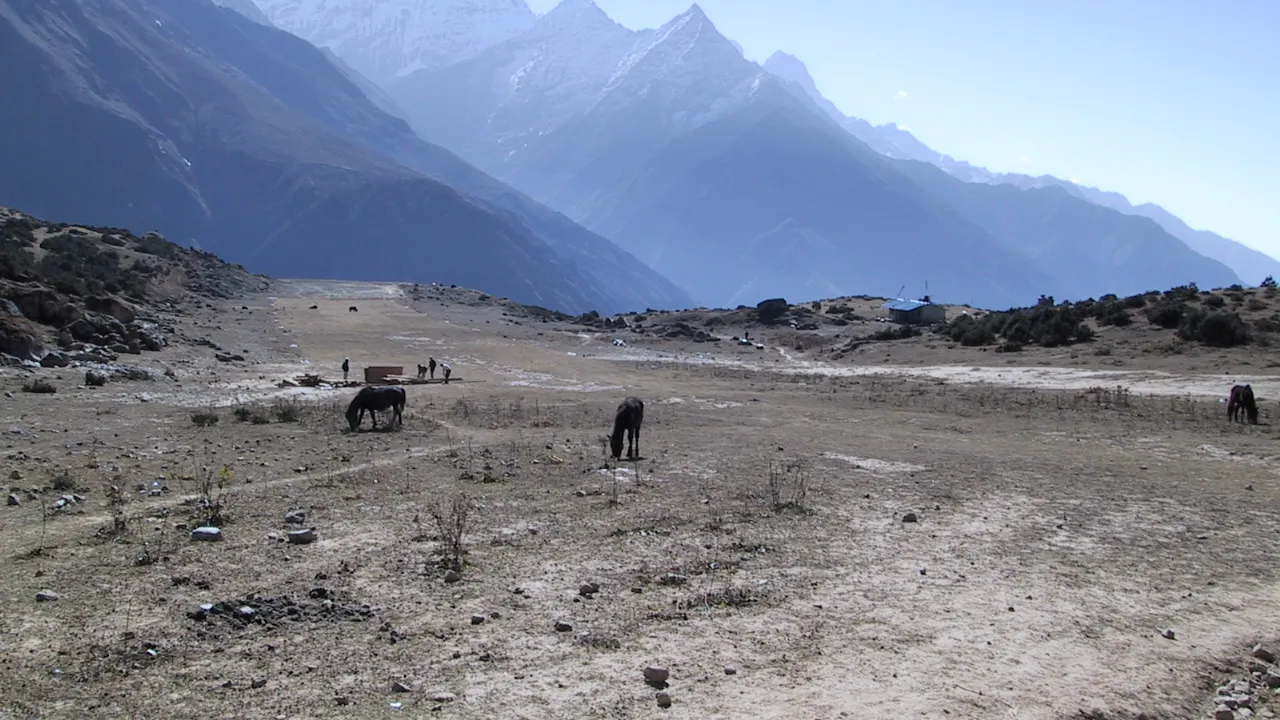
Photo: Ivan G. Somlai
Where is Syangboche Airport Located?
Note that Syangboche Airport lies very close to Khumjung School- the first school that was built by Sir Edmund Hillary in the Khumbu region. Incidentally, the materials for building this school were carried to Khumjung from another airport that is higher than Lukla-the Mingbo Airstrip, which isn’t functional, though is a captivating one. You can read about it in our guide below.
You can see two pedestrians in the runway of the airport. Syangboche’s runway has never been paved. It covers an area of 54435.18 square meters and is devoid of re-fueling facilities. Sir Edmund Hillary had flown to this airport from Phaplu (another place that houses an airport in Solukhumbu) when he heard the news that his son was injured in Ama Dablam during an expedition. In his own words, Sir Hillary said:
“Desperately, I asked the pilot if he’d fly me to Syangboche airfield and he generously agreed, in twenty minutes covering a four-day walk.”
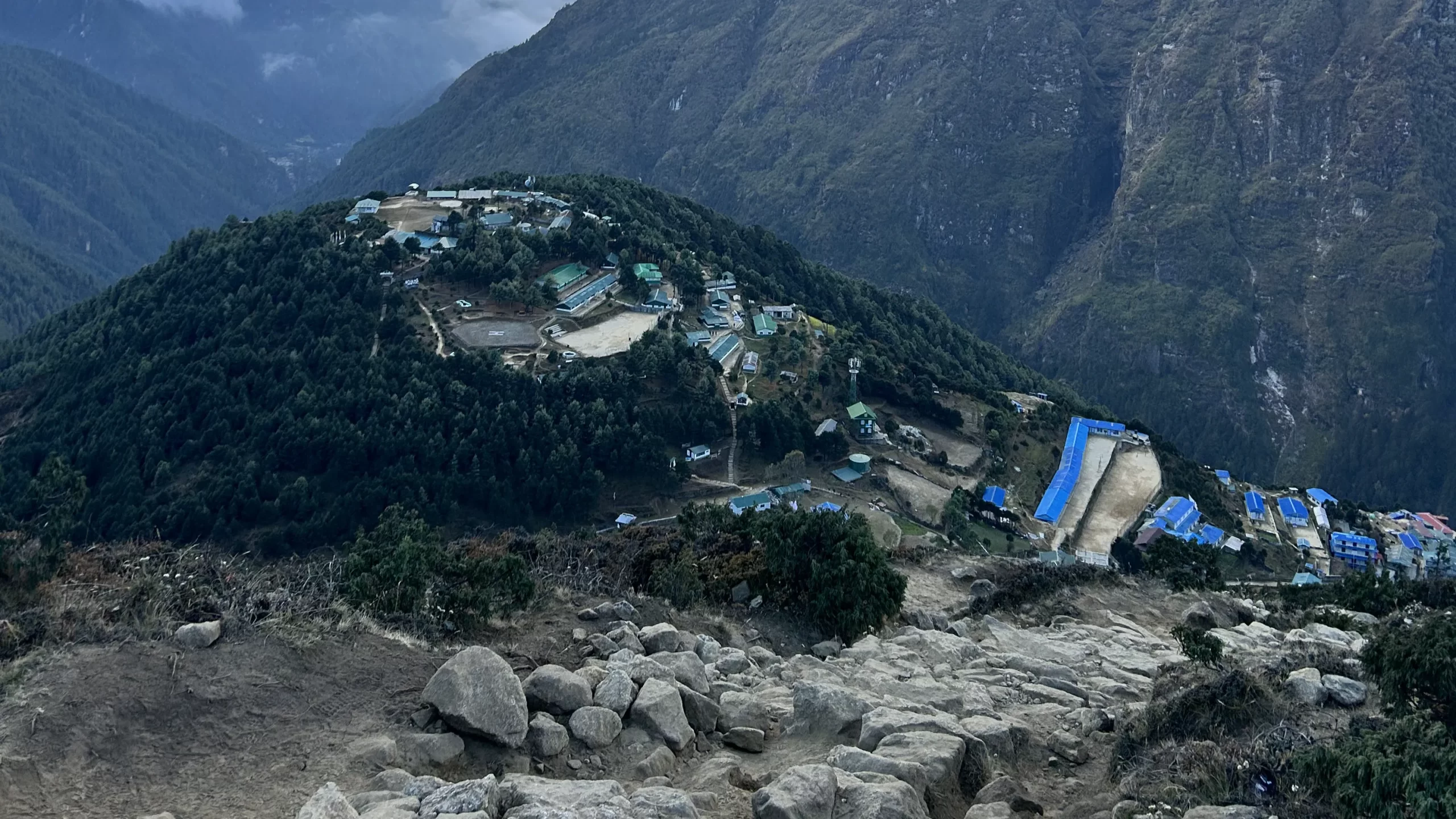
The following is a view of the famed village of Namche from the outskirts of Syangboche airport. People generally trek for two days to get to Namche from Lukla Airport. From Namche, a strenuous uphill trek of two hours takes you to Syangboche airport. One of the helipads in Namche Bazar is visible in the picture above.
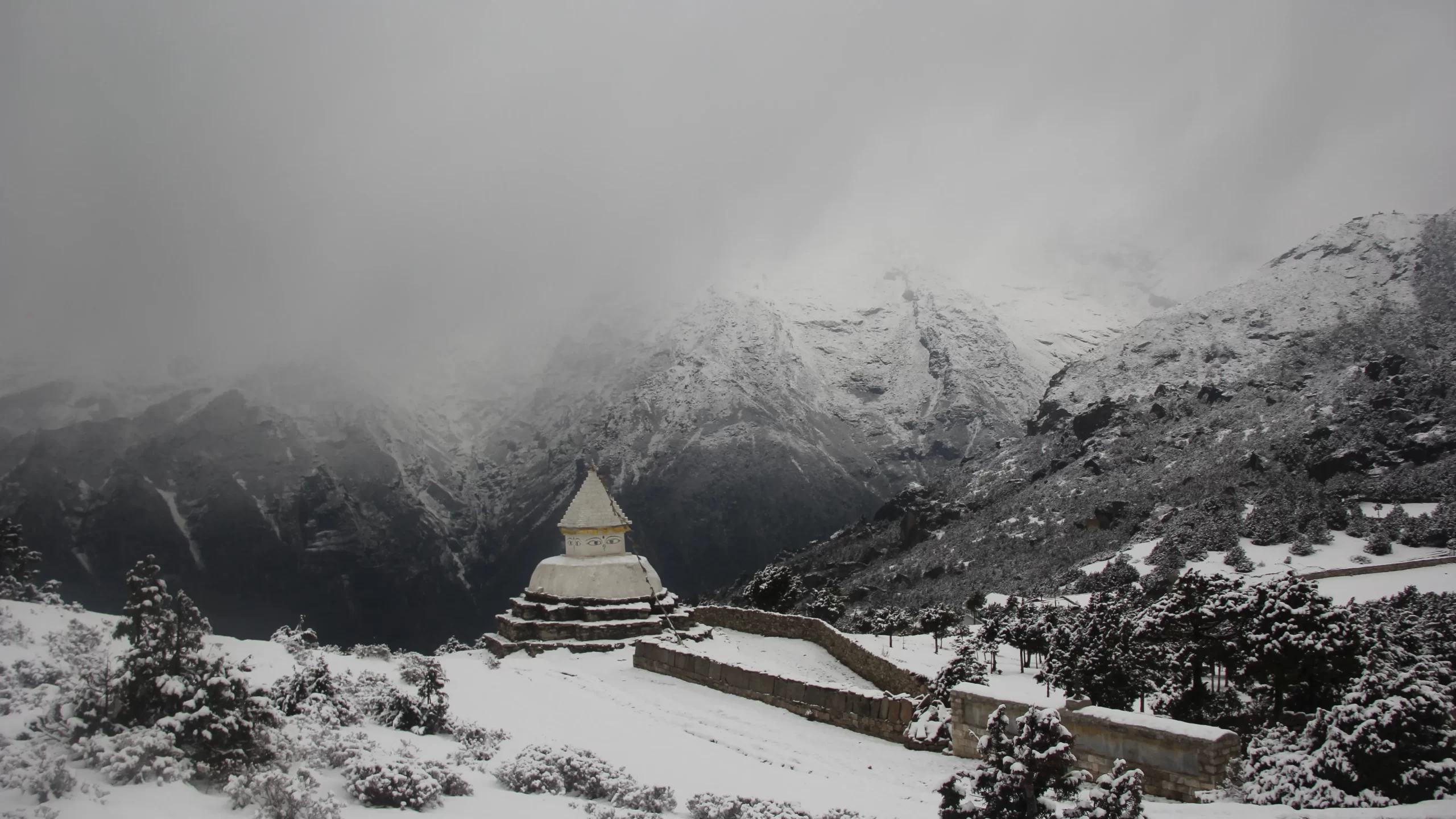
The other way to approach Syangboche, albeit descnding from a higher altitude is to get to it from Khumjung. As you approach this forgotten airfied from Khumjung, you will come across a remarkable chhorten (a stupa) that appears to bask against the majesty of the mountains that surround it. The following is the photo of the chhorten during snowy weather:
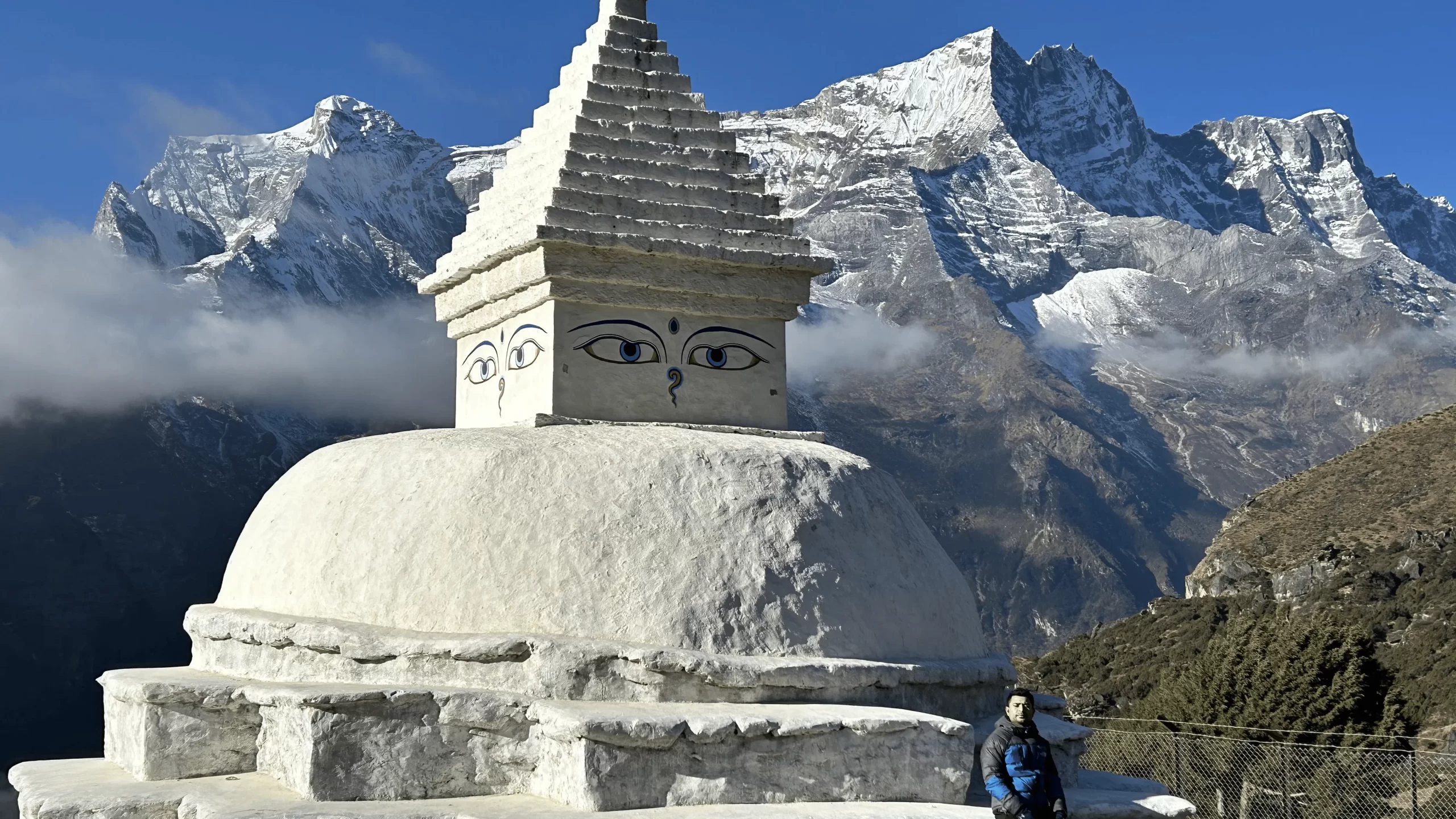
This is the same chhorten during some of the best trekking season.
Why Syangboche Airport doesn’t have regular passenger operations?
As far back as 2002, the Nepali Times reported that residents of Lukla were opposed to Syangboche Airport being opened to STOL traffic. Local residents had indicated that they were prepared to repeat earlier protests, including runway sit-ins, against cargo and passenger helicopters carrying tourists directly to Syangboche. Construction work had also faced delays after some equipment was vandalised.
Syangboche Airport is roughly a two-day walk from Lukla. If STOL operations begin there, much of the air traffic carrying tourists to the Everest region could shift from Lukla to Syangboche, potentially causing a significant economic impact on Lukla.
The opposition from Lukla residents is notable because the development of Lukla Airport itself dramatically changed access to the Khumbu region. Before regular flights to Lukla, trekkers typically faced a journey of around two weeks through Lamosangu and Jiri, passing through villages such as Junbesi. Once trekkers and mountaineers began flying directly to Lukla on their way to Everest Base Camp, much of the foot traffic along the traditional Jiri route disappeared.
Syangboche Airport could potentially have become operational more than two decades ago, but its development was affected by political disputes. The decision to refurbish the airstrip in the early 2000s was reportedly linked to tensions between then-Tourism Minister Bal Bahadur KC and political supporters in Lukla, who had demonstrated against him when the newly paved runway and terminal building at Lukla were inaugurated.
The dispute was partly related to concerns over the quality of construction at Lukla, particularly a retaining wall along the northern edge of the runway. Local political supporters reportedly argued that the structure appeared weak and could be damaged during the monsoon, adding another layer of controversy to the development of the region’s airports.
Tara Air and Nepal Airlines: The two airlines that have operated to Syangboche Airport
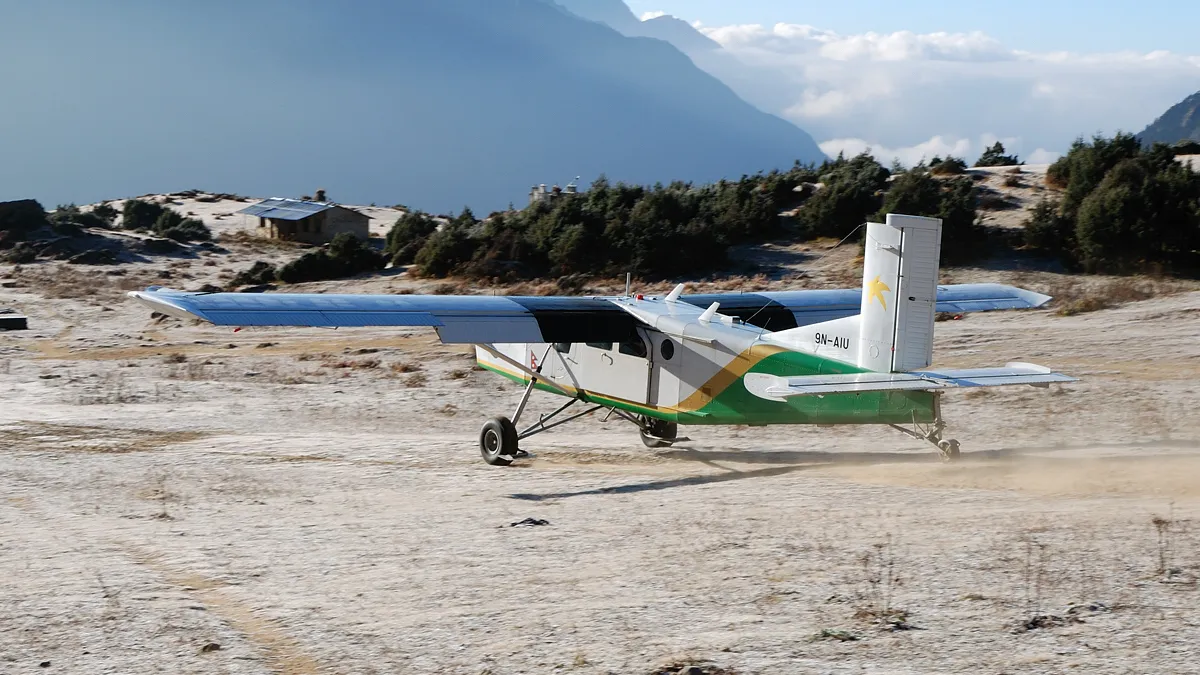
Only two airline operators have conducted sporadic passenger flights in Syangboche. One of them is Tara Air, which deployed Pilatus PC-6/B2-H4 Turbo Porter in Syangboche airport, and a subsidiary of Yeti Airlines. The following photograph is an example of Tara Air’s operation here:
The other operator was Nepal Airlines, formerly known as Royal Nepal Airlines, as the following photograph demonstrates:
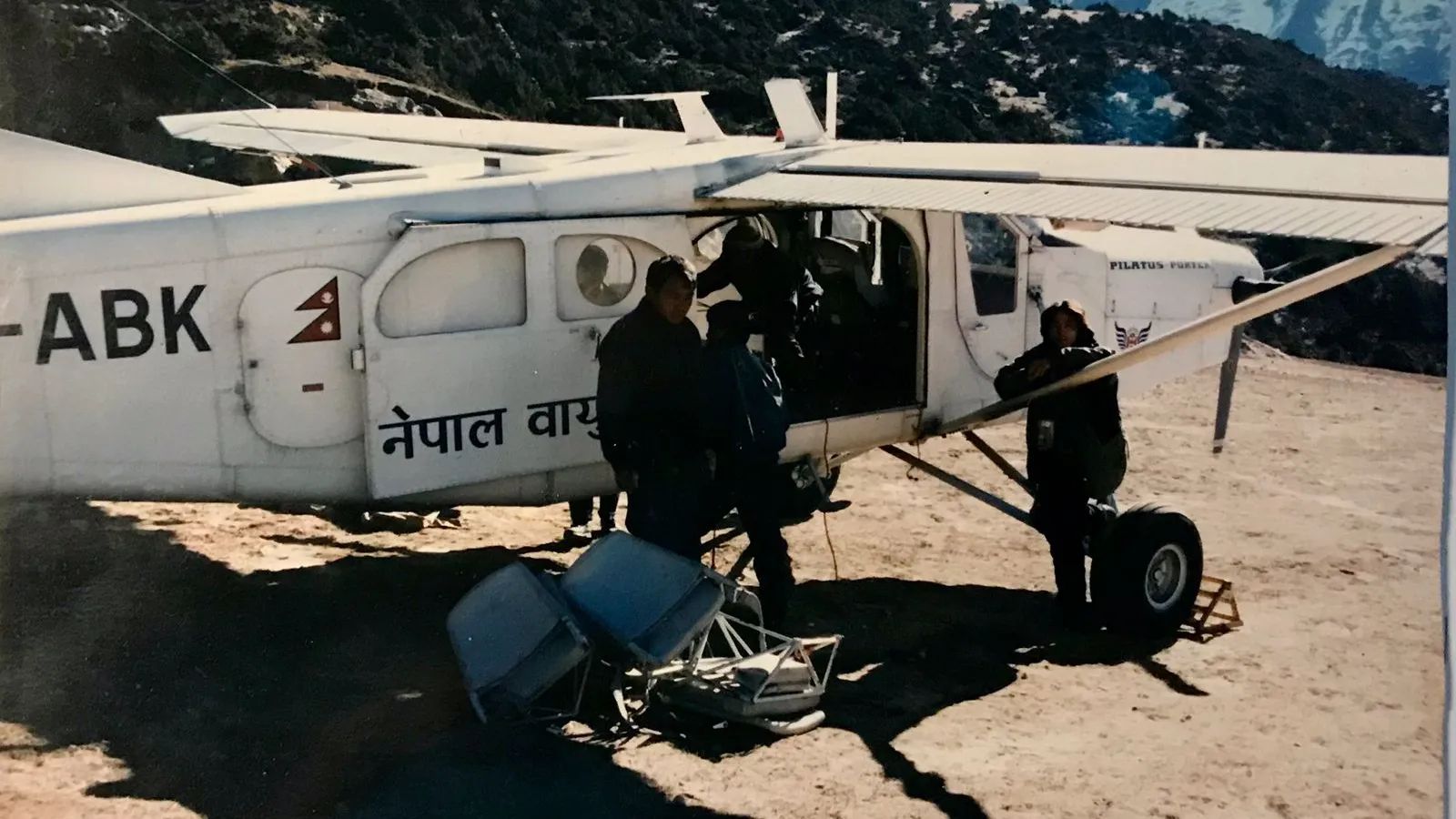
The airport was primary used to transport people who wanted to fly to Hotel Everest View, said Mahendra Rai (the author of the photograoh above), a resident of Khumjung Municipality and a former staff of this hotel, which once had the distinction of being the hotel located at the highest altitude:
” If regular commercial operations begin at Syangboche airport, this will shorten the popular Everest trek from 14 days to nine days roundtrip. This also means that people who use zopkio and yak for transporting goods into the region will also be out of business. “
Syangboche Airport turns into a snowy desert in winters
Despite the picturesqueness of the airport, there are other things to worry about as well. During snowy winters, Syangboche airport becomes an icefield, as exemplified in the photograph below.
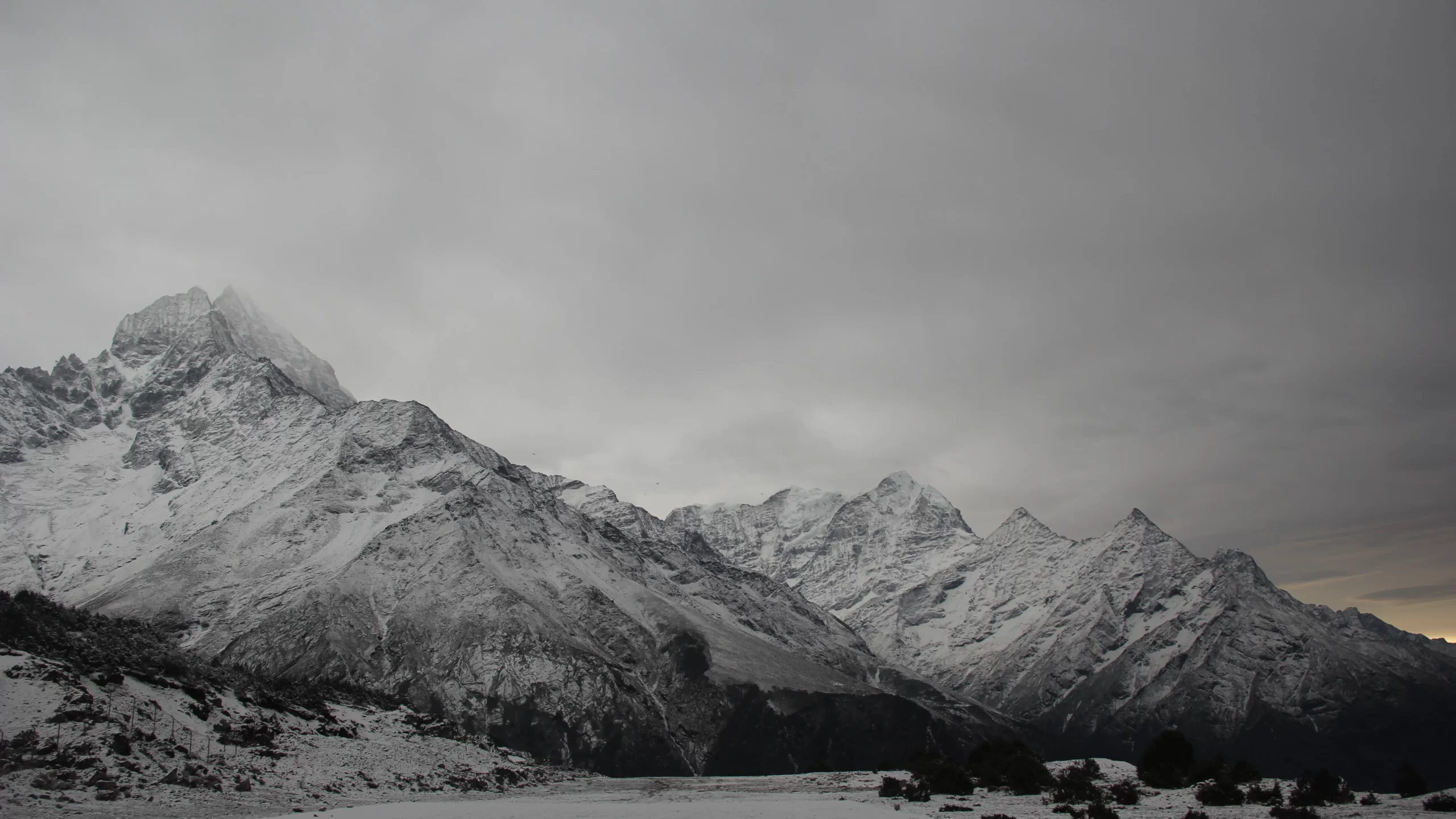
Although the airport turns into a dreamland of sorts with the splendid mountain views, regular passenger operations become extremely difficult.
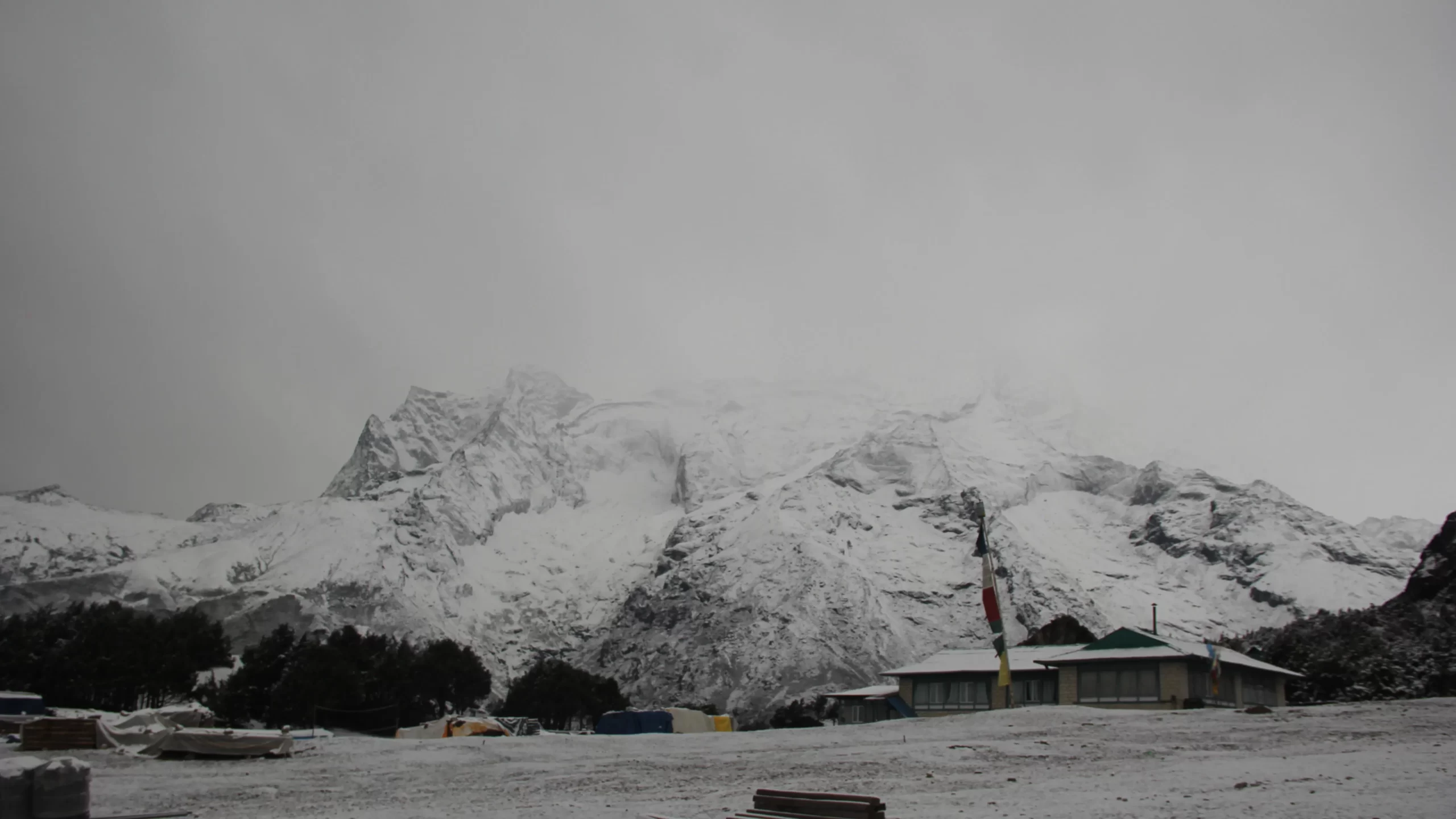
Further, many residents of Khumjung municipality come to Kathmandu (or lower parts of Solukhumbu district) during the winter. Many lodges and restaurants are closed. This means that the airport won’t have passenger operations (due to inclement weather conditions) for long stretches of time in a year. The following picture gives a clue about the surrounding area of Syangboche airport during the winter season:
Problems of Mountain Waves in Syangboche Airport
Nepal has many aerodromes and airstrips. However, not all of them are fully functioning.
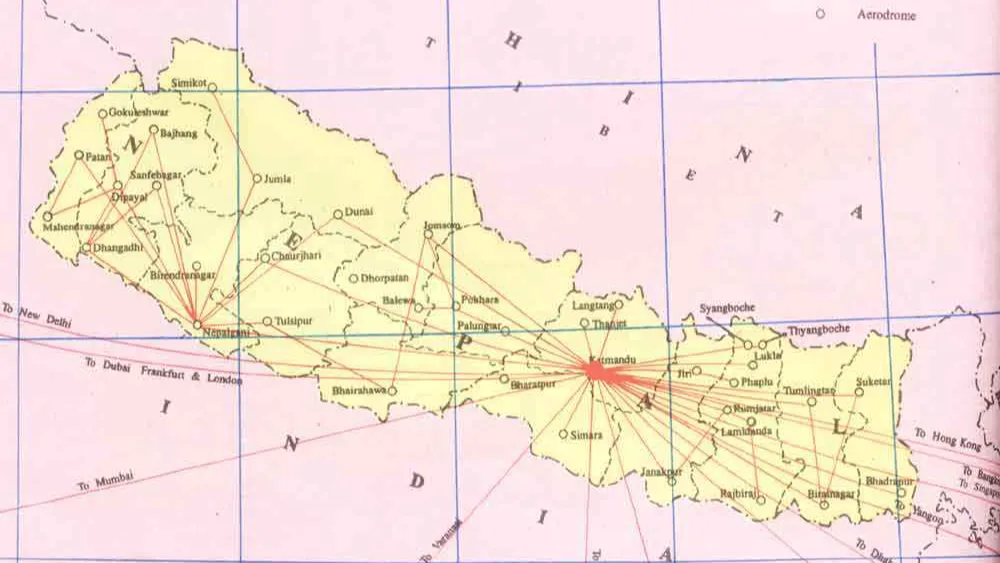
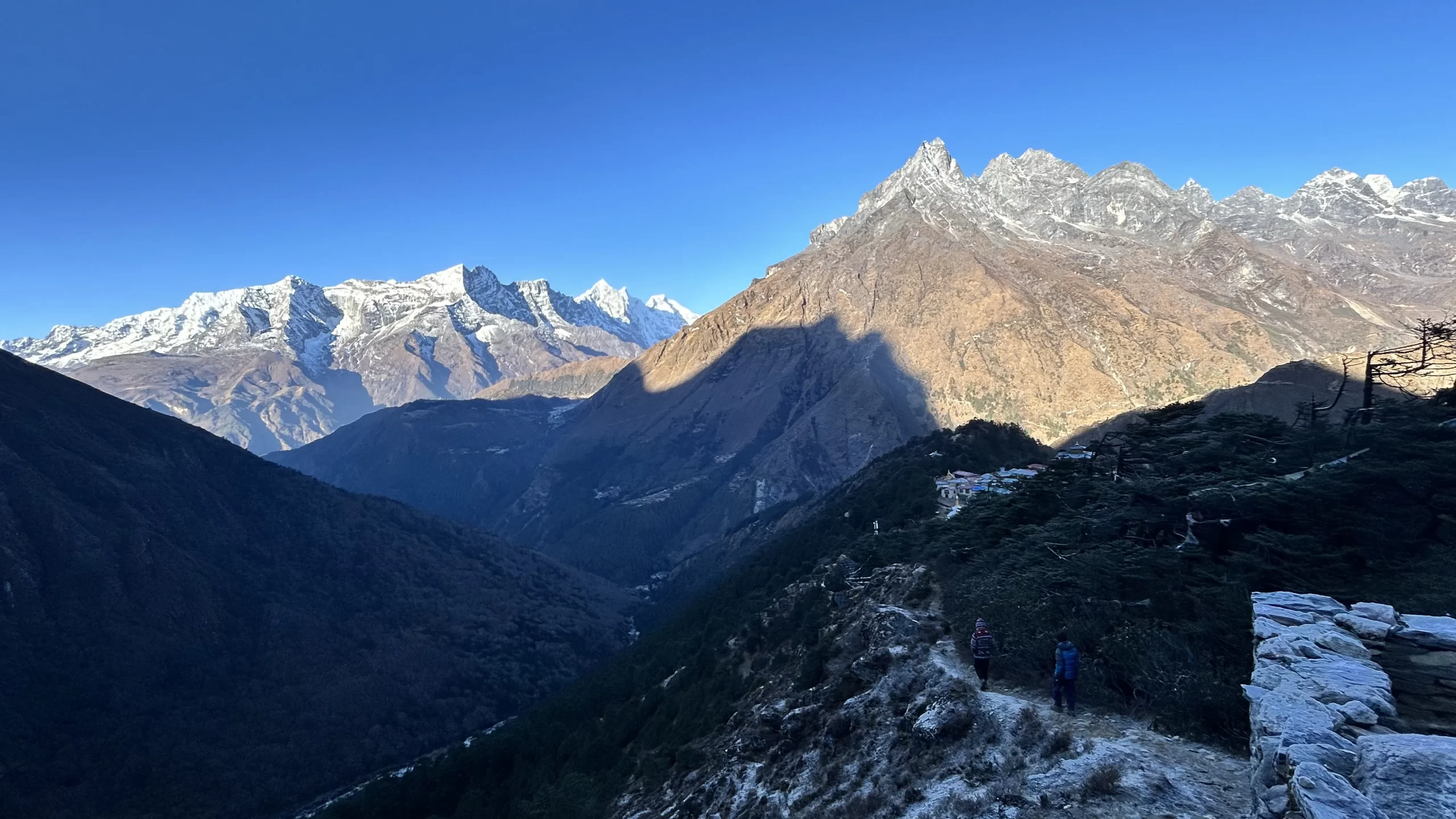
The map below shows airstrips in Thyangboche, is a village that lies one day trek from Syangboche airport. Syangboche and Tengboche are geographically similar, surrounded by tall mountains, posing risks for operations. The following is a photo of Tengboche:
The findings from Captain Emil J. Wick, a retired Royal Nepalese Airlines pilot, help explain why operating from Syangboche has historically been challenging. In his study, “Air Motions in the Vicinity of Mt. Everest as Deduced from Pilatus Porter Flights,” Wick examined flights conducted between 1974 and 1986 and documented frequent turbulence and difficult atmospheric conditions between Lukla and Syangboche.
He found that during winter mornings, the Dudh Kosi Valley was often covered by stratus clouds, while the air above the cloud layer, at around 4,000–4,500 meters, could become extremely turbulent. On some February flights, the valleys remained largely cloud-free, but severe turbulence at higher altitudes meant pilots had to remain at very low levels while approaching either Lukla or Syangboche.
Wick also described what he observed as a “funneling effect” around Syangboche. Flights could generally follow relatively calm valley routes until reaching the airfield, where the airflow transitioned into strong westerly winds. These high-speed flows could create two areas of wake turbulence, one downwind of Taboche Peak and another downwind of the Chakri Ridge.
These observations are particularly significant given that Syangboche has a relatively short runway measuring just 405 meters by 30 meters. The combination of a short STOL runway, mountainous terrain, strong winds and potentially severe turbulence raises an obvious question: why has there been continued interest in developing Syangboche for regular STOL operations despite these challenging conditions?
Operational & Infrastructure Details of Syangboche Airport
| Field | Details |
|---|---|
| Re-fueling Facility | Not Available |
| Service (AFIS) | Visual Flight Rules (VFR) |
| Type of Traffic Permitted | VFR Only |
| Scheduled Operating Airlines | None |
| Scheduled Connectivity | None |
| RFF (Rescue & Firefighting) | Not Available |
| Infrastructure Condition | Airside – Basic |
| Runway Type of Surface | Earthen |
| Runway Dimension | 405 m × 30 m |
| Runway Designation | 13/31 |
| Apron Type | Earthen |
The Current State and the Future of Syangboche Airport
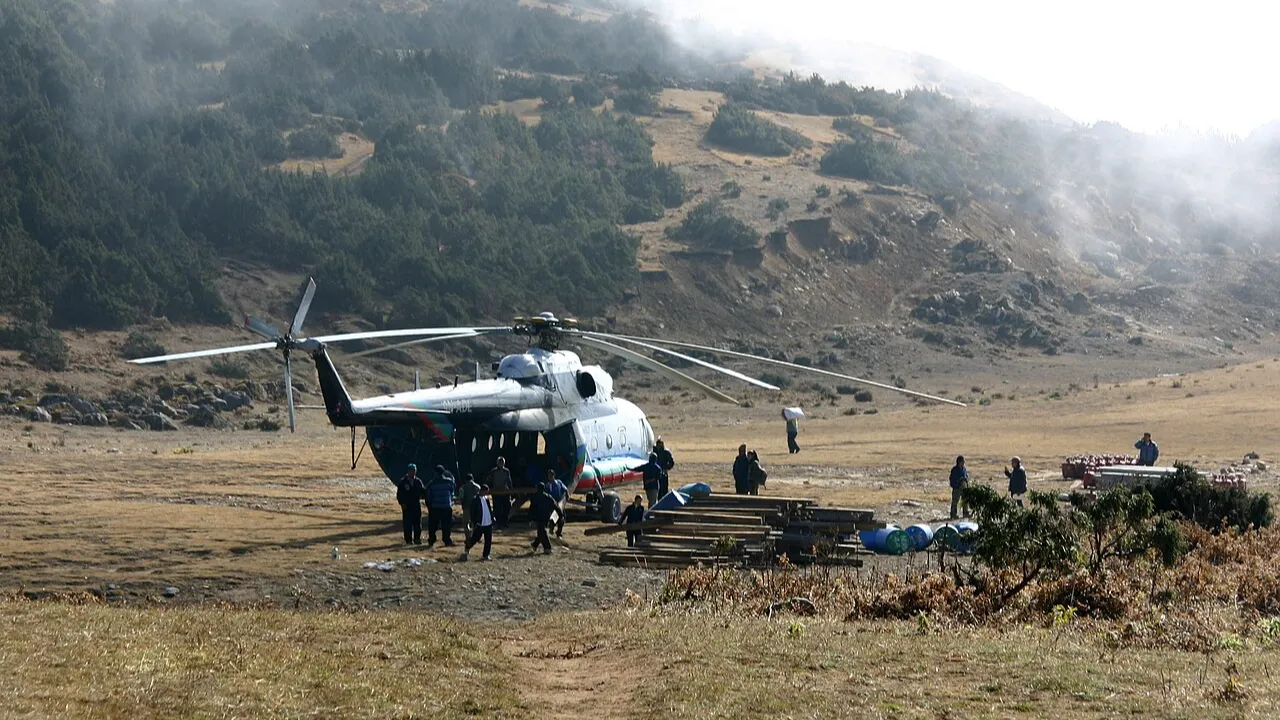
The airport now sees ceiling operations from helicopters as they often deliver a lot of essential supplies to the region. One of the most sought after helicopters operating in this region was the Mil-17 operated by Shree Airlines.
Surrounded by the most wonderful peaks, Syangboche Airport has all the promises of becoming one of the most picturesque airports in the world. Whether it will function in the future is something we don’t know. After all, Nepal has more than fifty airports, and more than half of them are non-functional. For now, Syangboche is one such airport in Nepal: full of promises, but no results.