Lukla Airport (LUA), which is named after the two famed climbers who scaled it first, [Tenzing Norgay Sherpa and Edmund Hillary]. is also referred to as the Tenzing – Hillary Airport (LUA). Its geographical conditions and unique flying challenges have led to it being dubbed “the most dangerous airport in the world”. However, a report (that you can read below) we prepared last year indicate that labeling it the most dangerous airstrip might be inappropriate.
For the piece, we quoted Ujjwal Tiwari, an Air Traffic Controller (ATC) working for the Nepalese government, who was stationed to Lukla for two years who confided that none of the numerous pilots (working in the STOL airports of Nepal) he had interacted with ever said that Lukla was “the most dangerous”. Let’s dive deeper into how difficult Lukla Airport for pilots.
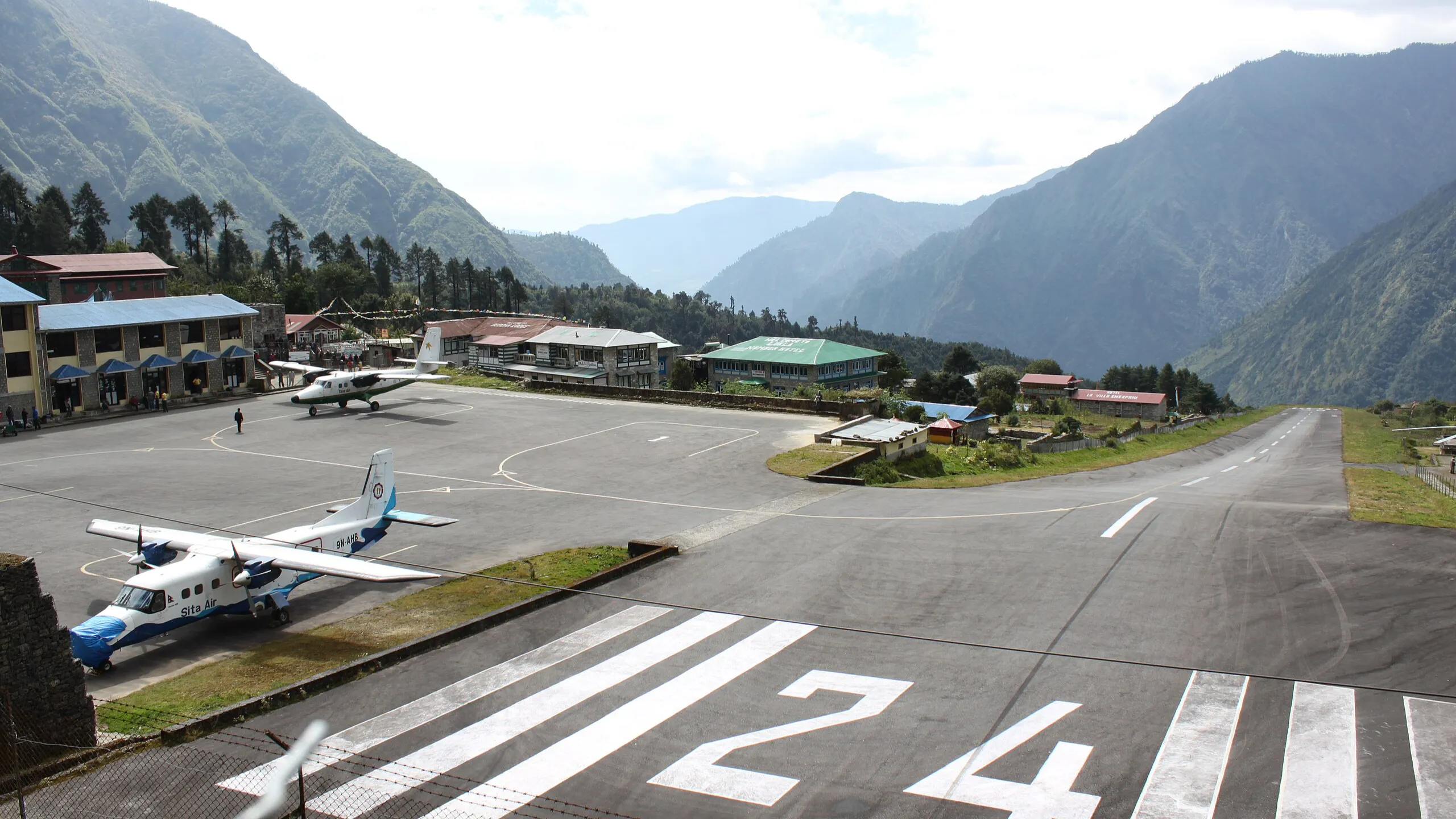
Some challenges that pilots face while operating to/ from Lukla
When you look at the pictures of the airstrip, Lukla comes across like no other major airport we know, and it gives the impression of being dangerous. But Captain Sanjib Kunwar, someone who is the Pilot-in-Command for Sita Airlines’ Dorner Do-228, said that he would think of the airport as “tricky” rather than “dangerous”:
“Why would I even fly there if it was dangerous?”
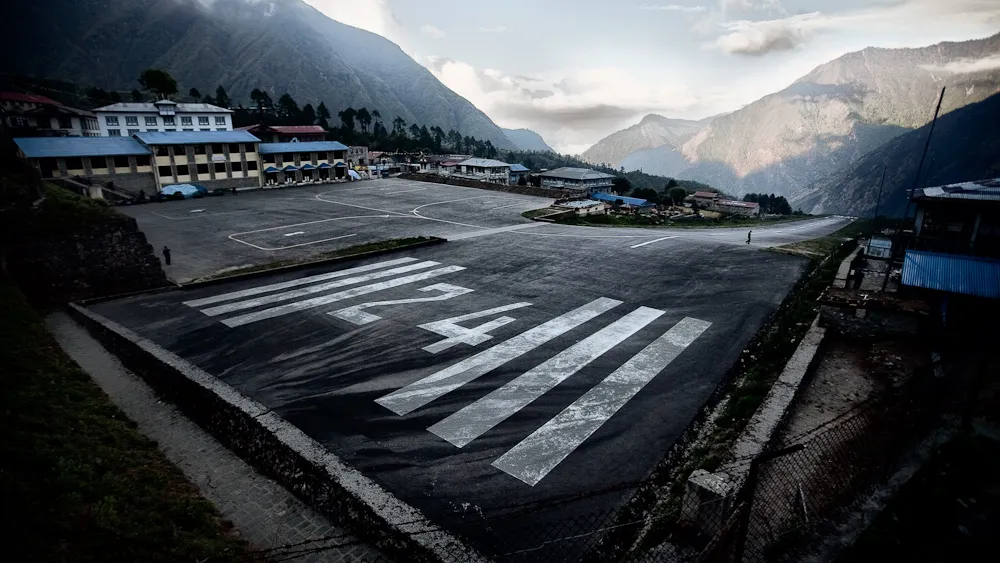
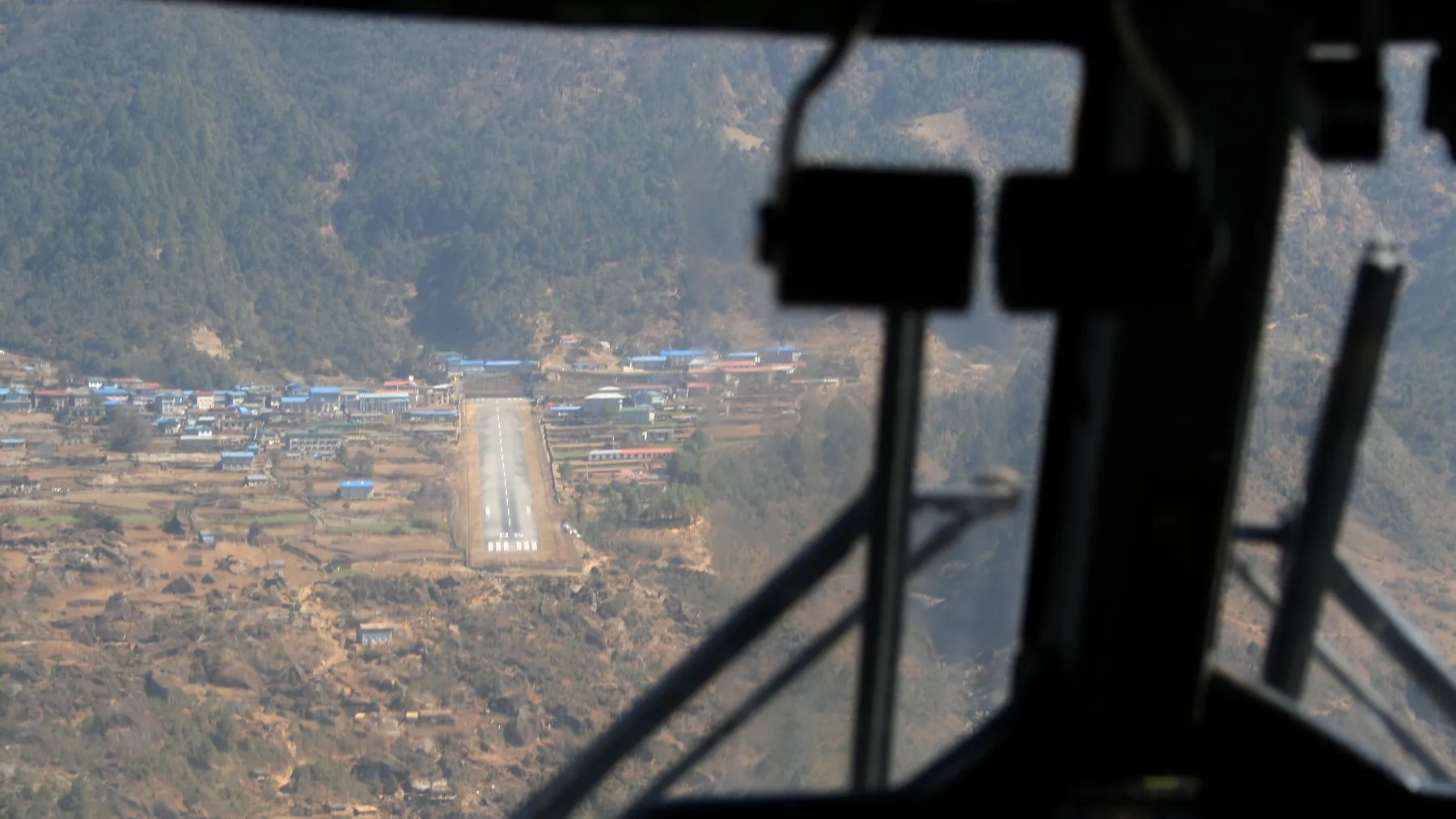
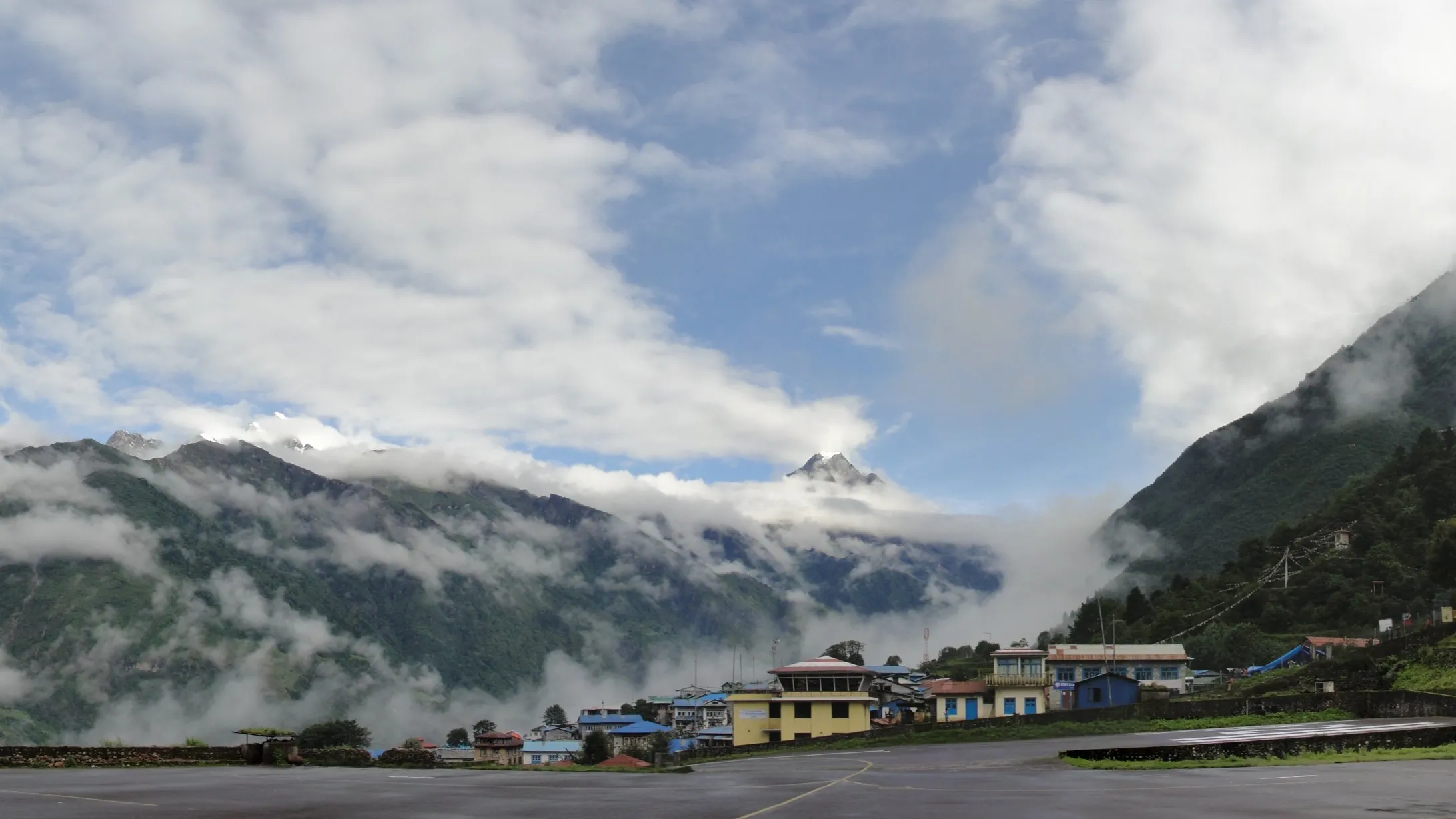
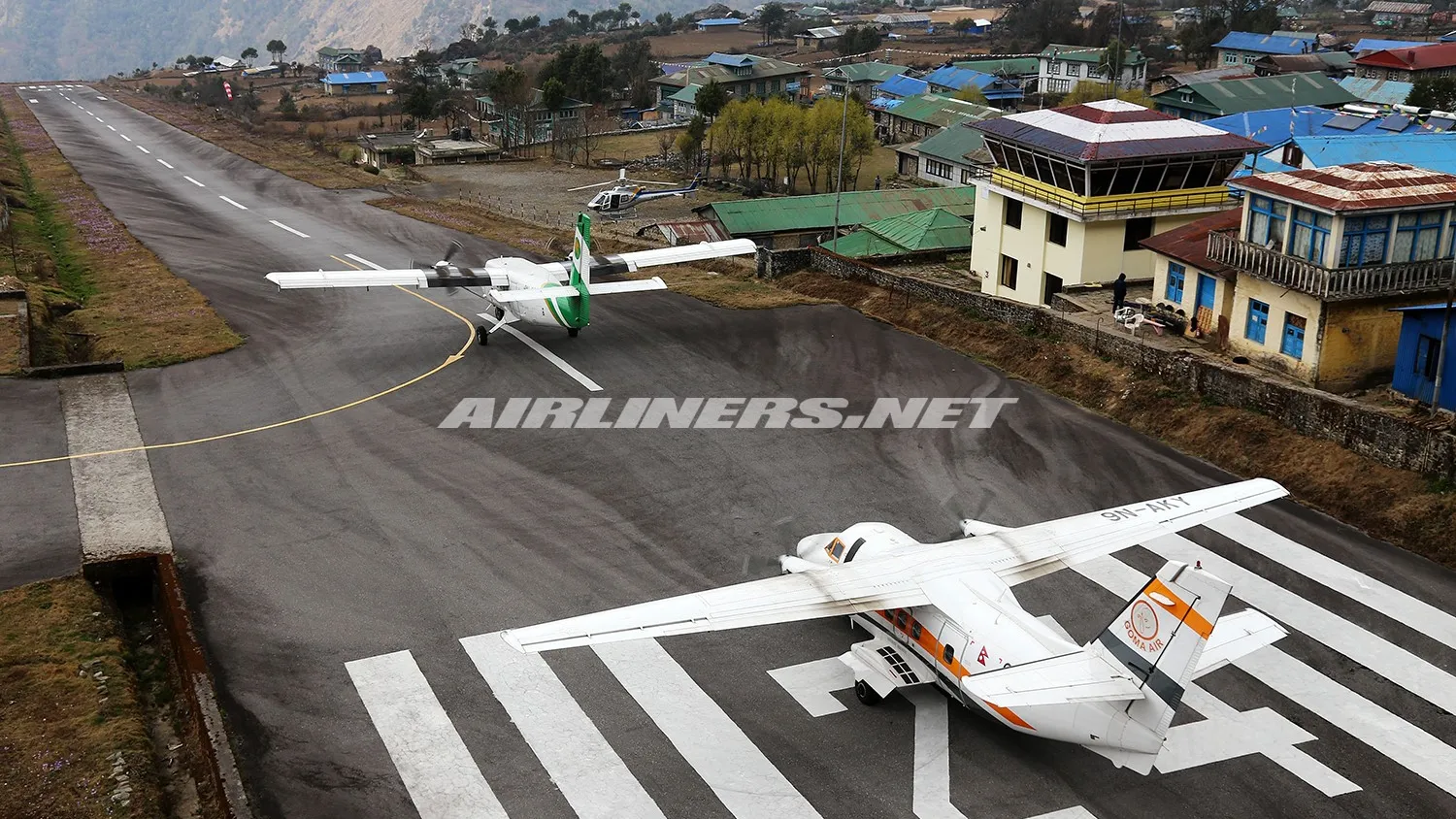
Lukla’s runway is short and steep
As we’ve previously said, Lukla’s runway is only roughly 527 meters (1,729 feet) long. If the aircraft landing in Lukla from Runway 06 overruns, it just smashes against the wall. However, no accident of this kind has ever taken place. Captain Rabindra Dangol said that though the airport appears (theoretically) to be difficult, it is one of the easiest places to land:
“ The difficulty is not landing the aircraft. If you fly according to the Standard Operating Procedures (SOP), Lukla’s not difficult. Take another airport in the same district, Phaplu Airport, for instance, which has a much more difficult approach. I would rate this airport to be more challenging than Lukla. When I first flew to Simikot airport for the first time a good couple of decades ago, I just couldn’t believe that the airport was so precariously placed. I remember saying to my pilot in command, “Is there really an airport in this dicey a place?” Compared to Simikot airport (of the years gone by), Lukla has always been rather easy.”
Captain Rabindra also said that the runway’s steep elevation (about 11.7), also allowed for a natural braking mechanism. However, taking off from the airport can be a tad tricky:
“Though landing at Lukla is where most people are shaky about, I would say taking-off is trickier. Once you are committed to take-off you can’t abort it. In Tribhuvan International Airport. For example, a lot of aircraft abort take-off (due to technical glitches or otehrwise), but you can’t do that in Lukla.”
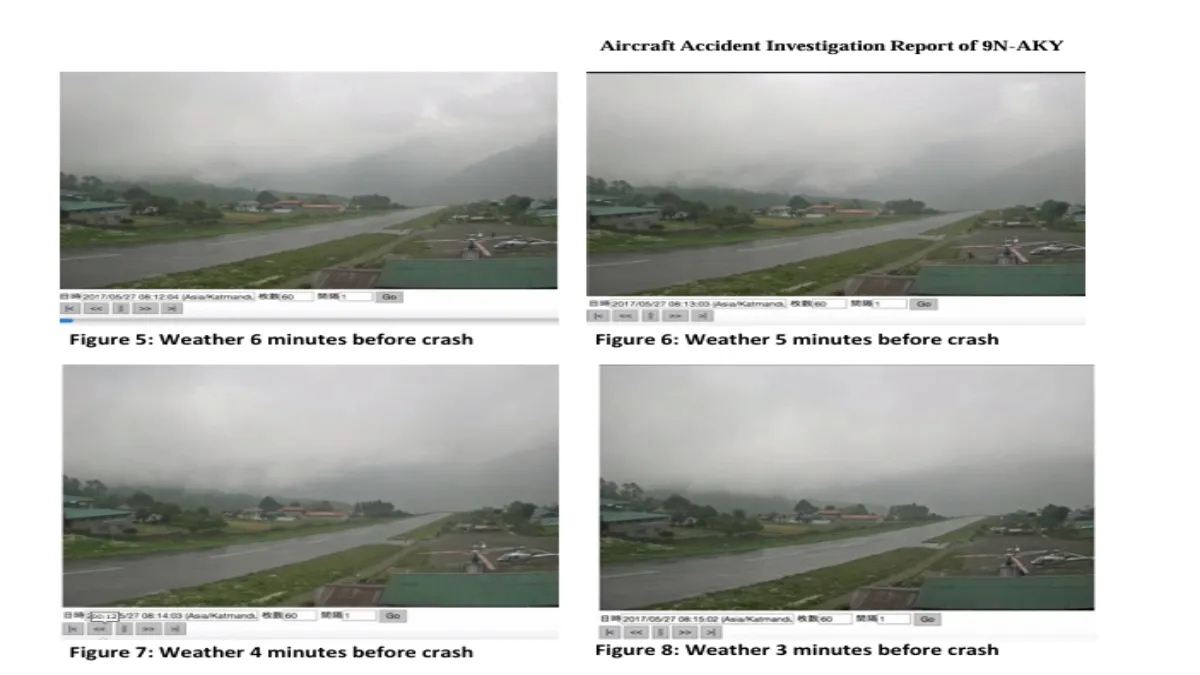
Lukla has a quickly fluctuating weather
Although the mornings in peak trekking seasons in Lukla are clear, the weather is not guaranteed to be consistent throughout the day. A pristine morning can turn into sudden heavy fog, cloud cover, wind, and even rainfall.
Captain Sanjib explained about the challenges the weather of Lukla Airport can pose:
“ There might be moments when you think the weather is clear, and you get a confirmation of that from people at the airport, but in no time, the mist and fog coming from the Dudh Koshi River means that the airport might be shrouded with cloud covers.”
One of the accidents that took place in Lukla and were attributed to “very low” visibility was that of Goma Air Flight 409. The investigation report concluded “Voilation of SOP by the ATS and Pilot as well” and posited the following findings:
-
Duty ATS Officer was regularly updating the rapidly deteriorating weather tendency to the pilot and in the meantime requesting the pilot to expedite. However, he failed to close the airport as per approved SOP.
-
During the critical phase of final approach PIC (PF) lost situational awareness and deviated to the right by almost 15 degrees and also descended below threshold height. He could not even pay attention to the FO’s call out alerting the excessive descent. “
Captain Rabindra Dangol said that aircraft failure is something of a rarity:
“The machine is rarely at fault. If you take a look at the cases of accidents in Lukla Airport, it most of the times points towards a violation of the Standard Operating Procedures”.
The same was true for Yeti Airlines Flight 101, which met an accident in Luka after the pilot repeatedly entered clouds in the region. It was also said that wrong practices were being followed in STOL fields like Lukla on a regular basis. It was also found that operators were creating a “MUst land” situation by prioritizing economic incentives over safety.
When Captain Sanjib was asked about whether it was difficult to be in charge of flights after one hears of an aviation accident and whether it plays into the psyche, he said that one had to stay humble:
“The trick to being good at piloting is to know that every situation poses a unique challenge. To have the confidence to pull through any situation is a gift but one’s confidence shouldn’t boil over to being cocky. This balance is key.”
One of the other challenges that an aircraft experiences while operating in airports surrounded by mountains (such as Lukla Airport) is that of Atmospheric Gravity Waves – waves moving through a stable layer of atmosphere.
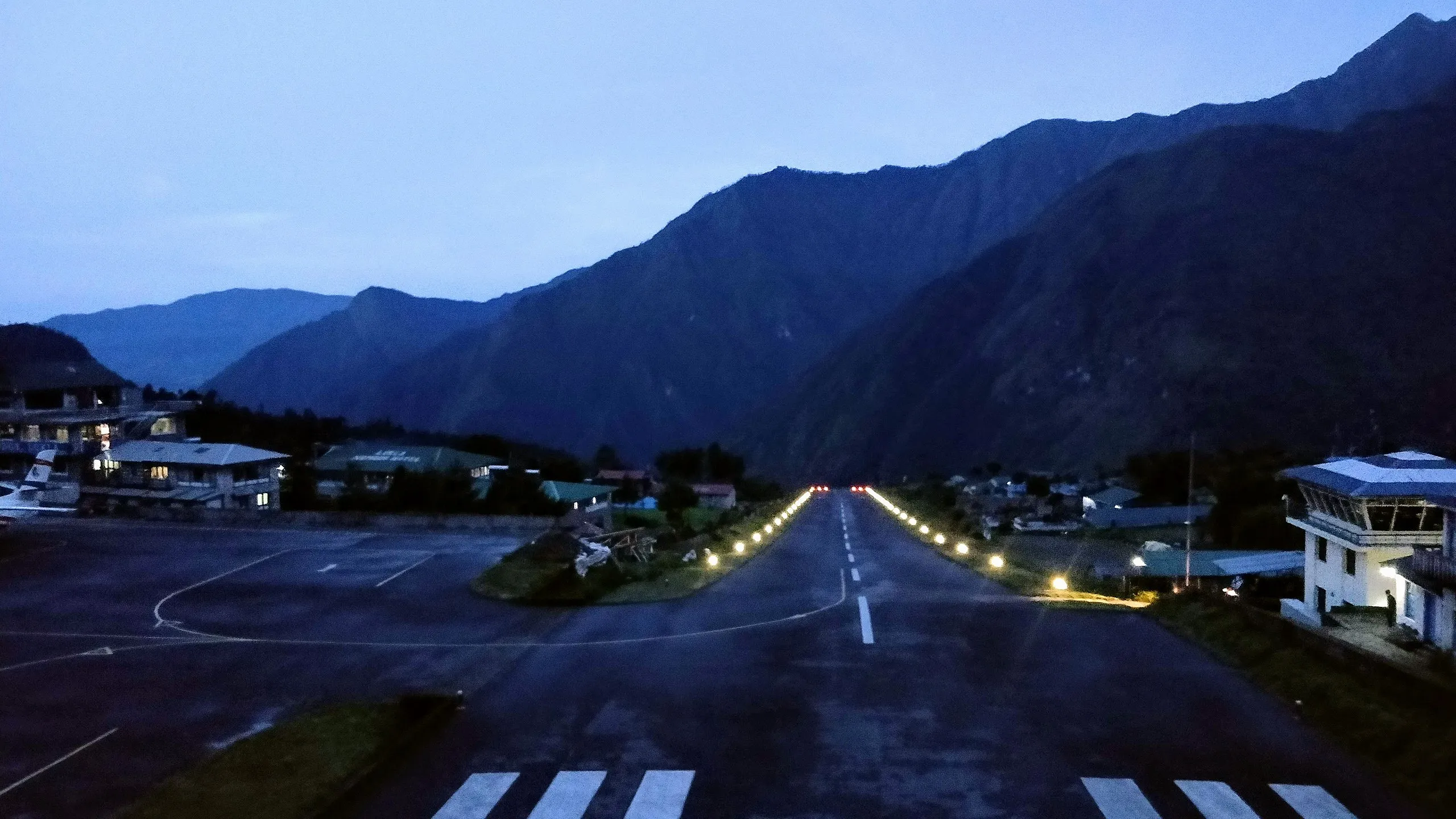
Lack of a go-around path
Pradip Bashyal, a reporter for BBC, brilliantly explained the lack of a go-around path in Lukla airport in his book “Sherpa”:
“The runway at this airport, which is a brief strip of just 527m (1,729ft) starting at the edge of a cliff on your approach, does not have any overshoot facility. Because of this, even when there is a strong wind, no visibility or any other obstacles on the runway, once an airplane crosses the ‘No Go’ zone, it’s only ‘Go Go’, with no chance of turning back. Pilots therefore claim that sometimes the survival rule in this airport is that you must be skilled enough to break the rules and improvise.”
After the aircraft committed to landing in Lukla have gone past a specific zone, they have to land, there isn’t a go-around path. However, some pilots have performed a go-around. When Captain Rabindra was asked of this procedure he said that performing a go-around is in the SOP:
“ Not all aircraft operating to Lukla would be able to perform a go-around. It would be extremely tough to do that with Twin Otters. I have been piloting the Dornier Do-228, and with these one could perform a go-around even if they had crossed the “no-go zone”[ as written by Pradip Bashyal]. This is because this bird can just pull through faster. ”
However, one can watch a video of a go-around being performed in Lukla in a Twin Otter in the video that exemplifies the extraordinary skills of pilots .
The constant altitude shifts while operating to/from Lukla could take a toll on a pilot’s long-term health
The risks of operating on a short, steep runway and in an airport around which the weather could change in a small window of time is quite obvious. But one of the lesser-known challenges of operating as a pilot to/from Lukla is the constant change in altitude that pilots are subjected to.
Tribhuvan International Airport (TIA), which during the recent Gen-Z protests in Kathmandu was almost torched by mobs, is placed at an altitude of 1339.54 m. /4394.76 ft. Lukla Airport, on the other hand, has an altitude that is more than two times that of TIA i.e., 2846 m./9338 ft. A pilot operating to/from Lukla has to undergo a change in altitude (in the two airports ]) of more than 1400 meters three to four times a day, everyday. This could have some long-term health consequences too.
Pilot Sanjib Kunwar, therefore, said that having a physically fit body is of the highest priority:
“ It is one of the topics that a lot of people don’t know. Kathmandu and Lukla are two very different places. The altitude, the air pressure, the way the body reacts to climatic conditions in these two airports, is just not the same. So hitting the gym and by doing that giving myself the best chance to deal with the atmosphere gradient that my body is subjected to on a daily basis (during peak seasons) is something particularly importantly for me.”
Pilots operating in STOLfields in Nepal are also paid higher compared to the ones not operating in STOL fields. So the added monetary benefits (of operating to Lukla) are always there but keeping oneself in top physical condition would always help a pilot operating to/from Lukla.
For example, in a research published in Cureues highliting the issues faced by commercial airline pilots”, the authors stressed the importance of having a healthy lifestyle choices for pilots:
“..…it is essential for airline pilots to focus on their well-being and proactively address these potential concerns. Airlines can proactively enhance the health and safety of their pilots by offering access to mental health services, establishing fatigue risk management systems, and encouraging healthy lifestyle choices….”
Perhaps we need to expand Lukla Airport to make it safer?
Lukla airport has seen the construction of a helipad near runway 06. This had led to easing of the traffic congestion at the airport. But an expansion of the airport could change things for good, thinks Captain Rabindra:
“If the nation has visions of the expansion of the airport, we can extend the airport. Perhaps then, the airport will be more accommodating to the large volume of aircraft movements seen here”.
However, Captain Rabindra thinks that the airport is only going to get safer with time, given how the younger crop of pilots (like Captain Sanjib) are different from the ones in the past:
“ I am really optimistic about the new pilots that are coming thrugh. Unlike pilots of the past who were found to violate the SOPs, the newer pilots that are coming through really stick to the SOPs, much more than the pilots of the yesteryears. This is a good development for the piloting community of Nepal as a whole, and for the operations at Lukla.”
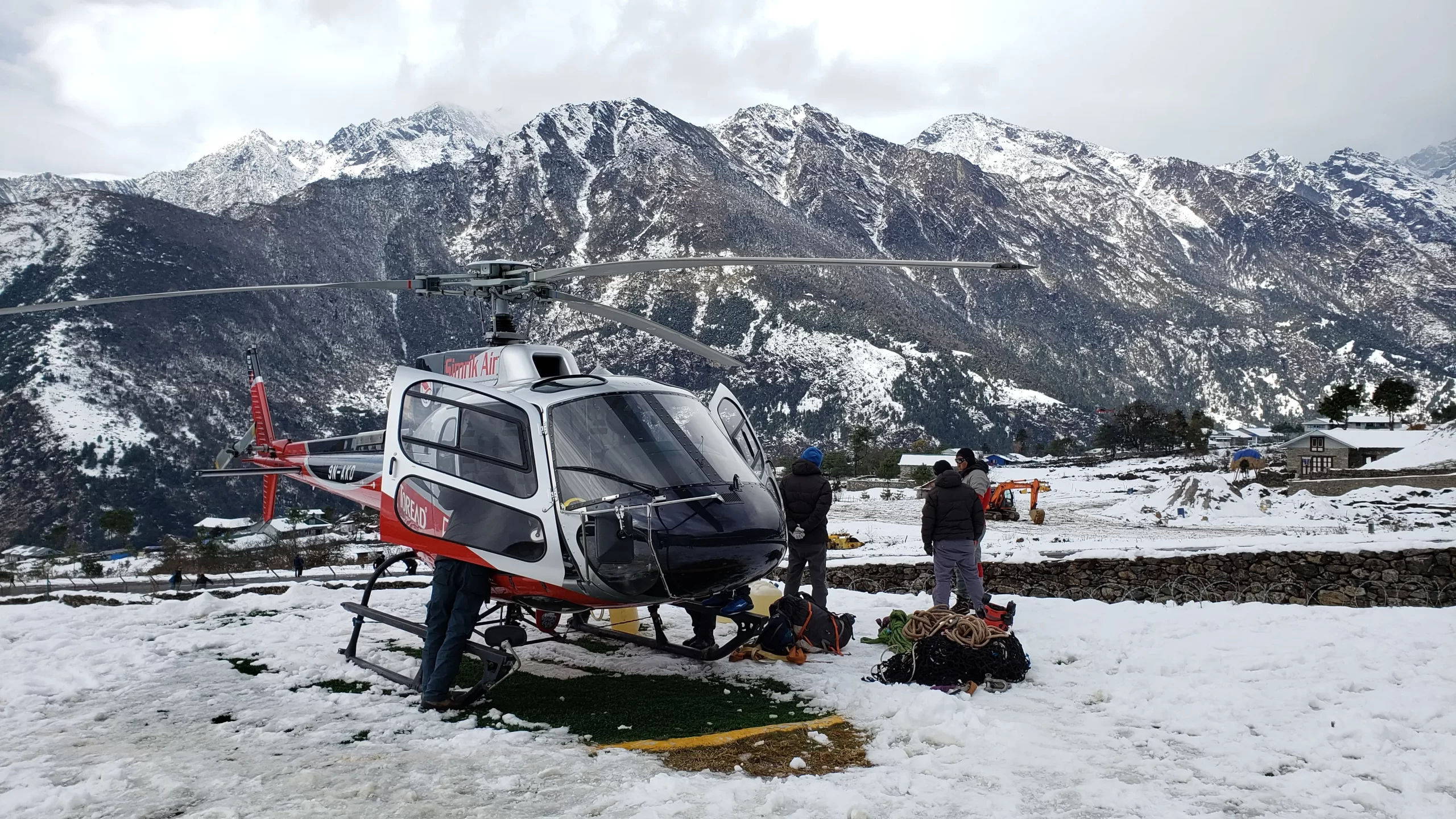
Before the construction of a helipad, Lukla Airport used to be more congested than it is right now. Before the collision of a LET L-410 Turbolet with an AS350 in 2017, Lukla Airport did not have a separate helipad. Though Simrik Airlines used to have its own helipad known as La Villa Helipad, the Civil Aviation Authority of Nepal (CAAN) instructed the operator not to have any scheduled helicopter operations from this helipad, said helicopter pilot Surendra Paudel. Here’s a look at the La Villa helipad:
Despite it all, piloting to Lukla is a sheer joy
For Captain Rabindra Dangol, flying to Lukla is a part of his everyday routine. He said that he didn’t think of it as challenging or tricky but more of an everyday job, giving a sense of equanimity that comes about with every professional who pursues their job.
For Captain Kismat Pichhai, a pilot of Sita Airlines, the sheer joy of passenger reactions while/ after landing in Lukla is what adds a touch of special-ness to his work:
“It feels really great to hear people clapping after successfully landing in Lukla. Some people approach us and give thankyou notes and requests for pictures. When I hear chants of “jai mata di”, I am quiety reminded that we have Indian passengers on board. I get to hear some screams, some laughs, some people shout out of joy and thrilling experience. Being in the thick of these mixed emotions of passengers makes Lukla operation amazing.”
One of the other challenges of operating to Lukla is that of weather. Every year, passengers (especially from outside Nepal) come with really tight schedules. But snowfall, rain and other factors that affect the weather can lead to the closing of the airport for weeks. This can be quite troublesome for many passengers. Helping passengers in times like these is another joy of working in Lukla, says Kismat:
“ When the weather is bad and the passengers can’t make it according to their itinerary or are stranded at Lukla weeks, they are often unable to catch connecting flights or make it for their important jobs. Obviously, pilots are unable to help in cases like these but we are able to perform our duties when the weather permits and the airport is open. Seeing passengers happy after successfully reaching the destination airport or even in some cases diverting back to base is the joy of piloting in this sector.”
Pilots might have found it to be too difficult in the past
Lukla Airport was the second airstrip constructed by Sir Edmund Hilary in the Everest region – the first being the Mingbo airstrip. Hillary was approached by a group of locals in Lukla who thought that a stretch of land would serve the purposes of an airstrip:
“They had some land for sale and thought it would be suitable for an airfield. They even suggested that the wind always blew in the right direction! How hill people who knew nothing about airfields could possibly make this sort of judgement I do not know, but when we went up to Lukla we agreed that they were right.”
Hillary purchased the land on behalf of the Nepalese government for a total of $635. However, the land required a bit of leveling work as according to Hillary himself, “one third was in rough pasture, one third in heavy scrub, and the last third in terraced potato fields.”.
Despite some impressive work being done to make the land amenable for an aircraft to land, Hillary had a hunch that the top surface wasn’t as firm. His solution to this problem was to buy local liquor for the Sherpas and ask them to perform a foot-stomping dance to flatten the land that served as the runway.
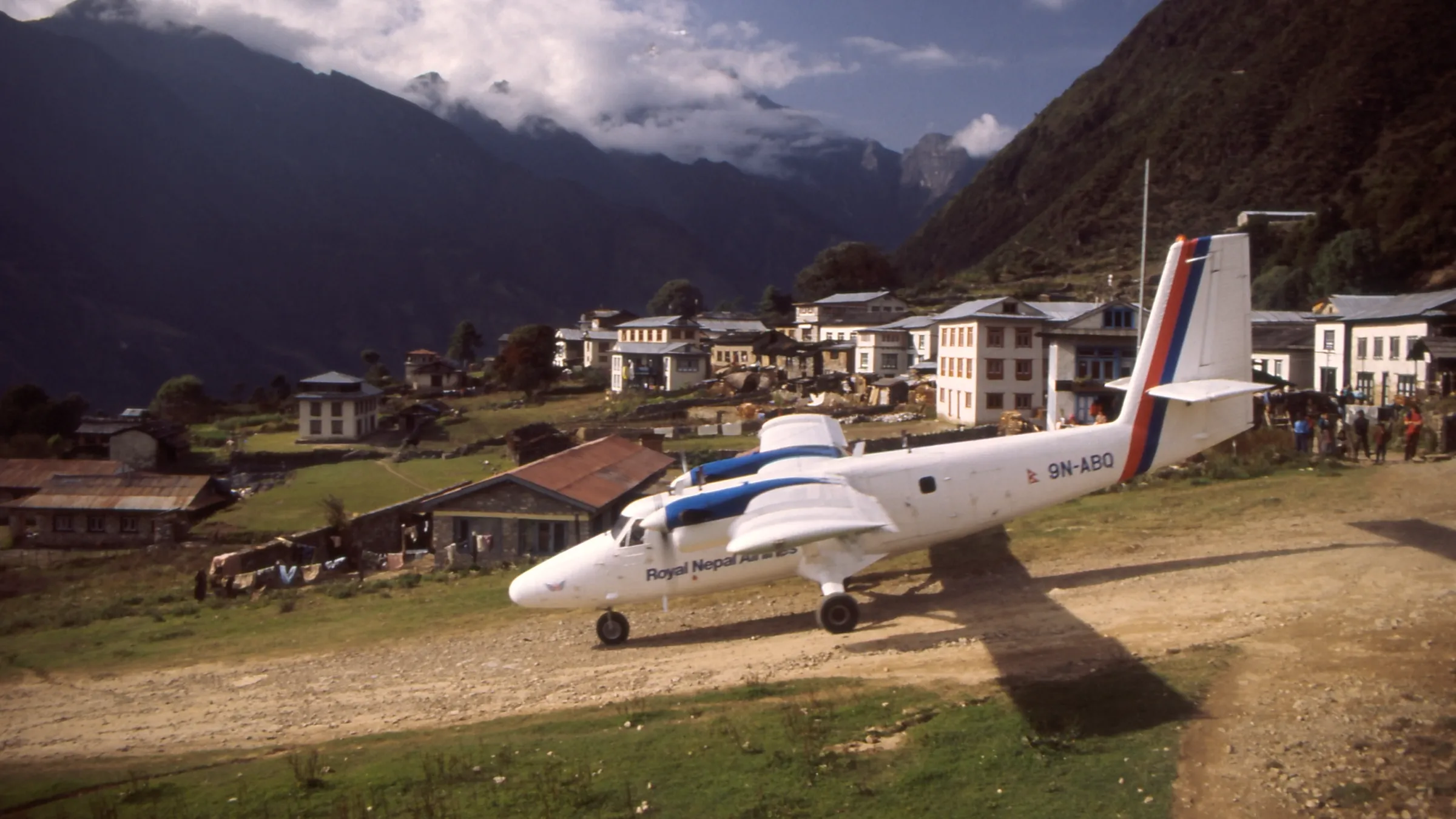
The first aircraft to land in Lukla was a Pilatus Porter. When the aircraft was headed to Lukla, cows were grazing near the airstrip, and children were playing. Hillary admitted having been tensed as the aircraft circled overhead to land.
Those were the days when the Lukla airport didn’t have an asphalt surface. Locals confided to aviospace.org that after the aerodrome was pitched, flying in and out of the airport was wobbly, and that now, the thrill of what they thought of coming in and out of a “dangerous airport” was virtually not there.
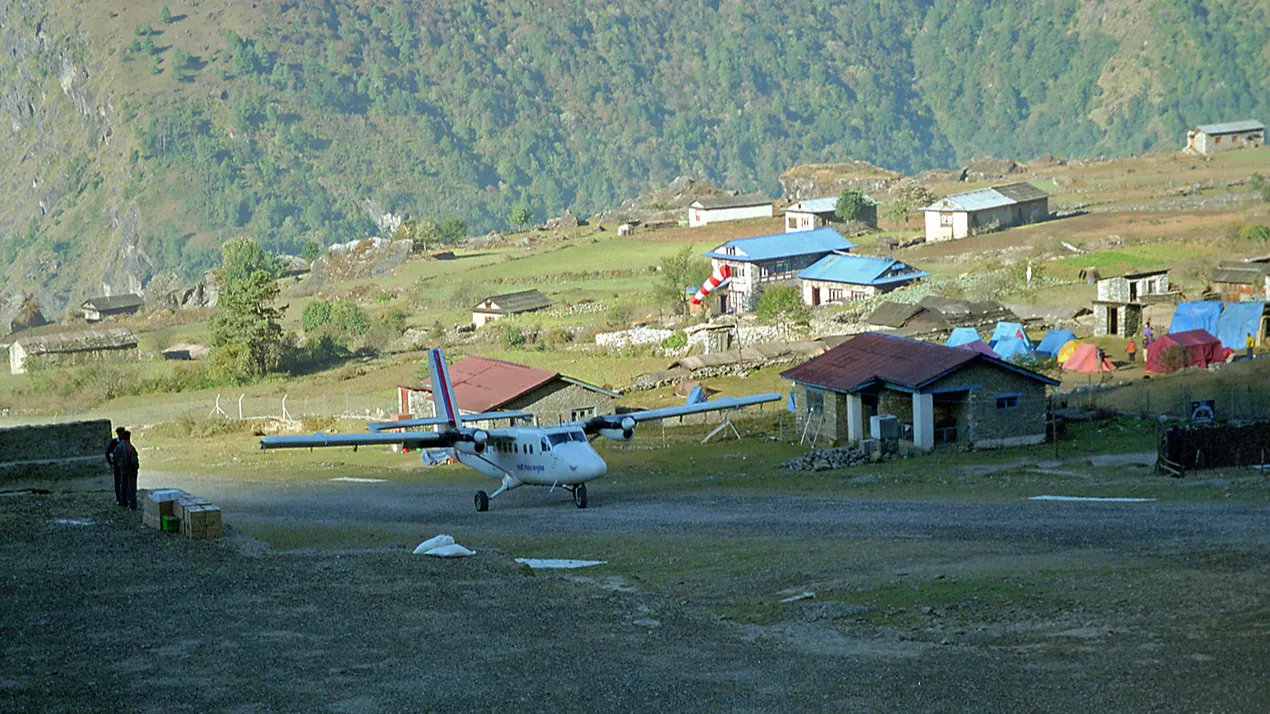
Types of aircraft that land in Lukla
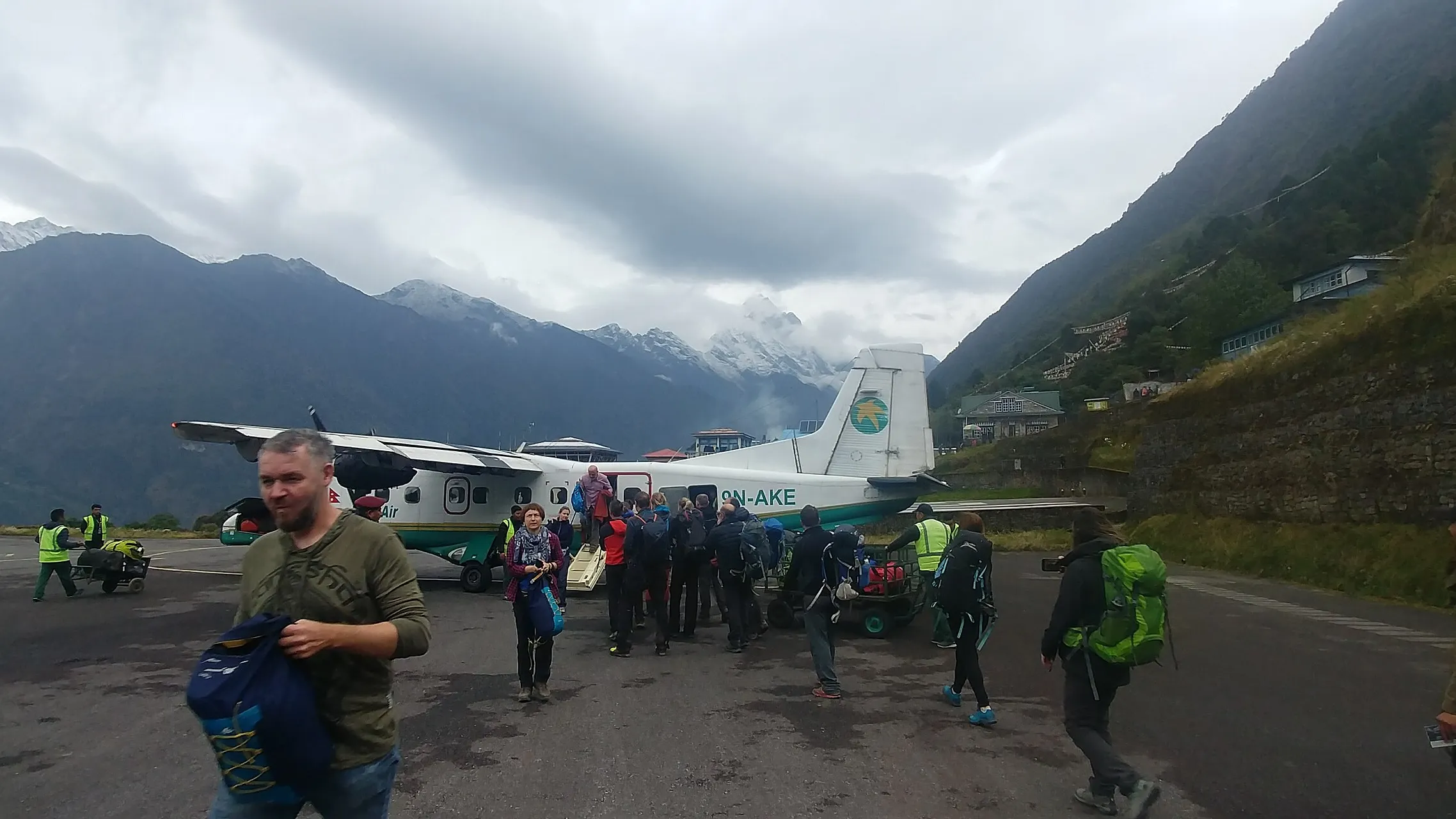
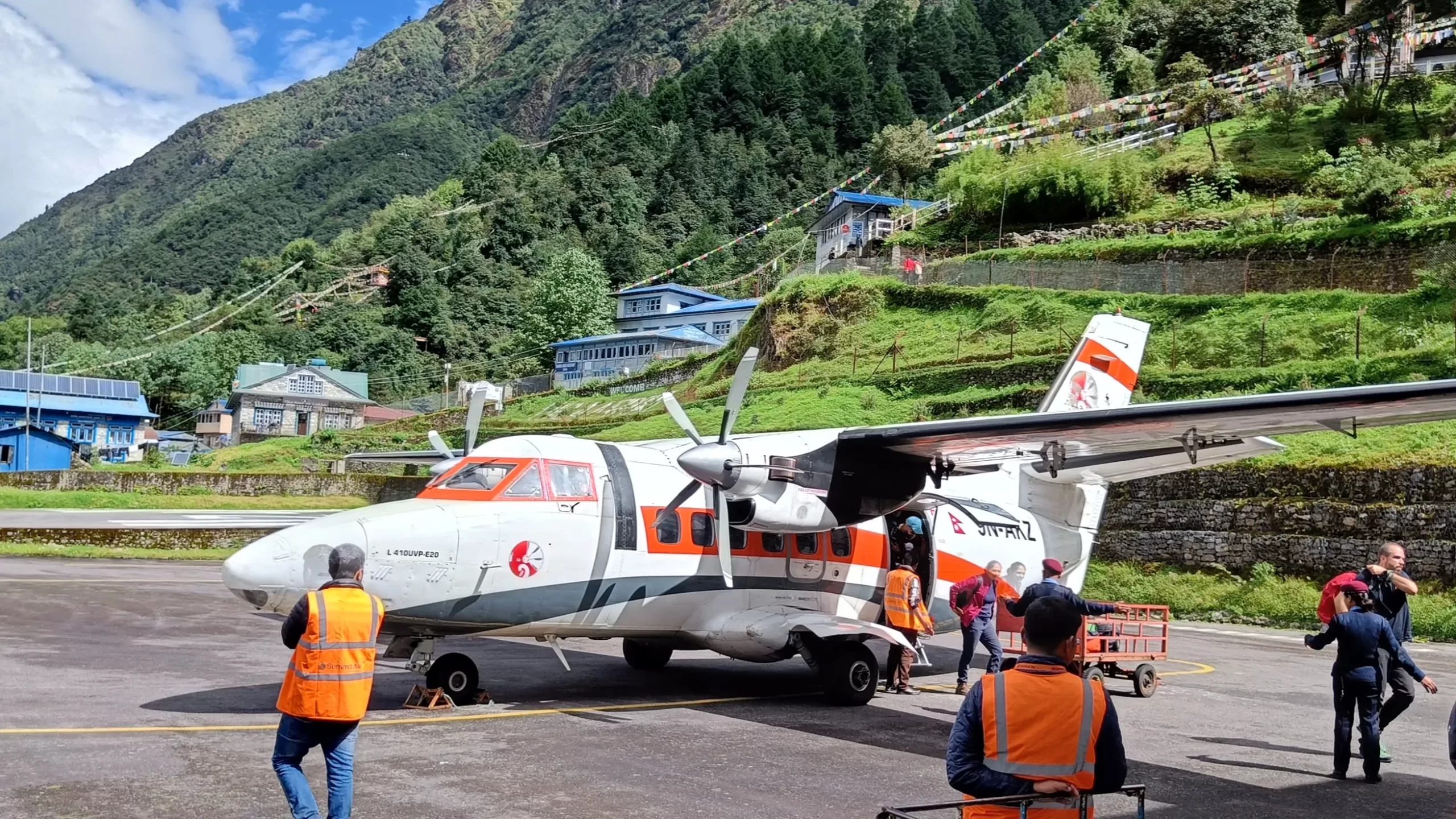
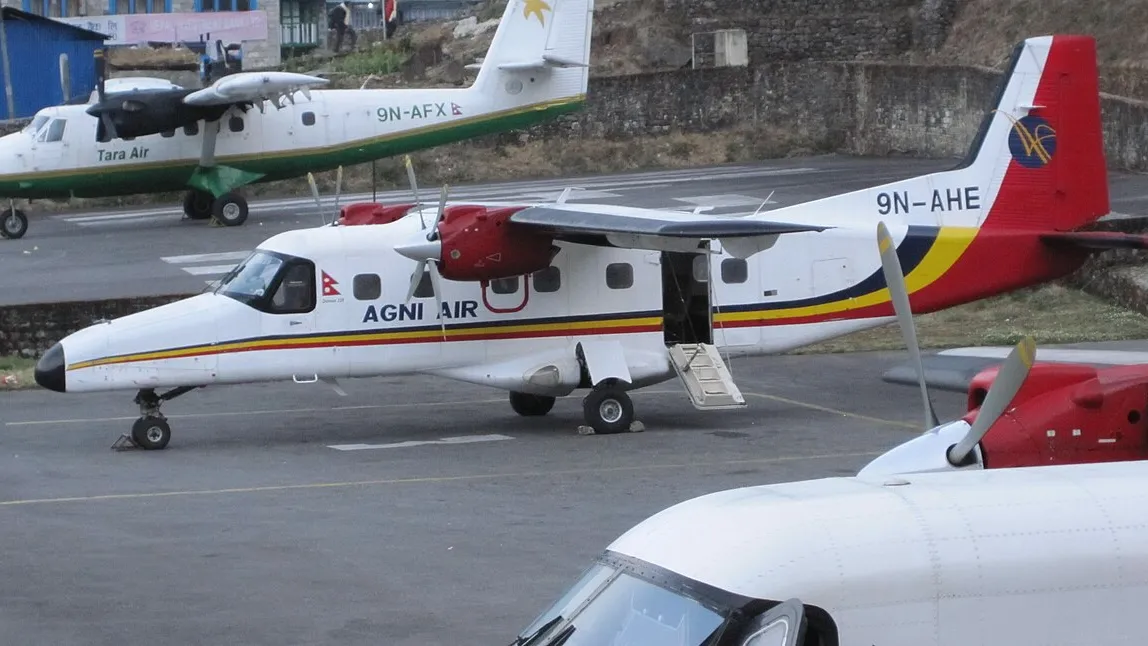
Lukla’s airstrip is merely 527 m (1,729 ft) long and 30 m wide, meaning that it can only accommodate short take-off and landing (STOL) aircraft. Three different airlines operate in Lukla, all of which operate different aircraft types:
- Sita Air operates a Dornier Do 228,
- Summit Airlines operates a Let L-410 Turbolet,
- Tara Airlines operates a De Havilland Canada DHC-6-300 Twin Otter
In the early morning, the wind is usually from the northeast, changing to a southwest wind from mid to late morning due to the action of the sun on the mountains to the north of Lukla. The airport regularly closes from mid to late morning due to the strong southwest winds that create crosswinds or tailwinds. Due to the difficulties of successfully landing at the airport, the Civil Aviation Authority of Nepal (CAAN) sets high standards for anyone to fly to Lukla.
CAAN has categorized STOL airfields in Nepal into three categories:
-
“ Category A STOL Airfield: Those STOL airfields located below 5500 feet AMSL and where missed approach is possible.
-
Category B STOL Airfield: Those STOL airfields which are below 7000 feet above mean sea level and where missed approach is critical.
-
Category C STOL Airfield: Those STOL airfields which are at or above 7000feet above mean sea level, approach is difficult due to local weather conditions and where missed approach is not advisable or possible after a certain point during the approach and landing phase.”
A captain must have six months of experience in non-STOL airports before being cleared for STOL operations in Nepal. After two years of working in STOLports in Nepal, a pilot would get cleared to operate in Category C STOLairfields such as Lukla. Captain Rabindra Dangol, (instructor) pilot for Sita Airlines said that one could be clear to operate in Lukla as quickly as two years after becoming a captain.
Is Lukla so dangerous, or is it fictitious?
There have been many accidents in Lukla and surrounding areas, and seven fatal ones killed over 50 men and women. All three airlines currently operating (as well as airliners in the past) in Lukla have been involved in incidents in the Everest region. Let’s take a look at the last accident to have taken place in Lukla airport:
Summit Airlines’ Turbolet collides with a helicopter
On 14 April 2019, at 9:01 local time, a Sumit Airline aircraft hit a Manang Air AS 350 B3e helicopter. The rotors (of the chopper) were still moving when the collision occurred. The pilot, Chet Bdr. Gurung was on board and not seriously injured. A second helicopter operated by Shree Airl was slightly damaged. A small fire broke out as a result of the collision.
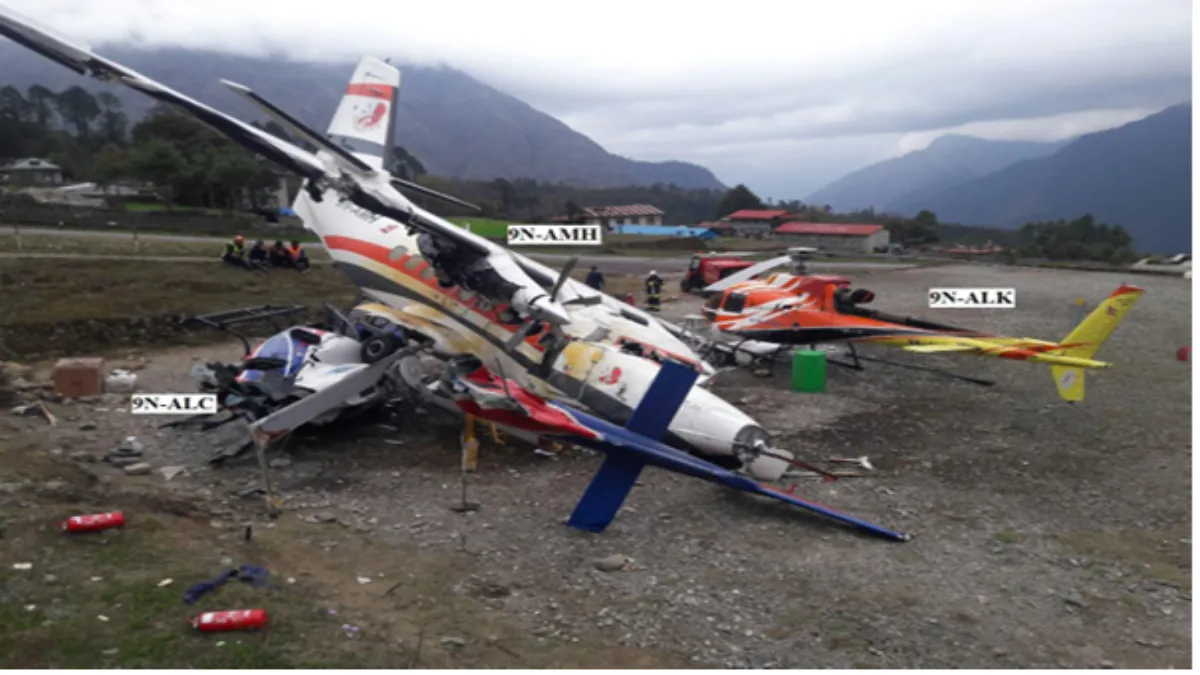
The investigation commission subsequently recommended that the pilot-in-command (PIC) should retain control of the aircraft during takeoff and landing at STOL airfields rather than handing the controls to the co-pilot. The commission identified the aircraft’s initial veer to the right during the takeoff roll as the probable cause, resulting from asymmetric engine power after the right power lever abruptly moved rearwards, combined with the crew’s failure to abort the takeoff.
The investigation also identified two contributing factors. First, the less-experienced co-pilot, who was the pilot flying, did not immediately recognize and respond to the sudden movement of the right power lever, allowing the aircraft to veer right before the PIC could take control and attempt to correct the deviation. Second, the PIC’s attempts to correct the veer by adding power were unsuccessful, while braking subsequently caused asymmetric braking because of the position of the pedals, further increasing the aircraft’s movement toward the right.
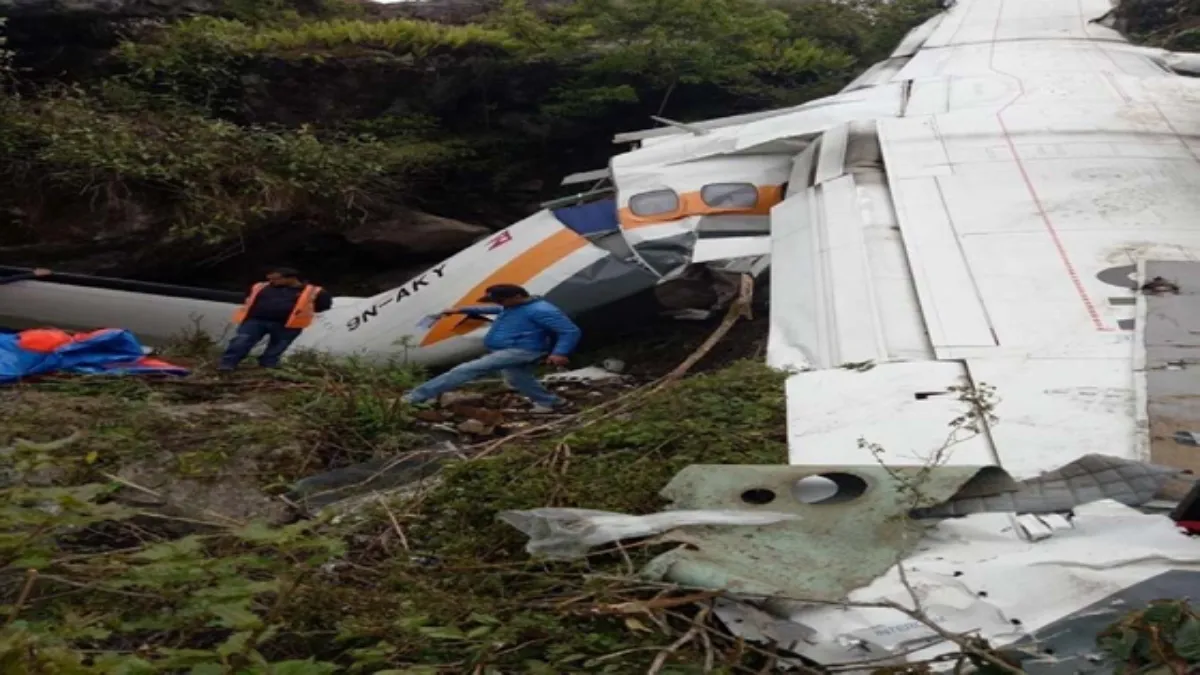
The following table shows some of the major accidents of aircraft heading to/from Lukla and the number of casualties in these incidents:
| Date of Accident | Airlines | Number of casualties | Probable cause of the Accident |
| August 24, 2010 | Agni Air | 14 | “loss of spatial orientation due to the loss of the attitude indicator”, as reported in The Aviation Herald |
| October 8, 2008 | Yeti Airlines | 18 | Aircraft tried to land despite bad weather |
| September 28, 2012 | Sita Air | 19 | “more drag on the aircraft during level flight than thrust from the engines” , as quoted in the investigation report. |
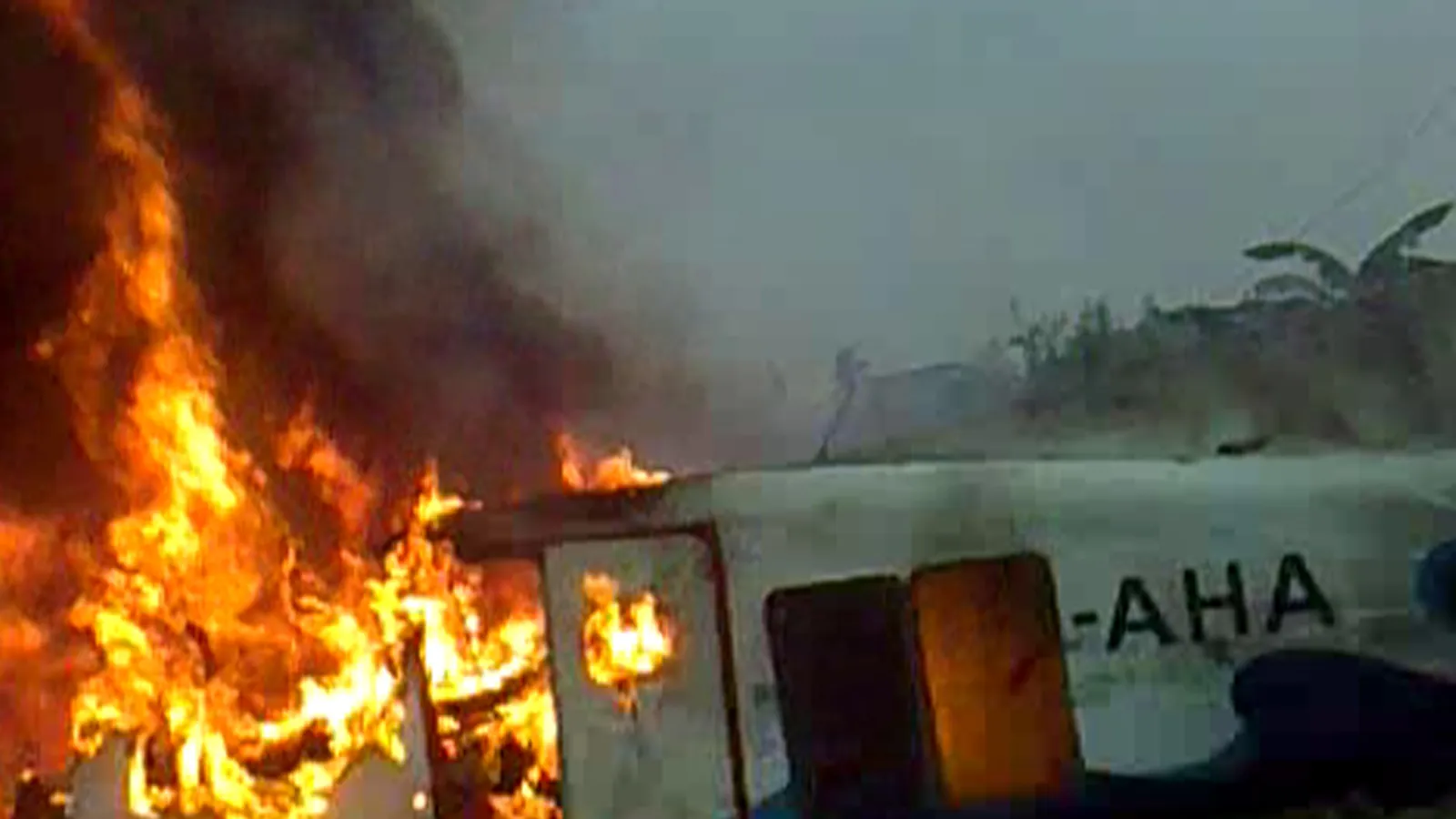
The accidents and the investigation that followed reveal that there are no uniquely treacherous quality attached to Lukla airport that would make it as dangerous as it was perceived. Much like Captain Rabindra said, “If we’re following the SOP properly, Lukla is as safe as any airport that I have flown into”.



.jpg)


_(cropped).jpg)

