

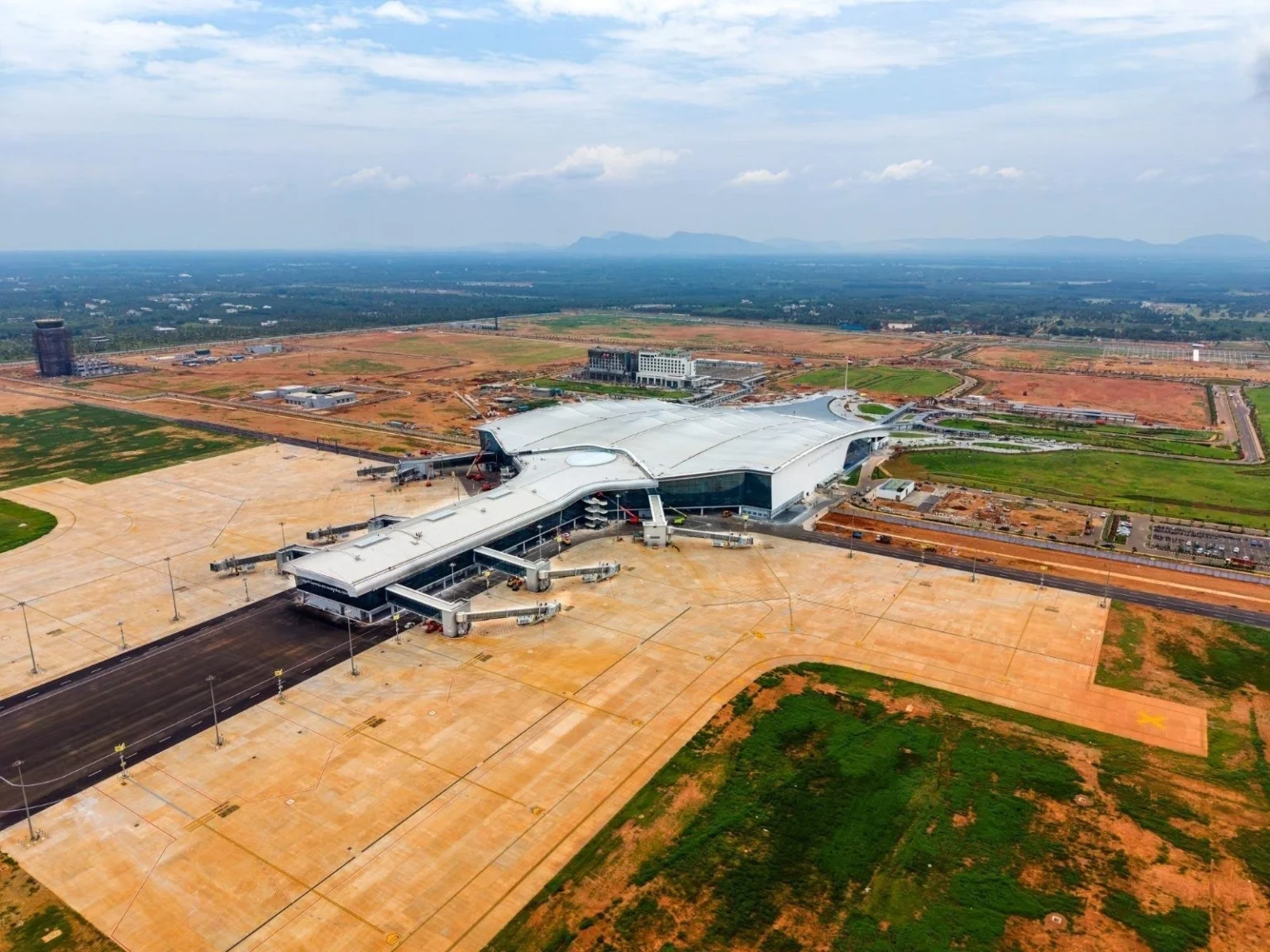
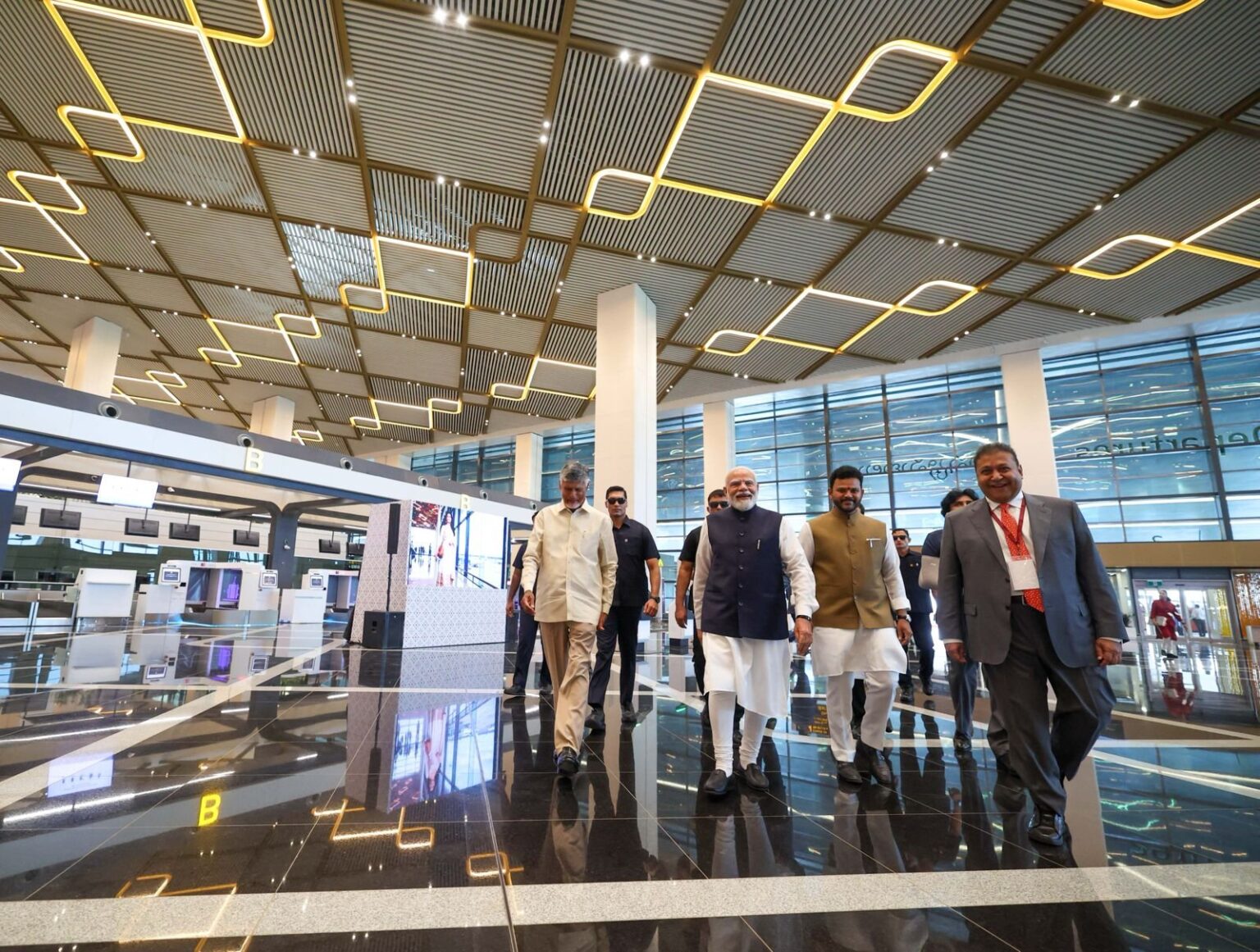
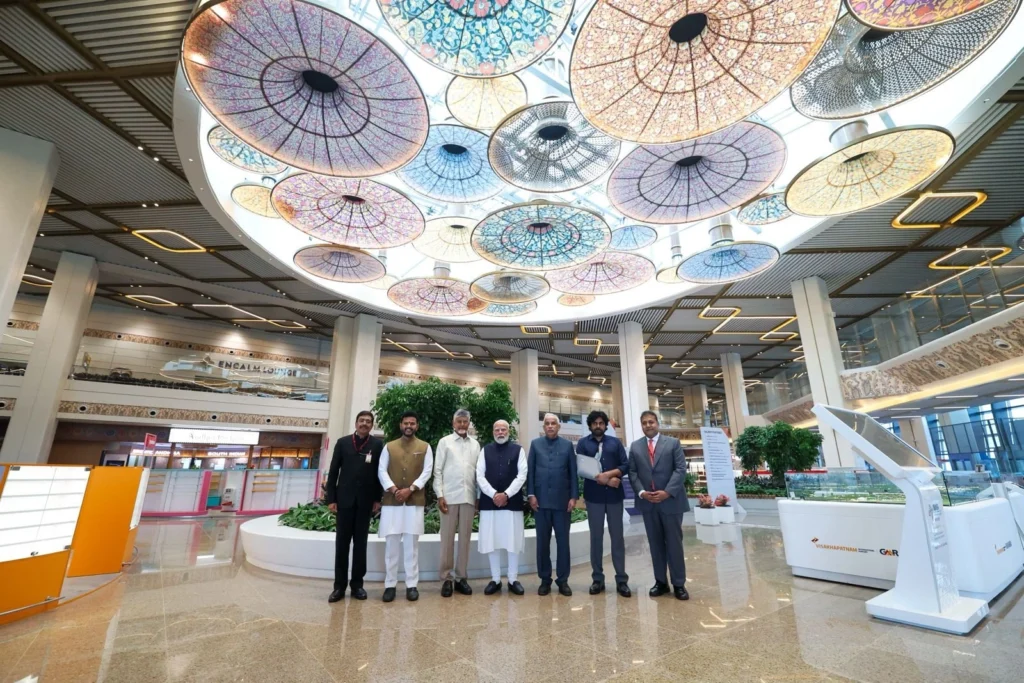
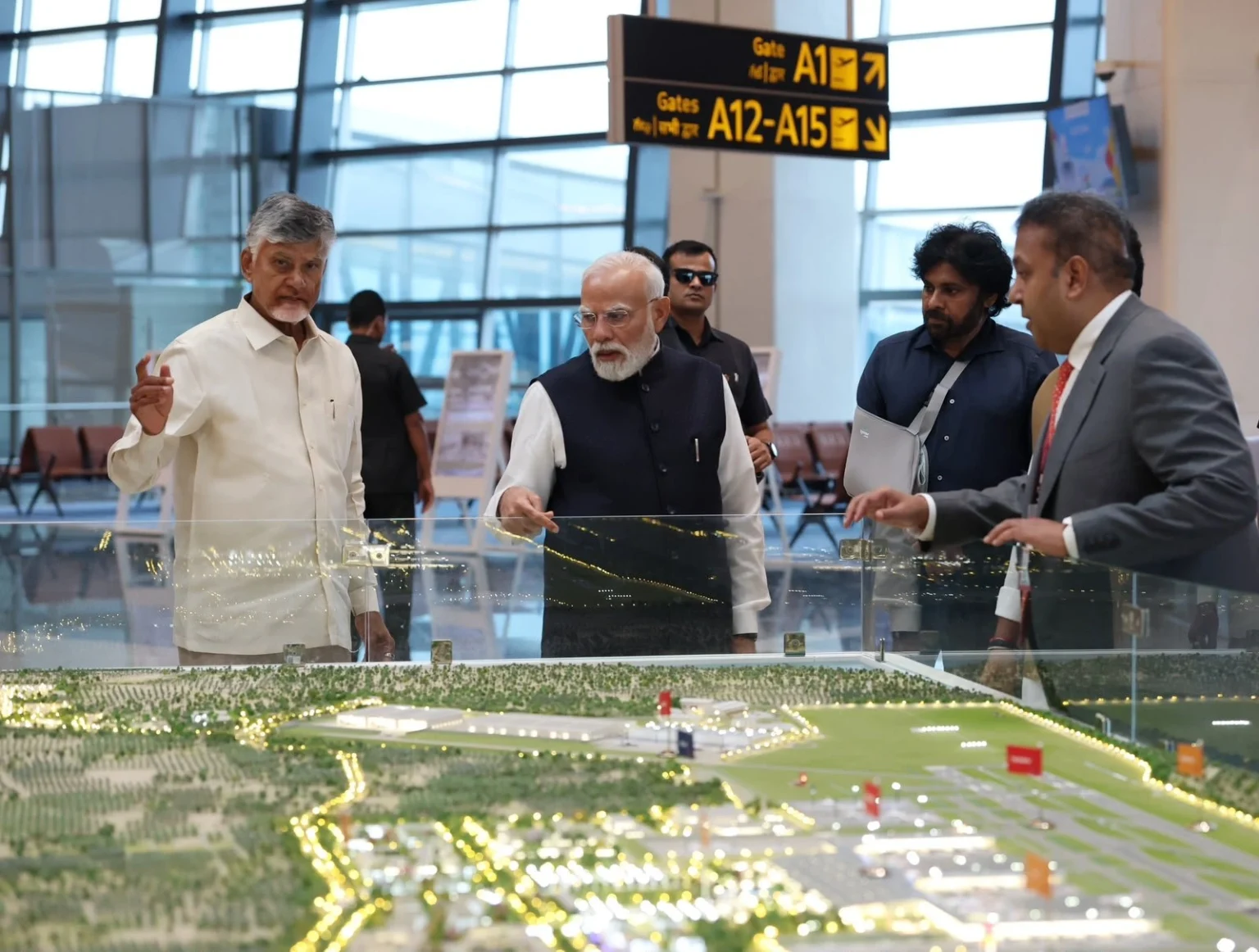
Prime Minister Narendra Modi inaugurated the Alluri Sitarama Raju International Airport (ICAO code VOVI) at Bhogapuram on Saturday, August 1, 2026, ANI reported. The Greenfield airport sits in Vizianagaram district, about 45 kilometres from Visakhapatnam, and will become North Andhra Pradesh’s main gateway for domestic and international travel. Modi landed at the new runway and walked through the terminal with Andhra Pradesh Governor S. Abdul Nazeer, Chief Minister N. Chandrababu Naidu, Deputy Chief Minister Pawan Kalyan, and Civil Aviation Minister K. Ram Mohan Naidu. The Prime Minister also dedicated development projects worth over ₹17,900 crore to the region at the same event.
The airport was built under a Public-Private Partnership by GMR Visakhapatnam International Airport Limited, a subsidiary of the GMR Group, at a cost of over $520 million. It is designed to handle six million passengers a year in its first phase, more than double the roughly 2.95 million passengers the existing Visakhapatnam civil enclave handled in the year to March 2025. Andhra Pradesh officials first proposed the project in 2015, and construction faced years of land-acquisition delays before commercial operations became possible in 2026. The launch also fits into a wider national push covered in on India’s 44-airport hub-and-spoke plan, which the government is building out city by city this year.

PM Modi’s Bhogapuram Visit Caps A Decade-Long Wait
Saturday’s ceremony closed out more than ten years of planning that began under a previous state government. Officials first cleared land for the site in Bhogapuram mandal, and construction only gathered pace after Chandrababu Naidu’s government resumed the project following the 2024 state elections. The airport now carries the name of Alluri Sitarama Raju, the Indian freedom fighter, after the state renamed it in September 2024.
Modi’s visit combined the airport opening with a separate public meeting where he laid foundation stones for other regional projects. The Prime Minister was also scheduled to travel to Mysuru later the same day to inaugurate the Swami Vivekananda Cultural Youth Centre. The dual-city schedule reflects how the government has increasingly paired airport launches with broader infrastructure announcements this year.
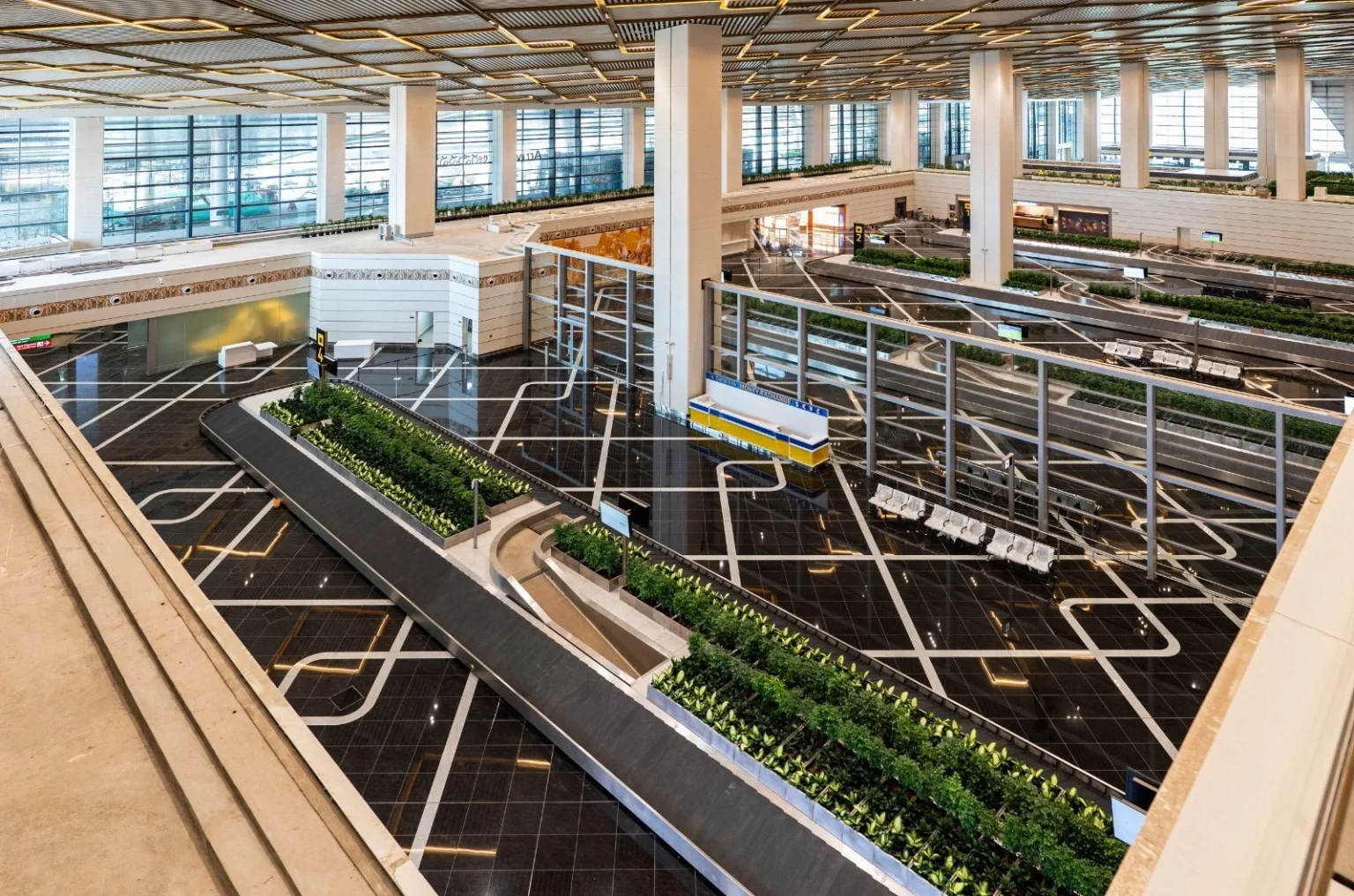
A Look Inside The 3,800-Metre Runway and New Terminal
Bhogapuram’s Phase 1 build includes a single 3,800-metre runway, long enough to handle wide-body aircraft on long-haul routes. The passenger terminal, cargo facilities, aircraft parking bays, and supporting infrastructure are complete, the airport operator has confirmed. The Directorate General of Civil Aviation (DGCA) has granted the Aerodrome Licence after a successful validation flight, and the government has notified Bhogapuram as an authorised Immigration Check Post.
Key features of the new facility include:
- A passenger terminal built with regional design elements and energy-efficient systems
- Rainwater harvesting and green landscaping as part of its sustainability plan
- A cargo complex able to handle large freight volumes for regional exporters
- A runway and apron sized for A320-family jets and wide-body long-haul aircraft
GMR holds a 40-year Design-Build-Finance-Operate-Transfer concession to run the airport. The company describes its plan for the site as centred on seamless connectivity and passenger-focused facilities.
The project also plans an Aerocity, an aviation academy, and MRO services around the passenger terminal in later stages. Officials say the airport is meant to serve Visakhapatnam, Vizianagaram, and Srikakulam districts together, rather than Visakhapatnam city alone. That three-district catchment area is one reason planners chose a site roughly 45 kilometres from Visakhapatnam instead of expanding the existing naval airfield.
From VTZ to VOVI: How the Airport Code Transfer Will Work
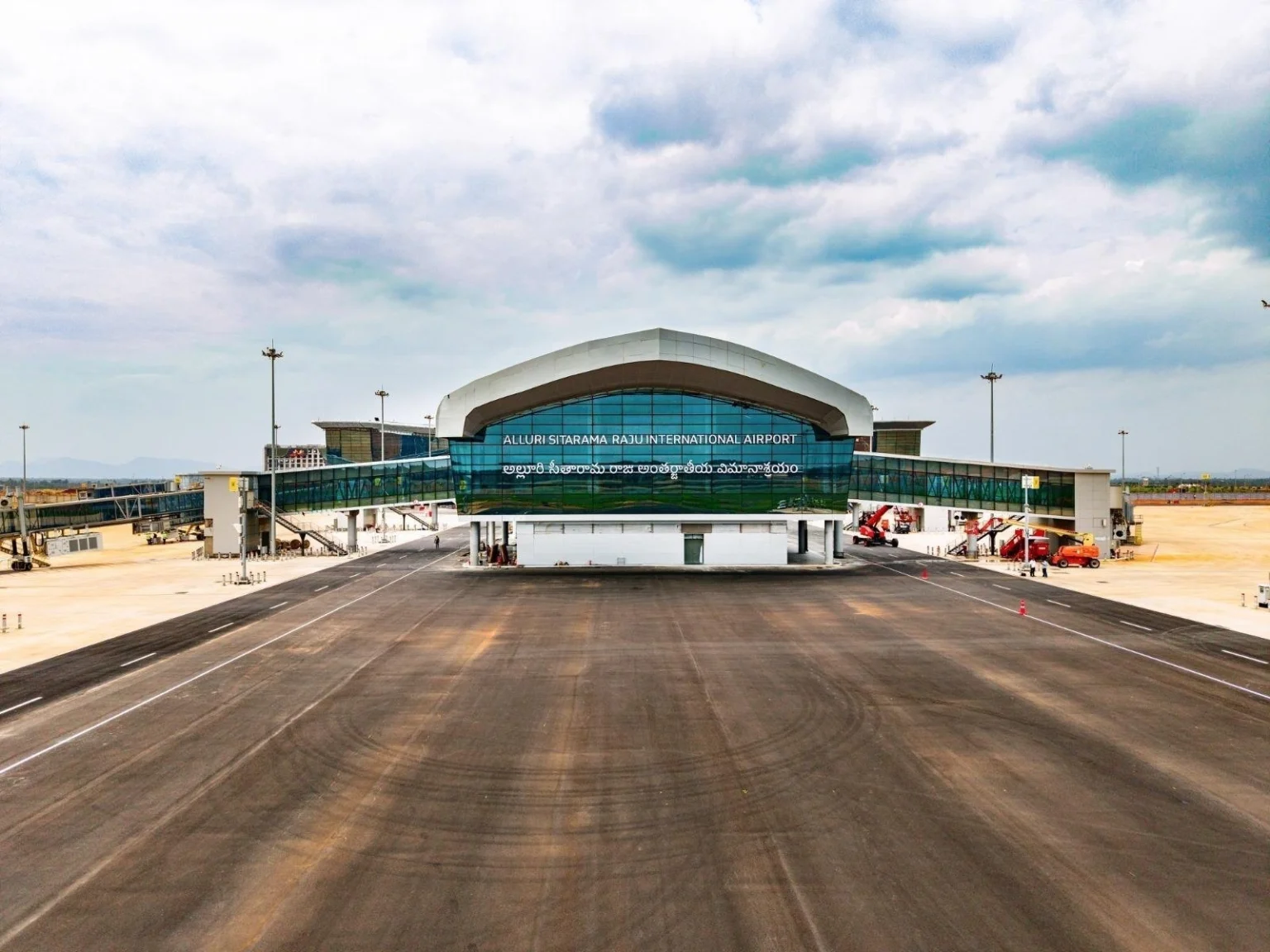
Bhogapuram has already received its ICAO code, VOVI, separating it from Visakhapatnam’s existing military-linked airfield. That older facility, known by the IATA code VTZ, currently operates as a civil enclave inside the Indian Navy’s INS Dega base. The Union government has confirmed that the VTZ code will transfer to Bhogapuram once scheduled commercial flights begin there.
A government notification set that commercial transition date around August 17, 2026, later than the earlier informal timelines floated back in May and June. Visakhapatnam’s civil enclave will keep handling non-scheduled commercial flights after the switch, while the Navy’s own operations there continue unaffected. Scoot Airways (TR), which currently flies the profitable Singapore route from Visakhapatnam, is expected to be among the first carriers to shift its schedule once the transfer takes effect.
Why Bird Safety Planning Matters for a Brand-New Runway
Every new Indian airport now opens against the backdrop of a worsening bird-strike problem nationally. India logged 1,782 bird strikes in 2025, a 39 percent jump from 1,278 the year before, with Indira Gandhi International Airport (DEL) and Mumbai recording the highest raw counts. Garbage dumps and unlicensed slaughterhouses operating inside the mandated 10-kilometre buffer zone remain the primary driver of that trend nationwide.
Bhogapuram’s rural, coastal setting differs sharply from Delhi and Mumbai’s dense urban surroundings, a contrast officials link to the worse bird-strike rates at older hubs. Aviation safety specialists have repeatedly said airfield wildlife management needs location-specific planning rather than a single national template. How well Bhogapuram’s operator keeps its perimeter clear of waste and construction debris in its early years will help decide whether it avoids the pattern that has plagued India’s busiest airports.
How Bhogapuram Compares with India’s Other New Airports
Bhogapuram is one of several greenfield projects reshaping Indian aviation in 2026, and each differs in ownership, scale, and speed to market. Noida International Airport (DXN) opened for commercial operations on 15 June 2026 with a single 3,900-metre runway and 12 million passengers of Phase 1 capacity, roughly double Bhogapuram’s six-million-passenger design. Unlike GMR-led Bhogapuram, DXN’s operator, Yamuna International Airport Private Limited, is a wholly foreign-owned subsidiary of Zurich Airport International AG, and that structure briefly delayed DXN’s launch when the Home Ministry rejected a proposal to let its Swiss chief executive run the site under India’s nationality rule for greenfield-airport security chiefs.
Maharashtra’s planned offshore airport near Kore Beach in Palghar sits at the opposite end of the scale. That project, still awaiting a Detailed Project Report, targets 90 million passengers and roughly $5.2 billion in cost, dwarfing Bhogapuram’s half a billion dollar outlay and requiring marine land reclamation rather than the farmland acquisition that shaped Bhogapuram’s decade-long approval process. Bhogapuram, DXN, and Palghar together show three distinct paths India is using to add airport capacity: a state-backed PPP, a foreign-operated concession, and offshore reclamation.
Bhogapuram’s Place in India’s Hub-And-Spoke Ambitions
The government’s wider hub-and-spoke plan, which aims to build four hub airports and 40 spoke airports nationally, gives Bhogapuram a role beyond serving Visakhapatnam alone. Air India (AI) chief executive Campbell Wilson has already named Visakhapatnam among the next cities set to join the hub-and-spoke network, alongside Amritsar, Vadodara, Mumbai, Hyderabad, and Chennai. Regional carriers are moving in parallel: Akasa Air (QP) confirmed it will study routes under the government’s Modified UDAN Scheme, a ten-year, roughly $3billion programme meant to fund connectivity to smaller cities.
Akasa Air chief executive Vinay Dube said the airline would weigh “each sector on its own merits” rather than commit to a blanket rollout of new routes. That cautious approach could shape how quickly Bhogapuram gains additional regional connections once international carriers confirm their own schedules.
Delhi’s own hub capacity is expanding at the same time, with its international handling set to rise from just over 20 million passengers annually to 32 million once a newly converted pier becomes operational. That expansion matters for Bhogapuram because most of its future long-haul connections will likely route through Delhi rather than fly directly overseas in the near term. For now, the clearest next step for Bhogapuram itself is the VTZ code transfer in mid-August, after which airlines are expected to publish their full Bhogapuram timetables.



Leave a Reply