Maharashtra’s government confirmed on June 28, 2026, that a site near Kore Beach in Palghar district is feasible for India’s first offshore airport, after Chief Minister Devendra Fadnavis inspected the location and reviewed a pre-feasibility report, Times of India reported. Fadnavis directed officials at the Maharashtra Airport Development Company (MADC) to prepare a full Detailed Project Report (DPR), the next formal step before construction can begin.
The aerodrome is planned on reclaimed land roughly 50 to 52 kilometres from Chhatrapati Shivaji Maharaj International Airport (BOM), Mumbai, and about 69 kilometres from Navi Mumbai International Airport (NMI), positioning it as the third major airport serving the Mumbai Metropolitan Region (MMR). The project is designed to handle up to 90 million passengers and roughly three million metric tonnes of cargo annually once complete, according to project details reviewed by GKToday.
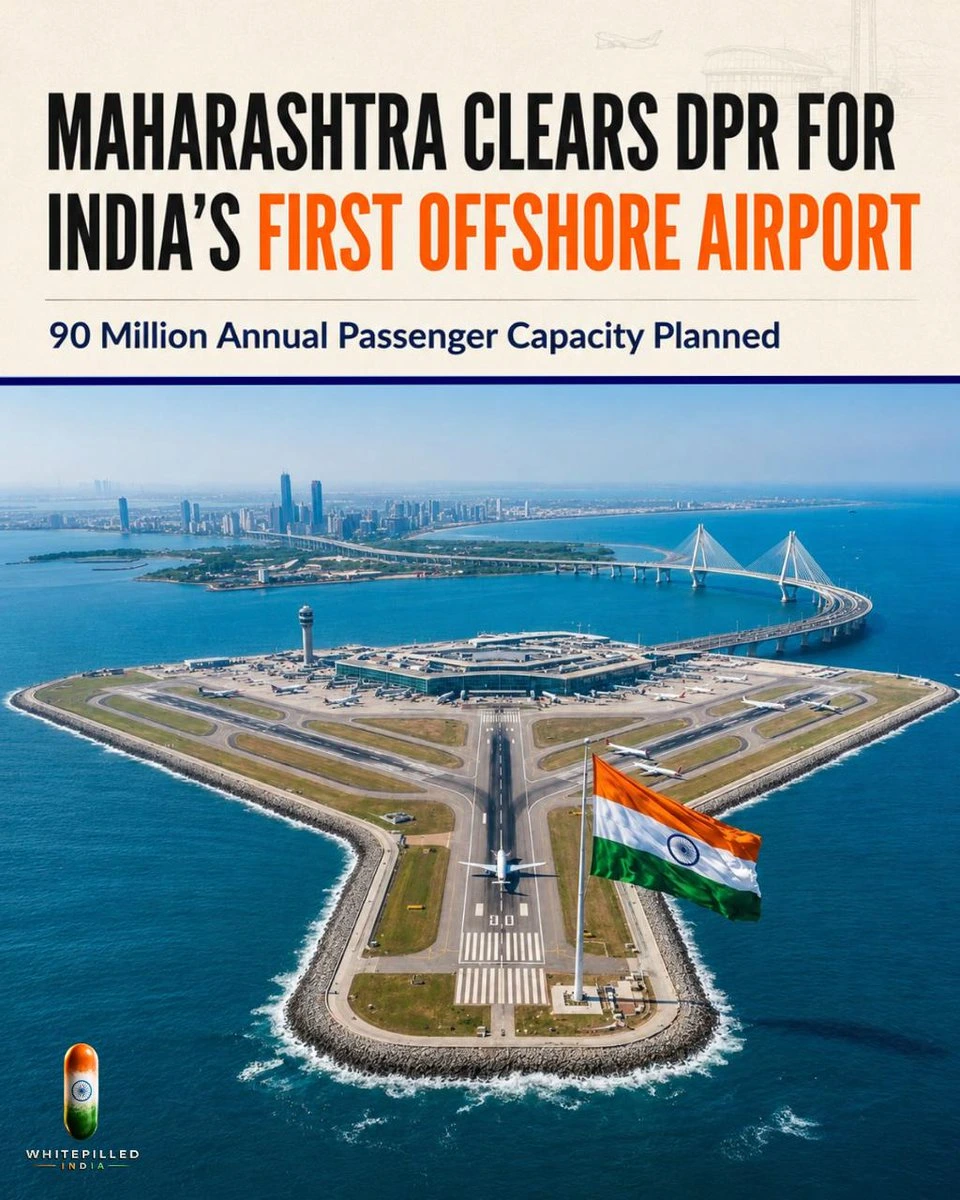
Kore Beach Site Confirmed Feasible After Pre-Feasibility Study
Fadnavis toured the proposed site during a daylong visit to infrastructure projects across Palghar district on Sunday, June 28. He said officials had presented a detailed briefing on the offshore airport, after which he ordered the DPR to move forward.
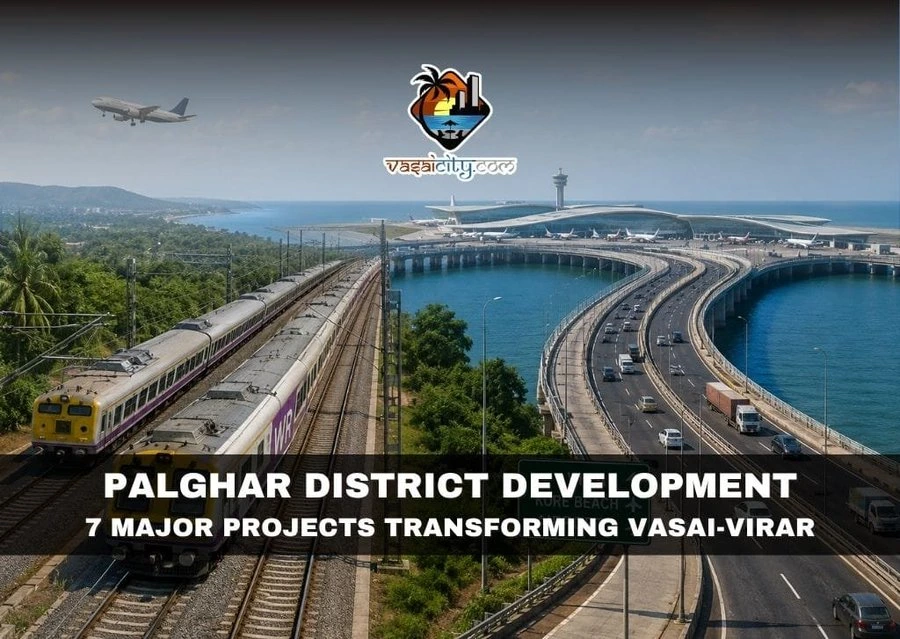
The airport site sits approximately 4.75 kilometres from the alignment of the planned Uttan-Virar Sea Link. Fadnavis said extending the sea link directly to the airport would give it fast road access to Mumbai and to both of the city’s existing airports. MADC, the state body overseeing the project, is the same agency that ran the pre-feasibility study confirming the site’s viability, according to Swarajya.
Two Runways Designed For 90 million Passengers and Three Million Tonnes of Cargo
The proposed facility is designed with two parallel runways, matching the scale of India’s largest existing hubs. Fadnavis said the airport is intended to help bridge Mumbai’s projected passenger capacity gap by 2050, as air traffic across western India continues to climb.
Cost estimates published by India Today TV put the total project at approximately ₹45,000 crore. Reports indicate the breakdown is split roughly between two components:
- Land reclamation from the seabed, needed to build a stable artificial island for the runways and terminals.
- Runway construction, passenger terminals, and cargo facilities built to international aviation standards.
Unlike conventional greenfield airports, offshore facilities avoid large-scale land acquisition and displacement, since the runways sit on reclaimed marine land rather than farmland or settlements. The approach mirrors Kansai International Airport (KIX) in Osaka and Hong Kong International Airport (HKG), both built on artificial islands to solve land scarcity near dense coastal cities.
Sea Link Extension and Bullet Train Station Anchor the Connectivity Plan
The Palghar site is designed to sit inside a dense web of infrastructure already under construction in the region. Fadnavis noted that the Mumbai-Ahmedabad High-Speed Rail bullet train station is planned close to the site, which officials expect to further boost urban development in Palghar.
Beyond the sea link and bullet train, the airport is planned with direct connectors to the Western Dedicated Freight Corridor (DFC), the Delhi-Mumbai Expressway, and National Highway 48, according to details shared by the Maharashtra government’s official social channels. This layered connectivity model goes beyond what most Indian airports offer at launch, since road, rail, freight, and high-speed transit links are all being planned in parallel rather than added later.

Vadhavan Port Partnership Builds a Sea-To-Sky Logistics Corridor
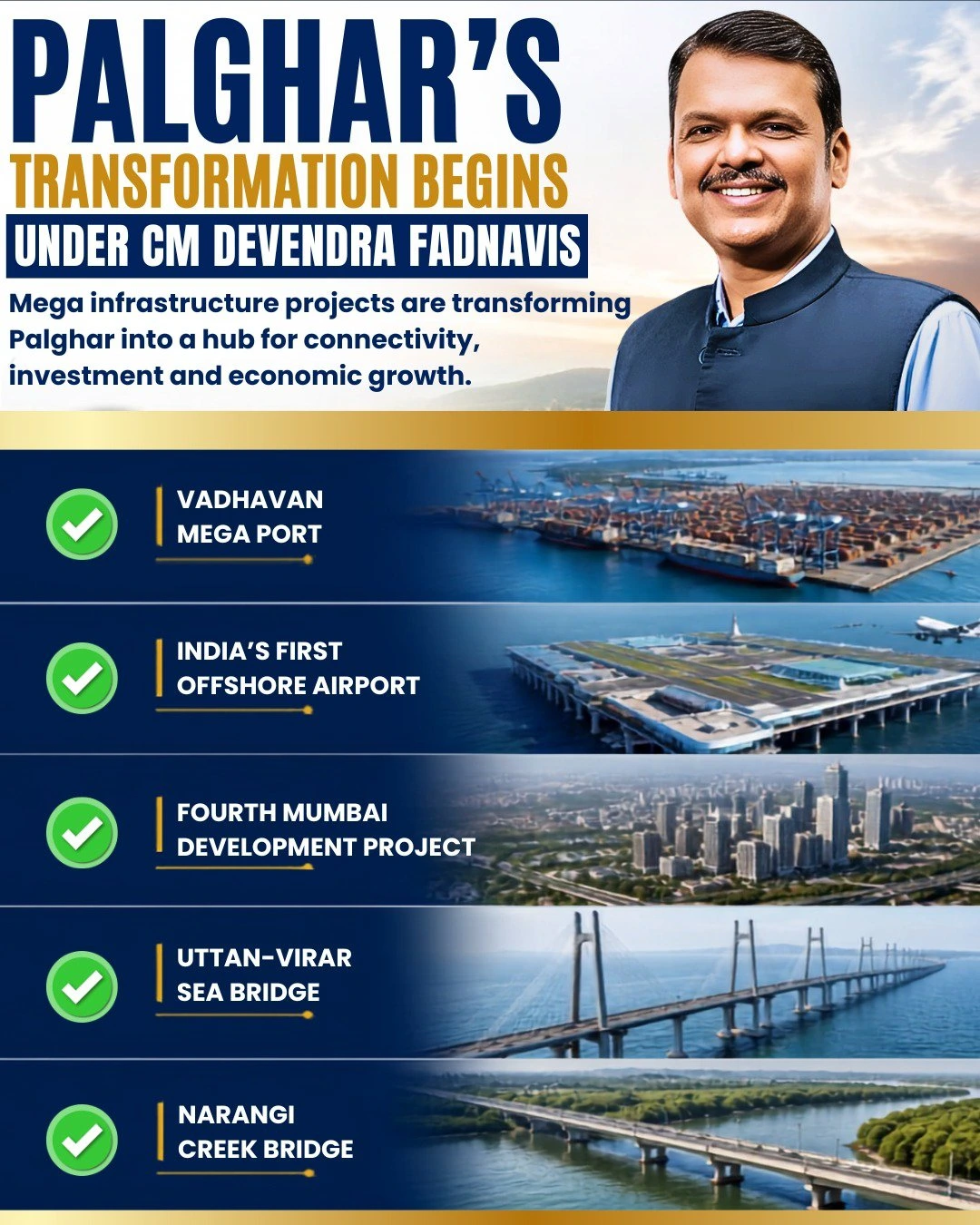
The airport is not a standalone project. It is planned as part of the wider Vadhavan Port development, a deep-sea container terminal under construction nearby and overseen primarily by the Jawaharlal Nehru Port Authority (JNPA). Fadnavis said the airport would give a major boost to cargo traffic moving through the Vadhavan and Murbe ports once both projects are operational.
The wider infrastructure push is expected to generate significant employment. Reports citing government estimates suggest the combined port, airport, and logistics build-out could create around ten lakh, or one million, direct and indirect jobs across shipping, freight, and related industries.
Planners have described the combined effect of the port, airport, bullet train, and expressway network as the emergence of a fourth major growth centre for the region, sometimes referred to as “Mumbai 4.0”.

How Palghar Compares to Mumbai’s Newly Opened Second Airport
Palghar would not be Mumbai’s first attempt to solve its capacity constraints. Navi Mumbai International Airport (NMI) opened its first phase on December 25, 2025. NMI’s first phase was built to handle 20 million passengers annually, with capacity expected to grow toward 90 million passengers across five construction phases.
Palghar’s target capacity of 90 million passengers would therefore roughly match Navi Mumbai’s ultimate design figure once both airports are fully built out, giving the Mumbai Metropolitan Region a combined theoretical capacity well beyond 200 million passengers a year across all three facilities.
Unlike Navi Mumbai, which was built on land in the Ulwe suburb of Raigad district, Palghar’s offshore design places it closer in engineering approach to Kansai and Hong Kong than to any existing Indian airport, since it requires large-scale marine reclamation rather than conventional land acquisition.

Timeline And Next Steps for the Detailed Project Report
The project remains in an early planning stage. MADC must now complete the DPR, after which the proposal will require environmental clearances and further government approvals before construction tenders can be issued.
No construction start date or completion year had been formally confirmed as of early July 2026. Officials have linked the airport’s broader timeline to the development schedule of Vadhavan Port, which broke ground in August 2024 and is being built in phases through the next decade.