Canada has become an observer of the Global Combat Air Program (GCAP), the sixth-generation fighter project run by Italy, Japan and the United Kingdom, and National Defence has confirmed the arrangement carries no fee and no financial commitment. According to a report by Global News, defence Minister David McGuinty defended the move while speaking to reporters in Calgary on Thursday, framing it as a low-cost way to track where fighter technology is heading next.
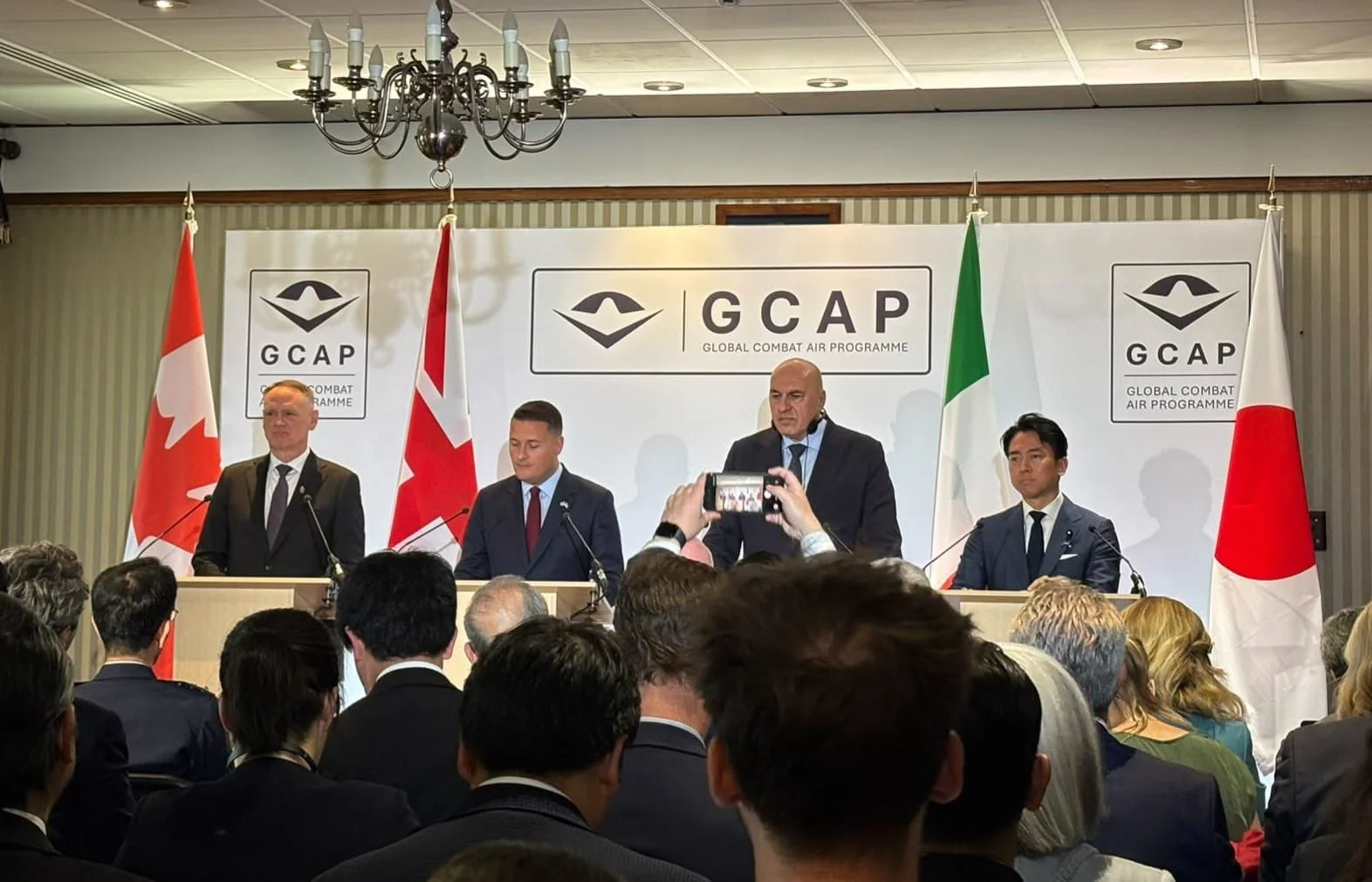
Canada is the first country to hold this kind of observer status inside GCAP, so there was no existing template to follow. National Defence said an observer arrangement is being drafted from scratch to define how far Canada’s involvement goes. Canada’s path to observer status was formalized on July 21 in London, when McGuinty signed the arrangement alongside his British, Italian and Japanese counterparts.
Rolls-Royce
| X (formerly Twitter)
Canada Pays No Fee to Watch GCAP’s Next-Generation Fighter Take Shape
Observer status lets Canada sit in on programme discussions and track GCAP’s progress without contributing money or industrial workshare. National Defence said that if Canada ever wanted to move from observer to full member, that step would bring real resource implications, though the size of that bill remains undetermined.
Any shift toward full membership would depend on further talks between Ottawa and the three founding governments. For now, Canada’s role is limited to watching, not building.
GCAP
@GCAP_int – X (formerly Twitter)
What “Smart Hockey” Means for Canada’s Defence Strategy
McGuinty told reporters the government has an obligation to track military technology as it advances quickly, and he used a Canadian metaphor to explain the logic. “We think that that’s smart hockey,” he said, describing his decision to sign Canada onto GCAP as an observer in the UK two weeks earlier.
The minister said staying close to cutting-edge research now gives Canada options later, without locking in a purchase or a financial obligation. That framing keeps GCAP separate, at least officially, from Canada’s live decision on its F-35 fleet.
National Defence spokesperson Cheryl Forrest added that Canada’s aerospace and defence sector is well positioned to contribute to the capabilities GCAP is developing, adding that:
” Early engagement in GCAP could create opportunities for Canadian industry to shape its development, invest in the technology early and secure meaningful participation throughout the life of the program. “Canada is assessing these opportunities with a view to its long-term defence requirements, relationships with allies and potential industrial benefits.”
Ottawa’s $1-Billion History with the F-35 Program Sets the Bar for Comparison
Canada’s past involvement in an international fighter programme offers a useful yardstick for what full GCAP membership might eventually cost. A few figures stand out:
- National Defence spent about $1 billion between 1997 and 2023 to take part in the eight-nation Joint Strike Fighter program, according to the Auditor General’s 2025 report.
- That spending happened years before Canada bought a single F-35 jet.
- Each F-35 built through the global supply chain now contains about $3.6 million in Canadian-made parts, according to federal briefing materials.
- Canada has so far funded 16 of the 88 F-35A jets it originally planned to buy.
Those numbers show how expensive early-stage participation in an allied fighter programme can get, long before any aircraft reach a runway.

Singapore, Germany and Poland Also Circle GCAP
Canada’s observer status makes it the first country to gain this kind of access, but it is far from the only government eyeing GCAP. Singapore has opened early, informal talks about the programme, even though its first F-35B jets are not due to arrive until 2029. Poland has separately discussed a possible industrial role with Italian and Japanese representatives, framing its interest around rebuilding its own aerospace sector.
Germany presents the most advanced case outside Canada. Leonardo’s chief executive said in July that German membership was not an option in the near term, a cooler stance than his comments in June, when he called Berlin a particularly valid partner for the project. That shift came shortly after Germany’s Future Combat Air System project with France collapsed, pushing Berlin to look elsewhere for a sixth-generation fighter option.
Japan has been the most cautious of GCAP’s three founding partners about expanding the programme further, since each new member could delay the aircraft’s targeted 2035 service entry and reopen governance terms that took years to settle.

Full Membership Would Cost Canada, But Nobody Knows How Much Yet
Observer status does not commit Canada to buying or co-developing GCAP’s sixth-generation fighter. It gives Ottawa a chance to weigh the programme’s technology and industrial opportunities against its existing relationships and its unresolved F-35 order.
A move to full membership would need agreement from Italy, Japan and the UK, and it would carry costs that have not yet been worked out. Until that conversation happens, Canada’s fighter strategy stays split between two tracks: a live review of its F-35 commitment, and a cost-free look at what might come after it.

_right_rear_view_in_GCAP_booth_of_JA2024_at_Tokyo_Big_Sight_October_19,_2024.jpg)