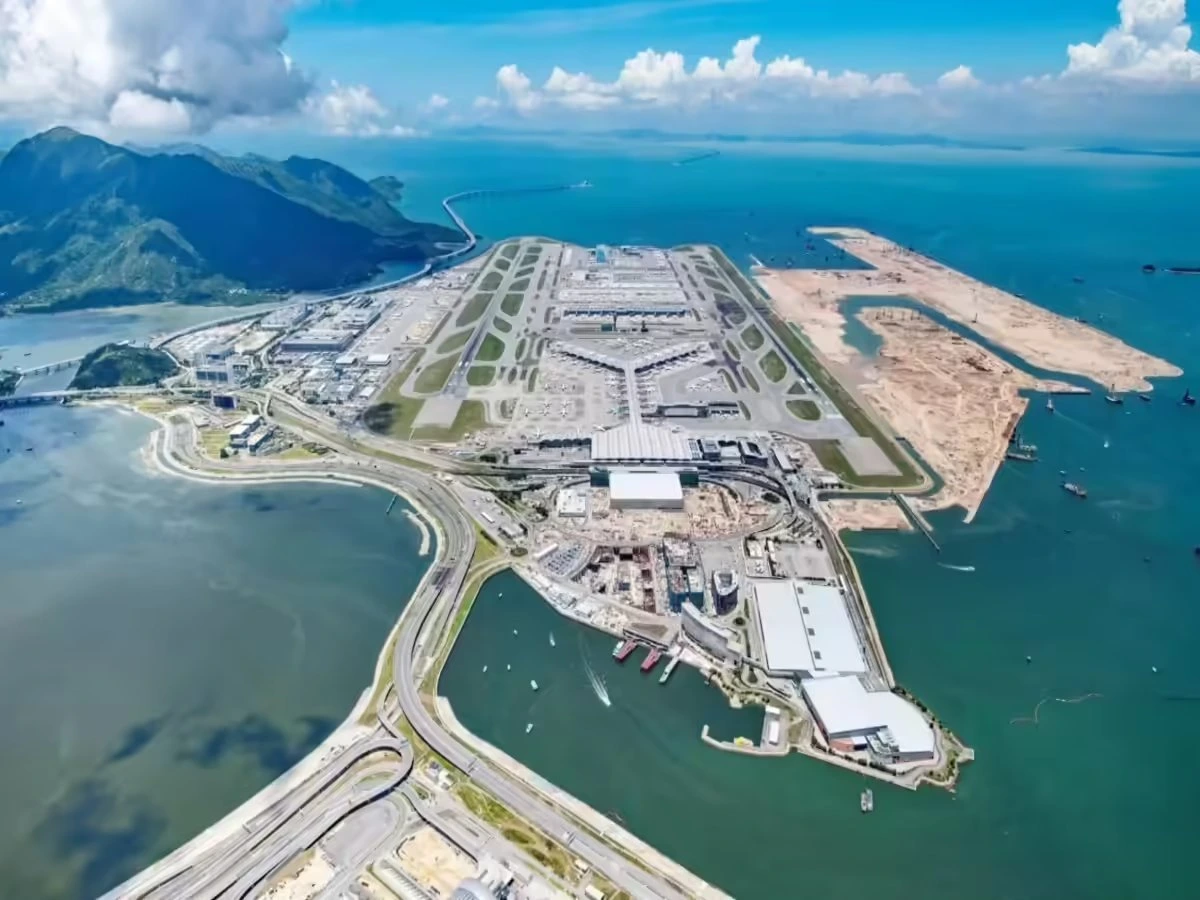
The Indian government plans to develop 44 airports, including four major hub airports, under a hub-and-spoke model designed to give the country seamless international air connectivity. Civil Aviation Secretary Samir Kumar Sinha announced the plan on Tuesday, 28 July 2026, at a launch event in Amritsar, Punjab. The event marked the start of hub-and-spoke flights from Amritsar’s Sri Guru Ram Das Ji International Airport (ATQ), making it the second spoke airport in the network after Varanasi, Economic Times reported.
Air India (AI) operated the inaugural Amritsar service under its ‘Easy Connect’ brand, which lets passengers from smaller cities check in once and travel onward to international destinations through a hub airport. Delhi’s Indira Gandhi International Airport (DEL) is currently the network’s only functioning hub, while Ahmedabad is next in line to become a spoke airport. The scheme sits inside a wider 10-year target announced by Civil Aviation Minister K Rammohan Naidu to build 100 airports and 200 heliports across India.
What The Four-hub, 40-spoke Plan Involves
Sinha said the government plans to establish four hub airports and 40 spoke airports as the backbone of the new network. Under the model, passengers boarding from Tier-II and Tier-III cities will be routed through a major hub, such as Delhi, for their onward international leg. This removes the need to repeat immigration and baggage checks at every stop along the journey.
Naidu framed the strategy in ambitious terms during a video message at the Amritsar event. Hub and spoke, he said, is “an aviation sovereignty and an opportunity model for India”, tying the network directly to the government’s long-term goal of turning the country into a global transit point rather than a market that feeds passengers to foreign carriers.

Air India Launches Easy Connect Flights from Amritsar Airport
Air India’s Amritsar service gives passengers ‘Easy Connect’ access to 27 international destinations within roughly four hours of arrival at Delhi. The list spans the United States, Canada, the United Kingdom, continental Europe, Australia, West Asia, and Southeast Asia, according to Air India’s own statement reported by Daily Excelsior. Air India will operate two daily ‘Easy Connect’ flights from Amritsar under the new arrangement.
Amritsar’s Sri Guru Ram Das Ji International Airport currently runs direct flights to Dubai, Sharjah, Kuala Lumpur, Singapore, London, and Birmingham. The airport handled 9.97 lakh international passengers last fiscal year, a 13.5 percent decline compared with the year before, a slide Air India’s hub-and-spoke connection is designed to help reverse by opening a far wider set of onward destinations than Amritsar’s direct network covers alone. Amritsar’s large Punjabi diaspora communities in Canada and Australia make the city a strong source of connecting traffic.
Air India said it expects to launch inbound international flights to Amritsar under the same model within the next two months. That inbound leg will let arriving passengers’ clear immigration and collect baggage at Amritsar itself, rather than at Delhi, their first port of entry today.

Varanasi Was the Model’s Testbed Before Amritsar Joined
The hub-and-spoke scheme did not begin in Amritsar. Civil Aviation Minister K Ram Mohan Naidu inaugurated the first such flight at Varanasi on 25 June 2026, connecting Lal Bahadur Shastri International Airport (VNS) to 17 international destinations through Delhi on flight AI1111. Air India chief executive Campbell Wilson named Amritsar, Vadodara, Mumbai, Hyderabad, Chennai, and Visakhapatnam as the next cities set to join the network.
The government has separately approved a roughly Rs 2,869 crore expansion of Varanasi’s airport, covering a runway extension, a new terminal, and multilevel parking, to be finished within 13 months. Beyond these six cities, Air India has said it will progressively connect Ahmedabad, Goa, Guwahati, Kochi, and Patna to its Delhi, Mumbai, and Bengaluru hubs.

Akasa Air and The Modified Udan Scheme Add Regional Reach
Regional carriers are also aligning with the government’s connectivity push. Akasa Air (QP) confirmed it will study routes under India’s revamped regional flying programme, the Modified UDAN Scheme, which Prime Minister Narendra Modi launched on 4 July 2026 with a budget of roughly Rs 28,840 crore over ten years. Akasa Air chief executive Vinay Dube said the airline would evaluate each sector on its own merits rather than commit to routes in a blanket rollout.
New Airports Like Noida and Maharashtra’s Palghar Will Feed the Network
A 44-airport hub-and-spoke system needs greenfield capacity to match, and two projects show that build-out already underway. Noida International Airport (DXN) opened for commercial operations on 15 June 2026 with five domestic routes, including a direct link to Amritsar, and is designed to reach 70 million passengers annually across four phases. Officials have positioned DXN as one of Asia’s largest airports by land area once fully built.
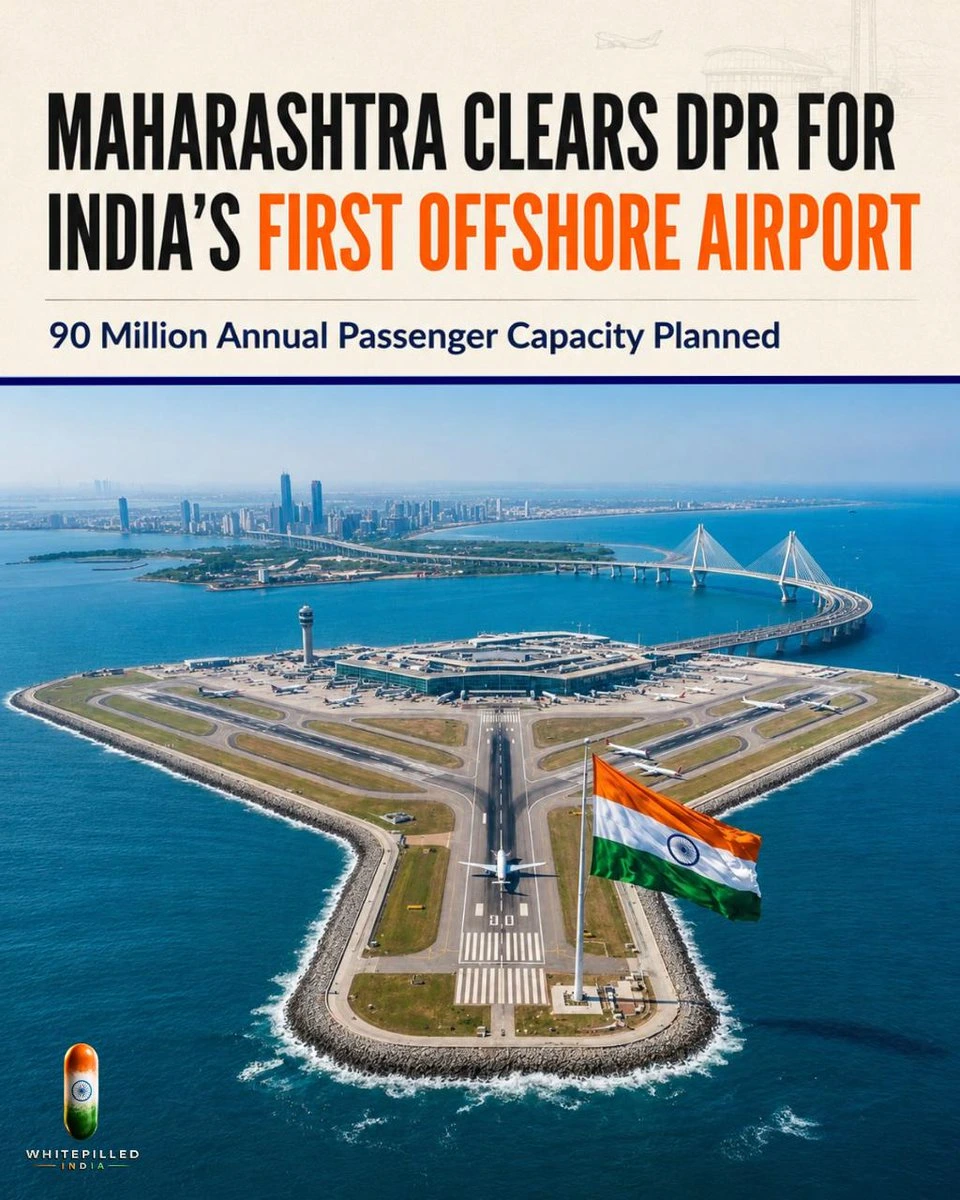
Maharashtra is pursuing a different approach to the same problem. The state government cleared a detailed feasibility review for India’s first offshore airport, near Kore Beach in Palghar district, designed to handle up to 90 million passengers and roughly three million metric tonnes of cargo a year at an estimated cost of $5.2 billion, Avio Space reported. Together with Delhi, Noida, and the existing Mumbai airports, these projects form the physical infrastructure the 44-airport hub-and-spoke network will eventually need to function at scale.