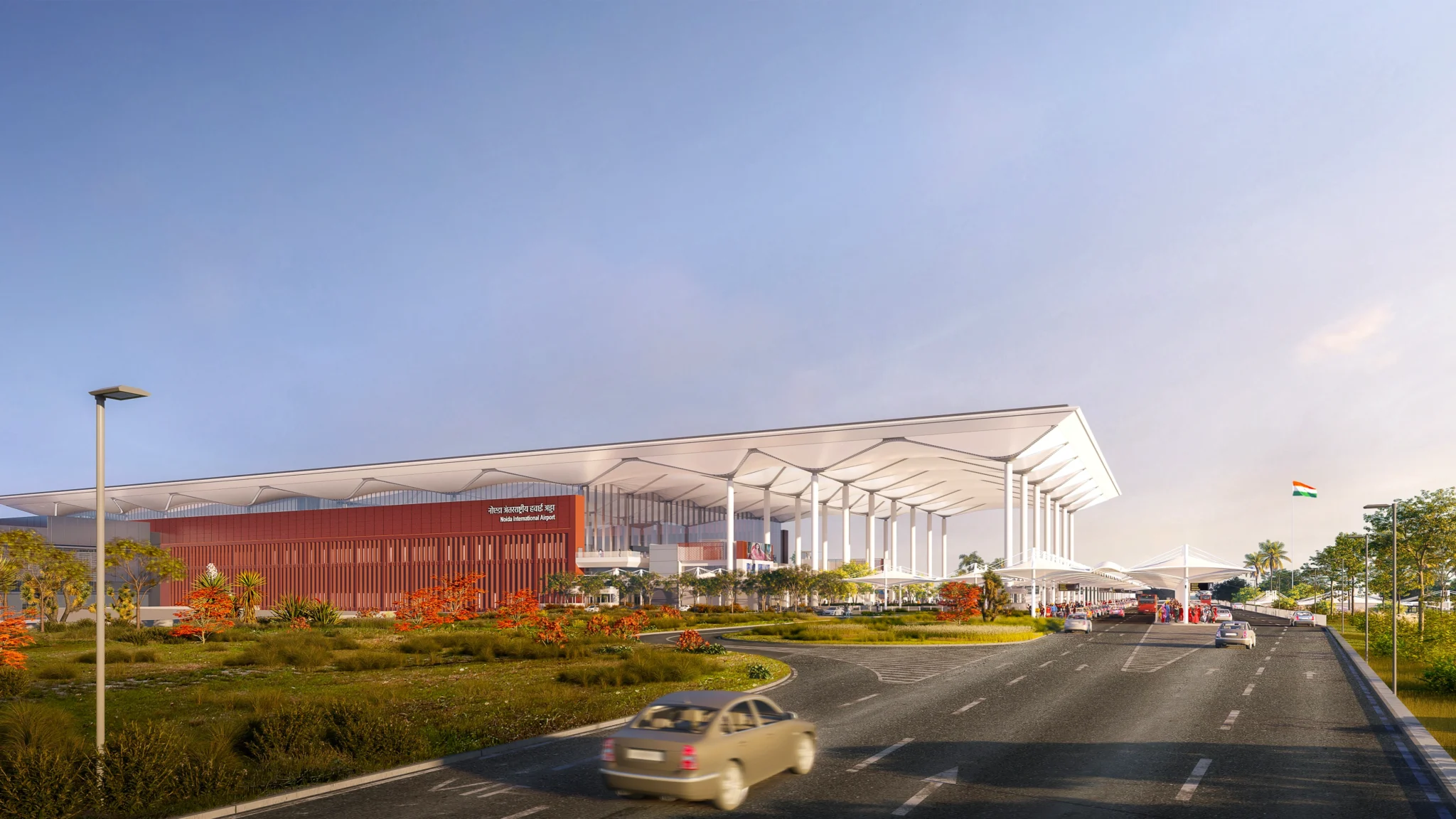
Noida International Airport (DXN), located in Jewar, Gautam Buddha Nagar district, Uttar Pradesh, opened for commercial operations on 15 June 2026. IndiGo (6E) operated the inaugural flight, a service from Lucknow Chaudhary Charan Singh International Airport (LKO) that landed at DXN in the morning before continuing to Kempegowda International Airport (BLR) in Bengaluru. The airport, developed by Yamuna International Airport Private Limited (YIAPL), a wholly owned subsidiary of Zurich Airport International AG, is India’s latest greenfield aviation project and is designed to serve the National Capital Region (NCR) alongside Indira Gandhi International Airport (DEL), Delhi.
Phase 1 of the airport comprises a single 3,900-metre CAT III-B runway and a terminal building of 101,590 square metres, with an annual passenger capacity of 12 million. Prime Minister Narendra Modi inaugurated the first phase on 28 March 2026, though commercial operations began nearly three months later following the completion of regulatory clearances from the Directorate General of Civil Aviation (DGCA) and the Bureau of Civil Aviation Security (BCAS). The airport’s long-term buildout envisions four phases of expansion, reaching a capacity of 70 million passengers per annum by FY40.
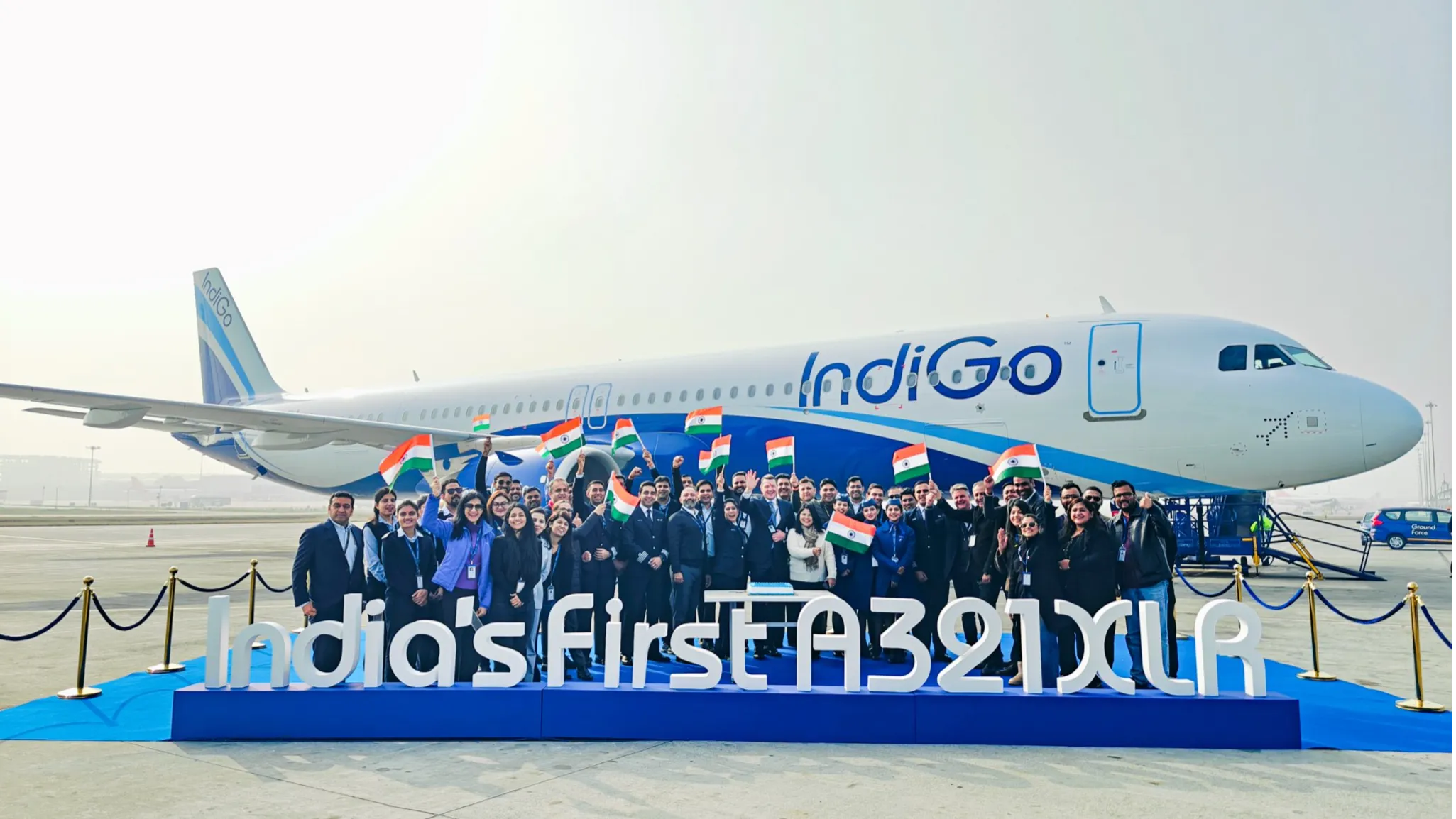
IndiGo’s Inaugural Routes and Day-One Schedule At DXN
IndiGo became the launch carrier at DXN, operating flights 6E 2278 and 6E 2279 on a triangular circuit — Lucknow → Noida → Bengaluru → Noida → Lucknow — on opening day, Aviation Week reported. This routing linked a key Tier-II administrative capital (Lucknow) with a major tech-sector hub (Bengaluru) through the new NCR gateway.
Flights to Amritsar Sri Guru Ram Dass Jee International Airport (ATQ) and Hyderabad Rajiv Gandhi International Airport (HYD) also began on 15 June. Services to Bengaluru and Jammu Airport (IXJ) followed on 16 June 2026. IndiGo announced its DXN schedule on 7 May 2026 and opened bookings on the same day across its website, app, and OTA distribution partners.
The published departure timings for routes operating from Day 1 are:
- Noida–Amritsar: Arrival 10:10 AM, departure 11:25 AM
- Noida–Bengaluru: Departure 2:45 PM, arrival 5:30 PM
- Noida–Hyderabad: Arrival 2:50 PM, departure 4:50 PM
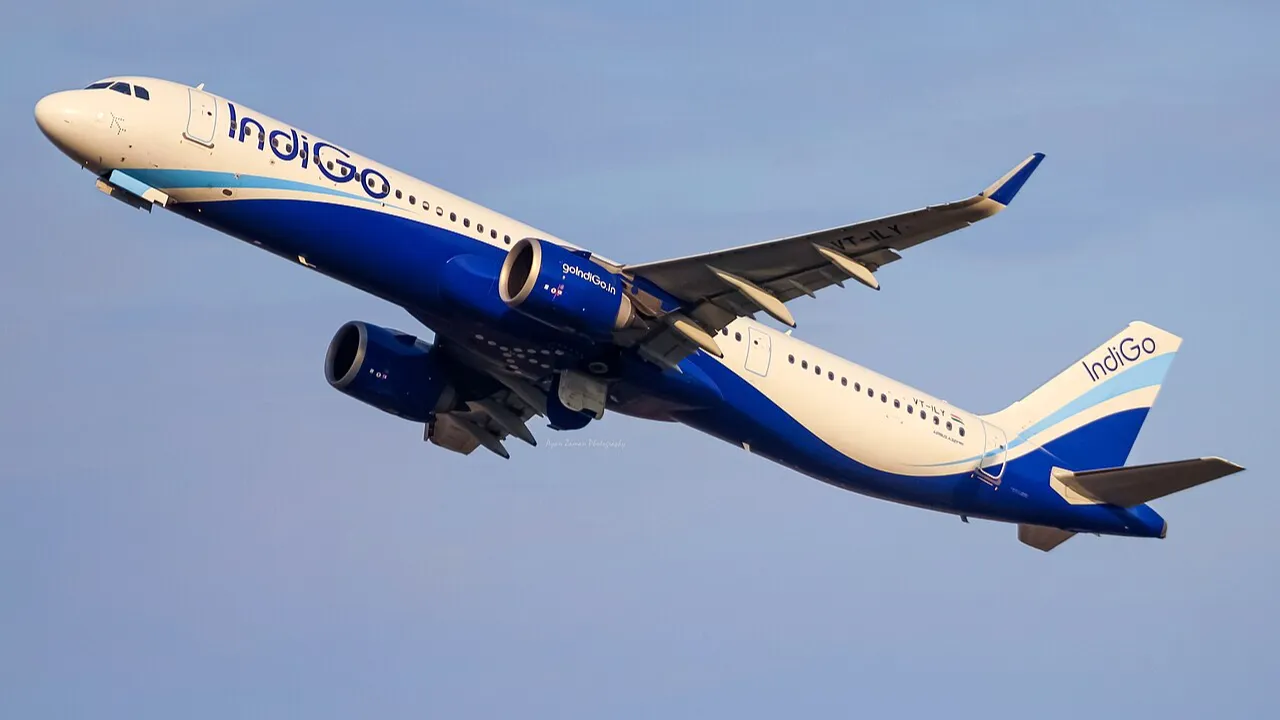
IndiGo’s July 2026 Expansion To 16+ Destinations
Starting 1 July 2026, IndiGo significantly expanded its DXN network, adding twelve new cities and taking the total to over 16 domestic destinations. The expansion targets regional tourist circuits, hill stations, and Tier-II business centres that passengers in western Uttar Pradesh could not previously access without traversing Delhi.
The full list of destinations added from 1 July includes:
- Navi Mumbai (NMIA)
- Srinagar (SXR)
- Jodhpur (JDH) — Monday, Wednesday, Friday, and Sunday at 2:40 PM
- Dharamshala (DHM) — 9:55 AM
- Bhopal Raja Bhoj Airport (BHO)
- Dehradun Jolly Grant Airport (DED) — 7:10 PM
- Bareilly (BEK) — selected days
- Kishangarh (KQH) — Tuesday, Thursday, and Saturday at 10:30 AM
- Lucknow (LKO)
- Jaipur International Airport (JAI) — 6:20 AM and 3:45 PM
- Pantnagar Airport (PGH)
- Chandigarh International Airport (IXC) — 6:10 AM, with an additional service from 13 July at 9:55 AM
Representative fares quoted by Times Bull at launch include Amritsar at ₹3,390, Mumbai at ₹5,207, Bengaluru at ₹9,327–₹9,606, Hyderabad at ₹6,444, and Srinagar at ₹13,113. These fares reflect IndiGo’s base pricing and do not include the airport’s User Development Fee (UDF), which is discussed in a separate section below.
Akasa Air Joins DXN On Day Two with Bengaluru and Navi Mumbai
Akasa Air (QP) commenced operations from DXN on 16 June 2026, one day after IndiGo’s inaugural service. The airline launched two routes: Bengaluru (BLR) and Navi Mumbai International Airport (NMI). The first Akasa service on this route, flight QP 2017, departed Navi Mumbai International Airport at 0725 hrs and arrived at DXN at 0935 hrs.
The Bengaluru rotation operates as flight QP 1575 from BLR to DXN and QP 1576 from DXN to BLR. From 1 July 2026, Akasa Air added Srinagar, Jodhpur, Bhopal, and Dehradun to its DXN network.
Akasa Air’s entry at DXN carries a strategic dimension beyond route announcements. The airline signed an MRO partnership with Noida International Airport in March 2026, making it the first in-airport MRO base at any Indian airport. This signals a long-term operational commitment from the carrier at the Jewar hub. Akasa Air previously stated it operated 188 weekly flights from the NCR region; DXN adds a third NCR point alongside its IGI and Hindon operations.
Air India Express At DXN
Air India Express (IX) was identified as one of the three initial carriers at DXN, alongside IndiGo and Akasa Air. However, the airline had not published specific flight numbers or city pairs as of mid-May 2026, and some reports indicate the carrier pulled out before the June 15 commercial launch, citing cost pressures from the higher UDF structure at DXN.
Air India Express was broadly expected to focus on South India connectivity and future Gulf routes from DXN, though no bilateral filings confirmed this. Passengers intending to fly Air India Express from DXN should verify current schedules directly with the airline before booking. Air India mainline has separately flagged DXN’s high cost base as a concern and has not announced any DXN flights.
This context matters when comparing DXN’s launch with Akasa Air’s earlier network expansion elsewhere. We have previously reported on IndiGo’s broader domestic growth through 2025, where the carrier connected Tier-II and Tier-III cities including Jaipur, Guwahati, Imphal, and Jaisalmer. The Jewar launch extends that pattern into the NCR’s second airport ecosystem, though with the added variable of higher airport charges that do not feature on IndiGo’s other routes.

Why Flying from DXN Costs More Than From DEL
Passengers booking DXN flights face a structural cost difference that does not exist at Indira Gandhi International Airport. The Airports Economic Regulatory Authority of India (AERA) approved a User Development Fee of ₹490 for domestic departures and ₹210 for arrivals at DXN for the first tariff cycle from 15 June 2026 to 31 March 2027. This compares with IGI’s domestic departure UDF of ₹129, a difference of 280 percent.
A family of four flying domestically from DXN pays roughly ₹2,000 in UDF charges alone, versus approximately ₹500 from IGI on the same route. The international departure UDF at DXN is ₹980, against IGI’s ₹650, a premium of 51 percent. YIAPL had originally proposed ₹653 and ₹1,200 for domestic and international departures respectively; AERA moderated these figures downward but the gap with IGI remains wide.
In its own submission to AERA, IndiGo calculated that operating a single A321neo departure from DXN costs ₹1,88,000 more than from IGI, or approximately ₹475 of incremental cost per passenger. The airline warned that at those rates, “NIA will become commercially unattractive for operations at any meaningful scale.” Despite that warning, IndiGo proceeded as launch carrier, suggesting that early slot acquisition at a new hub outweighs near-term cost disadvantage for India’s largest airline.
AERA has allowed DXN to revise tariffs upward by 5–11% between April 2027 and March 2031, meaning the UDF could reach ₹693 for departing passengers by FY31. Officials note that comparing a new greenfield airport with a mature hub like IGI is not straightforward, as DXN must recover significantly higher initial capital costs. The total Phase 1 capital expenditure is ₹11,282 crore.
What Is Confirmed and What Remains Speculation
The single most important fact for travellers planning international trips from DXN in 2026 is this: no international airline had filed a firm DXN schedule with the DGCA as of mid-May 2026. The airport launched on 15 June 2026 with domestic services only.
The first international flights are targeted for September–October 2026, aligned with the IATA winter schedule beginning 25 October 2026. Destinations mentioned in official discussions include Dubai, Singapore, and Zurich, but none of these have been confirmed with filed flight numbers.
Several MoUs have generated significant media attention but do not constitute confirmed routes:
- Lufthansa Group signed an MoU with YIAPL in November 2024. This does not commit a Frankfurt or any other European service.
- Singapore Airlines signed a similar MoU in November 2024. The India–Singapore bilateral air services agreement is already 94% utilised, limiting near-term frequency additions. Analysts suggest realistic earliest DXN–Singapore service would be the winter schedule 2027–28.
- Emirates and Qatar Airways have no public filings or MoUs related to DXN operations as of mid-2026.
India TV News reported earlier in 2026 that officials had previously planned for 30 services on opening day, including three international flights to Zurich, Singapore, and Dubai. That plan was revised multiple times as regulatory and commercial timelines shifted. Passengers planning international travel from DXN should confirm availability directly with airlines and avoid booking connections through DXN on the assumption that an international service will be operational.
DXN As NCR’s Second Airport
DXN operates alongside IGI and Hindon Airport (HDO) in Ghaziabad, creating a three-airport system for the NCR. IndiGo, which has its largest NCR slot allocation at IGI, now operates across all three airports. The dual-airport comparison most frequently cited is London Heathrow and Gatwick, where distinct catchment areas support complementary traffic bases.
DXN serves a primary catchment of approximately 4.2 million people in Greater Noida and along the Yamuna Expressway corridor. For passengers in Noida Sector 76, Greater Noida’s Pari Chowk, and cities further south along the expressway — including Mathura, Vrindavan, and Agra — DXN reduces road transfer distances by 40–80 kilometres compared with IGI.
At the same time, DXN is approximately 72 kilometres from IGI and roughly 75 kilometres from Connaught Place. Passengers in central Delhi, West Delhi, or South Delhi will generally find IGI closer and more cost-effective once the UDF differential is factored in. HappyFares estimates that IGI remains the default choice for approximately 85–88 percent of NCR flyers in Phase 1, with DXN serving the remaining 12–15 percent.
Road access to DXN is currently via the Yamuna Expressway, with a dedicated airport exit at approximately kilometre marker 35. No metro or rapid rail link operates to the airport at launch. The Noida Metro Aqua Line extension to DXN has a detailed project report finalised but construction has not started, with the earliest realistic completion in 2028.
DXN’s Infrastructure and Phase 1 Facilities
Phase 1 of Noida International Airport covers 1,334 hectares and includes a 101,590-square-metre terminal building with 28 apron stands. Key infrastructure specifications confirmed at launch include:
- Runway: Single 3,900-metre CAT III-B runway, capable of handling wide-body aircraft
- Terminal capacity: 12 million passengers per annum in Phase 1
- Cargo hub: Operated by AISATS across an 87-acre multi-modal facility, with Phase 1 capacity of 250,000 metric tonnes annually, scalable to 1.8 million metric tonnes
- MRO: Akasa Air’s maintenance, repair and overhaul base — the first in-airport MRO at any Indian airport
- Ground handling: Bird Group committed to all-electric ground service equipment under its handling agreement, signed April 2024
- Power supply: Tata Power supplies wind and solar energy under agreements announced November 2024
The terminal received security clearance from BCAS before commercial operations began. In February 2023, the airport selected Air India SATS (AISATS) to develop the cargo hub, positioning DXN as a logistics gateway alongside its passenger function.
The airport’s buildout plans beyond Phase 1 include three additional phases, with total projected capacity of 70 million passengers by FY40 across six runways. Total project cost across all four phases is estimated at ₹29,561 crore.

IndiGo’s NCR Expansion and India’s Aviation Policy
IndiGo is a carrier that commands approximately 63 percent domestic market share and operates over 2,200 daily flights. The DXN launch extends IndiGo’s NCR footprint to three airports and reflects the carrier’s broader strategy of anchoring new greenfield hubs before competitors.
DXN’s development aligns with the Government of India’s expanded UDAN (Ude Desh Ka Aam Nagrik) scheme, which targets 120 new destinations and four crore passengers within ten years. The airport is designed to bring air connectivity to residents of western Uttar Pradesh who previously relied entirely on IGI. Cities such as Agra, Mathura, Aligarh, and Meerut fall within DXN’s extended catchment.
The airport also reflects a governance model that is uncommon in Indian aviation: YIAPL, the operating entity, is a 100% subsidiary of Zurich Airport International AG, the same group that manages Zurich Airport. This Swiss operational framework is positioned to distinguish DXN from AAI-managed airports on metrics such as service quality and infrastructure maintenance. Civil Aviation Minister Ram Mohan Naidu confirmed DXN as a future hub for ground handling, cargo logistics, MRO, and hospitality, as reported by PIB in March 2026.
There have been congestion-related incidents at IGI that have underscored the case for a second major NCR airport. The pressure on DEL infrastructure has been a consistent theme in Indian aviation policy for the past decade, and DXN’s launch is the first structural answer to that challenge.

What Passengers Should Know Before Booking A DXN Flight
Travellers considering DXN should verify the following before completing a booking:
- Confirm airport code: DXN is Noida International Airport at Jewar. It is not a terminal of Indira Gandhi International Airport (DEL). The two airports are 72 kilometres apart.
- Check departure airport on your ticket: IndiGo and Akasa Air have integrated DXN into their booking systems. Some passengers with existing NCR bookings may find their flight has moved to DXN.
- Factor in the UDF: The ₹490 domestic departure UDF is embedded in your ticket price but is substantially higher than at IGI. On routes where fares appear comparable between DXN and IGI, this difference is already priced in.
- Plan road access: The Yamuna Expressway via DND Flyway is the primary route. Allow a minimum of 3 hours for connecting travel between IGI and DXN if you are transferring between the two airports.
- Do not assume international flights exist: As of the DXN commercial launch, no international routes were operational. The September–October 2026 target is not a confirmed booking date.
UPSRTC and Haryana Roadways bus services connect the airport to Noida, Greater Noida, Ghaziabad, Agra, Mathura, Faridabad, and Gurugram. YIAPL has deployed 1,200 Mahindra electric taxis at DXN for 24-hour road access. App-based cab services are available but passengers should expect surge pricing during evening peaks as driver familiarity with a new airport builds over time.