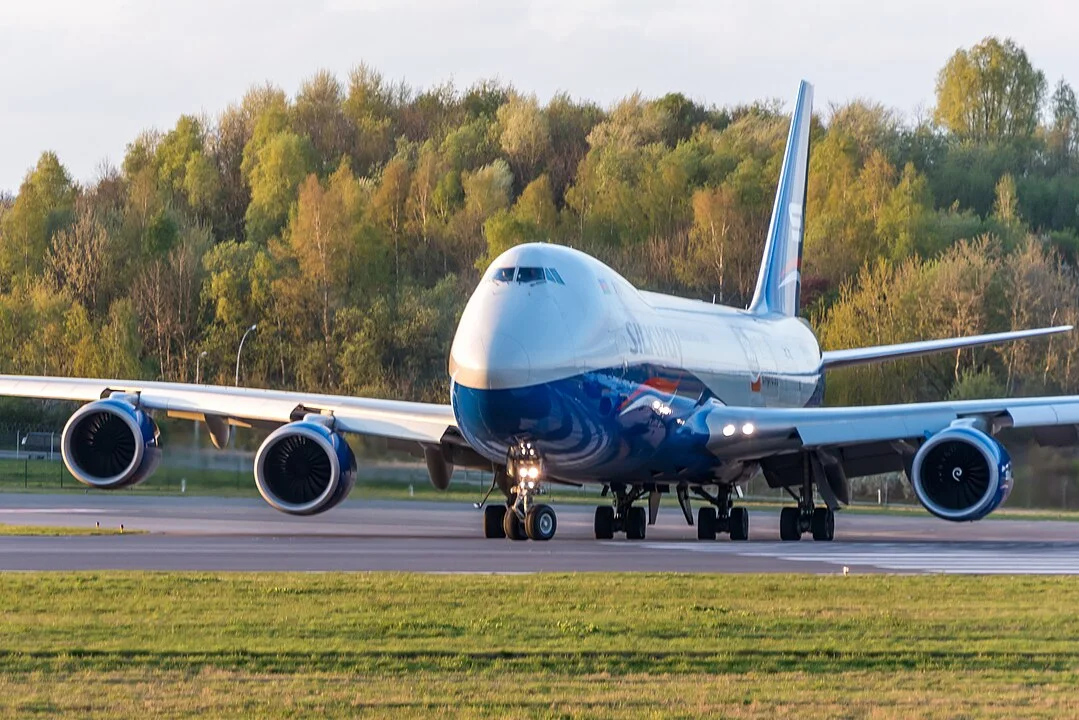
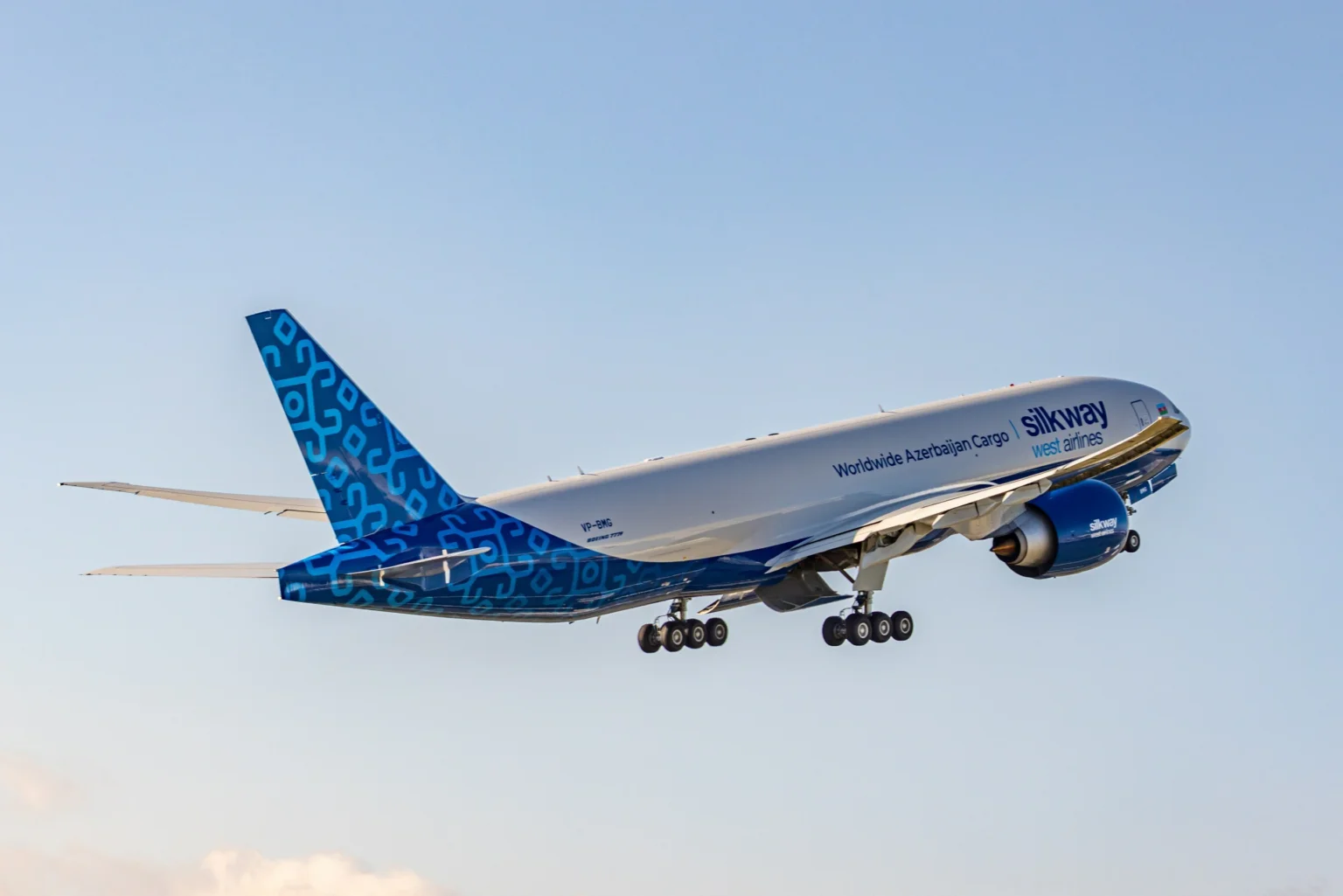
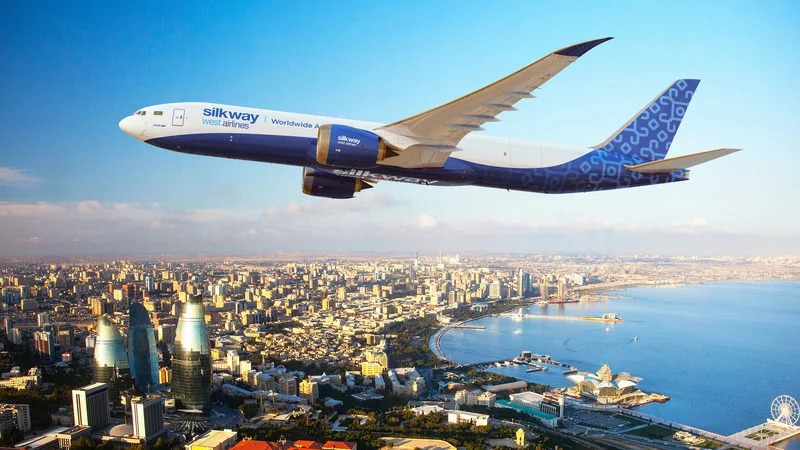
A Silk Way West Airlines (7L) Boeing 747-8 freighter scheduled to fly from Mexico City to Houston instead ended up circling Dallas on August 4, 2026, running critically low on fuel in the process, One Mile at a Time reported. Aviation blogger Ben Schlappig described the episode as one of the stranger air traffic control exchanges he has come across, not for how close a call it was, but for how difficult it is to explain the crew’s decision-making.
The flight eventually landed safely, but only after a Houston-based controller took the unusual step of declaring an emergency on the pilots’ behalf when they continued to insist on flying toward Houston without the fuel to get there.
A Cargo Run Gone Sideways
Flight 7L5722 departed Mexico City Felipe Ángeles International Airport (NLU) for the 741-mile hop to Houston George Bush Intercontinental Airport (IAH), a journey that ordinarily takes about 90 minutes. The aircraft involved was a Boeing 747-8 freighter registered VQ-BVB.
Roughly two hours after takeoff, the jet was instead circling near Dallas Fort Worth International Airport (DFW), more than 200 miles from its filed destination. That routing made little operational sense, since Dallas sits even farther from Mexico City than Houston does, meaning the detour burned extra fuel rather than saving any.
Adding to the confusion, the aircraft had already descended to 5,000 feet, an altitude far more consistent with an approach than with a holding pattern hundreds of miles from the intended airport. According to Simple Flying, the freighter had actually never come within 150 miles of Houston, instead tracking west of its route toward San Antonio before continuing north into Dallas airspace.
Inside The Air Traffic Control Exchange
The crew’s first radio call was a “pan pan pan,” the internationally recognised urgency signal one step below a full “mayday,” in which the pilots reported they were running out of fuel. A controller asked whether they wanted to declare an emergency and divert into DFW.
Rather than accept the diversion, the pilots requested to “land as soon as possible on runway 26R,” a reference to Houston’s Bush Intercontinental Airport, which was still hundreds of miles away. The controller pressed for a fuel figure, and the crew’s answer only deepened the confusion: they first cited six tons, then “confirmed” 6,000 pounds, two numbers that do not reconcile and were likely a units mix-up for roughly 6,000 kilograms.
According to audio reviewed by View From the Wing, told plainly that they lacked the fuel to reach Houston, the crew still replied that they wanted “the shortcut” to Houston rather than accept the diversion. At that point, the controller declared the emergency for them and redirected the aircraft onto Dallas Fort Worth’s runway 18R.
Why The Fuel Numbers Mattered
A Boeing 747-8 typically burns around 400 pounds of fuel per minute at cruising altitude, with consumption climbing sharply during ascent or a missed approach. Crews are also required to retain reserve fuel to cover a potential go-around, a margin the reported fuel state would have all but eliminated had the flight continued toward Houston.
Independent reporting from Simple Flying put the aircraft’s remaining endurance at only about 30 minutes when the pan-pan call went out, an estimate consistent with the 6,000-pound figure the crew ultimately gave controllers. Under FAA guidance, an aircraft is considered to be in at least an urgent condition once a pilot expresses doubt about fuel endurance, and controllers are directed to treat the situation as an emergency regardless of whether the crew formally declares one.
The freighter touched down at DFW at 10:51 a.m. local time, roughly two hours and twenty-one minutes after departing Mexico City, a flight that had taken barely half that long a week earlier on the same route, per data cited by View From the Wing. After refuelling, the aircraft departed again and reached Houston in a brisk 39 minutes, underscoring just how far off course the original routing had taken it.
What The Flight Data Suggests Went Wrong
Publicly shared ACARS messaging, cited by multiple outlets tracking the incident, points toward a possible conflict between flight plans rather than a straightforward navigational slip. A Dallas-area approach controller reportedly asked the crew whether they had received ATIS weather information for Dallas Love Field (DAL), an airport Silk Way West does not serve, according to InsideFlyer.
The same tracking data suggests the aircraft’s path diverged roughly 50 minutes into the flight, near the Matamoros VOR at the US-Mexico border, where the jet turned toward the San Antonio VOR rather than continuing east toward Houston. That waypoint sequence is consistent with a Dallas-bound routing rather than a Houston one.
Company operations messages sent via ACARS reportedly asked the crew directly whether they were heading to Love Field. The pilots replied that a “high traffic” reroute from Houston air traffic control had put them on a longer path, but that Houston remained their destination “for the moment,” language suggesting the crew believed they were simply absorbing a traffic delay while controllers were meanwhile handling the flight as a Dallas arrival.
A Language Barrier, But Not the Whole Story
English was clearly not the first language of the pilot working the radios, a factor that plausibly contributed to the mounting confusion, particularly around the conflicting fuel figures and the repeated requests to press on toward Houston. That alone does not fully explain the sequence of events, however.
The crew accepted a descent to 5,000 feet hundreds of miles from their filed destination without apparently questioning why, and continued asking for Houston even after being told directly that the remaining fuel would not get them there. InsideFlyer noted that flight data systems showed conflicting destinations, including Love Field, though the underlying cause remains under investigation. Six people are reported to have been on board the freighter, and there were no injuries.
Reaction From the Aviation Community
Clips of the exchange circulated quickly among aviation spotters and enthusiasts once posted online, drawing pointed commentary about both the crew’s decision-making and the controller’s handling of the situation. One spotter tracking the flight, SLCScanner, wrote that they had “so many questions” about how the mix-up occurred in the first place.
Commentary from pilots and aviation observers alike credited the Houston-area controller for effectively overriding the crew’s repeated requests to continue toward an airport they could not safely reach. By declaring the emergency himself rather than waiting for the pilots to do so, the controller moved the aircraft onto the ground at Dallas Fort Worth before its fuel state could deteriorate any further.
All in All
A cargo run that should have taken 90 minutes between Mexico City and Houston instead stretched past two hours, ended more than 200 miles off course near Dallas, and required a controller to force an emergency landing on a crew still asking to press on toward its original destination. The aircraft landed safely at DFW, refuelled, and completed the short final leg to Houston later the same day.
Conflicting ACARS data pointing toward Dallas Love Field, a language barrier on the flight deck, and a crew reluctant to accept a diversion all appear to have played a role, though the full chain of events has not been officially confirmed. What is clear from the released audio is that American air traffic control caught what the crew itself did not.