
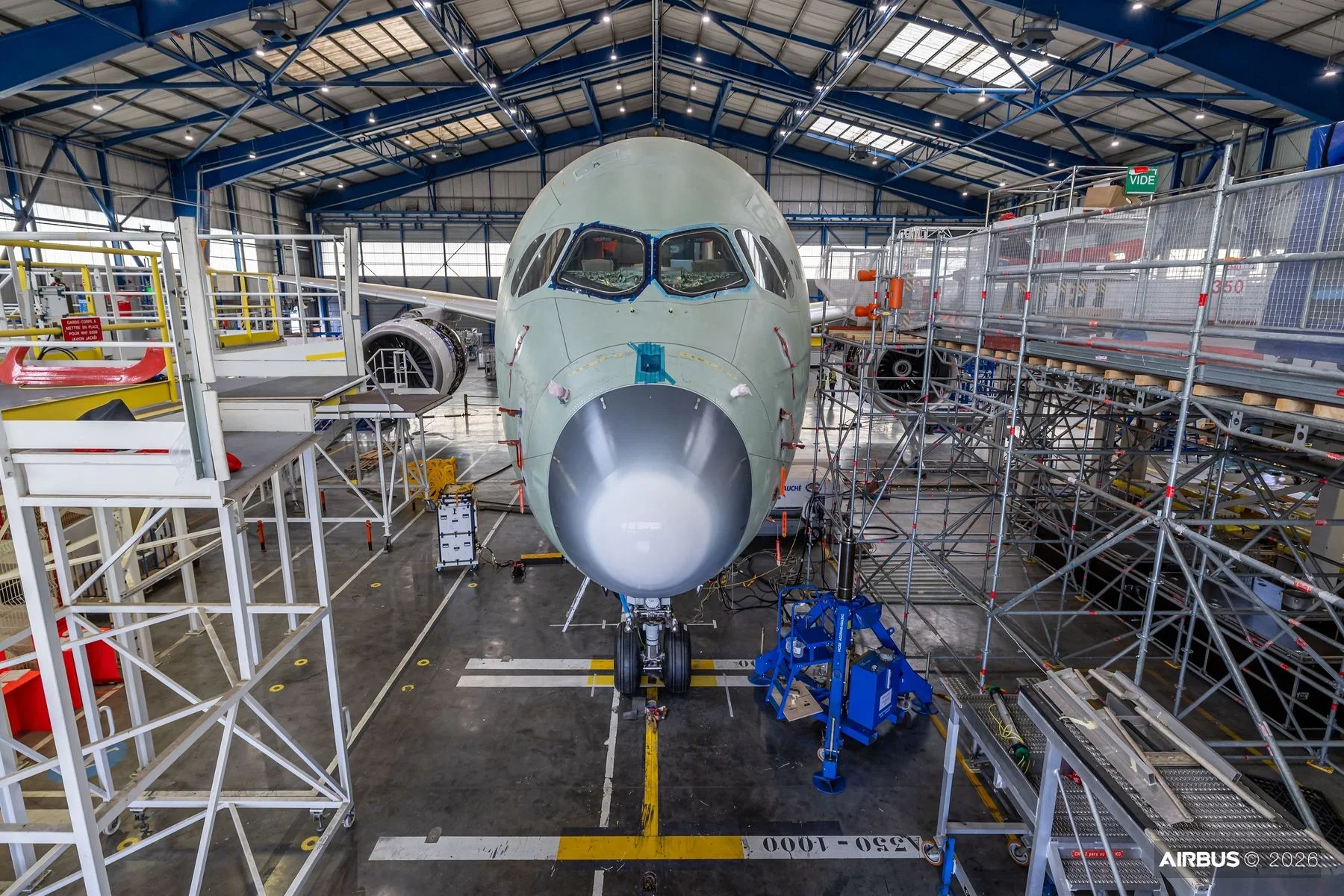
Airbus has completed a Ground Vibration Test (GVT) on its A350F freighter, moving the aircraft a step closer to its first flight. The three-day test took place in Toulouse (TLS), France, in June 2026. Engineers shook the aircraft with external shakers and its own flight controls to measure how it responds to vibration, a step Airbus says is essential before the plane can safely leave the ground.
The test matters because it validates the computer models used to predict how the Airbus A350F will behave in flight. It follows months of ground testing after major structural components landed on the Toulouse final assembly line, and it comes as Airbus races toward a first flight targeted before the end of 2026. The manufacturer has more than 100 firm orders on the books, and the GVT result brings the programme closer to entry into service in the second half of 2027.
What Is a Ground Vibration Test and Why It Matters
A Ground Vibration Test (GVT) measures how an aircraft’s structure reacts to controlled shaking. The primary objective of GVT is to ensure the aircraft is free from dangerous aeroelastic phenomena such as flutter, where aerodynamic forces and structural vibrations reinforce each other and could potentially cause structural failure. By validating the aircraft’s vibration characteristics on the ground, manufacturers can safely establish flight-test limits before expanding the flight envelope.
GVT focuses on how an aircraft behaves dynamically. Engineers analyze vibration frequencies, damping characteristics, and deformation patterns to predict aeroelastic behaviour and dynamic loads that are later used throughout flight testing and certification.
How Ground Vibration Testing Works
| Stage | Description |
|---|---|
| Aircraft Support | The aircraft is suspended to replicate flight conditions, often with landing gear retracted. |
| Excitation | Electrodynamic shakers apply controlled forces at multiple locations across the airframe. |
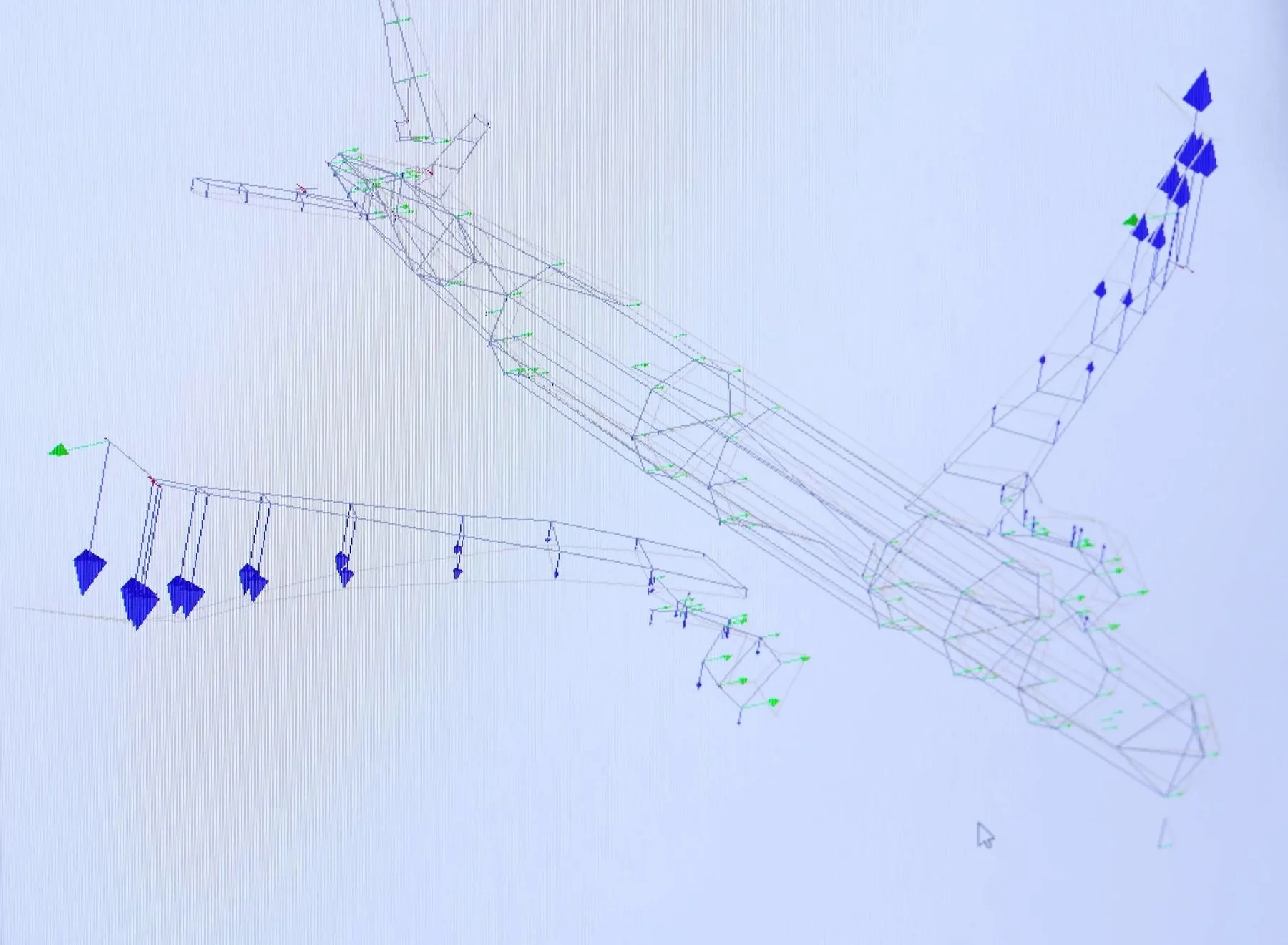
| Data Collection | Hundreds of accelerometers record structural responses throughout the aircraft. |
| Mode Identification | Engineers identify natural vibration modes, resonant frequencies, damping, and structural deformation patterns. |
| Model Correlation | Measured data is compared with computer simulations, and analytical models are updated if necessary. |
| Flight Test Preparation | The validated models are used to define safe flight-test envelopes and flutter clearance limits. |
Nicolas Lastere, a loads and aeroelastics expert at Airbus, explained why the test carries so much weight. He called it “a ‘key enabler’ for the first flight, providing the necessary evidence to complete the first step of aeroelastics model validation, which is essential for the opening of the aircraft’s flight envelope.”
Boom Supersonic drew parallels with a violin to express how GVT works:
Think of a string on a violin. Characteristics of vibration depend on mass and stiffness. In a sense, ground vibration testing is “playing” the aircraft. We excite it and make it vibrate in different modes, or resonant frequencies, which are measured with sensors. Conceptually, this is similar to how a violinist carries a bow across a string to produce a frequency of sound; a string is perturbed and vibration results.
How Airbus Ran the Three-Day Test in Toulouse
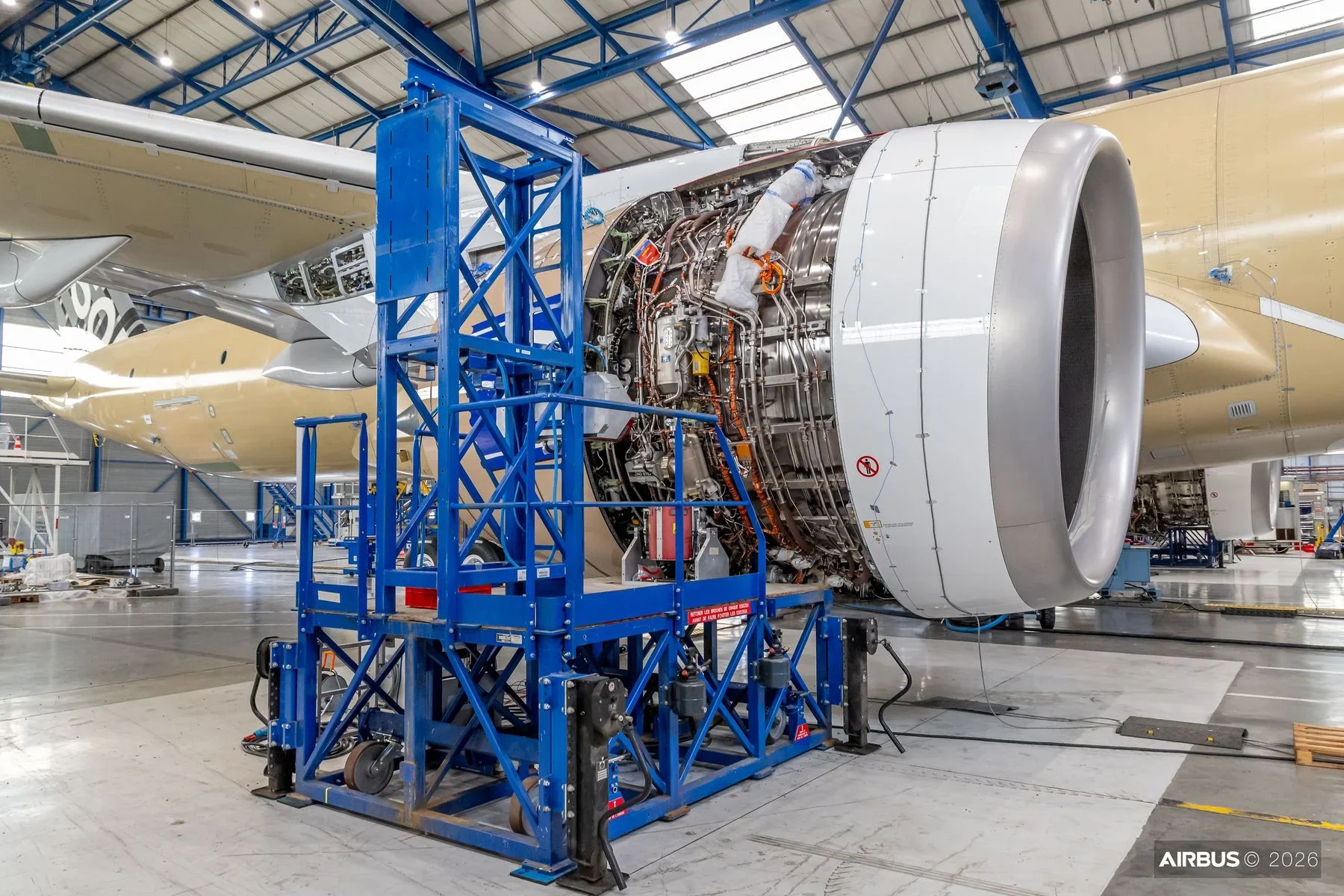
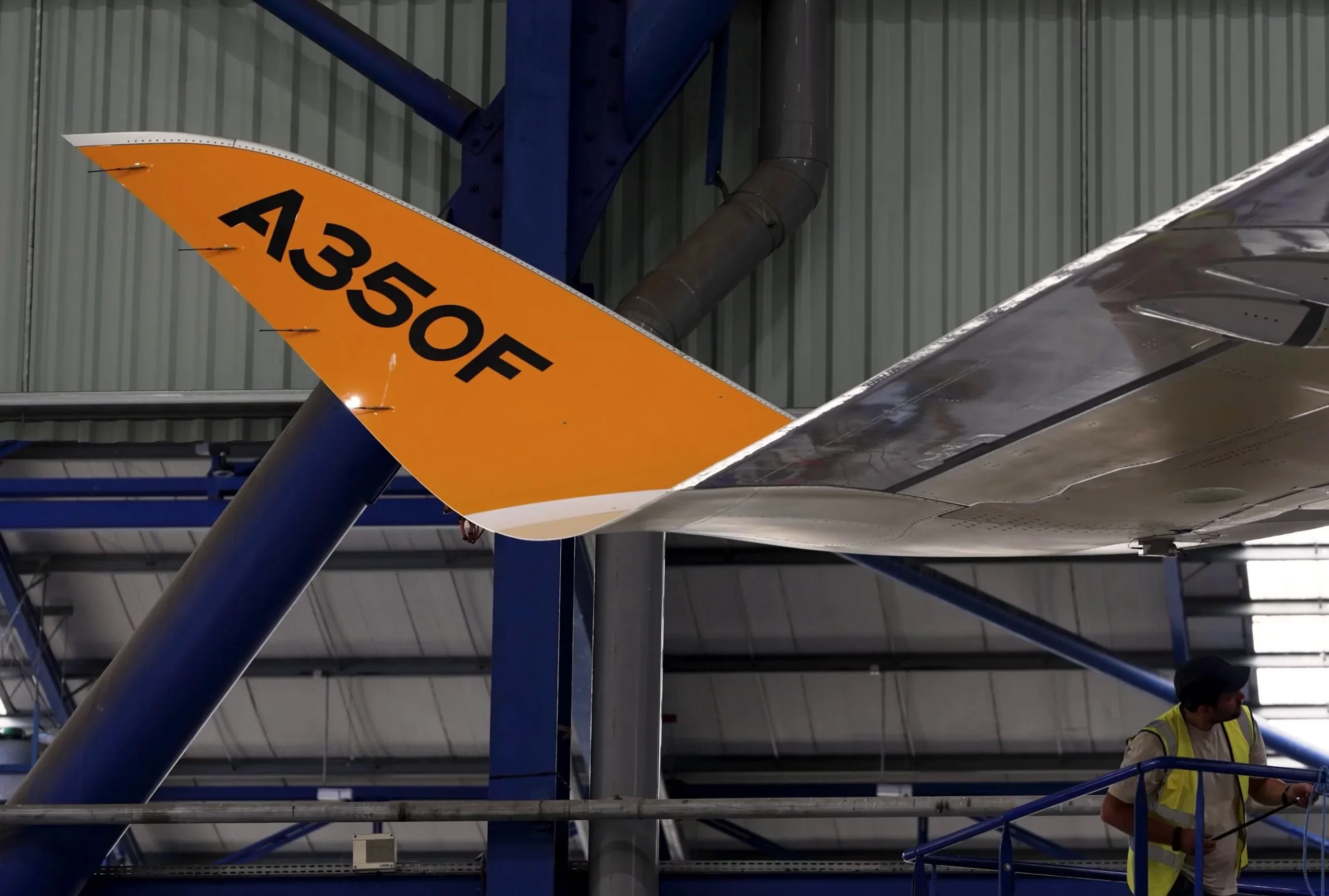
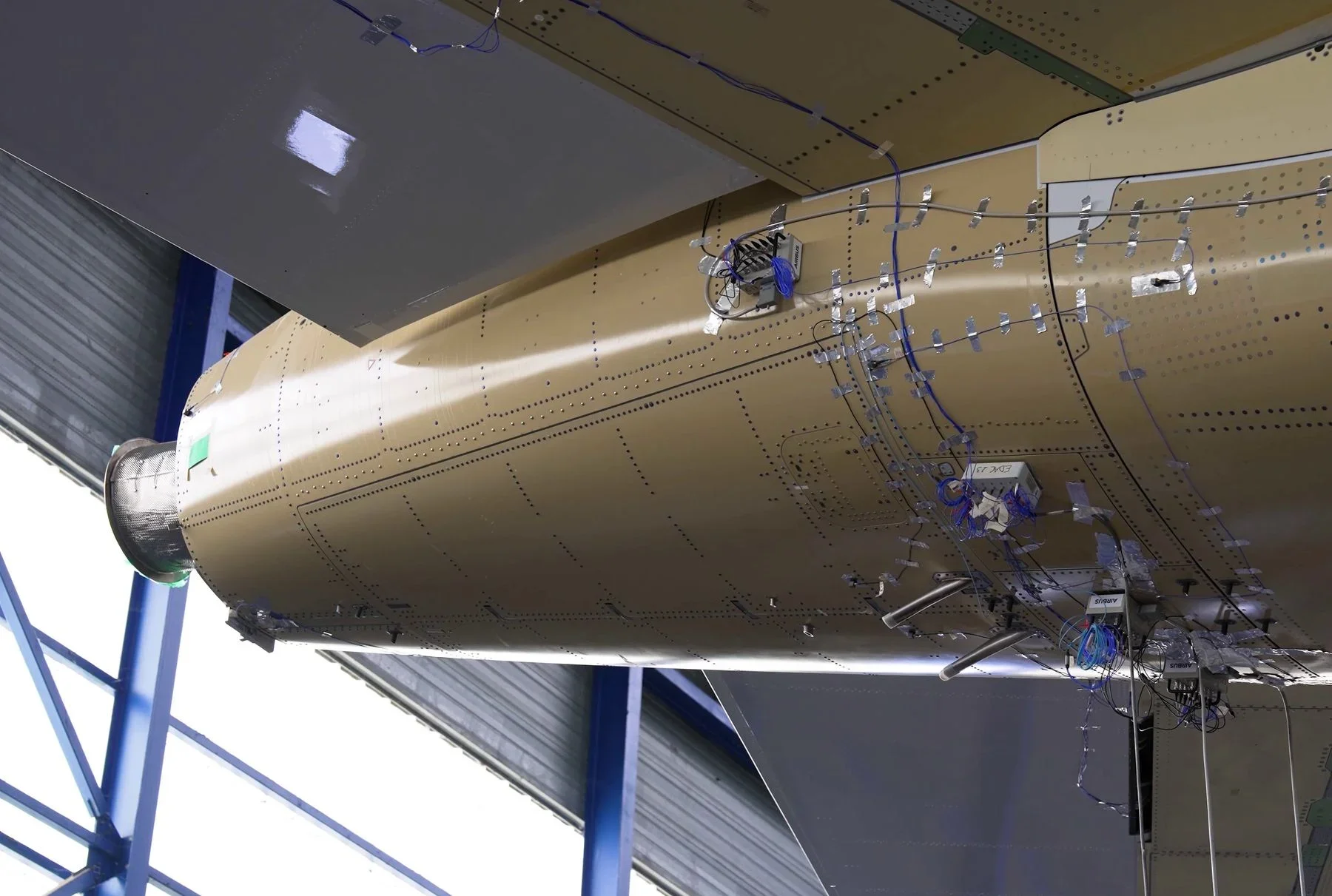
Airbus excited the aircraft in two ways. External shakers were attached to the wingtips, the rear fuselage cone, and the engines, while the aircraft’s own control surfaces performed sine sweeps across different frequency bands. Accelerometers then captured the aircraft’s dynamic response for analysis.
Engineers combined the aircraft’s own Flight Test Instrumentation with extra sensors fitted just for the test, a method known as data fusion. This approach shortened the test duration without sacrificing accuracy. The team monitored every run in real time and adjusted the test plan after reviewing each result, letting designers refine later runs as new data came in.
Fabien Ayme, aeroelastic testing expert at Airbus, gave an insight into the FTI in the following way:
“When the test was underway, the aircraft was ‘excited’ by its own control surfaces through sine sweeps performed on different frequency bandwidths. In addition, some shakers were connected to the airframe at the wingtips, on the rear fuselage cone (‘section 19.1’) and on the engines to complement the varieties of excitations.”
Preparation for the test began roughly two years earlier and drew on teams from the Final Assembly Line, Flight Control Systems, Aeroelastics, and several other departments. Airbus says the results matched its theoretical model predictions well. That outcome signals the freighter’s structural design is performing as engineers expected.
Flutter Tests and First Flight to Follow
With the GVT complete, engineers are now finalising post-processing and tuning the aircraft’s structural models. The next milestone is the Flight Vibration Test, also called the flutter test, which will run during the first three months of the flight-test campaign.
Flutter is a dangerous aeroelastic phenomenon in which an aircraft’s structural behavior becomes intertwined with aerodynamics, creating very large forces that can ultimately lead to structural damage. According to Boom Supersonic, wing oscillations can begin interacting with the unsteady airflow over the wing, making the aircraft’s structural response increasingly dependent on aerodynamic forces.
Ground Vibration Testing (GVT) is conducted to validate engineers’ aeroelastic models and ensure the aircraft is inherently safe against any tendency to flutter before it proceeds to flight testing. These tests will push the aircraft to its maximum dive speed and Mach number before regulators clear it for service.
Airbus Chief Executive Guillaume Faury said in July 2026 that the A350F remains on track to fly before the end of this year, a shift from the manufacturer’s earlier third-quarter target. The certification campaign is structured around ten months and roughly 400 flight-test hours, split between two aircraft, MSN700 and MSN701.