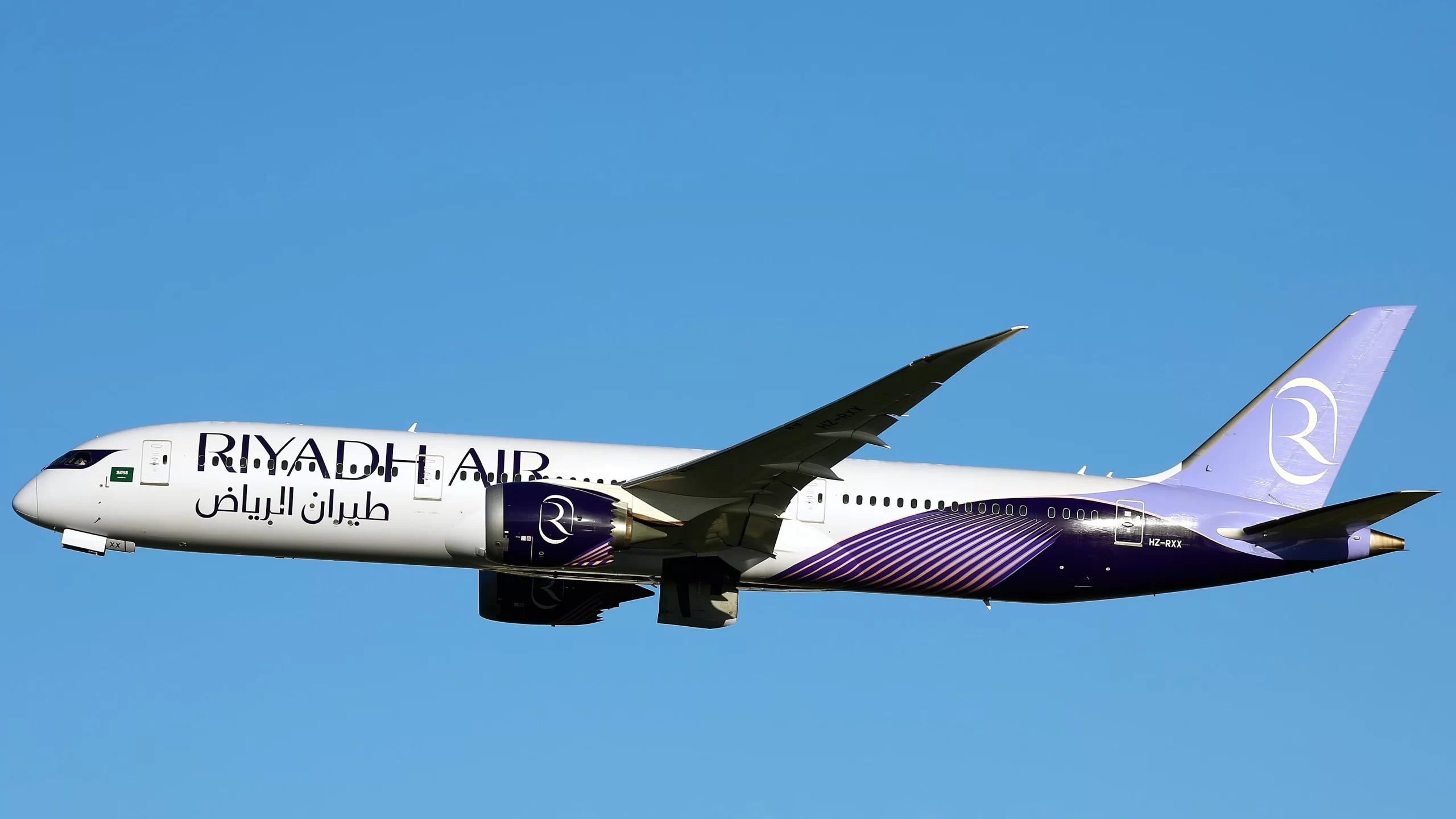
Riyadh Air (RX) has entered the Indian market, launching daily nonstop flights between King Khalid International Airport (RUH) and Chhatrapati Shivaji Maharaj International Airport (BOM) in Mumbai. The inaugural flight, RXI697, touched down in Mumbai on August 4 after departing Riyadh, according to a report by STAT Times. The service marks the Saudi carrier’s first scheduled route to India.
The new daily Boeing 787-9 Dreamliner flight gives passengers a direct link between Saudi Arabia and India’s financial capital, along with onward connections through Riyadh to Europe and the Middle East. It also extends Riyadh Air’s cargo network, using the aircraft’s belly-hold capacity to move freight between the two countries. The launch comes weeks after the airline unveiled a major fleet expansion at the Farnborough International Airshow, underlining how quickly the young carrier is scaling up.

Riyadh Air Opens Daily Mumbai Route with Boeing 787-9 Service
Riyadh Air confirmed the new service through its own channels, saying its first scheduled flights to Mumbai had taken off successfully. The airline flies the route once a day, in both directions, using its Boeing 787-9 fleet.
The schedule is built around the following times:
- Flight RX697 departs Riyadh at 2:05 pm and arrives in Mumbai at 8:35 pm local time.
- The return flight, RX698, leaves Mumbai at 10:05 pm and lands in Riyadh at 11:50 pm local time.
- The aircraft offers Economy, Business, and Business Elite cabins.
Riyadh Air opened ticket sales for the route on July 6, nearly a month before the first flight. The evening departure from Mumbai is designed to let passengers connect onward through Riyadh with minimal wait time.
How The Inaugural Flight Reached Mumbai
The first flight, operated by Boeing 787-9 Dreamliner HZ-RXAA, departed King Khalid International Airport at 2:56 pm local time and landed at Chhatrapati Shivaji Maharaj International Airport at 9:16 pm IST, based on tracking data. Mumbai becomes Riyadh Air’s ninth destination and its second stop in the Asia-Pacific region after Kuala Lumpur.
Riyadh Air Chief Executive Tony Douglas framed the launch as part of a broader strategy. He said the route “has been carefully selected to align with our ambition to become a global airline and a significant contributor to Vision 2030.” His comment ties the Mumbai launch directly to Saudi Arabia’s wider economic diversification plan.
Mumbai Joins a Fast-Growing International Network
Mumbai is the latest addition to a network Riyadh Air has built quickly since starting commercial operations. The airline added scheduled Boeing 787-9 service to London Heathrow in June, followed by Jeddah, Dubai, Cairo, Málaga, Madrid, Manchester, and Kuala Lumpur through July.
India gives Riyadh Air access to one of the world’s largest aviation markets, with strong demand from business travelers, tourists, and passengers visiting friends and relatives. Mumbai also supplies connecting traffic for flights beyond Riyadh into Europe and the Middle East. Beyond India, Riyadh Air has already announced upcoming services to Islamabad, Lahore, and Manila.
Riyadh Air Enters a Crowded Riyadh-Mumbai Corridor
Riyadh Air is not the first carrier on this route. Saudia, flynas, Air India, and IndiGo already operate scheduled service between Riyadh and Mumbai, according to flight-data provider OAG. That makes Mumbai one of the more contested India-Saudi Arabia gateways, with demand driven by business travel, tourism, and a large expatriate community moving between the two countries.
Riyadh Air’s build-out in the region is not limited to Mumbai. The carrier has scheduled further South Asian launches for later in 2026, including Islamabad from mid-August and Lahore later that month, alongside a planned September start for Manila in the Philippines. Each addition feeds passengers into the airline’s Riyadh hub, a strategy the carrier has used consistently since starting commercial flights.
Fleet Orders at Farnborough Show Riyadh Air’s Bigger Ambitions
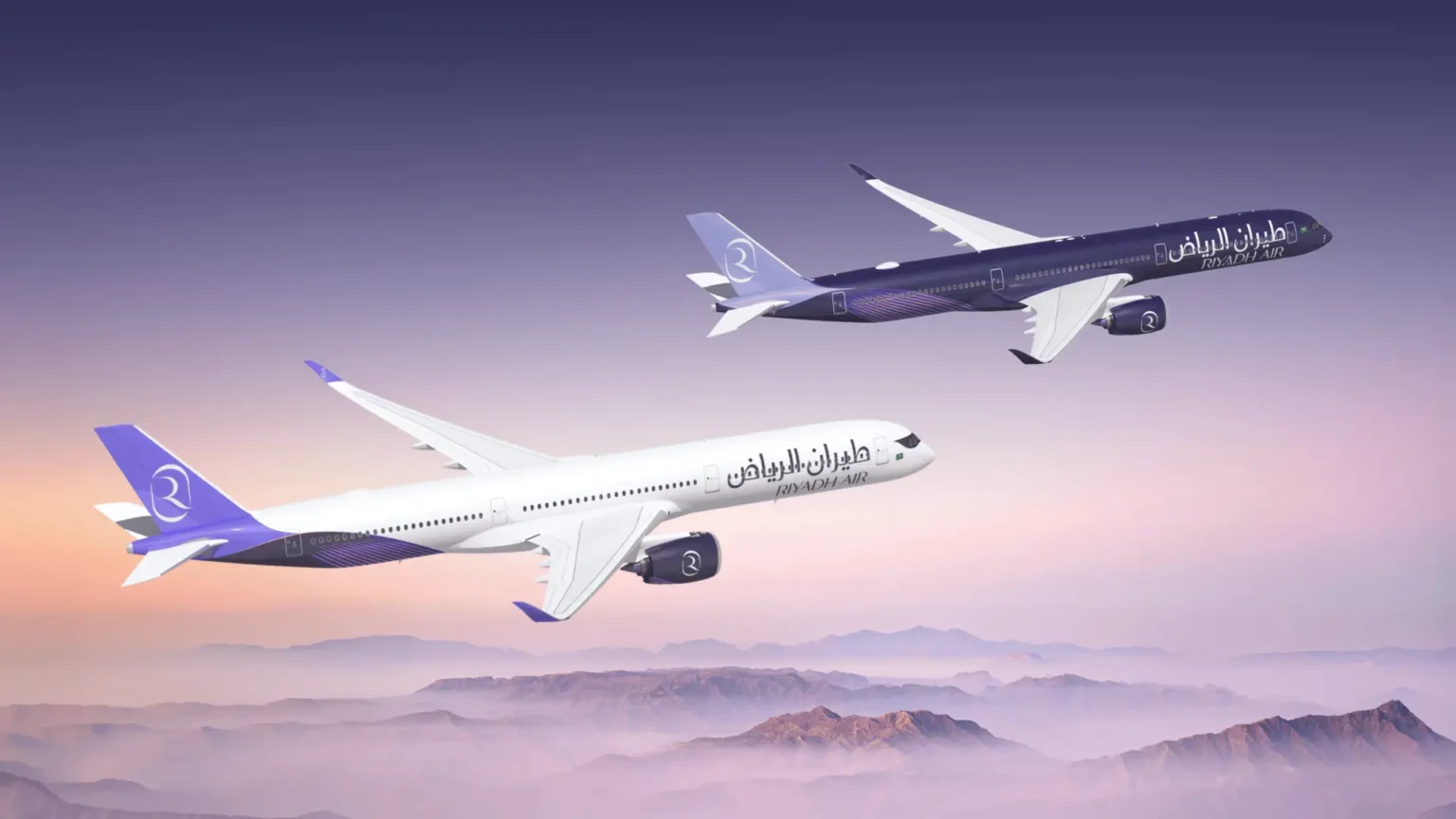
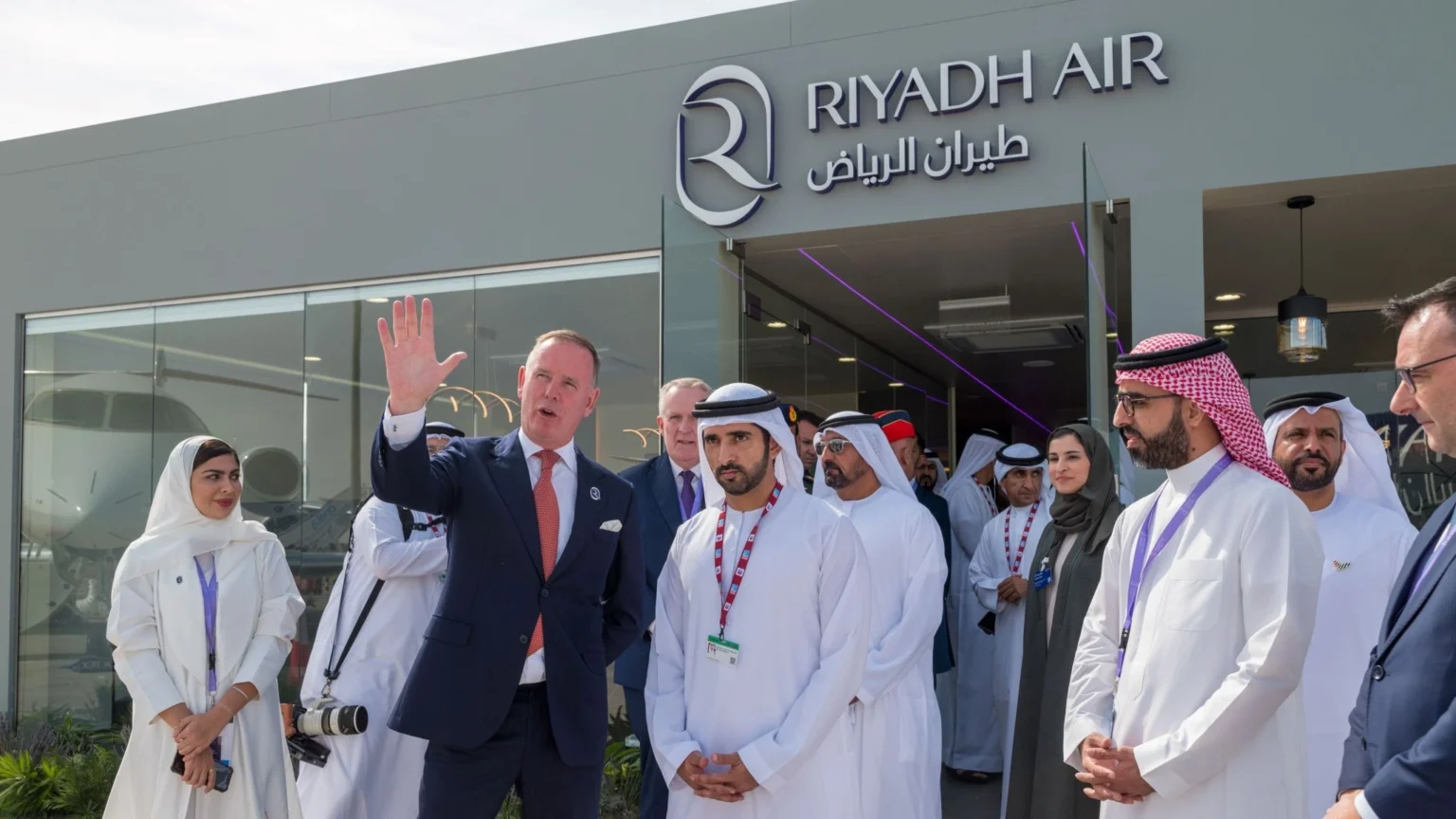
The Mumbai launch follows a separate but related milestone. At the Farnborough International Airshow on July 20, Riyadh Air firmed up options for 28 additional Boeing 787 Dreamliners, including the conversion of 20 aircraft to the larger 787-10 variant, taking its firm Dreamliner order to 67 aircraft.
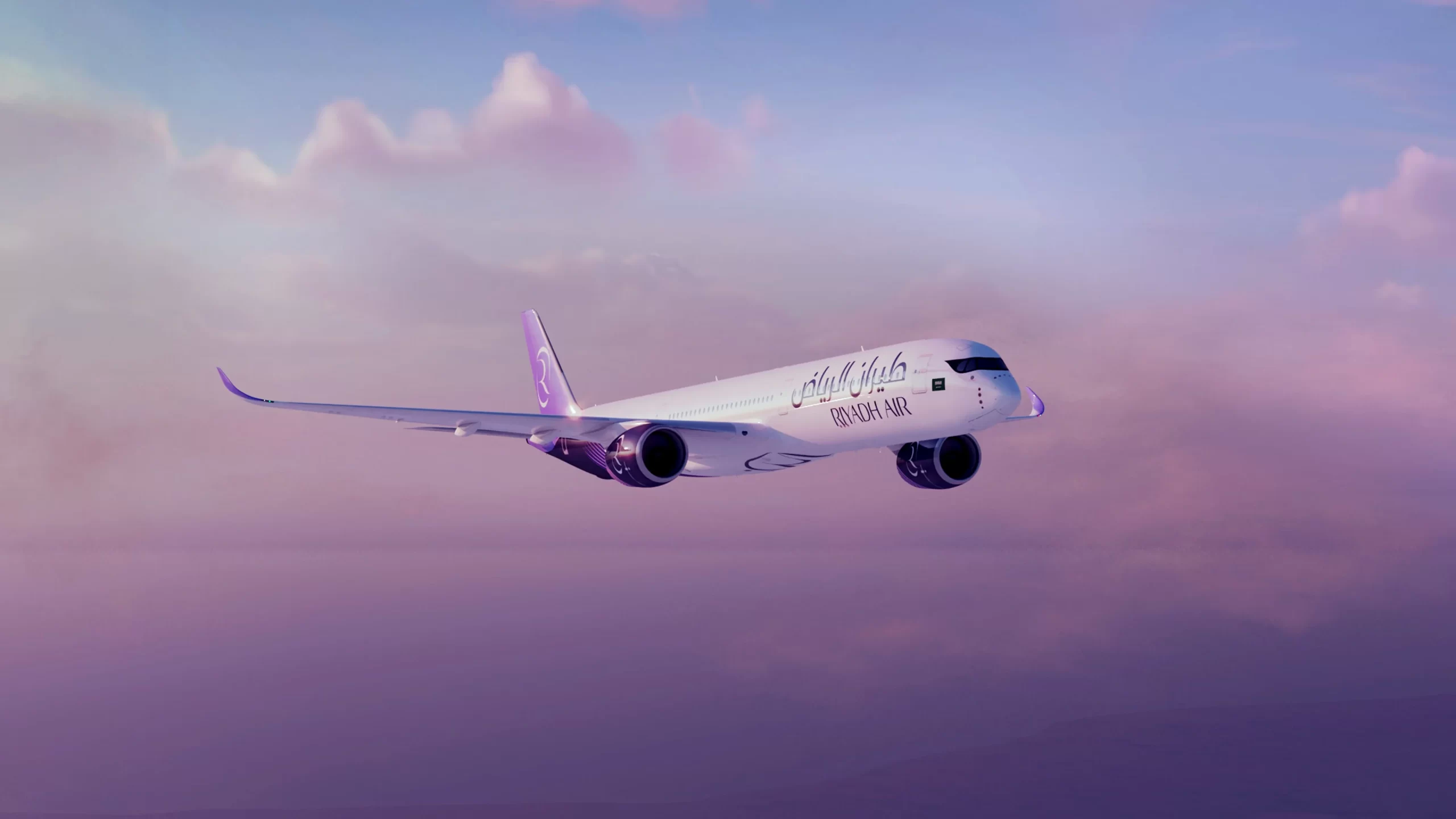
The airline also exercised options for six more Airbus A350-1000 aircraft at the same show, lifting its confirmed A350-1000 order to 31 jets. That order builds on a 2025 commitment for up to 50 aircraft of the type, split evenly between firm orders and options. Riyadh Air had accepted delivery of six Boeing 787-9 aircraft as of July 20, the fleet now supporting both the Mumbai route and the airline’s wider expansion.
Both aircraft types share design features that support long-haul, high-frequency growth. The Boeing 787-9 gives Riyadh Air the range and belly-hold cargo capacity it needs for medium and long routes like Mumbai, while the incoming A350-1000s are earmarked for the airline’s longest intercontinental sectors. Management has set a target of serving more than 100 destinations by 2030, with each new fleet commitment framed as a step toward that goal.
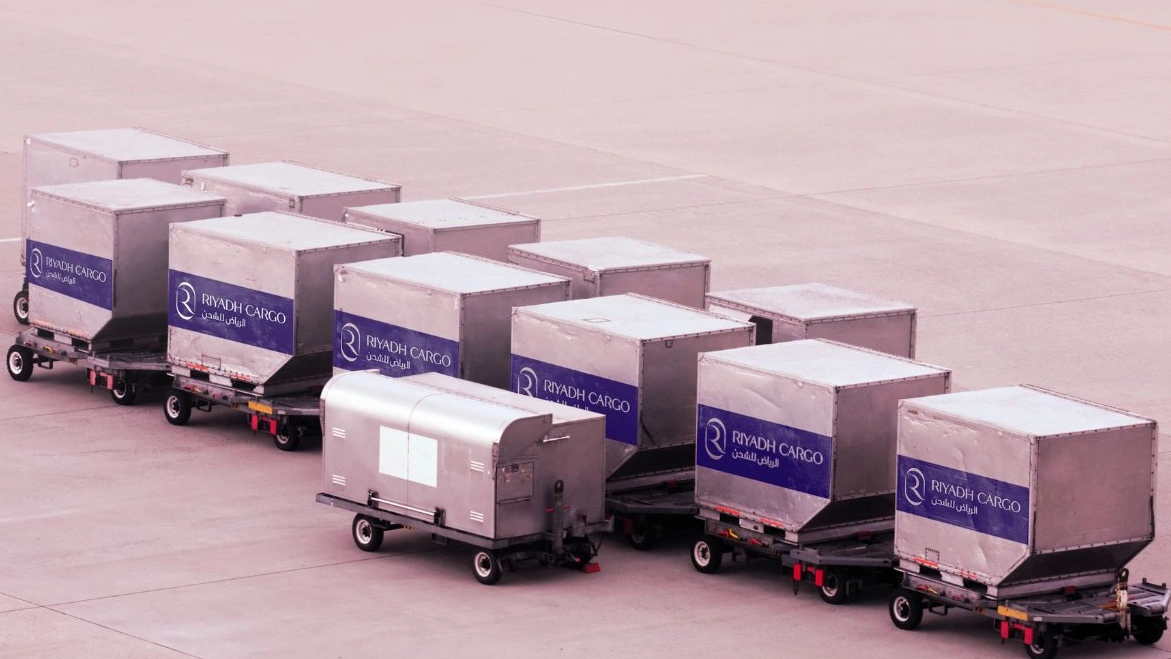
Cargo Strategy Anchors the New Route
Cargo remains central to Riyadh Air’s commercial plans, and the Mumbai route strengthens that side of the business by adding belly-hold capacity between two major trade hubs. Freight forwarders moving pharmaceuticals, electronics, e-commerce shipments, and other time-sensitive goods stand to benefit from the daily widebody frequency.
Riyadh Cargo, the airline’s freight division launched in January 2026, has been building out its network through partnerships rather than a dedicated freighter fleet. Earlier this year it appointed General Sales and Service Agent partners across India, Egypt, and the United Arab Emirates to support its international cargo expansion. It also recently signed an interline agreement with Saudia Cargo to expand routing options and improve cargo connectivity for shippers moving goods through Saudi Arabia.
This belly-hold approach lets Riyadh Cargo grow in step with the passenger network rather than requiring separate freighter infrastructure. Every new passenger route, including Mumbai, automatically adds cargo capacity without additional investment in dedicated aircraft. That model mirrors the airline’s broader Vision 2030 mandate, which ties Riyadh Air’s growth to Saudi Arabia’s ambition to become a global logistics and trade hub.

.jpg)