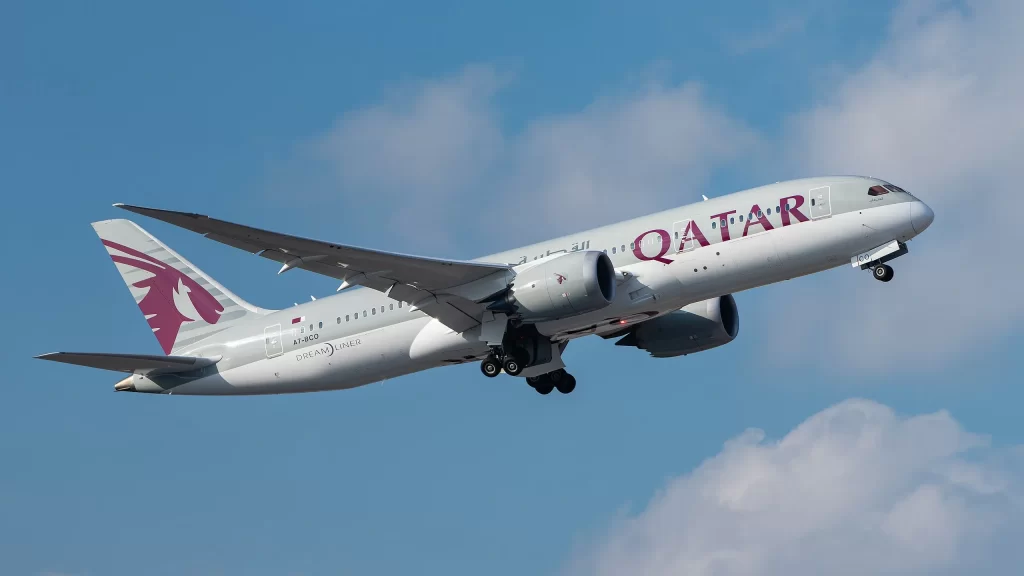
Qatar Airways (QR) has been granted permission to open a local branch in Libya, Libya’s Ministry of Economy and Trade announced on July 25, 2026. The Ministry said the approval moves the airline closer to resuming flights between Doha and Tripoli, ending a suspension that has lasted for roughly 12 years.
Ministry media officer Imad Ashour said the branch approval reflects Libya’s push to attract international carriers back into the country. The move sits inside a broader effort by Libya’s transitional government to reopen the country’s airspace to foreign airlines after more than a decade of civil conflict. A final flight resumption date has not been confirmed and still depends on further operational and regulatory steps.
What Libya’s Ministry Approved
The Ministry of Economy and Trade confirmed that Qatar Airways can now establish a registered commercial presence inside Libya, a standard prerequisite for an airline to sell tickets, staff a local office, and coordinate ground handling before launching service. Ashour said the step reflects the Ministry’s “ongoing commitment to creating a business climate that attracts international investments and companies.” He added that the return of a major global carrier signals growing confidence among international firms in Libya’s business environment.
Ashour also said the branch approval would boost air traffic and support trade and tourism by expanding travel options between Libya and international markets. The Ministry framed the decision as part of a wider package of economic reforms meant to streamline administrative procedures for foreign companies operating in Libya. No specific launch date for flights was given in the Ministry’s statement.
Ashour emphasized that the Ministry continues to work on reforms aimed at improving Libya’s investment climate more broadly. He said these efforts are expected to yield positive results for the national economy and improve the quality of services available to citizens and the business sector. The Ministry described the Qatar Airways decision as evidence that Libya’s business environment is gradually improving, even as the country continues to operate under a transitional government structure.
A 12-Year Absence: Qatar Airways’ History in Libya
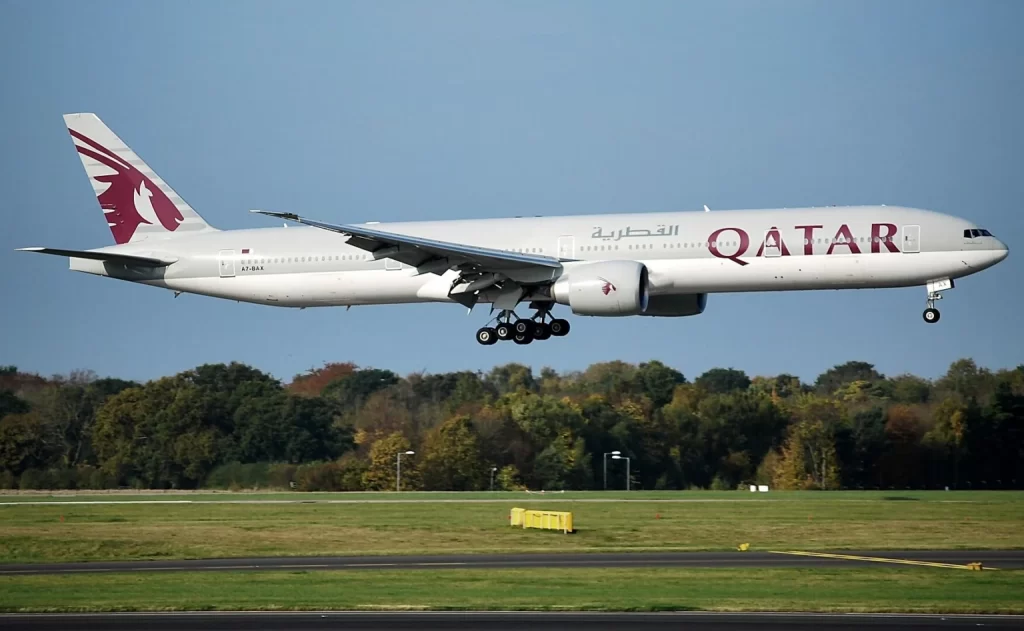
Qatar Airways last operated scheduled flights to Libya around 2014, when militia unrest forced the airline to abandon the market along with most other international carriers. In one incident during that period, armed groups shut down the airline’s Tripoli office and forced a Qatar Airways aircraft to abort its landing, according to reporting from ch-aviation at the time. Global airlines broadly withdrew from Libyan airspace that same year as fighting intensified across the country.
The two sides began working toward a return years later. Libya signed an initial air services agreement with Qatar in April 2024, followed by an updated 2024 Air Services Agreement in February 2025, according to Libya Herald’s archive of the process. Libya’s transport minister said in May 2024 that flights were expected to resume with Qatar Airways and Royal Jordanian, though that timeline slipped by more than a year.
Libya’s Wider Diplomatic Push to Reopen its Airspace
The Qatar Airways approval is one piece of a broader Libyan campaign to rebuild international air links. Libya and the United Arab Emirates signed a memorandum of understanding in February 2025 to lift restrictions on passenger and cargo air transport between the two countries. That MoU was signed on the sidelines of the ICAO Global Implementation Support Symposium in Abu Dhabi, alongside a Libyan Ministry statement noting similar agreements already reached with Tunisia, Egypt, Turkey, Jordan, Malta and Italy.
Qatar’s involvement in Libya extends beyond flights. Libyan Prime Minister Abdul Hamid Aldabaiba witnessed the signing of a separate memorandum of understanding in February 2025 between the Libyan Investment Authority, Libya’s Ministry of Transport, and Qatari construction firm Urbacon to prepare an investment study for Tripoli International Airport. That study followed the collapse of an earlier reconstruction contract with Italy’s Aeneas Consortium, after Libya fell behind on payments and construction stalled.
Where would Qatar Airways Actually Land?
Tripoli International Airport has not handled scheduled commercial flights since it was severely damaged during fighting in 2014. In its place, Mitiga International Airport (MJI), a converted military base roughly 8 kilometres east of central Tripoli, has served as the city’s sole international gateway since 2018. MJI is the same airport where Libya’s Army Chief, Lieutenant General Mohammed Ali Ahmed al-Haddad, was headed to before he was killed when a private Dassault Falcon 50 business jet he was aboard crashed. Turkish Airlines, ITA Airways and other carriers that have returned to Libya in recent years have all operated through Mitiga rather than the still-unfinished main airport.
That gives Qatar Airways two separate infrastructure questions to navigate. The airline needs Mitiga to be ready for its own operations in the near term, while Libya’s Qatari-backed investment study for the full Tripoli International Airport rebuild remains a longer-term, unfinished project. Both facilities fall under the same civil aviation authority that granted Qatar Airways its branch approval this week.
What Still Stands in The Way
Libya’s airspace remains formally flagged as high-risk by European regulators, which will shape how and when any resumed Qatar Airways service can actually operate. The European Union Aviation Safety Agency extended its Conflict Zone Information Bulletin for Libya until January 31, 2027, citing the continued fragility of the country’s security situation and the presence of competing authorities and armed groups. EASA classifies Libyan airspace below flight level 320 as high-risk, though it now permits flights approaching coastal airports from the sea under specific coordination conditions.
Qatar Airways is not an EU carrier, so the EASA bulletin functions as a recommendation rather than a binding restriction on the airline itself. Still, the advisory reflects the same underlying security conditions that Libya’s own Ministry of Economy and Trade is trying to offset through steps like the Qatar Airways branch approval. Libyan Airlines and several other Libyan carriers remain separately barred from EU airspace under a long-standing EU Air Safety List designation.
The coastal-approach exception in EASA’s bulletin is relevant to any airline weighing a Tripoli restart, since Mitiga sits close to the shoreline. Carriers that already fly there, including Turkish Airlines and ITA Airways, generally operate under similar sea-approach protocols rather than routing through Libya’s interior airspace. Any Qatar Airways service would likely follow the same operational pattern once regulatory approvals and ground arrangements are complete.



.jpg)