

Taking Flight with Solar Energy: The Benefits of Solar Panels in Aircraft
Aviation accounts for approximately 2.5 percent of global CO₂ emissions and roughly 4 percent of total climate forcing when contractions from condensation trails are included. Despite being a relatively modest share of the global total, this represents the hardest-to-decarbonise segment of the transport sector, because the energy density of jet fuel is approximately 43 megajoules...
Read More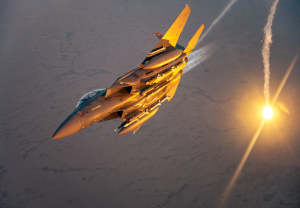
3 Levels, 12 Human-Factor Risks and 1 Critical Skill: Understanding Situational Awareness in Aviation
ICAO attributes approximately 75 percent of all aircraft accidents to lapses in human performance, and within that category, the loss of situational awareness ranks among the most frequently cited contributing factors in accident investigations across the world. The term entered formal aviation parlance in the late 1980s, when psychologist Mica Endsley — who would later...
Read More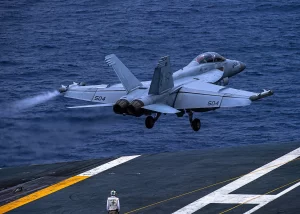
ADSBexchange Tracks 15,000+ Aircraft Without Filters: How the World’s Uncensored Flight Tracker Works
ADSBexchange is the world’s largest community-driven network of unfiltered Automatic Dependent Surveillance-Broadcast (ADS-B), Mode S, and Multilateration (MLAT) flight data feeders — a cooperative of volunteers who operate receivers at their homes and businesses worldwide, streaming live aircraft position, altitude, ground speed, and identification data to a central platform that displays it to anyone, without...
Read More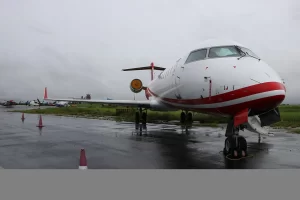
How To Keep Your Plane Air-Worthy
An aircraft is airworthy when it conforms to its approved type design and is in a condition for safe operation. An aircraft that has been modified without approved data no longer conforms to its type design, even if every component is mechanically sound; an aircraft that conforms perfectly to its type design but has a...
Read More
How Airlines Really Make Money Beyond Ticket Sales
IATA’s June 2025 industry outlook projects total 2025 airline revenues at a record USD 979 billion, yet total expenses at USD 913 billion. This is an industry-wide net profit margin of just 3.9 percent. Even the small Himalayan country named Nepal, which houses the most dangerous airport in the world – Lukla Airport– aviation contributes...
Read More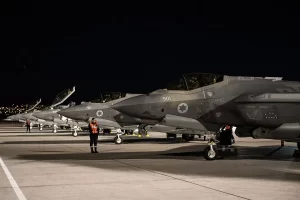
The Aviation Industry Is at a Digital Turning Point: AI, Digital Twins and Biometrics Are Changing How Airlines Operate
Today we reported that Air India (AI) was deploying AI to save $12 million by deploying 30 AI tools. Only a few years ago, we had covered the fact that collectors had made a digital archive of thousands of airsickness bag – there’s a virtual museum of barf bags. These developments give us a sense...
Read More
Inside Europe’s 7 Largest Air Force Installations: Size, Aircraft, and Strategic Missions
When Ukraine Russia War started in 2022, little did we have any idea that in a matter of four years, the world would see escalation in tensions such as a Russian Ilyushin Il-76 landing in Venezuela, US’ threats to take over Greenland, the Israel-Palestine conflict that left the Ben Gurion Airport closed for foreign airlines...
Read More
Nyoma Airbase: How India Built one of the World’s Highest Operational Fighter Base at 13,700 Feet
On November 13, 2025, the Indian Air Force (IAF) officially operationalized the Mudh-Nyoma Air Force Station in eastern Ladakh, at an elevation of approximately 13,700 feet. Air Chief Marshal A. P. Singh inaugurated the upgraded facility by landing a C-130J transport aircraft on its new runway, marking an important addition to India’s military infrastructure along...
Read More
Lukla Airport: The History and Engineering Behind the World’s Most Challenging Airport
The history of Lukla Airport (LUA) stretches back in the 1970s, when the original runway was gravel with a sparse grass covering. A siren would warn of an approaching aircraft so the cattle could be cleared. This was also the case when the first aircraft landed in Lukla. Cattle had to be cleared off the...
Read More