

Airline Seat Belt Regulations Through the Decades: What Changed and Why
It can be a surprise to learn that students of aviation have had to write scientific papers titled “Seat Belts are not dangerous”. While this may sound farcical, or even facetious, the author of the paper was Eugene F. Duboid, an Emeritus Professor of Physiology at the Cornell University Medical College. Dubois was also the...
Read More
Top 5: female military pilots who made history and broke records
Many female pilots have broken several aviation records. One of them is Evelyn Bryan Johnson, a colonel in the Civil Air Patrol, who was nicknamed “Mama Bird”. She logged 57,635.4 flying hours, equivalent to almost seven years of flight time. She also trained more pilots than anyone in history. Evelyn followed the footsteps of Raymonde...
Read More
Tupolev Tu-144 – The Soviet Concorde: Why the Supersonic Jet Failed?
The name is Tupolev Tu-144. In Russian, you’d call it Туполев Ту-144. The NATO reporting name for the Tu-144 is “Charger”. You might have other labels thrown at it: Concordski or the communist Concorde. For NASA, it was “a supersonic flying laboratory”. Given that the Tupolev Tu-144 was the first supersonic airliner to take to...
Read More
Ed White: The First American Walk(er)
The momentous occasion of Ed White performing the first American spacewalk was captured by the co-pilot of Gemini 4, James A. McDivitt. The caption of the photo should befittingly be Ed White’s joyous words while performing the “extra-vehicular activity,” (aka Space walking): “I feel like a million dollars”. Ed also commented that coming back to...
Read More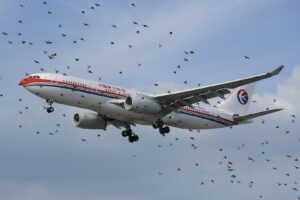
Bird Strike Prevention: Technologies and Prevention Strategies
Bird strikes, or collisions between birds and aircraft, began when what is now referred to as “mechanical birds” tread upon the space of birds. The deadliest bird strike on a fixed-wing aircraft was recorded on October 4, 1960, and this incident involving a Lockheed L-188 Electra took the lives of 62 passengers on board. In...
Read More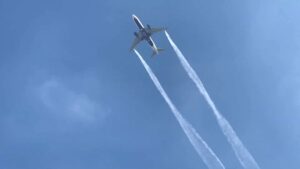
Fuel Dumping: What Is It and How Bad is it for the Environment?
Sometimes, the wispy white trails that follow an aircraft on its flight aren’t contrails but fuel that has been dumped by aircraft. This is also known as fuel jettison. Fuel dumping is a last-resort maneuver whereby a plane releases fuel in mid-air. This may seem environmentally unfriendly, but it is a critical safety measure in...
Read More
Concorde Was Faster Than Sound. But at What Environmental Cost?
The iconic supersonic jet, Concorde, (which probably had an even more iconic flight number: BA001) concluded its 27-year service with a final landing at Filton runway in November 2003. An absence of commercial viability, public concerns about the plane’s noise ( the sonic boom ) alongside high levels of pollution, led to its demise. Concorde...
Read More
Flygskam Tried to Stop People from Flying. Did It Actually Work?
In 2018, a Swedish social movement called flygskam, meaning “flight shame,” set out to make people feel guilty about boarding a plane. Seven years later, Sweden has scrapped the aviation tax it introduced at the movement’s peak, and global air travel closed out 2024 at a record high, according to a report by Flight Global...
Read More
Tågskryt Wants People to Take Trains Instead of Planes. Is It Working?
The rise of sustainable travel, focusing on reducing our carbon footprint, brought about the concept of “flight shame”, which was better known as “flygskam”. Individuals who were concerned about the soaring levels of CO2 emissions associated with flights came up with another alternative movement known as ‘tågskryt’ – a word that is composed of the...
Read More