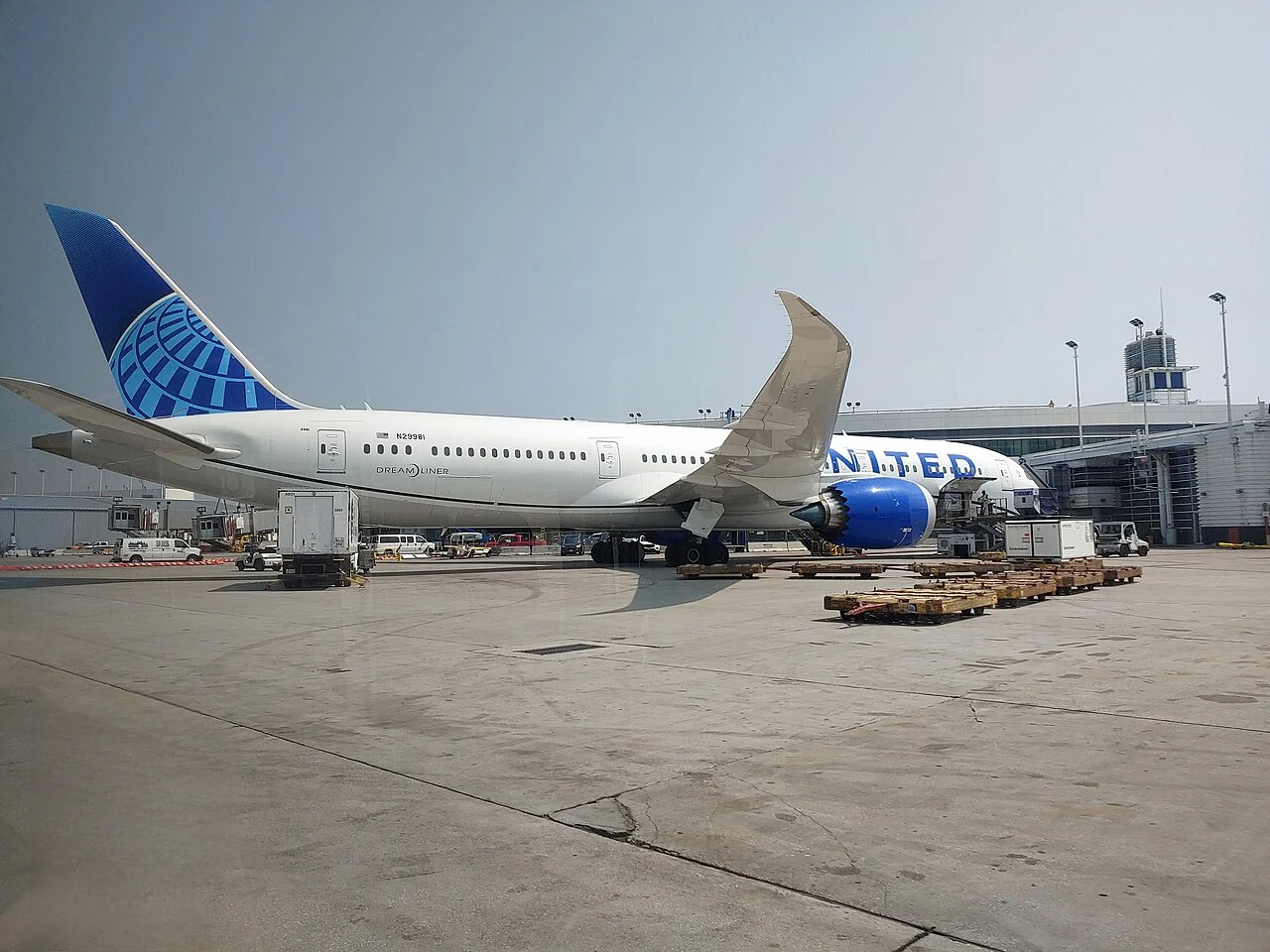
A communication breakdown between a departing business jet and air traffic control triggered a serious loss of separation near New York on July 8, after a private aircraft inadvertently crossed into the flight path of a United Airlines (UA) Boeing 787-10 Dreamliner approaching Newark Liberty International Airport (EWR).
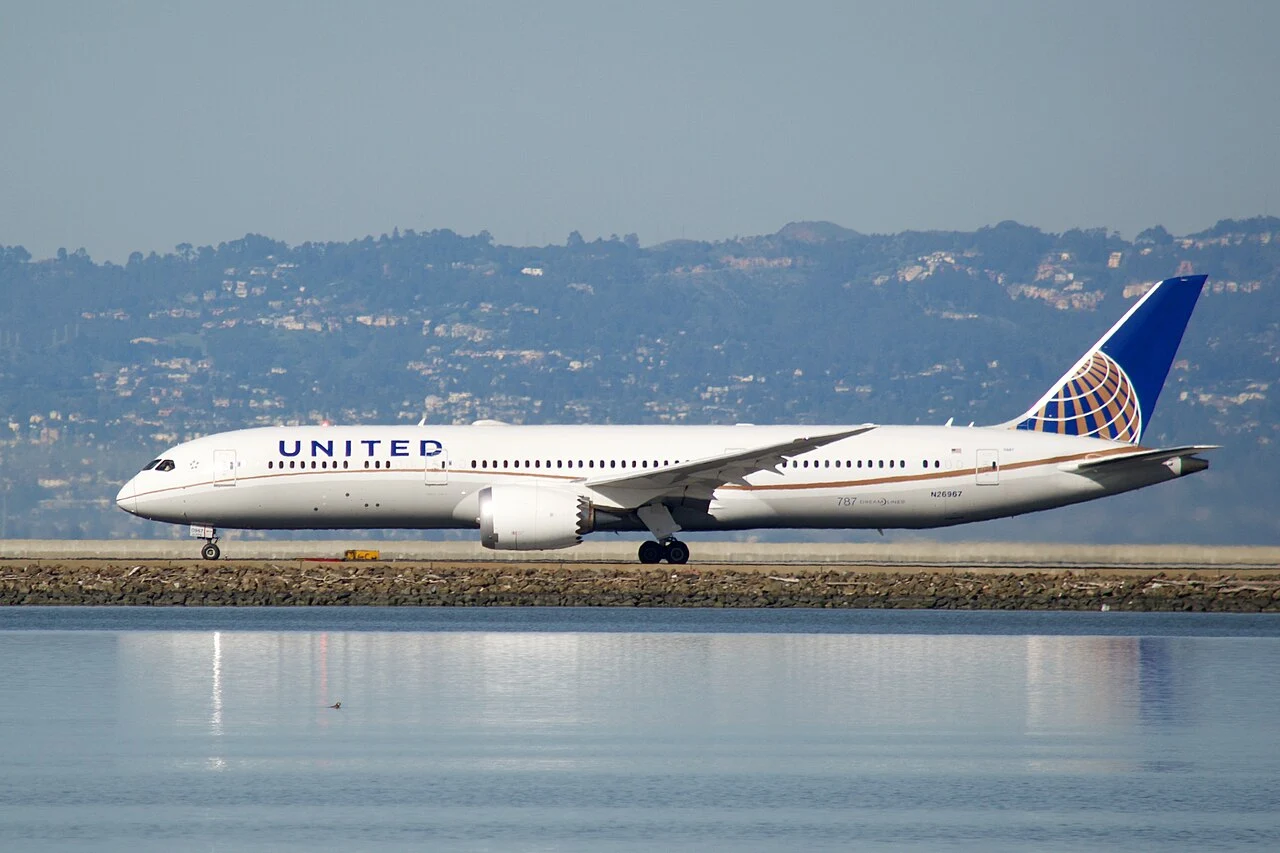
The incident involved a Hawker 800XP, registered N58DH, departing Teterboro Airport (TEB) for Mérida International Airport (MID), Mexico. At the same time, United flight UA1981 was arriving from Los Angeles International Airport (LAX) aboard a Boeing 787-10.
Although the aircraft remained safely separated, the conflict escalated enough for the United flight crew to receive a Traffic Collision Avoidance System (TCAS) Resolution Advisory (RA), requiring immediate evasive action before continuing safely.
The exchange, which lasted around eight minutes, was captured in air traffic control recordings later published by the YouTube channel You Can See ATC, accompanied by a graphical reconstruction of the event.
Miscommunication Quickly Escalated into a Serious Conflict
Shortly after departing Teterboro, the Hawker crew encountered repeated difficulties following departure instructions. Throughout the recording, controllers repeatedly issued heading and altitude corrections as the aircraft deviated from its assigned route.
The controller ultimately expressed frustration, telling the pilot that he had “disregarded every single instruction.”
The audio suggests the incident stemmed from communication errors rather than any technical malfunction. English also appeared not to be the pilot’s primary language, making rapid radio exchanges in New York’s notoriously busy airspace even more challenging.
Instead of remaining on its assigned departure path, the Hawker gradually drifted toward the arrival corridor being used by aircraft inbound to Newark.
United 787 Forced to Respond to Collision Warning
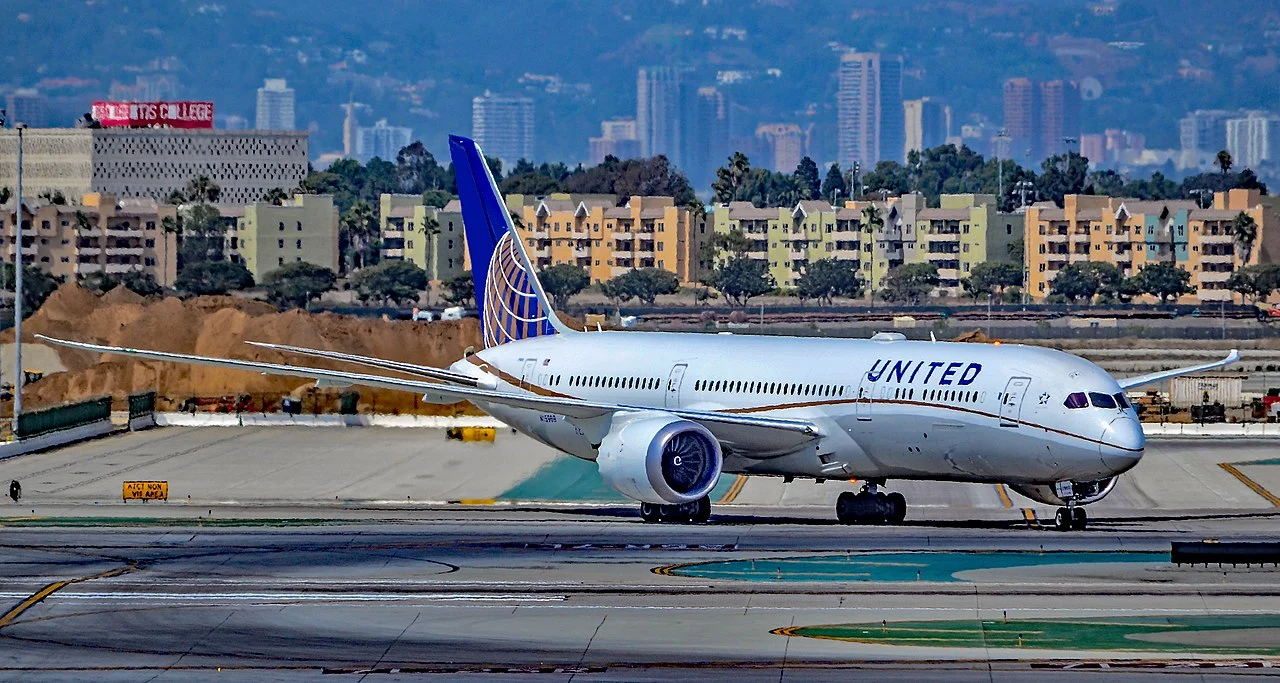
As the private jet entered the approach path, the onboard collision avoidance system aboard the United Boeing 787-10 detected the developing conflict.
The crew received a TCAS Resolution Advisory—a mandatory instruction generated by the aircraft’s Traffic Collision Avoidance System that pilots must immediately obey.
Unlike a standard traffic advisory, an RA directs pilots to climb or descend in order to restore safe separation from another aircraft.
Following the alert, the United crew discontinued the approach and executed a go-around before being resequenced for another landing attempt. Both aircraft ultimately continued their flights without injuries or damage.
ATC Audio Reveals Several Contributing Factors
While the Hawker pilot acknowledged mishearing a critical instruction, the recordings indicate the situation developed through several compounding errors rather than a single mistake.
Among the key issues identified from the ATC communications were:
- The departure controller instructed the Hawker to fly heading 260 degrees, but the pilot read back heading 200. That incorrect readback was not challenged, allowing the aircraft to continue on the wrong course.
- Communication became increasingly difficult as lengthy instructions were delivered despite the pilot appearing to struggle with radio phraseology.
- Controllers continued lengthy conversations with other aircraft on the already congested frequency while the Hawker remained uncertain about its assigned clearance.
- At one stage, the pilot asked whether he should continue climbing to 15,000 feet instead of maintaining the assigned 6,000 feet. That question went unanswered before additional corrections followed.
The pilot later admitted the heading had been copied incorrectly and apologized during the exchange.
ATC / Pilot Communication
| Time | Station | Transmission |
|---|---|---|
| 00:15 | TEB TWR | “N58DH, winds are calm, Runway 24 cleared for takeoff.” |
| 00:18 | N58DH | “24 cleared for takeoff, 58DH, thank you.” |
| 00:25 | TEB TWR | “58DH, caution wake turbulence, heavy Dreamliner descending above you. Wind [unclear]. Contact Departure 119.2.” |
| 00:36 | N58DH | “58DH, contact Departure.” |
| 00:42 | N58DH | “Departure, November 58DH, [unclear — altitude report].” |
| 00:49 | NY DEP | “Citation 58DH, Newark Departure, radar contact. Fly heading 260, climb and maintain 6,000.” |
| 00:55 | N58DH | “260, climb and maintain 6,000, 58DH.” |
| 01:03 | NY DEP | “N58DH, stop your climb immediately. Stop your climb immediately.” |
| 01:06 | N58DH | “Stopping climb, right turn heading 280.” |
| 01:12 | NY DEP | “58DH, turn right immediately. Turn right heading 280. Stop the climb now.” |
| 01:18 | N58DH | “[unclear], 58DH.” |
| 01:20 | NY DEP | “Stop the climb now, N58DH. Stop the climb now. Turn right, turn right heading 290. What are you doing?” |
| 01:27 | N58DH | “290, 58DH, stopping climb.” |
| 01:32 | UAL1981 | “Tower, United 1983 — or 1981 — responding to an RA on 22L.” |
| 01:37 | ATC | “United 1981, roger. Just turn to your right. [unclear] climb now and respond to the RA.” |
| 01:45 | UAL1981 | “Yeah, we have a TCAS RA.” |
| 01:48 | UAL1981 | “Okay, 1981 Heavy, we’d like to go around now. We’re clear of conflict.” |
| 01:52 | ATC | “United 1981, roger. Climb and maintain 2,500 for now.” |
| 01:57 | UAL1981 | “2,500, United 1981 Heavy, runway heading for now.” |
| 02:00 | ATC | “For now, runway heading. [unclear] coordinate with Departure.” |
| 02:01 | UAL1981 | “Roger.” |
| 02:05 | ATC | “United 1981, traffic is off to your right now, about 2 o’clock and a mile. [unclear].” |
| 02:14 | NY DEP | “N58DH, climb and maintain 6,000.” |
| 02:18 | N58DH | “6,000, 58DH. Which heading?” |
| 02:25 | NY DEP | “N58DH — 58DH, climb and maintain 6,000, fly heading 250 now.” |
| 02:30 | N58DH | “250, 6,000, 58DH.” |
| 02:34 | NY DEP | “United 1981 Heavy, continue runway heading, climb and maintain 4,000 now.” |
| 02:40 | UAL1981 | “United 1981, runway heading, up to 4,000 now.” |
| 02:46 | UAL1981 | “United 1981 Heavy.” |
| 02:49 | ATC | “United 1981, Newark.” |
| 02:52 | NY DEP | “N58DH, sir, I told you to fly heading 260 and climb to 6,000. What were you doing?” |
| 02:58 | N58DH | “We copied 200. We were cleared 200 and 6,000, 58DH.” |
| 03:05 | ATC | “United 1981, Newark.” |
| 03:07 | ATC | “United 1981 Heavy, Newark Approach.” |
| 03:09 | UAL1981 | “1981 Heavy, we’re climbing 3,000 for 4,000, runway heading.” |
| 03:13 | NY DEP | “United 1981 Heavy, Newark Departure, roger. Climb and maintain 5,000.” |
| 03:18 | UAL1981 | “We’re climbing to 5,000, yeah.” |
| 03:25 | NY DEP | “N58DH, yes, I told you to fly heading 260 and climb to 6,000. You made a whole left turn due south.” |
| 03:34 | N58DH | “Roger, sir, we apologize. We copied 200, and that’s why we stopped the climb like you told us.” |
| 03:42 | N58DH | “At this moment we’re flying 250, climbing to 6,000 feet.” |
| 03:46 | NY DEP | “Okay.” |
| 03:47 | NY DEP | “So you’re saying you thought that I said heading 200?” |
| 03:51 | N58DH | “Affirmative, we heard 200. It’s our fault, it was 260. Apologize for that.” |
| 03:57 | NY DEP | “Don’t worry about it, N58DH, everybody’s fine now. Just climb up to 6,000, okay?” |
| 04:01 | N58DH | “Affirmative, sir, climbing to 6,000. Thank you.” |
| 04:06 | NY DEP | “And United 1981, the reason for that cancelled approach — traffic that departed Teterboro. He had turned left instead of going west.” |
| 04:15 | NY DEP | “But you still had 1,000 feet between the both of you, so we’re good.” |
| 04:19 | UAL1981 | “1981 Heavy, thank you, appreciate it.” |
| 04:22 | NY DEP | “No problem. United 1981, turn right heading 250.” |
| 04:26 | UAL1981 | “Right 250, United 1981 Heavy.” |
| 04:29 | NY DEP | “United 1981, were you responding to an RA?” |
| 04:31 | UAL1981 | “Yes, we had a TCAS RA.” |
| 04:33 | NY DEP | “Okay, roger. Traffic was below you. It was a — not sure if you’ll have to file this — but a Hawker, a Hawker 25B.” |
| 04:41 | UAL1981 | “Okay, yeah, we will have to file. And you said it was a Hawker?” |
| 04:45 | NY DEP | “It was a Hawker 25B that departed Teterboro, and he turned left, he turned southbound, right underneath you on the final as you were going down to 22 [unclear]. He stopped at 1,400 — that’s the highest that he got.” |
| 04:56 | UAL1981 | “1981 Heavy, thank you for the info.” |
| 04:58 | NY DEP | “You’re welcome, United 1981.” |
| 05:00 | NY DEP | “I’m going to put you back in sequence for Newark, for the ILS Runway 22L, okay?” |
| 05:05 | UAL1981 | “Yes, sir, perfect. Thank you, 1981.” |
| 05:08 | NY DEP | “November 58 Delta Hotel, sharp left turn — turn left heading 150, direct NECCK when able.” |
| 05:14 | N58DH | “150, and direct.” |
| 05:20 | NY DEP | “58 Delta Hotel, direct NECCK, climb and maintain 6,000.” |
| 05:25 | N58DH | “Direct NECCK, and…” |
| 05:29 | N58DH | “1,500 for [unclear], 58 Delta Hotel.” |
| 05:32 | NY DEP | “November 58 Delta Hotel, NECCK should be on your route, sir. November, Echo, Charlie, Charlie, Kilo.” |
| 05:40 | N58DH | “November Echo Charlie Charlie Kilo, November 58 Delta Hotel.” |
| 05:47 | NY DEP | “November 58 Delta Hotel, I need you turning left now. You’re about to go into the downwind for Newark, sir.” |
| 05:53 | N58DH | “Turning left, November 58 Delta Hotel.” |
| 05:57 | NY DEP | “United 1981, turn right heading 290.” |
| 06:00 | UAL1981 | “Right 290, United 1981 Heavy.” |
| 06:05 | NY DEP | “United 1981, we got a good spot for you. Turn right heading 010, and increase speed to 250 when able.” |
| 06:11 | UAL1981 | “Okay, right to 010, we’ll fix the speed to 250, United 1981.” |
| 06:16 | NY DEP | “November 58 Delta Hotel, hang on until you’re on course. Let me know when you’re on course to NECCK.” |
| 06:23 | N58DH | “We’re flying NECCK. We didn’t have it on our flight plan, I don’t know why.” |
| 06:27 | NY DEP | “November Echo Charlie Charlie Kilo. [unclear] flying direct south.” |
| 06:35 | N58DH | “And we continue our climb to 15,000, correct?” |
| 06:39 | NY DEP | “Negative, November 58 Delta Hotel. The heading is 150. Stop your climb now — stop your climb right now and maintain 6,000, sir.” |
| 06:47 | NY DEP | “You have disregarded every single instruction. Maintain 6,000, fly heading 150.” |
| 06:53 | N58DH | “6,000 and 150 heading, 58 Delta Hotel.” |
| 07:02 | NY DEP | “November 58 Delta Hotel, for a possible pilot deviation, just advise when you’re ready for a phone number.” |
| 07:11 | N58DH | “We’re ready to copy, 58 Delta Hotel.” |
| 07:14 | NY DEP | “Okay, November 58 Delta Hotel. First, are you going direct to NECCK now?” |
| 07:19 | N58DH | “Affirmative, direct NECCK, 58 Delta Hotel.” |
| 07:22 | NY DEP | “Okay.” |
| 07:25 | NY DEP | “The number for November 58 Delta Hotel, the phone number is… [not captured in source audio]” |
| 07:34 | NY DEP | “November 58 Delta Hotel, contact New York Departure 120.85. Have a safe rest of your day.” |
| 07:42 | N58DH | “120.85, 58 Delta Hotel.” |
Congested New York Airspace Offers Little Room for Error
The airspace surrounding Teterboro and Newark is among the busiest and most complex in the United States. Aircraft departing Teterboro routinely operate beneath and alongside streams of arrivals bound for Newark, leaving little tolerance for navigational mistakes.
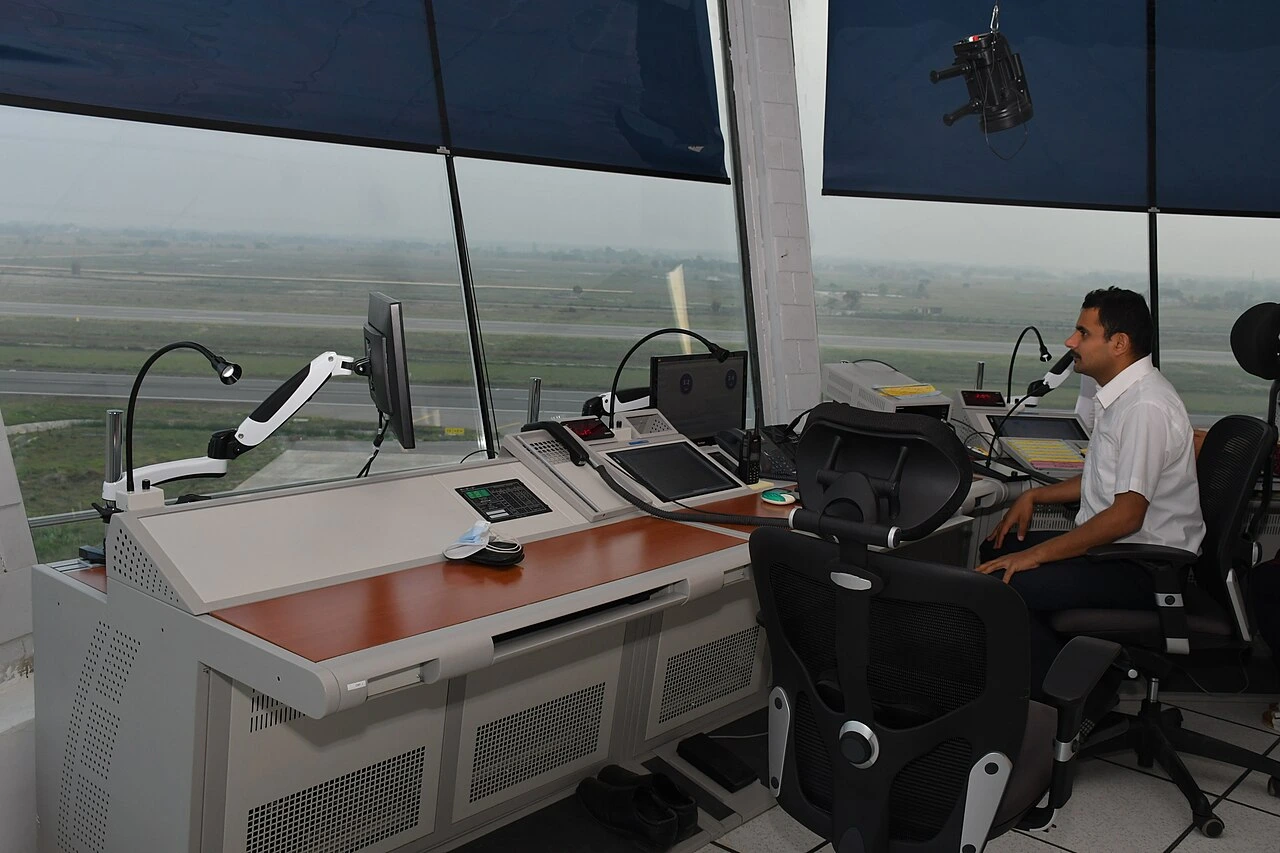
Controllers rely heavily on accurate readbacks and immediate compliance with assigned headings and altitudes to maintain safe separation between aircraft. Even a minor misunderstanding can rapidly develop into a conflict requiring intervention by onboard safety systems.
Bottom Line
The July 8 incident illustrates how several small communication errors can quickly compound in one of the world’s busiest terminal environments.
The Hawker crew acknowledged copying an incorrect heading, while the controller did not identify the erroneous readback before the aircraft deviated from its assigned route. That combination ultimately placed the business jet in the path of United flight UA1981, prompting the Boeing 787’s TCAS to issue a Resolution Advisory and forcing the crew to abandon its approach.
Although both aircraft landed safely, the event serves as another reminder that clear radio communication, accurate readbacks and prompt error correction remain fundamental safeguards in modern air traffic operations.


.jpg)
.jpg)
