ICAO attributes approximately 75 percent of all aircraft accidents to lapses in human performance, and within that category, the loss of situational awareness ranks among the most frequently cited contributing factors in accident investigations across the world.
The term entered formal aviation parlance in the late 1980s, when psychologist Mica Endsley — who would later become Chief Scientist of the United States Air Force — published a theoretical framework that defined it, decomposed it into three hierarchical cognitive levels, and positioned it as the foundational construct behind every decision a pilot, controller, or aviation worker makes under operational pressure.
Endsley formally defines situational awareness as “the perception of the elements in the environment within a volume of time and space, the comprehension of their meaning, and the projection of their status in the near future“.

Understanding Situational Awareness Through Endsley’s Framework
Mica Endsley first published her model of situational awareness in 1988, establishing three hierarchical cognitive levels: perception, comprehension, and projection. These levels are not parallel processes, as each builds on the one before.
A failure at Level 1 cascades downward to compromise everything that follows. This framework remains the dominant analytical reference in aviation human factors research worldwide, cited in regulatory guidance, accident investigation reports, and flight crew training curricula.
Level 1 — Perception is the most basic: the pilot, controller, or technician detects the raw status of the environmental elements relevant to the task at hand. The first step involves the basic awareness derived from:
- monitoring
- cue detection
- recognition processes
………..perceiving the status, attributes, and dynamics of relevant elements such as objects, events, people, systems, and environmental factors, along with their current states. A pilot who fails to notice a sinking altimeter trend, or a controller who fails to register an aircraft blip drifting off track, has already lost Level 1 SA. Everything upstream of that failure becomes unreliable.
Level 2 — Comprehension demands that the operator not merely perceive a data point but understand what it means in the context of the current mission and its goals. The second level indicates the comprehension of perceived environmental factors with respect to the aviator’s objectives.
Perceiving that airspeed is declining is Level 1; understanding that it indicates an impending aerodynamic stall and that the aircraft is in danger is Level 2.
Level 3 — Projection is the most cognitively demanding: the operator uses current comprehension to anticipate how the situation will evolve in the near future and what decisions are therefore required now. The third level interprets the projection of forecasting the operating system for timely decision-making.
For an Air Traffic Controller (ATC), this means not just knowing where aircraft are but modelling where they will be in five, ten, and fifteen minutes, and sequencing them accordingly. For a captain on approach in low visibility, it means projecting what the terrain and approach path will look like in the next thirty seconds.
Why Aviation Demands the Highest Level of Situational Awareness
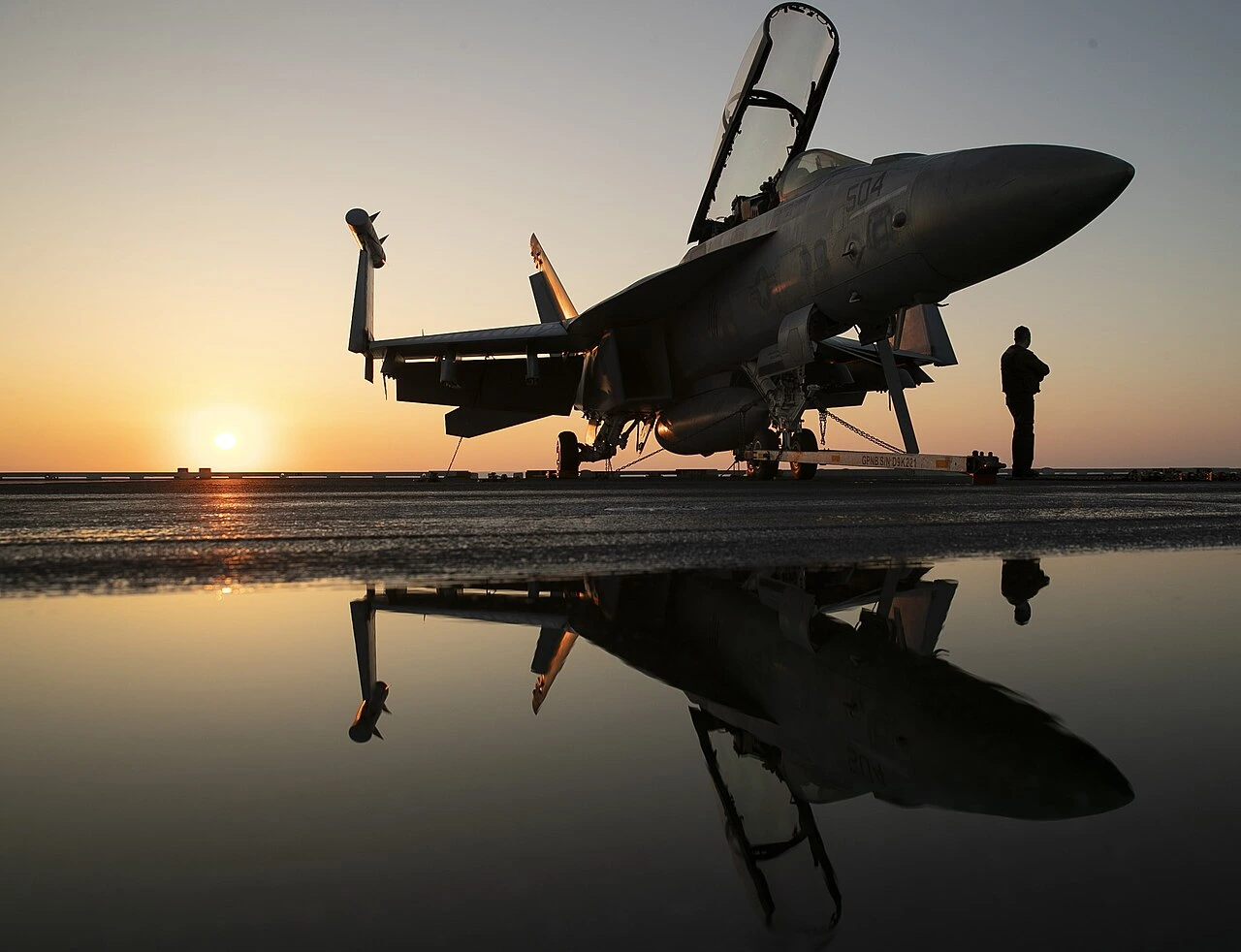
The aviation environment is unusual in the sheer density of variables it presents simultaneously to its operators. In a complex and fast-paced environment, situational awareness concerns a person’s comprehension of particular events or procedures. A military pilot must track threats, monitor aircraft system status, manage weapons, interpret weather, and anticipate threat reactions — concurrently, in real time, under physiological stress.
An air traffic controller must maintain a mental picture of every aircraft in a sector, their altitudes, their speeds, their flight plans, their intentions, and the dynamic interactions between all of them. A ground handler pushing back a widebody aircraft must simultaneously manage the towbar, communicate with the flight deck, monitor wing clearances, and stay alert to other traffic crossing the apron.
Inadequate situational awareness has been identified as one of the primary causal factors in NTSB aviation accident investigations attributed to human error or human factors. The NBAA Human Factors Working Group’s review of fifteen accident and incident reports found that a lack of situational awareness was a contributing factor in approximately 40 percent of cases. Pilot error accounts for approximately 53 percent of aircraft accidents overall, with mechanical failure at 21 percent and weather at 11 percent. Of that pilot error category, a disproportionate share traces to situational awareness failures rather than to a deficiency of procedural knowledge or stick-and-rudder skill.
The internal and external risk elements in aviation are numerous and compounding. Internal risks such as the following reside within the aircraft system itself:
- airworthiness status
- system malfunctions
- passenger conduct
- cargo condition (including dangerous goods)
- crew fatigue.
External risks include conflicting traffic, terrain proximity, weather trends, and the capacity constraints of ATC. When an operator loses the ability to track even one of these elements accurately, the system as a whole can spiral rapidly toward an outcome that no single safeguard prevents.
The FAA’s Dirty Dozen and How Situational Awareness Falls Apart in Aviation
Aviation’s human factors community has spent decades cataloguing the conditions that erode SA. The Federal Aviation Administration (FAA)‘s “Dirty Dozen” identifies twelve preconditions to human error that systematically compromise situational awareness. Fatigue and stress top the list in most operational analyses.
Attention and working memory are the critical cognitive resources that limit operators from acquiring and interpreting environmental information to form situational awareness. When either resource is depleted or overloaded, the cascade begins: perception narrows, comprehension becomes inconsistent, and projection fails entirely.
A pilot managing a dual engine malfunction while communicating with ATC while monitoring terrain approach while briefing a cabin crew member has placed extraordinary demands on both attentional bandwidth and working memory. This is why the industry’s response to situational awareness degradation under high workload has been to redesign cockpit information displays, rather than to assume that human cognitive capacity is infinitely elastic.
Ineffective communication, high workload, stress, fatigue, and challenging environmental conditions are among the most commonly identified contributors to SA loss in accident investigation findings worldwide. The conditions that precede human error also include time pressure, shift handover ambiguity, overconfidence in automation, and what researchers call “confirmation bias”: the tendency to interpret new information in ways that confirm an existing (and incorrect) mental model, rather than revising the model to accommodate the evidence.
The most significant loss of SA occurs when operators activate inappropriate mental models despite clear real-world evidence, a phenomenon that leads directly to confirmation bias and unwavering commitment to an incorrect course of action.
Situational Awareness Training: How Airlines and Regulators Are Responding
The industry’s response to the documented SA problem has evolved considerably since the post-EA401 era, when CRM was essentially invented in the late 1970s. Modern SA training in commercial aviation focuses on four primary competency areas, each targeting a different dimension of the problem.
For pilots specifically, SA training concentrates on technological enhancements such as moving maps, real-time traffic and weather displays, and enhanced preflight preparation — in addition to deepening knowledge of aircraft system limitations and the interactive effects of weather, airport status, and flight parameters.
The introduction of Electronic Flight Instrument Systems (EFIS) and advanced avionics in modern glass-cockpit aircraft has measurably improved SA under normal conditions, but it has also created new categories of failure: mode confusion, automation surprise, and over-reliance on technology that itself can fail. Research shows that the rate of fatal accidents attributed to loss of situational awareness resulting in aerodynamic stalls was 80 percent lower for modern EFIS-equipped aircraft compared to older instrumented types.

Situational Awareness Beyond the Cockpit in The 6G Aviation Future
The evolution of cockpit automation has added new complexity to the SA problem. As aircraft systems become more capable of managing routine flight tasks, pilots risk becoming monitors rather than operators.
The paradox of automation is well-documented: the more reliably a system performs, the less mentally engaged its operators become with its functioning; and the less engaged they are, the more catastrophically unprepared they are when it fails unexpectedly. Air France 447 was, in large part, a manifestation of this paradox.
Researchers at the University of Southampton have proposed a “distributed situational awareness” model that moves beyond individual cognition to argue that it is the sociotechnical system — comprising crew, cockpit design, avionics, and operating procedures together — that loses SA, not merely the individual. This perspective is gaining traction in regulatory circles.
It shifts the design imperative from training individuals to be more vigilant to designing systems that are harder to misread. Airbus’s post-AF447 introduction of the New Air and Inertia Automatic Data Switching function (NAIADS), which calculates airspeed from backup sensors when all Pitot tubes fail, represents exactly this kind of systemic response.
Endsley herself, reviewing critiques of her original model, has maintained that Level 3 projection and contingency planning remain the most challenging SA competencies to develop and the most consequential when absent.