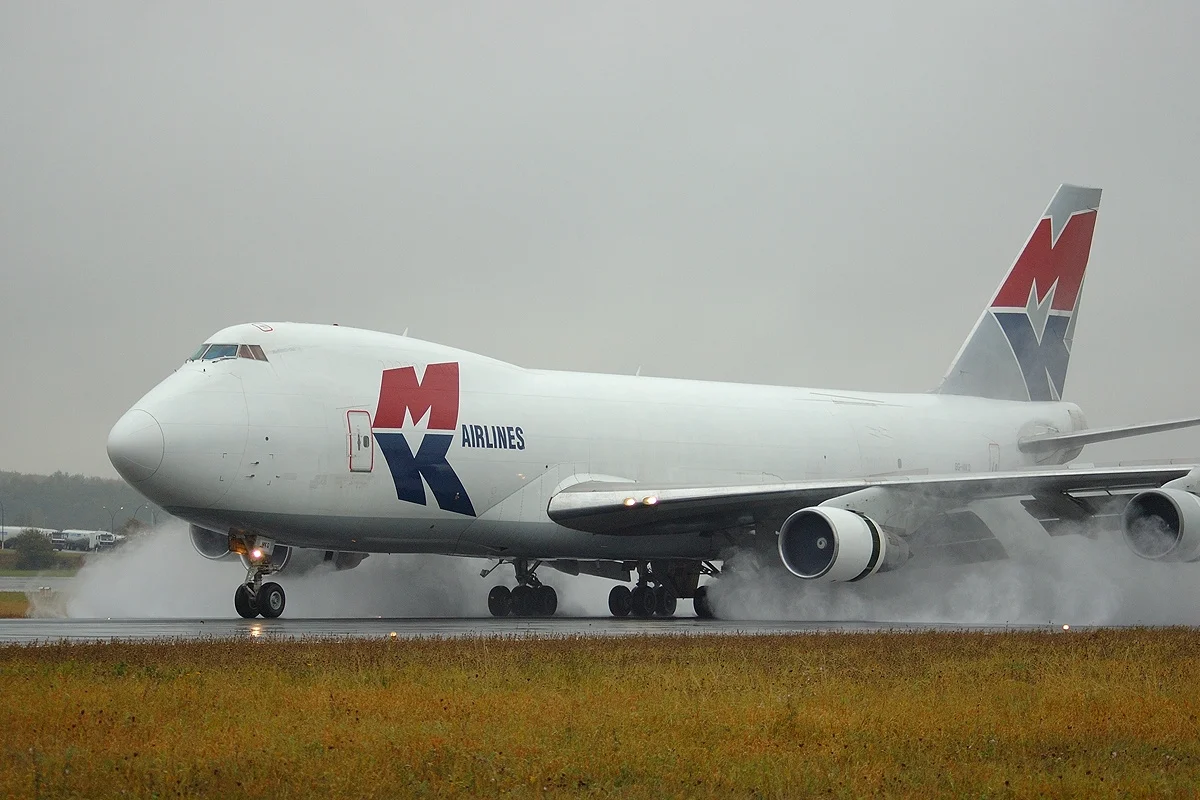
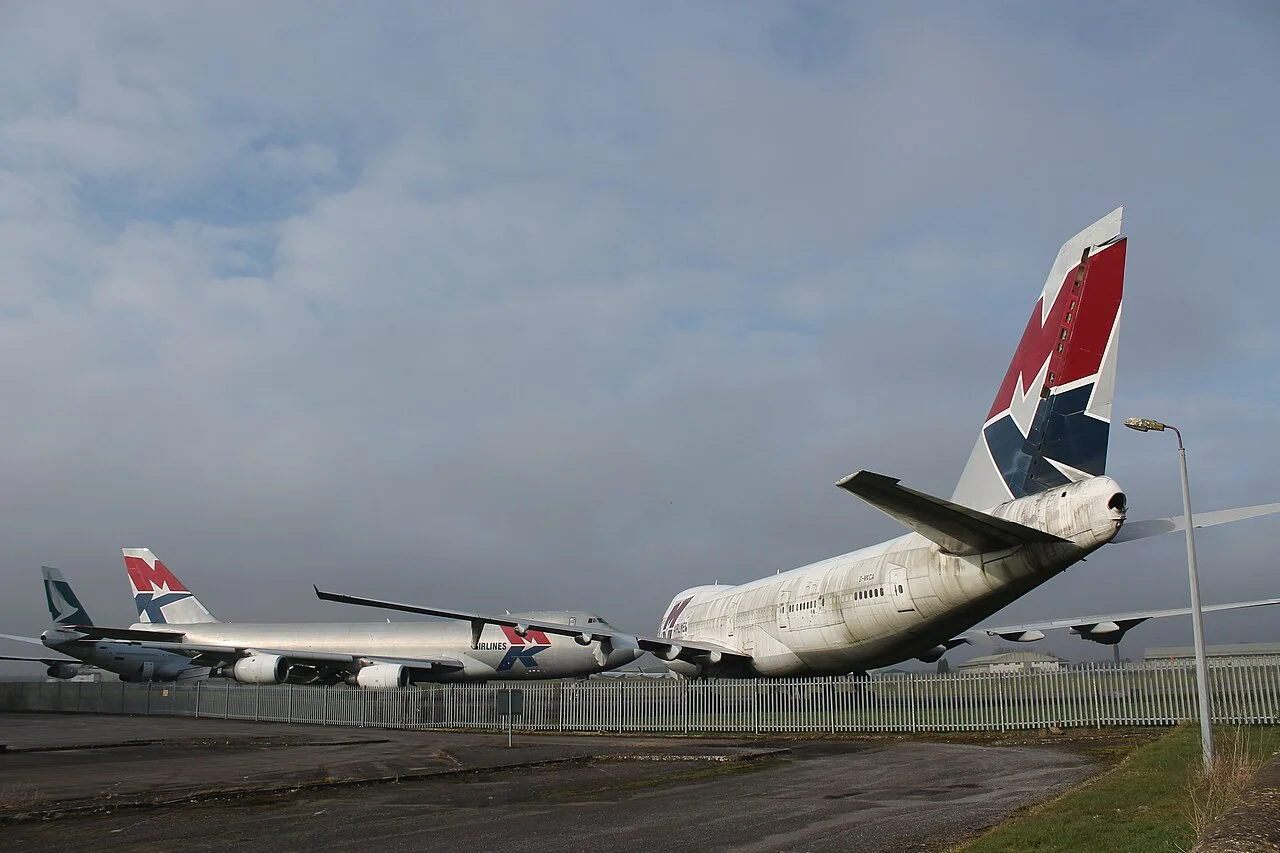
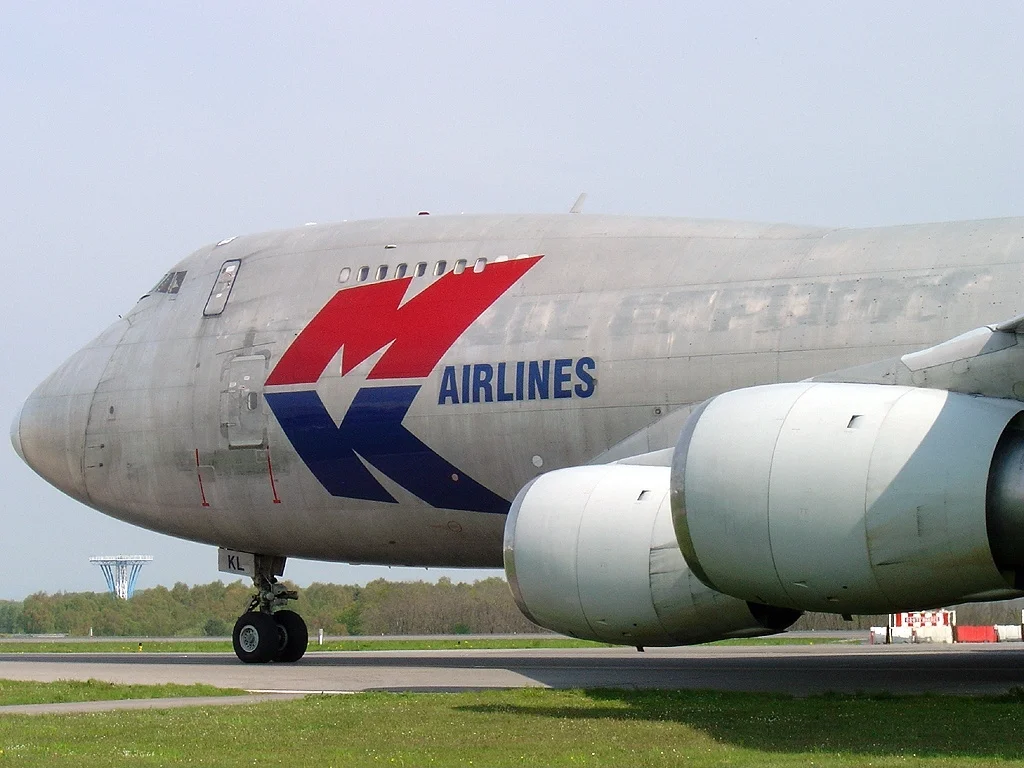
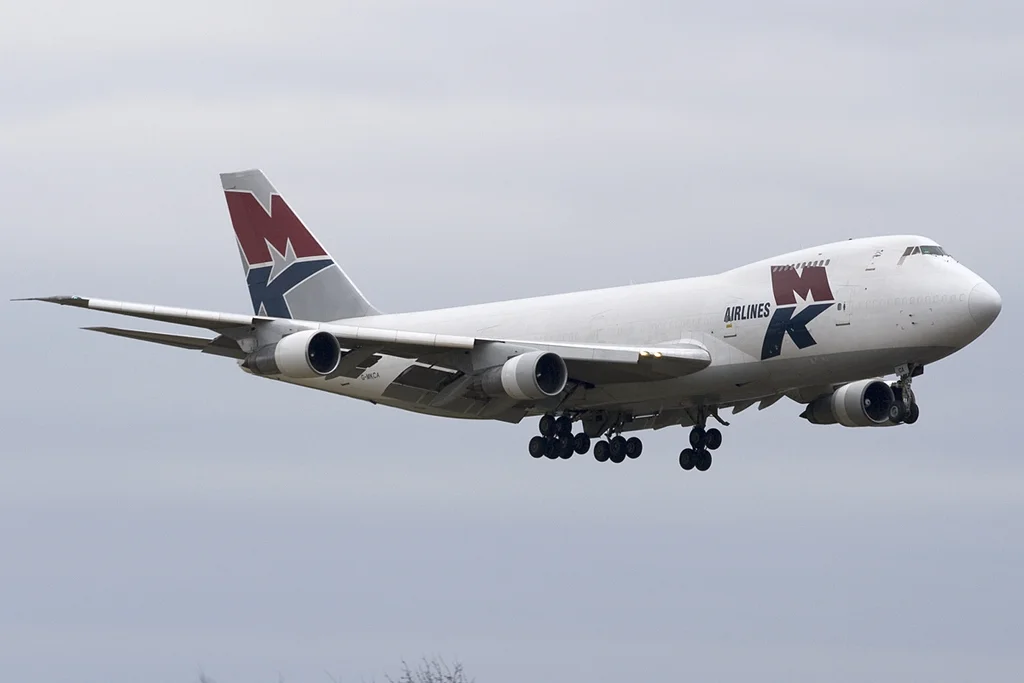
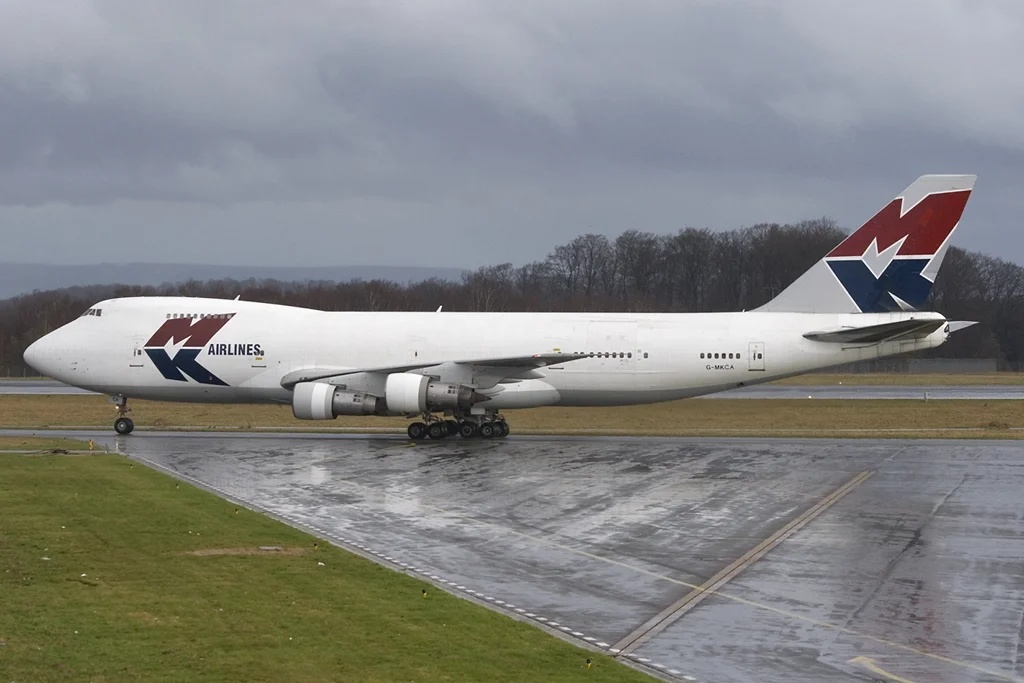
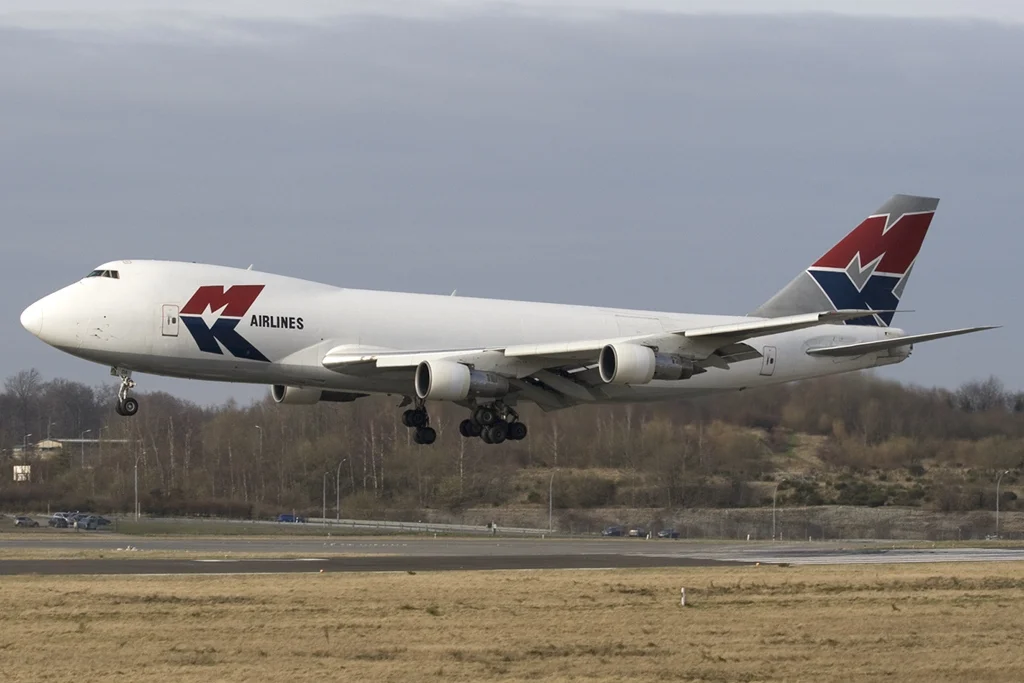
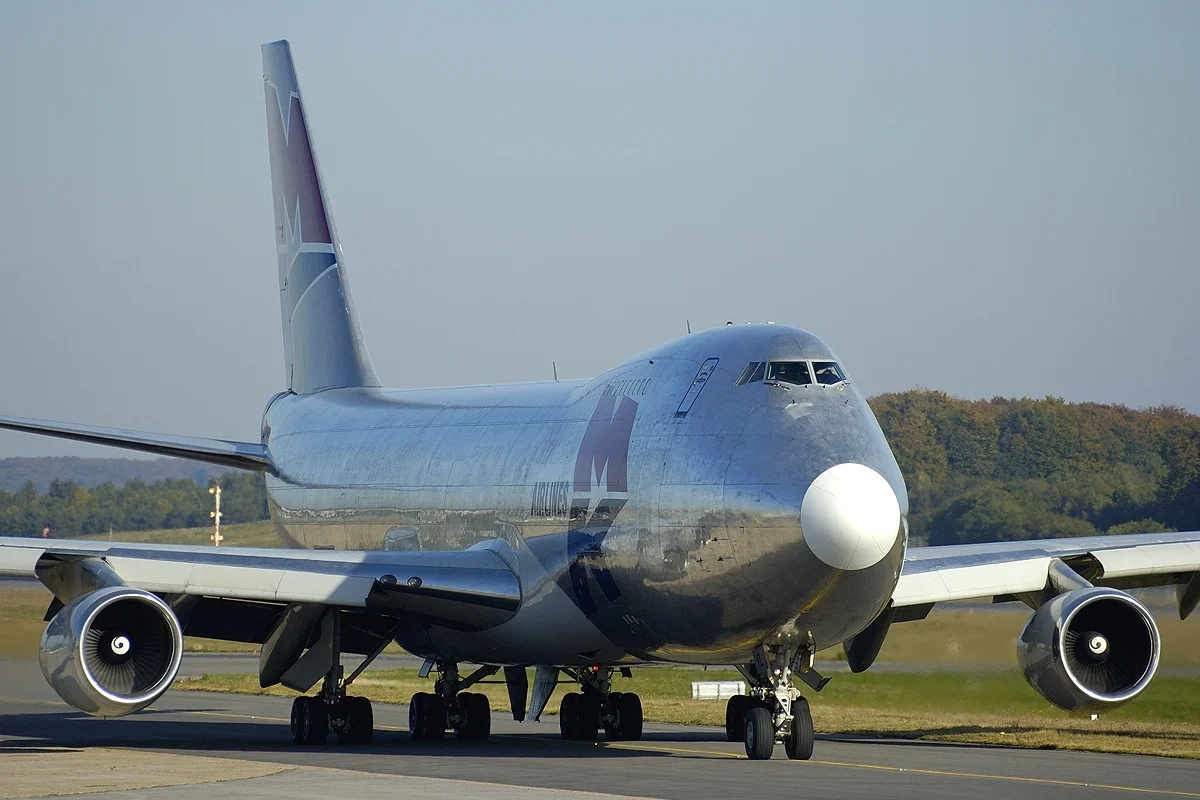
A Boeing 747-200 cargo jet crashed on takeoff from Halifax Stanfield International Airport (YHZ) in Nova Scotia on October 14, 2004, killing all seven crew members on board. MK Airlines Flight 1602 was bound for Zaragoza Airport (ZAZ) in Spain via a fuel and cargo stop in Halifax, having origi
nated in Luxembourg and routed through Bradley International Airport (BDL) in Connecticut.
Investigators later found no fault with the aircraft’s engines, structure or stabiliser trim. The cause instead traced back to a single number: the crew had used a takeoff weight of roughly 240,000 kg, drawn from the previous sector’s shorter flight, when the aircraft’s actual weight leaving Halifax was about 353,000 kg. According to Pilots Who Ask Why, that 113,000 kg error generated takeoff speeds and thrust settings far too low for the aircraft the crew was actually flying.
What Happened on the Runway at Halifax
At around 3:54am local time, Flight 1602 began its takeoff roll on Runway 24 carrying a cargo of seafood, lawn tractors and computer equipment. The 747 rotated at the calculated speed, but with insufficient thrust and airspeed for its true weight, it could not climb away cleanly. Its tail struck the runway repeatedly as the crew pitched up further trying to get airborne, dragging along the pavement in a shower of sparks.
The aircraft ran off the end of the runway, became briefly airborne, and struck an earthen berm that tore away its tail section. It travelled roughly 1,200 more feet before hitting terrain and bursting into flames.
All seven crew members died in the impact and post-crash fire, and the aircraft’s cockpit voice recorder was destroyed, permanently limiting what investigators could reconstruct about the crew’s final conversations.
How a Single Transposed Figure Doomed the Flight
The Transportation Safety Board of Canada (TSB) traced the fatal error to the Boeing Laptop Tool, or BLT, a Windows-based application MK Airlines had adopted only weeks before the accident to replace manual performance charts.
The TSB found that the aircraft’s weight from the earlier Bradley sector likely carried over into the Halifax performance calculation through what it called a reversion feature in the software, rather than being deliberately re-entered by the crew.
That single incorrect entry cascaded through the entire takeoff calculation. The undetected error produced:
- An incorrect V1 decision speed, too low for the aircraft’s true weight.
- An incorrect rotation speed (Vr), triggering rotation before the aircraft had enough energy to climb.
- A thrust setting well short of what a 353,000 kg jumbo jet needed to get airborne safely.
Company procedures required an independent cross-check of the performance figures before departure, a step designed to catch exactly this kind of error. The TSB report concluded that this gross-error check was not carried out in accordance with the airline’s standard operating procedures, leaving the mistake completely unchallenged from the flight computer through the takeoff briefing to the runway itself.
A Training Gap No One Caught in Time
Investigators found that MK Airlines had given crews minimal instruction on the new software before requiring them to rely on it. According to the TSB, pilots were asked to self-study a 46-page manual, with little formal training or testing on how the tool actually worked.
The captain, an experienced 747 pilot with roughly 4,000 hours on type, had transitioned onto the aircraft years earlier but had no dedicated training on the BLT itself.
That gap mattered because the software’s interface made an old figure look identical to a current one, with nothing to flag that the weight on screen belonged to a different flight altogether. A tool is only as reliable as the training behind it, and the TSB found the operator had not built that foundation before putting the BLT into daily use.
Crew Fatigue and One of the Least Restrictive Duty Regimes in the Industry
Flight 1602 was the third sector of a long duty sequence that began in Luxembourg the day before. The TSB concluded the crew had likely been awake for around 20 hours by the time of the Halifax departure, and that fatigue probably degraded both their ability to correctly calculate performance data and their capacity to catch the error once it existed.
MK Airlines was regulated by Ghana’s Civil Aviation Authority, whose duty-time rules the TSB described as among the least restrictive of any International Civil Aviation Organization member state at the time. The airline permitted three-pilot crews to work shifts of up to 24.5 hours, with as much as 18 hours airborne.
Canadian rules for comparable crews capped duty at 20 hours with a 14-hour flying limit, underscoring how much latitude MK Airlines’ regulatory home gave its pilots to operate while fatigued. Duty-time and staffing pressure remain live issues in Canadian aviation today, as seen in ongoing contract disputes over working conditions among Canada-based aviation workers in 2026.
What Investigators Recommended
The TSB’s single formal recommendation called on Transport Canada to work with international regulators toward developing a takeoff performance monitoring system, technology that would alert a flight crew in real time if an aircraft’s speed and thrust did not match what was needed to become airborne safely. MK Airlines stopped using the Boeing Laptop Tool entirely within two weeks of the crash, reverting to manual performance charts.
Families of the victims, who came from Zimbabwe, South Africa and Germany, later pursued a civil lawsuit in Nova Scotia against the airline, the Halifax airport authority, a training provider and a cargo-loading company. According to lawyers involved in the case, the six families represented in that action reached confidential settlements by 2007.
Two Decades on, the Recommended Fix Still Doesn’t Exist
Twenty years after the crash, Transport Canada has not implemented a takeoff monitoring system of the kind the TSB recommended. The safety board’s own website notes that Transport Canada agrees with the recommendation in principle but says no sufficiently reliable system yet exists, and that industry itself is best placed to develop one. The TSB has since responded that Canadian regulators could still push the research forward by working with international counterparts.
Crew fatigue has fared somewhat better as a policy issue. Canada tightened duty-time rules for large-aircraft pilots in 2020, capping on-duty periods at between nine and 13 hours depending on flight length and timing. Even so, the TSB placed crew fatigue on its official watchlist of safety concerns in 2018, and the issue has remained there every year since, with the board pressing for full fatigue management systems rather than hour limits alone.
What this Accident Still Teaches Pilots Today
Flight 1602 remains a stark illustration of a principle every pilot learns early: a performance calculation is only as good as the number fed into it. Whether that number comes from a laptop tool, a modern flight management system, or a manual chart, an undetected input error will produce a confident, precise and completely wrong answer.
The accident also shows why a genuine cross-check matters more than a procedural formality. Two crew members glancing at the same screen, from the same source, in the same way, is not an independent verification of anything. Two decades after Flight 1602 went down in the woods beyond Halifax’s runway, that distinction, and the still-unfinished search for a technological backstop, remains the accident’s clearest legacy for the industry.



.jpg)

,_MK_Airlines_JP6196653.jpg)
,_MK_Airlines_JP6202545.jpg)
,_MK_Airlines_JP6193815.jpg)
