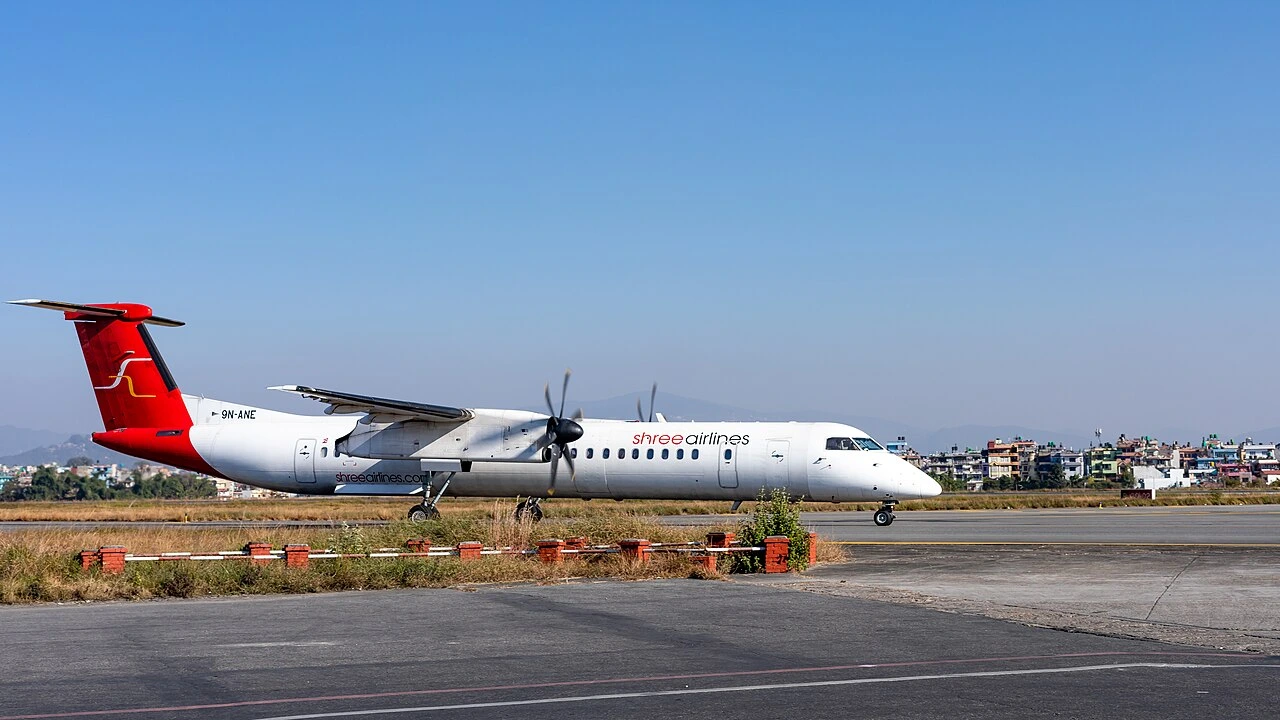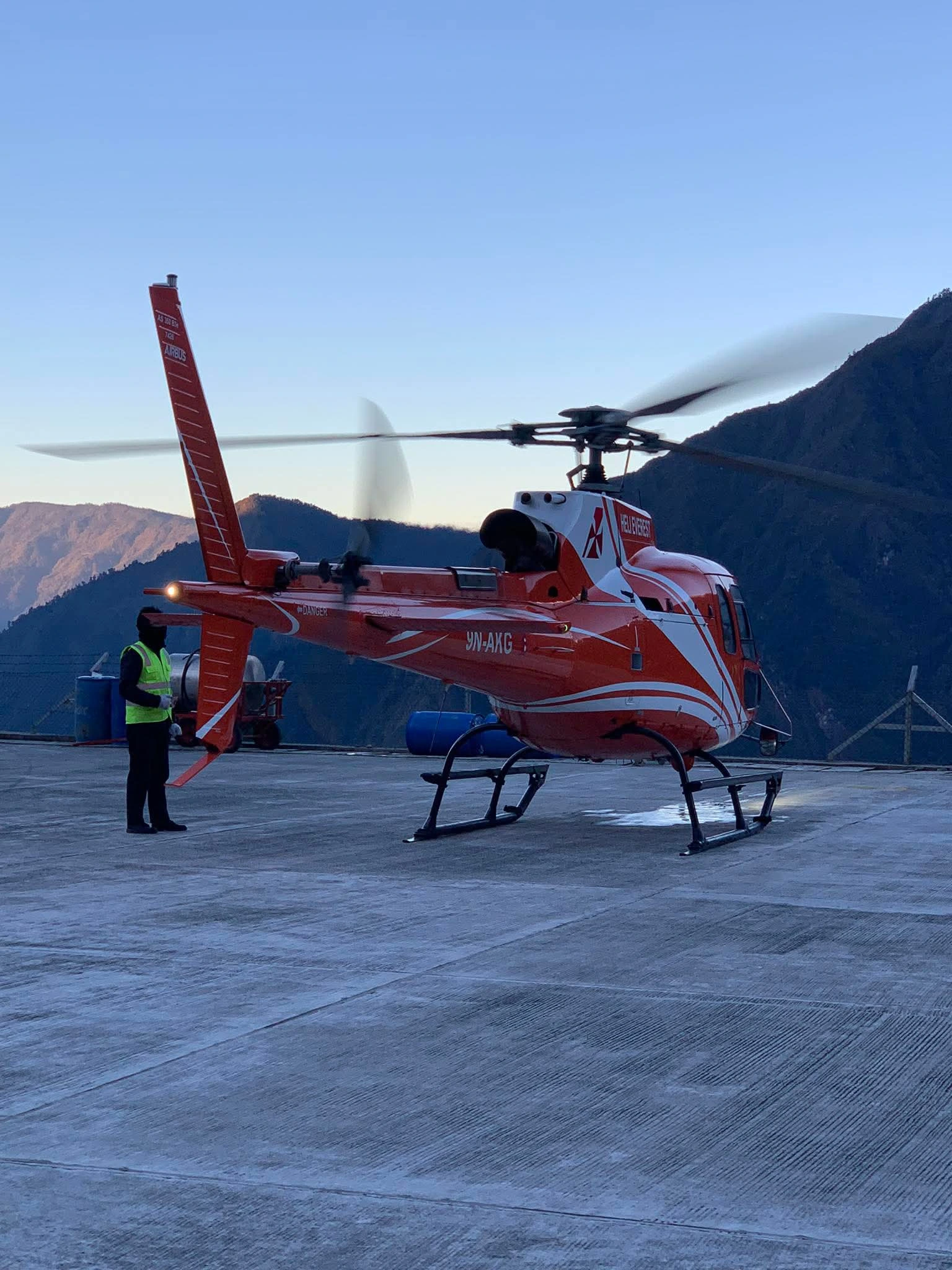

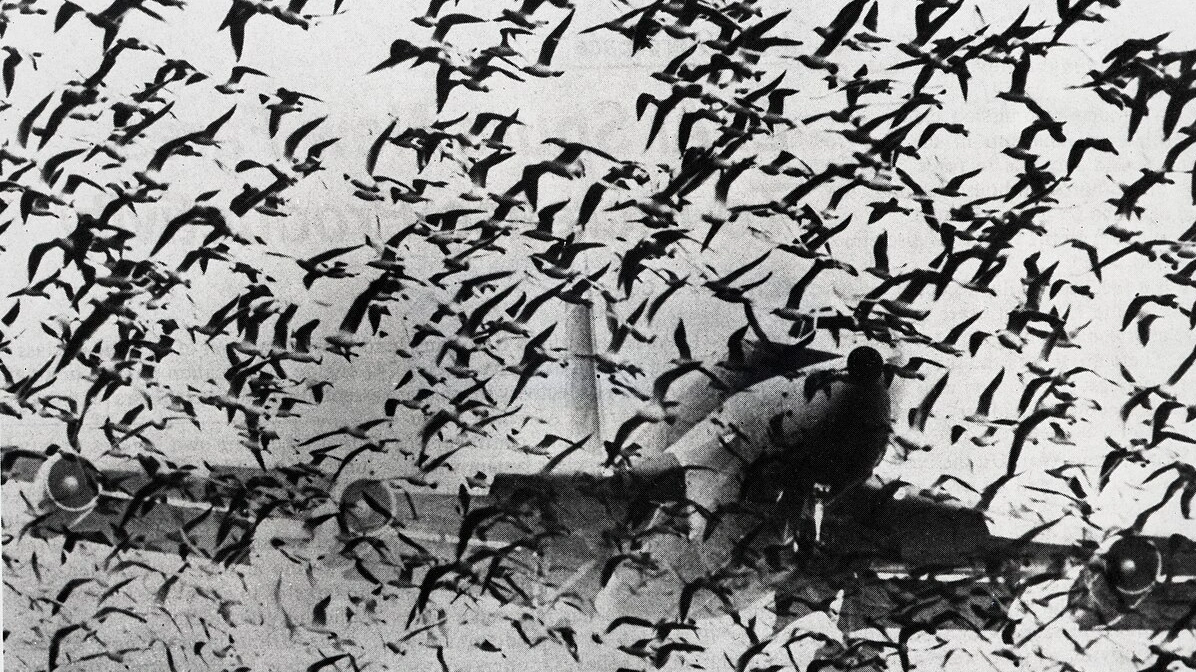
Nepal is home to 871 of the world’s roughly 10,000 bird species, and that extraordinary biodiversity collides with the nation’s demanding aviation environments. Between 1990 and 2023, Nepal lost at least 92 airplanes and helicopters and 817 people in civil aviation accidents attributable to causes including engine failure, weather constraints, and bird strikes, according to data from the Civil Aviation Authority of Nepal (CAAN). Bird strikes, while not the leading cause of every crash in that toll, represent a persistent and demonstrably lethal sub-category of risk that the country’s regulatory and airport-management infrastructure has consistently failed to address with adequate urgency.
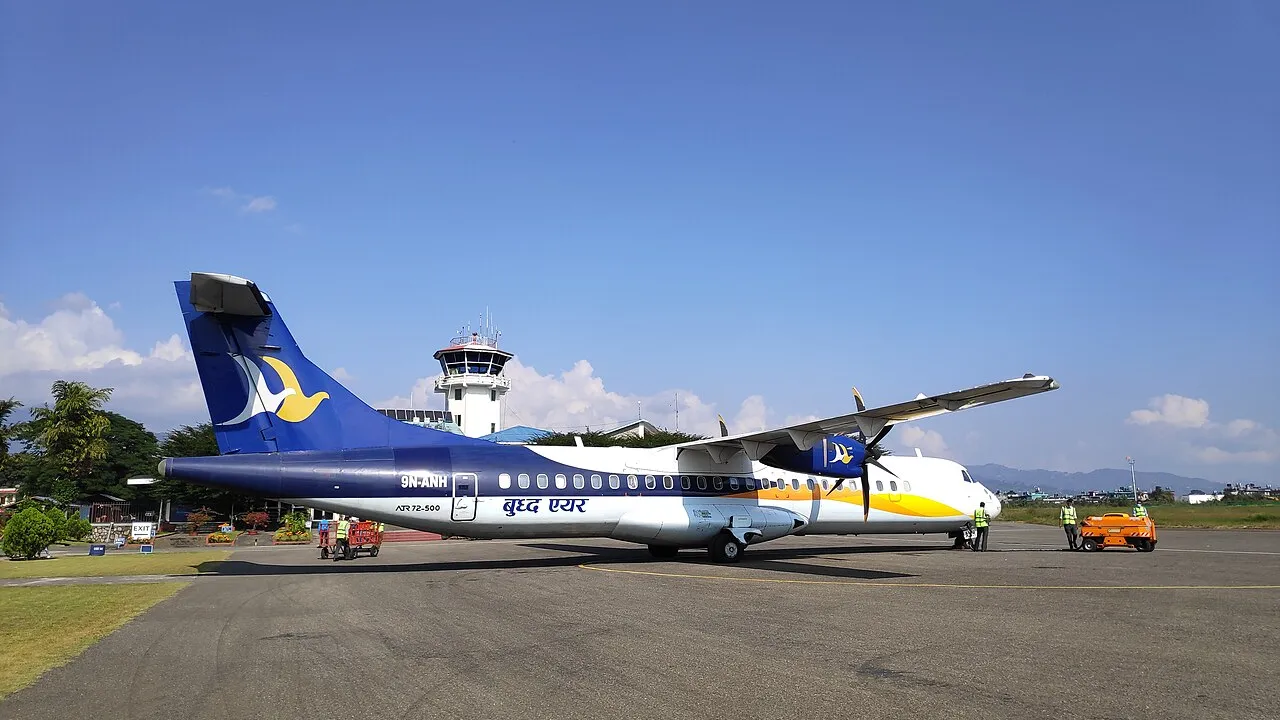
The foundational academic record of this hazard is Bharosh Kumar Yadav’s 2017 paper, Aircraft Collisions and Bird Strikes in Nepal Between 1946 and 2016: A Case Study, published in the Journal of Aeronautics & Aerospace Engineering and drawing on data from CAAN, the International Civil Aviation Organization (ICAO), the European Aviation Safety Agency (EASA), the Bureau of Aircraft Accident Archives (B3A), and the World Bird-Strike Association (WBA). The paper maps seven decades of aviation losses in Nepal, identifies bird strikes as a quantifiable threat within that larger pattern, and recommends specific safety reforms.

The Scale of Nepal’s Aviation Accident Record: 1946 To 2016
To understand bird strikes in Nepalese aviation, one must first understand the broader accident environment within which they occur. Yadav’s case study compiles aircraft accident data from May 7, 1946, when a Royal Air Force Douglas C-47 Skytrain (DC-3) came down at Simara in the Narayani zone with no fatalities, through to 2016.
Early fatalities included a 1956 Indian Airlines DC-3 crash in Kathmandu that killed 15, and a 1958 Indian Airlines crash in the same city that killed 20. The 1972 crash of a Royal Nepalese Air Force Douglas C-47 Skytrain killed 31 people in Kathmandu. A 1973 Thai Airways Douglas DC-8 accident at Kathmandu claimed one life.
Each of these incidents predated the jet equipment now standard on Nepal’s trunk routes, but they established the pattern: Nepal’s combination of high-altitude airports, narrow valley approaches, and extreme topographic variability creates consistent loss rates that persist regardless of aircraft generation. Seven hull losses occurred between 1975 and 2016.

Bird Strikes in Nepal: Taxonomy, Frequency, And Phase-Of-Flight Data
Globally, 73% of all bird-strike collisions occur near the ground below 500 feet, and 94% occur below 2,500 feet, making takeoff and landing the critical phases. Front-facing components — windshields, radomes, wing leading edges, engines, forward fuselage, empennage, landing gear, and propellers — absorb the majority of strike impacts. Nepal’s short runway environments, rapid altitude changes on departure, and valley approaches that require low-level maneuvering make these globally documented patterns uniquely acute in the Nepali context.
A CAAN report cited by the Kathmandu Post identifies 39 bird species in the immediate vicinity of Tribhuvan International Airport (KTM), Kathmandu — five classified as large, ten as medium, and 24 as small. The black kite (Milvus migrans) is identified as the primary threat, a designation consistent with findings from bird-strike research globally.
An earlier survey of bird mobility at KTM conducted between January and December 2001 and published in the Nepal Journal of Science and Technology documented 35 species visiting the airport, with the highest species richness occurring in January (23 species) and the lowest in August (14 species). The study recorded an average of 95 birds per three-hour observation session, with the highest concentrations in the western sector of the airport where land transitions into residential areas and waste-disposal sites.
Bird-strike frequency at KTM peaks during winter months — September through December — when migratory bird populations pass through the Kathmandu Valley. According to CAAN data reviewed by The Himalayan Times, airport authorities recorded close to 100 bird-strike incidents in the 15 years to 2015, with TIA accounting for the majority. At the city’s phase-of-flight level, Aviation Nepal has reported that 89% of incidents at KTM occurred on or near the aerodrome itself, with 28% occurring during takeoff run or initial climb, 61% during approach or landing roll, and 87% occurring in daylight hours.
Sita Air Flight 601 was The Deadliest Bird Strike Incident in Nepal’s History
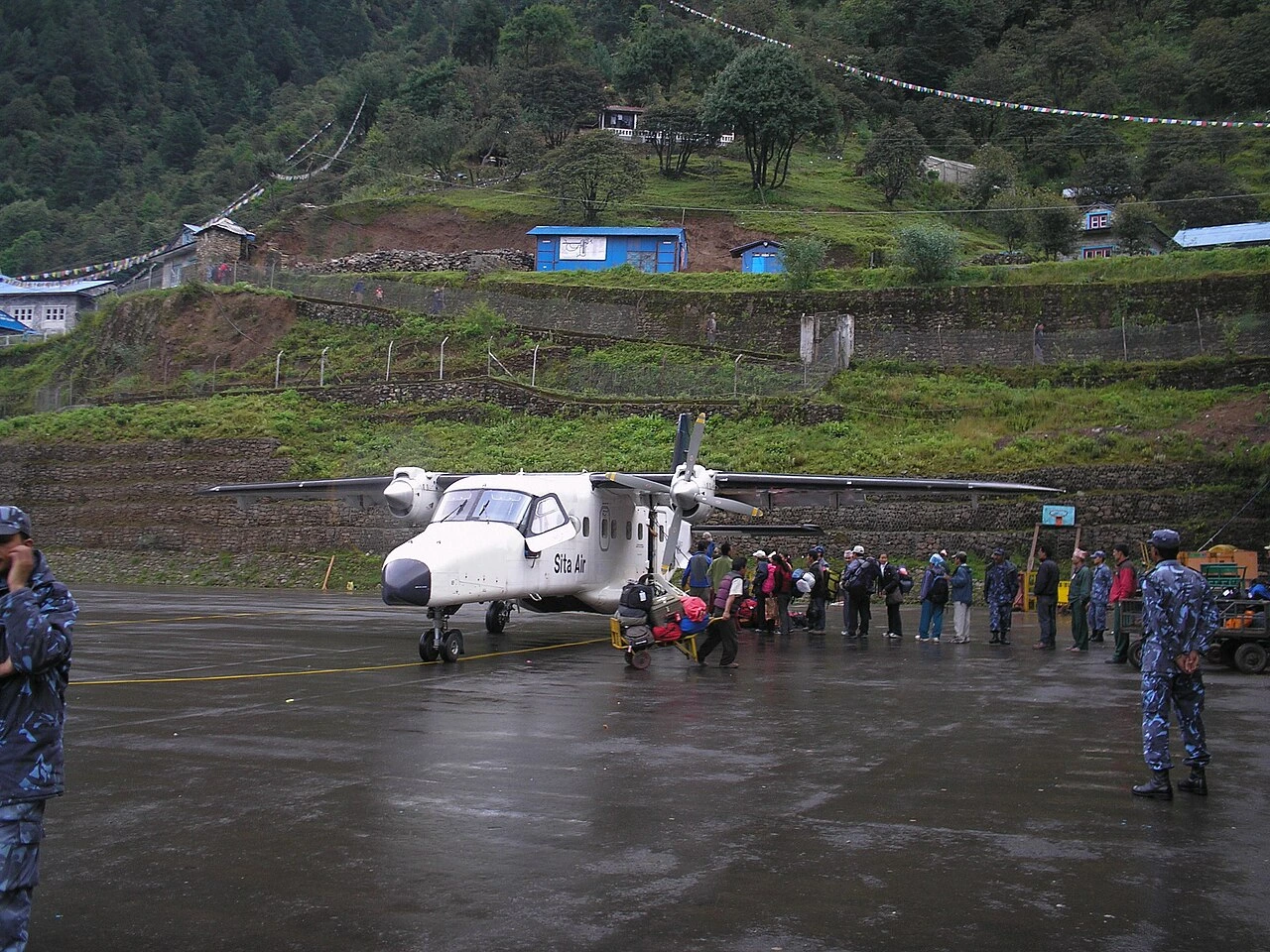
The most consequential bird-strike event in Nepali aviation history, and one of the most significant globally in the decade it occurred, is the crash of Sita Air Flight 601 on September 28, 2012. The aircraft was a Dornier 228-202 (registration 9N-AHA), operated by Sita Air on a domestic scheduled flight from Tribhuvan International Airport (KTM) to Tenzing-Hillary Airport in Lukla. All 16 passengers and three crew members perished.
The aircraft took off at 06:17 local time. Within minutes of becoming airborne, the crew reported a bird strike and the failure of an engine. According to the Bureau of Aircraft Accident Archives, the pilot radioed air traffic control “DUE BIRD HIT” as the aircraft decelerated through 71 knots and the stall warning activated.
A subsequent runway inspection found the carcass of a Black Kite at a position 408 metres from Intersection 2 of the runway, although critically, no bird remains were found within the engines themselves. The aircraft reached a maximum height of approximately 100 feet above aerodrome level before entering an unrecoverable stall and impacting a small open area 420 metres south-east of Runway 20.
In our detailed analysis of Lukla Airport crashes, we discovered that there was no precise causal mechanism between the bird carcass and the loss of thrust was not definitively established. The Nepal Aircraft Accident Investigation Commission (NAICC) determined that reduced thrust during the takeoff roll, followed by the crew’s inability to maintain airspeed above stall speed and insufficient altitude for recovery, constituted the proximate cause.
The investigation’s recommendations specifically called for KTM’s Civil Aviation Office to review its bird activity monitoring programme, its bird strike reporting system, and its bird strike control programme. It further recommended that the three municipalities adjacent to the airport — Kathmandu, Lalitpur, and Bhaktapur — review waste management and butchery practices that attract scavenging birds to the aerodrome’s vicinity.

Bird Strike Data in Nepal Post-2016
The years following Yadav’s 2017 paper brought a sustained accumulation of avian-collision data that reinforced rather than contradicted his findings. According to OnlineKhabar’s 2021 investigation, CAAN’s Aviation Safety Report 2020 recorded 70 wildlife and bird strike incidents at airports across Nepal in 2019 alone, of which 11% were classified as serious events with potential for further accidents.
CAAN’s 2022 safety report, cited by analyst Robert Van Wey, documented an increasing trend in bird-related incidents at Nepali airports between 2018 and 2021. By 2021, the number of reported bird incidents had climbed to 73 for the year, with November recording the highest monthly total. Of these, 92% occurred during taxi, takeoff, or landing, entirely consistent with global phase-of-flight data.
KTM accounted for close to half of all recorded occurrences, a proportion that reflects both its traffic volume and the concentration of the country’s most hazardous bird species in the Kathmandu Valley. Fewer than 6% of the 2021 incidents resulted in any aircraft damage, which superficially sounds reassuring but reflects the probabilistic reality that even a low damage rate across dozens of annual encounters will, in time, produce catastrophic outcomes.
A month-by-month breakdown of 2019 aviation safety incidents compiled by OnlineKhabar showed wildlife strikes distributed throughout the year, with concentrated peaks in winter months. The data confirm that bird and wildlife incidents represent not an intermittent anomaly but a structural element of Nepal’s aviation safety challenge. CAAN’s own 2024 Aviation Safety Report, published on the CAAN website, identifies BIRD (bird strikes) as one of Nepal’s State High-Risk Categories alongside controlled flight into terrain (CFIT), loss of control in flight (LOC-I), and runway contact anomalies.

Bird Strike Dispute in Nepal FlyDubai Dispute of April 2023
On April 24, 2023, a FlyDubai (FZ) Boeing 737-800 carrying 167 passengers departed Tribhuvan International Airport (KTM) on a scheduled service to Dubai International Airport (DXB). FlyDubai publicly attributed engine fire visible in social media images to a bird strike during takeoff. The aircraft continued to Dubai, landing without incident, and a FlyDubai spokesperson confirmed the engine remained within normal operational parameters throughout.
CAAN publicly disputed the characterisation. As Reuters reported, Nepal’s civil aviation authority called FlyDubai’s account “misleading” and stated there was no proof of a bird strike in Nepali airspace. CAAN subsequently deactivated the airport passes of FlyDubai’s country manager and airport manager for what it characterised as the dissemination of inaccurate information.
The incident exposed a systemic tension between airline incentives to report bird strikes (which triggers insurance protocols and absolves crews of mechanical-fault liability) and CAAN’s institutional reluctance to acknowledge a hazard whose prevalence reflects poorly on its own wildlife management programme.
As Van Wey observed, bird strikes are not uncommon at KTM, and the visual evidence — engine fire shortly after takeoff — is precisely the kind of consequence a bird ingestion event would produce. CAAN’s response, which involved administrative sanctions against the airline rather than a transparent investigation, reflects a pattern of institutional defensiveness that critics argue compounds rather than mitigates Nepal’s aviation safety deficit.

Bijay Chaurasia | Wikimedia Commons
Pokhara Regional International Airport And The Vulture Problem
No episode better illustrates the institutional failure to manage bird strike risk in Nepal than the opening of Pokhara Regional International Airport (PKR), officially inaugurated on January 1, 2023. The $216 million facility, financed largely by China, was designed to serve as Nepal’s third international hub, receiving traffic from India, China, and Southeast Asia. Conservationists had warned for more than a year before its opening that its location posed a severe avian-collision risk.
The core concern, as Mongabay reported extensively, was a landfill site directly adjacent to the airport that attracted multiple threatened vulture species. The landfill was relocated only days before the January 1 launch date, with a senior CAAN official at Pokhara quoted as saying: “We are hopeful that the local municipal officials will move the landfill site soon.”
The Bijaypur River on the airport’s eastern side remained a persistent attractor for scavenging birds because it carries solid waste and animal carcasses from the city. A conservationist who spoke to Mongabay anonymously noted that the river would continue drawing vultures “in ever larger numbers” as urban population and waste volumes grew.
On January 16, 2023 — the day after the Yeti Airlines Flight 691 crash — a plane on the same Kathmandu–Pokhara route struck a steppe eagle (Aquila nipalensis) on approach to PKR. The bird was killed; the aircraft was not substantially damaged. Mongabay’s Abhaya Raj Joshi reported that airport officials quickly cleared the runway debris while the international aviation community remained focused on the previous day’s tragedy. The juxtaposition of the two events — a major crash followed immediately by a bird-strike incident at the same airport — focused international attention on the hazard that conservationists had been warning about for over a year.
A peer-reviewed study published in Environmental Monitoring and Assessment in July 2025, authored by Dhakal et al. and available via Springer Nature, provides the most rigorous quantification to date of the avian-collision risk at PKR. The study reviewed the airport’s Environmental Impact Assessment (EIA) against long-term bird monitoring data and found that the EIA failed to account for the presence of large, high-risk species in the vicinity. Collision risk was calculated using four variables:
- Maximum mass (MM) — a proxy for the kinetic energy of a strike impact
- Flocking behaviour (FB) — a proxy for the probability of multiple-bird engine ingestion
- Foraging strategy (FS) — a proxy for altitude and trajectory patterns near approach paths
- Flight dynamics (FD) — a proxy for manoeuvrability and collision avoidance capacity
The study identified significant collision risks from six threatened vulture species with regular presence near PKR: the Egyptian Vulture (Neophron percnopterus), Slender-billed Vulture (Gyps tenuirostris), Himalayan Vulture (Gyps himalayensis), White-rumped Vulture (Gyps bengalensis), Griffon Vulture (Gyps fulvus), and Red-headed Vulture (Sarcogyps calvus). All six are large-bodied birds; a strike from any of them at approach speeds presents a meaningful threat to light turboprop aircraft.
A separate study published in Ecology and Evolution in 2025 and indexed by PubMed, assessed vulture abundance at PKR before and after the landfill relocation. It found that the shift in landfill site did not meaningfully reduce vulture numbers, because species such as the Egyptian Vulture spend their entire life cycles in and around the original site, continuing to return due to nesting habitat on adjacent cliffs and forests. Ornithologist Hemanta Dhakal, who monitors bird activity from the roof of his home adjacent to the PKR runway, told Mongabay in July 2025 that the risk of a fatal collision was “pretty grave” and urged government action before a tragedy occurred.
https://commons.wikimedia.org/wiki/File:Yeti_Airlines_crash_in_Pokhara_2023.jpg
Yeti Airlines Flight 691, Bird Strikes, And the Limits Of Investigation
Yeti Airlines Flight 691 — the deadliest air disaster in Nepal in three decades — crashed into the gorge of the Seti Gandaki River on January 15, 2023, killing all 68 passengers and 4 crew. The aircraft was an ATR 72-500, operating from KTM to PKR on a familiarisation flight for a pilot transitioning to the new Pokhara airport. Final investigation reports from both Nepal’s Aircraft Accident Investigation Commission (AAIC) and France’s Bureau d’Enquêtes et d’Analyses (BEA) determined that the pilot monitoring the flight inadvertently moved both condition levers to the feather position rather than actuating flap lever, removing thrust from both engines during final approach. Bird strike was not confirmed as a cause.
This conclusion is important to state accurately. As the Kathmandu Post reported, the investigation traced the accident to cockpit error — specifically, a misidentification of the condition levers as flap levers in the final seconds of approach. Nevertheless, Mongabay reported that pilots familiar with the Kathmandu–Pokhara route noted the crew’s late change of approach from Runway 30 to Runway 12, and some suggested this deviation may have been prompted by a bird encounter. The absence of confirmed bird evidence in the wreckage means this hypothesis remains speculative.
What the Yeti Airlines crash did do was dramatically amplify public and governmental attention to the bird-strike threat at PKR, arriving as it did the day before the steppe eagle incident on January 16. The temporal proximity of the two events made Nepal’s aviation community, conservation scientists, and international observers acutely aware that the new airport’s bird environment had not been adequately mitigated before commercial operations began.

CAAN’s Institutional Response is Deemed Inadequate
CAAN was established on December 31, 1998 under Nepal’s Civil Aviation Act 1996, with a mandate that includes safety oversight, accident investigation, and the management of aviation hazards. Its record on bird-strike prevention reflects a persistent gap between policy commitment and operational execution. The airport at KTM employs a full-time hunter and uses monitoring equipment to disperse bird flocks, temporarily grounding aircraft when large concentrations appear. However, no such arrangements exist at airports outside Kathmandu.
An unnamed airline representative told Tourism Mail in August 2025 that CAAN’s neglect of airport perimeter vegetation — specifically, failure to clear monsoon-season bushes and tall grass that attract insects and, in turn, birds — was “making flights increasingly risky.”
CAAN’s former director-general, Sanjiv Gautam, told OnlineKhabar that the most cost-effective mitigation measure available was also the most routinely neglected: regular mowing and bush clearance around runways. “It is the responsibility of CAAN to ensure flight safety at the airport,” he said. “It should not be avoided.”
The ICAO conducted a safety oversight assessment of Nepal that contributed to Nepal reaching 92.9% completion at Level 3 of its State Safety Programme by 2023, incorporating wildlife hazard management within its State Safety Performance Indicators — yet the practical outcomes at individual airports have lagged behind the programmatic progress.

Nepal In the Context of Global Bird Strike Risk
Globally, from 1990 to 2013, at least 66 aircraft and 26 lives were lost in civil aviation due to bird strikes — a period during which Nepal contributed disproportionately to the fatality column for a country of its aviation traffic volume.
The defining global comparison is the January 2009 US Airways Flight 1549 ditching in the Hudson River, in which a Canada Goose ingestion caused dual-engine failure and Captain Chesley Sullenberger executed a successful water landing with all 155 occupants surviving. That event prompted sweeping reforms in bird-strike management at major US airports.
Our coverage of bird strikes in US aviation documents that the FAA received reports of 17,300 and 17,200 bird strikes in 2019 and 2022 respectively in the United States or on US carriers abroad, with 695 incidents resulting in damage in 2022 — 36 of which were classified as substantial. The FAA’s hazard ranking of 108 bird species places vultures in the second and fourth most hazardous categories, behind snow geese.
In our guide to bird strike prevention technologies, we noted that CAAN has adopted a structured approach to bird strike prevention in principle. The practical implementation, however, remains uneven. Nepal can learn about the initiatives taken by airports and airlines across the world that we highlighted in our guide and learn from them.

Mitigation Strategies and Regulatory Imperatives for Nepal
The 2025 Dhakal et al. study in Environmental Monitoring and Assessment makes specific recommendations for PKR that extend to Nepal’s airport management more broadly. It calls for the deployment of avian radar systems to provide real-time bird movement data to air traffic controllers, the establishment of a formal wildlife hazard management programme consistent with ICAO standards, habitat modification around runways to reduce the carrying capacity of the aerodrome environment for large bird species, and coordination with municipal authorities on waste management along the Bijaypur River corridor.
At a systemic level, the study’s most urgent finding is that PKR’s EIA process failed to identify the full scope of avian hazards before the airport opened. This is not merely a procedural failure; it reflects a pattern in which infrastructure development in Nepal proceeds without the ecological risk assessments that international civil aviation standards require. The landfill was relocated only days before opening; the river remains; the vultures returned.
The ICAO’s Asia-Pacific Wildlife Hazard Management Working Group has been active in Nepal, and CAAN’s participation in its reporting frameworks has improved data collection. However, as Dhakal told Mongabay in 2025, “We hope the government acts soon to avoid a future tragedy.” It is a sentence that could have appeared in any publication about Nepali aviation bird strikes at almost any point in the past two decades.