It has not even been ten years that one of the main airports in Nepal – Pokhara Airport – transitioned from its domestic status into an international one. Its picturesque location, coupled with the most beautiful offerings in the city that is Pokhara, could have made it one of the busiest airports in Nepal, if not the busiest global airports. However, this second international airport of Nepal, which was funded by a loan from China Exim Bank, has been heavily touted to be China’s debt trap.
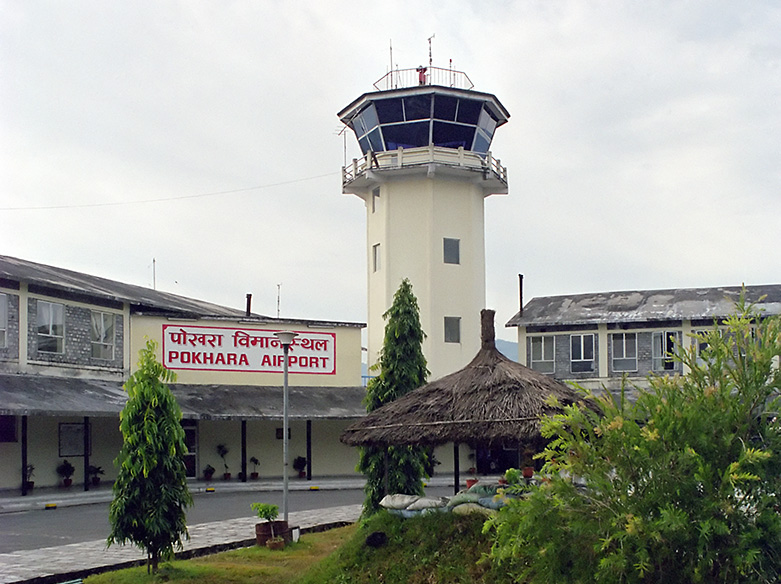
In 2024, a newspaper from Nepal reported that the airport only saw merely seven international flights. As a result, it is becoming increasingly difficult to cover operational costs. With loan installments due soon, there is growing concern about how to make these payments. And a much serious, pressing question comes into play: Will it fall into the list of the non-functional airports of the nation?
Reasons which might turn Pokhara International Airport into a failure
India-China Geopolitical Feud
India and China have strategic interests in Pokhara, according to Nepali Times. India has military ties to the region, while China monitors Tibetan refugee activity.
China built Pokhara International Airport, but India has not approved regular flights from the airport. Buddha Air’s request for twice-weekly Pokhara–Varanasi flights was also rejected, reportedly due to concerns over the airport’s Chinese connection.
Nepal’s limited air corridors have further hindered Pokhara’s international potential. In late 2024, Nepal’s Foreign Minister Arzu Deuba urged Indian airlines to launch services to Pokhara and Lumbini.
Whether the airport can secure regular international passenger flights remains uncertain.
Bird strike
Bird Strike is a major threat to any aircraft/ airport. Many airports around the world have developed various strategies to cope with bird strikes such as laser deterrents and infrared bird detection systems. Sita Air’s Dornier Do-228 registered 9N-AHA which as heading off to Hillary (Lukla) Airport– the most dangerous airport in the world – had also met an accident on 28 September 2012, killing all people on board.
When 9N-AHA crashed following a bird strike, the accident investigation commission recommended the Kathmandu, Bhaktapur, and Lalitpur to review if there were dumping sites nearby. Despite the fact that the dumping site near Pokhara International Airport has been relocated, the problem of bird strikes persists. persists, mainly because of these reasons:
- The lakes around Pokhara International Airport – the nearest of which is 2 kilometers away and the farthest is 8 kilometers away – serve as habitats for various bird species.
- During winter, birds migrate from Mongolia and Siberia to escape the cold, settling in the Pokhara region [Birds congregate in Kali Gandaki Valley, which is located between Dhaulagiri and Annapurna].
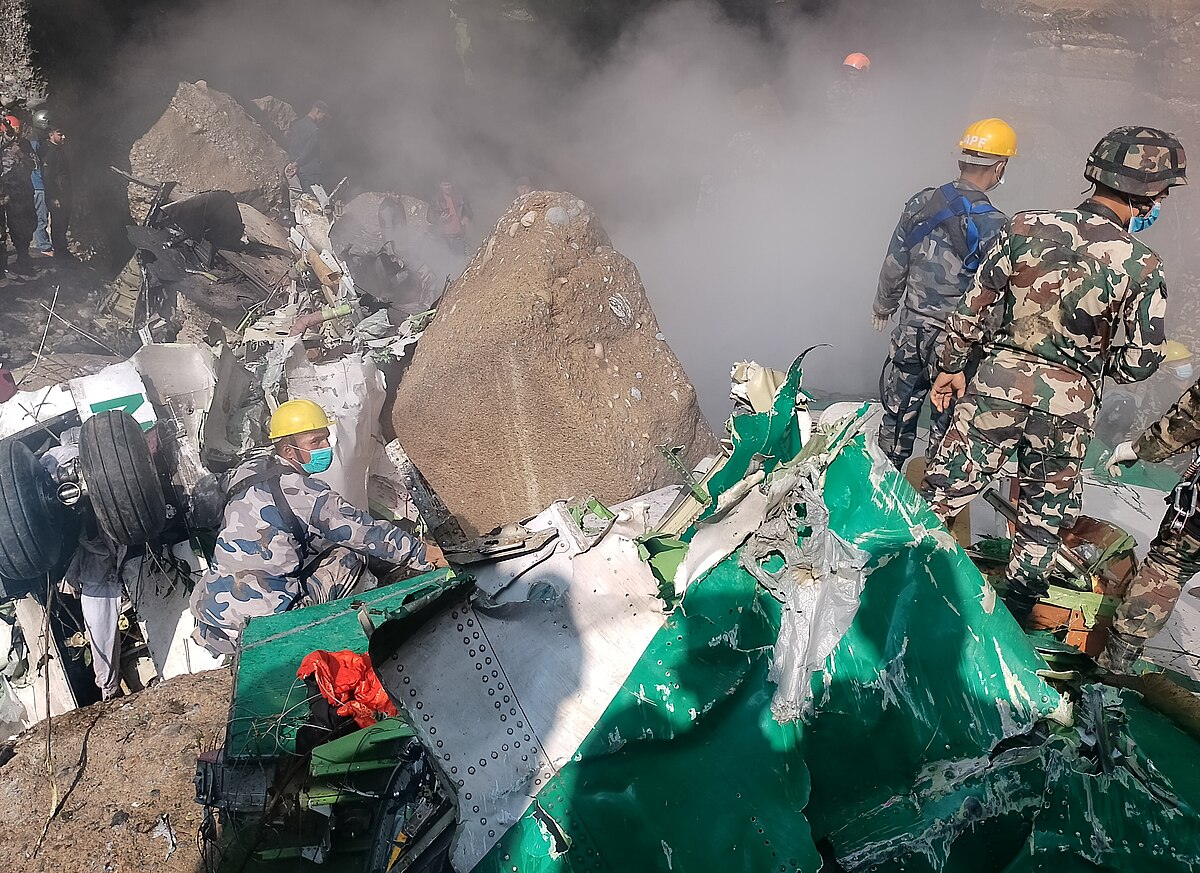
Photo: Bhupendra Shrestha | Wikimedia Commons
It is common knowledge that even lightweight birds can create a high impact force if they collide with an aircraft, potentially damaging critical components such as engines, wings, and windshields. Currently, only ATR-72 flights operated by two major airlines of Nepal– Yeti Airlines and Buddha Air at Pokhara International Airport, but if larger aircraft like the Airbus A320 begin to operate, the risk increases. Further, at the end of the runway of the airport are Bijaypur River and the old dumping site – both of which are frequented by birds. The danger is particularly acute during takeoff; if an engine failure occurs, there is a low chance of safely turning around and landing.
Birds could become lodged in the engines, leading to complete shutdowns, or they could strike the cockpit windshield, impairing the pilot’s visibility and making it difficult to control the aircraft. Even with helicopter operations, the safety of a helicopter pilot and passengers would be compromised if it met a bord strike. This is one of the reasons why helicopter pilots wear helmets.
Poor infrastructure
Pokhara International Airport has faced scrutiny over construction quality and oversight. A 2023 New York Times investigation found that the $2.8 million budget for construction consultants was reduced to just $10,000.
Engineer Murari Gautam also raised concerns about the 8,200-foot runway, saying there was no documentation of soil-density testing. Other issues included inexperienced staff, inadequate drainage planning and limited documentation on construction materials.
Poor drainage system
CAMC designed the airport’s drainage system without considering historical rainfall data for the Pokhara area and the site’s sloping topography, neglecting a standard practice in international construction. As a result, there is a risk of flooding during heavy rains. as shown this video that shows water pooling at the airport, which was constructed slightly lower than the surrounding area, increasing the risk of flooding
Limitations of Pokhara International Airport
Wide-body aircraft cannot operate with full payloads at Pokhara International Airport. Narrow-body jets like the Airbus A320 and A319, which are used by Nepal Airlines for international flights, may also face payload issues when landing due to restrictions at the airport.
According to CAAN and several pilots, temperature and distance at Pokhara International Airport result in a payload penalty of 5-10 tons for narrow-body jets like the Airbus A320 and A319. This means these aircraft can only operate with 10 tons less load. For instance, while the permissible load for an Airbus A320 is 77 tons, it can only carry 68 tons when departing from Pokhara.
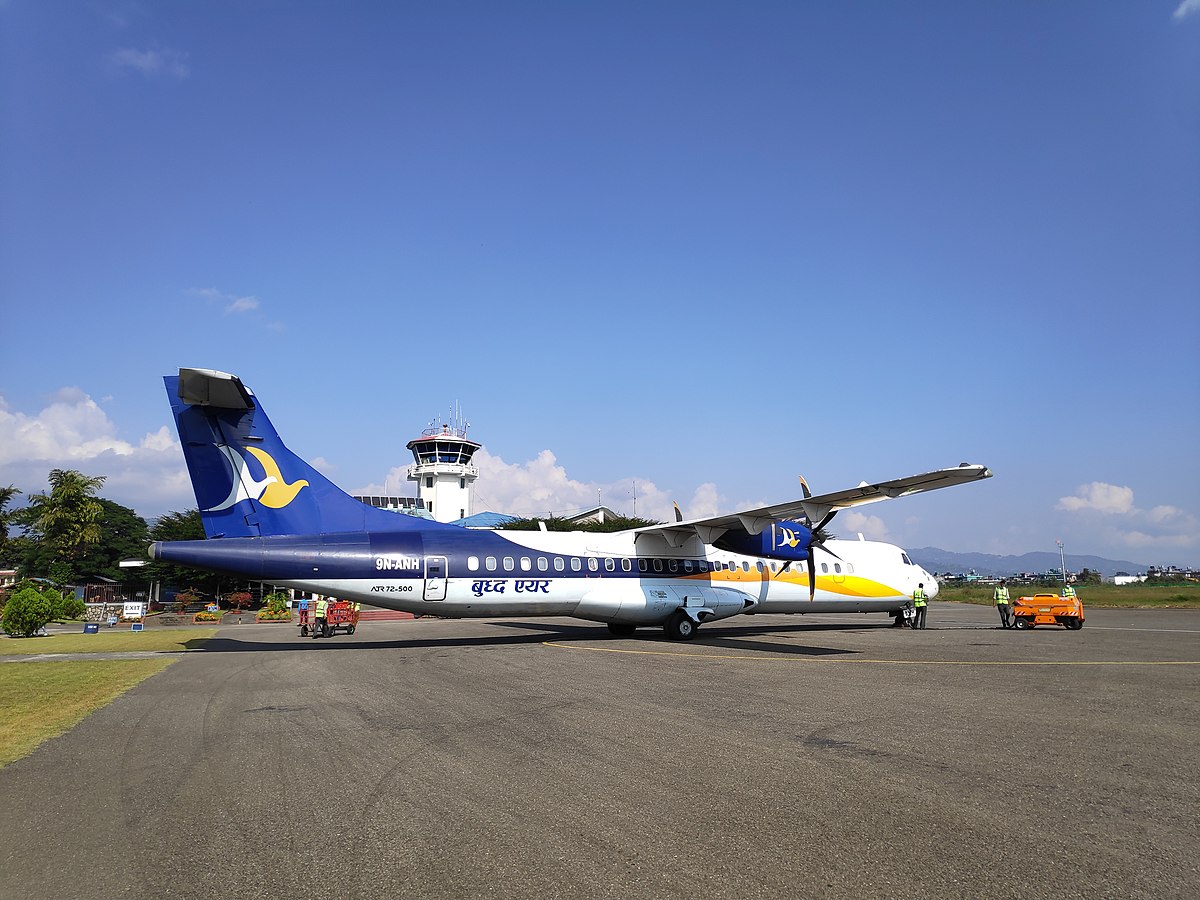
Photo: Gaurav Dhwaj Khadka | Wikimedia Commons
At 25 degrees Celsius, an Airbus A320 with a seating capacity of 158 needs to reduce its weight by 5 tons, and at 35 degrees Celsius, it must reduce weight by 10 tons. Some pilots have noted that for flights longer than 1 hour and 20 minutes from Pokhara, the aircraft may need to have more than 50% of its seats empty, which can lead to reduced profits for airlines. Conversely, shorter flights to destinations like Lhasa, China, and New Delhi are less affected, which is why only regional flights are commonly seen from Pokhara.
Will Pokhara International Airport be a failure after all?
Through the Belt and Road Initiative (BRI), China has invested in projects across Asia, Africa, and South America, often resulting in costly and low-quality construction. One of the most notable ones is the related to the construction of Mattala Rajapaksha International Airport, which is dubbed to be the emptiest airport in the world]. A major limitation of this airport is that aircraft cannot execute a 180-degree turn, which might be needed to be performed during emergency situations. With so many flaws, will Pokhara International Airport, which has proven to be a fiasco until now, rise up to the hopes with which it was build? It is extraordinarily difficult to be an optimist in this matter.