
The word aviation comes from the Latin avis, referring to birds. This is one of the reasons why airplanes are often referred to as mechanical birds. After the Wright brothers completed their maiden flight, the skies opened up as frontiers where humans could compete, leading people to go up to space, and even complete a spacewalk. Were it not for aviation, perhaps people wouldn’t have landed on the moon, nor would NASA revamp its efforts to land on our natural satellite via Artemis. What are the other fun facts about aviation that has been shielded from the common person’s eye? Let’s find out.
Aviation Fun Fact #15: A helicopter has landed at the top of Everest
In 2005, Airbus helicopter pilot, Didier Delsalle landed on the top of Mount Everest. He did so as a part of Airbus’ efforts to showcase the astonishing capabilities of the Airbus A350B3 helicopter. After he touched down on the summit of Mount Everest, he headed back to Lukla Airport, the aerodrome from where he had started his journey. However, he couldn’t retrieve the video capturing his historic flight. Without the video, there was no way to showcase his record. So, the next day Delsalle landed on the top of Mount Everest again. His helicopter was referred to as “The Mystery Chopper“.
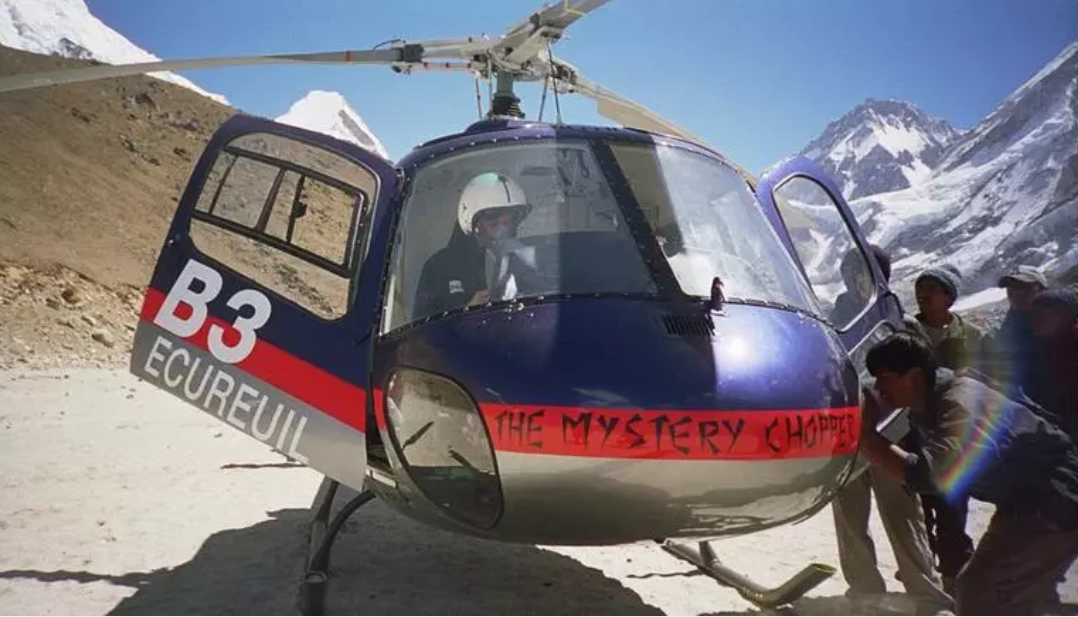
Photo: Airbus
You can read the details of this historic landing in our guide below:
Aviation Fun Fact #14: An Airline dedicated that treats dogs as VIPs
Bark Air, an airline based in the US, started calling the dogs it was transporting Very Important Pups, the airline’s VIPs. In order to cater for the dogs, the airline organizes a session (before flight) where dogs can meet their fellow canine passengers. This helps to calm the dogs during their journey.
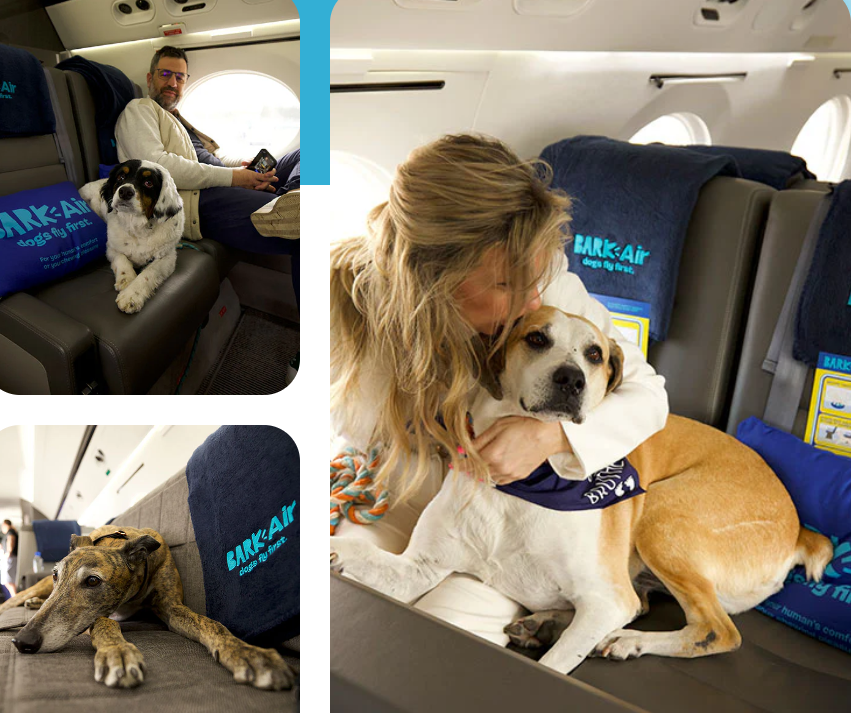
Although airlines such as Frontier transport dogs as pets for $99, Bark Air’s services are unique. The United States Department of Transport recorded an incident rate of 0.82 per 10,000 animals transported in 2021. Perhaps, the introduction of Bark Air will help in the reduction of such incidents.
Aviation Fun Fact #13: There’s a phenomena in aviation named after Dutch ice skaters
When an aircraft is subject to various forces that make it “sway” or get in in motion around a figure 8, we refer to it as a “Dutch Roll”. The name Dutch roll comes from the ice skaters from the Netherlands who have an almost indomitable reputation of being the best in the world.


A Dutch roll is a combination of a yawing motion and a rolling motion that can lead to the loss of an aircraft’s control. The Dutch Roll experienced by a US Air Force Boeing KC-135R Stratotanker aircraft registered 63-887 produced such airframe stress that the aircraft’s tail separated from the plane.
Aviation Fun fact #12: Concorde wasn’t the first supersonic airliner
When people think of supersonic travel, the word Concorde comes to mind. But Concorde wasn’t the first supersonic airliner- the Tupolev Tu-144 was. The Tu-144 was designed by the Tupolev Design Bureau in the USSR and beat the Concorde. However, a crash in a Paris Air Show didn’t help the cause of this aircraft that was sometimes referred to as the Soviet Concorde or the Concordski.
Tupolev Tu-144 – The Soviet Concorde: Why the Supersonic Jet Failed?
Some reports claimed that a global fleet of 500 Concorde-like planes would increase the chances of certain types of skin cancer by 2%. This was one of the reasons why Concorde and its Soviet counterpart were disbanded from regular passenger operations. The Tu-144 was quicker than the Concorde, though.
Aviation Fun fact #11: The heaviest aircraft ever built was destroyed in the Ukraine-Russia war
Antonov An-225 was referred as “Mriya” in the Ukrainian language, the Ukrainian word translating as a “dream”. However, this dream-like aircraft was desecrated in the Ukraine-Russia War, and the fact that only one Mriya was ever produced means that the aviation world is poorer without one of its marvels.
Mriya also made it to the list of the five biggest aircraft ever made. One of its more iconic photograph is the one where it carries the Buran space shuttle on its back.
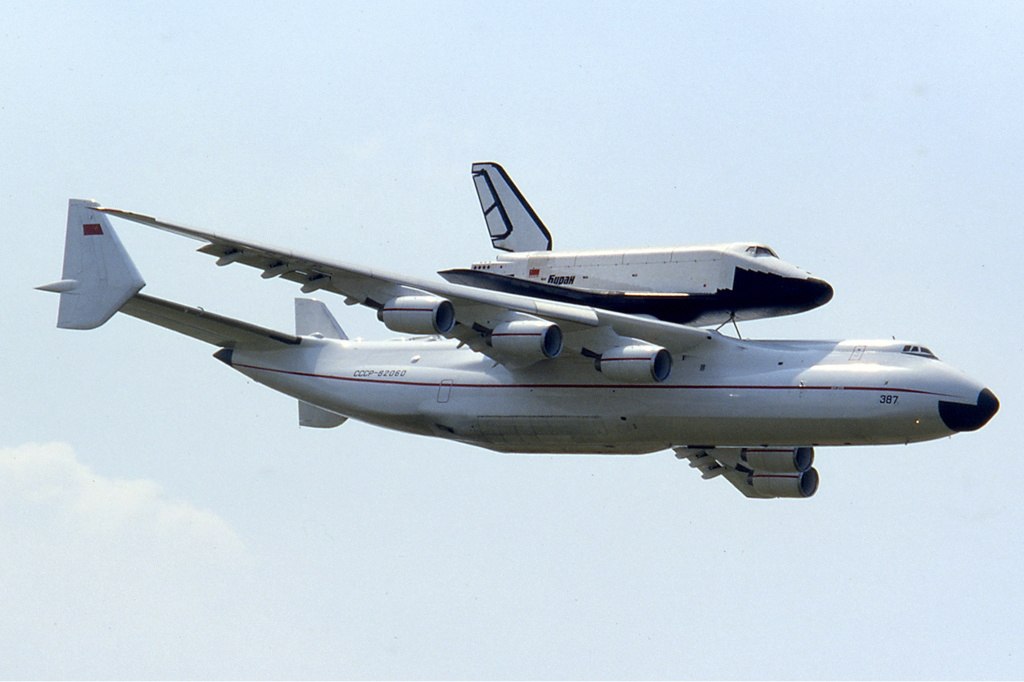
Photo: Ralf Manteufel | Wikimedia Commons

Aviation Fun Fact #10: Douglas C-54 Skymaster saved nearly 2.4 million Germans
After the USSR stormed into Germany and captured it following Hitler’s suicide (thereby marking the end of World War II), the Soviet Forces had taken control of the historic city of Berlin and blockaded it. They had deprived the allied forces to transport essentials into the city. This prompted the US to deliver supplies to Berlin from aircraft – the most prominent of which was the Douglas C-54 Skymaster.


A native of Utah, Lieutenant Gail S. Halvorsen, garnered a lot of fame for dropping candy (for kids in Berlin) from their C-54s, and is now remembered as the “Candy Bomber”. This aircraft type helped deliver 12,941 tons of supplies in a total of 1,398 flights. It has been said that at the height of the Berlin airlift, a C-54 delivered supplies to the city every 45 seconds.
Aviation Fun Fact #9: A president of the United States took oath in an aircraft
After the assassination of John F. Kennedy, the United States of America was left president-less for nearly three hours. Later, Lyndon Johnson was sworn in as president. He took his presidential oath in the Boeing VC-137C, which is also known as SAM (Special Air Mission). During its lifetime, this aircraft carried a total of eight presidents. The aircraft now sits at the National Museum of the US Air Force, where the aircraft was flown into in May 1998. The Boeing VC-137 is one of the must-see aircraft at this museum:
Top 5 Must-See Aircraft At The National Museum Of The US Air Force
Aviation Fun fact #8: There were no seatbelts in the very first airplanes
It might come as a surprise that the very first planes had wicker chairs as seats. Needless to say, such aircraft were devoid of seatbelts. As much as seatbelts are a staple in modern aviation, they didn’t exist for nearly first two decades of aviation- the first seatbelt laws were implemented in the 1930s, and that too, with some laxity.
From Wright Brothers to Jet Age: Evolution of Aviation History
In the 1950s, a hoax spread that some people had died in an airplane accident due to the impact of seatbelts, undoing the progress of implementing laws related to seatbelts. Following a thorough investigation that opposed this claim, parity was restored, and the importance of seatbelts was widely accepted. The laws related to seatbelts haven’t changed much in the last half a century.
Aviation Fun fact #7: World War II planes had rather risque pictures of models
When one looks back at the pictures of some fighter planes that were painted during World War II, one can see pictures of Mickey Mouse and pin-up girls. Pilots and other personnel battling in the war used to decorate their aircraft with semi-nude paintings of pin-up models. One of the most glaring examples is the following.
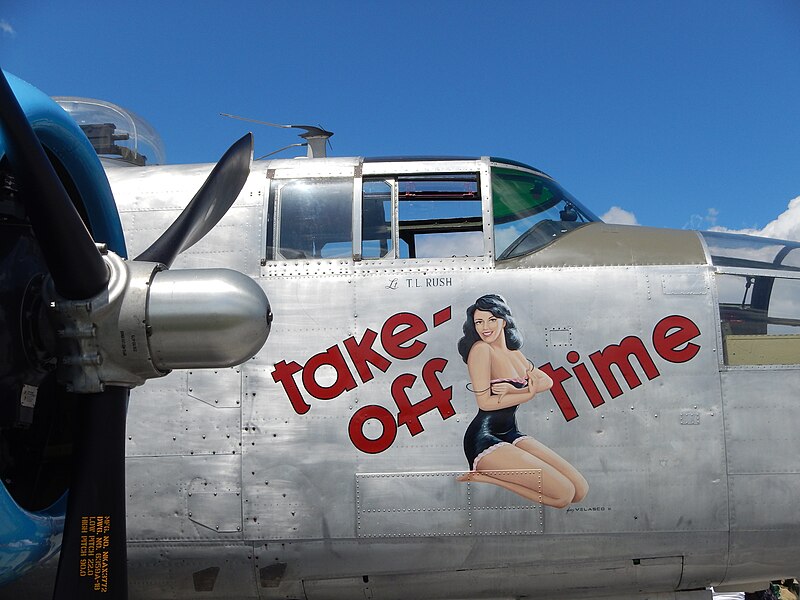
A painting called “The Dragon and his Tail” on a Consolidated Aircraft B-24 Heavy Bomber is regarded to be the longest nose art (nose art is the official term given to such paintings). It is said that Insects, birds, and four-legged animals made up about 15 percent of the nose art in World War, while 43% of the nose art depicted women.
Aviation Fun Fact #6: An avgeek has collected more than 6000 airsickness bags
Niek Vermeulen, a Dutchman, has a rather astonishing collection of 6,290 sickness bags from 1,191 airlines across nearly 200 countries. This makes him the most prolific collector of airsickness bags. However, Nick isn’t the only person with this hobby. Steven Silberburg, founder of a virtual airsickness bag musuem called airsicknessbags.com has a collection of 3575 bags. His slogan “Serving your barf bag needs since 1997″ is a classic, and so is his claim that this hobby, despite being a waste of time, is “a higher quality waste of time than many other places on the web“. His collection is an impressive 3575 bags. You can read about these frantic collector of airsickness bags in our guide below:
An Unlikely Hobby: Did You Know Multiple Avgeeks Have Collected Several Thousand Airsickness Bags?
Aviation Fun Fact #5: An airplane lost its roof at an altitude of 24,000 ft
Aloha Airlines Flight 243, which was a scheduled 35-minute inter-island flight in Hawaii, met with an accident that has almost no parallel in aviation. When the aircraft was at an altitude of 24,000 ft, the roof of the aircraft was blown away – leaving passengers in some rows exposed to the skies above. During this accident, a flight attendant, CB Lansing, was blown from the aircraft, and her body was never recovered.
Aviation Fun fact #4: The emptiest airport in the world cost $200m for construction
Sri Lanka’s Mattala Rajapaksha International Airport is often labelled as the emptiest airport in the world. The airport was constructed with the help of the Exim Bank of China, which provided the sum to the Sri Lankan government at an interest rate of 6.3%. Incidentally, the same bank also helped facilitate the construction of Pokhara International Airport in Nepal, a 216 million disaster of an airport in Nepal.
The Mattala Airport is widely considered to be a debt trap set by the Chinese. There are also widespread fears that the Pokhara International Airport in Nepal is one such case.
Aviation Fun Fact #3: In contrast, a remote $900 airfield might be the cheapest aerodrome
There used to be an aerodome in Nepal, called the Mingbo Airfield. Had this airport survived the impossible test of posterity, it would have, plausibly, been the most dangerous airport in the world. This airport is perched at an altitude of around 15,000 ft, and was constructed for merely #900, making it one of the cheapest airfields to have ever been constructed. We have to note that this Short Takeoff and Landing (STOlport) was constructed in the 1960s, though.
Mingbo Airport: The Forgotten Most Dangerous Airport In The World
Aviation Fun fact #2: The most dangerous airport in the world might not be the most dangerous in its own country
Lukla Airport in Nepal is regarded as the most dangerous airport in the world. But this claim might be false. Many pilots in Nepal have claimed that flying to other airports in Nepal requires greater technical expertise than operations to Lukla. The same sentiment has also been expressed by air traffic controllers in the nation. Incidentally, Lukla Airport was also constructed by Sir Edmund Hillary, the man who was seminal in constructing the Mingbo Airport (as we discussed above):
Lukla Airport: Myths vs Facts of “the most dangerous airport”
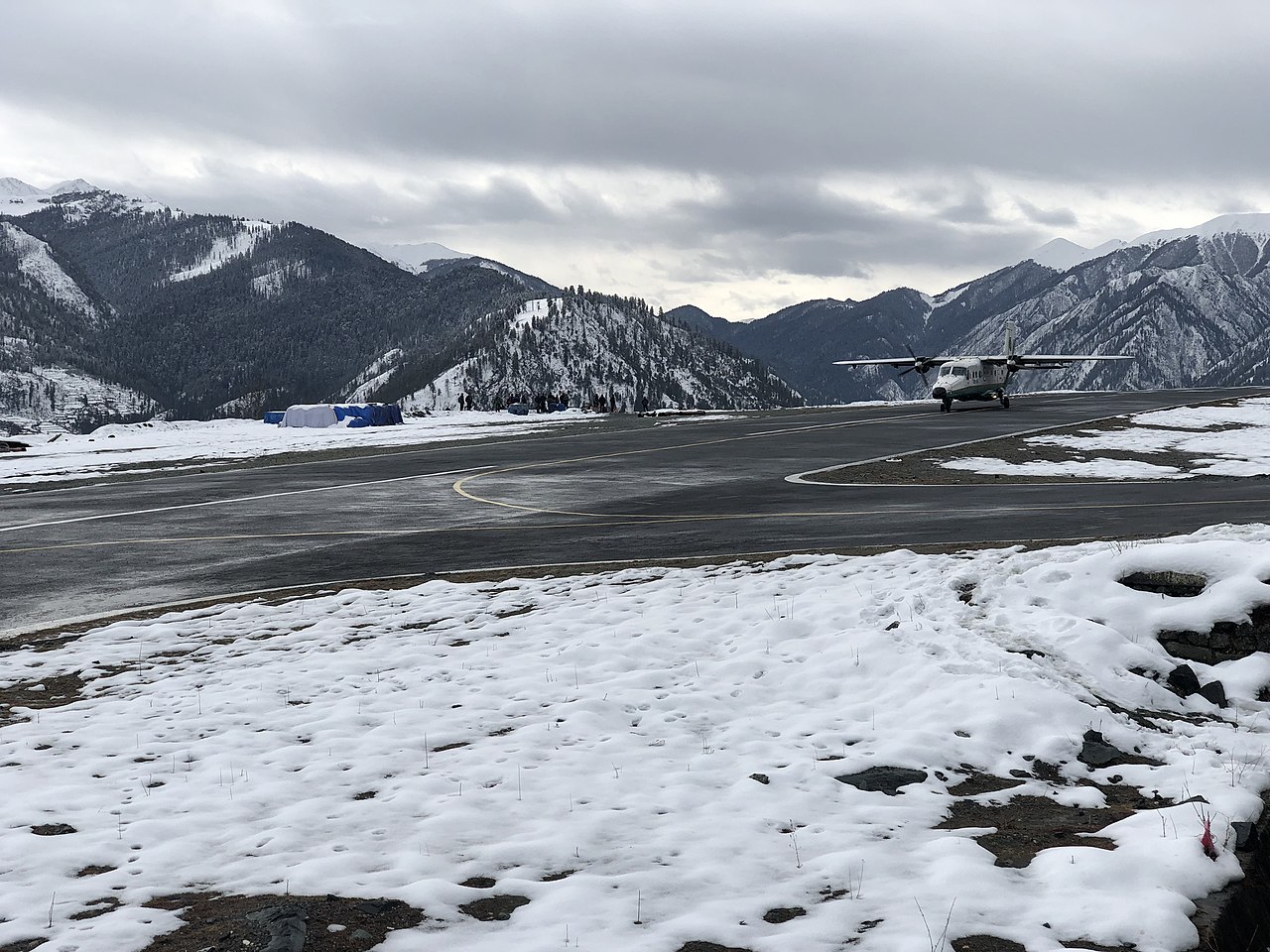
Photo: Tannu 01 | Wikimedia Commons

Aviation Fun fact #1: Ingenuity helicopter has flown on the surface of Mars
It might beggar belief that a helicopter named Ingenuity has flown on the surface of planet Mars. However, this helicopter didn’t fly from Earth to Mars but was delivered on the surface of the red planet. It was a 680-gram chopper that survived a temperature of -85 degrees. The cost of this helicopter was 80 million, and was sent to Mars on a rover called Perseverance. Ingenuity completed 70 flights and crashed on its 71st. The crash led to the first aircrash investigation on a planet other than the Earth. You can read about it in detail in our guide below:
Let us know in the comments which of the aviation fun facts you found to be your favorite.