If one makes the effort of trying to simplify what the term Dutch Roll means in aviation, it wouldn’t be too far from the truth, if we imagine thought of it as “swaying”. But this simplification means that we wouldn’t be too far from falsehoods either. After all, the English word “swaying” has a lot of connotations.

An airline pilot described what you feel during a Dutch roll in aviation is that “the airplane sort of wallows”.
The aforequoted pilot was asked to weigh in about Dutch roll after a Boeing 737 MAX operated by the budget carrier Southwest Airlines went into a Dutch roll, which led to damage to the structural components of the aircraft. In the years gone by, Dutch roll has also led to plane crashes. So when we want to get to the crux of a Dutch roll, we have to peer into the heart of aerodynamics, and not into semantics.
Dutch Roll: the basics
The reason why the word “sway” doesn’t quite capture the nuances of all the physics behind a Dutch roll is because one of the meanings of the word is to “move or bend from side to side“. Pus the word itself doesn’t have any origin that could be linked to the Dutch language. The biggest reason why this aerodynamic roll is called a “Dutch” one is because of the remarkable ability of Nethterlands to fare well in skating.
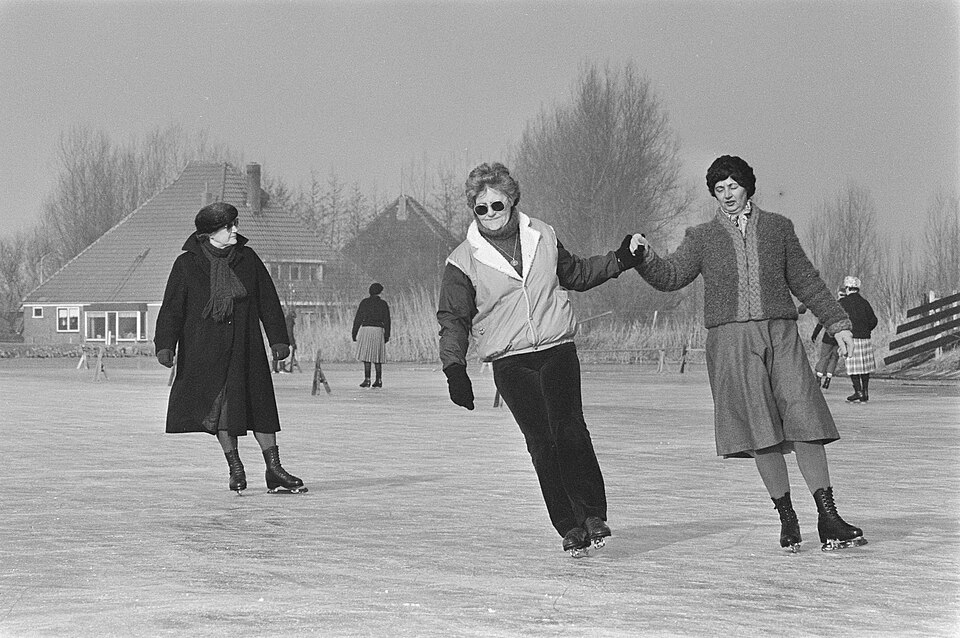
In the Winter Olympics held in Russia in 2014, this nation won 23 of the total available 36 medals in skating. This was according to the Guardian, “the single most dominant performance by a country in any sport, at any Olympics” and that “International Skating Union was so put out by the Netherlands’ performance in 2014 that they even changed the competition rules to stop them entering so many skaters this time around.” You might also wonder what skating has to do with an aerodynamic roll anyhow? Here’s how Boeing draws a parallel between a skater’s motion and that of the aerodynamic effect that is a Dutch roll:
“Ice skaters use the outer edge of their skates to propel themselves across the ice, rocking from side to side while also moving to the left, then to the right and back again. Airplanes can make similar lateral and directional motions in flight, rolling and yawing much like a traditional Dutch ice skater rhythmically swaying down one of Amsterdam’s frozen canals. This movement is called a Dutch roll.”
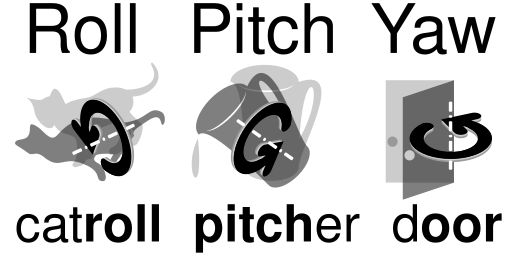
Let’s now have a closer look at the meaning behind the words “roll” and “yaw”:
| Roll, or bank angle | The lateral movement of the airplane |
| The yaw angle | The airplane’s nose moving left or right i.e., the directional movement |
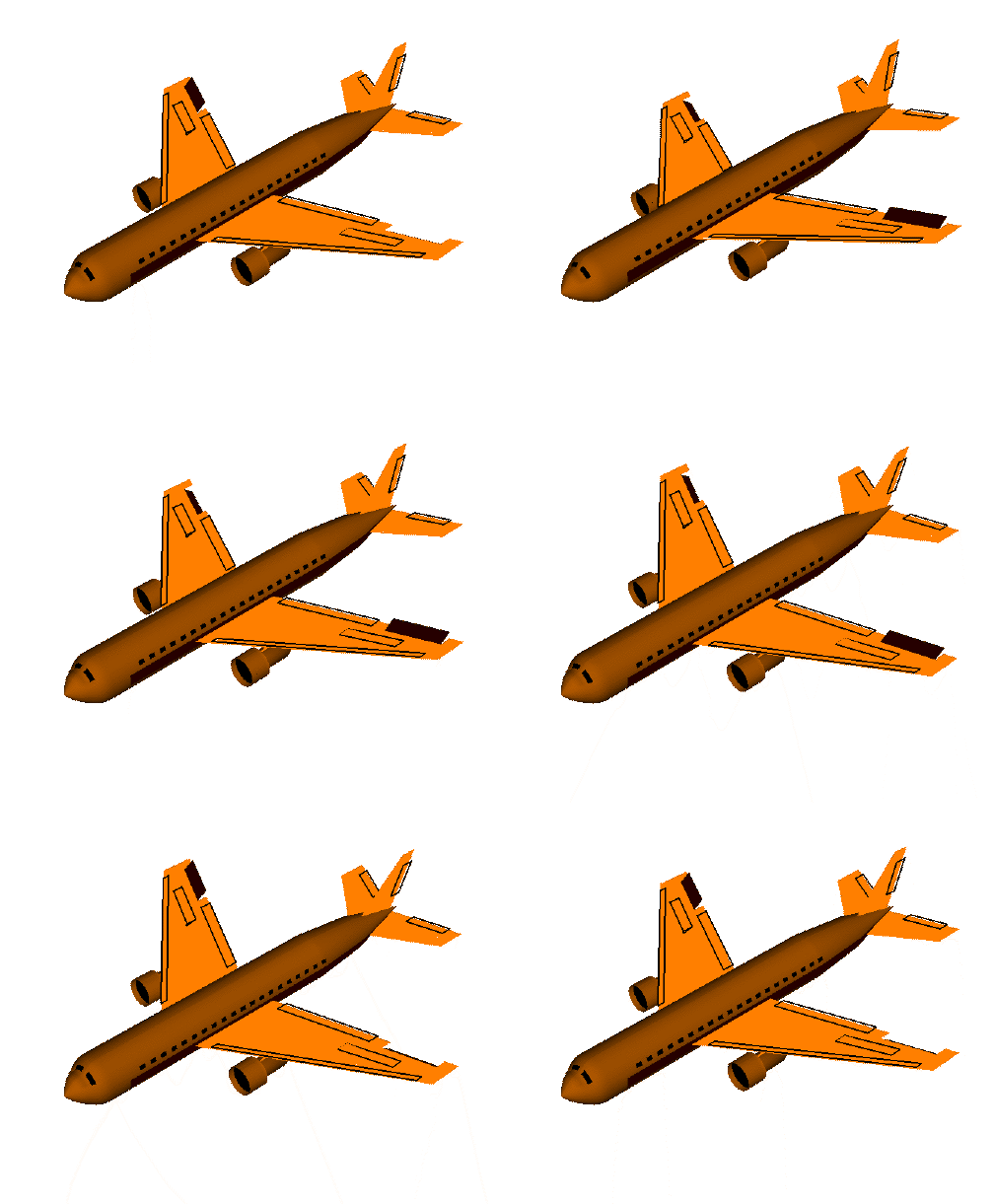
During the oscillation associated with a Dutch roll, the aircraft’s nose and wings move in opposite directions. The Dutch roll has, generally, a low frequency of about 0.5-1 Hz.
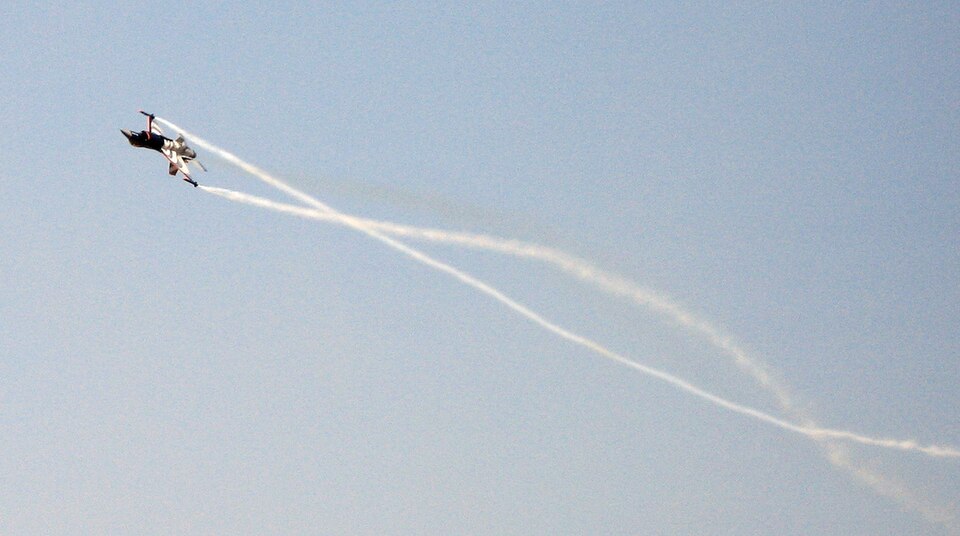
Yaw and Roll: the two types of motion that are cardinal in understanding a Dutch roll
Just as one would draw a three-dimensional picture of any object, along the three different axes, we can carve up a trio of axes while learning about the forces acting around an aircraft:
| Name of the axis | Where does it run across | Name of the movement around this dimension |
| Longitudinal | from nose to tail of the aircraft | roll (left or right depending on the wingtip that lowers) |
| Lateral axis | parallel to the line joining the two wingtips. | pitch |
| Vertical axis | perpendicular to the other two axes | yaw |

Yawing instigates a roll, instigates yaw
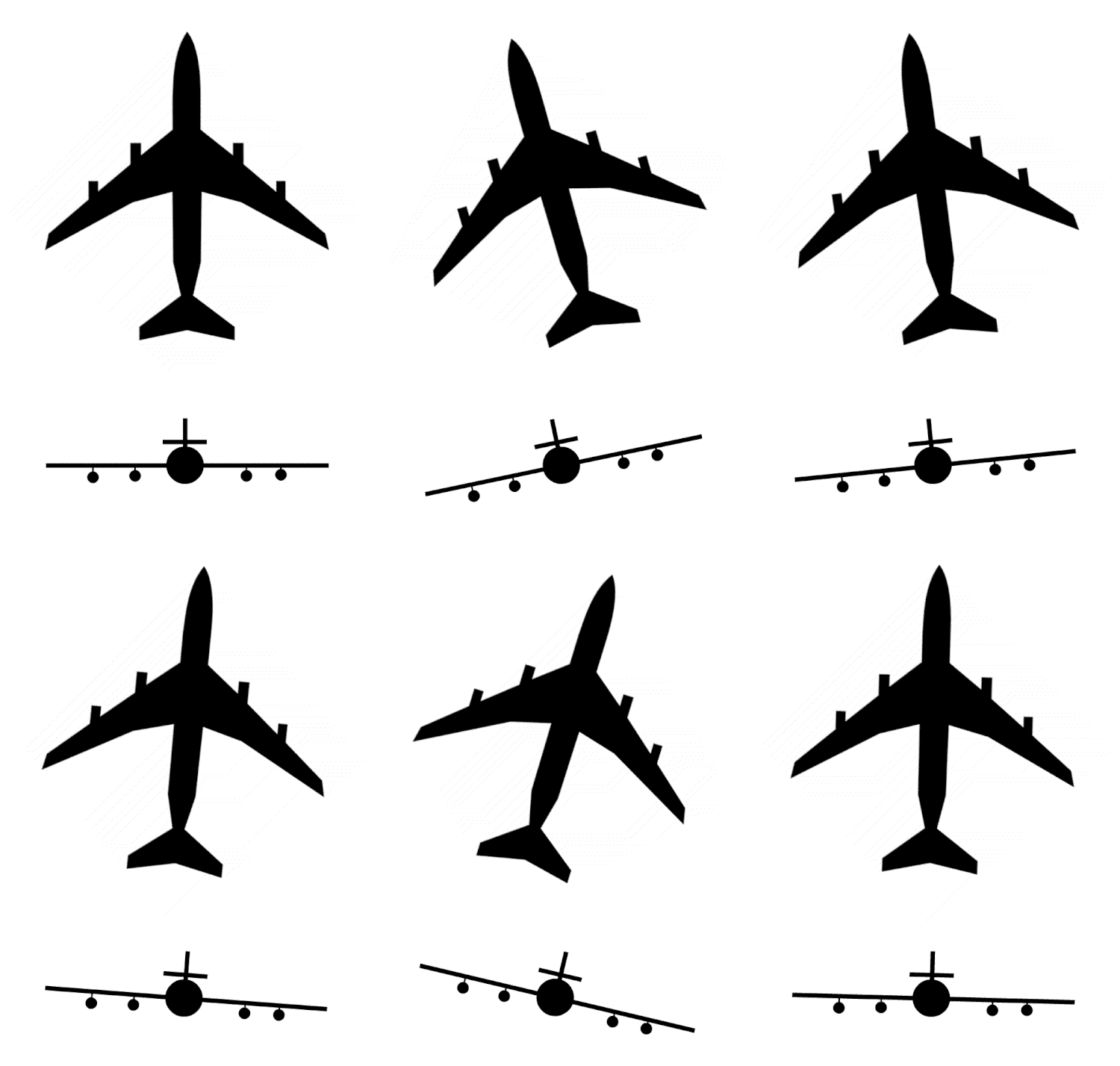
Let’s imagine that an aircraft is subject to a yawing* motion. A wind gust or turbulence might trigger a yaw. This causes an aircraft to rotate about the vertical axis. This causes the aircraft’s nose to swing, in addition to a change of the aircraft’s heading.
Yawing induces a lateral movement of the tail plane (with respect to the common position). The wing siding along the direction of the lateral movement moves faster than the wing on the other side. Hence, we have a greater lift on one wing compared to the other.
A greater lift, however, results in a higher induced drag, which is defined as “the resistance that happens as a result of creating lift, caused by swirling air around the wings that slows the airplane down.” This specific type of drag then lowers the speed of the raised wing (compared to the lower wing), resulting in the the lower wing swinging forward. International Aviation Training puts this effective start of a Dutch roll in more technical terms:
“ If the tail plane moves towards the right, the aircraft oscillates towards the left. Instantly the air flow acts on the effective keel surface and on the tail plane to move it left. The speed and the lift of the left-wing increase. That lift increase, together with the dihedral effect, raises the left wing while the tail plane moves left. That combination creates an oscillatory motion, which joins the roll and the yaw, it is called Dutch roll.”
* In the relatively older aircraft, a ball (in the needle and ball instrument) sowed the degree of yaw. In modern aircraft,however, there is a Primary Flight Display (under the bank indicator) that lets a pilot know if the aircraft is under a yawing motion.
[P.S.: In addition to the gust of winds that an airplane generally encounters, a plane also experiences Dutch Roll after the pilot gives wrong commands. ]
Understanding the stability of an aircraft
Once the aircraft starts to oscillate (after being subject to a Dutch roll), the oscillations can either stay the same, amplify( i.e,, increase), or dampen (i.e., decrease). Which of thse thre outcomes beckons is dependent on the aircraft’s dynamic stability.
| Type of dynamic stability | Fate of the Dutch oscillation | Pilot’s role |
| stable | Decrease (in time) | Not much input needed |
| neutral | Stay the same | Active correction needed |
| unstable | Grow (over time) | Pilot (or an automated system) intervention needed |
According to John Cox, a retired US Airways captain, a Dutch roll is a “natural aerodynamic phenomenon in swept-wing aircraft”. Aircraft with weaker directional stability** than lateral stability are subjec to the Dutch roll. Modern aircraft’s design tend to nullify the unwanted consequences of a Dutch roll.
**
| Aircraft’s stability | The axis about which it exists | How can it be achieved? |
| Longitudinal stability | Pitch axis | Placing the aircraft’s C.G ahead of the center of lift |
| Directional stability | Yaw axis | With the help of a vertical stabilizer (tailplane) |
| Lateral stability | Roll axis | Dihedral wings help the the plane to roll back to level flight |
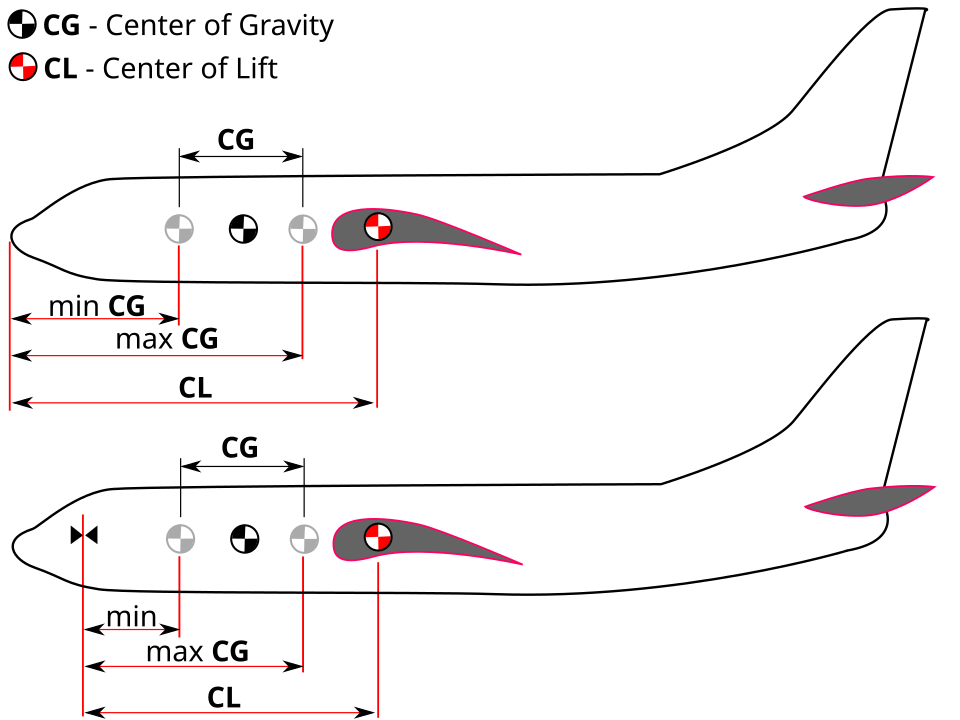
How does an aircraft’s wing design affects a Dutch roll?
Let’s take the example of Cessna 172, which is the most-produced plane in the world. The wings of this aircraft are mounted above the fuselage, providing it with a greater lateral stability, as its higher center of gravity helps the aircraft return to a level attitude after a roll. The same could e said of aircraft such as the C-130 Hercules and C-17 Globemaster III. On the opposite end of the spectrum is the Piper PA-28, whose low-wings correspond to less natural lateral stability. But things nare not as simple as correcting lateral stability only, but across all three axes, reports Pilot Institute.
How dihedral wings correct a Dutch roll
Wings of an airplane can be either:
Dihedral
Bent at an upward angle), such that the wingtips higher than the wing root. Such aircraft, when encountering yaw, create a rolling motion away from the sideslip. The Smithsonian Institute says “Wing dihedrals create ‘inherent stability,’ which allows the plane to right itself after rolling”. A plane with greater dihedral will have greater stability but not without biting into the lift and increasing the drag. An example would an aircraft of such type would be the Boeing 737, as you can see in the photograph below.
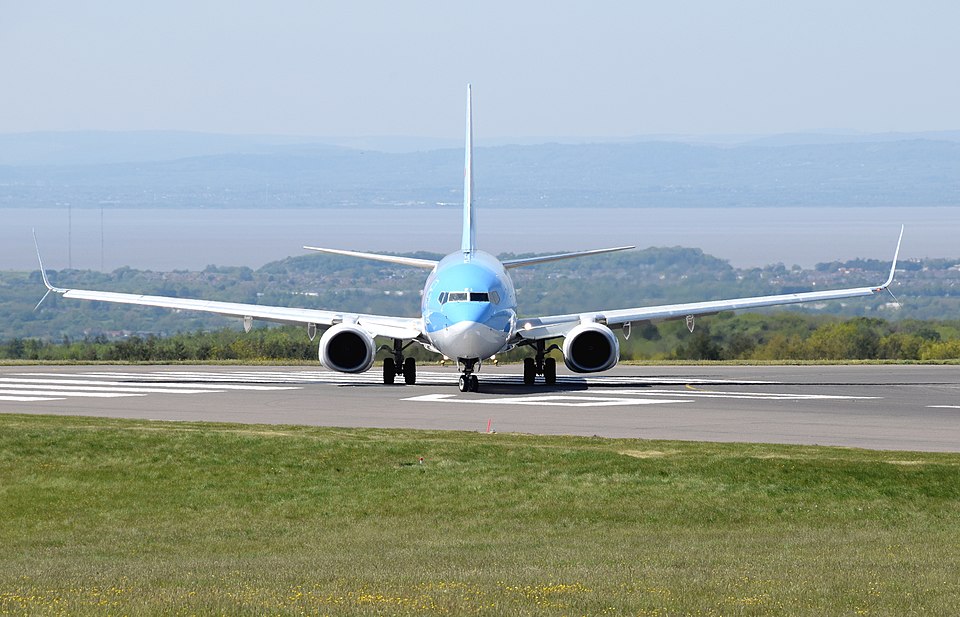
Or
Anhedral
Wings bent at a downward angle) such that the wingtips higher than the wing root. Antonov An-124, one of the largest planes ever build, is anhedral.

A positive dihedral angle and the delta wing design (also known as ‘arrow conformation’) tend to worsen the Dutch roll. Instead, a negative dihedral tends to enhance the condition.
The case of swept-back wings
Modern aircraft, such as the Boeing 787 have a high wing swept. This technology (which was first developed by Robert Jones, who first used it on the F-86 Sabre) helps the plane fly near Mach speed 1 safely. However, swept wings are likely to be subject to Dutch rolls. When the aircraft is subject to yawing motion, the angled wings create greater differential lift.
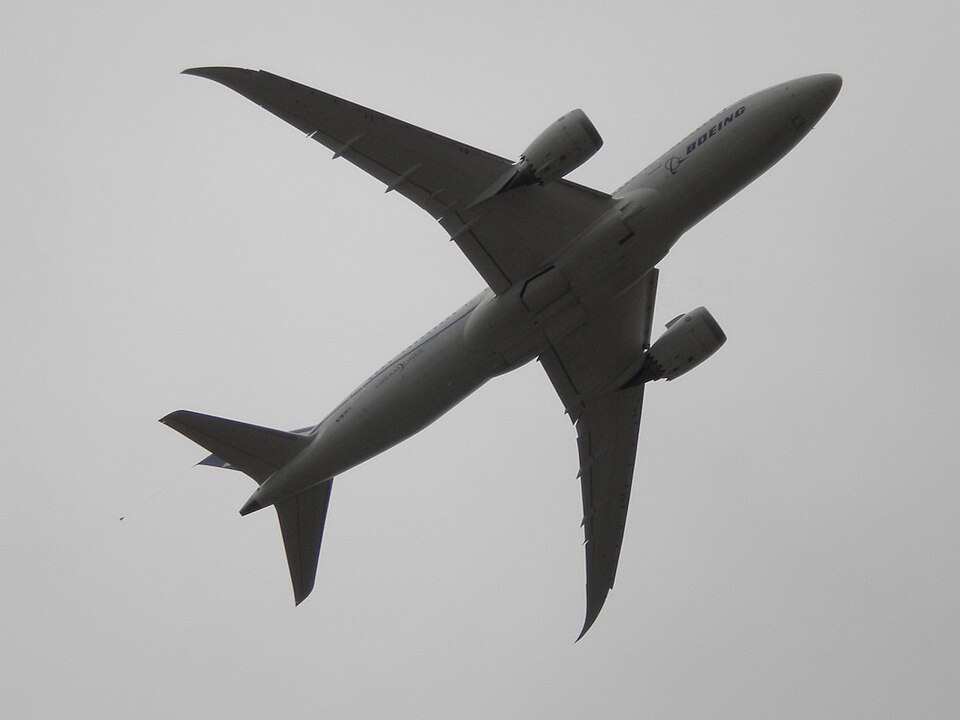
How do aircraft/pilots deal with a Dutch roll?
Using the rudder might be one of the ways a pilot can counter a Dutch roll. But if the frequency of oscillation of the roll is too high, this method might not work. Here’s how yaw dampers [an autopilot feature that controls the rudder and applies corrections when an aircraft experiences a yawing motion (or G forces)], which are connected in series in the flight control system of the rudder, can come to the rescue, according to the International Aviation Training:
“ The damper is controlled by gyroscopes and is automatically engaged, by means of a hydraulic system: a piston, fed by a fluid in pressure, acts in the right moment in the control system of the rudder, to correct the yaw movement and consequently the Dutch roll.”
Here are a few notes about yaw dampers:
- They reduce pilot’s workload
- It falls under a pilot’s duty to activate them (when needed).
- They’re typically turned off during takeoff/landing.
One of the other ways we can counter a Dutch Roll is through the use of ailerons. However, mistiming an aileron input can increase the roll-yaw coupling and make matters worse. You can see how an aileron can be deployed in a roll and how precise one has to be to time the aileron perfectly ( to counter the roll). Pilots are often advised ot use the ailerons, and minimally at that, if oscillations are too large.
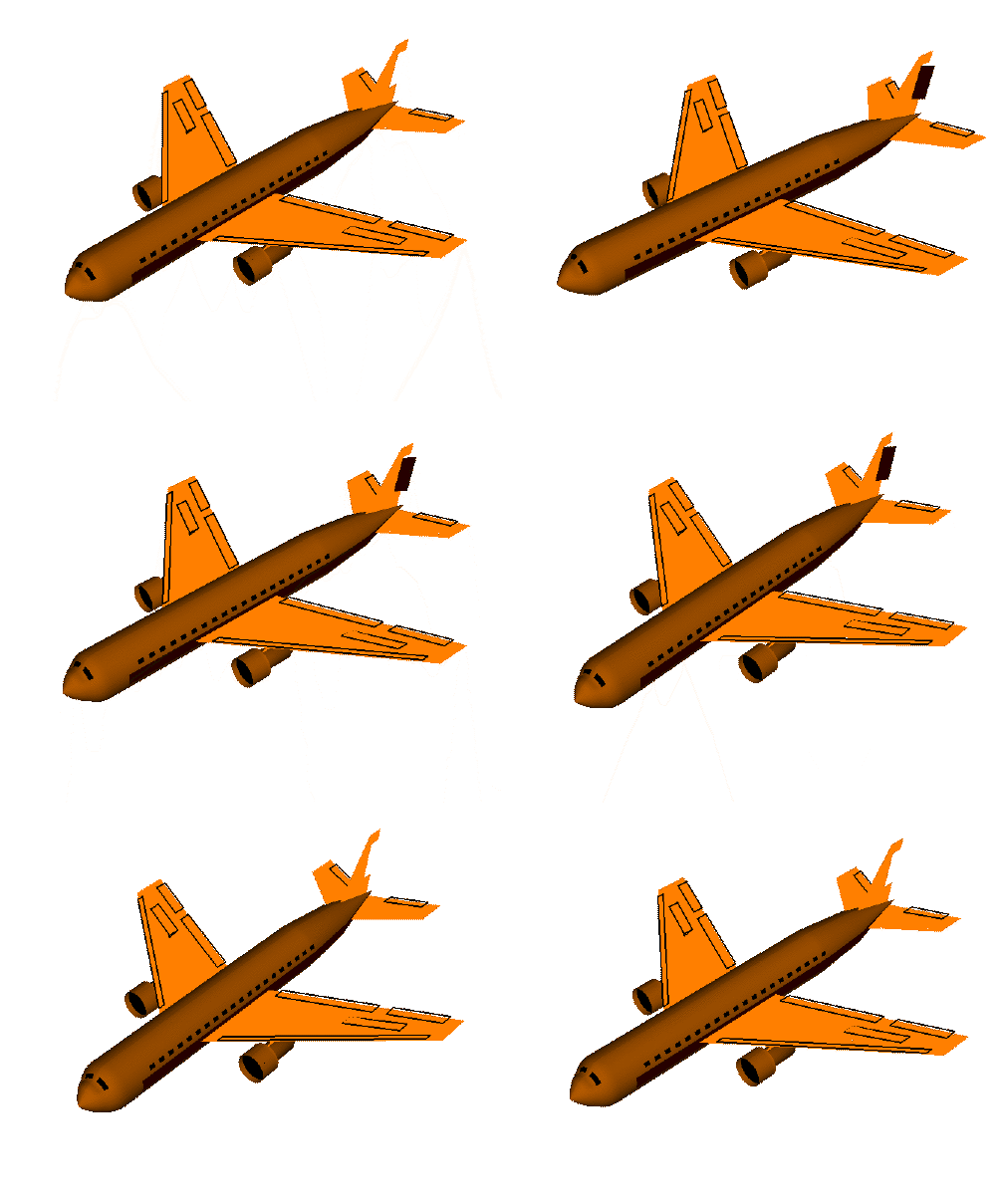
Why aerospace manufacturers intentionally design Dutch Rolls
In 2019, Boeing Test & Evaluation’s Flight Test Engineering team created the Dutch Roll Initiator (DRI). The DRI creates Dutch rolls that can be initiated during real test flights as well as during simulations. The methods included:
- Performing crew training and end-to-end validation on the system.
- Introducing the rudder actuation signals to start a Dutch roll.
The most difficult Dutch roll flight-test conducted by Boeing necessitated the following condition:“Aircraft dive of more than 5,000 feet (1,524 meters) to achieve the target speed of 5 knots (5.8 mph or 9.3 kph) below the maximum operating speed with landing gear extended”. Such controlled Dutch roll tests allow test pilots to initiate a Dutch roll in a safe and efficient manner, thereby allowing the aerospace giant to garner data in a variety of flight conditions. Such tests will allow a better understanding of Dutch rolls, and help in the design of future aircraft, said Darren McDonald, a Boeing Technical Fellow and flight test engineer:.
Such tests are all the more necessary as there are research works which indicate that air turbulence is on the rise, and hence we might see an increase in the incidences of Dutch roll, particularly in light of the fact that Dutch rolls have caused catastrophic accidents in the past.
Why and how much do aircraft wings flex/bend (during turbulence)?
Notable accidents due to Dutch Rolls
The most recent example of a Dutch Roll experienced by a flight included the case of the 737MAX8 operated by Southwest, as the flight WN746 (on May 25) departed from Phoenix Sky Harbor International Airport to Oakland, California. Despite the aircraft suffering structural damage, there were no casualties.
However, there have been instances when Dutch Rolls have caused aircraft to crash:
- A Boeing 707 registered N7071, manufactured in 1959, took off on October 19, 1959, on “a customer guarantee and acceptance training flight”. Following a series of Dutch Rolls, the aircraft lost control when “one of the rolls was executed beyond the maximum bank restrictions”. This led to engine numbers 1, 2, and 4 being torn off during an improper recovery attempt.
- A US Air Force Boeing KC-135R Stratotanker aircraft registered 63-887 crashed on May 3, 2013, killing all three onboard. The aircraft experienced a Dutch roll during its flight, but the crew was not able to recognize it. When the aircraft took a left turn (using a small amount of left rudder) to remain on-course its flight route, the oscillation associated with a Dutch roll exacerbated, and reports claimed that the “compounded the Dutch roll severity and produced extreme airframe stress that caused the KC-135’s tail section to separate from the aircraft”.
Conclusion
One might, at the end of it all, understand why simply “swaying” might not be a proper way of describing a Dutch roll. People have tried calling it different names for convenience: “wagging”, “going around figure 8”, “rippling”, etc., although catches some of the nuances of the word, aren’t subtilized enough. While the aircraft’s systems are developed in such a way that Dutch Rolls subside on their own, pilots need to have an eye out to ensure that such rolls don’t exacerbate over time.


.jpg)


_taxying_for_take_off_at_Bristol_Airport,_England_14May2019.jpg)
.jpg)


