There is pretty good evidence that turbulence is on the rise, and this is especially the case with Clear Air Turbulence (CAT). University of Reading reported that “the total annual duration of severe turbulence increased by 55% from 17.7 hours in 1979 to 27.4 hours in 2020.” Any passenger who is seated in an aircraft must have seen an aircraft’s wing flex during turbulence, and if we’re to take the afore-quoted numbers, sights of people seeing an aircraft’s wings flex during turbulence might also be on the rise.
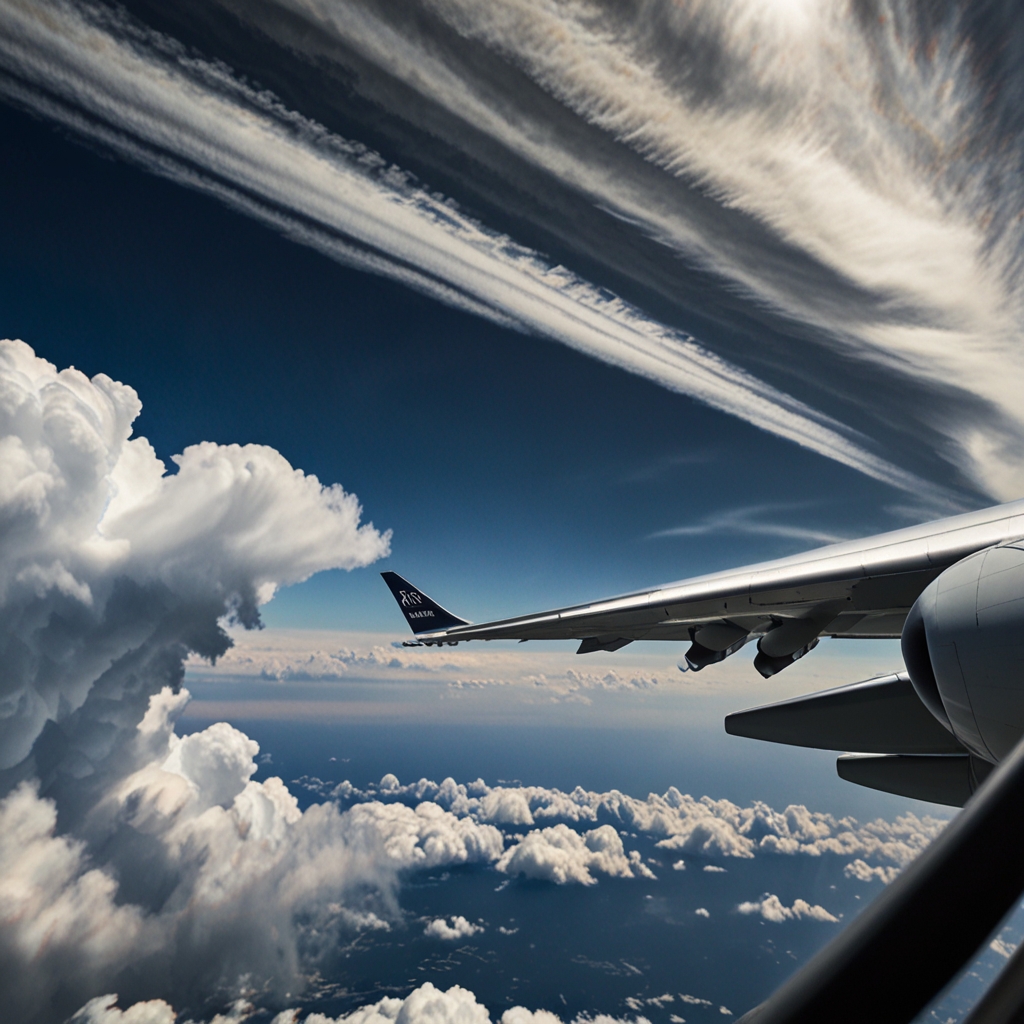
The largest aircraft ever constructed – the Scaled Composites Stratolaunch – has a wingspan of 117 meters. One might wonder if this failed project did take to the skies on like regular scheduled passenger aircraft, how much its wings would have flexed during turbulence, if at all? And how much do wings of regular passenger aircraft flex during turbulence? Let’s find out.
Two pertinent terms in wings flex: DUL and DLL
Every component of an aircraft, including the wings, had a
- Design Limit Load (DLL), which generally indicates how much load wings (and other parts of aircraft) are designed to experience.
- Design Ultimate Load (DUL) refers to the maximum limit of the load wings (and other parts of the aircraft) are designed to experience. DUL is generally 150% of DLL.
During designing the aircraft wings, manufacturers keep an eye on the wing flex by pulling the wings upward. This helps ensure that wings handle the flex caused by the simulated DUL (and DLL) smoothly.

What is the maximum that an aircraft wing can flex (during turbulence)?
The amount a wing flexes depends on the aircraft type, wing structure, and flight conditions. Here are some approximate figures:
- Commercial jets such as the Boeing 787 has a flex up to 25 feet, as recorded during a test
- The Airbus A350XWB has a flex of 5.2 meters (17 ft)
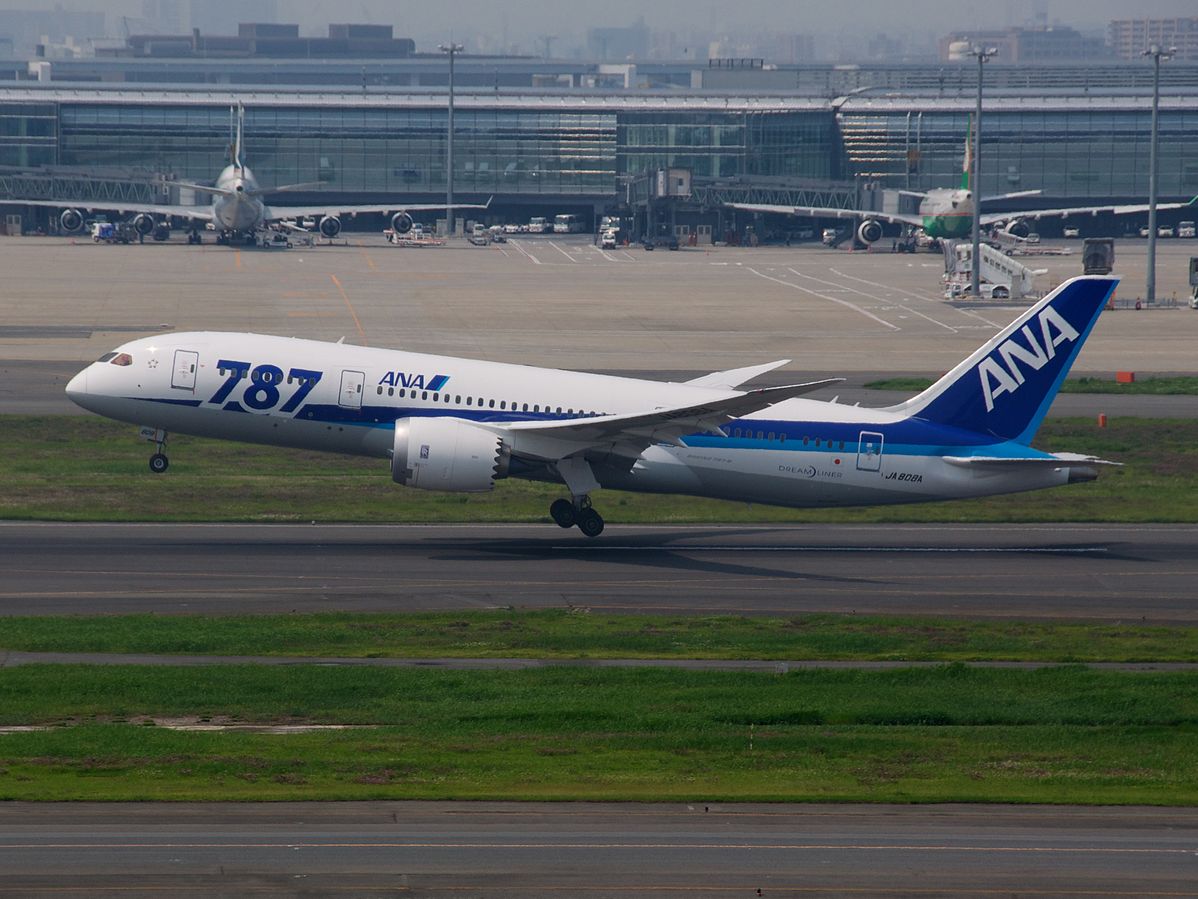
Photo: BriYYZ | Wikimedia Commons
In order to determine how much the wings can flex, manufacturers often conduct what is known as a “Destructive test” that quantifies how much vertical displacement i.e., the height difference between the wing tip and its base a wing can undergo.
During Boeing’s ultimate-load wing test for the 787 Dreamliner, the manufacturer subjected the aircraft to forces equivalent to 150 percent of the most extreme loads it was expected to encounter during normal service. The test caused the 787’s wings to bend upward by approximately 25 feet (7.6 meters), with the initial results indicating that the airframe had performed as expected.
Boeing described the test program as more extensive than any it had previously conducted on one of its commercial jetliners. However, the initial results still required further analysis and review before the test could be considered successful.
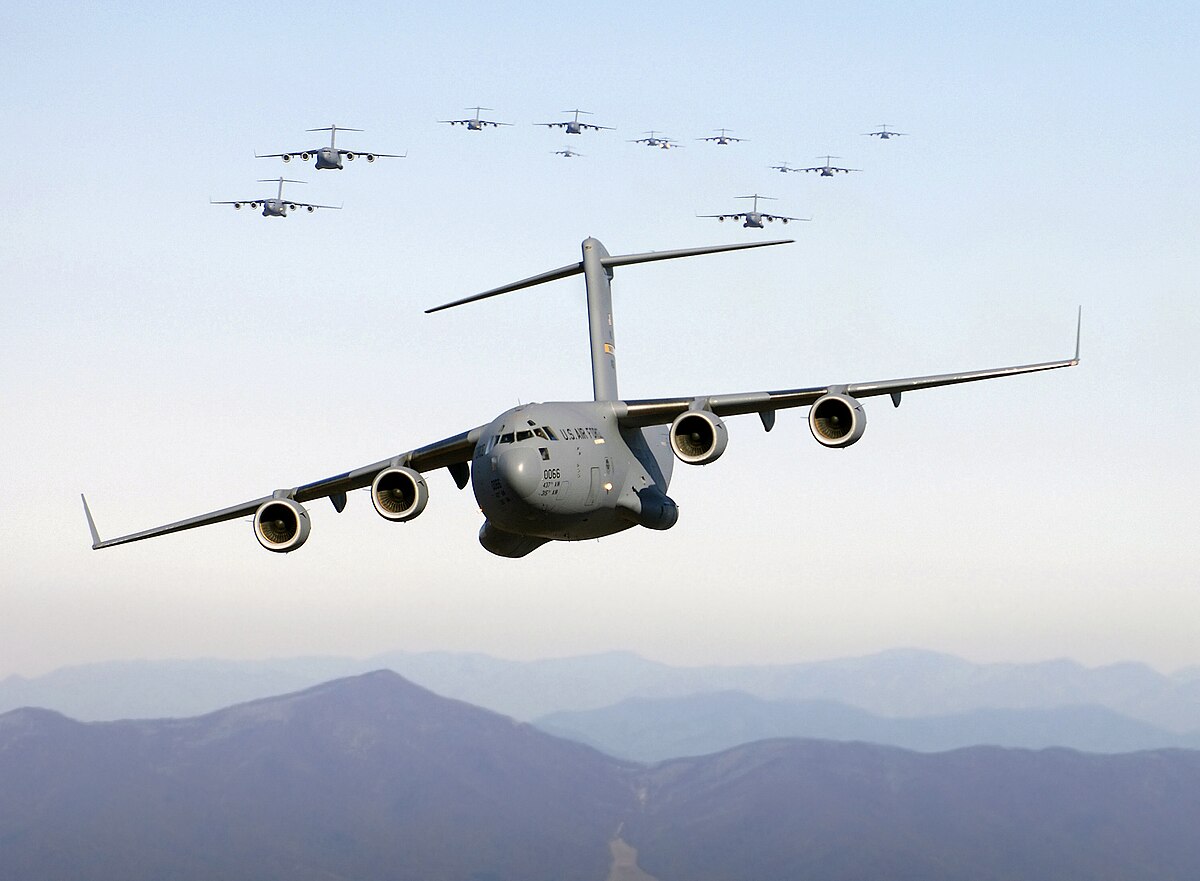
Smaller aircraft, including regional and business jets, generally experience less visible wing flex because of their shorter wingspans and different structural designs. Military and fighter aircraft can also be designed with comparatively stiff wings to withstand the high loads generated during high-speed flight and aggressive maneuvering, although wing flexibility varies considerably by aircraft design and mission.

Photo: Lord of the Wings© | Wikimedia Commons
Some older aircraft programs were historically tested all the way to their actual breaking point to find that limit. Boeing’s 787, however, was not pushed to failure — the composite wing’s ultimate-load test stopped once it reached the required 150% of maximum load, at which point the wings had flexed approximately 25 feet, matching the figure Boeing announced as a success.
How are wings designed to allow for maximum flexibility?
Getting the wing structure perfect
A good wing has the following characteristics:
- High strength
- Low weight
- Flexibility
While carving the entirety of the wing with solid aluminium might make it strong, it does add on to the weight. Hence, while making an aircraft wing, all the factors above should be balanced. This is why aircraft designers use a semi-monocoque design.

Unlike a monocoque design where loads are supported by an object’s external skin, in a manner similar to an egg shell, a semi-monocoque takes ribs i.e., slices of the wing and connects them with an aluminum skin. This forms the volume of the wings. Turbli.com, explains the semi-monocoque design ties up with wing flex:
“To prevent the skin from buckling when the wings flex, small support bars known as stringers are placed along the inner side of the skin. The stringers redirect these bending forces to the main load bearing structures of the wing: the spars. These are thick and strong bars running from the wing base to its tip. Most wings are built with two spars: the front and rear spars.”
The fuselage and the wings are connected at the center wingbox, which has the following characteristics:
- It is the strongest part of the plane.
- It is designed “to take all the loads from the wings and the landing gear”.
- It is connected with the wings (and vice-versa) with a fork-like structure that tweezes both pieces together.
Wings made up of alloys allow greater flex of wings
Aluminum alloys have a really good blend of flexibility, good corrosion resistance, high strength, and light weight – all of which in unison makeup for very good wings (flex). Steel, which was used in Kalinin, K-7, for instance, weighs 2.5 times more and is also afflicted by corrosion in humidity. The most common aluminum alloys used in planes are shown in the table below:
| Series | Properties | Component(s) where it is used |
| 2000 series |
|
|
| 7000 series |
|
|
Currently, the aviation industry is focusing on wings that are made up of carbon fiber composites, which allow even greater flex. These composites are a mixture of epoxy resins and carbon fiber, and are set to be used in the X version of the Boeing’s triple sevens. The wings of the Airbus A350XWB and the Boeing B787 – the ones with the largest flex in the industry – are made of approximately 50% carbon fiber composites.
Why do Boeing’s wings flex more than Airbus?
The Boeing 787’s wings have carbon fiber reinforced plastic (CFRP). Carbon composite construction helps an aircraft wing absorb significant flex stress. Further, unlike aluminum construction, in CFRP stiffness can be tailored to the specific areas of the plane that need it. Nevertheless, Boeing 787’s 25 ft flex is almost 8 ft more than its closest counterpart, the A350. But why?

The real driver is material science rather than aileron design: carbon fiber reinforced polymer (CFRP), used extensively in the 787’s wings, has a lower modulus of elasticity than aluminum despite being stronger overall, meaning it deforms more under a given load. The A350 also uses substantial carbon fiber content, but differences in each manufacturer’s specific wing design and load-path engineering account for the remaining gap between the two aircraft’s flex figures
All in all
With more modern aircraft to follow in the future and Carbon composite construction getting more of a say in an aircraft’s wing design, we might see Boeing 787’s record flex of 25 feet getting better in the future. As instances of clear air turbulence are rising, do we have any other option to come up with better wing flex in aircraft anyhow?

.jpg)
.jpg)
.jpg)


.jpg)