It can be a surprise to learn that students of aviation have had to write scientific papers titled “Seat Belts are not dangerous”. While this may sound farcical, or even facetious, the author of the paper was Eugene F. Duboid, an Emeritus Professor of Physiology at the Cornell University Medical College. Dubois was also the former Chairman of the U.S. National Research Council Committee on Aviation Medicine. He wrote his passionate and objective defense of seatbelt in airlines after a report on a crash a year earlier (on Viking aircraft) stated that “The immediate cause of death in more than half of the victims was acute flexion of the body over the safety-belt.”
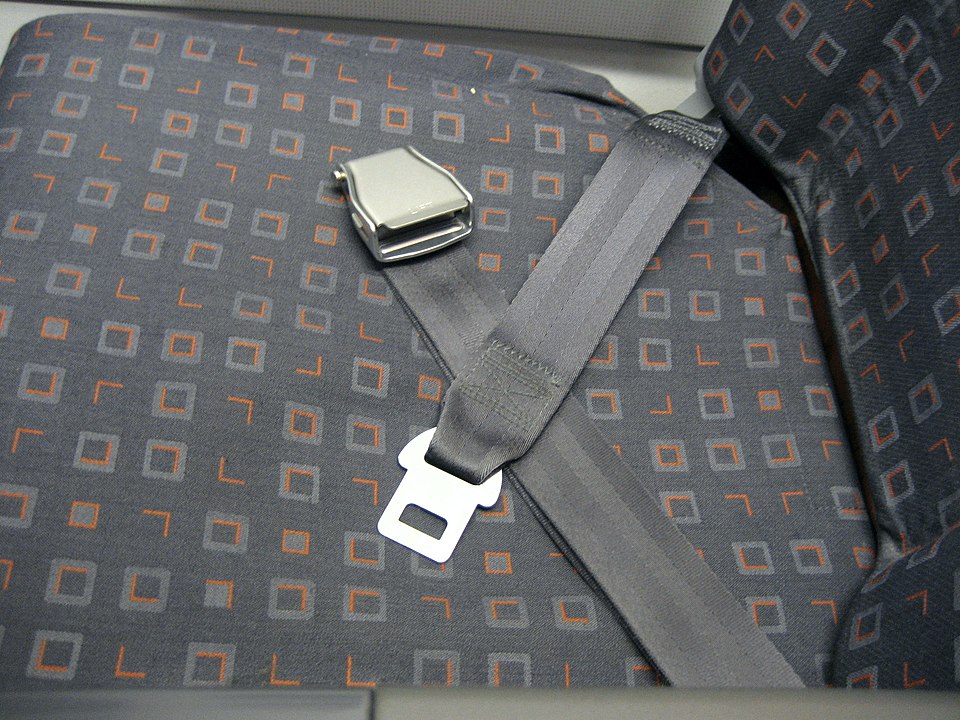
As early as 1942, the year when the heaviest bombers of the Second World War, such as the Avro Lancaster were being introduced, it was popularly believed that “1,000-lb. (454-kg.) safety belts caused internal injuries, and even cut people in two”. Dubois wrote his paper to dispel such myths, and establish safety belts as life-savers in aircraft, especially when the plane encounters turbulence or massive acceleration/deceleration during the takeoff and landing phases. Fast forward to three decades later and scientific enquiry in 1970s showed that lap seat-belts reduced the risk of major or fatal injury by nearly 60%. They were, however, “responsible for visceral injury including intestinal perforation, and can be associated with a specific type (“chance”) of spinal fracture”.
A change in scientific perception about the use of selt-belt over time is also a reflection of the changing policies regarding the matter. Only last year, after turbulence experienced in Singapore Airlines SQ321 led to the death of a passenger on the flight, prompting Singapore Airlines* to come up with a seatbelt policy where the flight attendants of this carrier needed to strap themselves into their jumpseats when not serving a passenger. [A glaring example of the dangers of not putting on seatbelt was when a flight attendant of Aloha Air Flight 243 was blown away when the aircraft lost its roof at 24,000 ft].
The first law regarding seatbelts goes back almost a hundred years, to the time when the Air Commerce Act was introduced in the US in 1926- a time when the first federal aviation regulations were brought forth. This was a novelty in aircraft seat belt regulation and was deemed: “Safety belts or equivalent apparatus for pilots and passengers in open-cockpit airplanes carrying passengers for hire or reward.” A couple of years later, airliners were required to have seatbelts, but it was not compulsory for passengers to strap themselves with it. One might therefore wonder how and why have airline seatbelt regulations changed over the years. Let’s find out.
Benjamin D. Foulois, the US Army general who invented aircraft seat belts
According to a report by the FAA, aviation, by and large, recognizes Major General Benjamin D. Foulois as the inventor of aircraft safety belt. Foulois was a US Signal Corps officer and only the fifth Army officer to whom the rating of military aviator was bestowed upon. On March 2, 1910, this one of the first military pilots in the world, made four flights, which consisted of his four personal firsts:
- First solo flight
- First take off,
- First landing,
- First crash (on his last flight)
It was his first crash that prompted him to come with the idea of a seatbelt. One of the earliest sources that claims Foulois to be the person who came up with seatbelts in aircraft is a doctoral dissertation submitted to the University of Ohio, where the author mentions:
“He corresponded frequently with the Wright brothers on questions of pilot technique. He also modified the airplane they had designed and built, substituting wheels in place of the original skids. This enabled him to take off without the use of the catapult. He also installed the first aircraft seatbelt, after nearly “being thrown out of the plane while approaching the field for landing.”
However, Foulois didn’t only come up with seatbelts, but also numerous novations in aviation such as:
- Dedicated flight surgeons
- First assignment instructors
- Radio communications
- Flying squadrons organized by function rather than into companies
- Replacement training units,
- Flight Pay
- Wheeled landing gear
Foulois, himself, has been quoted as about the idea of coming up with seatbelt in the hugely popular game show “I’ve Got a Secret“. It was Foulois efforts that helped install seatbelts in military aircraft manufactured by the US by the time Europe was wracked by World War I.

The need for seat belts was also demonstrated in this decade when Harriet Quimby, the first licensed woman pilot in the United States, who was killed, quite possibly due to the absence of seat belts. After all, Quimby was ejected from her Bleriot aircraft “when her plane pitched forward suddenly and plunged to the ground during an aerial demonstration”.
Coming up with the first seat belt laws but with great laxity
As mentioned earlier, despite a formal law regarding airline seat belt being passed, passengers didn’t really have to put them on even until 1928. The earliest seats in aircraft were wicker chairs, and it might be needless to say that the first seatbelts weren’t as sophisticated as the ones currently deployed. Also, aircraft during those times flew at a height of merely 4,000 or 5,000 ft, meaning that the aircraft experienced higher turbulence than modern-day aircraft. The turbulence experienced in such low altitudes also meant that the airsickness bags were also being developed around the same time.
Then chief engineer at Boeing, Charles N. Monteith, was buoyant about the prospect of seatbelts at his presentation aeronautical meeting of the American Society of Mechanical Engineers, organized in May 1929:
“As for safety belts, British and Dutch opinion is against their installation. Most of the transports operating in the United States today do not provide belts for the passengers, but it is being demonstrated rapidly that they are sometimes very necessary.”
The FAA claims that safety belts in the 1920s “did little to protect passengers or pilots during crashes”. Its aim was essentially what Dubois hoped for: the prevention of passengers/crew from being tossed around the aircraft during turbulence or other maneuvers. Straps were all the more important in smaller planes, which were capable of tossing pilots during severe turbulence.
The crash of a US Navy H-16 seaplane: the first turning point
On April 29, 1927, the crash of a US Navy H-16 seaplane led to the loss of four crew aboard the aircraft: none of them had seatbelt on when the aircraft hit a patch of turbulence. The crew were tossed around the aircraft (registered A-3553), which eventually succumbed to a crash. One of the crew even hit the controls and it was suggested that “The proper wearing of the safety belts could have prevented the pilots from being jostled around and allowed them to remain in control of their plane”.
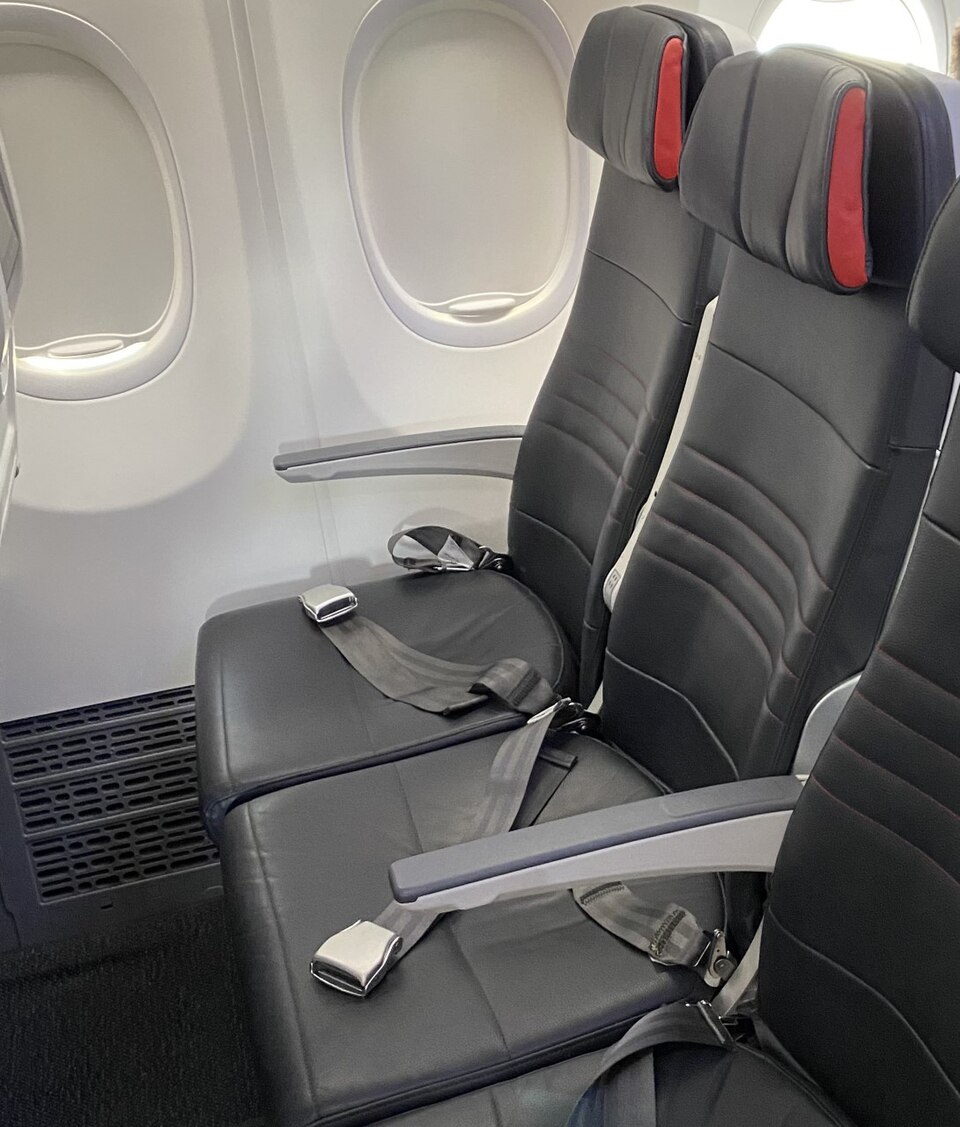
As a result, various laws regarding airline seatbelt were drafted the next decade. Aeronautics Bulletin placed the nuances in the rules in various times in the 30s in the following manner:
| Year | Seatbelt Policy |
| 1931 | “safety belts or equivalent for pilot and passengers… Seats or chairs in cabin aircraft shall be firmly secured in place. Safety belts and their attachments shall be capable of withstanding a load of 1,000 pounds applied in the same manner as a passenger’s weight would be applied in a crash.” |
| effective March 1, 1933 | “capable of withstanding a load of 1,000 pounds applied in the same manner as a person’s weight would be applied in a crash. [Safety belts should] also be easily adjustable and equipped with a quick-release mechanism capable of being operated by hand under a load of 400 pounds.” |
| October 1, 1934, increasing the requirements for safety belts. 1 | “ (seatbelts) and their attachments” should be able to hold 1,000 pounds applied “upwardly and forwardly at an angle of approximately 45° with the floor line.” ** |
**by this time the idea of a wicker chair was gone and it was deemed necessary for airline seats to be firmly secured in place.

In 1939, the Air Corps designed shoulder seat belts for military aircraft. Air Corps News Letter (published in the pertinent time) described this piece of technology as “In appearance, it resembles a pair of suspenders passing over the user’s shoulders. The front ends are latched to the standard lap type safety belt; the back ends are anchored to the airplane seat.”
The research and the policies tweak a little in the next decade
In the 1940s, research was being done to analyze how effective seatbelt (policies) are at preventing injury and accidents. A few laws beckoned. These included:
- 1941: “a suitable means for warning passengers to fasten seat belts” was mandated by the Civil Aernautics Administration.
- 1942: “certificated safety belts for all passengers and members of the crew” ***
*** the rule was to be iterated in the year when the B-29 superfortress dropped the bomb in Hiroshima and Nagasaki.
A study conducted by the Air Force a couple of years after the end of World War II showed that the human body was capable of withstanding 4,770 pounds of force without injury, given that the body was secured with a seatbelt. Such results prompted manufacturers to come up with durable seat belts (and buckles) that could be easily removed but were not amenable to flying open on impact.
Spurious claims about the lethal effects of seatbelts and the mood changes in the 1950s
On October 31, 1950, a Vickers 610 Viking 1B operated by British European Airways (BEA) and registered G-AHPN crashed, killing 28 of the 30 people aboard. The pilot overshot the runway before the aircraft skidded across the surface and struck a pile of drain pipes, which caused it to catch fire.
Investigators concluded that the most likely explanation was that the captain continued the approach below the normal break-off point. At around 100 feet or lower, the aircraft apparently entered fog that suddenly reduced the visibility of the runway lights. The overshoot procedure was then initiated too late to prevent the accident.
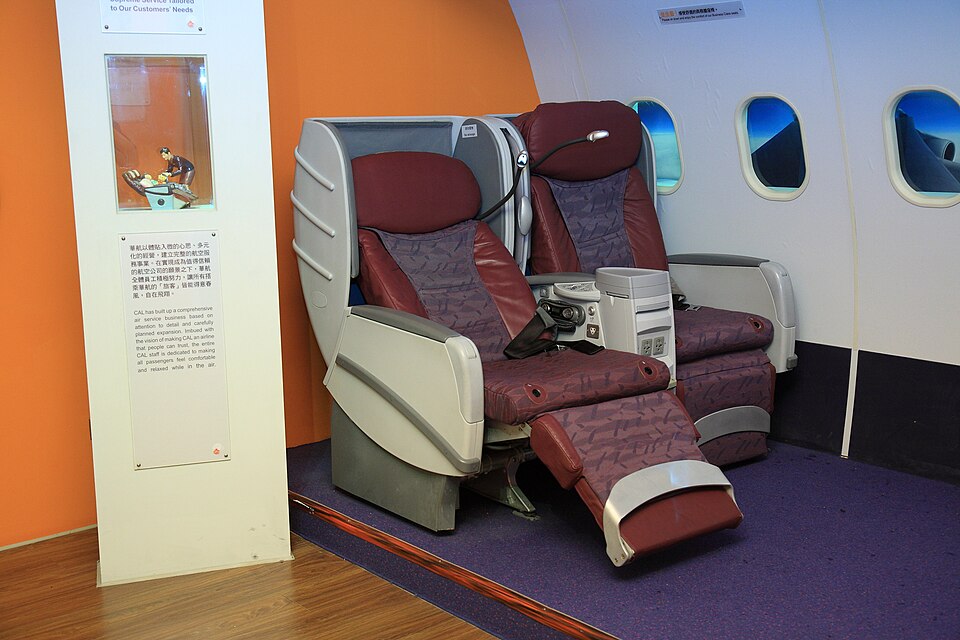
Dr. Donald Teare wrote in the British Medical Journal (in an article titled “Post-Mortem Examinations on Air-Crash Victims”) that the immediate cause of death in more than 50% of the victims “was acute flexion of the body over the safety belt”. When Teare’s article made its way across to the Scientific American in 1951, the abstract read, “The Dangerous Safety Belt”. The opening sentence was rather ominous: “When an airplane crashes, the safety belt…may become a deadly hazard.” This scared a lot of people from putting their seatbelts on, lest they suffer the same fate during an accident. The widespread fears led to Eugene Dubois to challenge this claim by conducting an extensive analysis of the crash.
Dubois also found that there was little credence to support the falsely held view that “1,000-lb. (454-kg.) safety belts caused internal injuries, and even cut people in two”. Five years prior, a colleague of Dubois, Hugh DeHaven ridiculed the misconception that lap belts were unsafe, calling such a perception “dangerous,” and was caused by a lack of “ignorance and superstition”, asserting that “…the false conviction that the use of safety belts would cause internal injury when crashes occur”
The laws haven’t changed too much since the 1970s, though
Let’s have a look the amendments to the airline seatbelt rules in 1971 which state that “each occupant of an aircraft fasten his safety belt during the takeoff and landing of that aircraft.”
| Amendment 91 |
|
| Amendment 121 | “stated that during takeoff and landing… each person… shall occupy an approved seat… with a separate safety belt properly secured about him”
[The rule wasn’t applicable for infants under two years in age.] |
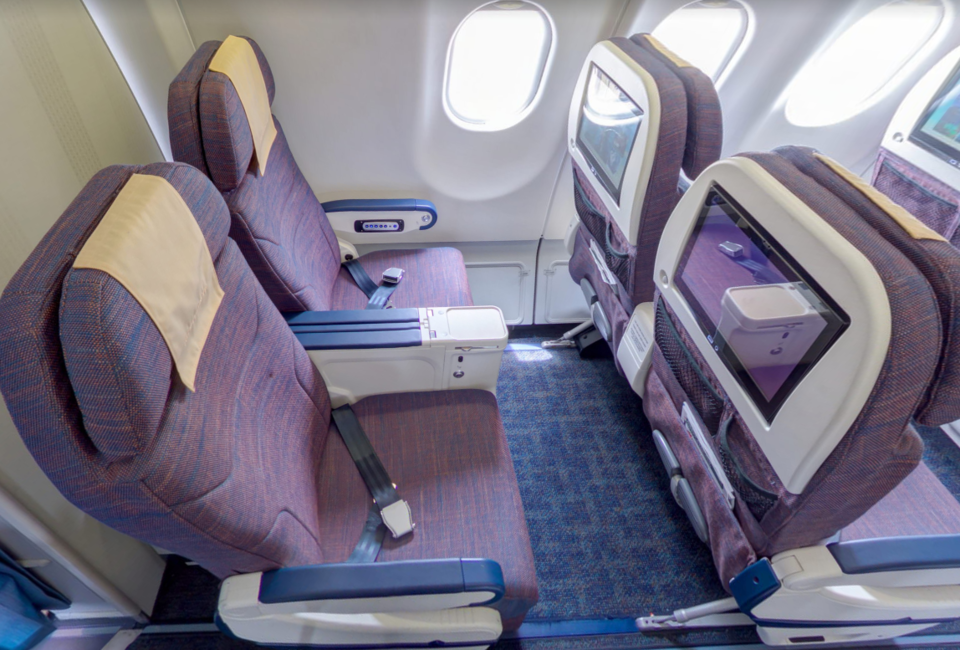
Despite the fact that Shoulder belts were invented in the year the second world war started, they’ve not found their way into airliners as planes with such belts tend to make heavier, affecting the aerodynamics. While one could connect the belts to the wall or ceiling of the aircraft, there would be much pressure applied on the exterior walls. The FAA is sceptical about lap belts’ efficiency in protecting passengers during turbulence.
Exception to “Always fasten your seatbelt while seated” rule
There might be subtle differences in airline seatbelt policies around the world but the the overarching theme of these rules is universal: Passengers need to out on the seatbelts during taxi, take-off and landing, and whenever it is “deemed necessary in the interest of safety”. Skybrary enunciates the rationale behind the rules in the following points:
- “preventing people from being thrown around the aircraft and into hard objects or other persons;
- preventing people being thrown out of the aircraft in case of a hull breach, either in flight or during a high impact crash”
We have often heard that we need to always fasten our seat belts while we are seated. The only exception to this decree is refueling with passengers onboard.


,_fastens_his_seatbelt_while_Maj._Angel_Hooper,_aircraft_commander,_VMGR-352,_15th_MEU,_conducts_a_pre-flight_130208-M-BY384-008.jpg)

.jpeg)

