Neil Armstrong’s landing on the moon prompted an apercu that is rather indelible (and perhaps wrongly quoted): “A Small step for [a] man, one giant leap for mankind”. [Without the parenthesized [a], the nuances change]. The Apollo 11 crew that landed alongside Neil unveiled an engraved plaque bearing a lesser-known phrase: “We came in peace for all mankind” The fifth space shuttle mission, however, had a prosaic statement: “We Deliver”.

Space Shuttle was a workhorse that delivered satellites, telescopes, and experiments into space: the emphasis of the space program had changed during the zeitgeist of the 70s, and space was something less to be “explored” and more to be “utilized”. The shape of a space shuttle orbiter hinted at its usefulness – it was a broad-winged craft with a large cargo bay body. But how does a space shuttle work? Let’s find out.
The Basics of Space Shuttle
The Space Shuttle marked a new era in spaceflight as the first reusable spacecraft. One major component of the Space Shuttle is the orbiter. One parallel of the orbiter was Soviet Union’s Buran, whose iconic photograph as it was carried on the back by the Antonov An-225 Mriya, one of the largest planes ever produced.
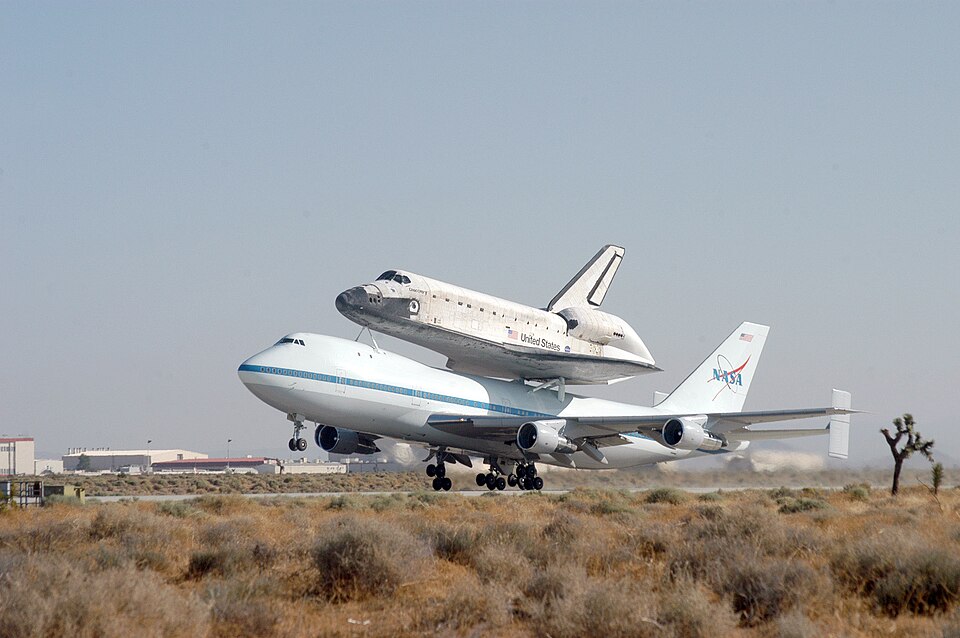
Here are the other major components of the Space Shuttle:
| Three main engines | A combined thrust of more than 1.2 million pounds |
| Two solid rocket boosters (SRB’s) | Combined thrust of some 5.8 million pounds |
| External Tank (ET) | Feeds the liquid hydrogen fuel and liquid oxygen oxidizer to the three main engines |
The Shuttle has proved to have had “the most reliable launch record of any rocket now in operation”. Some of its distinctions include:
- Boosting more than 1.36 million kilograms (3 million pounds) of cargo into orbit since 1981.
- There has been a decrease in problems encountered i the Space Shuttle while on flight by 70 percent.
- The cost of operating the Shuttle has reduced by 40% (a decrease of one and a quarter billion dollars annually)
Orbiter
The size of the orbiter is comparable to that of an Airbus A320 or a DC-9 aircraft. But unlike this plane of Airbus that sports the name A and has the number 3, the orbiter has double-delta wings of a fighter plane. Author Valerie Neal describes the orbiter as a “part camper, part moving truck, service station, research lab, observatory, and construction rig—with wings and wheels like an airplane and engines like a rocket” in her book “Spaceflight in the Shuttle Era and Beyond Redefining Humanity’s Purpose in Space”. The orbiter, which has a structure that is mostly made of titanium alloy, has:
- Three main rocket engines in the aft fuselage
- A large payload bay
- A crew compartment in the nose section
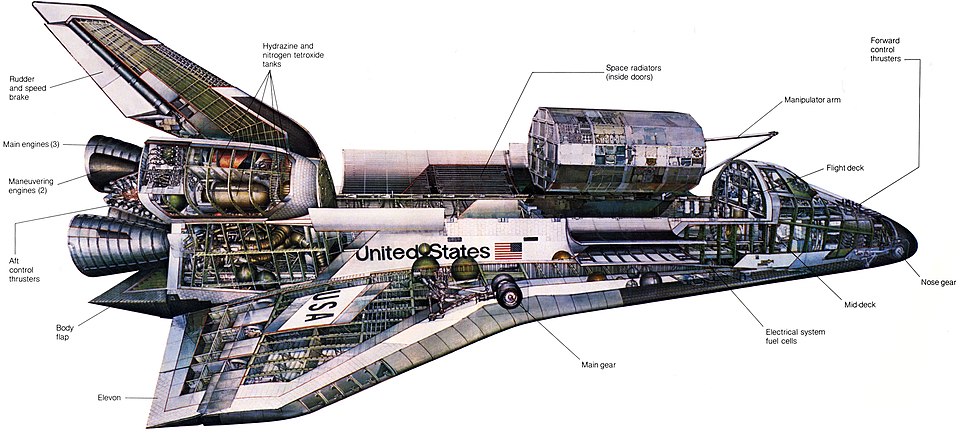
Each orbital vehicle, such as Discovery, Atlantis, and Endeavour was designed for 100 flights.
How Shuttle’s powerful engines help it launch to space
The Shuttle weighs around 4.5 million pounds (2.05 million kg), and is hurled into an orbit in Space [the definitions of where space begins differ] of typically 115 to 400 miles/185 to 643 km. Its main engines and rocket boosters help it get to orbit.
Space Shuttle Main Engine (SSME)
Each Orbiter has three Rocketdyne Block II SSME engines. Here’s the technical details:
| Weight | 6,700 lb (3039 kg) |
| Length of each engine | 14 feet (4.3 m) long |
| Dimater of each engine | 7.5 feet (2. 3 m) |
| Sea level thrust (each engine) | 1.752 MN at 104% power |
| Total thrust at liftoff | 5.255 MN* |
| Speed of exhaust gases (at the nozzle) | 6,000 mph (10,000 km/h) |
| Burn Time | 480 seconds |
| Fuel | Liquid oxygen and liquid hydrogen (which is in the External Tank a ratio of 1:6) |
* According to How Stuff Works, the rate of thrust can be controlled from 65 percent to 109 percent maximum thrust.

External Tank
In addition to holding the attachment points for the Orbiter and the Solid Rocket Boosters, the (non-reusable) External Tank also supplies liquid oxygen and hydrogen propellants to the main engines.
Solid Rocket Boosters
The thrust of each booster is 5,300,000 lbs.

How does the space shuttle lift off?
On either side of the tail of the space shuttle are its two orbital maneuvering systems’ (OMS) engines, which burn:
- Monomethyl hydrazine fuel (CH3NHNH2)
- Nitrogen tetroxide oxidizer (N2O4).
After coming into contact, these two substances ignite and burn automatically. Let’s take a look at the details of the OMS engines
| Parameter | Value |
| Number of OMS Engines | 2 |
| Thrust per Engine | 6,000 lb (26,400 N) |
| Total Acceleration (Both Engines) | 2 ft/s² (0.6 m/s²) |
| Maximum Velocity Change | 1,000 ft/s (305 m/s) |
| Velocity Change for Orbit Insertion/Deorbit | 100–500 ft/s (31–153 m/s) |
| Velocity Change for Orbital Adjustments | ~2 ft/s (0.61 m/s) |
| Number of Starts/Stops | Up to 1,000 |
| Total Burn Time | 15 hours |
Half a minute before take-off, the launch sequence is taken over by the on-baord computers. Three seconds before takeoff, the shuttle’s main engines get in lift-off position. For the first two minutes of the flight, the Solid Rocket Boosters (SRBs) work in unison with the main engines. A minute after taking off, the shuttle engines are at maximum throttle. Shuttle then wheezes from 4,828 kilometers per hour (3,000 mph) to over 27,358 kilometers per hour (17,000 mph) in just six minutes, and reaches orbit.

Eight and a half minutes after take-off, the main engines shut down. When the shuttle is at an altitude of approximately 45 km (24 nautical miles), the SRBs separate from the space shuttle and make their way to the Atlantic Ocean after descending on parachutes.
How does the crew survive aboard the Shuttle in orbit?
Normally, the Space Shuttle is in orbit for 5-16 days, with the maximum a Shuttle stayed in orbit being 17.5 days. The orbiter is home to a life support system (for crew who are positioned in the crew compartment that have “2,325 cu.ft of space with the airlock inside or 2,625 cu.ft with the airlock outside”) comprising food, water, temperature control, waste removal, and fire protection. The crew cabin has a habitable volume of 71.5 cubic meters (2,525 cubic feet). The crew compartment is divided into three decks, the first of which is the uppermost deck that is home to Shuttle’s controls and warning systems (and is therefore dubbed cockpit). The mid-deck is the living quarter that has sleeping bunks and compartments that house mission-essential equipment, exercise equipment, and experiments. The lower deck, which is also known as the equipment bay, is where the life support equipment and the electrical systems are.
The middeck stowage capability of a Space Shuttle is comparable to 127.5 middeck lockers, each having a volume of 0.06 cubic meters (2 cubic feet). This is enough to accommodate supplies and equipment for seven crew members for upto 16 days.
The space shuttle’s fuel cells are where the water gets made – these cells can make 11 kg (25 lb) of water per hour. The hydrogen separator eliminates any trapped hydrogen gas in the water that is manufactured. Water is then stored in the lower deck, which is home to four water storage tanks (each with a capacity of 75 kg (165 lb). Food, available in various forms such as natural, fresh, dehydrated, heat-stabilized, and low moisture, is stored on the mid-deck of the crew compartment. There is a galley-style kitchen in the orbiter, and it contains the following:
- Food storage compartments
- A food preparation area
- Food warmers
How does the Space Shuttle communicate and navigate during its orbit?
The Space Shuttle Program helps in the construction of massive space structures, such as the ones needed for the International Space Station. This might often necessitate repairing complicated engineering components by people who are adept at dealing with sensitive materials and structures. So, having a bearing on Shuttle’s location is of paramount importance. If the crew of the orbiter want to communicate with the ground, they can use either the high bandwidth Ku-band for transferring video data, or the low bandwidth S-band for voice/ commands data. The orbiter tracks its location and speed using a Global Positioning System (GPS).

What kind of work does the space shuttle do in space?
One of the biggest works of the Space Shuttle was assembling the International Space Station. As of October 2010, Space Shuttle Discovery, Atlantis, and Endeavor had flown 34 missions (in total) to the ISS, with each mission carrying 12,700 and 18,600 kg (28,000 to 41,000 pounds). According to NASA, “The combined total of ISS structure, logistics, crew, water, oxygen, nitrogen, and avionics delivered to the station for all shuttle visits totaled more than 603,300 kg (1,330,000 pounds)”- a capacity that no other launch vehicle has: delivering structures that are 4.27 m (14 ft) in diameter, and 15.24 m (50 ft) in length.
In 1990, NASA deployed the Hubble Space Telescope [weight: 13,600 kg (30,000 pounds)] into an altitude of 555-km (300-nautical-mile) altitude. Over the next two decades, the Space Shuttle helped upgrade Hubble’s science instrumentation. For such work, some crew members might also have to perform spacewalks, which are more scientifically known as Extra vehicular Activity (EVA).
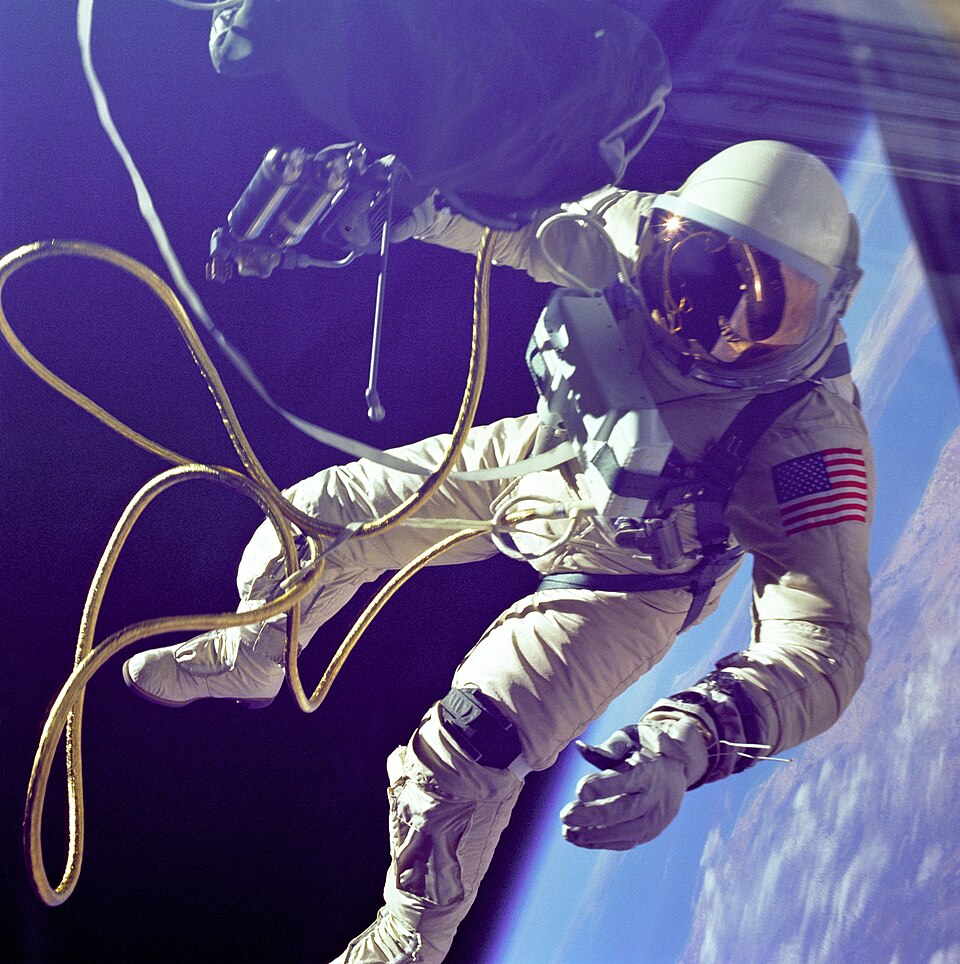
It is also said that the Space Shuttle, through its refurbishments, helped bestow “an almost perpetual youth” upon the Hubble Space Telescope.
How does space shuttle return to Earth?
Returning to Earth is quite a challenge for the orbiter for various reasons. When entering the Earth’s atmosphere, the orbiter is subject to an extraordinary drag force, which might be able to burn the orbiter. This possibility is nullified by the ceramic tiles placed over the body of the orbiter.

The orbiter also has to enter the earth at a specific angle of attack, so as to decrease the drag. It also has to bank at specific angles at various times. While landing at the Kennedy Landing Site, there is also no possibility of a go-around, as the fuel is completely exhausted by the time the shuttle enters the Earth. You can read about it in detail in the guide below:
Celebrating the Space Shuttle
The Space Shuttle mission gave us the first female astronaut on NASA’s such mission. When at the age of 14, this later-to-be-female-astronaut had enquired about the possibility of joining NASA, the space organization replied that it didn’t hire female astronauts.
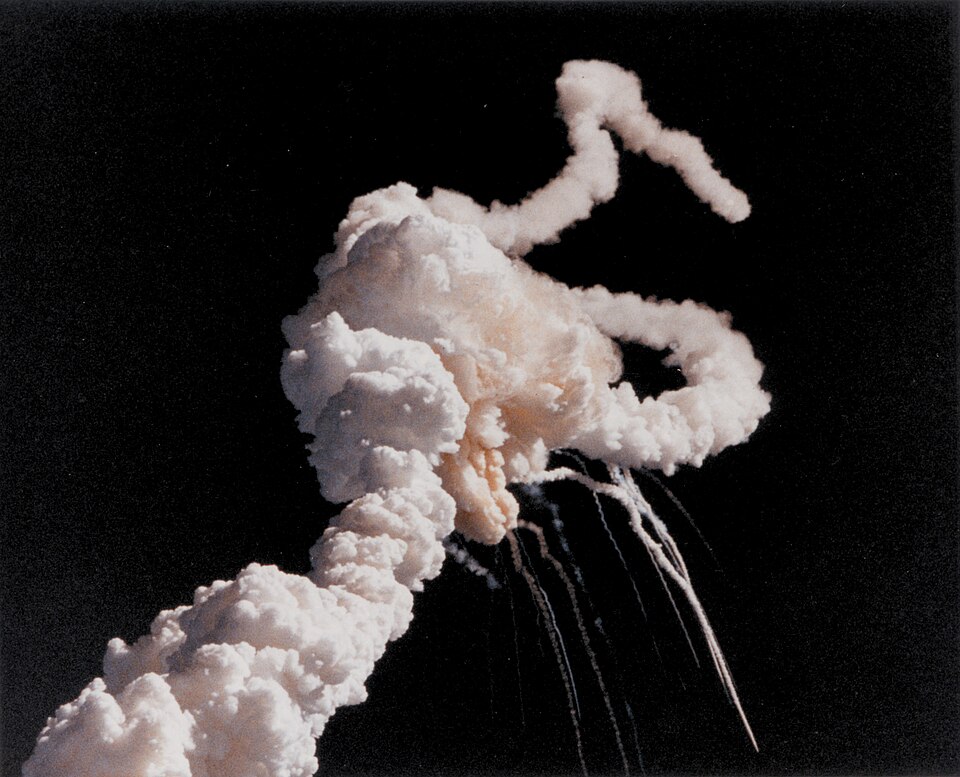
Space Shuttle Challenger also saw a horrific accident- the only one in-flight for an American spacecraft. All seven crew were killed. While this will be a scar that the Space Shuttle will not be able to shrug from its history, it will also be a recipient of being a crewed spacecraft whose capabilities have not been replicated. Till now.

.jpg)
