When the former Air France chairman, Jean-Cyril Spinetta, said, “Concorde will never really stop flying because she will live on in people’s imagination”, it encapsulated everyone’s feelings. Apart from hardcore environmentalists who have maintained that an aviation world full of Concordes would simply ruin the planet (for the aircraft was a gas guzzler)[zero carbon flight was once called as big a challenge as Concorde], everyone wishes Concorde (or something that resembles it) take to the skies.
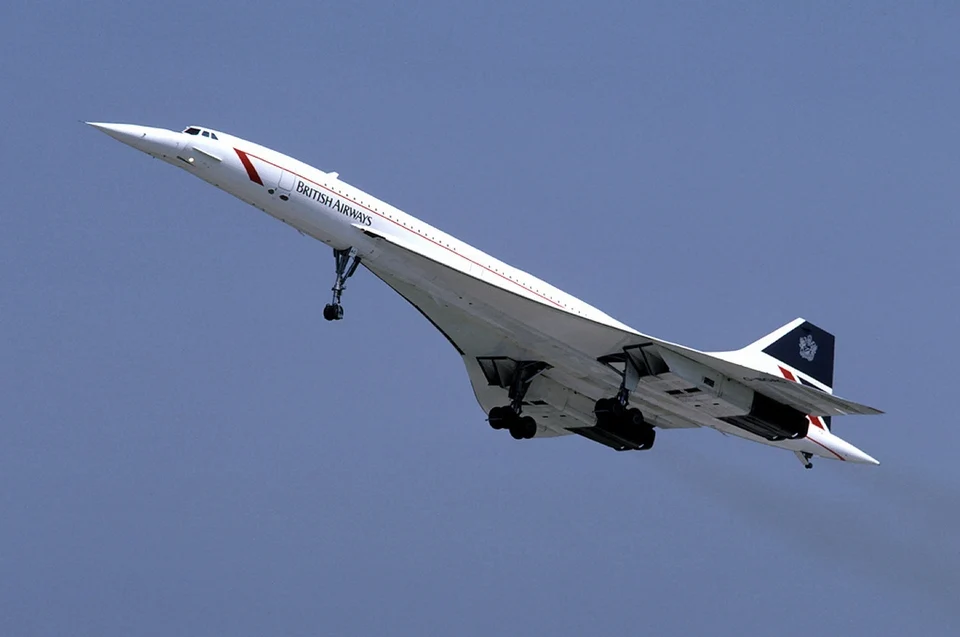
Photo: Eduard Marmet | Wikimedia Commons
Concorde, by no means, is the world’s fastest aircraft: the North American X-15, a hypersonic research rogram that clocked six times the speed of sound was approximately three times faster (though the X-15 was rocket-powered). But what was the Concorde’s top speed? Let’s find out.
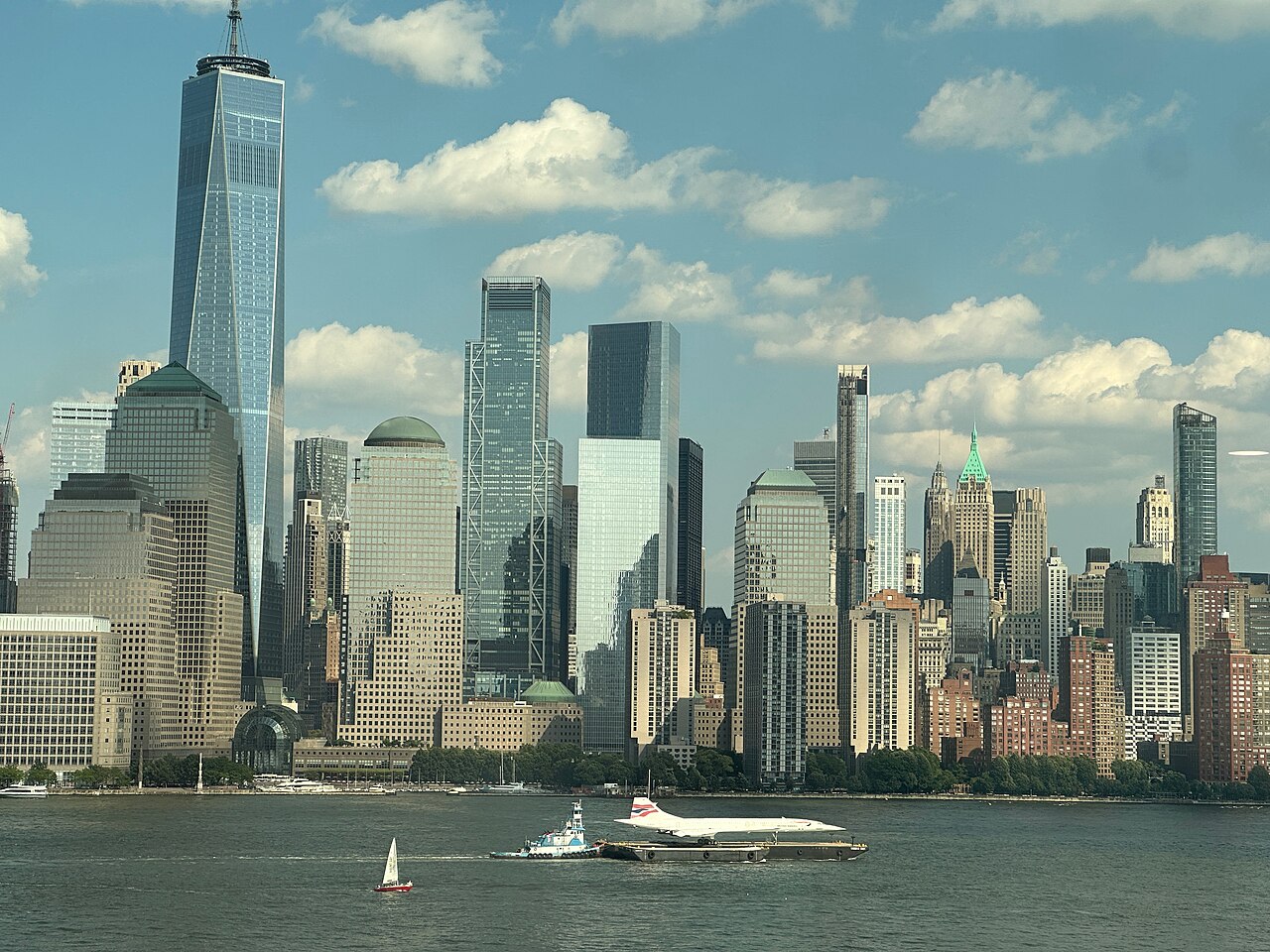
What is the top speed of the Concorde?
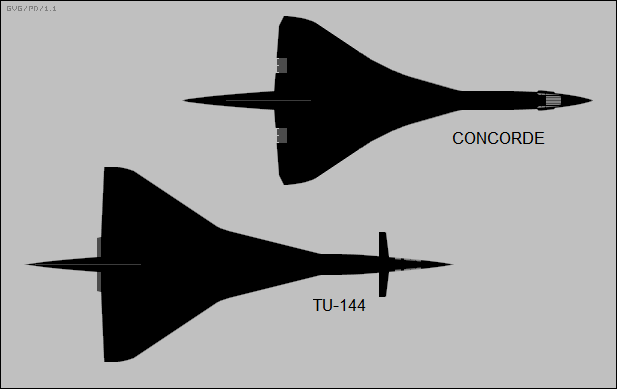
A cruise speed of twice the speed of sound, which is technically written as Mach 2, means that this aircraft that could break the sound barrier was faster than a rifle bullet, and could travel every 2½ seconds, completing a Marathon in less than a minute. However, the Concorde wasn’t the fastest supersonic airliner: this distinction goes to the Tupolev Tu-144, a Soviet aircraft used by then state carrier Aeroflot. It had a top speed of Mach 2.35. In its unveiling, the Tu-144 beat the Concorde by three months, much to the chagrin of the West.
One of the most astonishing achievements of the Concorde was to have recorded the longest eclipse when seven other astronomers had boarded the Concorde 001F-WTSS, the prototype of the aircraft that would later be flown by British Airways and Air France.

The fastest Concorde was registered G-AXDN
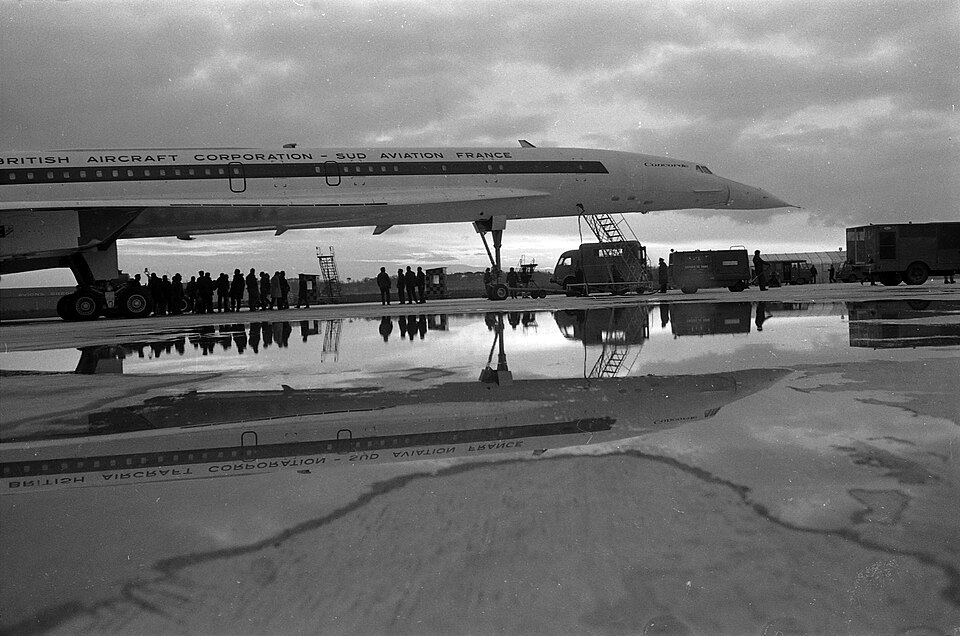
Concorde 01 was registered G-AXDN( later dubbed 101) was the third Concorde built. It was assembled at the British Aircraft Corporation (BAC) facility in Filton, Bristol. Compared to the two earlier prototypes, 101 had a larger airframe and more advanced systems. It introduced a redesigned nose section with a fully transparent visor
Key milestones of the fastest Concorde ever, G-AXDN
- Rolled out: 20 September 1971
- First flight: 17 December 1971 (Filton to Fairford)
- Assembly site: BAC Filton, Bristol
- Primary test base: Concorde Flight Test Centre, Fairford
One of 101’s most significant contributions to the Concorde program was in testing the engine intake control system. This system allowed the aircraft to fly efficiently at supersonic speeds without relying on afterburners. In contrast, the Tu-144 couldn’t sustain a supersonic flight in the absence of afterburners.

Let’s take a look at the performance records and test achievements of this fastest Concorde ever
- March 1974: Reached Mach 2.23 (~1,450 mph) at 63,700 ft, the highest speed recorded by any Concorde.
- November 1974: Flew from Fairford to Maine in 2 hours 56 minutes, setting a westbound transatlantic record for a commercial aircraft.
- Conducted 11 flights from Moses Lake, Washington to validate the electrical de-icing system.
- 4 December 1974: Successfully tested de-icing in required conditions.
- Returned to Fairford on 13 December 1974, matching the outbound flight time from Bangor.
- Also conducted tropical icing trials from Nairobi, Kenya, due to more severe equatorial icing conditions.
Following the conclusion of its major test role, G-AXDN continued to support the program by testing performance and range modifications for production Concordes. Its final test flight took place on 16 May 1975.
After retiring from test duties, it was used to train BAC flight crews who were responsible for preparing British Airways pilots and engineers for the launch of commercial Concorde services in January 1976. It has been said that there is only one phtograph of the Concorde at supersonic speed.

How does Concorde’s speed match up with later aircraft with incredible top speeds?
After the crash of the Concorde, an image of which is one of the most terrifying in aviation history, and amidst soaring travel costs (the prices of a flight were $20,000 in present-day equivalent), the Concorde was abandoned. The Bombardier 8000 has been dubbed the fastest aircraft since Concorde, and was able to rake up a speed of 0.94, marking what its manufacturer, Bombardier dubs “the flagship of a new era”. Compared to the Concorde’s top speed, Bombardier’s looks almost pedestrian.
Despite this, Concorde doesn’t make it to the list of the ten fastest aircraft of all time- the tenth fastest ever, the General Dynamics F-111 Aardvark had a top speed of Mach 2.5. NASA’s SR-71 was the first stealth aircraft and could fly three times the speed of sound. NASA’s X-43A, which is well-known as Hyper-X and used a tile-based thermal protection system (the same protection system used in the Space Shuttle) achieved a Mach speed of 9.68 on Nov 16, 2004- the highest speed ever for any aircraft. You can read the details of the fastest aircraft ever, in our guide below:
Concorde B- The fastest Concorde that never was
A few months after the Concorde began commercial service in 1976, Aérospatiale proposed an improved version of the Concorde called the Concorde B– a variant that optimists hoped would be produced by 1982 but never saw the light of day. Concorde B was proposed to have a better fuel capacity, more powerful, fuel-efficient engines, and an extended range of up to 500 miles.
However, this aircraft that would have had “shape of the delta wing with leading-edge slats that could be drooped like Concorde’s nose”, which could “improve lift during takeoff and landing, and raise them for supersonic flight in order to reduce drag”, might have been faster. What would have been the top speed of this Concorde? We never know.


_-_53Fi2322.jpg)