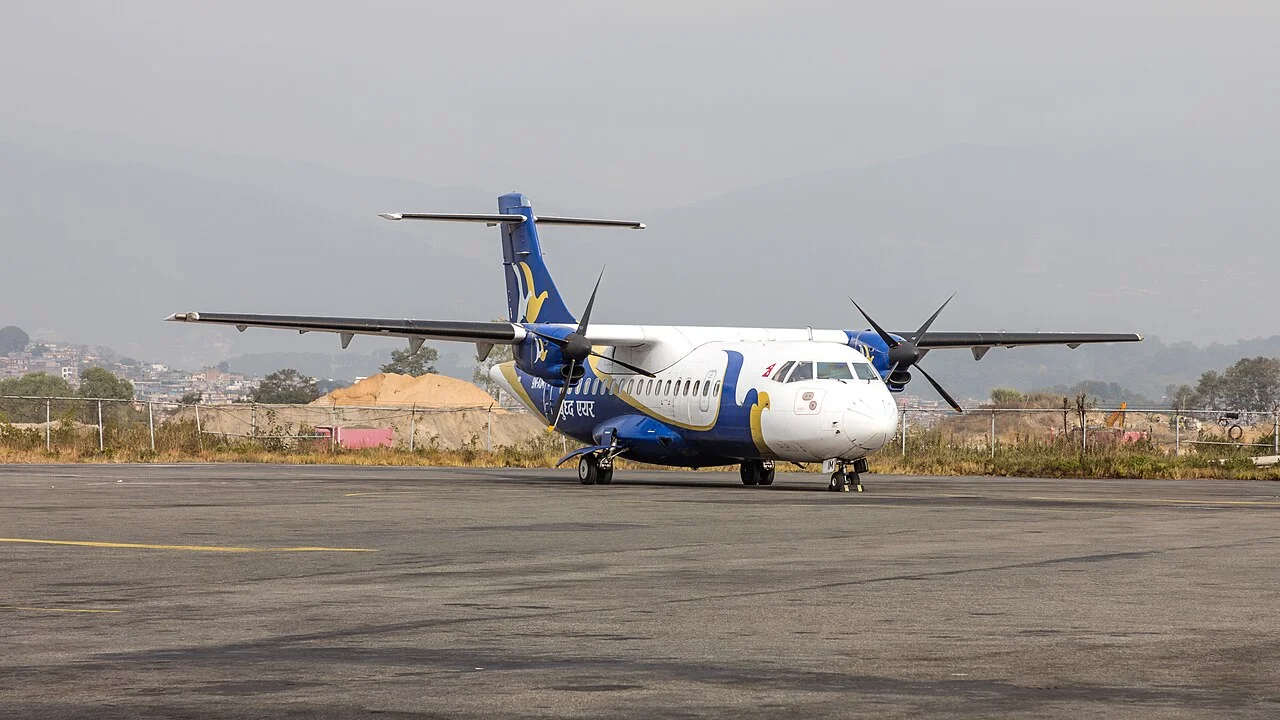
Buddha Air (U4), Nepal’s largest private airline by fleet size, has taken delivery of a new-generation ATR 72-600 turboprop, registered 9N-AOS. The aircraft landed at Tribhuvan International Airport (KTM), Kathmandu, on Saturday, July 25, 2026, after a ferry flight that began in Toulouse, France, and routed through Cairo and Muscat. The delivery raises Buddha Air’s fleet to 17 aircraft and marks the airline’s first 600-series ATR.
The aircraft cost Buddha Air nearly 1.5 billion rupees and was purchased from a private Brazilian airline. Captains Olivier Monthuel and Samit Lachkar ferried the aircraft to Kathmandu. Buddha Air says the jet’s onboard navigation system will improve reliability on flights to Pokhara, a route long disrupted by fog and poor visibility.
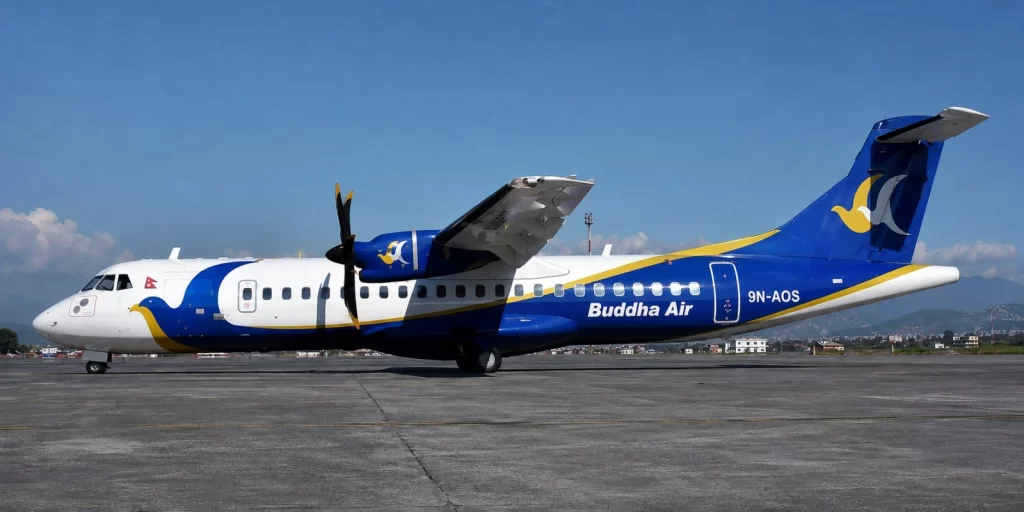
The ATR 72-600 Brings a Digital Glass Cockpit to Buddha Air’s Fleet
The 600-series ATR is a generational step up from the ATR 42 and ATR 72-500 aircraft that make up the rest of Buddha Air’s turboprop fleet. It carries a fully digital glass cockpit built by Thales, replacing the analogue instrumentation of the older aircraft. Key features include the following:
- Five multifunctional LCD screens in the cockpit
- A digital flight management system
- Automated safety systems
- Lower fuel consumption and reduced noise compared with older ATR variants
- High-level RNP-AR satellite navigation
The standard ATR 72-600 seats up to 72 passengers and is powered by two Pratt & Whitney Canada PW127M engines, each rated at 2,475 shaft horsepower for takeoff. Buddha Air plans to add two more ATR 600-series aircraft within the next few months, the airline says.
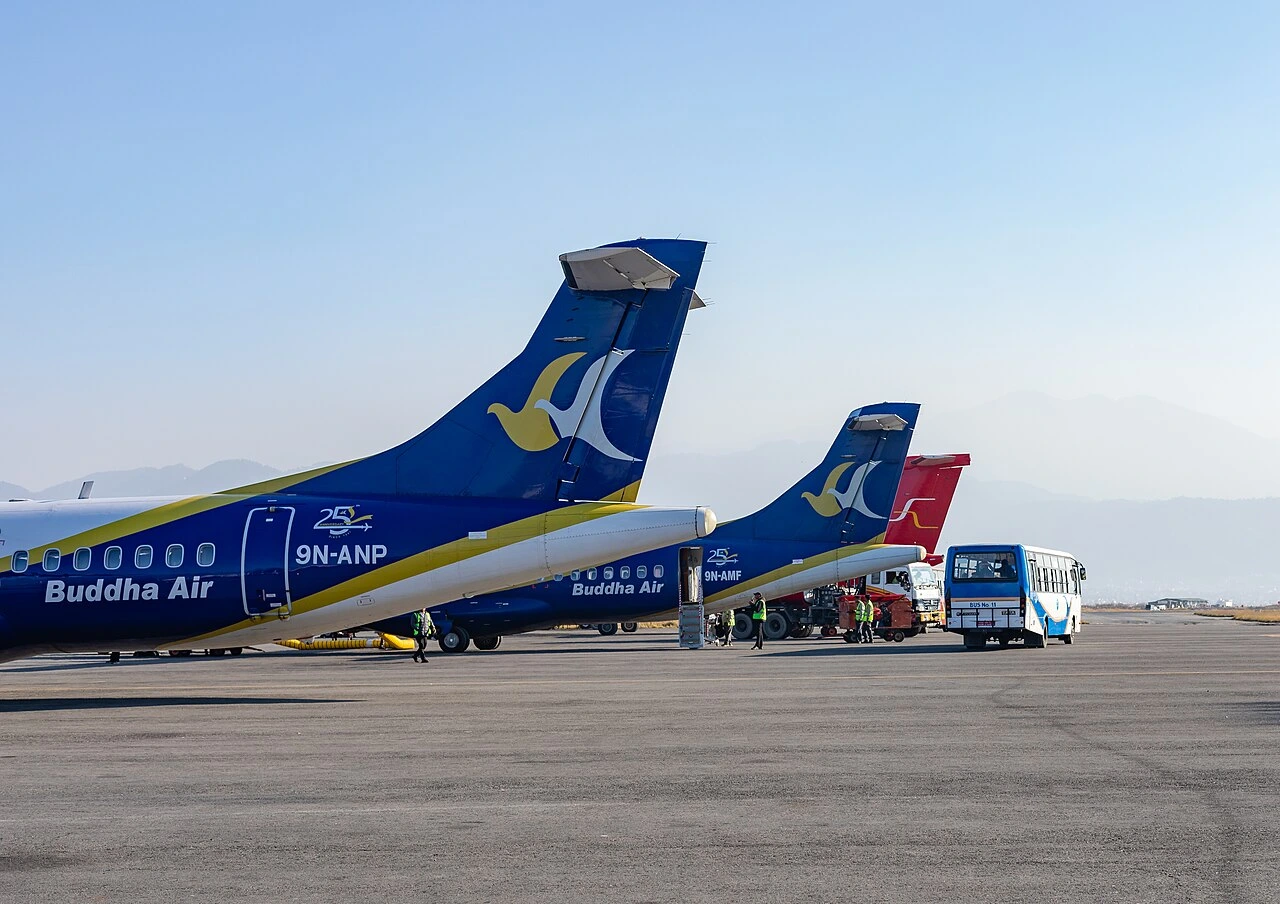
RNP-AR Navigation Could Cut Pokhara’s Weather Cancellations Below 3 Percent
The aircraft’s most consequential feature for passengers is its Required Navigation Performance Authorization Required (RNP-AR) capability, a satellite-based system that lets aircraft fly a precise digital path down to very low visibility. Buddha Air says the technology allows safe landings even when visibility drops to 2,000 metres, and as low as 1,700 metres, at airports with difficult terrain.
That matters most at Pokhara. The city’s airport currently relies on a conventional Instrument Landing System that requires 3,100 metres of visibility for takeoff and landing. Fog in winter and monsoon rain routinely force diversions and cancellations on the Kathmandu–Pokhara route.
Buddha Air estimates that full RNP-AR implementation, done in coordination with the Civil Aviation Authority of Nepal, will bring the weather-related cancellation rate at Pokhara below 3 percent.
Buddha Air’s executive chairman, Birendra Bahadur Basnet, called the technology a “game changer” for a city that international carriers have generally avoided because of its unpredictable weather. The airline’s longer-term plan, according to Basnet, is to use the RNP-AR groundwork to eventually fly Airbus A319 jets on direct international routes from Pokhara International Airport, combining the jet’s climb performance with analysis from the European navigation firm NAVBLUE.
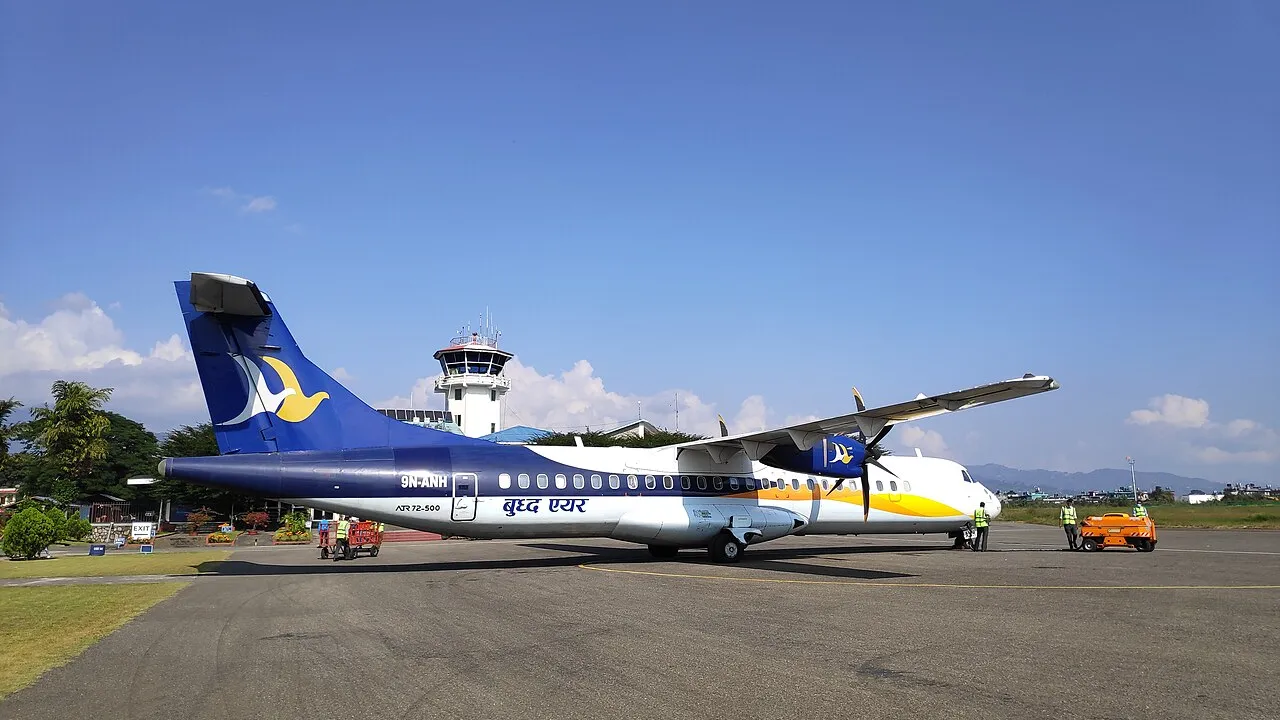
Buddha Air’s Wider Turboprop Fleet Still Averages Nearly Two Decades Old
The new arrival stands out against the rest of Buddha Air’s fleet. Before this delivery, the carrier operated sixteen aircraft, made up of two ATR 42s and fourteen ATR 72s. That fleet had an average age of roughly twenty years, according to planespotters.net data cited in a separate report.
One ATR 42 in the fleet, registered 9N-AIT, dates to 2009 and is now more than 30 years old, as reported by planespotters. That figure is driven by the aircraft’s earlier service history with carriers in Mauritania, the Czech Republic, and Poland before it reached Nepal.
Buddha Air has also logged some of the highest cumulative flight cycles of any Asian operator. In 2024, the airline retired an ATR 42-320, registered 9N-AIN, after the aircraft completed 70,000 flight cycles. This was the first ATR anywhere in the world to reach that milestone in commercial passenger service.
Cycle counts, the combination of a single take-off and landing, place more structural stress on turboprop airframes than raw flying hours because pressurisation and undercarriage loads compound with each flight. A closer look at how old the rest of Nepal’s commercial fleet really is can be found here.

Buddha Air’s expansion comes at an awkward moment for Nepal’s domestic aviation sector. Jet fuel prices in the country nearly doubled in early 2026, and Buddha Air itself reported a daily passenger drop of about 1,500, down from an average of 8,000. The airline had already cut at least a quarter of its daily flights because of weak occupancy before this new aircraft arrived.
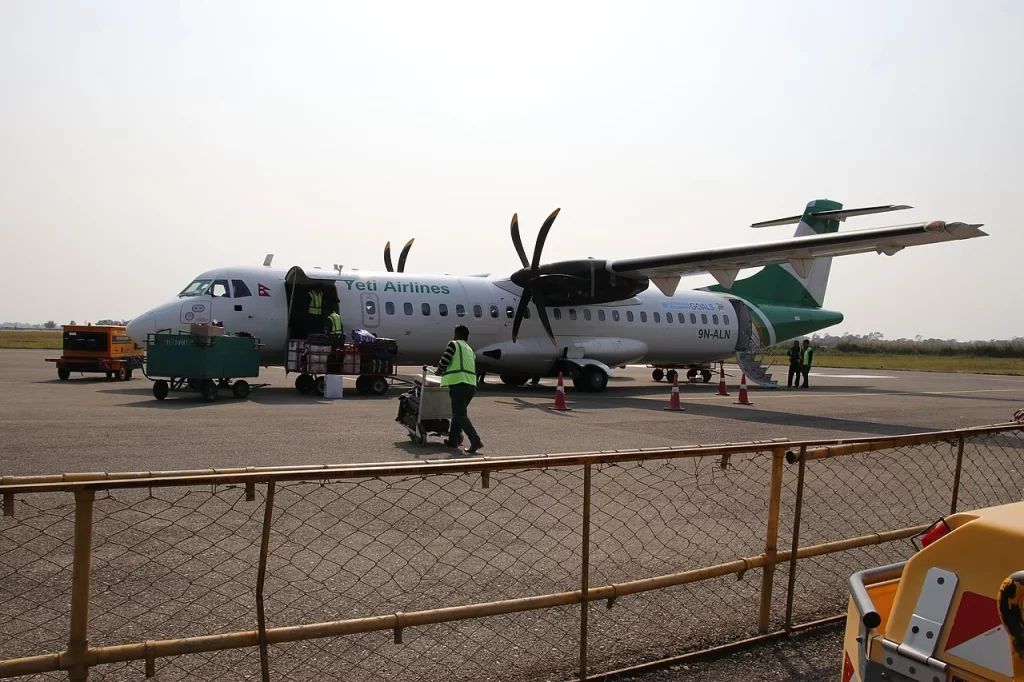
Buddha Air’s Delivery Comes After Rival Yeti Airlines’ Deadly ATR 72 Crash at Pokhara
Buddha Air’s push into RNP-AR technology carries extra weight because of what happened to a competitor’s ATR 72 at the same airport. On January 15, 2023, a Yeti Airlines (YT) ATR 72-500 operating Flight 691 from Kathmandu stalled and crashed on final approach into Pokhara, killing all 72 people on board. Investigators found that the instructor captain had mistakenly moved both condition levers into the feather position, cutting engine thrust instead of extending the flaps, and that the co-pilot did not challenge the error in time.
The Yeti crash happened just two weeks after Pokhara’s international airport opened and remains Nepal’s deadliest accident since 1992. Buddha Air itself has not been free of tragedy. In September 2011, a Buddha Air Beechcraft 1900D crashed in Lalitpur district shortly before landing at Tribhuvan International Airport, killing all 19 people on board, after the crew apparently experienced spatial disorientation in poor visibility.
Investigators in both cases pointed to human factors rather than mechanical failure.
What Comes Next for Buddha Air
Buddha Air currently flies international routes only from Kathmandu to Varanasi and Kolkata in India. The carrier’s stated priority for now is making its domestic and regional network more dependable through new technology, rather than rapid international expansion. Two more ATR 72-600 aircraft are expected to join the fleet within the coming months, and the long-discussed Airbus A319 plan for Pokhara remains a second-phase ambition rather than a confirmed timeline.


-070A2337.jpg)


-ATR_42-320_at_TIA-070A7457.jpg)