Nepal occupies a peculiar position in global aviation: it is a country where the extraordinary difficulty of the terrain has led to Lukla Airport, which is dubbed as the most dangerous airport in the world, and is routinely chastised by the public for operating some of the oldest planes on the most demanding sectors. Tribhuvan International Airport (KTM) is the nation’s busiest aerodrome and handles dozens of domestic departures daily, many operated by turboprops and short-takeoff-and-landing (STOL) aircraft that may or may not be as old as the public perceives.
The question of fleet age in Nepal is not merely academic. Since 1946, Nepal has suffered 42 fatal plane crashes, with eight air disasters killing more than 100 people in the three years between 2022 and 2025 alone. Many of the planes in Nepal have fallen prey to bird strikes as well. The European Union banned all 20 Nepali airlines from its airspace on December 5, 2013 — a ban that remains fully in force as of the EU Air Safety List update of December 13, 2024. Against such a backdrop, one has to wonder how old planes in Nepal are anyway.
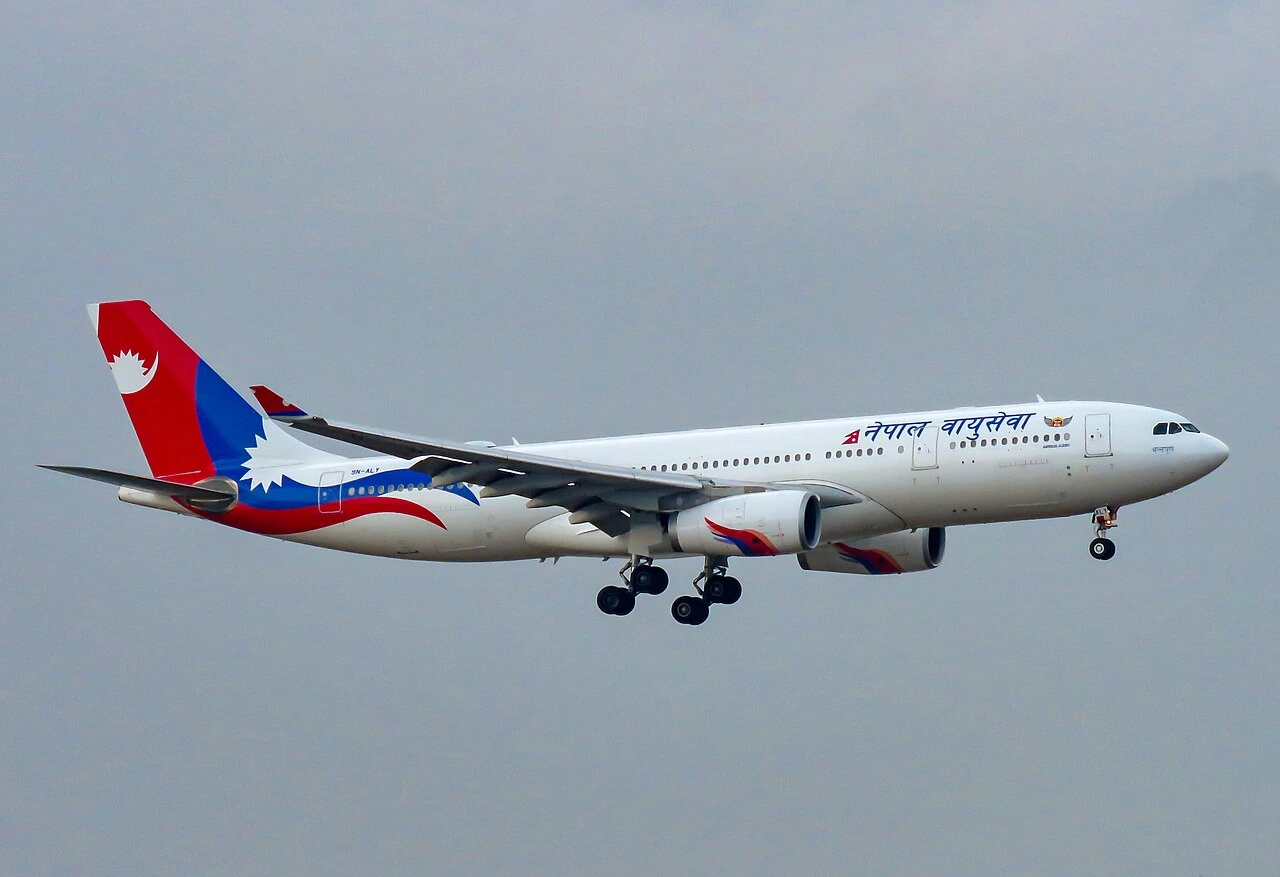
Nepal Airlines Has A 41-Year-Old Twin Otter Flying the Himalayas
Nepal Airlines Corporation (RA), the state flag carrier, operates one of the most bifurcated fleet profiles of any carrier anywhere in the world. Its international and regional jet fleet — two Airbus A330-200s (9N-ALY Annapurna and 9N-ALZ Makalu) acquired in 2018, and two Airbus A320s (9N-AKW and 9N-AKX) delivered in February and April 2015 respectively — averages roughly 9.5 years in age and represents a creditable modernisation drive.
| Reg | Aircraft Type | Config | Delivered | Aircraft Name | Age |
|---|---|---|---|---|---|
| 9N-AKW | Airbus A320-200 | C8Y150 | Feb 2015 | Sagarmatha | 11.3 Years |
| 9N-AKX | Airbus A320-200 | C8Y150 | Apr 2015 | Lumbini | 11.2 Years |
| 9N-ALY | Airbus A330-200 | C18Y256 | Jun 2018 | Annapurna | 8 Years |
| 9N-ALZ | Airbus A330-200 | C18Y256 | Jul 2018 | Makalu | 8 Years |
The STOL fleet tells an entirely different story. Nepal Airlines operates two De Havilland Canada DHC-6-300 Twin Otter aircraft — registrations 9N-ABT and 9N-ABU — that carry an average age exceeding 41 years. These aircraft are the workhorses of Nepal Airlines’ domestic network, connecting settlements such as Bhojpur and Tulsipur that would otherwise require days of road travel. They were manufactured between 1965 and 1988 — and the DHC-6-300 series, specifically, ceased production in 1988.
The airline’s overall average fleet age, factoring in all types, sits at approximately 20.4 years.
A committee convened by Nepal Airlines proposed acquiring two Airbus narrowbodies, two ATR turboprops, and three replacement Twin Otters via dry-lease in 2023— a proposal that signals management awareness of the ageing issue but has yet to translate into confirmed deliveries. Nepal Airlines also has Yarbin Y12 and Mh-60s it doesn’t know what to do with and are idly sitting.
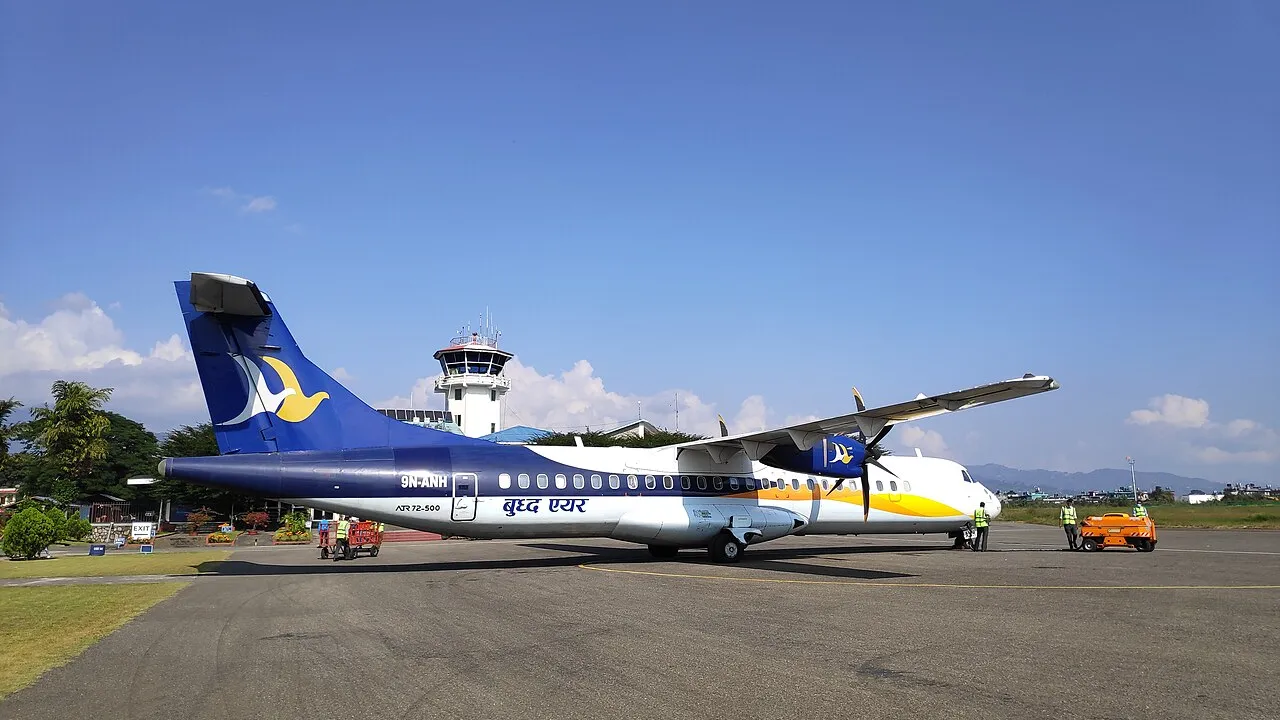
Buddha Air (U4): ATRs Beyond 50,000 Cycles
Buddha Air (U4), the largest domestic carrier in Nepal by fleet size, operates a mixed fleet of ATR 42 and ATR 72-500 turboprops — 15 aircraft in total, flying more than 160 flights a day across 14 domestic destinations. The carrier holds the distinction of being listed among the Asian airlines with the highest cumulative flight cycles.
Three of Buddha Air’s ATR 42 aircraft are 24 to 28 years old, and each has individually logged more than 50,000 flight cycles Flight cycles — the combination of a take-off and a landing — place far greater structural fatigue on an airframe than raw flying hours, because pressurisation cycles and undercarriage loads compound with each operation. When Buddha Air retired its ATR 42-320 registered 9N-AIN in 2024, the airline marked a genuine aviation milestone: the aircraft had completed the full economic life of 70,000 flight cycles, the first ATR anywhere in the world to do so in commercial passenger service.
| Attribute | Details |
|---|---|
| Aircraft | ATR 42-320 |
| Engine Model | PWC PW121 |
| Registration | 9N-AIN |
| MSN | 403 |
| MTOW | 16,700 kg |
| Date of Operation | 17 September 2008 |
| Date of Decommission | 10 September 2024 |
| Passengers Served | 1.8 million |
| Flight Cycles Completed | 70,000 |
The oldest aircraft operated by Buddha Air is an ATR 42 that is registered 9N-AIT. The carrier obtained this aircraft in 2009. Let’s look at the aircraft’s history that was manufactured in Toulouse before it made it to Nepal:
| Reg | Airline / Company | Delivered |
|---|---|---|
| F-OKMR | Air Mauritanie | Jun 1996 |
| F-OKMR | ATRiam Capital | Aug 1998 |
| OK-BFG | Czech Airlines (CSA) | Jun 1999 |
| F-WQNJ | ATRiam Capital | Jun 2005 |
| SP-KCN | White Eagle Aviation | Apr 2006 |
| SP-KCN | Whoosh | May 2007 |
| SP-KCN | White Eagle Aviation | Dec 2007 |
| F-WKVF | ATRiam Capital | Nov 2008 |
All other aircraft in the carrier’s fleet are the ATR 72 types:
| Reg | Config | Delivered | Age |
|---|---|---|---|
| 9N-AJL | — | May 2021 | 15.5 Years |
| 9N-AJS | Y70 | Aug 2011 | 28.6 Years |
| 9N-AJX | Y72 | Sep 2012 | 27.2 Years |
| 9N-AMD | Y72 | Jan 2017 | 19.6 Years |
| 9N-AMU | Y72 | Jun 2018 | 18.8 Years |
| 9N-AMY | — | Mar 2019 | 19 Years |
| 9N-ANH | — | Jan 2021 | 15.7 Years |
| 9N-ANI | Y68 | Sep 2019 | 18.5 Years |
| 9N-ANP | — | Mar 2022 | 17.5 Years |
| 9N-ANQ | Y72 | May 2023 | 17.5 Years |
| 9N-ANW | — | Aug 2023 | 15.8 Years |
| 9N-ANZ | — | Jun 2024 | 16.3 Years |
| 9N-AOC | Y72 | Oct 2023 | 14.9 Years |
| 9N-AOG | Y68 | Dec 2024 | 16.2 Years |
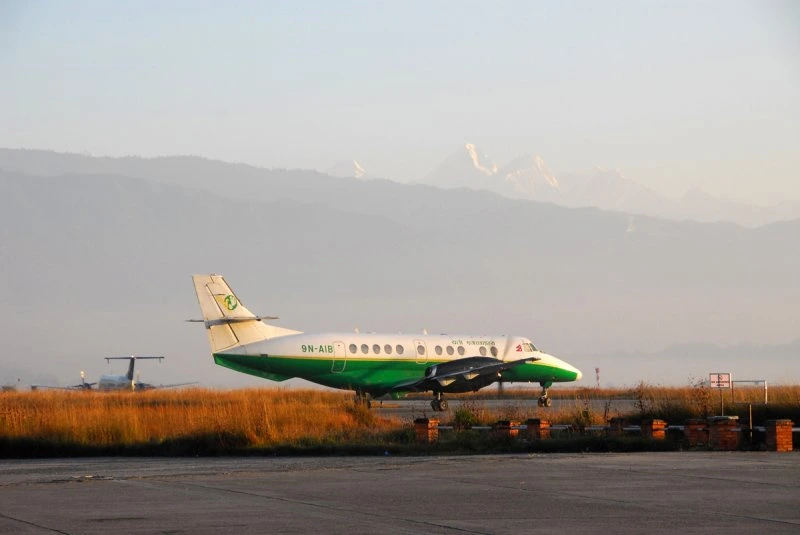
Yeti Airlines (YT) And Tara Air (TA) Operate ATR 72s And Twin Otters
Yeti Airlines (YT) currently operates seven aircraft, all of which are ATR 42 and ATR 72-500 turboprops, following the loss of its ATR 72-500 9N-ANC in the January 15, 2023, crash at Pokhara International Airport (PKR) — Nepal’s deadliest domestic accident in three decades, in which all 72 people on board were killed. The carrier’s active ATR fleet averages approximately 17 years, with the details mentioned by planespotters.net being the following:
| Reg | Config | Delivered | Age |
|---|---|---|---|
| 9N-ALN | Y70 | Sep 2018 | 18.4 Years |
| 9N-AMM | Y70 | Sep 2017 | 19.1 Years |
| 9N-AMN | Y70 | Jul 2017 | 16.9 Years |
| 9N-AMZ | Y70 | Sep 2022 | 14.5 Years |
| 9N-ANG | Y70 | Jul 2019 | 19.2 Years |
| 9N-AOF | — | Feb 2024 | 17.5 Years |
| 9N-AOH | — | Feb 2024 | 17.7 Years |
Yeti Airlines’ subsidiary, Tara Air (TA), specializes in STOL operations across Nepal’s mountain airstrips — including Tenzing-Hillary Airport (LUA) in Lukla, the runway at an altitude of 2,860 metres with a 527-metre strip ending at a sheer cliff drop. Tara operates De Havilland Canada DHC-6/300 and DHC-6/400 Twin Otters for these sectors — aircraft suited by design to the task, but whose age frequently mirrors the originals operated by Nepal Airlines.
The consequences of age compounded by demanding operations have been visible. Tara Air Flight 197, a DHC-6-300 (9N-AET) operating from Pokhara Airport to Jomsom Airport, disappeared on May 29, 2022 and was later found crashed into a mountainside in Mustang District, killing all 22 people aboard.An earlier Tara Air crash on December 15, 2010, also involved a DHC-6 Twin Otter (9N-AFX) that killed all 22 occupants after departing Lamidanda. The causes in both cases centred primarily on pilot error and terrain, rather than direct mechanical failure from airframe age — a distinction that analysts note does not exempt the broader fleet age question from scrutiny.
| Reg | Aircraft Type | Config | Delivered | Age |
|---|---|---|---|---|
| 9N-AEV | De Havilland Canada DHC-6 Twin Otter | Y19 / Cargo | Nov 2009 | 45.5 Years |
| 9N-AKL | Viking DHC-6 Twin Otter | Y19 / Cargo | Jul 2015 | 11.2 Years |
| 9N-ALO | Viking DHC-6 Twin Otter | Y19 / Cargo | Jul 2018 | 15.5 Years |
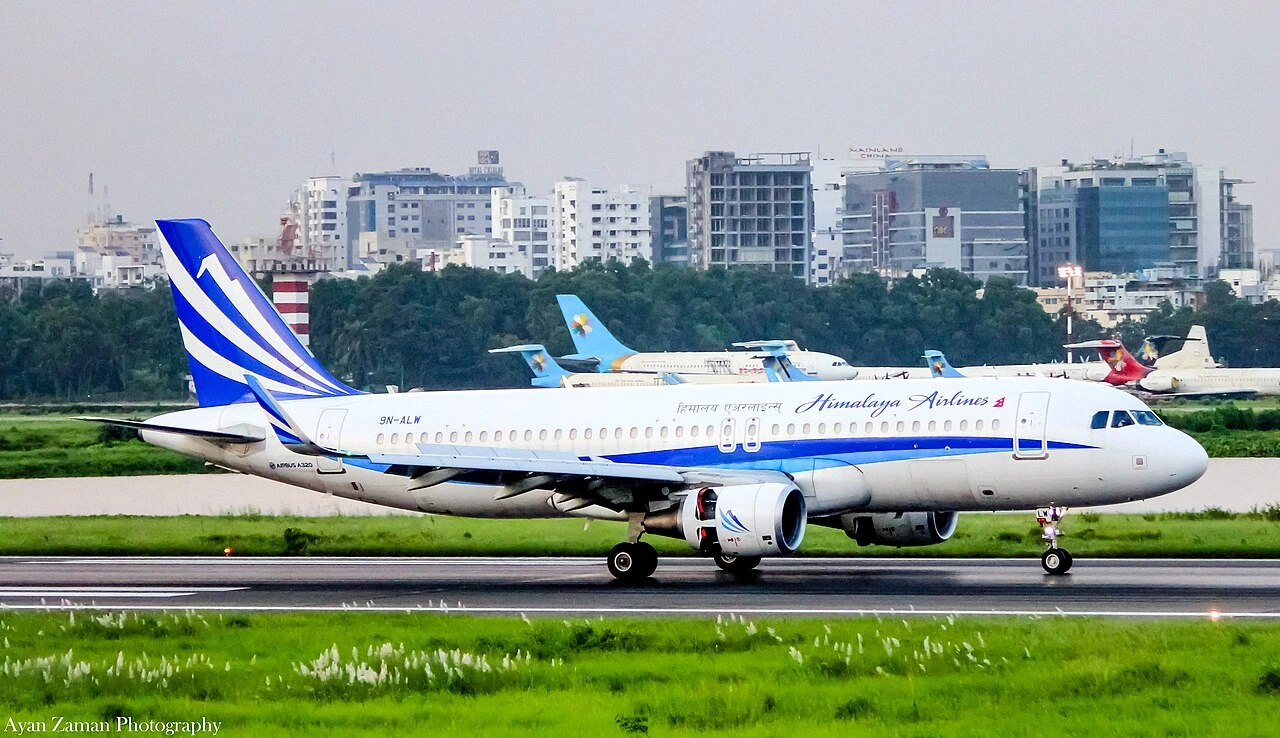
The Fleet Age Spectrum of Other Carriers in Nepal
The spread of aircraft ages across Nepal’s current commercial operators reveals a system where youth and antiquity coexist within the same national airspace:
Himalaya Airlines (H9)
Himalaya Airlines has the youngest jet fleet of any Nepal-based carrier. The carrier recently started the first Shenzhen services from Kathmandu and in doing so, became the first carrier to do so. The four aircraft of this carrier average 9.2 years.
| Reg | Aircraft Type | Config | Delivered | Age |
|---|---|---|---|---|
| 9N-AJK | Airbus A319-100 | Y144 | Mar 2020 | 7 Years |
| 9N-ALM | Airbus A320-200 | Y180 | Nov 2019 | 11 Years |
| 9N-ALV | Airbus A320-200 | Y180 | Jan 2017 | 9.4 Years |
| 9N-ALW | Airbus A320-200 | Y180 | Mar 2017 | 9.2 Years |
Shree Airlines (N7)
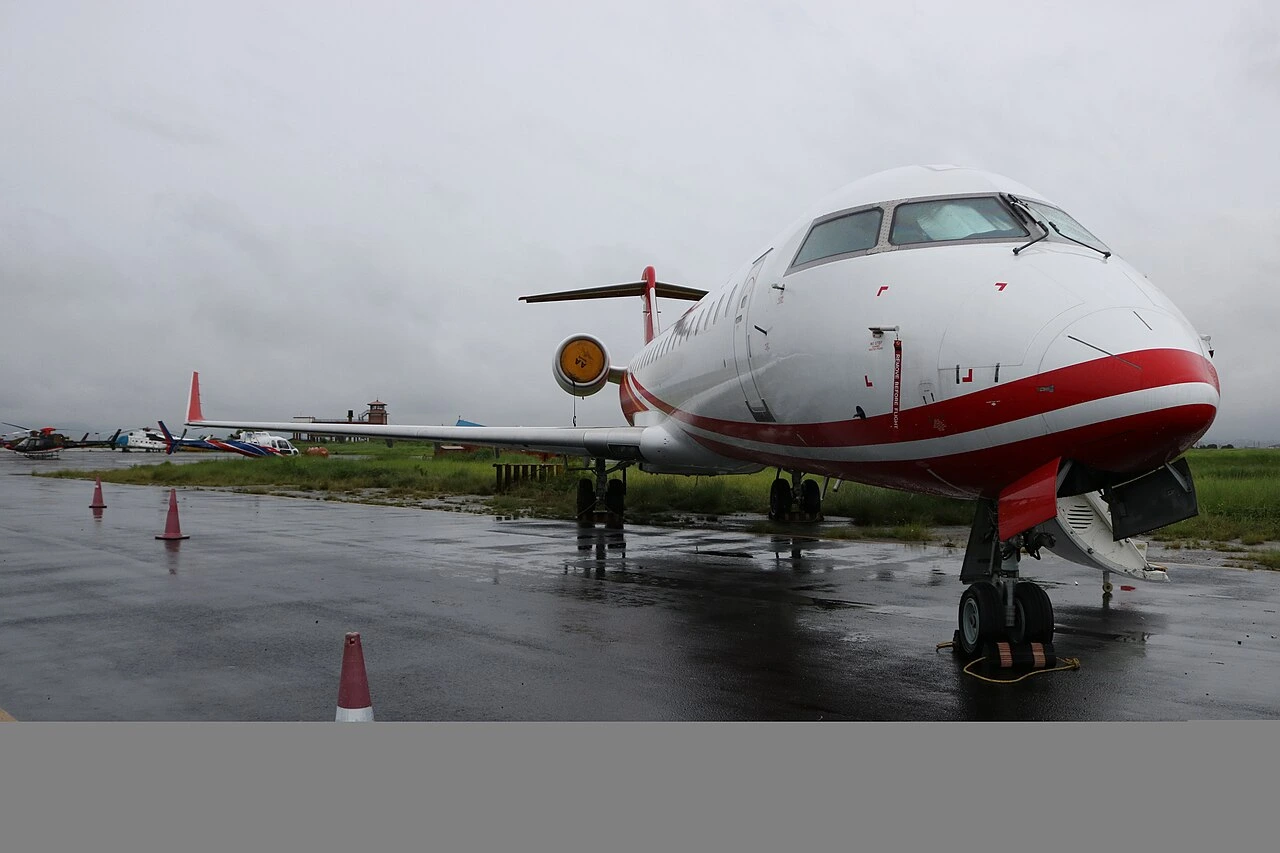
Shree Airlines, which was founded in 1999, has a fleet that comprises of Bombardier CRJ-200s and De Havilland Canada DHC-8-400s. The average fleet age of the carrier is 18.4 years.
| Reg | Aircraft Type | Config | Delivered | Age |
|---|---|---|---|---|
| 9N-AMA | Bombardier CRJ-200 | Y50 | May 2017 | 23.1 Years |
| 9N-AMC | Bombardier CRJ-200 | Y50 | Apr 2017 | 24.1 Years |
| 9N-ANE | Bombardier DHC-8-400 | Y76 | Jul 2019 | 19.6 Years |
| 9N-ANF | Bombardier DHC-8-400 | Y76 | Jul 2019 | 19.5 Years |
| 9N-ANR | Bombardier DHC-8-400 | Y76 | Dec 2021 | 16.6 Years |
| 9N-ANS | Bombardier DHC-8-400 | Y76 | Jan 2022 | 16.6 Years |
| 9N-AOK | Bombardier DHC-8-400 | Y76 | Mar 2024 | 15.5 Years |
| 9N-AOL | Bombardier DHC-8-400 | Y76 | Mar 2024 | 15.5 Years |
| 9N-AOM | Bombardier DHC-8-400 | Y76 | Jun 2024 | 15.5 Years |
Summit Air / Goma Air
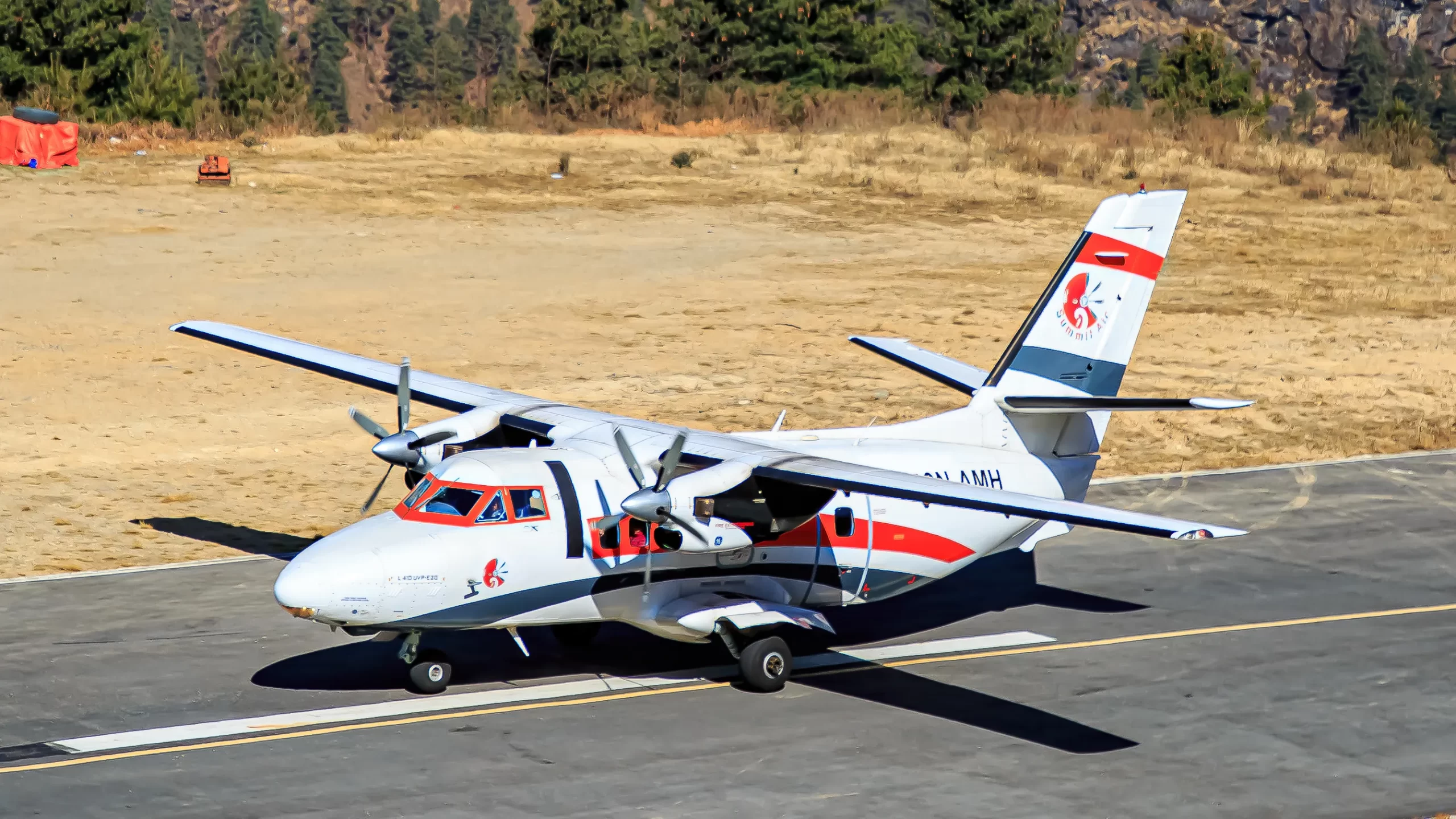
Summit is the only carrier in the country that operates a Let L-410 UVP-E20 Turbolet and there’s little public information about the specifics of the aircraft that the carrier operates. Alongside Sita Air and Tara Air, the carrier is one of the three operators to Lukla. The carrier changed its name from Goma after a crash of its Let L-410 in Lukla.


Relation Between Aircraft Age and Accidents in Nepal
Fleet age in isolation is not a reliable predictor of an accident. The Civil Aviation Authority of Nepal (CAAN), in a 2023 safety report, concluded that collision with terrain or other obstacles accounted for 93% of deaths in air accidents over the preceding decade. The 2023 Yeti Airlines crash, in which an experienced instructor captain with 21,900 flying hours inadvertently moved both condition levers to the feather position — cutting engine thrust on final approach — was attributed to pilot error rather than airframe degradation.
The July 24, 2024 Saurya Airlines (S1) crash, in which a Bombardier CRJ200LR (9N-AME, built in 2003 — a 21-year-old airframe) veered off the runway at Tribhuvan International Airport during a ferry flight and killed 18 of the 19 people on board, also concluded pilot error as the primary cause.
However, the Reuters explainer published in 2023 flagged fleet age as a structural, institutional contributor:
“Among the world’s poorer countries, Nepal has not invested sufficiently in upgrading or maintaining its planes. Many are ageing, so that they lack some features and facilities common elsewhere, and tend to be poorly maintained, making mishaps more likely. This is partly why the European Union, citing ‘safety concerns’, banned air carriers certified in Nepal in 2013.”
The Saurya CRJ200 had in fact been grounded at Kathmandu and placed in short-term storage before the crash. A return-to-service check had been conducted on the day of the accident itself — July 24, 2024 — after the aircraft’s airworthiness certificate had previously lapsed. CAAN had issued the flight release certificate for a test flight on April 26, 2024, before the aircraft was grounded again.
The Kathmandu Post editorial, published in November 2024, noted that as of July 2024, 914 people have died in 105 different air accidents in Nepal since records began, with Nepal ranked 33rd out of 207 countries for air crashes over the period December 1989 to January 2024.

Why Ageing Turboprops Persist on Nepal’s Most Demanding Routes
The persistence of elderly aircraft in Nepal’s domestic sector reflects economics, geography, and procurement inertia working together. The De Havilland Canada DHC-6 Twin Otter is not operating in Nepal’s mountains because operators chose to cut corners; it operates there because no commercially available aircraft of comparable STOL performance exists at an accessible price point for carriers in a low-revenue market.
Tenzing-Hillary Airport in Lukla — a tabletop strip at 2,860 metres with a 12-degree upslope, a 527-metre runway, and a sheer drop at the downhill end — demands an aircraft that can land in under 200 metres of rollout. The 400-series Twin Otter, manufactured since 2008 by Viking Air and then De Havilland Canada again, continues production precisely because no modern equivalent exists for that mission profile.
The ATR 42 and 72, which dominate Nepal’s main domestic trunk routes, are not obsolete in a global sense — ATR continues to deliver new aircraft — but Nepal’s carriers have generally not upgraded to newer MSN (manufacturer serial number) examples, and the cycle accumulation on the oldest airframes in the Buddha Air and Yeti fleets is exceptional by regional standards.
Nepal imported aircraft spare parts worth nearly $30 million in the first two months of the 2025/26 fiscal year alone, a figure that we noted may indicate the sector is undergoing intensive overhaul activity to keep an aged fleet serviceable.

CAAN’s Conflict and the EU Ban That Endures
The fleet age question cannot be assessed independently of Nepal’s regulatory architecture. CAAN simultaneously regulates the airlines and operates Nepal Airlines — a structural conflict of interest that the International Civil Aviation Organization (ICAO) first flagged in its 2009 Universal Safety Oversight Audit report. An entity that both oversees airlines and operates one of them cannot, by definition, independently audit maintenance standards or airworthiness across the industry.
In February 2025, Minister for Culture, Tourism and Civil Aviation Badri Prasad Pandey introduced two bills in the House of Representatives — the Bill to Amend and Integrate Laws Related to the Civil Aviation Authority of Nepal, 2025, and the Bill to Establish and Manage Nepal Air Service Authority, 2025 — to finally separate CAAN into a pure regulator and a separate service-providing body, the Air Services Authority of Nepal (ASAN). During the tabling, Pandey stated: “I present these bills to align Nepal’s civil aviation services with international standards and enhance their reliability.”
A previous iteration of the same bill passed the National Assembly in August 2021 but lapsed when the House of Representatives’ term ended in September 2022. As of June 2026, the bills remain pending enactment, and the EU ban shows no sign of imminent removal. In a March 2025 assessment, The Diplomat noted that when the European Commission renewed the ban in December 2024, Nepal continued to appear on the EU Air Safety List — and that the EU’s decision the previous month to lift its ban on Pakistan International Airlines (PIA), following Pakistan’s division of its aviation authority into three separate entities, had heightened expectations in Kathmandu that were ultimately unmet.

What Younger Fleets Look Like, And What They Cost Nepal
The contrast between Nepal’s oldest and newest operators illuminates what structural investment in fleet modernisation actually achieves. Himalaya Airlines (H9), the IOSA-certified carrier operating four Airbus A320-family aircraft with an average fleet age of just 8.5 years, holds the highest safety rating of any Nepal-domiciled airline — five out of seven stars from Airline Ratings — and maintains a fatality-free history.
The A320 family offers EGPWS (Enhanced Ground Proximity Warning System), TCAS II (Traffic Collision Avoidance System), and ACARS (Aircraft Communications Addressing and Reporting System) as standard equipment — features not necessarily present or fully functional on the oldest STOL turboprops active in Nepal. One also has to note that A320s can’t operate to STOLports of Nepal.
The economic gap between operating a 41-year-old DHC-6 and acquiring a new Viking DHC-6-400 Series Twin Otter is formidable for carriers whose revenue per route can be measured in thousands rather than millions of dollars per year. Nepal’s aviation sector serves a population where median incomes remain low, remote routes carry few passengers, and the infrastructure to attract aircraft lessors or financing institutions remains underdeveloped. Fleet renewal on Nepal’s mountain routes is not a matter of regulatory will alone — it requires a financing mechanism that does not currently exist at scale for the operators in question.