

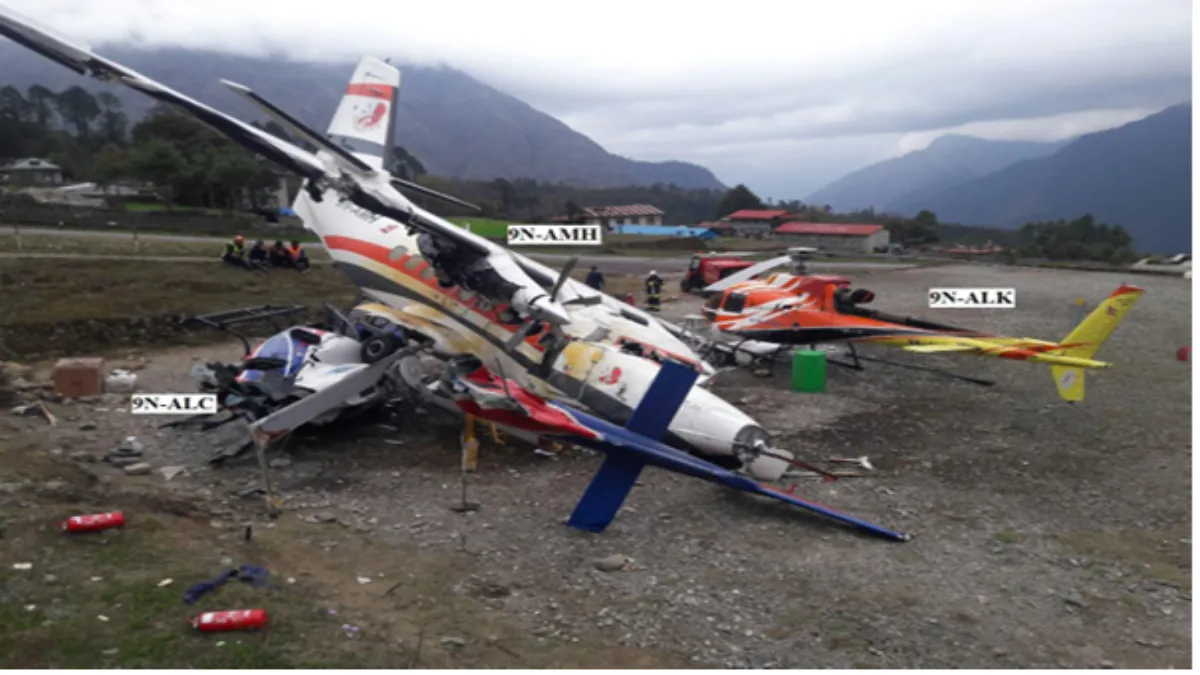
Nepal occupies a paradox in global aviation. It is a country of extraordinary natural allure, especially with regards to the Everest region where thousands of trekkers and mountaineers come. But the very terrain that draws millions to Everest has also contributed to crashes in Lukla Airport, which is, albeit falsely, considered to be the most dangerous airport in the world.
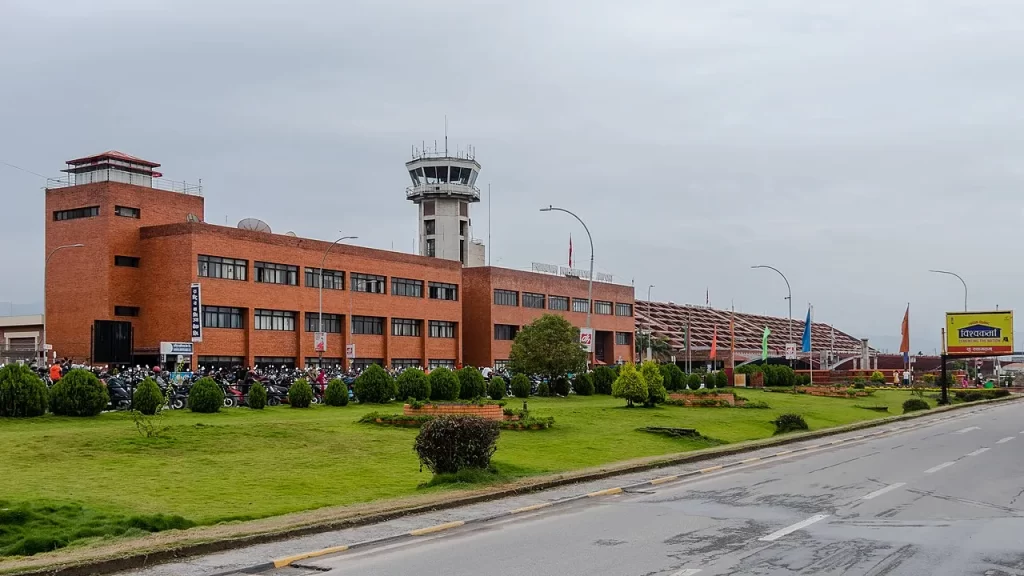
Tribhuvan International Airport (KTM) in Kathmandu — the country’s sole international gateway — sits in a valley ringed by imposing ridgelines, served by approach procedures that rank among the most technically demanding on earth. Since 1946, Nepal has suffered 42 fatal plane crashes, and over the past three years alone, eight crashes have killed more than 100 people.
Most recently, a Turkish Airlines (TK) landing gear fire at Tribhuvan International Airport on May 11, 2025, involving flight TK726 from Istanbul, served as yet another reminder that Nepal’s aviation infrastructure remains vulnerable to operational risks. A year before a helicopter had crashed in the Everest region, though no fatalities were observed.
In this article, we are going to have a look at the deadliest crashes in the country.
Nepal’s Twin Aviation Disasters of 1992
On July 31, 1992, Thai Airways International Flight 311, an Airbus A310-300, struck a hillside in Langtang National Park north of Kathmandu, killing all 113 people on board.
| Field | Details |
|---|---|
| Aircraft Type | Airbus A310-304 |
| Operator | Thai Airways International |
| Registration | HS-TID |
| MSN | 438 |
| Year of Manufacture | 1987 |
| Total Airframe Hours | 13,127 hours |
| Flight Cycles | 4,768 flights |
| Engine Model | GE CF6-80C2A2 |
| Fatalities | 113 / 113 occupants |
| Aircraft Damage | Destroyed, written off |
| Category | Accident |
| Location | 40 km north of Tribhuvan International Airport (KTM), Nepal |
| Flight Nature | Passenger – Scheduled |
| Departure Airport | Don Mueang International Airport (BKK/VTBD) |
Barely eight weeks later, on September 28, 1992, Pakistan International Airlines (PIA) Flight 268, an Airbus A300B4-203 departing Karachi International Airport (KHI), leading to the deadliest aircraft accident in Nepal.
| Field | Details |
|---|---|
| Date | Monday, 28 September 1992 |
| Time | 14:30 |
| Aircraft Type | Airbus A300B4-203 |
| Operator | Pakistan International Airlines |
| Registration | AP-BCP |
| MSN | 025 |
| Year of Manufacture | 1976 |
| Total Airframe Hours | 39,045 hours |
| Flight Cycles | 19,172 flights |
| Engine Model | General Electric CF6-50C2 |
| Fatalities | 167 / 167 occupants |
| Aircraft Damage | Destroyed, written off |
The US-Bangla Crash Of 2018
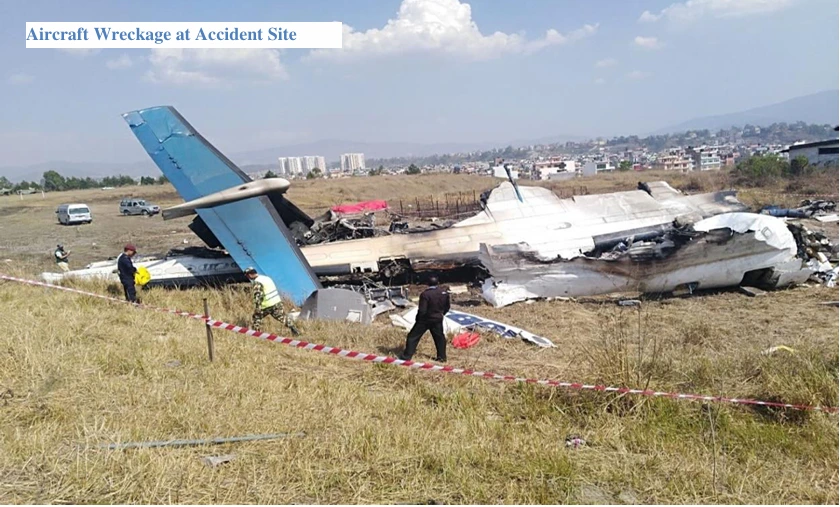
On March 12, 2018, a Bombardier Q400 operated by US-Bangla Airlines (UBG) on Flight BS211 from Hazrat Shahjalal International Airport (DAC), Dhaka, crashed on landing at KTM, killing 51 of the 71 people on board. The aircraft burst into flames after veering off the runway, and the crash remains the deadliest accident involving any Bangladeshi airline and the worst ever involving a Bombardier Dash 8 Q400.
Nepal’s final investigation report, released in January 2019, was unsparing. The commission concluded: “When we analyzed the conversation on the cockpit voice recorder, it was clear to us that the captain was harbouring severe mental stress” before the aircraft even left Dhaka.
US-Bangla disputed the findings, with CEO Imran Asif attributing the crash instead to air traffic controllers who misled the pilots onto the wrong runway. In 2025, the Kathmandu District Court ordered US-Bangla to pay $2.74 million to the families of 17 victims — the first ruling of its kind in Nepal’s aviation history.
The Yeti Airlines Pokhara Crash Of 2023
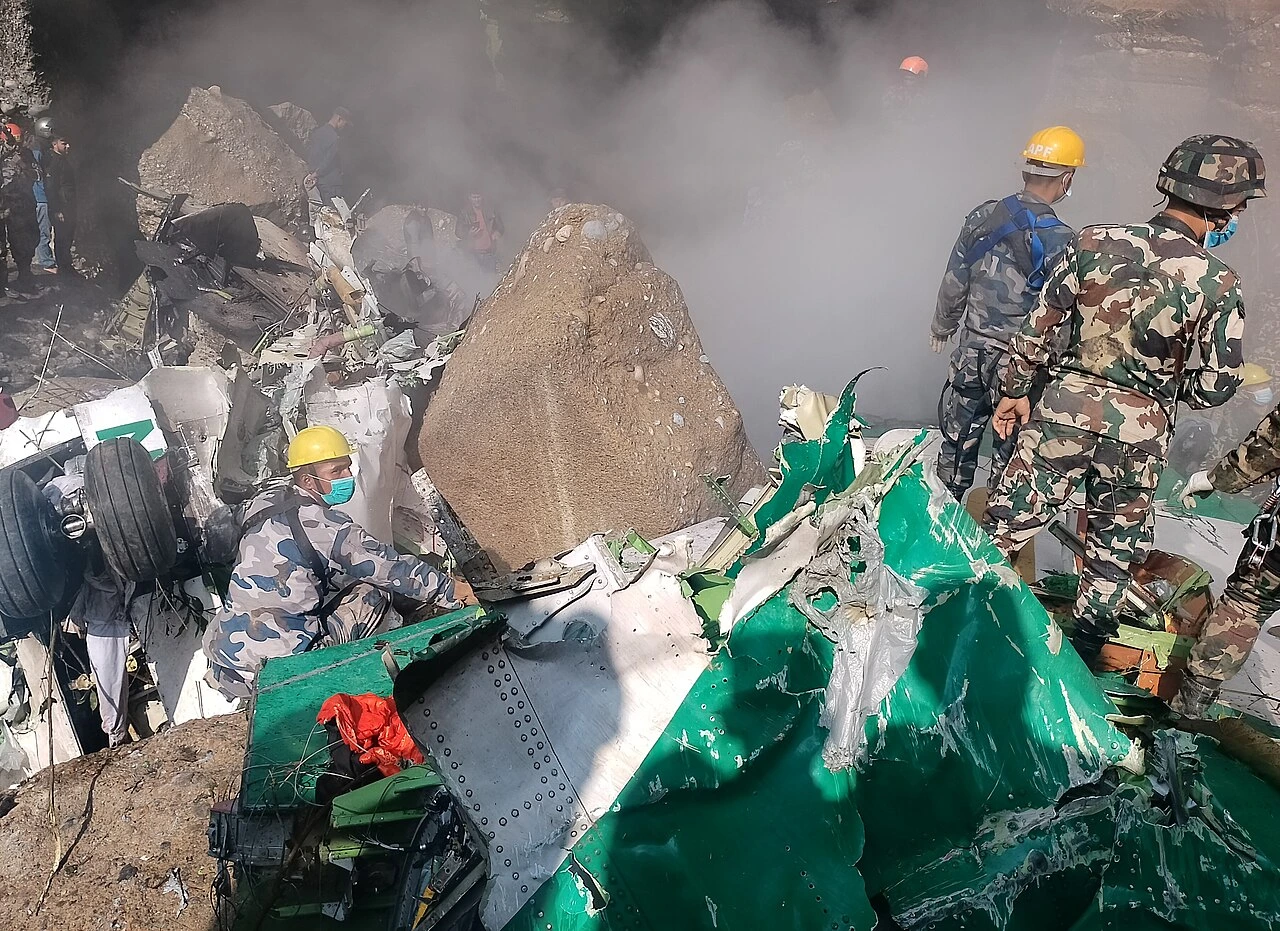
On January 15, 2023, a Yeti Airlines ATR 72-500 operating Flight 691 from KTM to the newly opened Pokhara International Airport (PKR) stalled and crashed on final approach, killing all 72 people on board. The wreckage fell into a gorge on the bank of the Seti Gandaki River. The final moments of the crash were livestreamed on Facebook by a passenger unaware of the unfolding catastrophe.
Instructor captain Kamal KC, who had with 21,900 flying hours under his belt, accidentally moved both condition levers to the feather position, cutting engine thrust, instead of extending the flaps for landing. The co-pilot failed to challenge the error, and the accident became Nepal’s deadliest since 1992 and the worst crash ever involving an ATR 72 — at an airport open just two weeks.
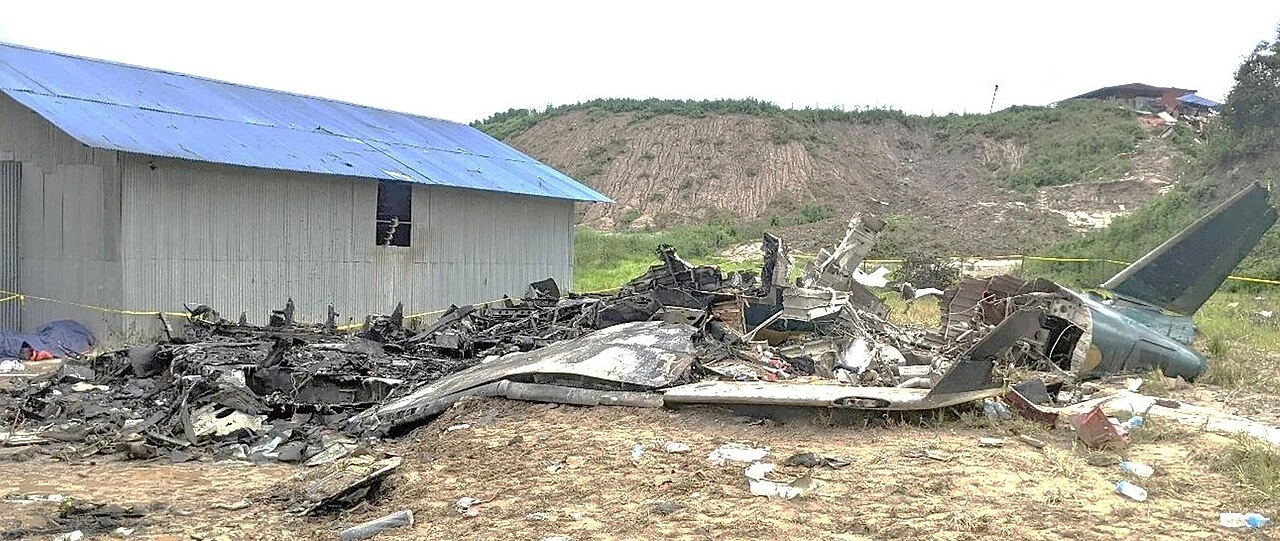
Saurya Airlines CRJ200 Crash Killed 18 After Failed Kathmandu Takeoff
Saurya Airlines suffered one of Nepal’s deadliest recent aviation accidents on July 24, 2024, when a Bombardier CRJ200LR, registered 9N-AME, crashed moments after departing Tribhuvan International Airport (KTM) in Kathmandu. The non-scheduled ferry flight was on the way to Pokhara International Airport (PKR), an airport rife with corruption, for maintenance work when it lost control during takeoff.
Preliminary findings showed the regional jet rolled sharply to the right immediately after liftoff before impacting the ground near the runway. The crash killed 18 of the 19 people onboard, including several airline technical staff and engineers traveling with the aircraft. The captain survived after rescue teams pulled him from the wreckage.
Investigators identified several contributing factors behind the accident:
- The operator was found to have committed serious procedural violations during cargo and baggage handling, including failures in weighing, loading, distribution, and securing of cargo.
- The load was inadequately restrained with insufficient straps, tie-downs, and nets, while flight preparations were conducted in a rushed manner, contrary to the airline’s operational and ground handling manuals.
- The absence of a clear and consistent definition for ferry flights, alongside repeated non-compliance with established ferry flight preparation practices.
Additionally, investigators found that the aircraft departed using incorrect takeoff speeds that had been calculated from an erroneous interpolated speed card for an 18,500 kg takeoff weight. The inaccurate V-speeds had remained undetected since the speed card’s development, partly because the booklet had never undergone formal approval or acceptance procedures.
Tara Air Twin Otter Crash Killed 22 on Flight to Jomsom
Tara Air suffered a fatal accident on May 29, 2022, when a de Havilland Canada DHC-6 Twin Otter disappeared during a domestic flight from Pokhara Airport (PKR) to Jomsom Airport (JMO) in Nepal’s Mustang district. The aircraft lost contact with air traffic control shortly after takeoff while flying through mountainous terrain under poor weather conditions.
The aircraft was carrying 22 people, including four Indian nationals, two German passengers, and the Nepali flight crew. Rescue teams later discovered the wreckage near Thasang in Mustang, confirming that all passengers and crew members had died in the crash.
Investigators determined that adverse weather, low visibility, and controlled flight into terrain were major contributing factors in the accident and listed the probable cause as “the flight crew’s failure to monitor and maintain the proper course while inadvertently flying in IMC conditions with the aircraft Terrain Avoidance and Warning System [TAWS] inhibited which resulted into a CFIT accident.”
The Helicopter Crash That Killed Nepal’s Tourism Minister
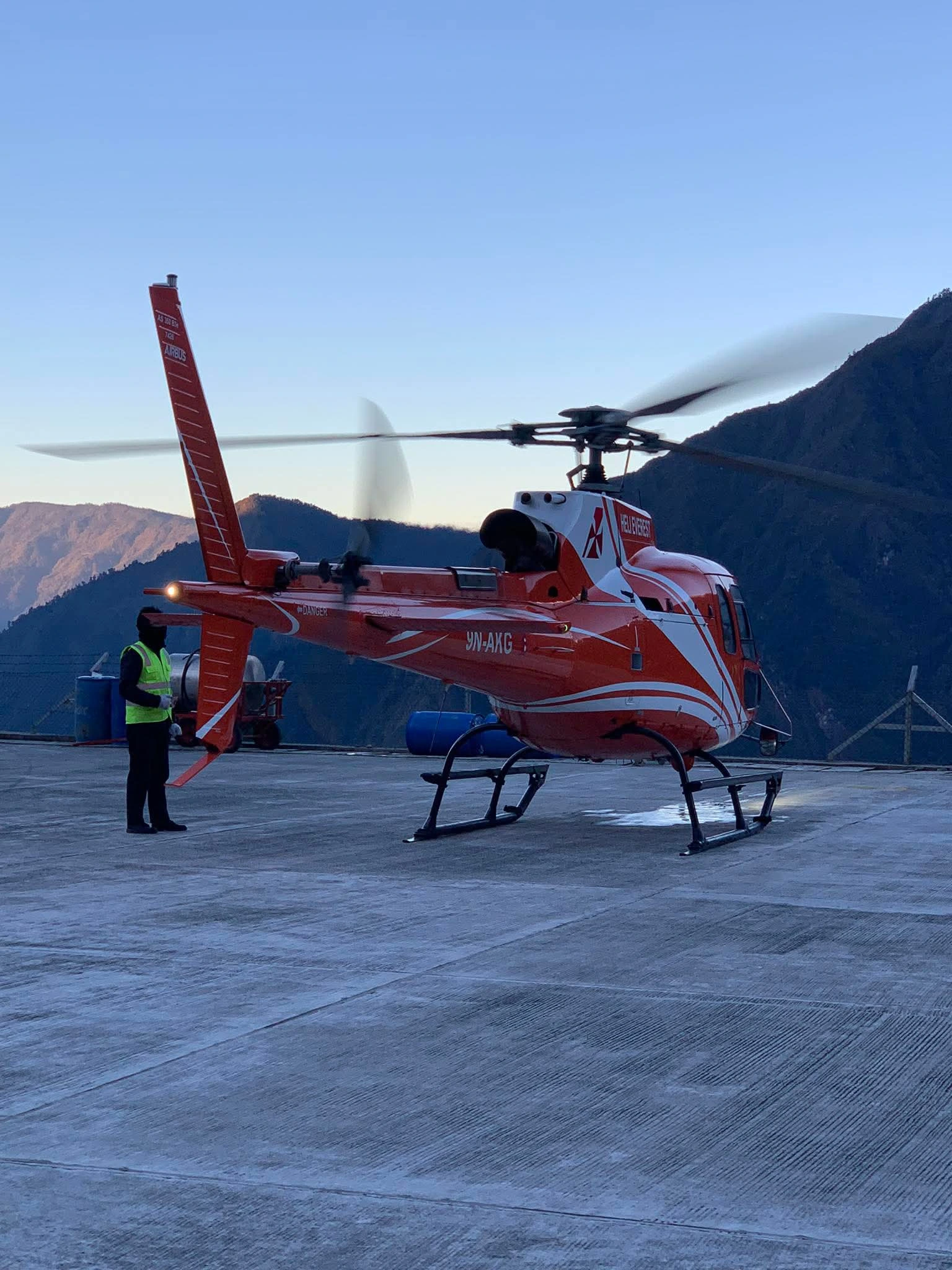
The 2019 Taplejung helicopter crash was one of Nepal’s most significant aviation tragedies because it killed several senior government and aviation officials, including then Tourism and Civil Aviation Minister Rabindra Adhikari.
The accident occurred on February 27, 2019, in Taplejung district in eastern Nepal. An Air Dynasty Helicopters helicopter crashed shortly after departing from the Pathibhara area near the famous Pathibhara Devi Temple pilgrimage site.
All seven people onboard were killed. The victims included:
- Rabindra Adhikari
- Ang Tshering Sherpa
- Senior officials from the Civil Aviation Authority of Nepal
- A Nepal Army officer
- An aide to then Prime Minister KP Sharma Oli
- Pilot Captain Prabhakar KC
According to investigators, the helicopter encountered deteriorating weather conditions soon after takeoff. The region was experiencing snowfall, strong winds, cloud cover, and low visibility. Authorities later stated that the aircraft likely entered instrument meteorological conditions (IMC), where pilots cannot rely on visual references alone.
The helicopter eventually struck terrain near a cliff area known as Sisne Bhir. Investigators classified the accident as a Controlled Flight Into Terrain (CFIT) crash.
The group had been visiting eastern Nepal to inspect a proposed airstrip project in Tehrathum district before returning from the Pathibhara area.
A government investigation committee formed the next day identified several contributing factors:
- Adverse mountain weather
- Low visibility
- Possible procedural violations
- Weight distribution imbalance
- The pilot’s limited operational experience in such conditions
The crash intensified scrutiny of aviation safety in Nepal, particularly helicopter operations in mountainous regions where weather can change rapidly. It also renewed international concerns about Nepal’s aviation oversight and terrain-related flight risks.
Buddha Air’s Sightseeing Flight Crash in 2011
On September 25, 2011, a Buddha Air Beechcraft 1900D aircraft crashed in the Lalitpur district shortly before it was due to land at Tribhuvan International Airport. The aircraft had been operating a scenic Everest mountain flight, a popular tourism service that offers close aerial views of the Himalayas, including Mount Everest.
All 19 people onboard died in the crash, including 16 passengers and three crew members. The passengers included 10 Indian tourists who had booked the sightseeing flight.
According to the investigation, the aircraft encountered poor weather and low visibility conditions while returning to Kathmandu. Investigators later concluded that the crew likely experienced spatial disorientation, a dangerous situation in which pilots lose accurate awareness of the aircraft’s position and movement.
The report stated that the surrounding terrain and cloud cover created visual illusions, making it difficult for the pilots to distinguish the horizon from mountainous terrain. Authorities also identified pilot fatigue as a contributing factor in the accident.
All in All
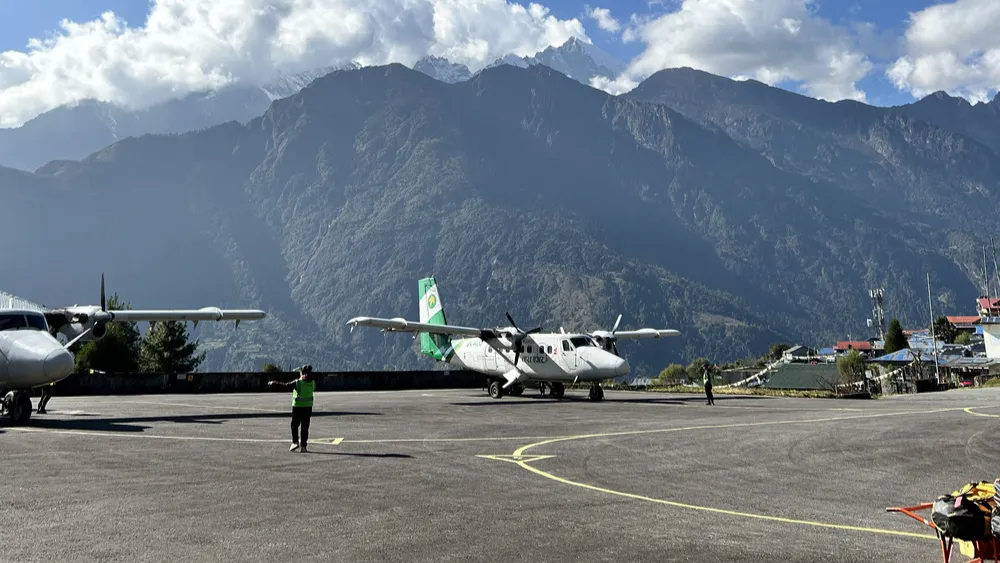
In February 2014, a Nepal Airlines DHC-6 Twin Otter traveling from Pokhara to Jumla went down in Arghakhanchi district, leaving all 18 passengers and crew dead.; two years later, Tara Air Flight 193 vanished eight minutes after departing Pokhara for Jomsom, with all 23 on board perishing in the Myagdi mountains.
A string of these crashes has led to European Union banning all 20 Nepali airlines from its airspace on December 5, 2013, citing safety concerns — and as of the EU Air Safety List update of December 13, 2024, that ban remains fully in force. The central demand is structural: Nepal must split the Civil Aviation Authority of Nepal (CAAN) into a separate regulator and service provider.
In a note obtained by the Kathmandu Post, the European Commission stated that “concerns remain about the current capacity of CAAN to properly discharge the responsibility required by relevant international safety standards“.
Two reform bills have been drafted, debated, and stalled across successive governments — blocked most recently by the Dahal administration. An aviation expert told the Post that “Nepal has consistently failed to abide by the reforms recommended by global aviation watchdogs“, and EU visitors represent 15 to 20 percent of Nepal’s total inbound tourism, with the ban showing no sign of lifting until reform materialises.



.jpg?uselang=en#Licensing)
Leave a Reply