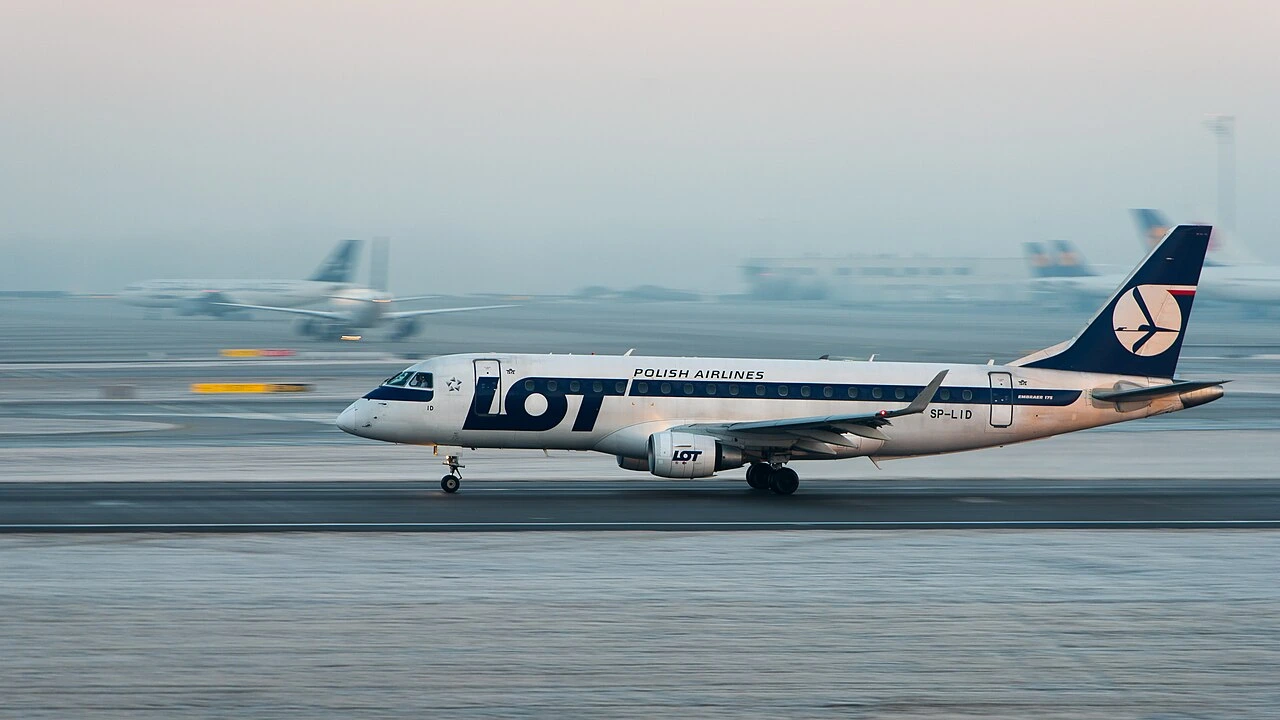
LOT Polish Airlines (LO) became the first commercial carrier in the world to take Boeing to a jury trial over the 737 MAX crisis on 11 May 2026, Reuters reported. The proceedings commenced at the United States District Court in Seattle, Washington as the Polish national flag carrier, formally known as Polskie Linie Lotnicze LOT S.A., alleged Boeing concealed critical safety deficiencies in the Maneuvering Characteristics Augmentation System (MCAS) while actively pitching the aircraft to LOT in 2016 as the cornerstone of a financial turnaround strategy.
LOT subsequently committed to leasing 15 aircraft, relying on Boeing’s core commercial promise that pilots already rated on earlier 737 variants would require no expensive simulator retraining to transition to the MAX. That promise, LOT argues, was built on a concealment.

LOT’s $250 Million Claim Centers on Boeing’s Promise of Minimal Pilot Retraining
The gravitational centre of LOT’s legal argument is not that MCAS existed, but that Boeing deliberately understated its scope. Opening statements on 11 May from LOT’s lead attorney, Anthony Battista, were unambiguous. Reuters reported that Battista told jurors directly that “this case is about Boeing’s lies and deception and the devastating financial harm it caused“.
In 2016, Boeing was engaged in an intense narrowbody competition with Airbus’s A320 family for thousands of orders worldwide, and the MAX’s principal advantage over the A320neo was that incumbent 737 operators could transition their pilots using a brief computer-based training module rather than full simulator hours.
Maciej Wilk, a former LOT executive who took the stand on the trial’s opening day, told jurors that switching to an Airbus alternative would have demanded costly simulator training for LOT’s entire pilot corps. Per Reuters’ court reporting, Wilk stated: “And the key promise in all this was about pilot training” for the 737 MAX.
On that assurance, LOT committed to leasing 15 jets over two years, entirely unaware of MCAS or its operational characteristics. The company’s fleet manager also underwent questioning on the trial’s first day, per court papers published that evening.
The airline’s formal claim, filed in October 2021, alleges “purposeful and negligent false representations and omissions concerning the 737 MAX aircraft.” LOT operated and leased 14 MAX aircraft at the time of the 2019 grounding and currently flies 26 Boeing 737 MAX 8 jets, with four additional units on order.

Boeing’s Defence Hinges on the Fact that LOT Continues to Fly the MAX Daily
Boeing entered the trial with a pointed rhetorical counter-offensive. Its attorney, in opening arguments reported by Reuters and re-published by Investing.com, accused LOT of “crying foul and fraud out of one side of their mouth in the courtroom” while simultaneously operating the 737 MAX every day across its European network. The attorney asked jurors directly: “Is that how the victim of a multimillion-dollar fraud scheme behaves?”
LOT currently operates 26 Boeing 737 MAX 8 aircraft. According to data from planespotters.net, These have an average of 4.1 years. Boeing’s defence will likely argue that LOT’s continued commercial use of the aircraft, and its continued acceptance of pending MAX deliveries (four are on order), undermines the carrier’s credibility of a fraud claim that hinges on the original 2016 sales process.
Boeing separately told Reuters it had already paid billions of dollars to the families of the 346 victims of the two crashes and had resolved airline grounding-related claims. The precise details remain undisclosed, though.
Boeing Has Record Orders but Unresolved Accountability Still There
Boeing’s commercial recovery from the MAX crisis has been numerically striking, even as the legal proceedings multiply. The manufacturer produced 2,233 Boeing 737 MAX aircraft as of March 2026, and the type commands a backlog of 4,870 outstanding orders. Boeing opened its fourth 737 MAX production line at its Paine Field Everett facility (PAE) in mid-2026.
We had also previosuly detailed in April 2026 that the new “North Line” is designed to gradually raise output from 38–42 aircraft per month toward 47, and ultimately to 63 per month over several years. Boeing production leader Jennifer Boland-Masterson summarised the philosophy guiding the ramp-up:
“It’s like running. We know how to do it, and we’ve done it before, but we need to warm up our muscles. You don’t start with a marathon. You start with shorter distances and build up from there.”
The day after LOT’s opening statements in Seattle, Boeing reported its strongest monthly order intake of 2026, booking 135 net new aircraft including 57 Boeing 737 MAX jets. Boeing’s year-to-date net order total of 284 aircraft represents the strongest four-month commercial start since 2014.
All in All
Simple Flying’s analysis noted that LOT currently flies over four times as many MAX jets as 737-800s — a fleet composition that reflects not ideological commitment to the type but operational and contractual entrenchment.
LOT’s financial turnaround in the mid-2010s was explicitly architected around the MAX’s economics: the aircraft offered superior fuel efficiency relative to the Boeing 737NG and could be operated by LOT’s existing pilot pool without the simulator training investment that an Airbus A320neo transition would have entailed.
When the grounding arrived in March 2019, LOT was more exposed than most: it had fewer alternative aircraft to redeploy and a recovery narrative that had been publicly linked to the MAX’s economics. The simultaneous onset of the COVID-19 pandemic in early 2020, compounding the 20-month grounding, further deepened the financial damage.
LOT’s then-president, Rafał Milczarski, acknowledged the severity of the losses when announcing the lawsuit in October 2021, telling journalists via Aviation 24’s earlier reporting: “We will not let go and we cannot let go of anything that Boeing owes us. It is a natural thing and we will make such claims against Boeing.”
Settlement talks with Boeing had previously failed to reach satisfactory terms. The trial now represents LOT’s only remaining avenue for public resolution.