

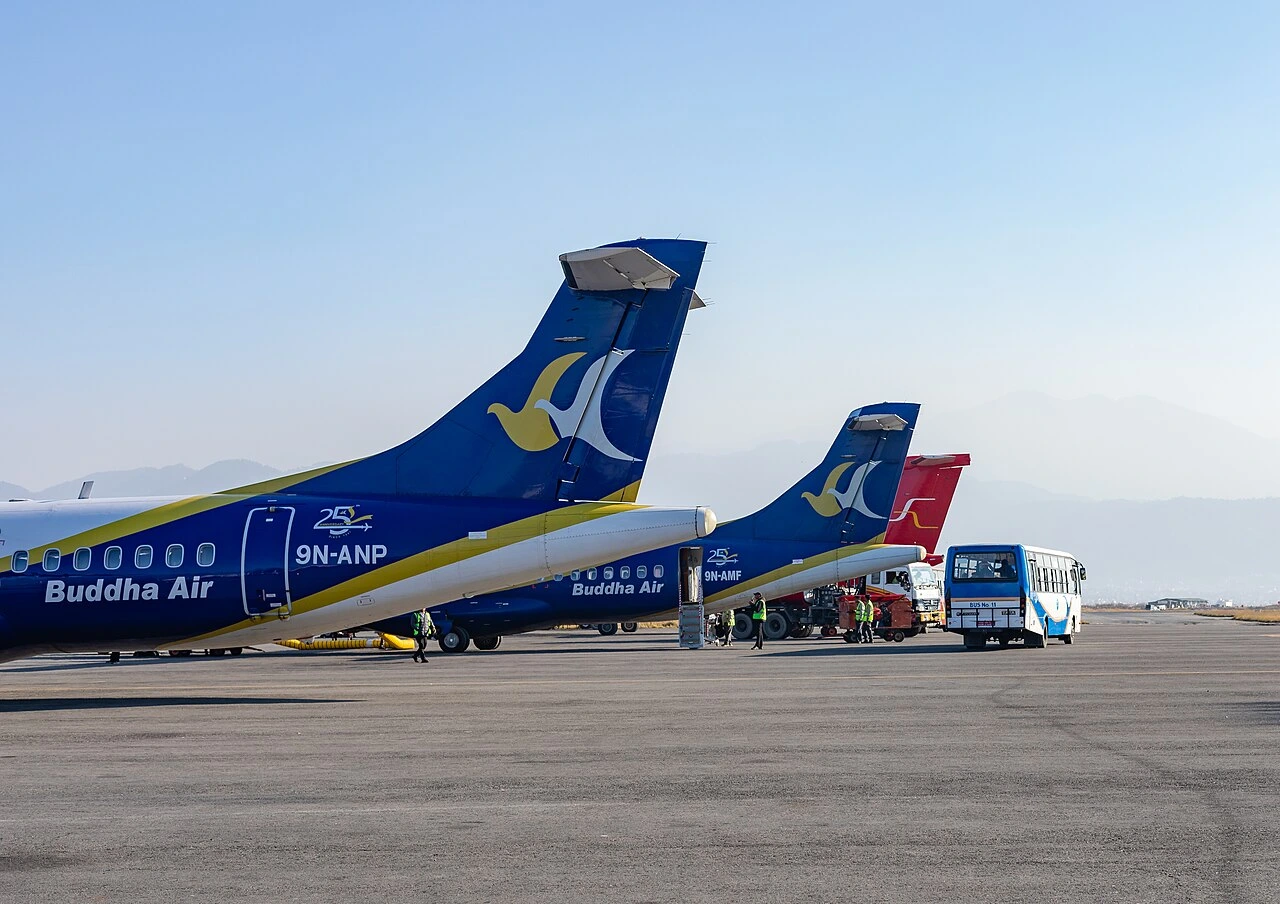
Tribhuvan International Airport (KTM), Kathmandu, serves as Nepal’s sole international aviation gateway. As of May 2026, 32 airlines operate scheduled flights to and from Kathmandu, connecting the Himalayan nation to 45 destinations across 16 countries, FlightsFrom reported. The airport, operated by the Civil Aviation Authority of Nepal (CAAN), handled nearly 9 million passengers in 2023 alone.
Kathmandu is a critical hub for trekkers, mountaineers, and regional travelers, as flights to Lukla, which is considered to be the most dangerous airport in the world take place from here. The same is true for the people who want to get to the Western region of the nation after a flight to Pokhara, a reputed city that hosts an international airport that hosts no international flights.
International carriers from the Middle East, South Asia, Southeast Asia, and East Asia all serve Tribhuvan International Airport. Nepal’s own national flag carrier, Nepal Airlines (RA), also operates international routes — though it and all other Nepali carriers remain banned from flying to the European Union.
The Full List of Airlines Flying To Kathmandu
As of May 2026, the following 32 airlines operate flights to and from Tribhuvan International Airport (KTM):
- Air Arabia – Gulf low-cost carrier, operates connecting services via Sharjah
- Air Arabia Abu Dhabi – Abu Dhabi-based low-cost affiliate of Air Arabia
- Air China (CA) – China’s flag carrier, connecting Kathmandu to Beijing
- Air India (AI) – India’s flag carrier; one of five airlines with direct Delhi–Kathmandu service
- Air India Express (IX) – Budget arm of Air India, operating Indian subcontinent routes
- Batik Air (ID) – Malaysian low-cost carrier, serving the Kuala Lumpur–Kathmandu route
- Bhutan Airlines (B3) – National carrier of Bhutan, connects Paro to Kathmandu
- Biman Bangladesh Airlines (BG) – Bangladesh’s flag carrier; currently operates Kathmandu–Dhaka service
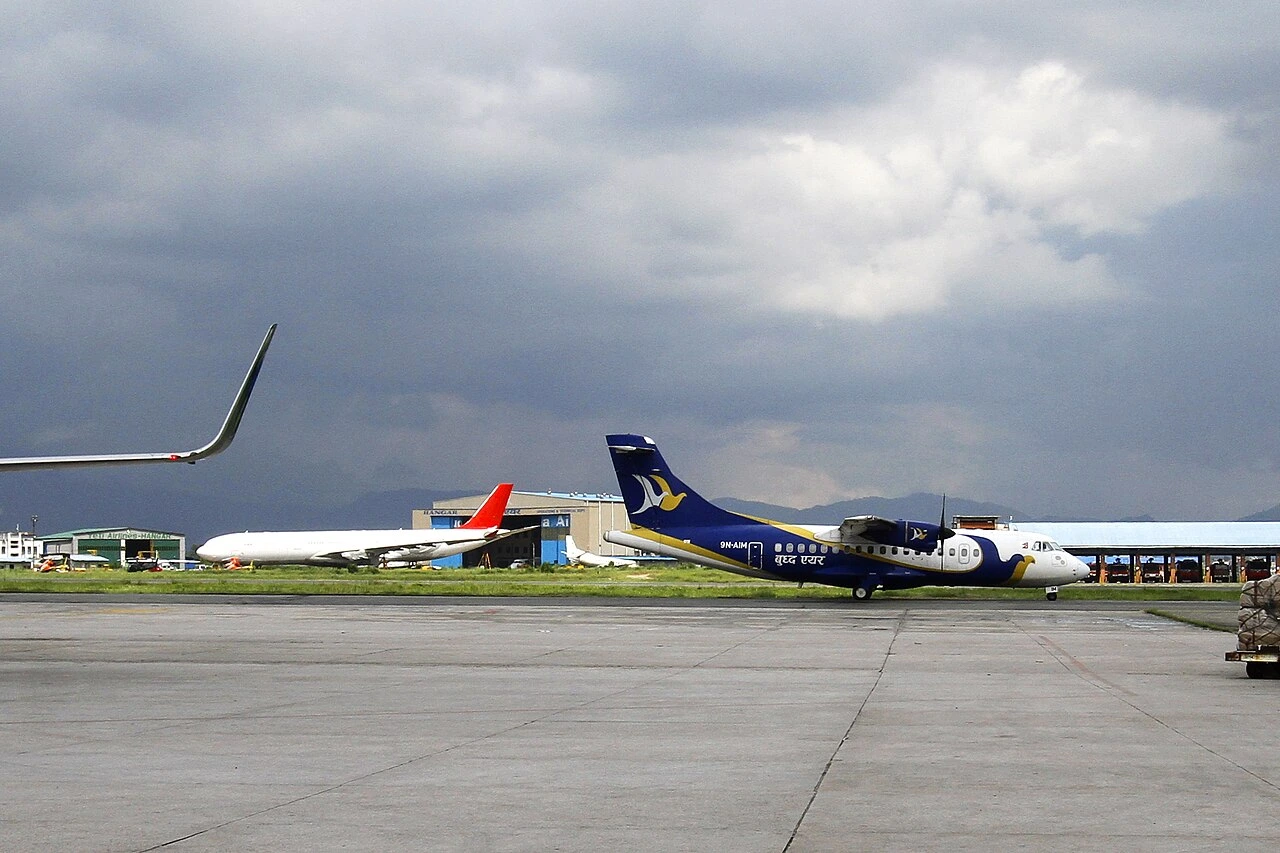
- Buddha Air (U4) – Nepal’s largest domestic airline by departures; also serves Varanasi and Kolkata internationally
- Cathay Pacific (CX) – Hong Kong’s premium international carrier
- China Eastern Airlines (MU) – Major Chinese carrier, offering connections via Shanghai
- China Southern Airlines (CZ) – One of China’s largest carriers, serving Kathmandu from mainland Chinese hubs
- Drukair (KB) – Bhutan’s royal airline, the second carrier connecting the two neighbouring nations
- FlexFlight (WF) – Regional carrier with Kathmandu–Delhi connectivity
- flydubai (FZ) – Dubai-based low-cost carrier, popular for European-to-Kathmandu connections via Dubai
- Himalaya Airlines (H9) – Nepal-based carrier operating exclusively on international routes; operates an all-Airbus A320 fleet with 8 destinations and 48 routes. The carrier also recently launched a route that was never operated before, between Kathmandu and Shenzhen.
- IndiGo (6E) – India’s largest airline by market share; among the airlines offering Delhi–Kathmandu service
- Jazeera Airways (J9) – Kuwait-based low-cost carrier; operates 7 direct flights weekly between Kuwait City (KWI) and KTM
- Korean Air (KE) – South Korea’s flag carrier, the only airline with direct Seoul–Kathmandu service
- Kuwait Airways (KU) – Kuwait’s national carrier; operates 5 direct weekly flights to Kathmandu on Monday, Tuesday, Wednesday, Thursday, and Saturday
- Malaysia Airlines (MH) – Malaysia’s flag carrier and Oneworld member, one of 4 carriers serving Kuala Lumpur (KUL)–Kathmandu
- Nepal Airlines (RA) – Nepal’s national flag carrier; the leading international carrier at KTM in September 2025 with 53,262 passengers transported
- Qatar Airways (QR) – Oneworld member and one of the most popular international airlines at KTM; 4th busiest international carrier at Tribhuvan in September 2025 with 39,278 passengers.
- Shree Airlines (N2) – Nepal-based carrier; second largest by fleet size after Buddha Air with 11 fixed-wing aircraft as of May 2025
- Sichuan Airlines (3U) – Chinese carrier operating from Chengdu and other Chinese cities
- Singapore Airlines (SQ) – Star Alliance member; the only carrier with a direct Singapore (SIN)–Kathmandu service
- SriLankan Airlines (UL) – Sri Lanka’s national carrier, connecting Colombo to Kathmandu
- Thai AirAsia (FD) – Low-cost Thai carrier operating Kathmandu–Bangkok routes
- Thai Airways (TG) – Thailand’s national carrier; serves Kathmandu from Bangkok Suvarnabhumi
- Thai Lion Air (SL) – Budget carrier with Kathmandu–Bangkok connectivity
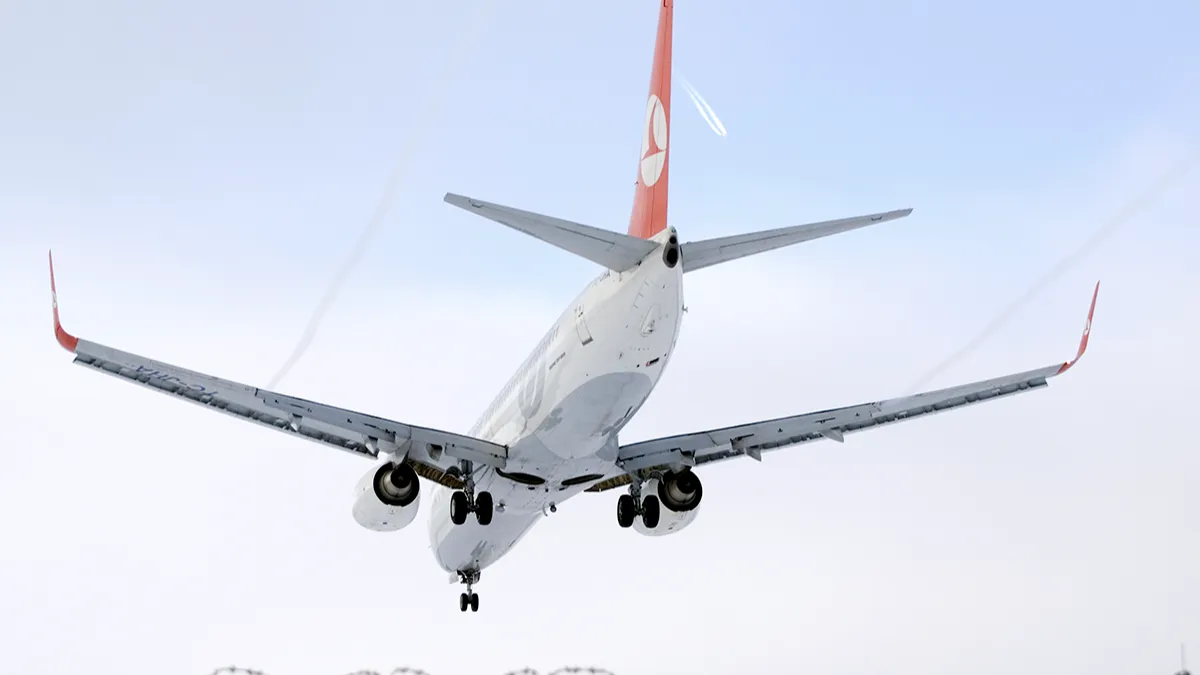
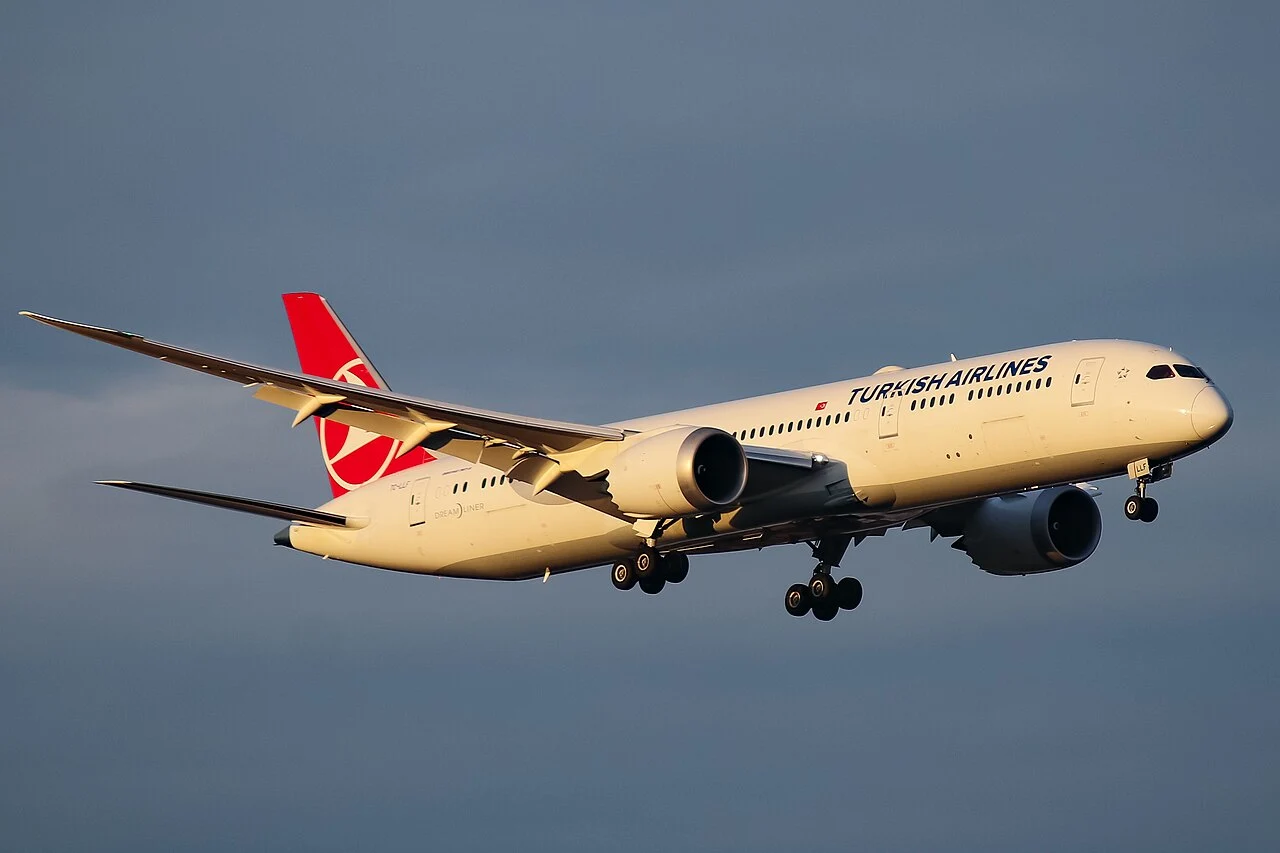
- Turkish Airlines (TK) – Turkey’s flag carrier and the operator of the longest non-stop route from KTM: Kathmandu–Istanbul (IST), spanning 3,295 miles and taking approximately 8 hours and 10 minutes
- Yeti Airlines (YT) – Nepal’s second-largest domestic airline; also connects Kathmandu to domestic destinations
Key International Routes to Kathmandu
Delhi, India is the top international destination from KTM. Five airlines serve the Indira Gandhi International Airport (DEL), New Delhi–Kathmandu route directly: Air India (AI), Bhutan Airlines (B3), FlexFlight, IndiGo (6E), and Nepal Airlines (RA). Kuala Lumpur International Airport (KUL) is the second-most-popular international connection, served by Batik Air, Himalaya Airlines, Malaysia Airlines, and Nepal Airlines.
Doha’s Hamad International Airport (DOH) is a key Gulf hub for Kathmandu-bound passengers. Three carriers operate direct Doha–Kathmandu services: Qatar Airways, Nepal Airlines, and Himalaya Airlines. Kuwait City is another notable Gulf connection, where both Jazeera Airways and Kuwait Airways operate daily direct flights to KTM.
Tokyo’s Narita International Airport (NRT) is the only Japanese city with a direct KTM link. Nepal Airlines operates this seasonal route, which runs from June to October each year. Seoul’s Incheon International Airport (ICN) connects to Kathmandu through Korean Air, the sole carrier on that sector.
Nepal Airlines is the Top International Carrier At KTM
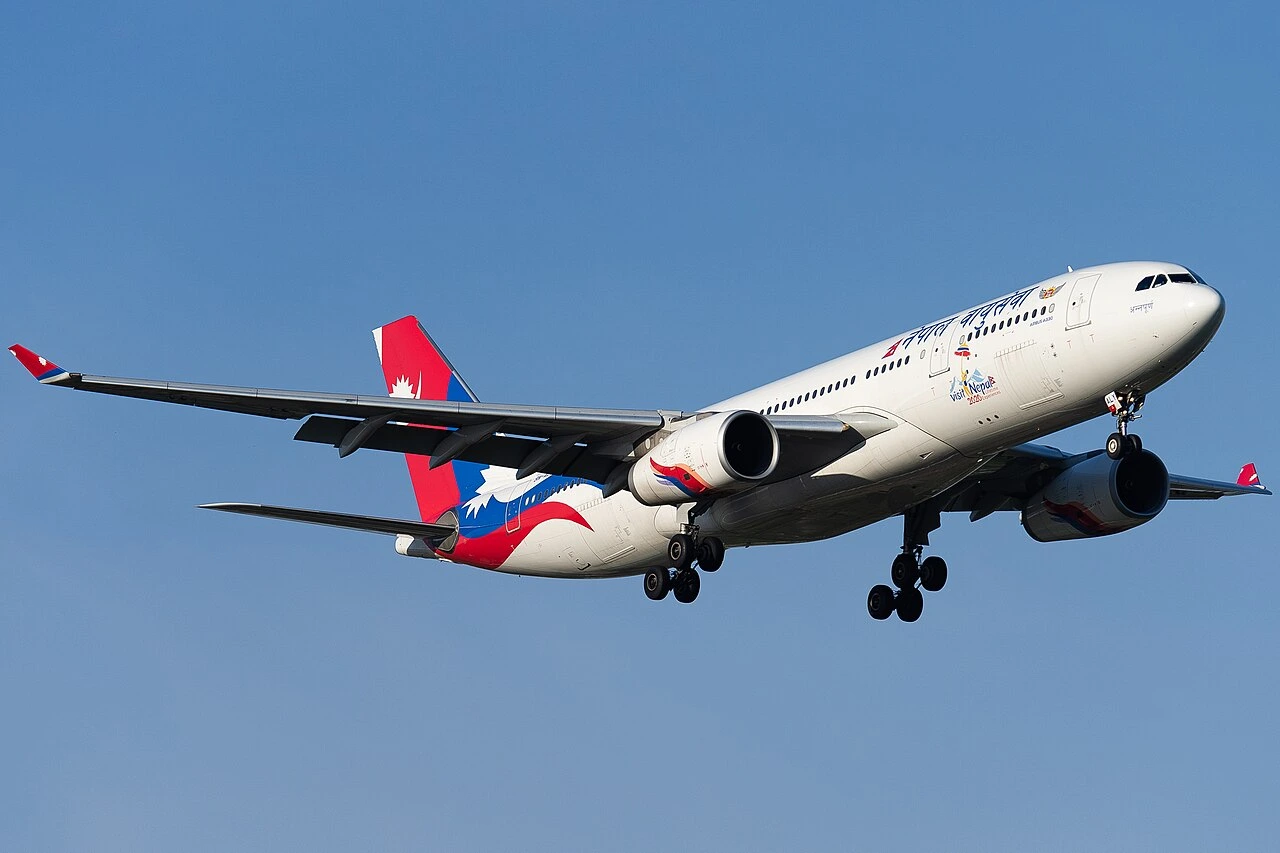
Nepal Airlines Corporation (RA), founded on 1 July 1958, is Nepal’s oldest airline and its national flag carrier. The airline’s headquarters are on Kantipath, Kathmandu. Its Everest Club serves as its frequent-flyer program.
Nepal Airlines operates six aircraft covering 36 destinations. Its narrow-body Airbus A320s operate regional routes, while its Airbus A330-200s handle longer international sectors. In September 2025, Nepal Airlines transported 53,262 passengers at Tribhuvan International Airport — the highest figure among all international carriers that month — comprising 28,178 inbound visitors and 25,081 outgoing passengers, according to CAAN.
The airline is currently preparing to launch direct flights between Kathmandu and Hazrat Shahjalal International Airport (DAC), Dhaka, Bangladesh. Subash Rijal, Director of the Operations Department and a senior captain at Nepal Airlines, was quoted in a report by KhabarHub as saying the airline aims “to address a notable absence in its network.” At present, Biman Bangladesh Airlines and Himalaya Airlines both operate the Kathmandu–Dhaka sector.
Turkey Is Europe’s Only Direct Link to Kathmandu
Turkish Airlines (TK) is the only carrier offering a direct flight between Europe and Kathmandu. The airline launched direct Istanbul (IST)–Kathmandu flights in September 2013, re-establishing Nepal’s link with continental Europe after Austrian Airlines discontinued its Vienna service. Turkish Airlines operates 6 non-stop weekly flights on the Istanbul Airport (IST)–Tribhuvan route.
The Istanbul–KTM sector is the longest non-stop flight from Kathmandu, covering 3,295 miles and requiring approximately 8 hours and 10 minutes in the air. Turkish Airlines operates this route using an Airbus A330-300. The aircraft type is significant: a Turkish Airlines A330-300 also became Nepal’s first aviation museum exhibit after suffering a runway excursion at KTM in March 2015, and has since been repurposed as the Aircraft Museum Kathmandu in Sinamangal.

.jpg)
.jpg)

Leave a Reply