Himalaya Airlines (H9), Nepal’s Nepal-China joint-venture international carrier, commenced direct scheduled flight service between Tribhuvan International Airport (KTM), Kathmandu, and Shenzhen Bao’an International Airport (SZX) on June 4, 2026. The inaugural outbound service, flight H9 985, took off from Kathmandu at 09:59 PM local time carrying 98 passengers, landing in Shenzhen at 04:17 AM Chinese local time on June 5. With that departure, Himalaya Airlines became the first and only commercial carrier in the history of civil aviation to operate a scheduled direct service on the Kathmandu–Shenzhen–Kathmandu sector — a corridor that no airline had ever claimed.
The return service, H9 986, departed Shenzhen Bao’an International Airport at 06:12 AM Chinese local time on June 5 with 157 passengers on board and landed at Tribhuvan International Airport at 08:26 AM Nepali local time on the same day. The higher load on the inbound leg signals robust initial demand from Shenzhen-side travelers, even before any sustained promotional campaign. The airline deploys its Airbus A320-214 on the sector, configured in an all-economy, 180-seat layout.
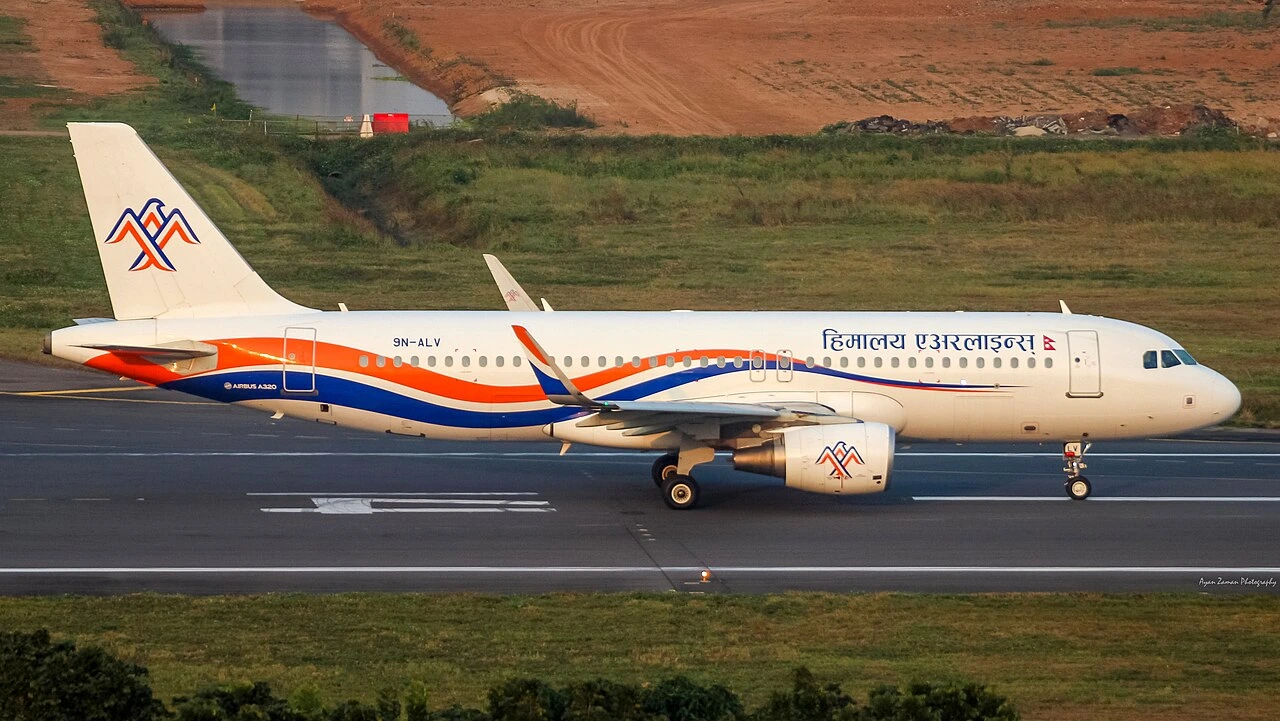
Flight Schedule And Operational Details for the Kathmandu–Shenzhen Sector
The Kathmandu–Shenzhen corridor had remained entirely unclaimed prior to June 4, 2026. AeroRoutes data confirms that the carrier initially schedules the route at two to three weekly frequencies, with plans to increase to four weekly rotations from June 22, 2026. Himalaya Airlines launches this route during Nepal’s traditionally lean early-summer tourism season — a calculated gambit to inject inbound demand at precisely the moment the country’s hospitality sector needs it most.
The Kathmandu Post reports that the airline operates outbound services from Tribhuvan International Airport every Tuesday and Thursday, with inbound services from Shenzhen Bao’an International Airport on Wednesdays and Fridays.
The current schedule maintains a logical 24-hour turnaround rhythm that gives the operating aircraft adequate ground time at both ends. The inaugural schedule, effective June 4 through June 30, 2026, is as follows:
| Sector | Days of Operation | Departure | Arrival |
|---|---|---|---|
| KTM–SZX | Tuesday, Thursday | 09:59 PM (NPT) | 04:17 AM+1 (CST) |
| SZX–KTM | Wednesday, Friday | 06:12 AM (CST) | 08:26 AM (NPT) |
The airline has confirmed plans to review and increase operational frequency in direct response to passenger demand and load factors. This iterative approach to capacity management reflects standard revenue-management practice for newly inaugurated thin routes. Tickets are available through Himalaya Airlines’ own ticketing counters, authorised travel partners, the official website, and the Himalaya Airlines mobile application.
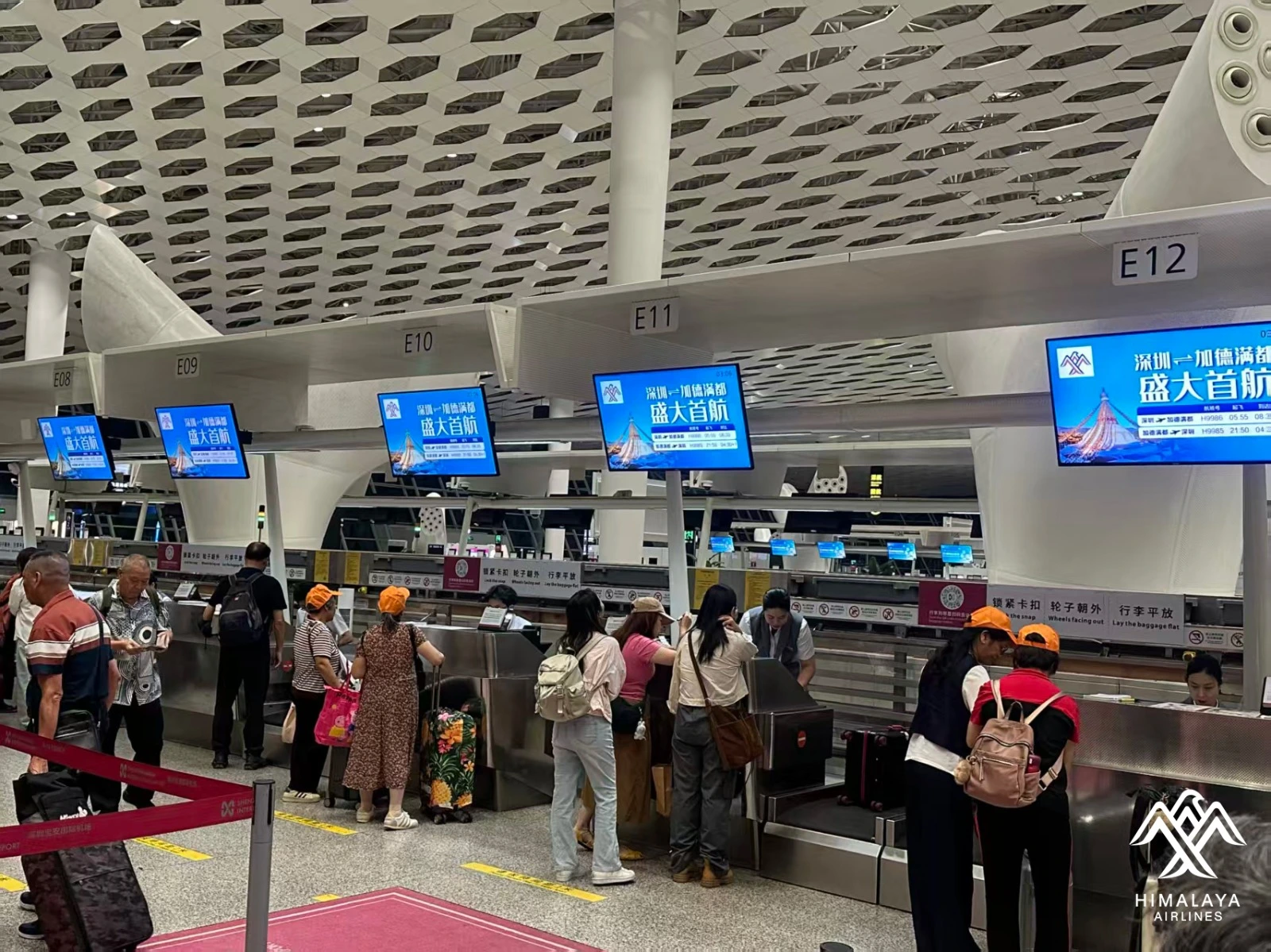
Understanding The Strategic Weight of Flying to Shenzhen
Shenzhen is not simply another Chinese city Himalaya Airlines adds to its network. Designated as China’s first Special Economic Zone (SEZ) in 1980, the city transformed from a modest fishing village into one of the world’s most productive metropolitan economies within four decades. Its GDP grew at an annualised compound rate of approximately 21.6% between 1979 and 2019, eventually surpassing Hong Kong’s GDP for the first time in 2018.
The city now houses nearly 18 million residents and serves as the global headquarters for technology giants including Huawei, Tencent, DJI, and BYD. Shenzhen Bao’an International Airport handled 61.46 million passengers in 2024, cementing its position as a primary aviation gateway within China’s Pearl River Delta region.
For Himalaya Airlines, the destination offers access to a high-income, outbound-hungry population of business professionals and technology-sector workers — demographics Nepal’s tourism economy has historically struggled to attract in volume.

What Vijay Shrestha, Himalaya’s Vice-President, Said About the New Route
Vijay Shrestha, Vice-President and chief spokesperson of Himalaya Airlines, articulated the airline’s strategic rationale in a statement carried by Peoples’ Review on the day of the inaugural flight. Shrestha said:
“Himalaya Airlines has always pioneered trailblazing and new routes to China, leading the way ahead of conventional market trends. The introduction of the Kathmandu–Shenzhen service is a testament to that commitment. With this route, Himalaya Airlines aims to create memorable travel experiences while upholding the highest standards of safety and service quality. We look forward to welcoming passengers on board and facilitating the discovery of the extraordinary beauty and opportunities that both Nepal and China have to offer.”
In a separate interview cited by MENAFN and the Bangladesh Monitor, Shrestha also disclosed the airline’s broader China ambitions, as he confided that the main mission of Himalaya Airlines is to “operate flights to ten different tourism and economic sectors across China and to welcome one million Chinese tourists to Nepal.”
These two statements, taken together, frame the Shenzhen route not as an isolated addition but as one component of a systematic, decade-spanning network-build across the People’s Republic.
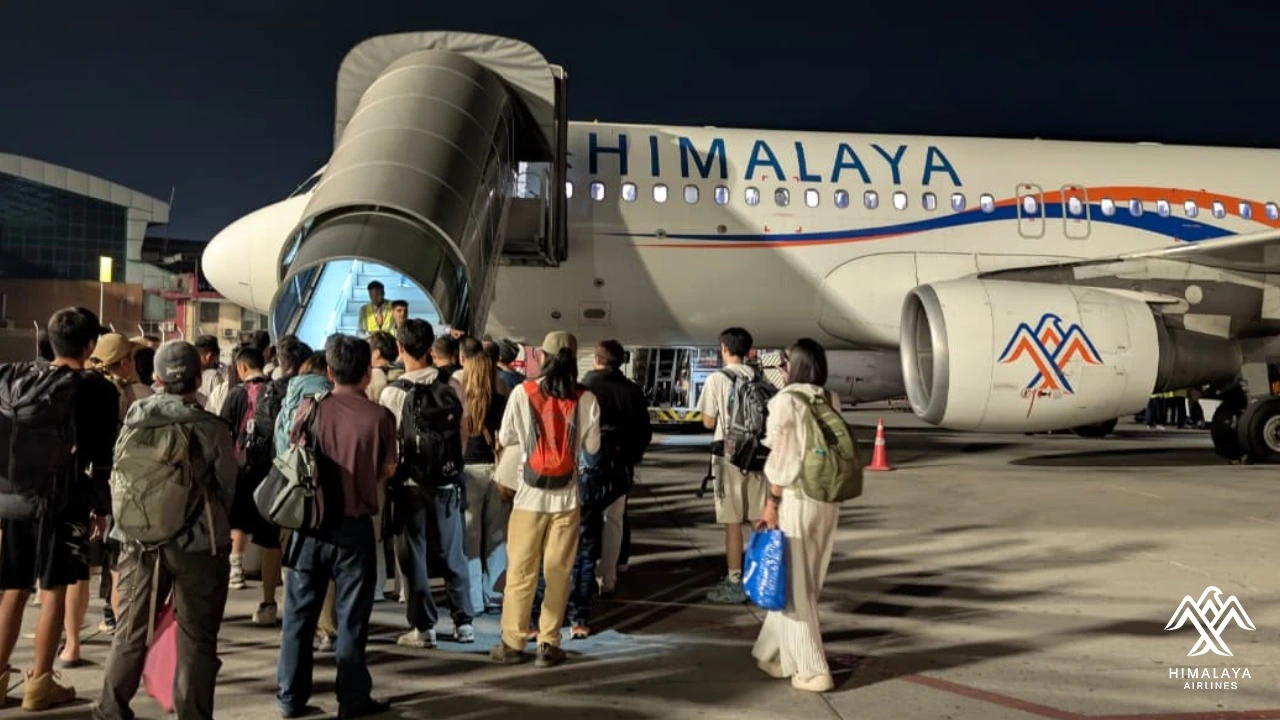
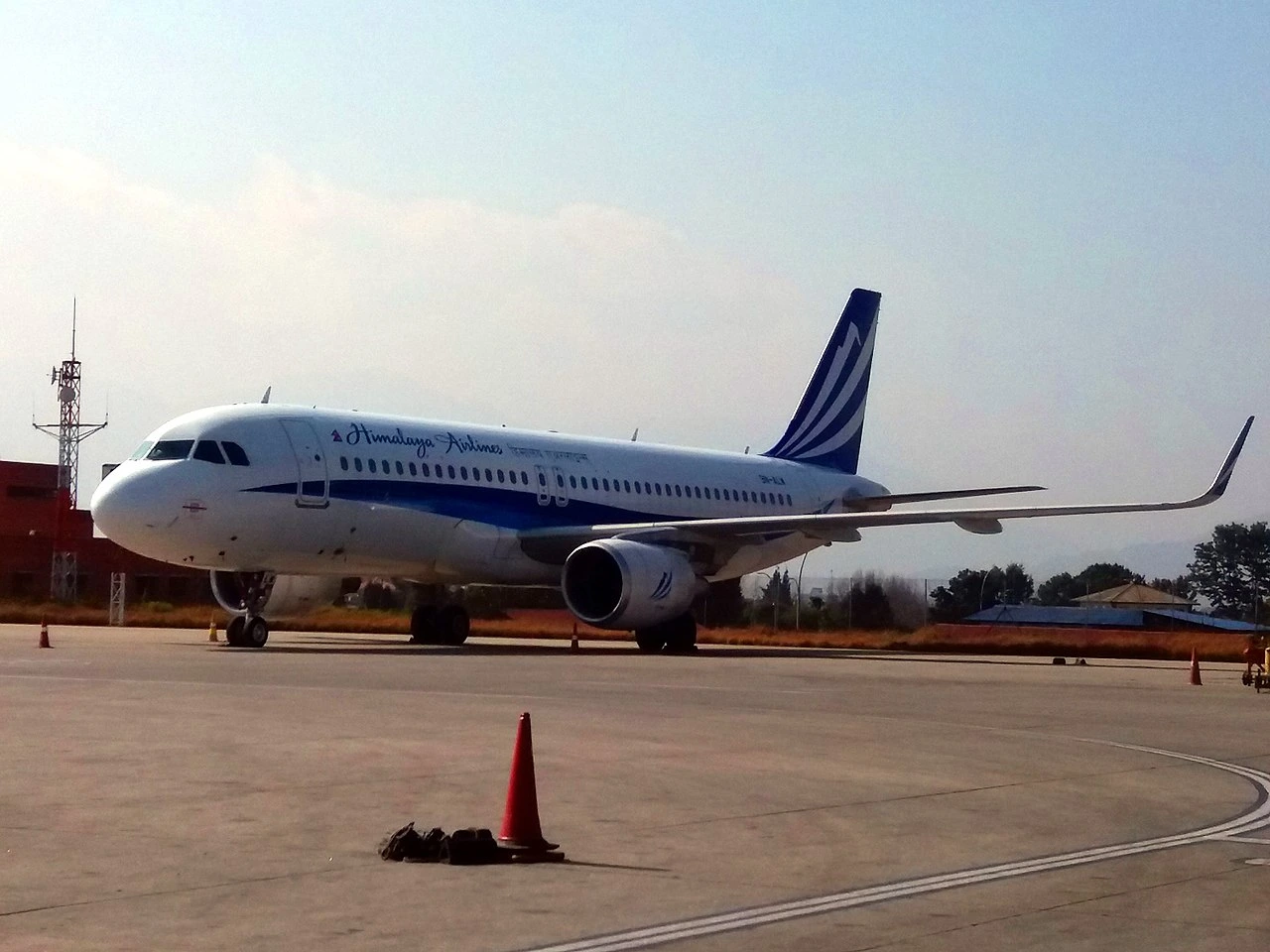
Himalaya Airlines operates the Kathmandu–Shenzhen service using aircraft from its four-strong Airbus narrowbody fleet. AirlineRatings notes this fleet carries an average age of 8.5 years — the youngest jet fleet of any Nepali carrier. The fleet breakdown is as follows:
- Three Airbus A320-214 aircraft: all-economy, 180-seat configuration (registration numbers 9N-ALM, 9N-ALV, 9N-ALW)
- One Airbus A319-115 aircraft: all-economy, 144-seat configuration (registration 9N-AJK)
Why Himalaya’s Certifications Matter For This Expansion
Himalaya Airlines’ route expansion comes against a backdrop of meaningful institutional safety achievements that set it apart from other carriers in Nepal’s aviation ecosystem. Unlike other Nepalese carriers that have suffered fatal aviation accidents and hull losses, Himalaya has recorded none. On December 28, 2023, the carrier became the first and only airline in Nepal to be certified as an IOSA (IATA Operational Safety Audit) Operator and formally registered as an IATA member airline.
The IOSA certification carries demonstrable weight. The IATA 2025 Safety Report shows IOSA-registered carriers record an all-accident rate of 0.98 per million sectors, against 2.55 for non-IOSA operators — meaning IOSA carriers are statistically approximately two and a half times safer. At the inauguration ceremony, Nabina Karmacharya, Deputy Director General of Nepal’s Aviation Safety and Security Regulation Directorate, stated — as quoted by Spotlight Nepal — that:
“On behalf of Civil Aviation Authority of Nepal, I commend Himalaya Airlines for their exceptional dedication to safety leading to the prestigious IOSA certification. This accomplishment of Himalaya has definitely helped in reinforcing trust and confidence amongst the passengers, contributing significantly towards the growth and development of air travel in the country.”
Himalaya Airlines further holds an ISO 9001:2015 QMS certification, granted on December 29, 2021, covering the provision of air transport for travelling passengers and freight, including aviation-related training services. It also remains the only Nepali carrier to carry Automated External Defibrillators (AEDs) across its entire fleet, a standard it introduced in September 2021.