Why Are Seat Belts Needed for Passengers in Aircraft? How Does it Work?

Seat belts are one of the most important safety tools on any aircraft. They protect passengers during takeoff, landing, and unexpected turbulence by keeping them secured to their seats. Aviation regulators around the world — including the Federal Aviation Administration (FAA) in the United States and the European Union Aviation Safety Agency (EASA) — require airlines to provide a seat belt or safety harness for every passenger on board.

The need for seat belts in aircraft became starkly clear on 21 May 2024, when Singapore Airlines (SQ) Flight SQ321 encountered extreme turbulence over Myanmar at 37,000 feet. Passengers without fastened seat belts were thrown against the cabin ceiling. One passenger died, and dozens were injured. Experts and regulators pointed to one consistent lesson: a fastened seat belt saves lives.
Photo: Emirates

Why Aircraft Seat Belts Are a Matter of Life and Death?

Seat belts in aircraft serve a specific and critical function. They restrain body movement when sudden or excessive force is applied to the cabin, such as during a crash or a severe turbulence event.

According to SKYbrary Aviation Safety, seat belts protect passengers in three key ways:

  • They prevent passengers from being thrown into hard objects or other people inside the cabin.
  • They stop passengers from being ejected from the aircraft in the event of a hull breach during flight or a high-impact crash.
  • They keep passengers secured during clear air turbulence (CAT), which cannot be detected by radar and can strike without warning.

Sara Nelson, international president of the Association of Flight Attendants-CWA, which represents over 50,000 crew members at 20 airlines, addressed the SQ321 incident directly, ans said that “buckling up” was “a matter of life and death.”

The Air Line Pilots Association (ALPA), which represents more than 77,000 pilots at 41 US and Canadian airlines, echoed that statement. ALPA said the safest action a passenger can take is to keep their seat belt fastened at all times while seated.
Photo: Air France

How Aircraft Seat Belts Work

An aircraft seat belt works through a straightforward but precisely engineered mechanism. The belt consists of a webbing strap attached to the seat frame. The passenger inserts the male tongue plate into the female buckle, then pulls the free end of the strap to remove slack and tighten it across the lap.

According to an FAA-published aviation medicine report, the buckle release mechanism in US aircraft is designed to release when a lever is raised between 30 and 45 degrees. The UK Civil Aviation Authority requires a larger release angle of 70 to 95 degrees. The intent of the larger angle is to prevent the belt from accidentally opening during turbulence or emergency landings.

The strap material itself is load-rated. The EASA certification standard requires belts to meet the “16g rule.” A standard passenger weighing 170 pounds multiplied by 16 G-forces produces a force of 2,710 pounds. Most certified airline seat belts are rated to withstand at least 3,000 pounds of force.

All airline seat belts carry a certification label. According to AeroSavvy, the primary standard governing passenger seat belt specifications is FAA Technical Standard Order TSO-C22g. Every airliner seat belt must carry an FAA, UK CAA, or EASA approval code. Airlines cannot source seat belts from standard retail suppliers; all aircraft restraints must be manufactured to internationally agreed safety standards.

Photo: Emirates

Types Of Seat Belts Used in Commercial Aircraft

Not all aircraft seat belts are the same. The type used depends on the seat location, cabin class, and regulatory requirements.

Lap Belt (Two-Point Belt) The most common type on commercial passenger aircraft. It wraps across the passenger’s lap and pelvis. It is the standard across economy cabins worldwide. The lap belt is adequate for in-flight protection against turbulence.

Three-Point Shoulder Belt Used at certain business and first-class seats where the seat configuration requires additional head injury protection. According to Aircraft Interiors International, a lap belt alone is adequate for turbulence, but premium cabin seats with wider pitch and spacing require a shoulder belt to meet the Head Injury Criterion (HIC) standard during crash scenarios.

Airbag Seat Belt An airbag integrated into a lap belt. It is certified to meet the 16g Head Injury Criterion under FAA and EASA standards. According to AeroSavvy, the primary manufacturer of this system is AmSafe. Airlines can use the airbag belt as an alternative to a three-point shoulder harness in business and first-class cabins.

Flight Attendant and Crew Harnesses Flight attendants use a shoulder harness with a single-point, quick-release buckle. Pilots typically wear a five-point harness that includes two lap belts, two shoulder straps, and a crotch strap to prevent submarining under the belt during impact.

Four- and Five-Point Harnesses Used primarily in military aircraft and aerobatic planes. All straps converge at a central buckle for complete torso restraint.

According to AOPA, the FAA states that the use of shoulder harnesses in addition to seat belts reduces major injuries in crashes by 88 percent and reduces fatalities by 20 percent.

Photo: Emirates – X

The Regulations That Make Seat Belts Mandatory on Aircraft

Seat belt requirements in aviation have a long legal history. The first law mandating seat belts appeared in the US Air Commerce Act of 1926, which required “safety belts or equivalent apparatus for pilots and passengers in open-cockpit airplanes carrying passengers for hire.” By 1928, seat belts were mandatory on all aircraft types, though passengers were not yet required to wear them.

Today, the key regulatory references are:

Under FAR 91.107(a)(1), the pilot in command must ensure every person on board is briefed on how to fasten and unfasten their seat belt before takeoff. Passengers must also be notified to fasten belts before movement on the surface, before takeoff, and before landing.

The FAA’s turbulence safety page states that passengers can best prevent turbulence injuries by keeping their seat belt buckled at all times while seated, not just when the sign is illuminated.

In the US, failing to fasten a seat belt during landing can result in a fine of up to USD 10,000.

Photo: Carlos Delgado | Wikimedia Commons

Turbulence is the Biggest Reason Passengers Must Stay Buckled

Turbulence is the leading cause of non-fatal injuries on commercial airline flights. According to a 2021 NTSB safety research report, turbulence was involved in 38 percent of all Part 121 air carrier accidents between 2009 and 2018. The report found that most passengers who suffered serious injuries were either out of their seats or seated with their belts unfastened.

A 2026 study published in a peer-reviewed journal reviewed 136 turbulence-related accidents on US commercial airline flights between 2008 and 2023. The study recorded 143 serious injuries and 218 minor injuries across those events.

The NTSB noted that turbulence injuries are especially common below 20,000 feet and in the vicinity of thunderstorms. The NTSB Acting Chairman was quoted as saying:

“The majority of injuries occurred below 20,000 feet in the vicinity of thunderstorms so it’s critically important for both passengers and flight attendants to be seated with their seat belts fastened in those conditions.”

Clear air turbulence (CAT) poses a particular challenge. It is invisible, forms outside of clouds, and is virtually undetectable by current onboard radar technology. According to a report we had previously quoted, the University of Reading reported that severe turbulence increased by 55 percent between 1979 and 2020. Climate change is widely expected to worsen turbulence conditions in future decades.
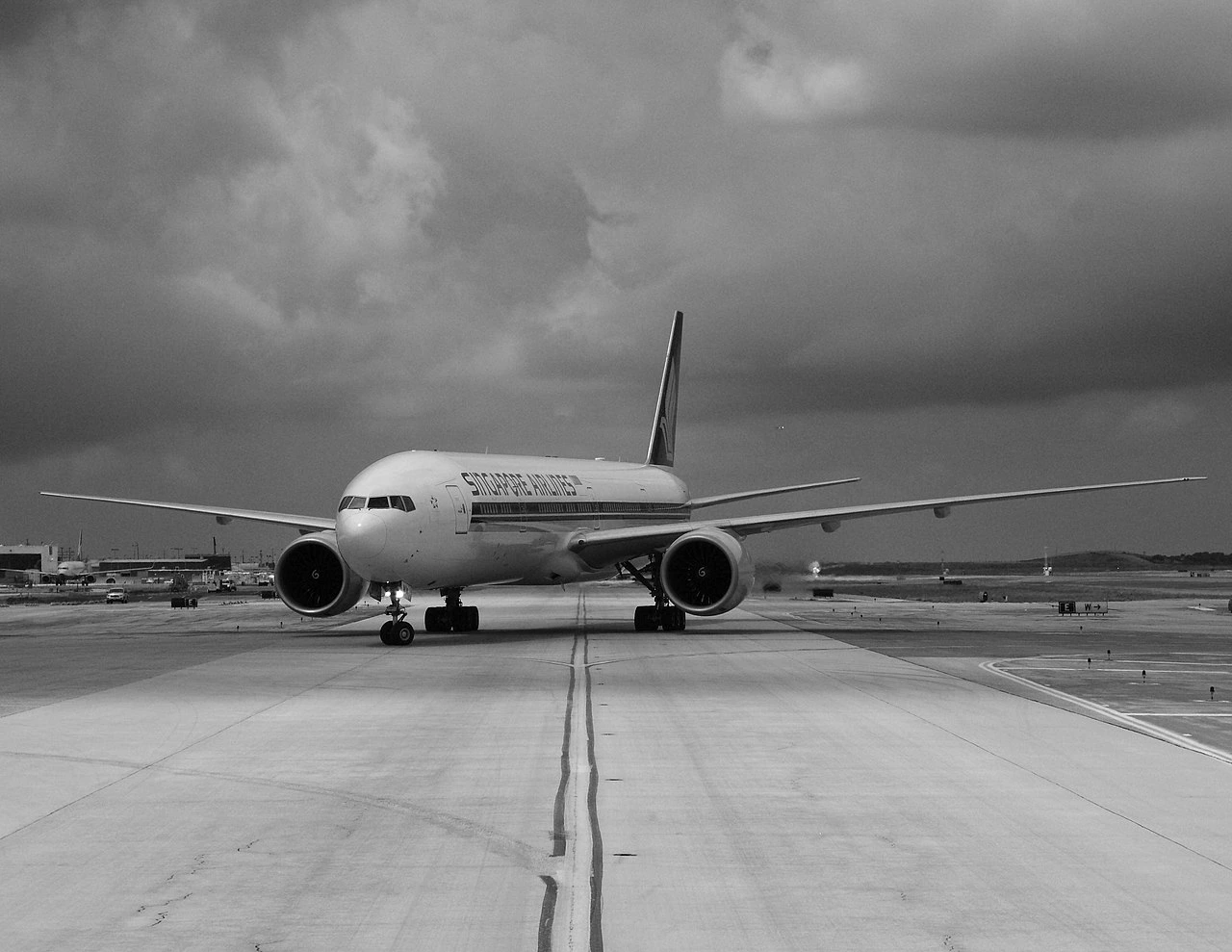
Photo: Shawn | Wikimedia Commons

Real-World Cases Where Seat Belts Made The Difference

Singapore Airlines Flight SQ321 (May 2024)

On 21 May 2024, Singapore Airlines (SQ) Flight SQ321 — a Boeing 777-312ER operating from London Heathrow Airport (LHR) to Singapore Changi Airport (SIN) — encountered extreme turbulence over the Irrawaddy Basin in Myanmar at 37,000 feet. The aircraft carried 211 passengers and 18 crew.

Preliminary investigation findings revealed the aircraft dropped 54 metres in altitude within seconds. Gravitational force in the cabin changed rapidly and violently. Seated passengers who had their belts fastened were pinned down, while unrestrained individuals were thrown against the cabin ceiling. One 73-year-old British passenger died of a suspected heart attack, and 83 people were injured.

A passenger, Dzafram Azmir, told CBS News:

“People who weren’t buckled down in their seats were thrown up off of their chairs, flung to the ceiling of the cabin and then immediately thrown back down, to their seats or the flooring.”

Azmir credited his own seat belt with keeping him unharmed.

Singapore Airlines subsequently revised its seat belt policies. Under the new rules, meal service is suspended when the seat belt sign is illuminated. The airline also adjusted at least one flight route as a precautionary measure.

A study published in Scientific Reports reviewing the SQ321 event concluded:

“Injuries can be largely prevented when passengers and crew are seated and seat belts fastened.”

Alaska Airlines Flight 1282 (January 2024)

On 5 January 2024, Alaska Airlines (AS) Flight 1282 — a Boeing 737 Max 9 — suffered a door plug blowout shortly after departing Portland International Airport (PDX). The left mid-exit door plug separated from the fuselage at 16,000 feet, causing rapid decompression in the cabin.

Passenger Cuong Tran, seated in Row 27 directly next to the opening, felt his body lift from his seat as suction pulled toward the hole. His shoes and socks were torn off by the force. His foot was injured when it caught in the seat structure. Despite the violent forces acting on him, Tran was not ejected from the aircraft. He directly credited his seat belt with saving his life.

According to NBC News, a subsequent lawsuit filed on behalf of seven passengers stated that Tran’s seat belt held him in place while air rushed out of the gaping hole. The aircraft landed safely, and all 174 passengers and six crew survived.

United Airlines Boeing 747 — Tokyo to Honolulu (December 1977)

One of the earliest documented cases demonstrating the fatal consequences of not wearing a seat belt occurred on 28 December 1977. A United Airlines (UA) Boeing 747-122 operating from Tokyo, Japan to Honolulu, US (Flight 826) encountered severe clear air turbulence at cruise altitude. One passenger who had not fastened their seat belt suffered fatal injuries. Eighteen others were seriously injured and 161 suffered minor injuries.

How Seat Belt Regulations Compare Across Different Airline Cases

The SQ321 incident prompted direct comparisons with earlier aviation tragedies and led Singapore Airlines to act faster than regulators required. While international rules mandate belt use during takeoff, landing, and when the sign is illuminated, the SQ321 case showed that extreme turbulence can strike before the sign is even switched on.

Retired British Airways and easyJet pilot Chris Hammond told The National:

“You can’t make people wear seatbelts, unless the seatbelt sign is on. In America occasionally they have been known to leave the seatbelt sign on all the time.”

The 2024 LATAM Airlines incident, in which a Boeing 787 dropped abruptly mid-flight and injured more than 50 people, occurred just weeks before SQ321. Both events drew renewed attention to the same gap: passengers often unbuckle during cruise and are unable to react fast enough when sudden turbulence strikes.

Our article on seat belt regulation history notes that Singapore Airlines also introduced a new policy requiring flight attendants to strap into their jump seats when not actively serving a passenger. This directly echoed a long-standing NTSB recommendation that the FAA had not yet acted upon by that point.

According to the Flight Safety Foundation, aviation safety experts recommend that passengers who ignore crew instructions to fasten belts should receive a written reminder card. The organisation has proposed cards reading: “Turbulence Happens – Click it, don’t risk it.”

Photo: KLM

When Passengers Must Fasten Their Seat Belts

The FAA requires passengers to be seated with seat belts fastened during the following phases:

  • When the aircraft leaves the gate and during the climb after takeoff.
  • When the seat belt sign is illuminated at any time during the flight.
  • During the descent and approach to landing.
  • When the aircraft taxis to the gate after landing.

The FAA and aviation safety organisations strongly advise passengers to keep their seat belts fastened at all times while seated, regardless of whether the sign is on. This is the single most effective action a passenger can take to avoid turbulence-related injury.

Pilots follow a stricter standard. SKYbrary notes that airline standard operating procedures (SOPs) generally require pilots to wear seat belts and shoulder harnesses at all times while operating the aircraft, both on the ground and in flight.
Photo: Live and Let’s Fly

The History of Seat Belt Regulation in Aviation

Aviation seat belt requirements began nearly a century ago. The US Air Commerce Act of 1926 introduced the first federal seat belt regulation. By 1928, seat belts were mandatory on all aircraft, but passengers were still not required to wear them.

Early seat belts in the 1920s and 1930s had a single purpose: to prevent passengers from being thrown around the cabin during turbulence. The belts had to withstand a load of 1,000 pounds under the regulations of that era.

Research in the 1940s shifted focus from mere restraint to full crashworthiness. In 1947, US Air Force studies found that a human body secured by a seat belt could withstand up to 4,870 pounds of force without sustaining injury. This finding drove manufacturers to design belts and buckles that were both strong and easy to release quickly.

The there is the case of the Aloha Airlines Flight 243 incident as a turning point in understanding the risks of in-flight structural failure. In that 1988 accident, a flight attendant was fatally blown from the aircraft after the fuselage lost its roof section at 24,000 feet — a stark demonstration that occupant restraint is critical even in seemingly routine flight phases.

Photo: Southwest Airlines

What Passengers Should Know Before Every Flight

Passengers can take simple, effective steps to protect themselves on every flight:

  • Buckle up immediately upon seating. Do not wait for the seat belt sign to illuminate.
  • Keep the belt fastened during the entire flight. Clear air turbulence gives no warning.
  • Tighten the belt low and snug across the lap and pelvis, not across the abdomen.
  • Learn the release mechanism before takeoff. Aircraft buckles operate differently from car seat belts; the lever is lifted, not pressed.
  • Children under two should be secured in an FAA-approved child restraint system (CRS), not held in a parent’s lap. The FAA strongly advises against lap-held infants.

Aviation remains one of the safest forms of transport, with approximately one fatal accident per 16 million flights. Seat belts are a key reason why survivable accidents remain survivable.

Leave a Comment

Your email address will not be published. Required fields are marked *

Scroll to Top