Indian airports recorded 1,782 bird strikes in 2025, a 39 percent jump over the 1,278 cases logged in 2024, according to figures the government shared with parliament, according to a report by FODNews.
The scale of the problem stems from a familiar and largely unresolved cause: garbage dumps, meat shops, and open waste sites operating well inside the 10-kilometre buffer zone that Indian law mandates around every airport. Regulators have issued repeated circulars ordering airports to fix the problem since 2017.
India’s Bird Strikes Climbed 130 Percent in Five Years
The five-year trend line shows a near-uninterrupted rise. Strikes climbed from 775 in 2021 to 1,131 in 2022, then to 1,371 in 2023, before a brief dip to 1,278 in 2024 and a sharp jump back up to 1,782 in 2025. That final figure represents a 130 percent increase over the 2021 baseline, and the five-year cumulative total across the country now stands at 6,337 incidents.
An earlier RTI disclosure had already flagged the trend years before parliament’s 2025 figures confirmed it. That data showed Indian airports averaging roughly three bird strikes every single day. India’s National Aviation Safety Plan, aligned with ICAO’s Global Aviation Safety Plan, has listed wildlife and bird strikes as a core safety priority since 2018.

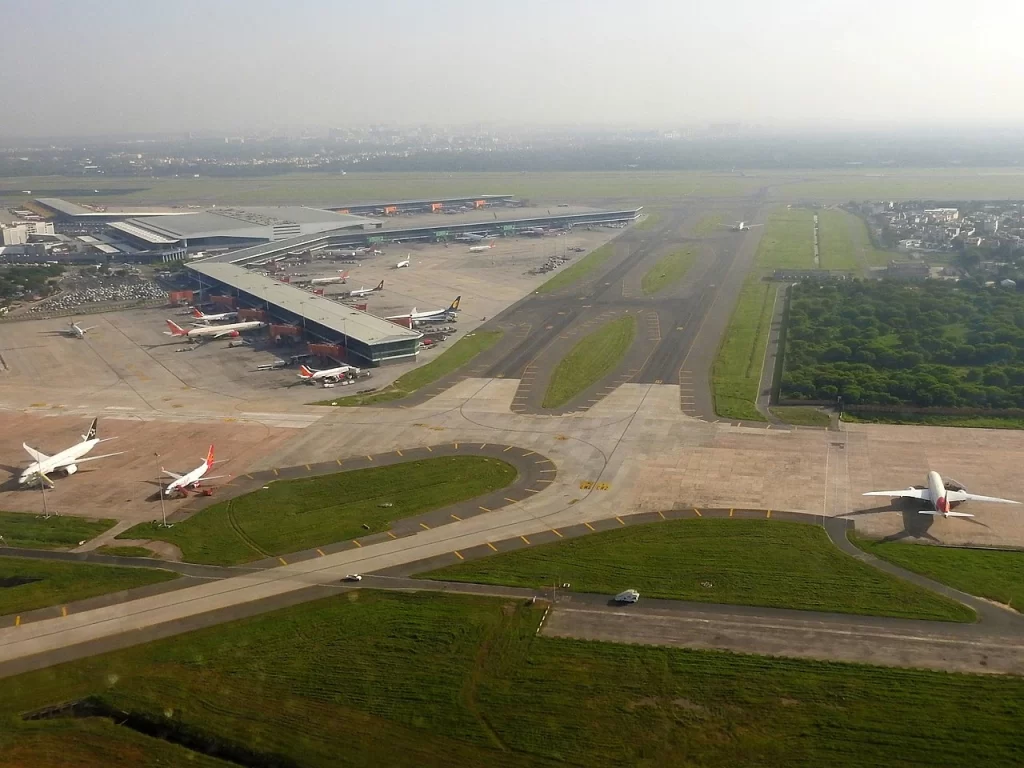
Delhi’s Airport Records the Highest Raw Bird Strike Count in India
DEL consistently tops the national count, logging 442 strikes in 2022, 616 in 2023, and 419 in 2024. Mumbai’s BOM ranks second by cumulative volume, a pattern researchers link to the airport’s dense surrounding urban habitat, which limits the deterrence options available to airport wildlife teams. Kolkata’s Netaji Subhash Chandra Bose International Airport (CCU) has also shown a steady climb, rising from 31 incidents in 2022 to 45 in 2023.
An earlier academic account of the same pattern appeared in 2022, when reporting on 2021 DGCA figures found that India logged more than 1,400 suspected and confirmed wildlife incidents that year, up from roughly 840 in 2016, with Delhi and Mumbai again dominating the count. This continuity across separate reporting periods indicates the problem is structural rather than a short-term anomaly.

Ahmedabad’s Strike Count Grew Fivefold in Just Two Years
Ahmedabad’s AMD tells the sharpest growth story of any Indian airport. The airport logged 39 incidents in 2022, jumped to 81 in 2023, and reached 201 in 2024, a more than fivefold rise in just two years. That trajectory places AMD among the country’s fastest-deteriorating airports by rate of change, even though its absolute totals remain below Delhi and Mumbai.
The Air India (AI) Flight 171 crash at AMD on June 12, 2025, killed 274 people and briefly drew global attention to the airport’s bird hazard environment. Investigators from the Aircraft Accident Investigation Bureau identified a suspected fuel cutoff switch movement, not a bird strike, as the trigger.

Why Garbage Dumps and Slaughterhouses Keep Drawing Birds to Runways
Rule 91 of the Aircraft Rules, 1937, bans garbage dumping and animal slaughter within 10 kilometres of any airport’s reference point precisely because these activities attract scavenging birds. In practice, the rule is widely ignored. A senior airport official put the gap bluntly, asking which major Indian airport does not have garbage dumps or unlicensed slaughter activity within that radius.
Vultures, kites, and crows pose the greatest ingestion risk to jet engines during takeoff and landing, and open waste and animal byproduct disposal near perimeter fences draws all three species in large numbers. A senior Airports Authority of India (AAI) official in Kolkata described shops and informal markets mushrooming close to airport boundaries, with dumped waste attracting birds that then interfere with departing and arriving flights.

DGCA Circulars Exist, But Ground-Level Enforcement Lags Badly
The DGCA has issued advisory circulars twice, first in 2017 and again in 2022, ordering airports to implement effective Wildlife Hazard Management Plans (WHMPs). The repetition of the same instruction after five years signals how little the first circular achieved. Every licensed Indian airport is also required to run an Airfield Environment Management Committee (AEMC) bringing together airport authorities and local government.
One official admitted these committees exist largely to satisfy DGCA paperwork requirements, with little real implementation on the ground. A separate Kolkata-based AAI official noted that no formal one-kilometre buffer standard has ever been codified, and that local administrations attach little importance to controlling birds near the perimeter.

Black Kites Are Displacing Vultures at Indian Military Airfields
Peer-reviewed research from the Defence Life Science Journal, co-authored by scientists from the Indian Air Force and the Salim Ali Centre for Ornithology and Natural History, tracked bird activity at three Indian airfields across different bio-geographical zones over a 30-year window. The Agra airfield recorded a 10.3-fold increase in Black Kite activity across four decades. Sirsa’s Red-wattled Lapwing activity rose fifteenfold over ten years before beginning to decline again.
The study’s authors linked the long-term rise in Black Kite numbers to changing waste-management practices in nearby cities and found that kites appear to be filling the ecological niche vultures once occupied. Jodhpur’s airfield, by contrast, showed stable populations of both species over the same period, illustrating how sharply bird hazard profiles vary by location even within one country. The researchers concluded that airfield safety managers need location-specific solid waste management projects rather than a single national template.

How India’s Bird Strike Numbers Compare Globally
India’s problem sits within a broader regional pattern shared by its neighbours, though the underlying causes and scale differ by country. Pakistan’s Civil Aviation Authority recorded 622 strikes nationwide between 2018 and 2022, with Lahore’s Allama Iqbal International Airport (LHE) alone logging 198 incidents in that window. Nepal’s Tribhuvan International Airport (KTM) recorded close to 100 bird strikes in the 15 years to 2015.
Britain and the United States, by contrast, operate at a different scale entirely. The UK Civil Aviation Authority confirmed 1,432 bird strikes in 2022 alone, while the US Federal Aviation Administration received reports of roughly 17,200 bird strikes that same year, part of an estimated $900 million in annual damage to American civil and military aircraft.

What Closing India’s Enforcement Gap Would Require
Aviation safety specialists and airport officials consistently point to the same three fixes: closing illegal slaughterhouses and waste sites within the 10-kilometre radius, setting binding timelines for local administrations to act on AEMC recommendations, and running independent audits of WHMP implementation rather than relying on self-reported compliance.
Mumbai’s BOM already conducts monthly inspections out to 10 kilometres, targeting dumps and slaughterhouses, supplemented by river cleaning and controlled tree trimming, though officials concede the surrounding urban habitat limits what perimeter management alone can achieve.