Boeing, the Chicago-headquartered aerospace giant founded in 1916 by William Boeing on the shores of Lake Union in Seattle, has shaped commercial aviation more profoundly than any other manufacturer in the industry’s history. Boeing’s aircraft types have defined every era of mass air travel from the piston age through the jet age through the composite widebody era that now carries nearly five billion passengers per year.
Boeing’s most popular commercial commercial aircraft portfolio — the 707, 727, 737, 747, 767, 777, and 787 — and the 7×7 naming convention that Boeing has applied to all commercial aircraft models since the 707 (with the sole exception of the Boeing 720, a shorter-range 707 derivative). In 2026, that legacy portfolio carries a commercial aircraft backlog of over 6,100 airplanes valued at USD 567 billion.
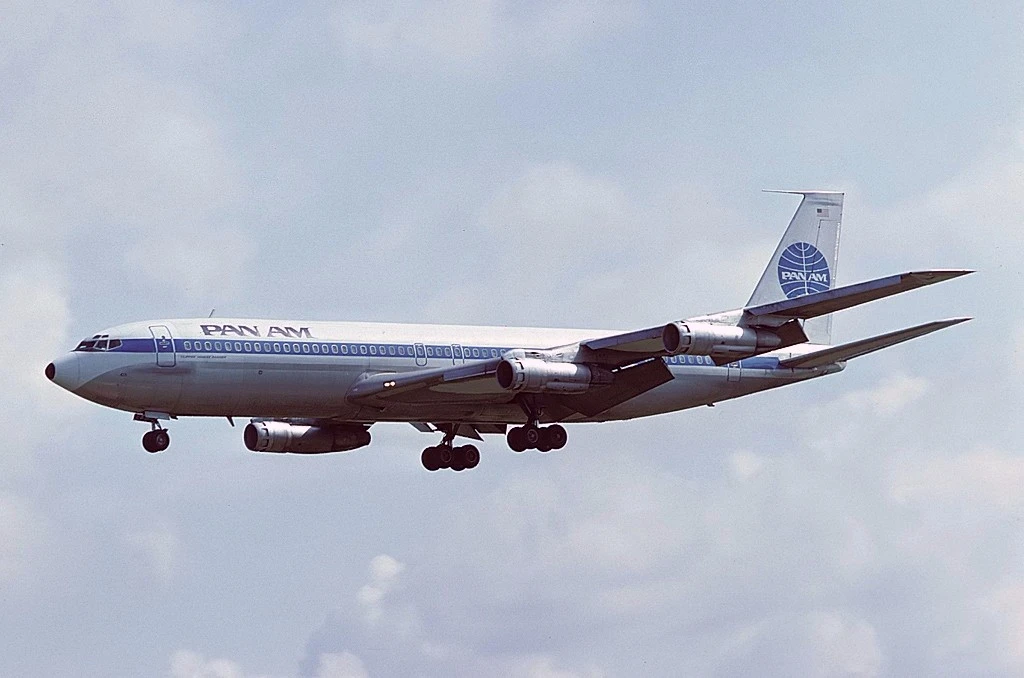
Development of the Boeing 707
The Boeing 707 is the foundational document of modern commercial aviation — the aircraft that made long-distance travel by air both technically feasible and economically accessible to a mass market.
First entering commercial service with Pan American World Airways (PA) on the transatlantic New York to Paris route on October 26, 1958, the 707 reduced the crossing from five days at sea to seven hours in the air.
The 707-120 model, powered by Pratt & Whitney JT3C-6 turbojets, cruised at approximately 896 kilometres per hour carrying up to 180 passengers, while the ultimate 707-320C accommodated a maximum of 219 passengers.
Wikipedia’s Boeing 707 production record confirms total production of 1,010 aircraft across all variants and operators between 1958 and 1991. The 707’s most enduring commercial legacy is not any specific aircraft it produced but the derivative it inspired: the Boeing 720, a shorter-fuselage domestic variant, and ultimately the entire 737 family, whose original prototype was derived from the 707’s fuselage cross-section. Every 737 ever built — including all 5,900-plus 737 MAXs in Boeing’s current backlog — traces its interior cabin width to a design decision made for the 707 in the 1950s.
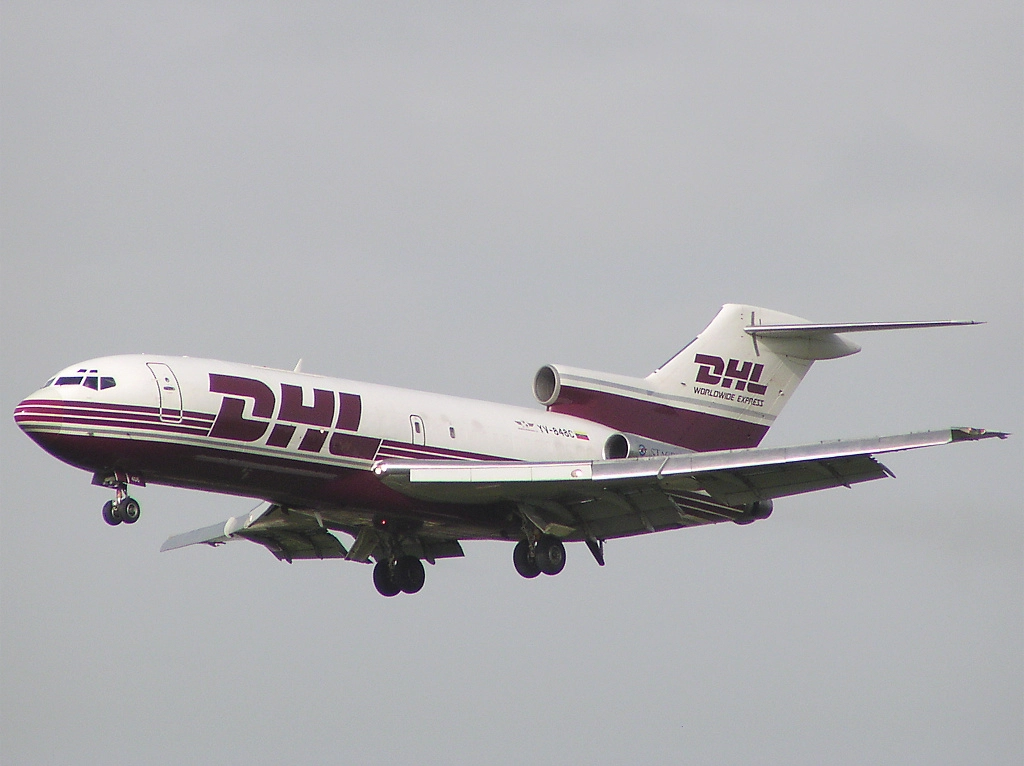
Boeing 727 Was a Trijet That Connected America’s Secondary Cities
The trijet that was the Boeing 727 represents Boeing’s most successful resolution of the specific infrastructure challenge that constrained commercial aviation in the early 1960s: the short, narrow runways of America’s regional airports that jet aircraft of the period were too heavy and too demanding to use safely.
Boeing’s only trijet were powered by three rear-mounted Pratt & Whitney JT8D turbofans. Its 22-year production ran from 1962 to 1984, with 1,832 total units built. That figure makes the 727 one of the best-selling jet airliners in history by unit count, a distinction it held until the Boeing 737 surpassed it.
The 727’s defining aerodynamic feature was its triple-slotted Fowler flaps, which allowed it to approach and depart from runways as short as 1,500 metres. Boeing 727 had a rear-stair boarding door that allowed passengers to board and deplane without a jet bridge. The type remains in limited freighter service as of 2026.
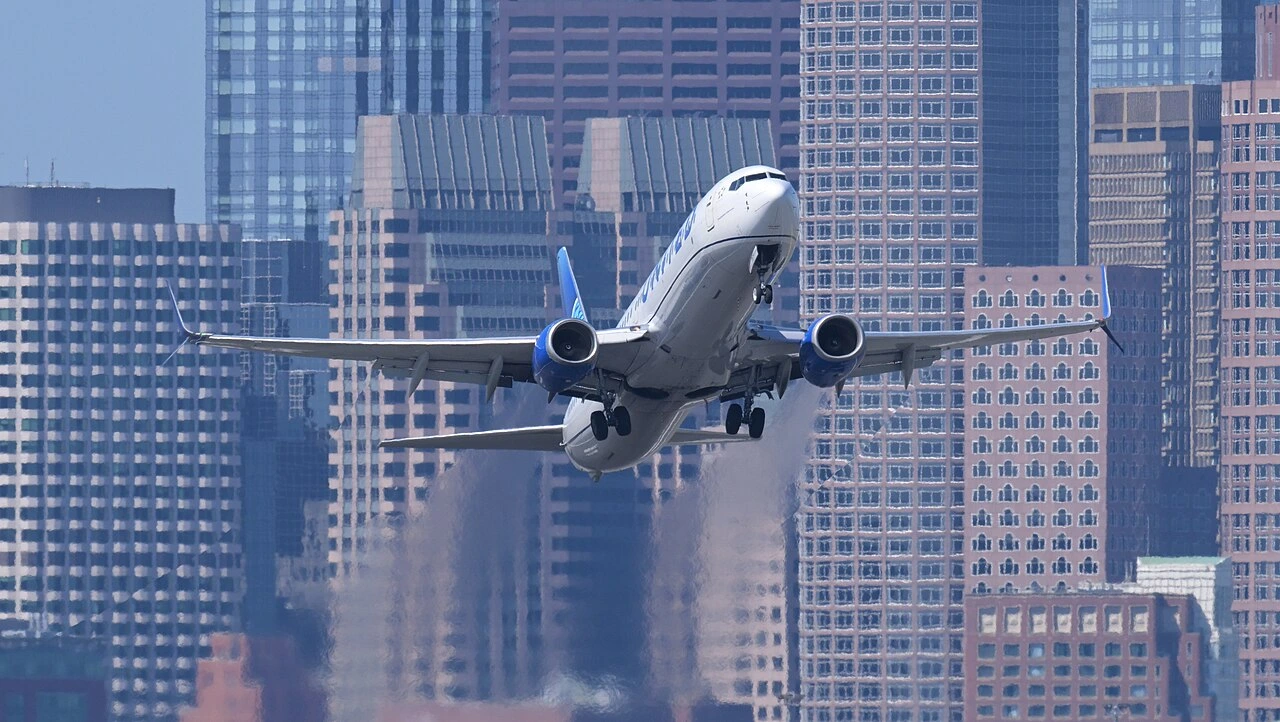
Boeing 737 is Forever Etched with Aviation’s Biggest Comeback
The Boeing 737 is the most commercially successful aircraft type in the history of aviation by total units built, as it surpassed 11,000 deliveries across its four generations (Original, Classic, Next Generation, and MAX) since the first -100 variant entered service with Lufthansa (LH) on February 10, 1968.
Simple Flying’s February 2026 analysis of MAX delivery milestones confirms that by early 2026 Boeing had delivered 2,157 737 MAX aircraft since the type returned to service in November 2020, with a backlog of 4,887 additional MAXs on order.
Boeing’s own Q3 2025 SEC filing confirmed the FAA and Boeing jointly agreed in October 2025 to increase the monthly production cap from 38 to 42 aircraft, with Boeing targeting 52 per month by year-end 2025.
The MAX programme carries history’s most consequential aviation safety failure embedded in its commercial record. Maneuvering Characteristics Augmentation System (MCAS) software defect caused two fatal crashes — Lion Air Flight 610 on October 29, 2018, killing 189 people, and Ethiopian Airlines Flight 302 on March 10, 2019, killing 157 — triggered a 20-month global grounding, the largest criminal settlement in aviation history (Boeing paid USD 2.51 billion in 2021), and a January 2024 Alaska Airlines door plug blowout that resulted in renewed FAA production cap enforcement.
The MAX 7 and MAX 10 variants remain uncertified as of May 2026, with de-icing system challenges on the CFM LEAP-1B engine pushing certification into 2026. This has affected approximately 1,300 aircraft in the unfulfilled order book for these specific variants.
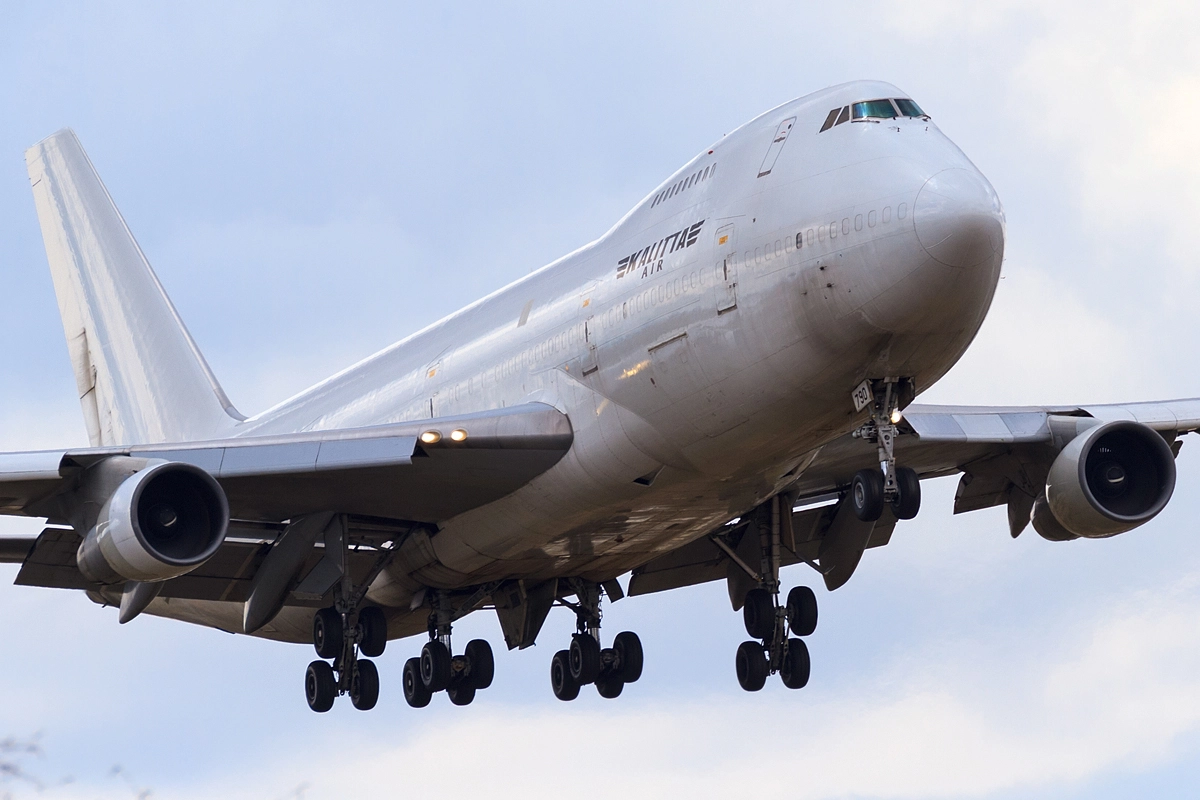
The Boeing 747 was Dubbed the Queen of the Skies
The Boeing 747 is the aircraft that did for intercontinental travel what the 707 did for transatlantic travel — it reduced the per-seat cost of mass long-haul flying to the point where it ceased to be a luxury and became an ordinary commercial proposition.
When Pan American World Airways inaugurated the 747-100 on the New York to London route on January 21, 1970, the aircraft was twice the size of anything that had flown commercially before it, carrying 374 passengers on a double-deck configuration with a distinctive upper deck hump that became the world’s most recognisable aircraft silhouette.
Boeing rolled the final 747 out of its assembly line in December 2022, ending passenger 747 production — though Atlas Air (5Y) received the very last 747-8F freighter built in February 2023, per Atlas Air’s press release. The 747-8, the final variant developed before programme termination, offered 16 percent better fuel efficiency per seat than the 747-400 through General Electric GEnx-2B engines and a composite wing redesign.
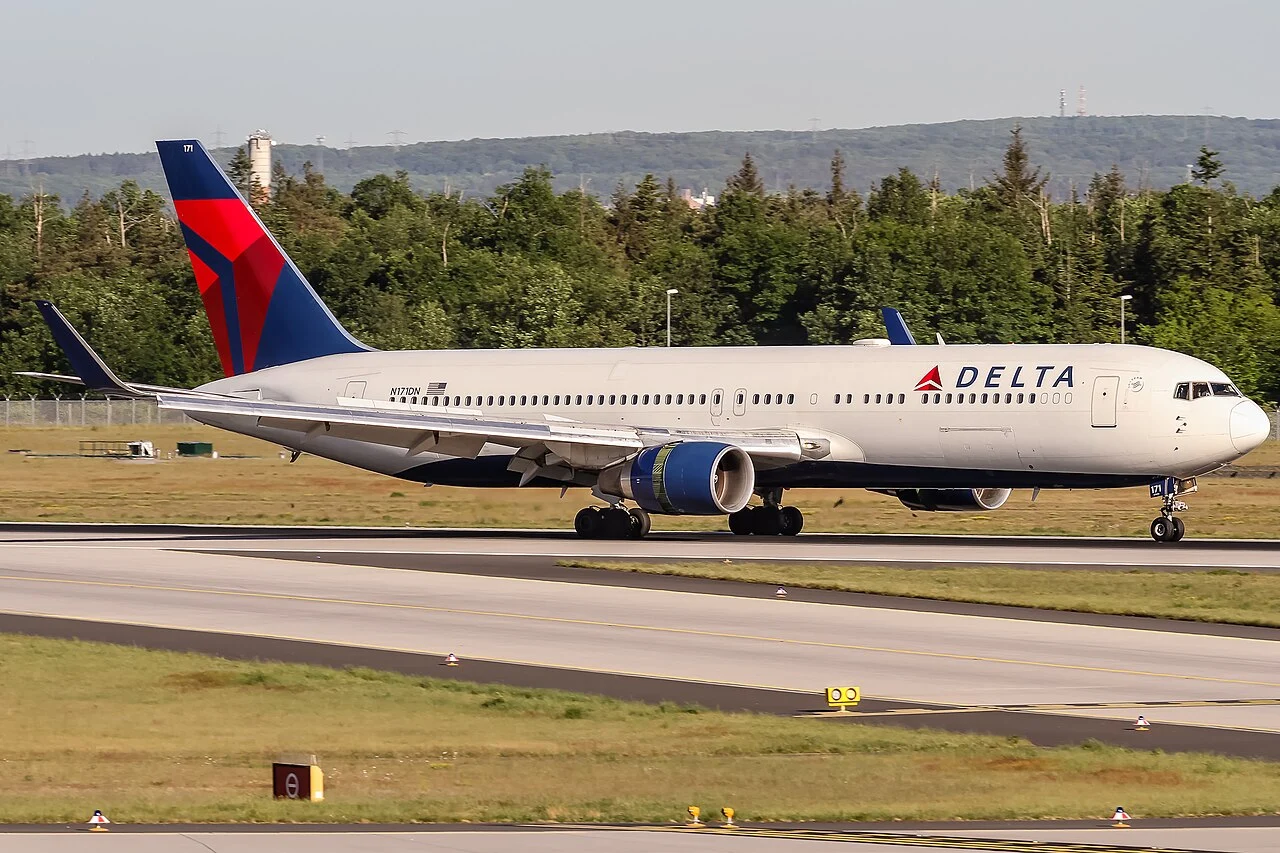
The Boeing 767 And 787 Partnership
The Boeing 767 and 787 Dreamliner occupy adjacent positions in Boeing’s widebody portfolio — one a 43-year-old aluminium conventional twin increasingly deployed as a military tanker and freighter, the other the most technologically advanced composite commercial aircraft ever built and Boeing’s primary commercial revenue engine in 2026. The 767 entered service with United Airlines on September 8, 1982, and has produced over 1,250 units across its commercial passenger, freighter, and military tanker variants.
Boeing’s 767 product page confirms active production continues on the 767-2C and KC-46A Pegasus tanker for the U.S. Air Force — ensuring the assembly line remains open even as passenger 767 deliveries have effectively ceased. The 767’s powerplant options included:
- GE CF6
- Rolls-Royce RB211
- P&W JT9D
The Boeing 787 Dreamliner, entering service with All Nippon Airways (NH) in October 2011, represents Boeing’s most radical engineering departure in commercial aircraft history — building its fuselage, wings, and major structural elements from carbon fibre composite rather than aluminium, reducing weight by 20 percent and enabling a 25 percent fuel burn improvement over the aircraft types it replaces. Boeing 787 Dreamliner also has some of the biggest wing flex during turbulence.
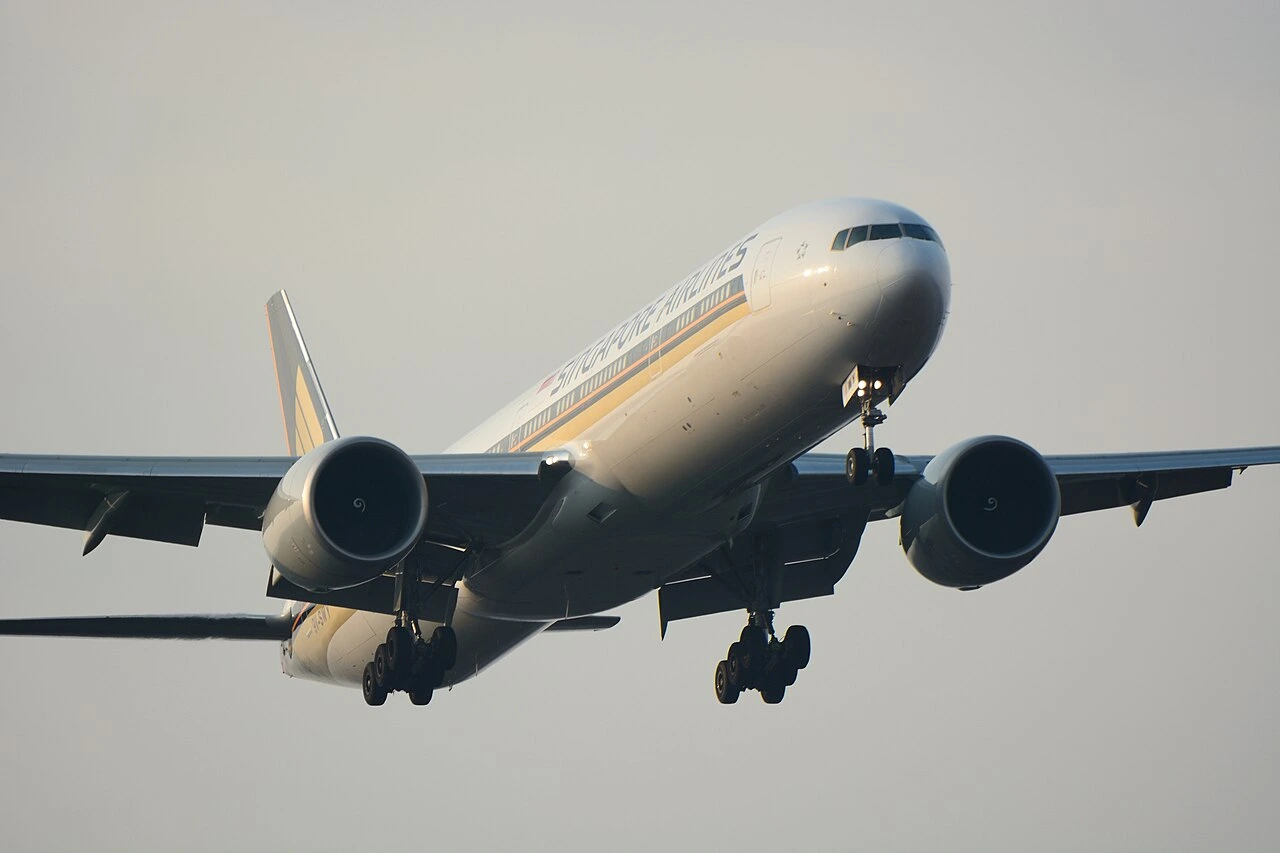
The Boeing 777 Success Story and the Challenges Haunting The 777X
The Boeing 777 is the most commercially successful widebody aircraft in aviation history by total orders — accumulating more than 2,100 firm orders from over 60 customers since the type entered service with United Airlines on June 7, 1995. The Triple Seven us “the world’s largest twinjet” and uses the GE90-11BL engine. However, the dominant production variants, the 777-300ER and 777-200LR, use the GE90-115B, rated at 115,300 pounds of thrust and the most powerful commercial turbofan engine ever certified.
The Boeing 777X — the re-engined, composite-wing successor to the 777 family — carries the most troubled development record of any commercial aircraft programme in Boeing’s history. Indoneo’s May 2026 analysis of the programme confirmed that the 777X will enter service in 2027 — seven years after its original 2020 target — having accumulated over USD 15 billion in development charges driven by cracked engine thrust links, flight control issues, and a cargo door failure during testing.


_Boeing_727-35(F)_Maharajh-2.jpg)
.jpg)
_(7203552824).jpg)
_coming_in_from_Atlanta_(ATL)_@_Frankfurt_Rhein-Main_International_(FRA)_08.05.2018_(41937154382).jpg)
.jpg)