Every airline ticket sold for travel to, from, or within the United States carries a legal guarantee that most passengers have never fully read: the right to cancel that ticket within 24 hours of purchase and receive a full cash refund to the original payment method, without penalty, provided the flight departs at least seven days after the booking date. The U.S. Department of Transportation’s (DOT) official Refunds page codifies this guarantee precisely: airlines must either allow free cancellation within 24 hours or allow passengers to hold a reservation at the quoted price for 24 hours without payment — with the airline choosing one option, not both.
The 24-hour reservation requirement applies to all U.S. airlines and foreign carriers operating flights to or from the United States, and under 14 CFR Part 250 it survives as a non-negotiable regulatory baseline regardless of what the airline’s own fare conditions state — including for non-refundable economy and Basic Economy tickets that are otherwise non-changeable. Airline ticket booking and the 24-hour cancellation policy have three conditions for the 24-hour rule to apply are:
- the booking must touch U.S. soil
- must be made directly with the airline rather than through a third-party OTA
- flight must depart at least seven days after purchase
The regulatory landscape governing airline refunds more broadly underwent its most significant reform in a decade on April 26, 2024, when DOT’s Automatic Refund Rule took effect — requiring airlines to automatically issue cash refunds for cancelled flights and significant schedule changes without requiring passengers to affirmatively request them, eliminating the previous industry-standard practice of pushing travel vouchers as the default compensation.
TravelStacks’ April 2026 analysis of American Airlines’ refund policy confirmed that under the DOT rule, even Basic Economy tickets — which are non-refundable for voluntary passenger cancellations — entitle passengers to a full cash refund if the airline cancels the flight or makes a significant change, and that airlines issuing Trip Credits when a cash refund was actually owed must convert those credits to cash on request through the airline’s customer relations department. However, the DOT issued a significant enforcement pause on December 5, 2025: the Federal Register notice paused enforcement through June 30, 2026 of refund requirements for flights operated under a different flight number than the one sold to the passenger, pending a redraft of the definition of a “cancelled flight.”

The Anatomy of an Airline Ticket
Understanding what a passenger actually purchases when they buy an airline ticket is foundational to understanding both what rights attach to that purchase and what the 24-hour cancellation rule protects. An airline records the passenger’s travel plans and constitutes the passenger’s primary financial claim against the airline.
Every reservation creates a Passenger Name Record (PNR), a unique computerised file in the airline’s reservation system that records passenger details, the flight itinerary, seat assignment, meal requests, Special Service Request (SSR) codes, and the ticketing time limit. The PNR is the authoritative record that both airline staff and check-in systems reference at every stage of the journey.
Electronic tickets — universally known as e-tickets — replaced paper tickets as the global standard following IATA’s mandate that all member airlines transition by June 1, 2008. An e-ticket stores all flight coupon information in the airline’s reservation system rather than on paper; the passenger presents a confirmation code and government-issued identification at check-in, and the airline issues a boarding pass in exchange for the electronic coupon.
IATA’s e-ticketing resolution framework (Resolution 722) standardized the data elements that all airline tickets must contain:
- passenger name
- carrier
- flight number
- date
- form of payment
- origin and destination airport codes
- reservation status
- ticket number
- baggage allowance
- fare amount
…ensuring that any IATA-member-issued ticket is interpretable by any participating carrier worldwide. The boarding pass itself indicates class of service and seat number and constitutes the final exchange in the ticket’s journey from financial instrument to physical access document.
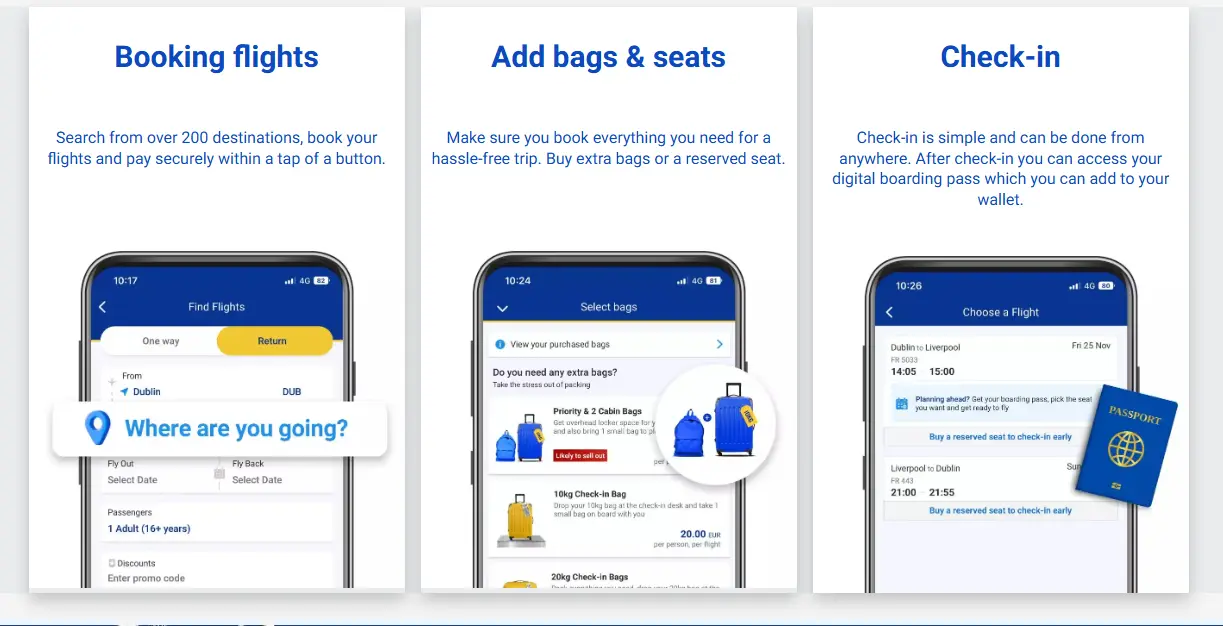
24-Hour Cancellation Rule Three Conditions Two Options and One Limitation
The DOT’s 24-hour cancellation guarantee is frequently misapplied by both passengers and airline staff because its three operative conditions are narrower than the general understanding of “free cancellation within 24 hours” suggests. Thrifty Traveler’s October 2025 definitive guide to the 24-hour rule confirms the three conditions that must simultaneously hold:
- the ticket must have been purchased at least seven days before scheduled departure
- the booking must have been made directly with the airline, not through a third-party OTA or travel agent
- the flight must involve U.S.-connected service.
Tickets booked through Expedia, Google Flights book-through, or any OTA are not covered by the DOT’s 24-hour guarantee — they are subject only to whatever cancellation policy the OTA itself offers, which may or may not replicate the airline’s rule. TravelPander’s March 2026 24-hour rule guide confirmed that approximately 30 percent of all cancellations in the DOT’s dataset occur within this 24-hour window. This is a frequency that reflects the rule’s importance as a consumer safety valve for impulsive bookings.
The DOT’s rule requires airlines to offer one of two compliance options, not both: either free cancellation for 24 hours, or a 24-hour hold at the quoted price without payment. American Airlines (AA)’s 2026 policy, per TravelStacks, chooses free cancellation. This means passengers can cancel within 24 hours regardless of fare class, including Basic Economy. Delta Air Lines (DL) implements the rule with a specific quirk that Thrifty Traveler flags: Delta defines its 24-hour window as ending at midnight of the day after purchase rather than exactly 24 hours from the purchase timestamp. This is a distinction that extends the window for some passengers but can confuse those who book late in the evening.
Delta partner Aeromexico (AM), by contrast, enforces the 24-hour rule to the minute from purchase with no rounding — a difference that Thrifty Traveler characterises as enforced “viciously” even for Delta SkyMiles elite members on partner bookings. The practical lesson is that passengers must read their specific carrier’s 24-hour policy on the booking confirmation page, not assume all implementations are identical.
DOT Refund Rule Shock What Changed In 2024 And What 2025 Took Back
The DOT’s April 2024 Automatic Refund Rule represented the most consequential expansion of U.S. airline passenger rights since the original 24-hour rule, and understanding both its provisions and its subsequent dilution is essential for any passenger navigating a claim in 2026. The New York Attorney General’s March 2025 public reminder of airline passenger rights confirmed the still-operative rights:
- passengers are entitled to full cash refunds for cancelled flights regardless of the reason they cancelled
- passengers are entitled to refunds for significant schedule changes or delays even if the fare was initially non-refundable
- airlines are required to adhere to their customer service plans.
The rule also defined, for the first time, what constitutes a “significant change” for domestic flights:
- a departure or arrival time change of three hours or more
- a change in origin or destination airport
- an increase in connection number, a downgrade in cabin class, or connections at different airports or flights on different aircraft that are less accessible for passengers with disabilities.
The December 5, 2025, enforcement pause documented in the Federal Register specifically suspended — until June 30, 2026 — the requirement that airlines issue refunds when a flight is renumbered (given a different flight number) but otherwise operates without significant changes to schedule or routing.
Aerospace Global News’ analysis of the enforcement notice confirmed the DOT’s reasoning: airlines faced operational difficulty distinguishing between a genuine flight cancellation and a routine renumbering for administrative purposes. Passengers who experience a flight renumbering with no material change to departure time, routing, or cabin class will not receive a refund under the paused enforcement — but passengers whose renumbered flight also changes departure by three or more hours domestically (or six or more hours internationally) retain full refund entitlement regardless of the pause, because the “significant delay” trigger still applies.
Ticket Booking Technology: CRS, GDS, And How Reservations Actually Work
The technology infrastructure that processes every airline ticket sold globally is invisible to passengers but directly shapes the booking options available to them. There is the Computer Reservation System (CRS) — the private reservation database operated by each individual airline — and the Global Distribution System (GDS), the multi-airline aggregation platforms that travel agents and OTAs access to search and book inventory across carriers.
Amadeus — the world’s largest GDS by market share — Sabre, and Travelport (which operates the former Galileo and Worldspan systems) process billions of booking transactions annually, distributing real-time seat availability and pricing from over 400 airlines to approximately 70,000 travel agencies and millions of OTA users worldwide.
When a booking is made through a GDS, the reservation data is transmitted to and stored in both the airline’s private CRS and a local GDS copy — creating the synchronised dual record that allows travel agents to modify itineraries on behalf of passengers while the airline’s system receives instant updates. IATA’s NDC (New Distribution Capability) standard, which airlines have progressively adopted since its 2012 introduction, allows airlines to distribute richer, more personalised fare content directly to travel agents and OTAs rather than exclusively through the standardised legacy GDS data formats — enabling airlines to offer bundled ancillary products, personalised upgrade offers, and differentiated seat selection packages that the 40-year-old GDS infrastructure could not accommodate.
Airlines including American, Lufthansa (LH), and British Airways (BA) have progressively surcharging GDS-booked tickets to incentivise direct channel distribution — a commercial pressure that makes understanding the booking channel’s implications for the 24-hour rule increasingly important for frequent travellers.How This Compares Globally: EU261, Canada’s APPR, And Nepal’s CAAN Consumer Rights
The U.S. regulatory framework for airline ticket refunds and overbooking compensation is more prescriptive than most Asian aviation systems but less generous in some dimensions than the European framework. EU261/2004 provides compensation for delays exceeding three hours at arrival — a right with no U.S. domestic equivalent, since the DOT’s Fly Rights page explicitly confirms that “for domestic itineraries, airlines are not required to compensate passengers whose flights are delayed or cancelled” unless involuntary denied boarding occurs.
Canada’s Air Passenger Protection Regulations (APPR), introduced in 2019 and strengthened in 2022, provide compensation for delays and cancellations within airlines’ control — up to CAD 1,000 for large carriers on delays exceeding nine hours — creating a third distinct regulatory tier alongside the U.S. and EU systems.
In Nepal, CAAN’s Air Service Operation Guidelines (CARs 2058) provide consumer protection provisions for passengers flying on Nepali-registered carriers, but the enforcement mechanisms and compensation scales differ substantially from either the U.S. DOT or EU frameworks.
Consumoteca’s March 2026 comprehensive overbooking compensation guide confirmed that airlines globally paid out over USD 500 million in 2025 claims, with services like AirHelp reporting 97 percent success rates for EU261 claims. These are figures that illustrate the practical importance of knowing which jurisdiction’s rules apply to any given flight, since a passenger flying from Kathmandu (KTM) to London (LHR) on a European carrier operating under EU261 jurisdiction has access to up to €600 per passenger in denied boarding compensation that would not apply on the same route flown by a non-EU carrier.


.jpg)