If you are planning to fly business class this summer, you are not going to get the experience of beauty of beds like in the poem of Rober Louis Stevenson:
I have to go to bed and see
The birds still hopping on the tree,
Or hear the grown-up people’s feet
Still going past me in the street
The significance of bed length in business class extends is beyond the reaches of birds, and despite the whirring of the engines of the mechanical bird, you will get passenger comfort. Lng-haul routes continue to grow in duration — with ultra-long-haul services now routinely exceeding 17 hours — the ability to sleep horizontally and without compromise has become a competitive differentiator that airlines must address to retain high-yield travellers.
British Airways introduced the world’s first lie-flat business class seat in 2000 at London Heathrow Airport (LHR), and in the quarter-century since, the industry’s definition of “flat” has been continuously revised upward, with today’s leaders pushing well past the 80-inch threshold once considered exceptional.
In this article, we are going to have a look at the world’s longest flat beds in 2026, as reported by Simple Flying.
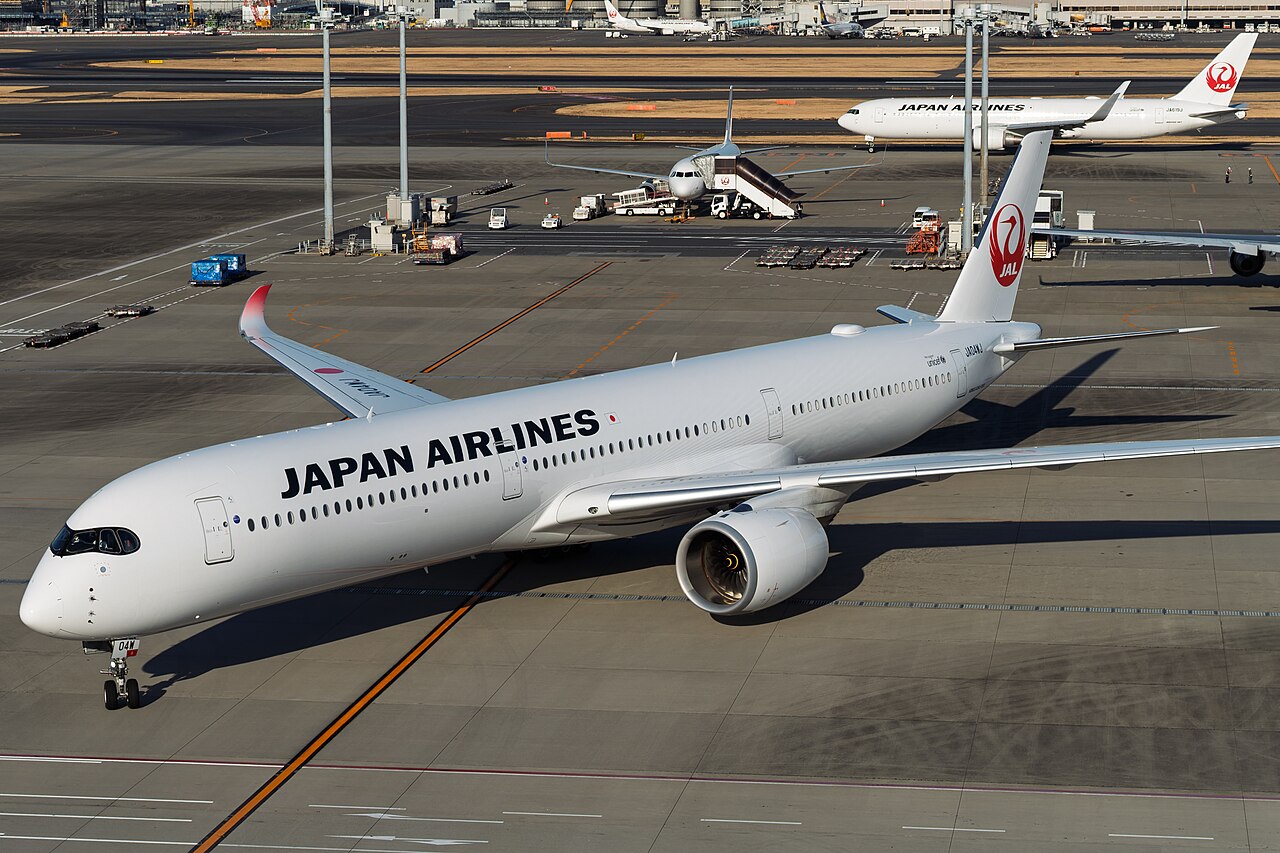
5. Japan Airlines’ Safran Unity
Japan Airlines (JL) became the global launch customer for the Safran Unity seat when it inducted its Airbus A350-1000 into long-haul service in early 2024. The aircraft replaced the Boeing 777-300ER as JAL’s international flagship, and with it came an entirely reimagined cabin across all four travel classes. The business class cabin houses 54 Safran Unity suites in a staggered 1-2-1 configuration, spread across 14 rows — every passenger enjoys direct aisle access without disturbing a neighbour.
The Unity seat delivers a bed length of 79 inches (201 centimetres), making it one of the longest in the staggered category. JAL’s customised iteration goes further than the baseline specification, with a pitch of approximately 51 inches (130 centimetres) — substantially more generous than what future Unity operators including Qantas and Riyadh Air are expected to receive. The suite’s privacy doors and partitions stand 52 inches (132 centimetres) tall, creating a genuinely enclosed sleeping environment.
Key features of JAL’s Safran Unity suite on the A350-1000 include:
- Bed length: 79 inches (201 cm), fully lie-flat
- Seat configuration: Staggered 1-2-1 across 54 suites
- Entertainment screen: 24-inch 4K display
- Audio system: Safran ‘Euphony’ headrest speakers
- Privacy: Sliding doors with 52-inch (132 cm) partitions
- Storage: In-seat wardrobe plus extensive compartmentalisation
As noted by aviation journalist John Walton of Runway Girl Network, who flew the product as a guest of the airline shortly after its debut:
“On boarding, the cabin was even more impressive than it was at the reveal event in Toulouse last December, thanks to the soft mood lighting on a cloudy April morning in Tokyo. The calm, cosy atmosphere and JAL’s welcoming and helpful flight attendants were a great start to the flight.”
Reviewer Ben Schlappig of One Mile at a Time was equally unequivocal in his assessment:
“It’s more spacious than any other staggered seat I’ve experienced, and the amount of storage is on a completely different level.”
The Unity seat is set to appear on Air India and Qantas aircraft in the coming years, making JAL’s highly pitched version particularly notable by comparison.
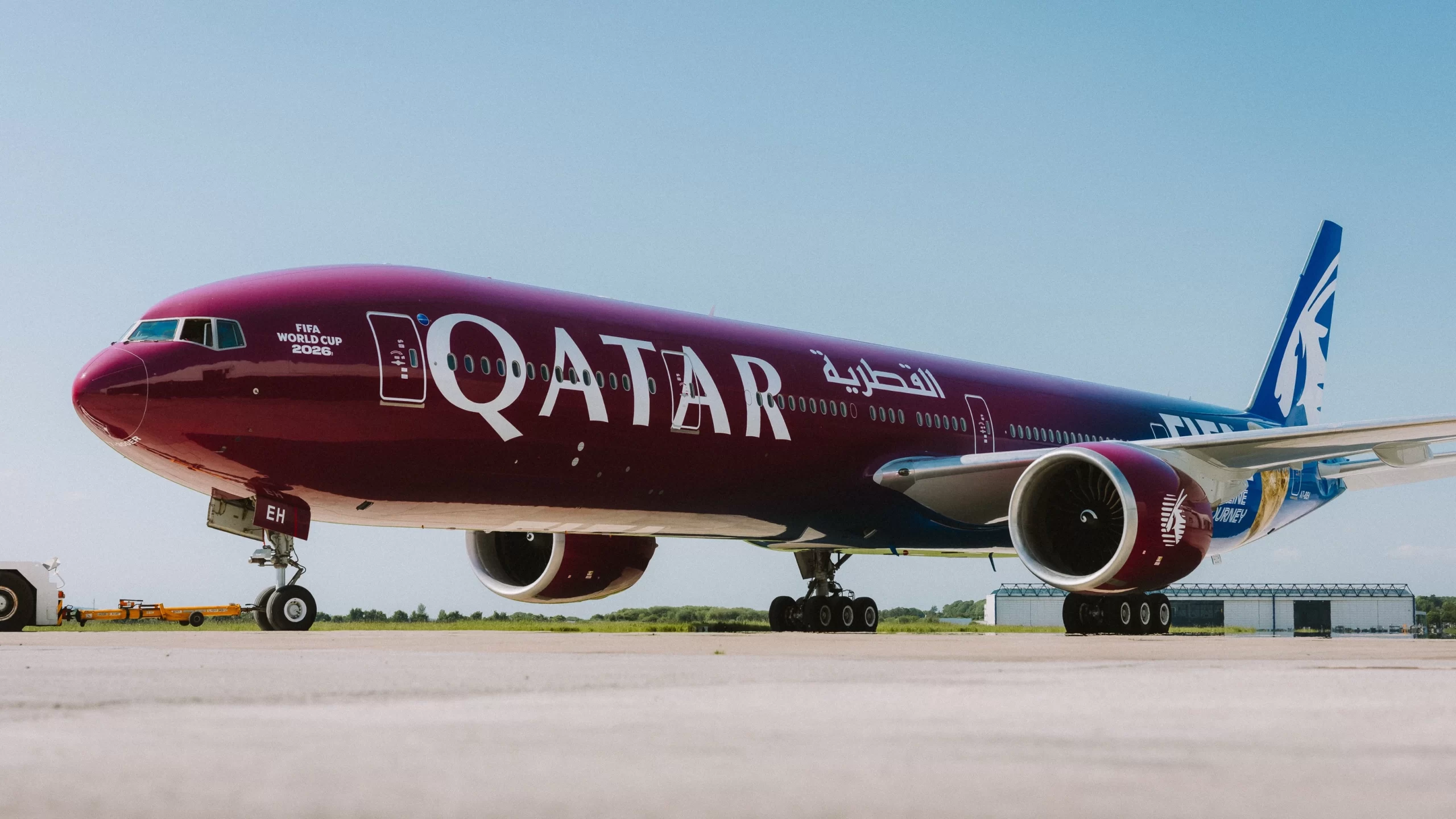
4. Qatar Airways QSuite
Qatar Airways (QR)‘ QSuite has occupied a singular position in the premium cabin hierarchy since its 2017 debut, winning the Skytrax World’s Best Business Class award multiple years consecutively. Manufactured by Collins Aerospace, the suite is built around a staggered layout that alternates between forward and rear-facing seats, with centre suites featuring retractable dividers that allow pairs — or groups of four — to configure a shared space. The result is a product that remains architecturally unique at scale among widebody operators.
The QSuite’s lie-flat bed measures 79 inches (201 centimetres) in length, with a total pitch of 103 inches for certain configurations, and 52-inch (132 cm) privacy walls that rank among the tallest of any business class product currently flying. The 21.5-inch (55 cm) entertainment screen, although no longer the industry’s largest, remains functional and well-positioned. The suite’s configurable centre dividers — allowing the creation of a double bed or a quad meeting space — continue to set it apart from every competing product.
Qatar Airways operates QSuite across its Airbus A350-1000 fleet and on select A350-900 and Boeing 777 aircraft. It is not installed on the carrier’s A380-800 or Boeing 787 fleet, a distinction passengers must verify before booking. Hamad International Airport (DOH), Doha, serves as the hub through which all QSuite-equipped services operate.
In 2024, Qatar Airways unveiled the QSuite Next Gen, set to debut on the Boeing 777-9 in 2027. The updated product raises privacy walls to 56 inches (142 cm), introduces motorised sliding doors — replacing the manual mechanism of the original — and expands the seat width to 23 inches (58.4 cm). Window-side seat pairs will also gain face-to-face companion dining capability, a feature previously restricted to centre seats.
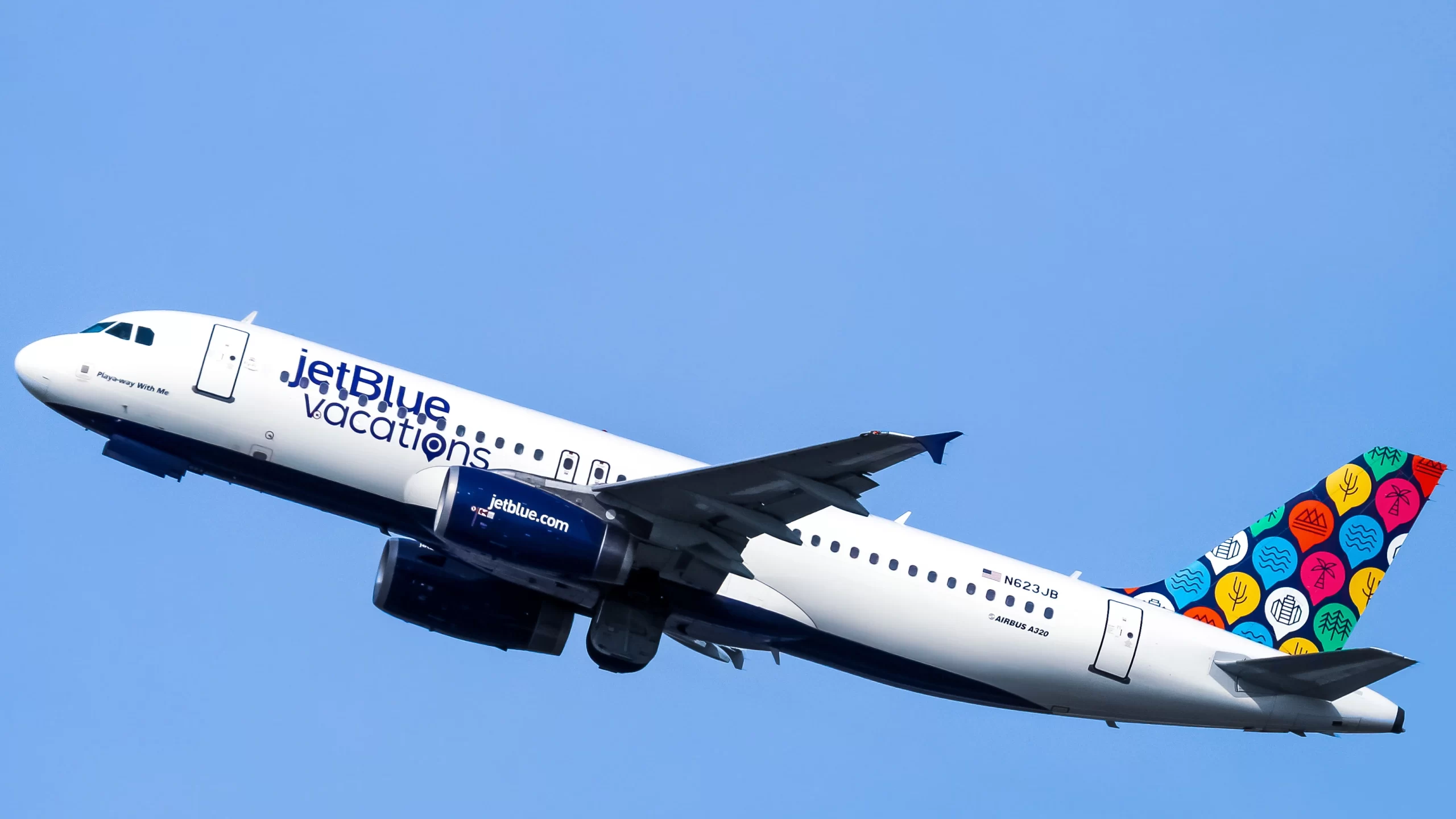
3. JetBlue Mint
JetBlue Airways (B6)‘s Mint business class product is an anomaly in any conversation about long-haul beds. The carrier operates it on single-aisle Airbus A321-200 aircraft on premium transcontinental routes within the United States and on select transatlantic services — segments where legacy US carriers have historically installed the comparatively basic Collins Aerospace Diamond in a four-abreast layout. JetBlue’s original Mint cabin, introduced in 2014 on the A321-200, was the first to feature sliding doors in business class, three years before Qatar Airways’ QSuite.
The original Mint seats are based on the Thompson Vantage platform, modified extensively by JetBlue, and they deliver a bed length of 80 inches (203 centimetres) — longer than many widebody products operated by airlines with far greater resources. The cabin features 16 seats in an alternating 2-2 and 1-1 staggered arrangement, with four “throne” solo suites in rows two and four offering sliding doors, a feature later expanded across the entire cabin in JetBlue’s second-generation Mint Suite product.
Key specifications of JetBlue Mint on the original A321-200:
- Bed length: 80 inches (203 cm), fully lie-flat
- Seat width: 20.5 to 22 inches depending on position
- Configuration: Alternating 2-2 / 1-1 layout (16 seats)
- Doors: Sliding privacy doors on throne suites
- Bedding: Tuft & Needle pillow and duvet
- Entertainment: Large screen with adjustable firmness and massage controls
It is worth noting a significant product distinction: JetBlue’s second-generation Mint Suite, based on the Thompson VantageSOLO and fitted to A321neo and A321LR aircraft, actually delivers a slightly shorter bed of 77 inches (196 cm). The original A321-200 Mint product therefore retains the distinction of offering the longest bed in the JetBlue fleet despite predating the newer suite by several years. As of early 2026, 35 A321-200s carry the original Mint configuration, while 10 A321neos and 11 A321LRs feature the Mint Suite.
Thompson Aero Seating’s Vice President Neil Taggart described the VantageSOLO development in a company announcement as: “ground-breaking on this type of aircraft. From only a 33-inch seat pitch, it offers a fully-horizontal flat bed with direct aisle access for every seat.”

2. Virgin Atlantic Upper Class
Virgin Atlantic (VS) operates the Airbus A350-1000 as its long-haul flagship, and the aircraft’s Upper Class cabin is equipped with the Safran Cirrus NG seat — the final evolution of a lineage tracing back to the late 2000s when the original Cirrus was introduced by US Airways. The product has been significantly refined through successive generations, and the NG iteration offers Virgin Atlantic a bed length of 82 inches (208 centimetres), the longest of any seat in the carrier’s current fleet.
The Cirrus NG seats on Virgin’s A350-1000 are arranged in a semi-reverse herringbone 1-2-1 layout, angled away from the aisle. Centre seats are oriented in a herringbone configuration — facing each other rather than away — which Virgin selected because it facilitates side-by-side seating for travelling couples. Each suite measures 20 inches in width with a 44-inch pitch when upright, and the full recline extends to that 82-inch sleeping surface, complemented by premium bedding including a soft duvet, mattress pad, and pillow.
Key features of Virgin Atlantic Upper Class on the A350-1000:
- Bed length: 82 inches (208 cm), fully lie-flat
- Seat width: 20 inches
- Configuration: 1-2-1 semi-reverse herringbone
- Entertainment: 18.5-inch HD screen
- Social space: “The Loft” communal area with 32-inch TV and sofa seating
- Connectivity: Universal power outlets and USB ports at every seat
Reviewer Matthew Klint of Live and Let’s Fly described the product as “a tremendous revolution in comfort” compared to Virgin’s older herringbone cabin. It is worth noting that privacy doors are absent on the A350-1000 Upper Class suites — a feature Virgin has incorporated into its newer A330-900 product based on the Thompson Vantage XL. The A330-300 and Boeing 787-9 fleets retain older herringbone seats, meaning the A350-1000 is the aircraft to seek for maximum bed length on Virgin services.
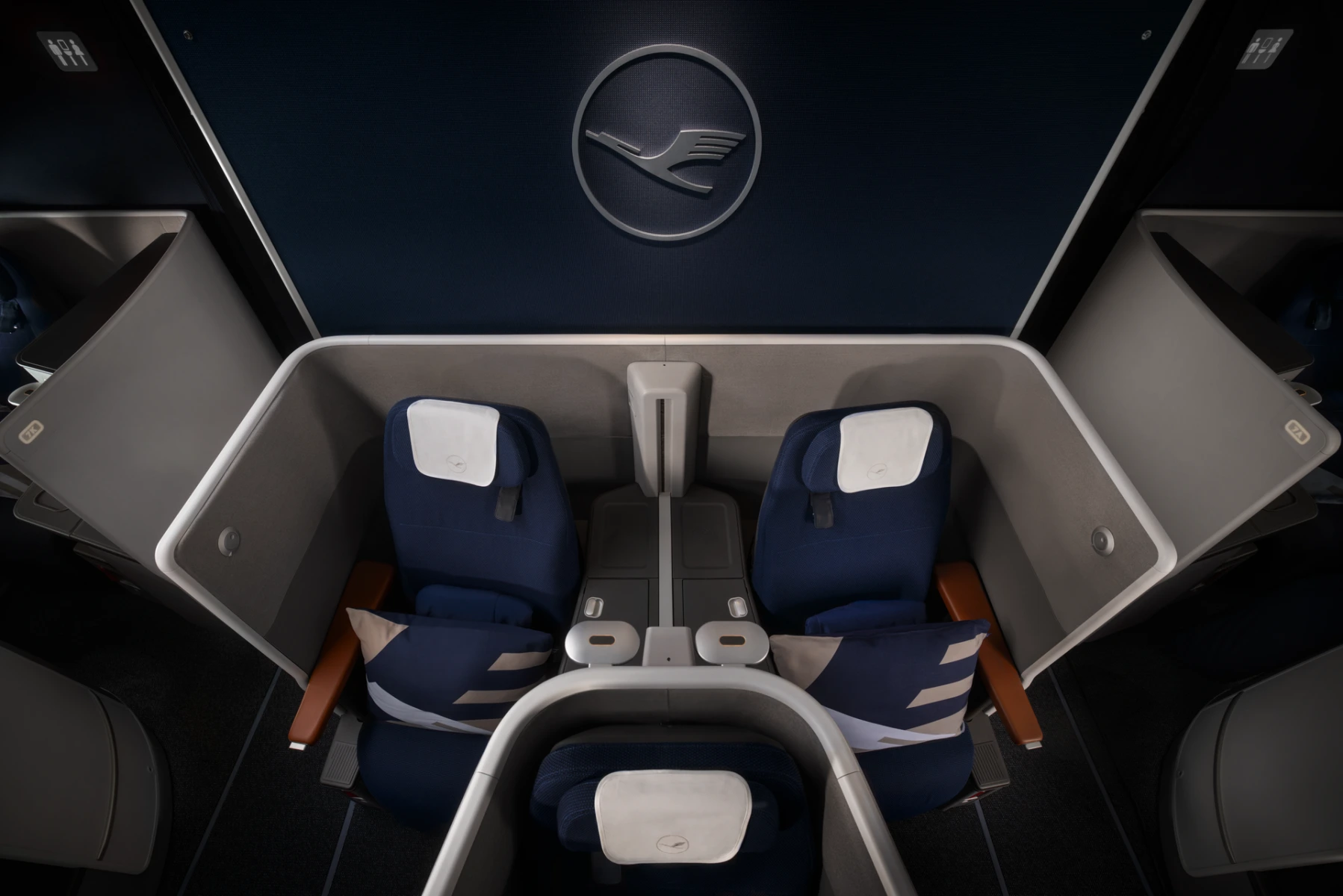
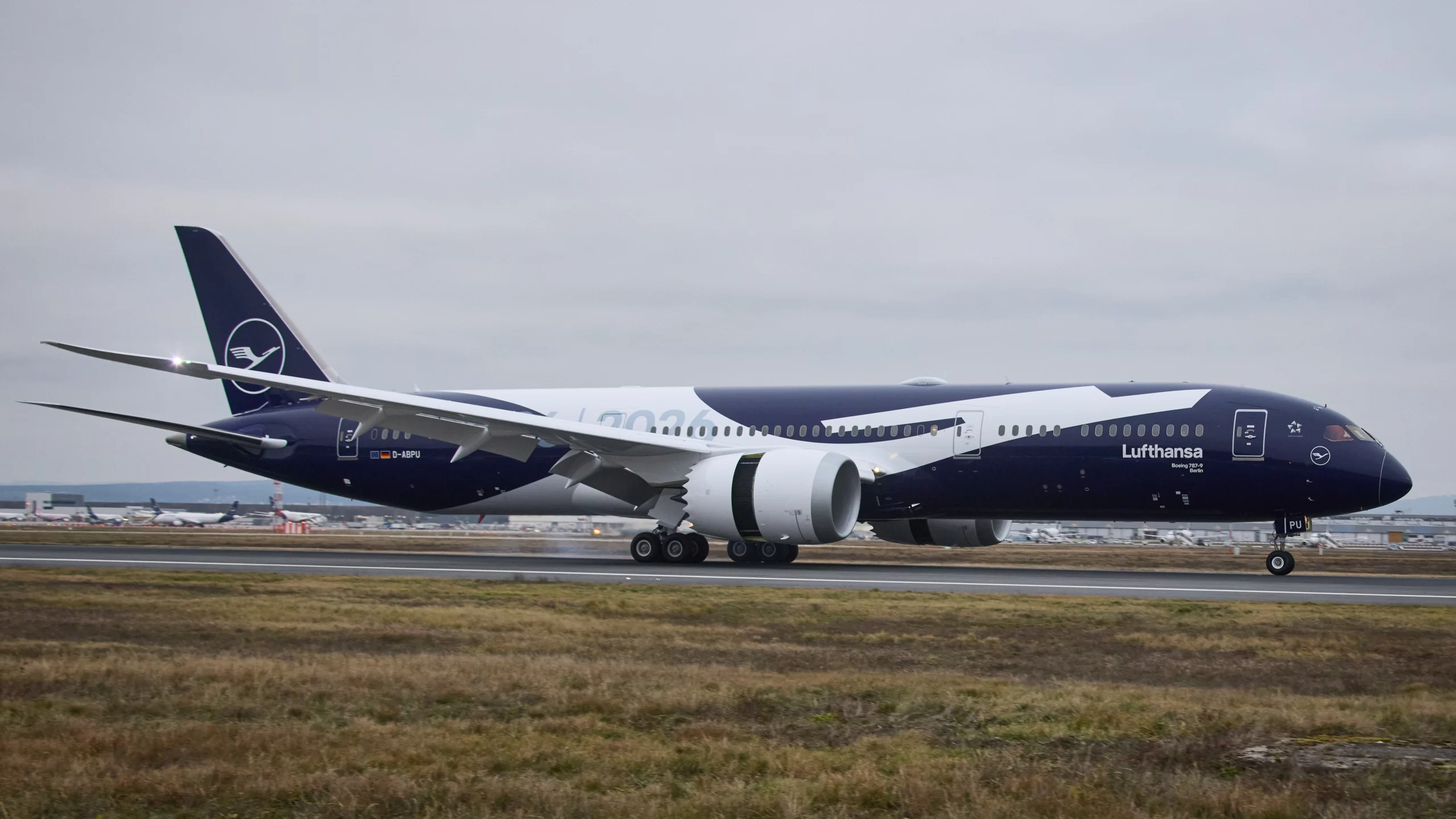
1. Lufthansa Allegris
Lufthansa (LH)‘s Allegris product represents the most ambitious single investment in premium cabin design by any European carrier in recent memory. The programme, backed by a total investment of €2.5 billion by 2025, encompasses new seats across every travel class on more than 80 aircraft, including the Boeing 787-9, Airbus A350-900, A350-1000, and the forthcoming Boeing 777-9. At the summit of this offering sits the Extra Long Bed seat: a bespoke product that delivers a bed length of 86 inches (218 centimetres), the longest in commercial business class anywhere in the world today.
The Allegris business class cabin is notably unusual in offering passengers five distinct seat types within the same cabin: the Classic Seat, the Extra Space Seat, the Privacy Seat, the Business Suite, and the Extra Long Bed seat. According to Lufthansa Group’s official Allegris documentation:
“Passengers can choose between four additional seat options, depending on whether they want an extra-long bed with a length of 2.20 meters, extra space and work surface, a seat with a baby seat or simply an exclusive seat right by the window.”
The Extra Long Bed seats occupy the centre section of the cabin in alternating rows, positioned between pairs and solo throne seats. The extended sleeping surface is achieved through an enlarged footwell, and the seats are available on a reservation fee of approximately €107–€183 (approximately $115–$196) per segment above the standard business class fare. Classic Seats, by contrast, carry no additional fee but offer a shorter bed length of 74 to 78 inches depending on row placement.
Key features of Lufthansa Allegris business class (Extra Long Bed configuration):
- Bed length: 86 inches (218 cm), fully lie-flat
- Adjustable firmness: Individual controls for cushion hardness
- Entertainment screen: Up to 27-inch 4K ultra-high-definition on suite seats
- Seat heating and cooling: Standard across all Allegris business class variants
- Configuration: 1-2-1 throughout the business class cabin
- Sustainability: All 27,000 Allegris seats were manufactured using recyclable materials
The Allegris product is currently flying on select Airbus A350-900 and Boeing 787-9 aircraft, with the A350-1000, Boeing 747-8, and 777-9 to follow. Lufthansa received FAA certification for Allegris on the 787-9 in March 2026, with 25 of the 28 business class seats now bookable on those flights departing from Frankfurt Airport (FRA), Frankfurt.
The Allegris seat is manufactured by three separate vendors — Stelia Aerospace for the A350 and 747-8, Collins Aerospace for the 787, and Thompson for the 777 — a decision driven by the complexity of fitting the same architecture to different fuselage geometries, and one that has contributed to the extended rollout timeline. The seat itself is a bespoke Lufthansa design that bears a resemblance to the Safran Optima but is not derived from it.
Comparing The Five: Where Does Each Airline Stand?
The five airlines on this list occupy meaningfully different market positions, which makes a direct comparison instructive rather than merely academic.
| Airline | Aircraft | Seat Product | Bed Length | Doors |
|---|---|---|---|---|
| Lufthansa (LH) | A350-900 / 787-9 | Allegris Extra Long Bed | 86 in / 218 cm | Yes (Suite) |
| Virgin Atlantic (VS) | A350-1000 | Safran Cirrus NG | 82 in / 208 cm | No |
| JetBlue (B6) | A321-200 | Thompson Vantage | 80 in / 203 cm | Throne seats only |
| Japan Airlines (JL) | A350-1000 | Safran Unity | 79 in / 201 cm | Yes |
| Qatar Airways (QR) | A350-1000 / 777 | Collins QSuite | 79 in / 201 cm | Yes |

_@_MAN,_September_2020.jpg)