On 13 May 2026, an Illinois federal jury ordered The Boeing Company to pay $49.5 million in compensatory damages to the family of Samya Rose Stumo, a United States citizen who perished when Ethiopian Airlines (ET) Flight 302 crashed near Bishoftu, Ethiopia, on 10 March 2019. According to Law360’s courtroom report, Judge Jorge L. Alonso presided over the case in the United States District Court for the Northern District of Illinois — the same federal venue that has hosted years of Boeing 737 MAX wrongful-death litigation.
The Seattle Times, which broke the verdict, confirmed that Stumo’s attorneys from Philadelphia-based law firm Kline & Specter brought the compensatory damages case before the jury. Stumo’s family has been one of the most publicly visible holdouts in the otherwise largely settled landscape of Flight 302 civil litigation. Rather than accepting the liability stipulation Boeing extended to most other ET302 families, Stumo’s estate chose to pursue a full jury trial.
The verdict is the second civil jury award against Boeing in connection with the two 737 MAX crashes, following a November 2025 ruling that ordered the company to pay more than $28 million to the family of Shikha Garg, a United Nations environmental worker who also died aboard Flight 302.
Who Was Samya Rose Stumo, And Why Her Case Stood Apart
Samya Rose Stumo, 24, was a health financing analyst from Sheffield, Massachusetts, travelling to Nairobi, Kenya, on 10 March 2019 to begin a new assignment with ThinkWell, a nonprofit organisation focused on health systems development. She boarded Ethiopian Airlines Flight 302 at Addis Ababa Bole International Airport (ADD) for what was intended to be the first leg of a field deployment connected to a Gates Foundation health initiative.
She was the niece of veteran consumer activist Ralph Nader, and her parents — Michael Stumo and Nadia Milleron, both attorneys — filed the original wrongful death lawsuit in federal court in Chicago as early as April 2019.
The Stumo family’s case stood procedurally apart from those of other ET302 families from an early stage. The Seattle Times reported that when Boeing’s lawyers presented most ET302 families with a stipulation admitting liability for compensatory damages, the Stumo family was among only two families who declined to sign. The other being that of a Kenyan married couple.
Signing that agreement would have limited proceedings to compensatory damages while explicitly foreclosing any future pursuit of punitive damages. The family’s refusal reflected a consistent and publicly stated insistence on broader corporate accountability, not merely financial redress.
Nadia Milleron, Stumo’s mother, did not moderate her position even as Boeing negotiated its way out of criminal exposure. When the United States Department of Justice (DOJ) agreed in May 2025 to abandon a criminal prosecution of Boeing in favour of a non-prosecution agreement, Clifford Law Offices — one of the firms representing crash families — quoted Milleron as saying:
“Pam Bondi is afraid to try a case. She is reinstituting the coddling corporate criminals policy. Boeing remains a criminal corporation, and Bondi is enabling them.”
Ethiopian Airlines Flight 302 Crash and Boeing’s 737 MAX Scandal
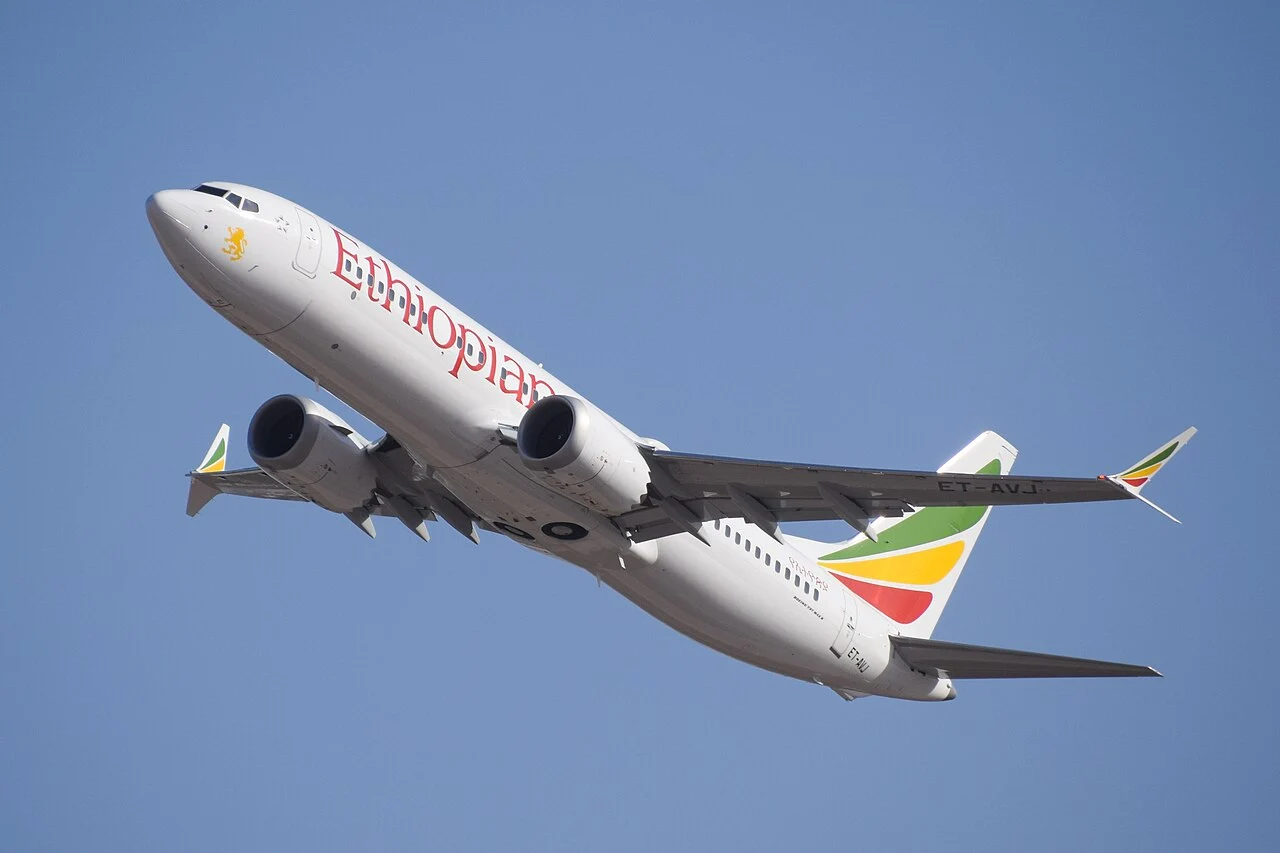
Ethiopian Airlines Flight 302 crashed near Bishoftu on March 10, 2019, just six minutes after departing Addis Ababa for Nairobi. The Boeing 737 MAX 8, delivered only four months earlier, killed all 157 people aboard. It was the second fatal 737 MAX crash after Lion Air Flight 610, which killed 189 people in October 2018.
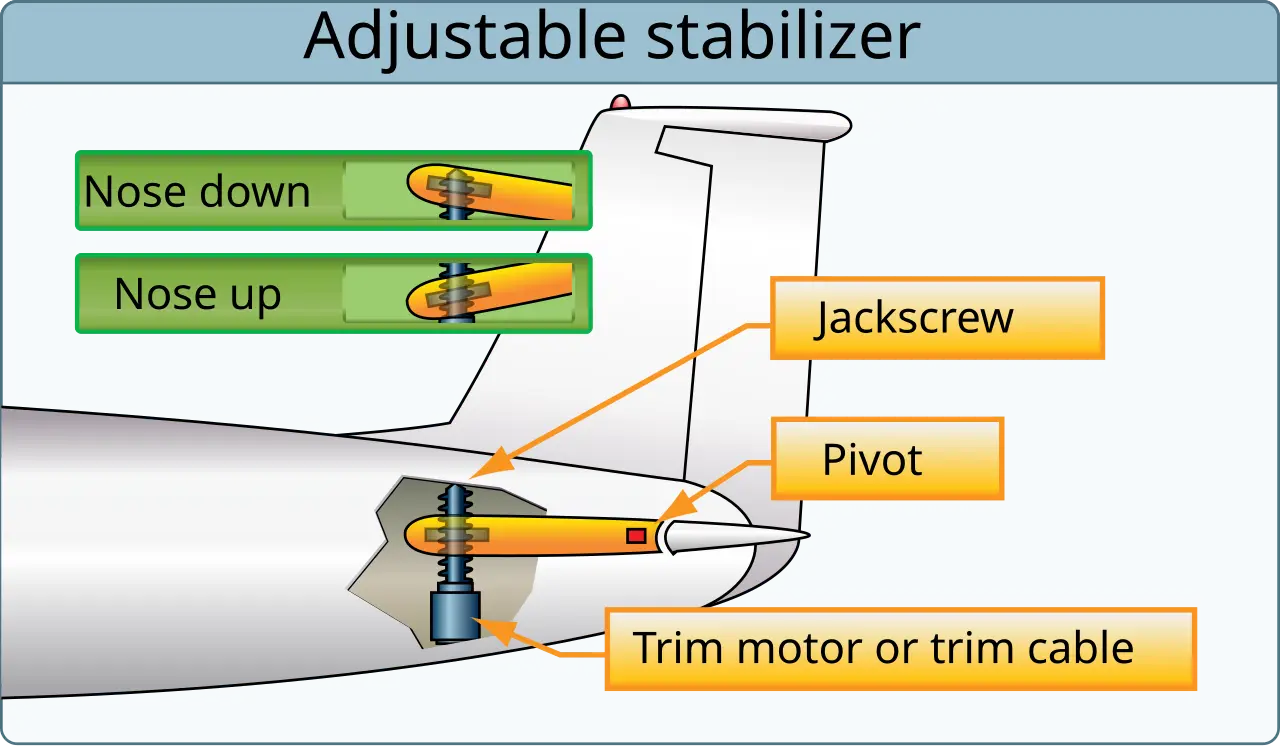
Ethiopia’s 2022 final report identified Boeing’s Maneuvering Characteristics Augmentation System (MCAS) as the probable cause. A faulty angle-of-attack sensor repeatedly triggered MCAS, forcing the aircraft’s nose downward. The two AoA sensors reportedly differed by 59 degrees, while the crew struggled to counter the system as the aircraft accelerated.
| Flight 302 | Details |
|---|---|
| Aircraft | Boeing 737 MAX 8 |
| Registration | ET-AVJ |
| Route | Addis Ababa–Nairobi |
| Date | March 10, 2019 |
| Fatalities | 157 |
The crash also highlighted Boeing’s failure to properly disclose MCAS. Ethiopian Airlines had reportedly requested information about the system after the Lion Air crash, but Boeing did not respond. During certification, Boeing had also withheld MCAS details from FAA regulators and pilot manuals.
The U.S. Department of Justice charged Boeing with conspiracy to defraud the United States in 2021. The company agreed to a $2.5 billion Deferred Prosecution Agreement, but the DOJ later found it had breached the deal. A proposed guilty plea was rejected in 2024, and the prosecution was ultimately abandoned in 2025 in favor of a non-prosecution agreement requiring Boeing to pay $243.6 million and an additional $444.5 million to victims’ families.

Judge O’Connor’s Scathing Criticism
The dismissal of the criminal case provoked a remarkably pointed judicial critique. Judge O’Connor granted the DOJ’s motion to dismiss but made his contempt for the outcome unambiguous.
Judge O’Connor made clear he was acting reluctantly and only because he concluded he lacked the legal authority to override the executive branch’s prosecutorial decision. He concluded that the crash victims’ families’ arguments against dismissal were “compelling,” and he characterised the families’ position as “correct” — that the NPA “fails to secure the necessary accountability to ensure the safety of the flying public.”
The Fifth Circuit Court of Appeals, in a ruling issued on 31 March 2026, ultimately declined to disturb the dismissal, holding that the DOJ had not violated the Crime Victims’ Rights Act in the manner it had negotiated the NPA. Boeing thus arrived at May 2026 having never entered a criminal conviction for crashes it admitted caused 346 deaths.

All in All
Boeing registered 284 net new orders in the first four months of 2026. The Stumo verdict, coming on the same day that company’s first-quarter 2026 deliveries outpaced Airbus for the first time since the MAX crisis began, also coincided with LOT Polish announcing that it would be taking Boeing to a jury trial over the 737 crisis.
The aircraft manufacturer’s admitted deception of the FAA produced two crashes within five months, grounded 387 aircraft globally, disrupted more than 8,600 weekly flights operated by 59 airlines, and ultimately cost the company more than $3.8 billion across all liability tracks.
.jpg)

.jpg)