In a few circles, it has been said that maybe there are six colors in the rainbow instead of seven- eliding “indigo” from VIBGYOR is one of them. It has been said that Issac Newton’s religious connotations with the number 7 coerced him to add in indigo to the list. We’ve all heard of the 7 deadly sins, and “seven” wonders of the world.
With seven being a theme in our traditions as well as in popular culture: the 007 (associated with James Bond) or the number 7 associated with Christiano Ronaldo, one might wonder about Boeing’s aspirations to tie the number 7 to the name of its most distinguished aircraft.
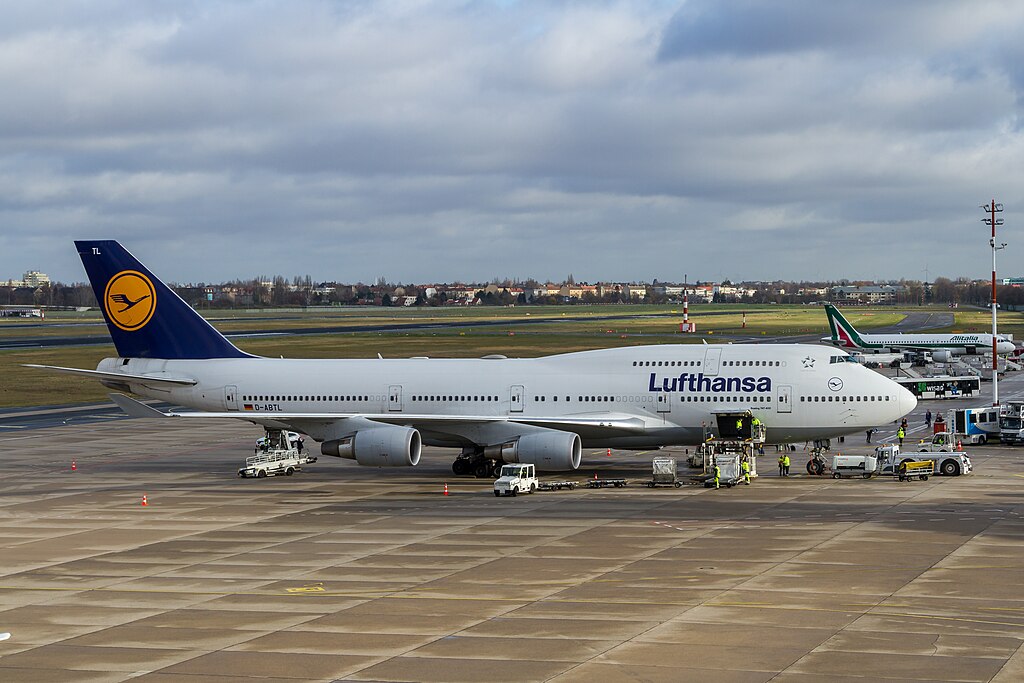
Photo: Matti Blume|Wikimedia Commmons
A few theories as to why Boeing might have named its aircraft with the number 7
The familiarity of engineers with the number 7, might have been one of the reasons to start and end Boeing’s aircraft with number 7, is what the University of Houston suggested:
” Like pi, it’s a number familiar to many engineers: 7, 0 and 7 are the first three digits in both the sine and cosine of 45 degrees. Swept wings — wings that angle toward the back of a plane’s fuselage rather than sticking out at 90 degrees — were new at the time. Story goes that the name 707 came from the angle of the plane’s wings. It’d be a fitting tale if it was true, but the 707 wing sweep was only 35 degrees, not 45.”
However, naming an aircraft with such esoteric information that engineers dabbled around with wasn’t why Boeing’s aircraft names have the number 7 tethered to them.
Photo: Aaron1a12 | Wikimedia Commons
One might also feel that Boeing’s number system was akin to its rival Airbus. After all, when Airbus introduced the A300, it was so named “because it was designed to seat 300 passengers”, reported the Sydney Herald. However, Boeing’s 787-10 has an exit limit of 440 people, while the 747-8 has an exit limit of 605. However, the A380 can occupy 380 passengers in a four-class layout as was the case, while also being able to carry more than 850 passengers in a single class layout.
A dive into history to reveal a few fallacies of the Boeing’s number 7
If we scratch a bit of history, we get to know that not all Boeing aircraft have been named with number 7. Boeing’s first aircraft was Boeing Model 1 – a seaplane.
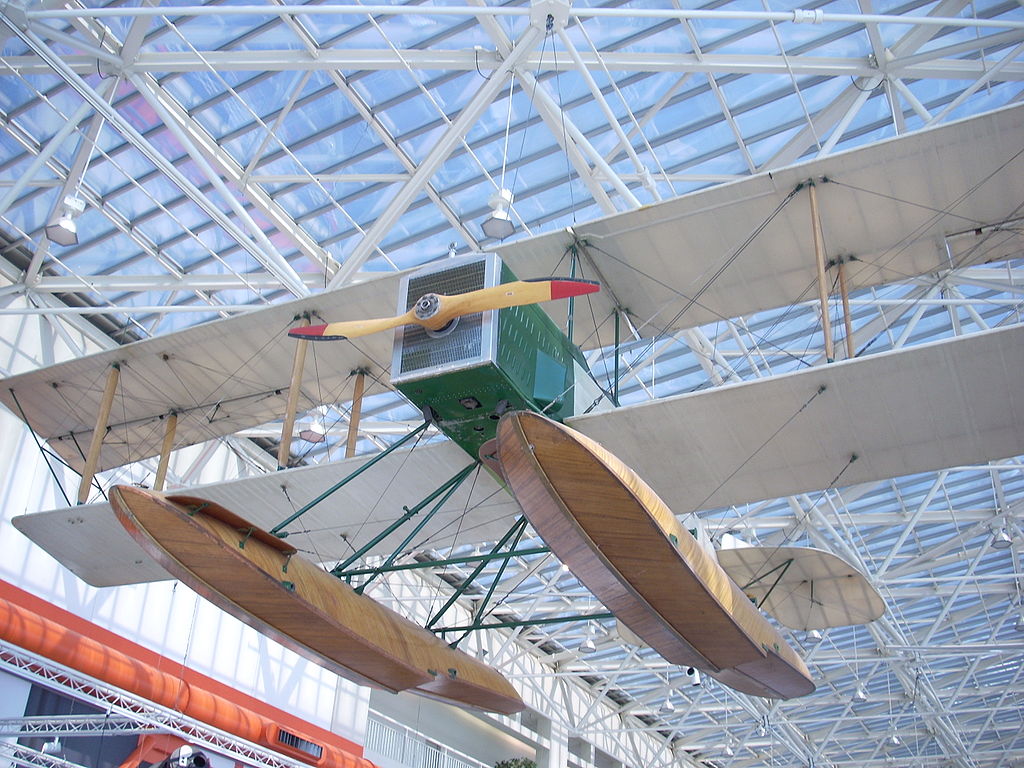
Photo: KudzuVine | Wikimedia Commons
In other words, had I been writing in before the World War, the title of this article would have been non-existent. Let’s have a look at a few aircraft that Boeing manufactured in the past and what their numbers were
| Boeing Models | What they represented? |
| 200 | Early single-wing designs that stood out from biplane trends of the era |
| 300 and 400 | commercial propeller-driven aircraft |
| 500 | turbo-engined aircraft |
| 600 | missiles and rocket-powered devices |
| 900 | boats* |
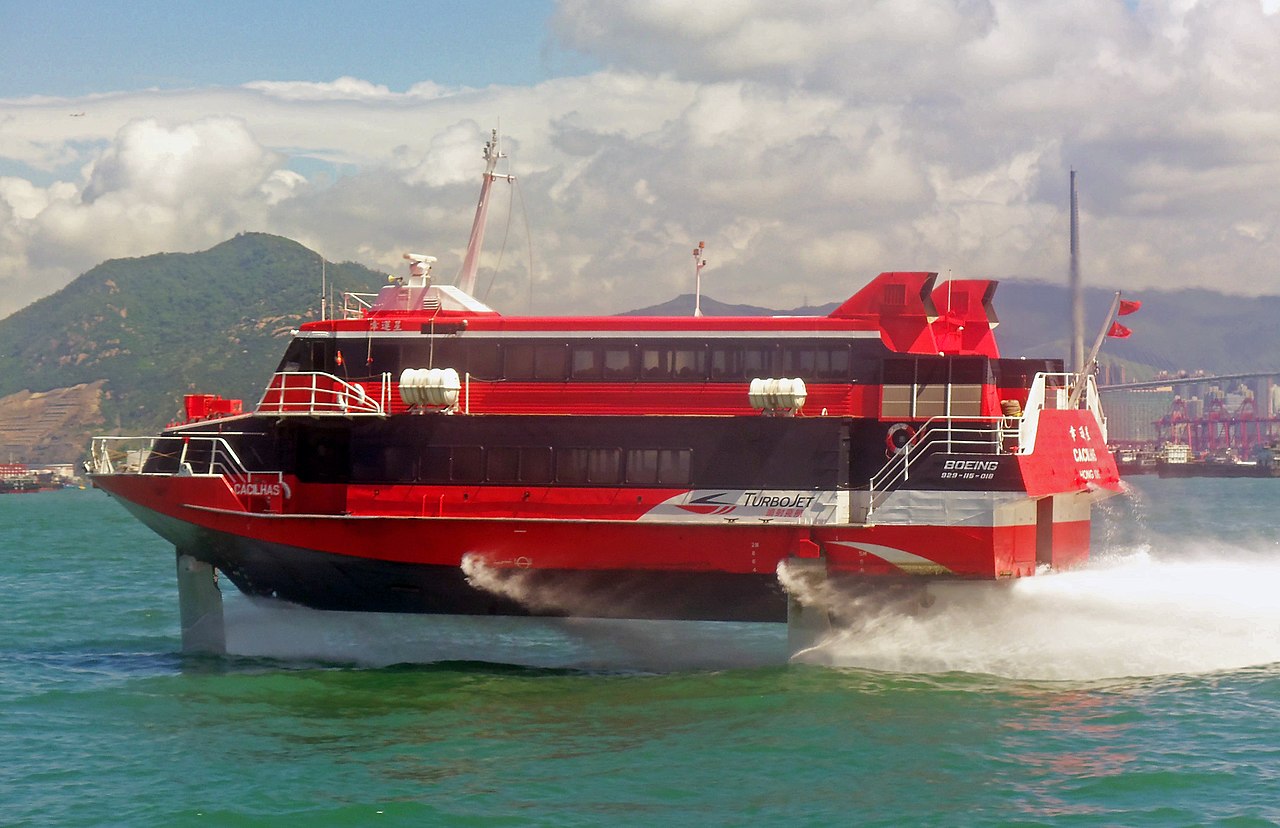
Photo: Daniel Case | Wikimedia Commons
Aerocorner reported that while Boeing had made aircraft such as the Boeing 247 or the Boeing 314 (which was the first aircraft to carry a US president):
“… most of the company’s reputation was built on their military aircraft’s successes. The B-17 Flying Fortress (Boeing Model 299) and B-29 Superfortress (Model 345) heavy bombers had helped secure a victory for the Allied Forces in WWII.”
Boeing’s first aircraft that had the number 7
The B-17 Flying Fortress was a heavy bomber developed by Boeing and an aircraft that helped secure a victory for the Allied Forces in WWII. Though this aircraft had the number 7 in it, it didn’t quite have the distinction of the 7X7 pattern associated with Boeing aircraft. However, the B-17 helped the development of the Boeing 307 Stratoliner – an aircraft that was launched on July 4, 1940 with Pan American Airways.
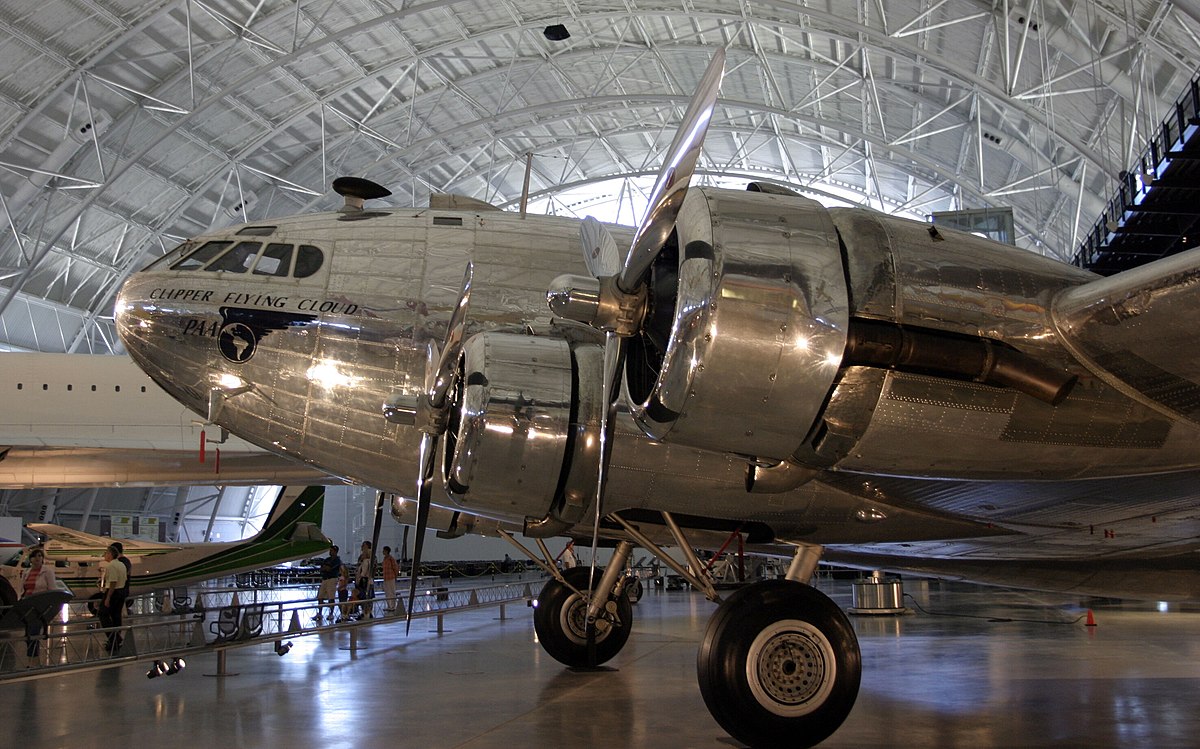
Photo: Kaszeta | Wikimedia Commons
After the end of the second of the great wars, Boeing came out with the 377 Stratocruiser. This probably was the first aircraft designed by Boeing that had two sevens in its name. Pan Am had the distinction of being the first and the last carrier to fly the 377 Stratocruiser. After the first scheduled passenger flight using the 377 Stratocruiser flew from Honolulu, this aircraft met a number of hull losses and was eventually retired in 1961.
Following its aircraft numbering system, Boeing reserved the 700 series for its new generation of jet-powered aircraft. The prototype that eventually led to the Boeing 707 was initially designated the Model 367-80, later known as the “Dash 80,” and was developed as both a military tanker and commercial jet transport.
Once Boeing moved toward a production version for the commercial market, the company assigned the aircraft to the 700 series. Rather than calling its first jetliner the Boeing 700, however, Boeing’s marketing team selected the name 707 because it was considered more appealing and memorable than 700. The 707 subsequently became the first member of Boeing’s 700-series commercial and military jet family.
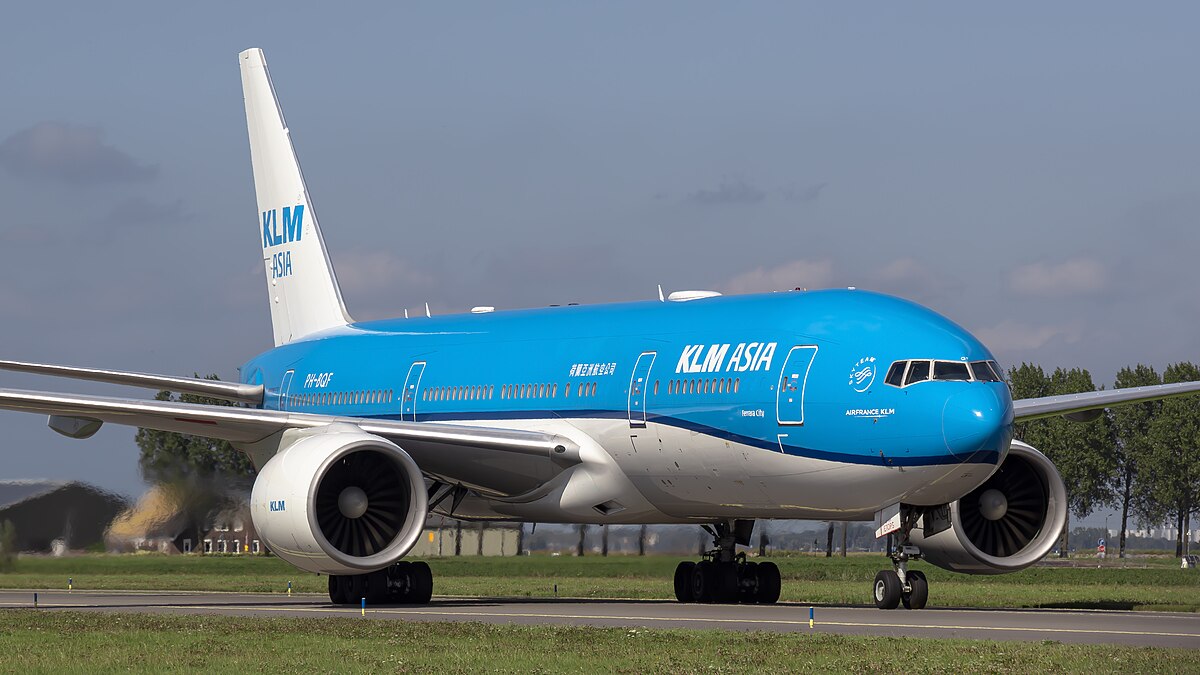
Photo: Mees Jansen | Wikimedia Commons
Let’s have a look at a few aircraft of Boeing that start and end with seven, and a few of their respective peculiarities:
| Aircraft Type | Variants | Notes |
| Boeing 707 |
|
US actor John Travolta owned an aircraft of this type (Boeing 707) that had a custom registration of N707JT |
| Boeing 717 |
*(all of these variants were merely proposed; none were ever built) |
Boeing 717 was aircraft developed by competitor McDonnell Douglas and was incorporated into Boeing’s portfolio following Boeing’s acquisition of McDonnell Douglas in 1997 |
| Boeing 727 |
|
|
| Boeing 737 |
|
Flight analysts have determined that everytime you blink your eye, a Boeing 737 aircraft takes to the skies |
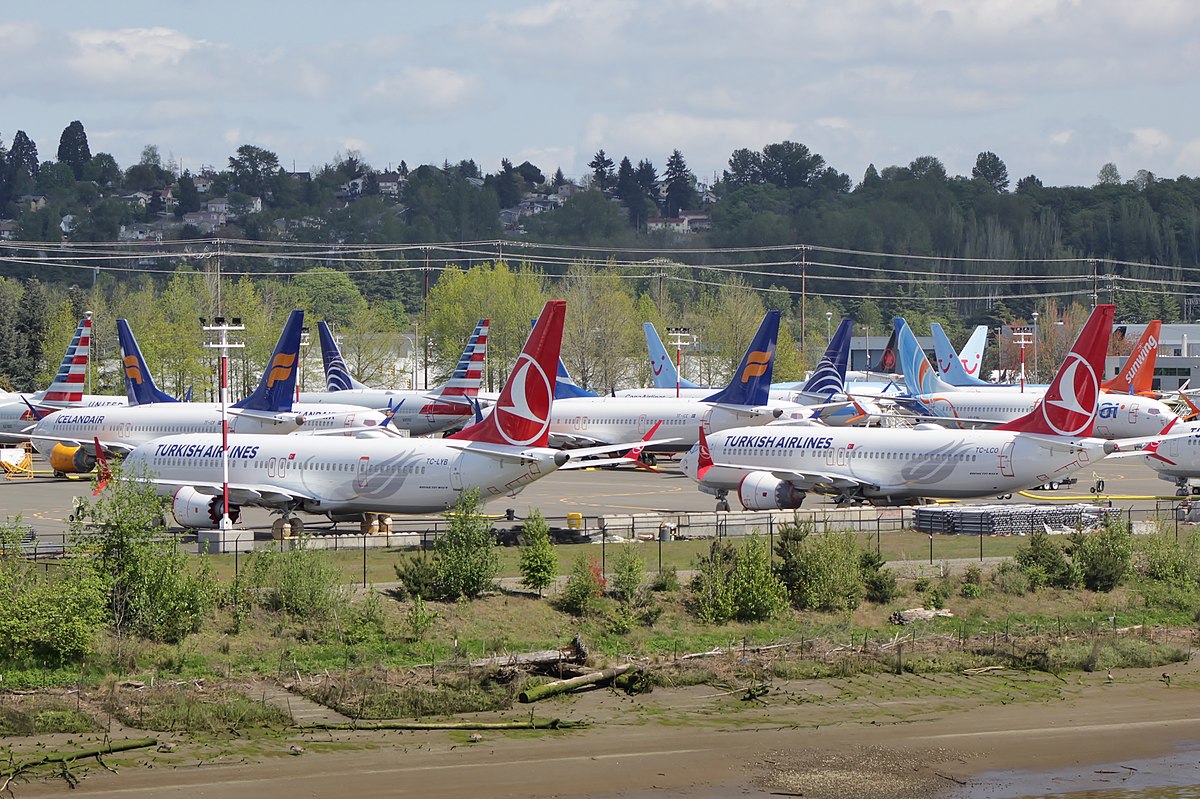
Photo: SounderBruce | Wikimedia Commons
The only Boeing aircraft starting and ending with the number 7 but has not been produced is the Boeing 797. Some have suggested that having the 7X7 as the aircraft name rolls off the tongue rather nicely, compared to 7X0 which comes across as rather bland.
Boeing’s supersonic that had the number 7 – the Boeing 2707
Besides these, Boeing has eyed an aircraft named Boeing the Boeing 2707- a competitor to the Concorde and the Tupolev Tu-144. One of the reasons it was cancelled was because of environmental pollution associated with supersonic travel. Also, aircraft traveling at supersonic speeds created a sonic boom meaning that such aircraft would only be “permitted over long stretches of water limiting the number of routes and city pairs where the aircraft could operate“, reported Qantas.

Photo: Bill Abbott | Wikimedia Commons
If the Boeing 2707 had been made, it would have had the following specifications:
- 292 passengers in two classes
- Configuration of 264 passengers in economy 34 inches of legroom and 28 passengers in the first class first with 40 inches of legroom
- Range of approximately 3,500 nautical miles (6,400 km).
- Engines: Four General Electric GE4/J5P turbojets with a thrust of 63,200 lb/f (281 kN).
- Top Speed: Mach 2.7.
Nonetheless, the aircraft cost almost a billion dollars but never took off. Even if it did, it would have been an aircraft that merely ended with the number 7, not started with it!!

.jpg)


