On 8 October, Germany’s Bundestag Budget Committee greenlighted a sweeping defense procurement plan totaling over €7 billion (roughly $8.14 billion), spearheaded by the acquisition of new Eurofighter combat aircraft. The news comes only a few days after the Indian Air Force procured new 97 Tejas Mk-1A light combat aircraft, for almost the same amount of money [under the “Aatmanirbhar Bhaarat” (which can be translated to “a Self-sufficient India”)].
Ukrainian Air Force Gains 30 F-16s From Belgium, Loses Sweden’s Gripens
The legislation in Germany brings forward 14 projects exceeding the €25 million threshold. This also includes 20 new tranche-5 Eurofighters, which are scheduled for delivery between 2031 and 2034. The aircraft are intended to bolster the Luftwaffe’s capabilities in electronic warfare and data reconnaissance.
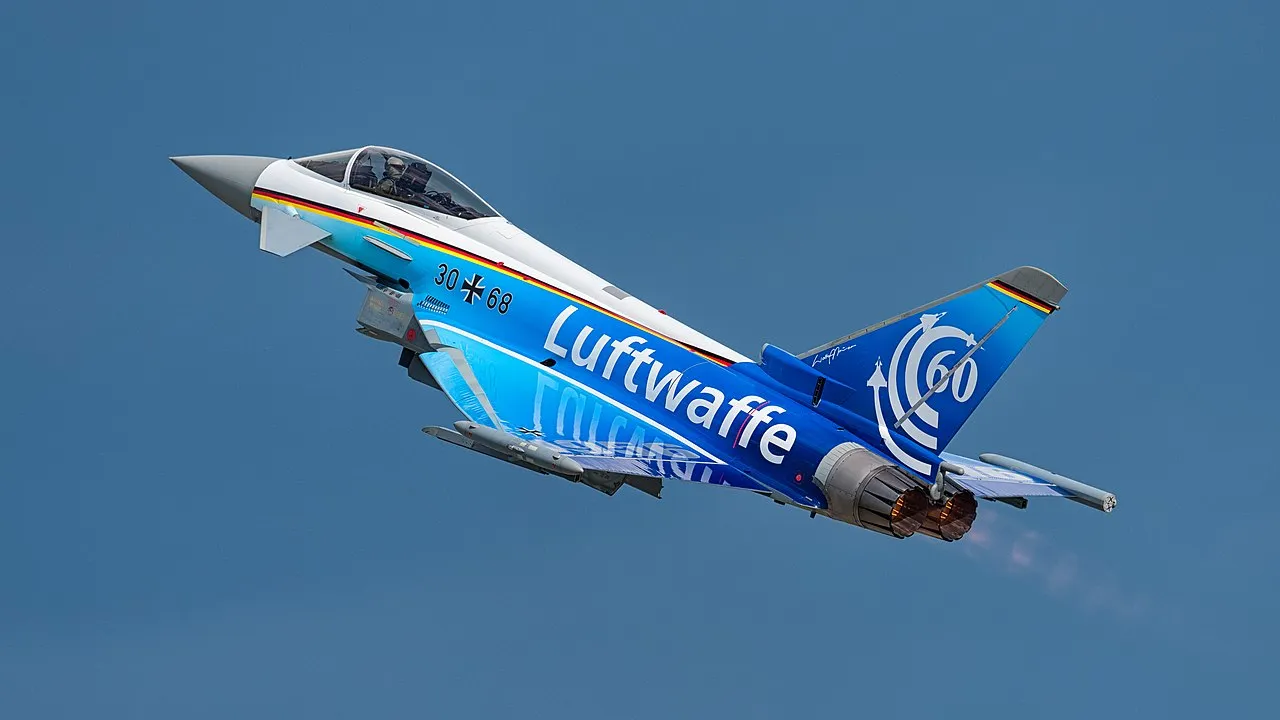
Germany’s Eurofighter tranche-5 procurement details
The tranche-5 Eurofighter order is valued at approximately €3.75 billion (about $4.36 billion), which emposses:
- Airframes
- Engines
- Spare Parts
- Associated Logistics
Germany’s latest Eurofighter procurement is part of a broader effort to modernize the country’s air, land and naval forces. The new aircraft will feature electronically scanned E-Scan radar systems, while the wider program also includes upgrades designed to strengthen surveillance, electronic warfare and combat capabilities.
The Bundestag’s Budget Committee approved €412 million to modernize Eurofighter flight and tactical simulators, allowing crews to train with the aircraft’s new radar and combat systems. A further €1.13 billion was allocated to develop the Eurofighter’s electronic-warfare capabilities, including integration of Saab’s Arexis self-protection and electronic-warfare suite and advanced air-to-ground weapons.
The modernization also includes €53 million for armor-piercing ammunition for Eurofighter and Tornado aircraft, supporting continued training and operational readiness. Together, the measures are intended to improve Germany’s ability to operate its fighter fleet against increasingly sophisticated threats.
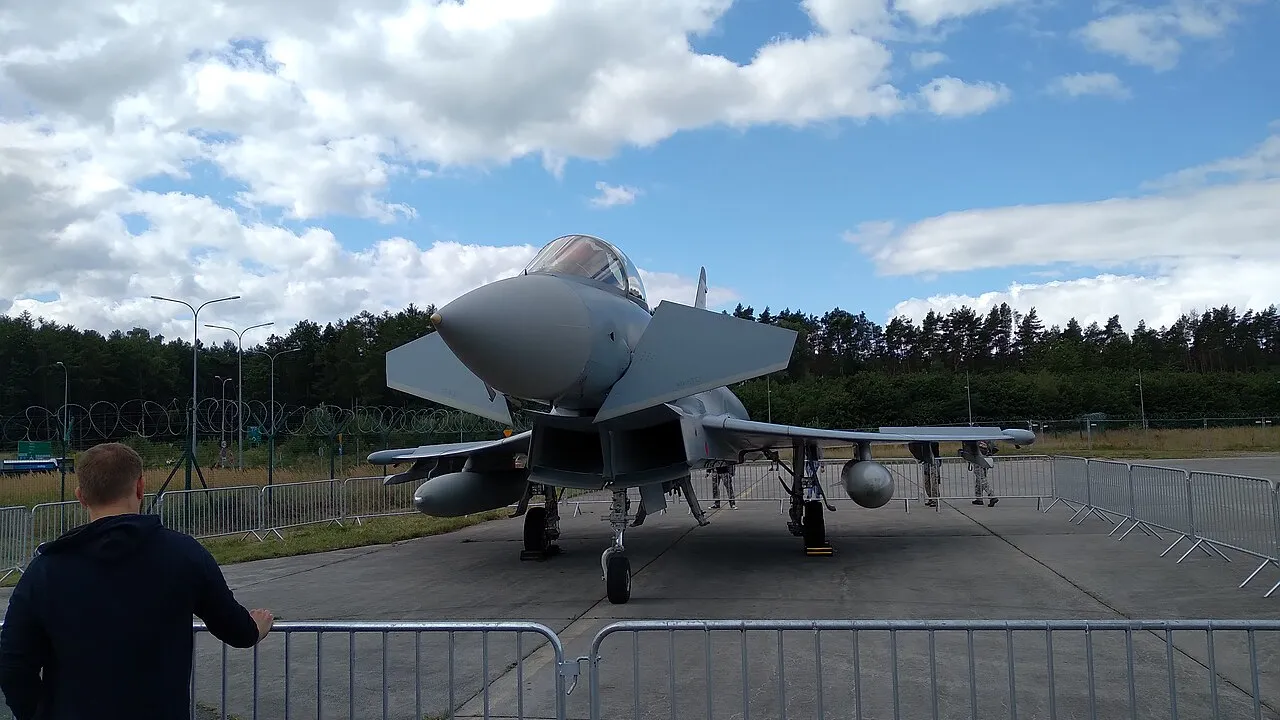
The Bundeswehr, the armed forces of the Federal republic of Germany, currently operates about 138 Eurofighters. These serve multiple roles including air policing and NATO missions. The tranche-5 jets are intended to replace older Tornado aircraft used in electronic combat and reconnaissance roles.
Aviation Fun Facts: 15 most interesting facts about aviation
Andreas Schwarz, the Social Democrats’ budget spokesman, described the Tranche 5 Eurofighters as an important investment in Germany’s NATO commitments and national defense. He said the new aircraft would help preserve the Eurofighter’s operational capability through 2060, while also strengthening its role in areas such as data collection and electronic warfare.
The German Defence Ministry indicated that the Eurofighter purchase would be followed by further major procurement projects. Officials said additional arms programs would be presented to the Bundestag during the year as Berlin seeks to maintain momentum in modernizing the Bundeswehr and ensure that German troops receive the equipment they require.
The Tranche 5 order covers 20 Eurofighters worth approximately €3.75 billion, with deliveries to the German Air Force scheduled between 2031 and 2034. The procurement forms part of a wider defense modernization package valued at more than €7 billion.

Germany’s Other Major Procurements Approved
Beyond the Eurofighters, the budget committee cleared funding for ground and naval systems. Approved projects include:
- Additional Boxer armored vehicles for training and medical missions
- New light air-droppable land combat vehicles
- Development of pontoon bridge systems.
The German Navy will receive medium-range high-speed boats for special operations and mine-hunting sonar systems to upgrade its coastal and undersea domain awareness. Here’s a look at German Navy’s fleet:
| Category | Details |
|---|---|
| Personnel | Circa 16,300 sailors, naval infantry, and airmen |
| Fleet | 62 naval and auxiliary vessels |
| Aircraft | 51 aircraft |
The German Navy will acquire new operational boats, in addition to modernization package for naval telecommunications and command systems was approved that covers:
- Class 124 frigates
- Class 130 corvettes
- Class 404 tenders
- procurement of minehunting sonar systems for Class 332 minehunters

The most recent procurements by Germany’s Bundestag Budget Committee draw on both the regular defense budget and Germany’s €100 billion special fund, established in 2022 in response to Russia’s invasion of Ukraine. Notably, the tranche-5 Eurofighter acquisition will be drawn from the regular budget, rather than the special fund.
Top 5 Must-See Aircraft At The National Museum Of The US Air Force
Some observers have flagged tensions with the Franco-German Future Combat Air System (FCAS) project. A German lawmaker, Christoph Schmid, warned that Berlin might leave the FCAS collaboration if disagreements with France are not resolved, and suggested ordering additional Eurofighters as a hedge.
All in All
In September, a government document revealed that Germany was seeking parliamentary approval for close to 8o defense projects in 2025 alone. These included:
- Acquisition of Patriot and IRIS-T SLM missile systems
- Boxer armoured personnel carriers
- Modernizing the Taurus cruise missile system: forming a production line for the next-generation Taurus NEO
- Puma infantry fighting vehicles
Douglas C-54 Skymaster: An iconic aircraft in American history
Despite approvals representing a major step, cmanaging timelines, controlling cost overruns, coordinating multinational supply chains, and ensuring compatibility with evolving European and NATO systems are some of the challenges that lie ahead. Additionally, the durability of funding beyond the special fund’s expiration remains a political question.
As the Eurofighters begin arriving in 2031, Germany will need to integrate them operationally. The nation will also need to ensure pilot training, whilst also synchronizing with European defense strategies. At a time when the future of the FCAS remains unresolved, Germany might have to realign its needs.